3.12 Mitigation
What this document covers
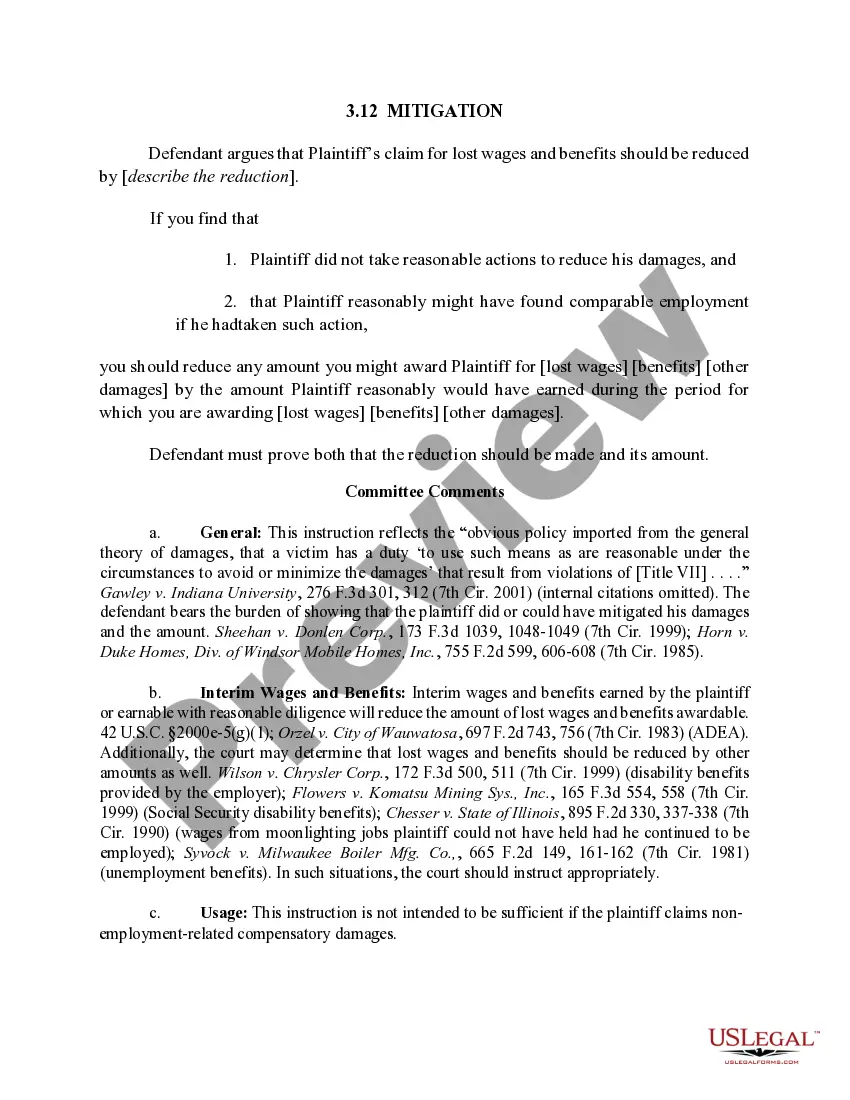
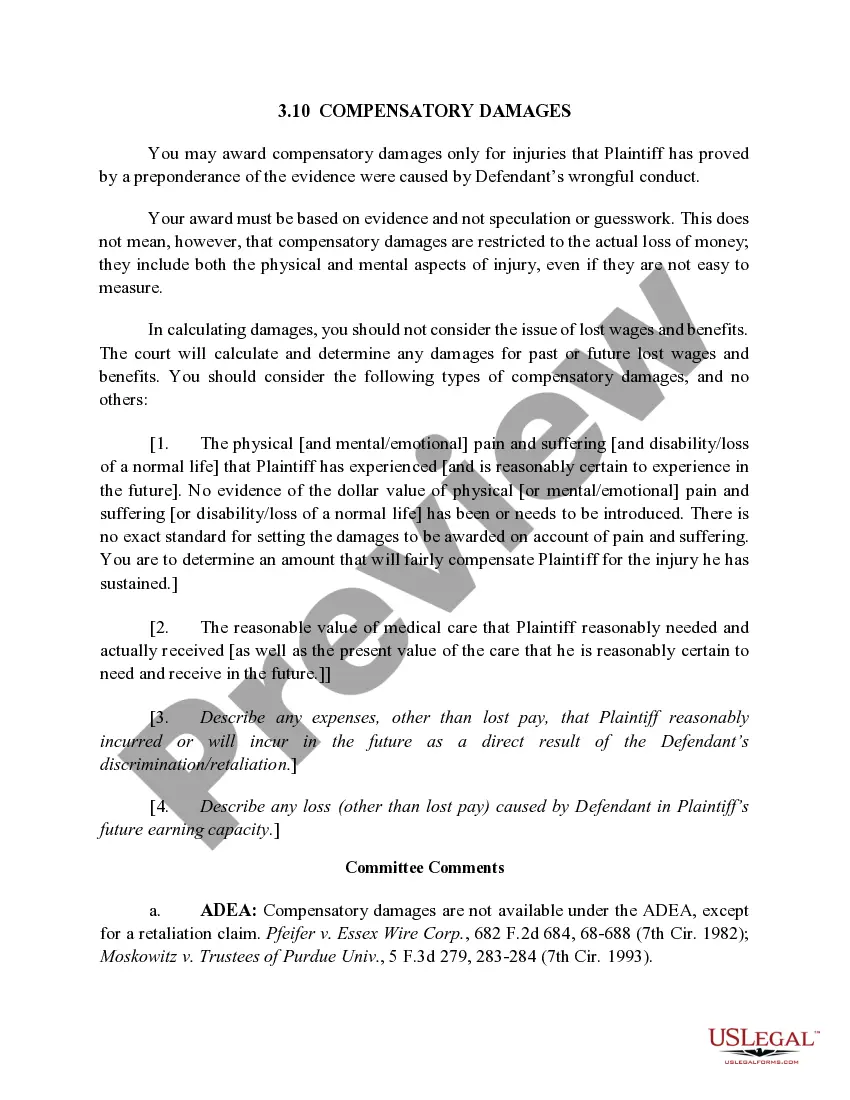
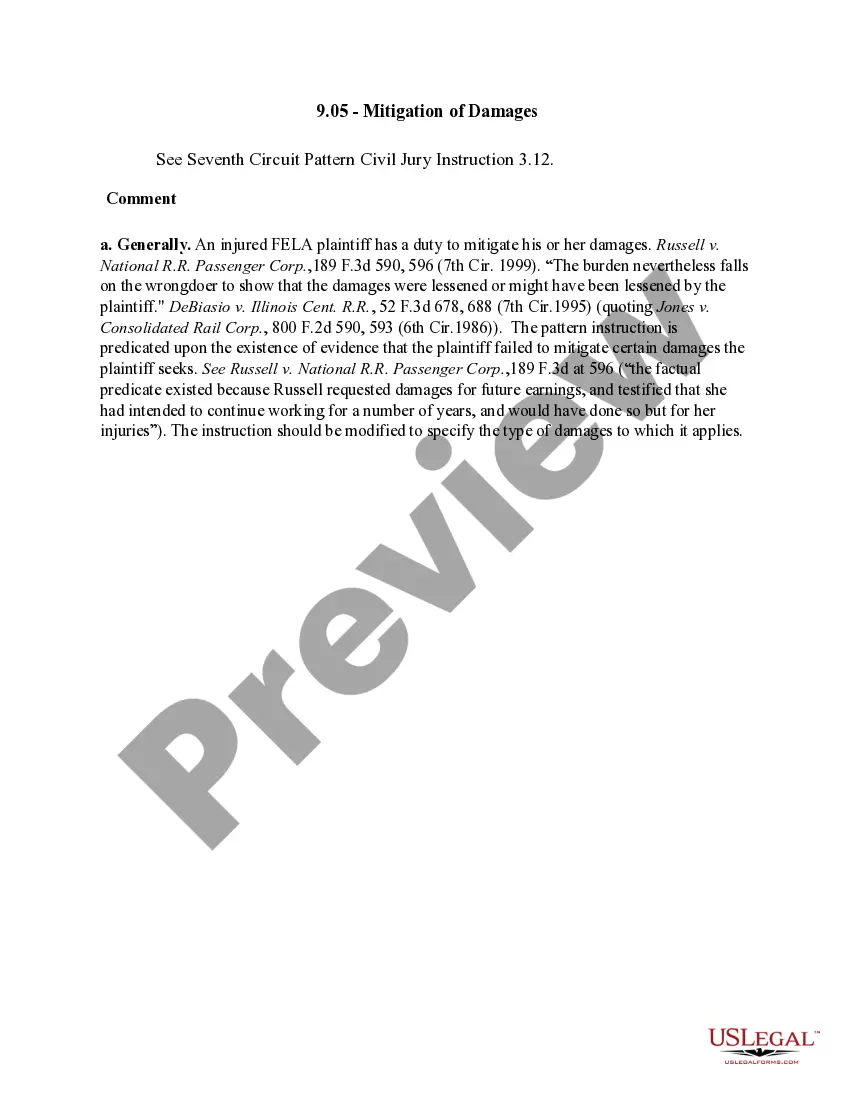
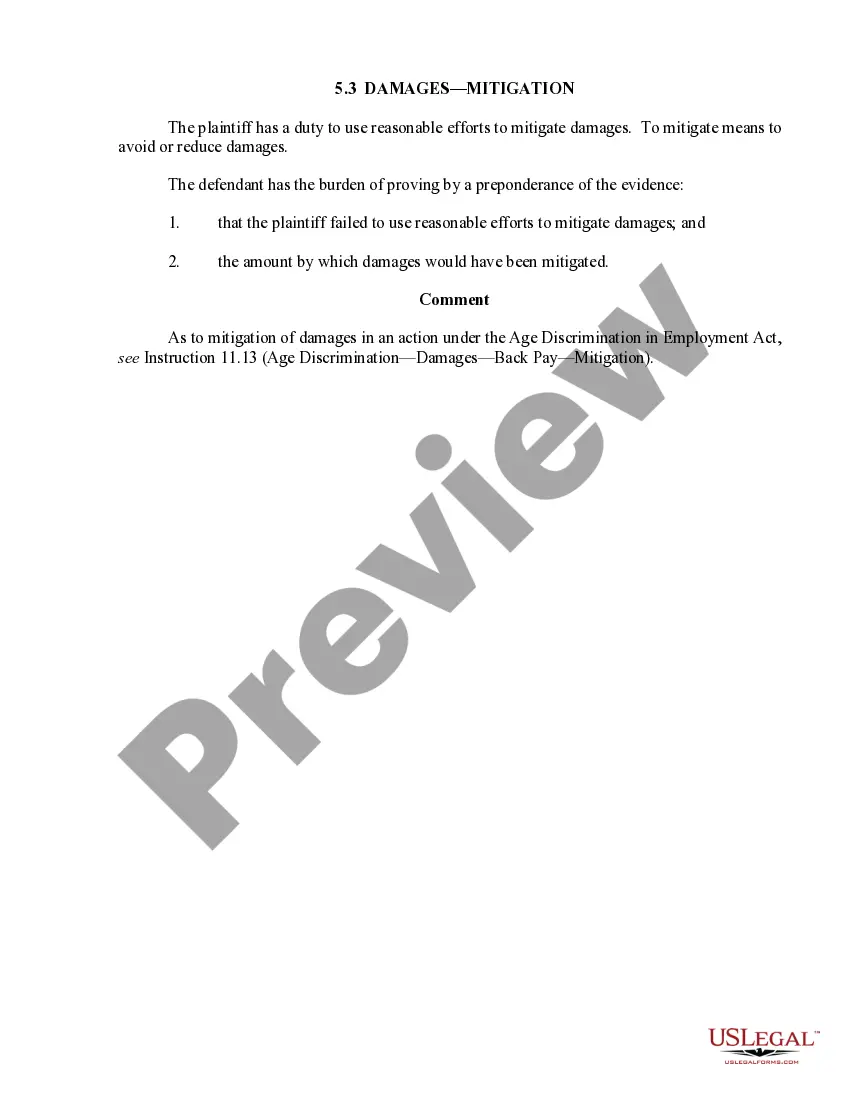
The 3.12 Mitigation form is a legal instruction used primarily in cases involving claims for lost wages and benefits. It provides guidelines on how to assess whether a plaintiff has failed to take reasonable steps to reduce their damages after an incident. This form differs from general damage claims by focusing specifically on the duty of a victim to mitigate their losses and the burden it places on the defendant to prove a lack of mitigation.
Form components explained
- Description of the reduction in lost wages and benefits that the defendant is arguing.
- Criteria for determining whether the plaintiff took reasonable steps to mitigate damages.
- Details on how the defendant can demonstrate the need for a reduction in damages.
- Clarification that interim wages and benefits can affect the award amount.
- Comments and legal precedents relevant to mitigation of damages.

Common use cases
This form is needed in legal cases where the plaintiff is claiming damages for lost wages and benefits due to wrongful actions by the defendant. It is particularly relevant when there is a dispute over whether the plaintiff took reasonable action to find employment or reduce their losses after the incident. Common scenarios include employment discrimination and wrongful termination cases.
Who needs this form
This form should be used by:
- Plaintiffs claiming lost wages or benefits in a lawsuit.
- Defendants contesting the extent of damage claims made against them.
- Attorneys representing either party in cases involving employment-related claims and damages.
Completing this form step by step
To complete the 3.12 Mitigation form, follow these steps:
- Identify the plaintiff and defendant involved in the claim.
- Describe the specific reduction in lost wages or benefits being argued by the defendant.
- Assess and detail any reasonable actions the plaintiff failed to take to mitigate their damages.
- Document any interim wages or benefits the plaintiff has earned or could have earned.
- Include relevant case law or precedents that support the arguments made.
Notarization guidance
This form does not typically require notarization unless specified by local law.
Get your form ready online
Our built-in tools help you complete, sign, share, and store your documents in one place.
Make edits, fill in missing information, and update formatting in US Legal Forms—just like you would in MS Word.
Download a copy, print it, send it by email, or mail it via USPS—whatever works best for your next step.
Sign and collect signatures with our SignNow integration. Send to multiple recipients, set reminders, and more. Go Premium to unlock E-Sign.
If this form requires notarization, complete it online through a secure video call—no need to meet a notary in person or wait for an appointment.
We protect your documents and personal data by following strict security and privacy standards.

Make edits, fill in missing information, and update formatting in US Legal Forms—just like you would in MS Word.

Download a copy, print it, send it by email, or mail it via USPS—whatever works best for your next step.

Sign and collect signatures with our SignNow integration. Send to multiple recipients, set reminders, and more. Go Premium to unlock E-Sign.

If this form requires notarization, complete it online through a secure video call—no need to meet a notary in person or wait for an appointment.

We protect your documents and personal data by following strict security and privacy standards.
Avoid these common issues
- Failing to clearly describe the reductions in lost wages or benefits.
- Not providing sufficient evidence of reasonable actions the plaintiff could have taken.
- Overlooking interim wages or benefits that could impact the total damage award.
- Misunderstanding the burden of proof required for the defendant.
Why complete this form online
- Convenience of downloading the form directly for immediate use.
- Editability allows users to tailor the content to specific cases quickly.
- Reliability, as the forms are created by licensed attorneys with expertise.
The 3.12 Mitigation form serves a key role in legal proceedings where the defendant must establish that the plaintiff did not adequately mitigate their damages. Understanding and utilizing this form correctly can significantly impact the outcome of a case, as it helps clarify the responsibilities of both parties regarding lost wages or benefits.
Summary of main points
- The form provides guidelines on the mitigation of damages in lost wage claims.
- It is essential for defendants to prove the necessity and amount of any damage reduction.
- Interim earnings can significantly affect the total damage calculation.
Looking for another form?

Form popularity
FAQ
There are many types of military discharges, including an honorable military discharge, general discharge, under other than honorable conditions, bad conduct discharge, dishonorable discharge, and entry-level separation.
Other Than Honorable -- Given when there is misconduct that could be considered a misdemeanor in the civilian world.
To receive VA compensation benefits and services, the Veteran's character of discharge or service must be under other than dishonorable conditions (e.g., honorable, under honorable conditions, general).
General Under Honorable: You are eligible for VA health care & disability benefits. Other Than Honorable: You will need to ask for a discharge upgrade (federal) or Character of Service determination (local VA regional office) in order to be eligible for health care & disability benefits.
Normally only honorable and general under honorable conditions will qualify the veteran for benefits. An uncharacterized discharge may also qualify the veteran, but it is up to the VA and is handled on a case- by-case basis. Officers cannot receive a dishonorable discharge.
§ 3.12 Character of discharge. (a) If the former service member did not die in service, pension, compensation, or dependency and indemnity compensation is not payable unless the period of service on which the claim is based was terminated by discharge or release under conditions other than dishonorable. (38 U.S.C.
General Discharge Under Honorable Conditions Veterans who receive general discharges under honorable conditions are entitled to all VA benefits, with the exception of GI Bill education benefits.
While a discharge under honorable conditions may not be what a veteran wants on his or her resume, it qualifies for VA health care, TRICARE's Continued Health Care Benefit Program (military health insurance), VA disability compensation, VA pension, VA home loans, and all other veterans benefits except for educational