Exportation of Stolen Vehicles
Overview of this form
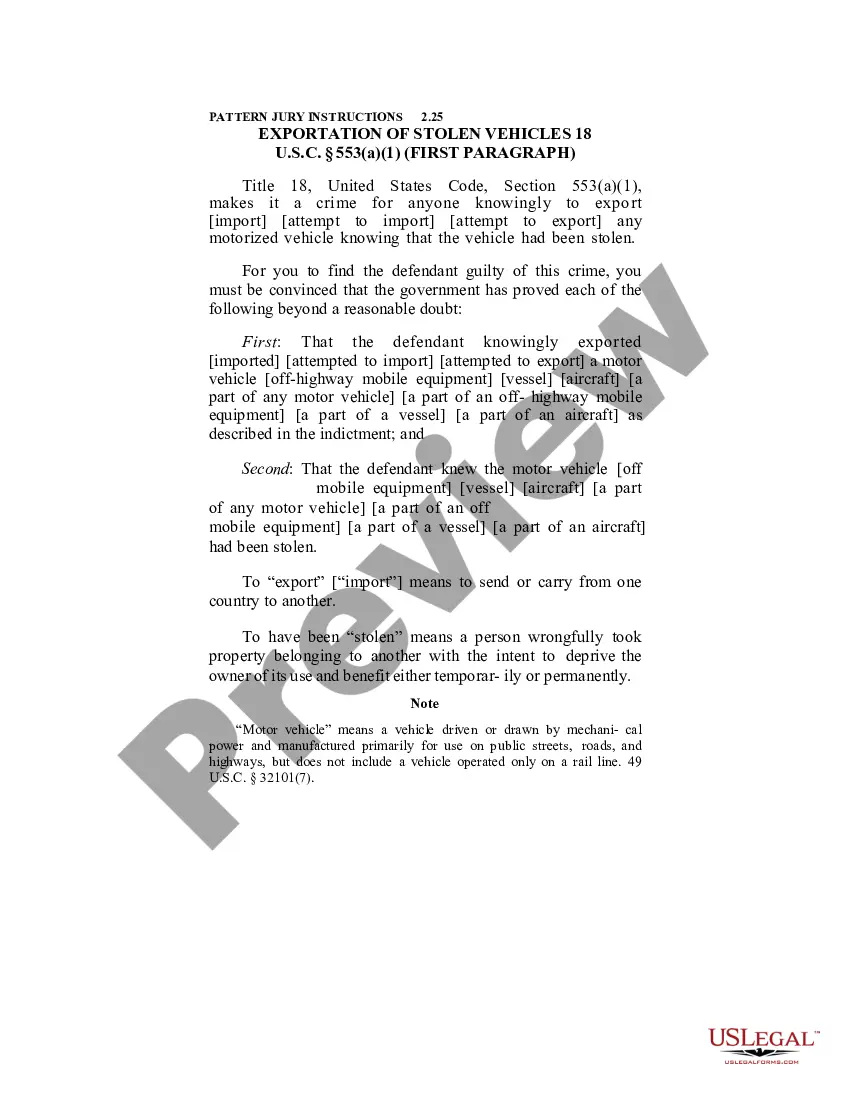
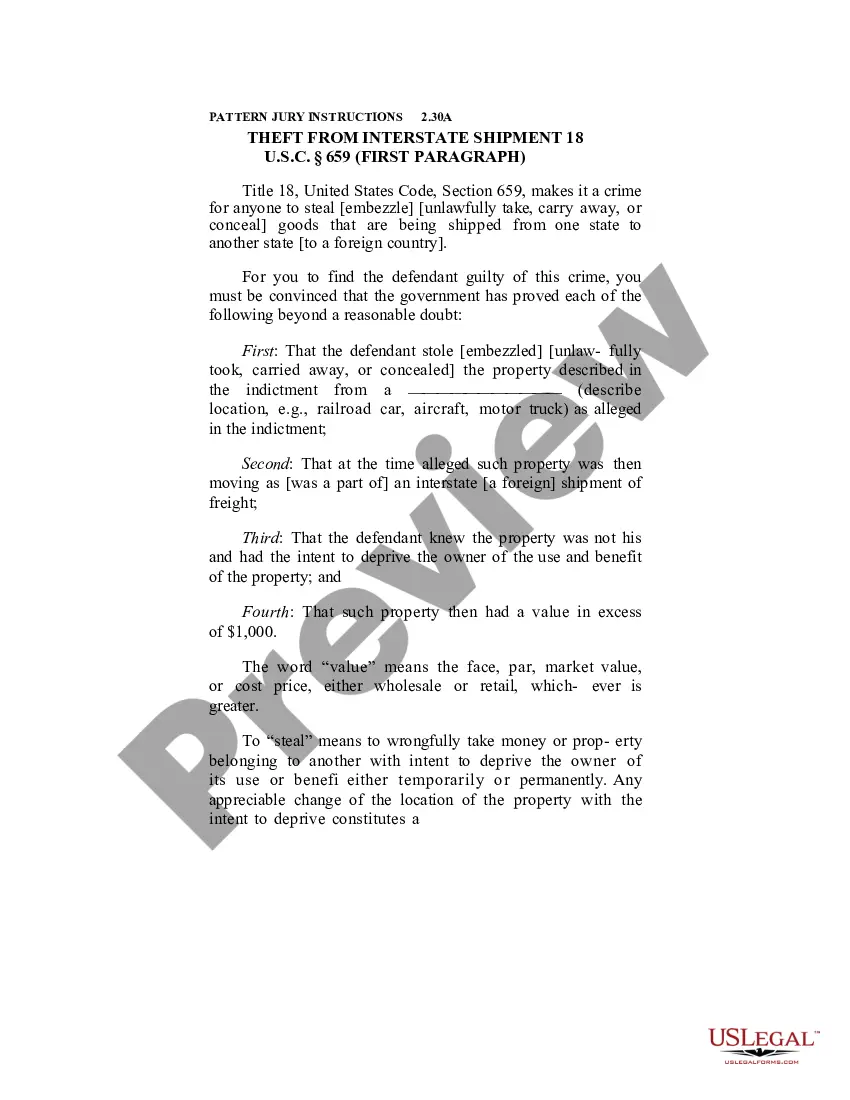
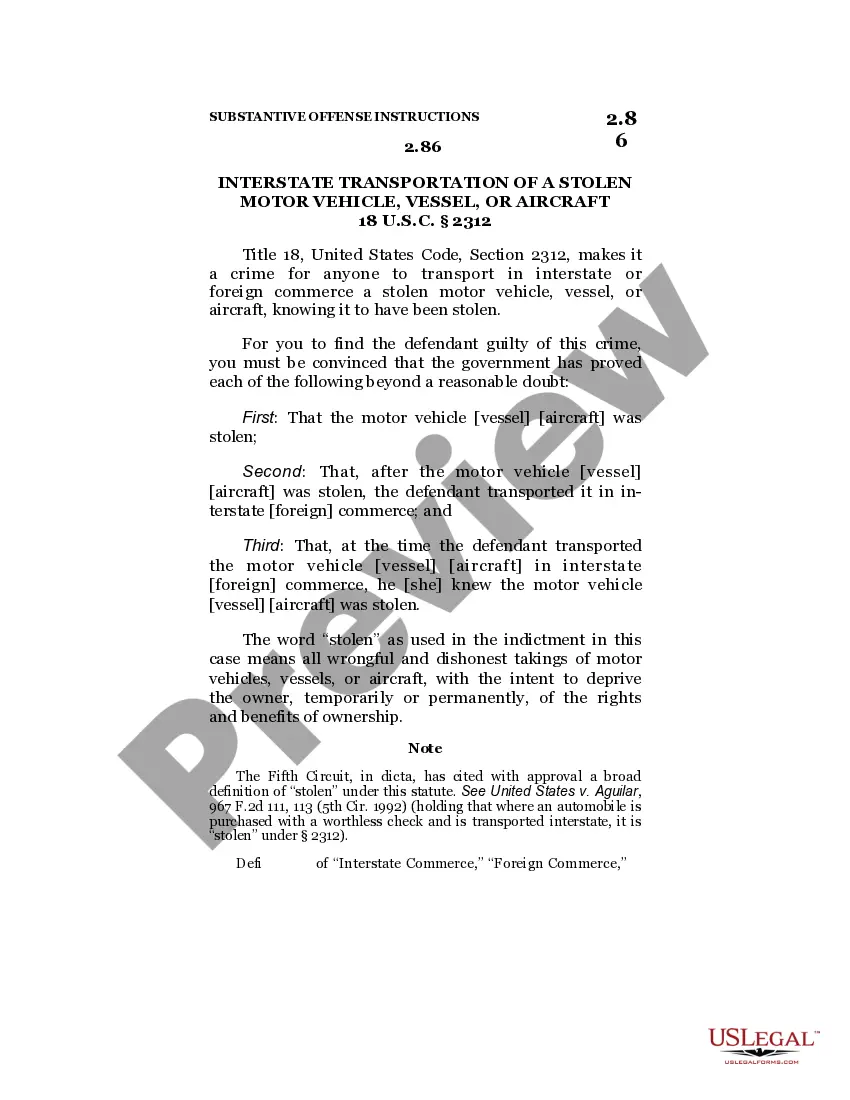
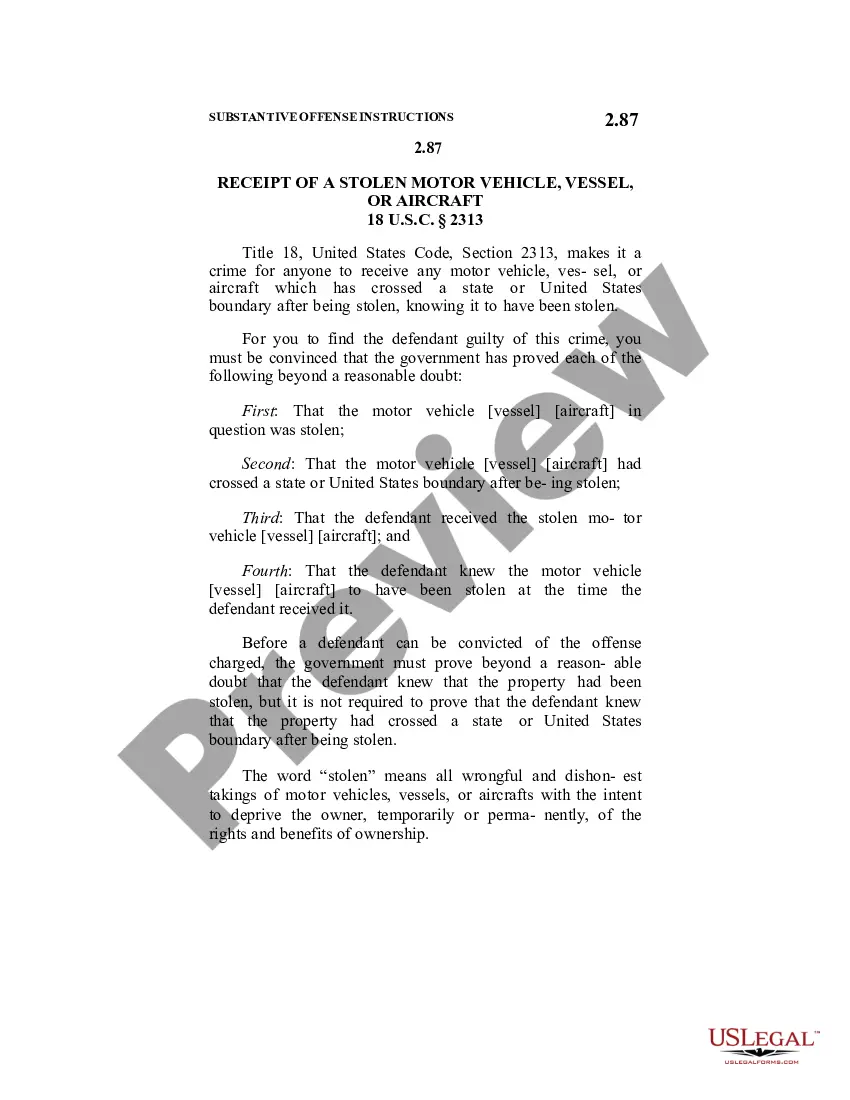
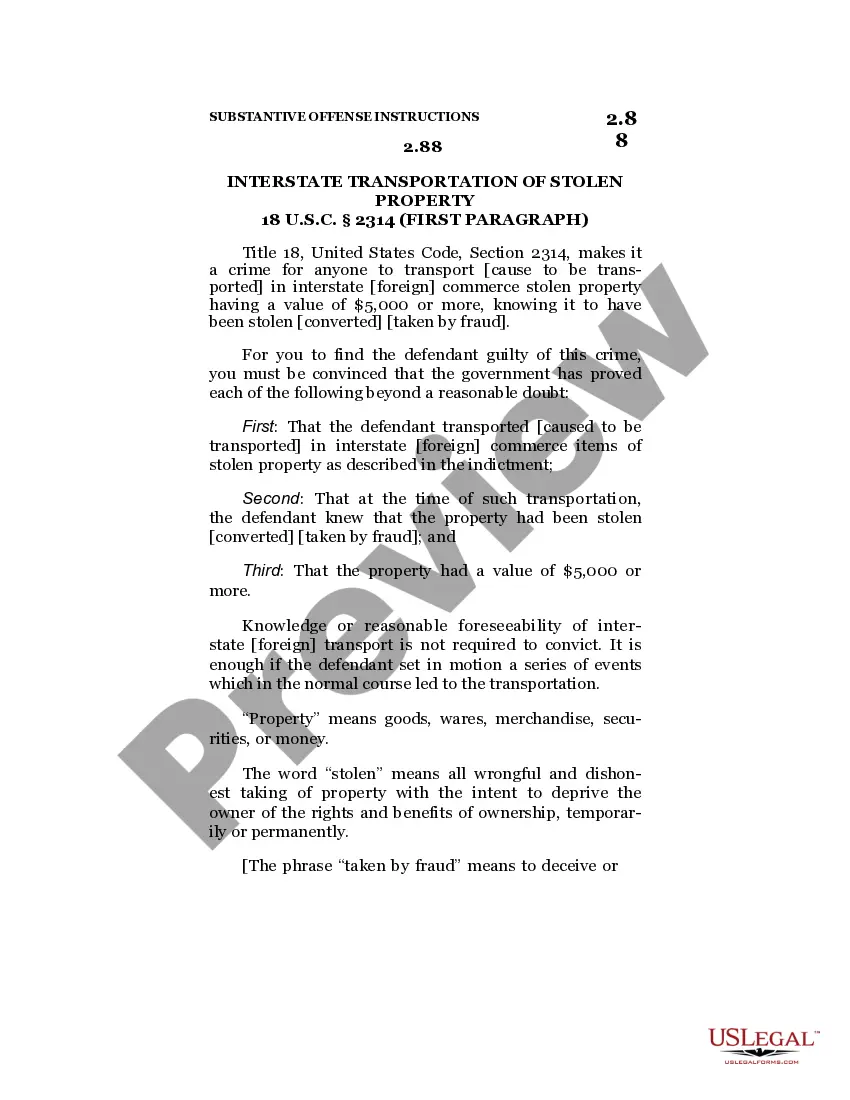
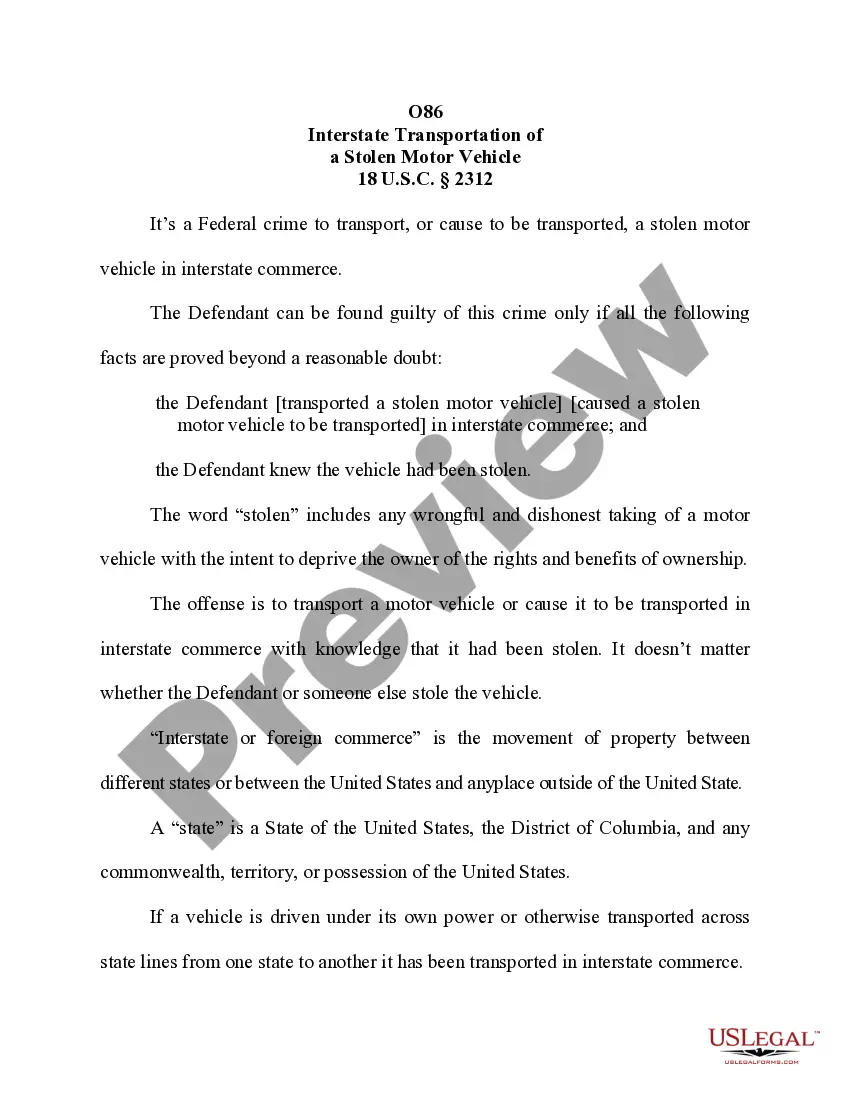
The Exportation of Stolen Vehicles form is a legal document that addresses the crime of knowingly exporting or attempting to export a stolen vehicle. This form is crucial for law enforcement and judicial processes, distinguishing itself from other vehicle-related legal documents by its emphasis on criminal liability associated with stolen vehicles. Understanding this form is vital to prevent unauthorized exportation activities and to seek justice in cases of vehicle theft.
Key components of this form
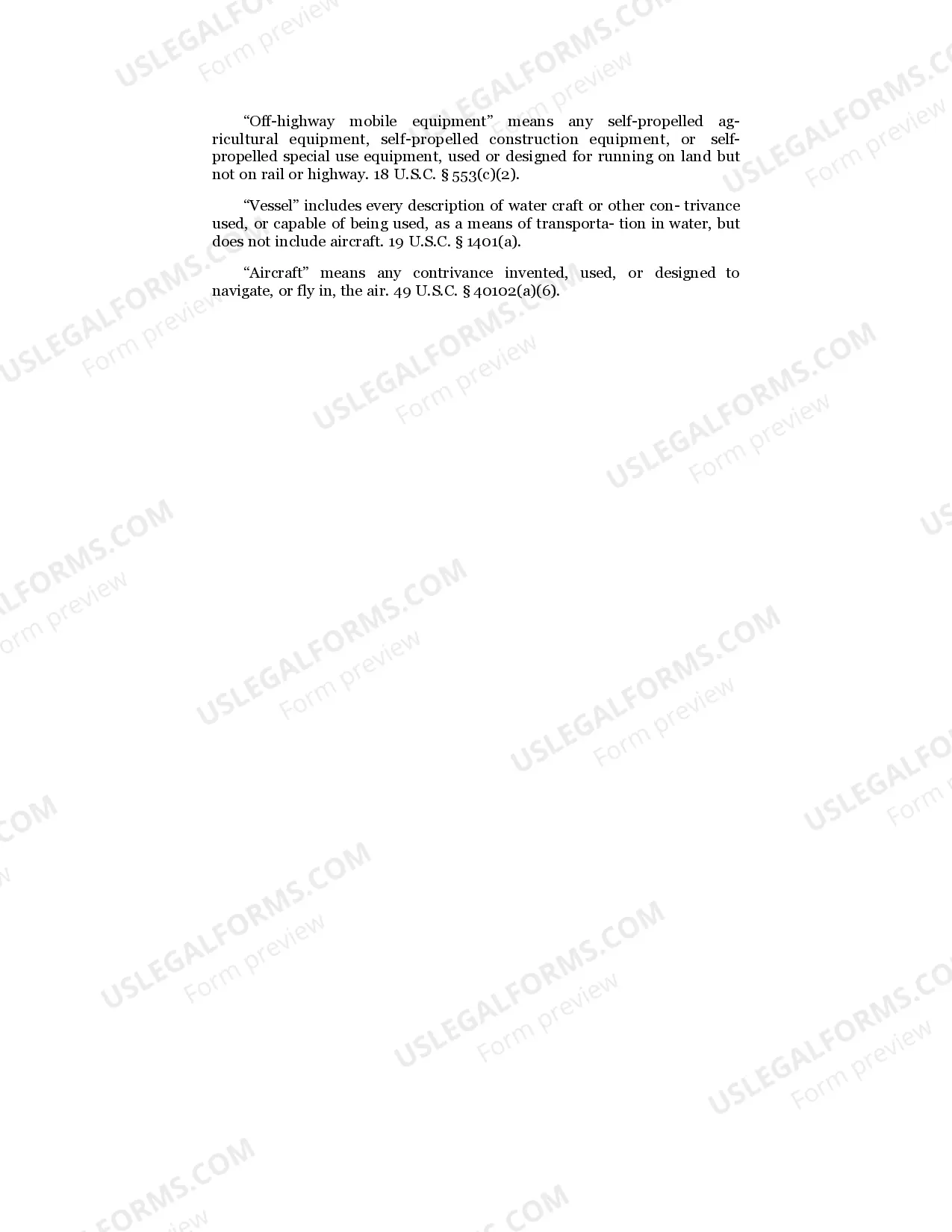
- Definition of key terms such as motor vehicle, stolen, export, and import.
- Elements that must be proven to establish criminal liability.
- Clarification on the different types of vehicles covered, including cars, mobile equipment, vessels, and aircraft.
- Legal citations relevant to the crime and definitions utilized.
Situations where this form applies
This form is used in scenarios where an individual is accused of exporting a vehicle that they know has been stolen. It may arise during criminal investigations, prosecutions, or legal proceedings concerning motor vehicle theft, especially in cases involving cross-border issues. This form helps clarify the legal ramifications of the act of exporting stolen property.
Who can use this document
- Law enforcement officials involved in vehicle theft investigations.
- Legal professionals representing clients in theft-related cases.
- Individuals seeking to understand their legal obligations concerning stolen vehicles.
Instructions for completing this form
- Identify the relevant parties involved in the exportation.
- Specify the details of the vehicle involved, including make, model, and VIN.
- Clearly state the circumstances of how the vehicle was acquired.
- Enter any pertinent dates related to the transaction or event.
- Sign and date the form as required by jurisdictional rules.
Is notarization required?
This form usually doesn’t need to be notarized. However, local laws or specific transactions may require it. Our online notarization service, powered by Notarize, lets you complete it remotely through a secure video session, available 24/7.
Get your form ready online
Our built-in tools help you complete, sign, share, and store your documents in one place.
Make edits, fill in missing information, and update formatting in US Legal Forms—just like you would in MS Word.
Download a copy, print it, send it by email, or mail it via USPS—whatever works best for your next step.
Sign and collect signatures with our SignNow integration. Send to multiple recipients, set reminders, and more. Go Premium to unlock E-Sign.
If this form requires notarization, complete it online through a secure video call—no need to meet a notary in person or wait for an appointment.
We protect your documents and personal data by following strict security and privacy standards.

Make edits, fill in missing information, and update formatting in US Legal Forms—just like you would in MS Word.

Download a copy, print it, send it by email, or mail it via USPS—whatever works best for your next step.

Sign and collect signatures with our SignNow integration. Send to multiple recipients, set reminders, and more. Go Premium to unlock E-Sign.

If this form requires notarization, complete it online through a secure video call—no need to meet a notary in person or wait for an appointment.

We protect your documents and personal data by following strict security and privacy standards.
Common mistakes
- Failing to provide accurate vehicle identification information.
- Not including complete details about the nature of the alleged theft.
- Ignoring state-specific legal requirements or variations.
Why use this form online
- Convenient access to up-to-date legal templates and forms.
- Editable fields that allow for precise information entry.
- Reliable format designed by licensed attorneys to ensure compliance.
Legal use & context
- This form is essential for enforcing laws against the export of stolen vehicles.
- Understanding this form aids in navigating the legal system related to motor vehicle theft.
- It serves as a formal document that can be used in criminal proceedings to establish facts and support prosecution or defense strategies.
Main things to remember
- The Exportation of Stolen Vehicles form addresses serious legal issues related to theft.
- Essential for law enforcement and legal professionals in theft-related cases.
- Compliance with jurisdictional regulations is critical for validity and enforcement.
Looking for another form?
Form popularity
FAQ
Enterprising criminals can copy a VIN from a legally owned and documented vehicle sitting in a parking lot, on the street or at a vehicle dealership. The copied VIN is then used to create counterfeit VIN tags. Car thieves often travel across state and international borders to sell vehicles at the highest prices.
How does VIN cloning work? It begins with a stolen vehicle. Then the vehicle is ?cloned? ? its manufacturer-installed VIN plate is pried off and replaced with another one. This second VIN plate actually holds a legitimate number that came from a vehicle of a similar make and model in a different state.
Another way that a scammer can buy a vehicle in your name is to duplicate your Vehicle Identification Number (VIN). A VIN is a unique number used to identify your vehicle. If scammers get your VIN, they can use it on a stolen vehicle and register it in your name.
One way thieves sell stolen cars is through VIN cloning. They take the VIN or Vehicle Identification Number of a legitimately registered vehicle in another state and use it to mask the stolen vehicle's VIN. In this way, everything checks out. Later is when they discover that it is a stolen car.
Chop shops Because the parts of a stolen car may be worth more than the vehicle, stolen vehicles often end up in a chop shop. In a chop shop, a mechanic takes the car apart and discards anything that carries your vehicle identification number (VIN), such as the engine or transmission.
Hiring A Customs Agent (Agente Aduanal) You must go to a customs agent when crossing the border, to get the import request and pay all fees and taxes. It is best to contact your agent a few weeks before you want to import your car to Mexico. Any other method of taking a car to Mexico permanently is illegal.
In 2020, New Zealand had the highest car theft rate worldwide, with 1,172 occurences per 100,000 inhabitants. Other countries with the highest car theft rate were Uruguay, Italy and the United States.
You know, anybody can walk past your car and copy down the VIN number because it's right there in the windshield. Once they've copied your VIN number, they can apply for duplicate papers, and those papers can be used on another car that has been stolen or may have been reconstructed. How can you prevent it?