Interstate Transportation of a Stolen Motor Vehicle, Vessel, or Aircraft
What is this form?
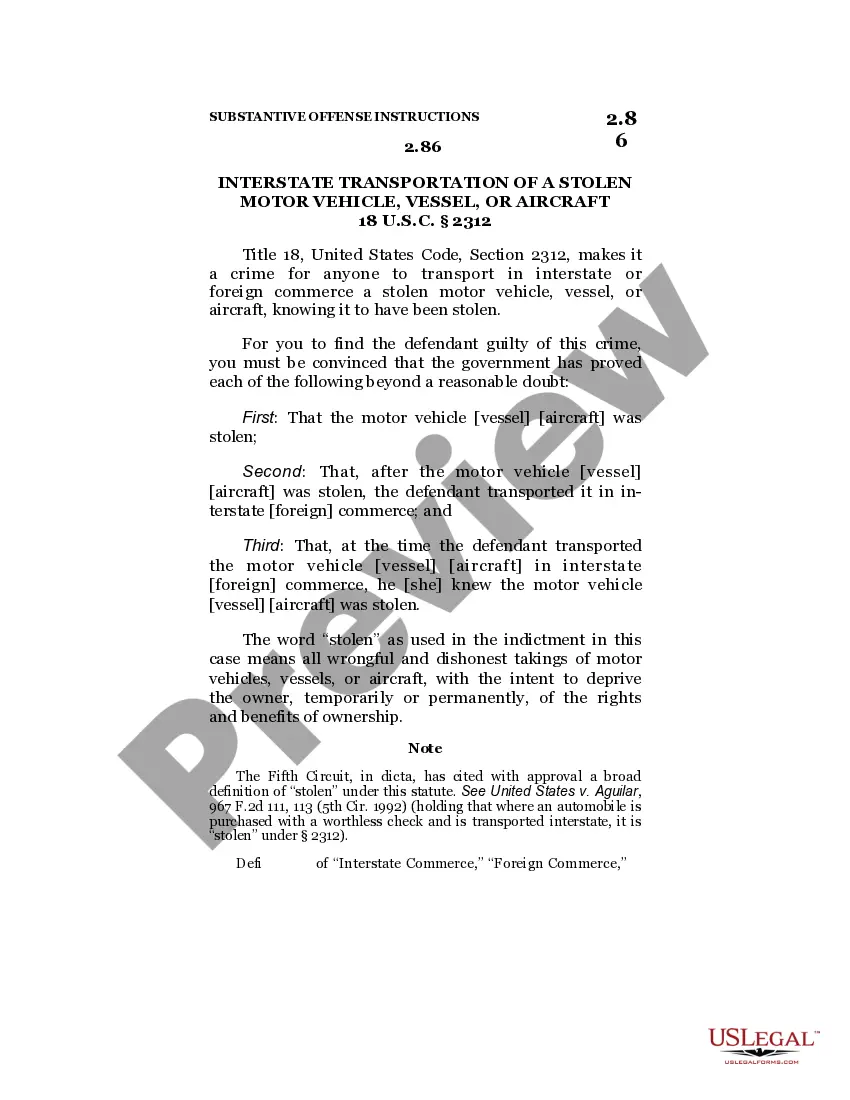
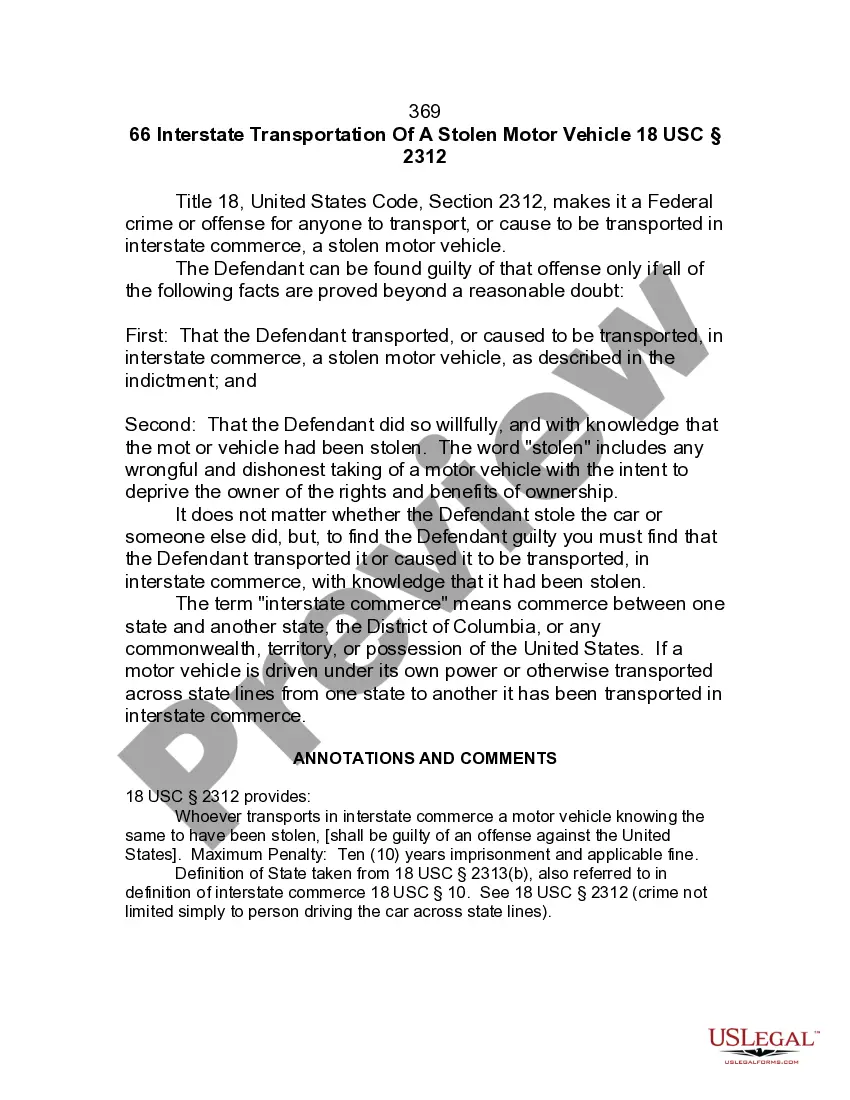
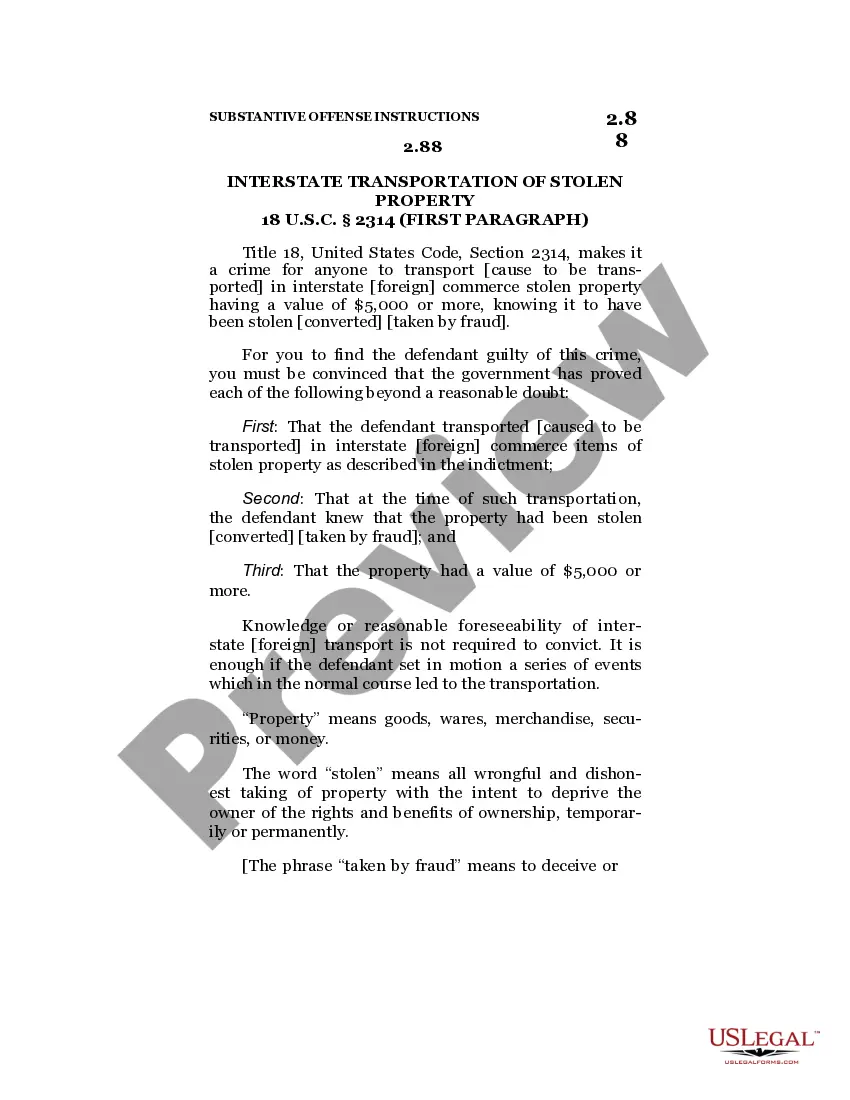
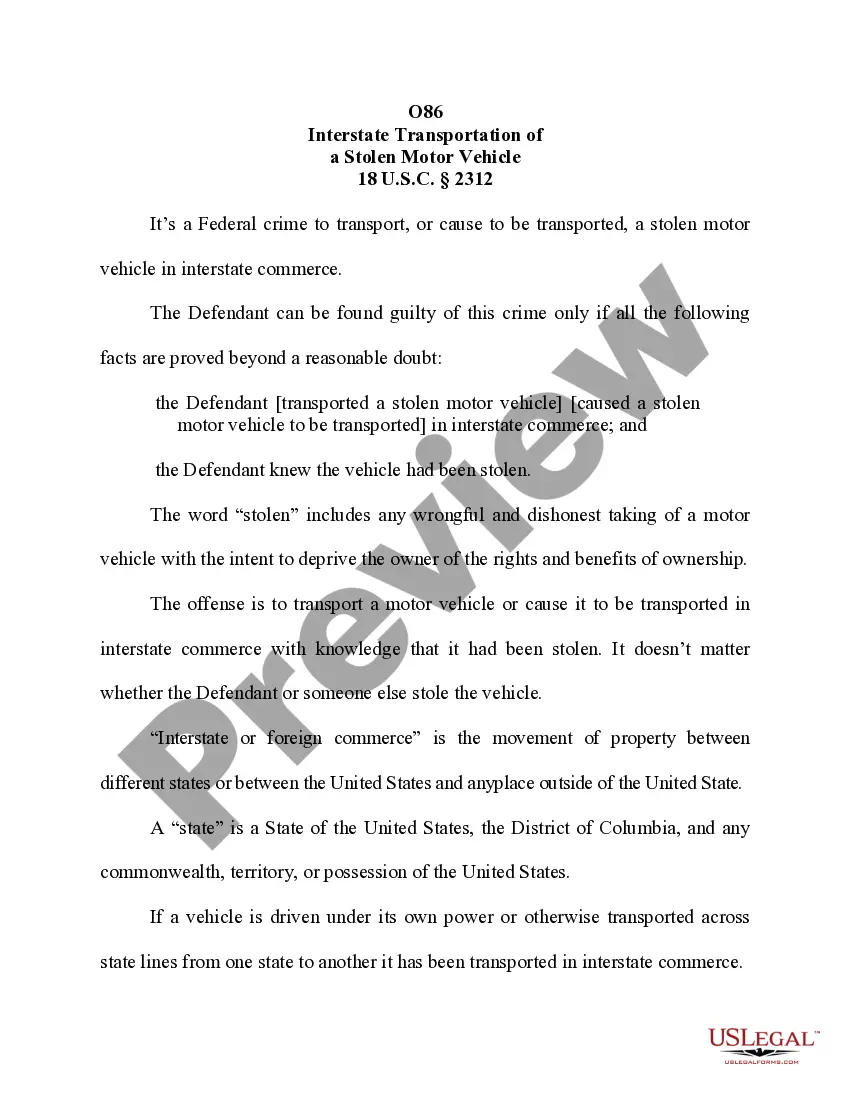
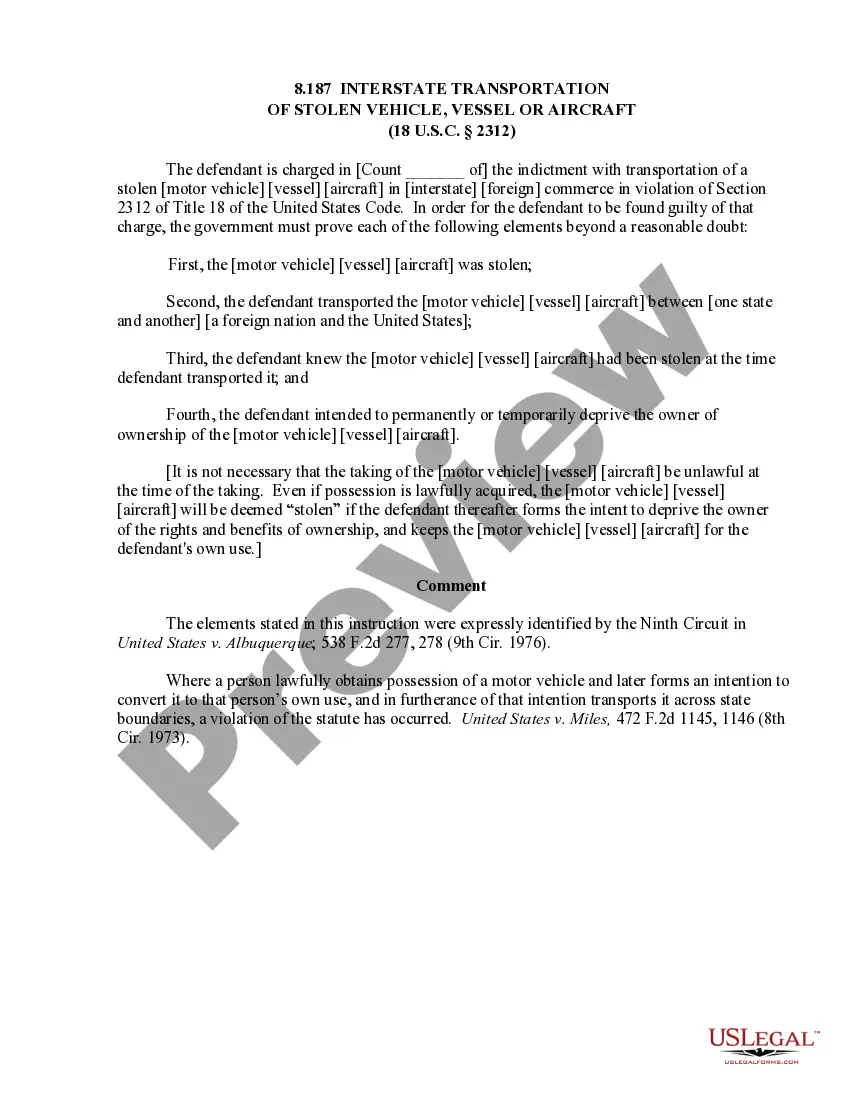
The Interstate Transportation of a Stolen Motor Vehicle, Vessel, or Aircraft form is a legal document used to outline the crime of transporting stolen property across state or international lines. This form serves as a way to understand the serious implications of knowingly moving stolen vehicles, vessels, or aircraft. It differs from similar forms by specifically addressing interstate and foreign transportation crimes as defined under Title 18, United States Code, Section 2312.
Key components of this form
- Definition of "stolen" as wrongful and dishonest taking with the intent to deprive the owner.
- Elements of the crime that must be proven: the property was stolen, it was transported across state lines, and the defendant knew it was stolen.
- Clarification on what constitutes interstate and foreign commerce.
- Relevant judicial interpretations from case law.
When to use this document
This form is essential in scenarios where law enforcement or legal entities need to establish charges related to the interstate transportation of stolen property. It can be used in criminal investigations, court proceedings, or when preparing legal defenses concerning such crimes.
Intended users of this form
- Law enforcement officials involved in criminal investigations.
- Legal professionals representing clients facing charges of transporting stolen vehicles, vessels, or aircraft.
- Individuals seeking to understand the legal ramifications of their actions concerning stolen property.
Steps to complete this form
- Identify all parties involved in the transportation of the stolen property.
- Clearly specify the stolen vehicle, vessel, or aircraft being discussed.
- Enter dates of the alleged crime and the transportation process.
- Provide evidence or documentation supporting the knowledge of the item's stolen status.
- Include any relevant case numbers or additional legal references, if applicable.
Does this form need to be notarized?
This form usually doesn’t need to be notarized. However, local laws or specific transactions may require it. Our online notarization service, powered by Notarize, lets you complete it remotely through a secure video session, available 24/7.
Get your form ready online
Our built-in tools help you complete, sign, share, and store your documents in one place.
Make edits, fill in missing information, and update formatting in US Legal Forms—just like you would in MS Word.
Download a copy, print it, send it by email, or mail it via USPS—whatever works best for your next step.
Sign and collect signatures with our SignNow integration. Send to multiple recipients, set reminders, and more. Go Premium to unlock E-Sign.
If this form requires notarization, complete it online through a secure video call—no need to meet a notary in person or wait for an appointment.
We protect your documents and personal data by following strict security and privacy standards.

Make edits, fill in missing information, and update formatting in US Legal Forms—just like you would in MS Word.

Download a copy, print it, send it by email, or mail it via USPS—whatever works best for your next step.

Sign and collect signatures with our SignNow integration. Send to multiple recipients, set reminders, and more. Go Premium to unlock E-Sign.

If this form requires notarization, complete it online through a secure video call—no need to meet a notary in person or wait for an appointment.

We protect your documents and personal data by following strict security and privacy standards.
Mistakes to watch out for
- Failing to provide sufficient evidence of knowledge regarding the stolen status of the property.
- Not clearly identifying the vehicle, vessel, or aircraft involved in the transportation.
- Ignoring local laws that might affect the case related to interstate transportation.
Advantages of online completion
- Convenience of accessing legal forms from anywhere, anytime.
- Ability to edit and customize the form to fit specific needs.
- Reliability of the templates drafted by licensed attorneys, ensuring legal compliance.
Legal use & context
- This form is essential for establishing legal grounds in prosecuting cases related to the interstate transportation of stolen property.
- It is important to understand the legal implications of transporting stolen items, as penalties can be severe, including fines and imprisonment.
- Local laws may provide additional context or variations in how this form is applied.
What to keep in mind
- The form is designed to address violations under Title 18, U.S. Code related to stolen property transportation.
- It outlines necessary elements that must be proven for prosecution.
- Users should be aware of local regulations that may affect the application of this form.
Looking for another form?


Form popularity
FAQ
Motor Vehicle And Aircraft Theft -- Legislative History. The Dyer Act, which made auto theft a federal crime, was enacted by Congress on October 29, 1919.
The Dyer Act, which made auto theft a federal crime, was enacted by Congress on October 29, 1919. See Chapter 89, 41 Stat. 324. In 1945, aircraft were added to the statute.
The first recorded car theft took place in Paris, France, 1896, when a mechanic stole a Peugot from Baron de Zuylen, founder of the Automobile Club of France. While the vehicle was eventually recovered and the thief caught, it set forth a series of innovations that would see our cars become more theft-proof.
The elements of a violation under 18 U.S.C. § 2312 are that the defendant: (1) unlawfully transported or caused to be transported in interstate or foreign commerce; (2) a stolen motor vehicle or aircraft; and (3) knowing the same to be stolen.
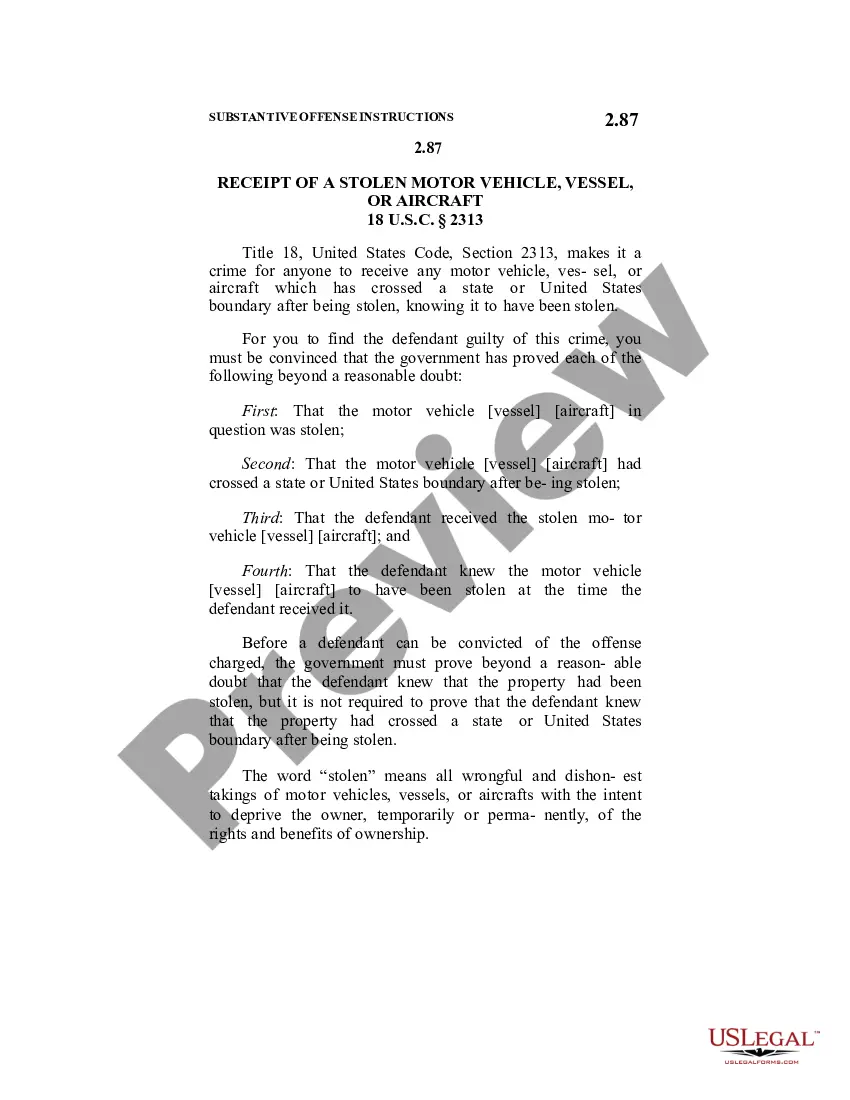
Federal prosecutors will investigate and prosecute cases involving organized crime that moves stolen property across state lines.
The Dyer Act made interstate transportation of a stolen motor vehicle a federal crime and allowed for federal help in prosecuting such cases.