Personal Criminal Responsibility of a Corporate Agent
What is this form?
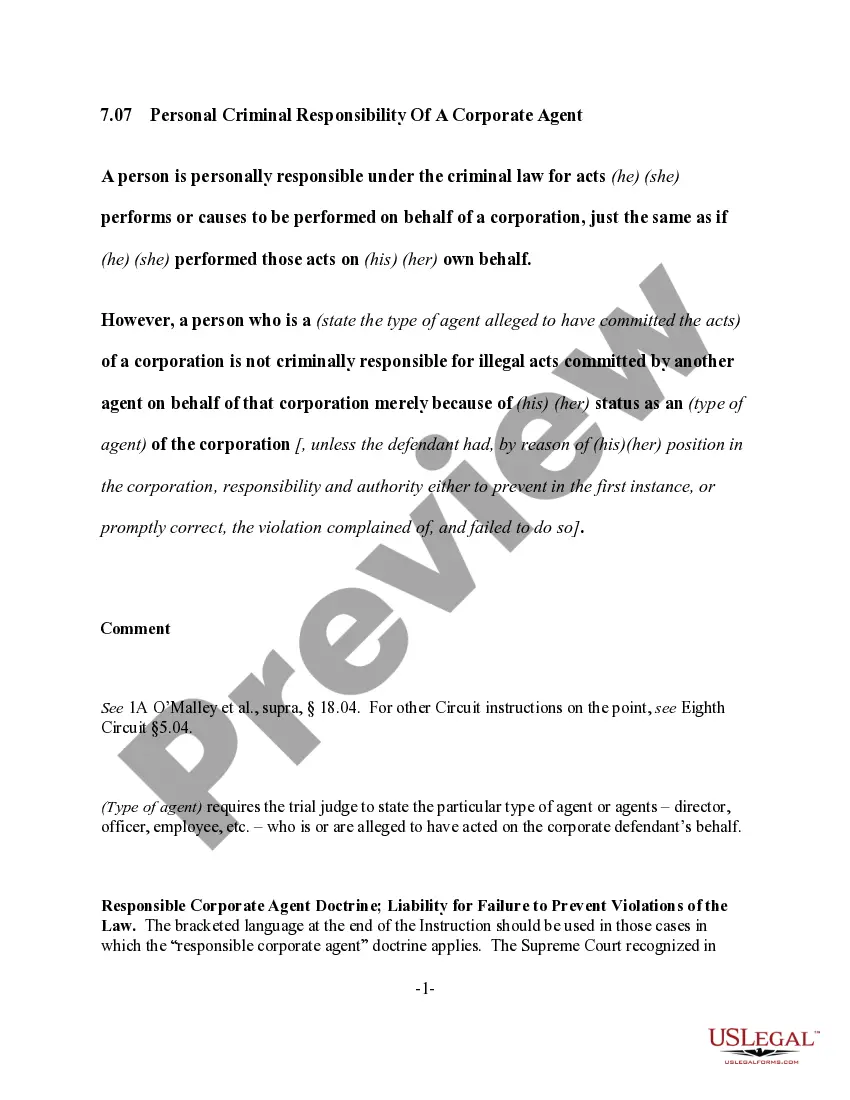
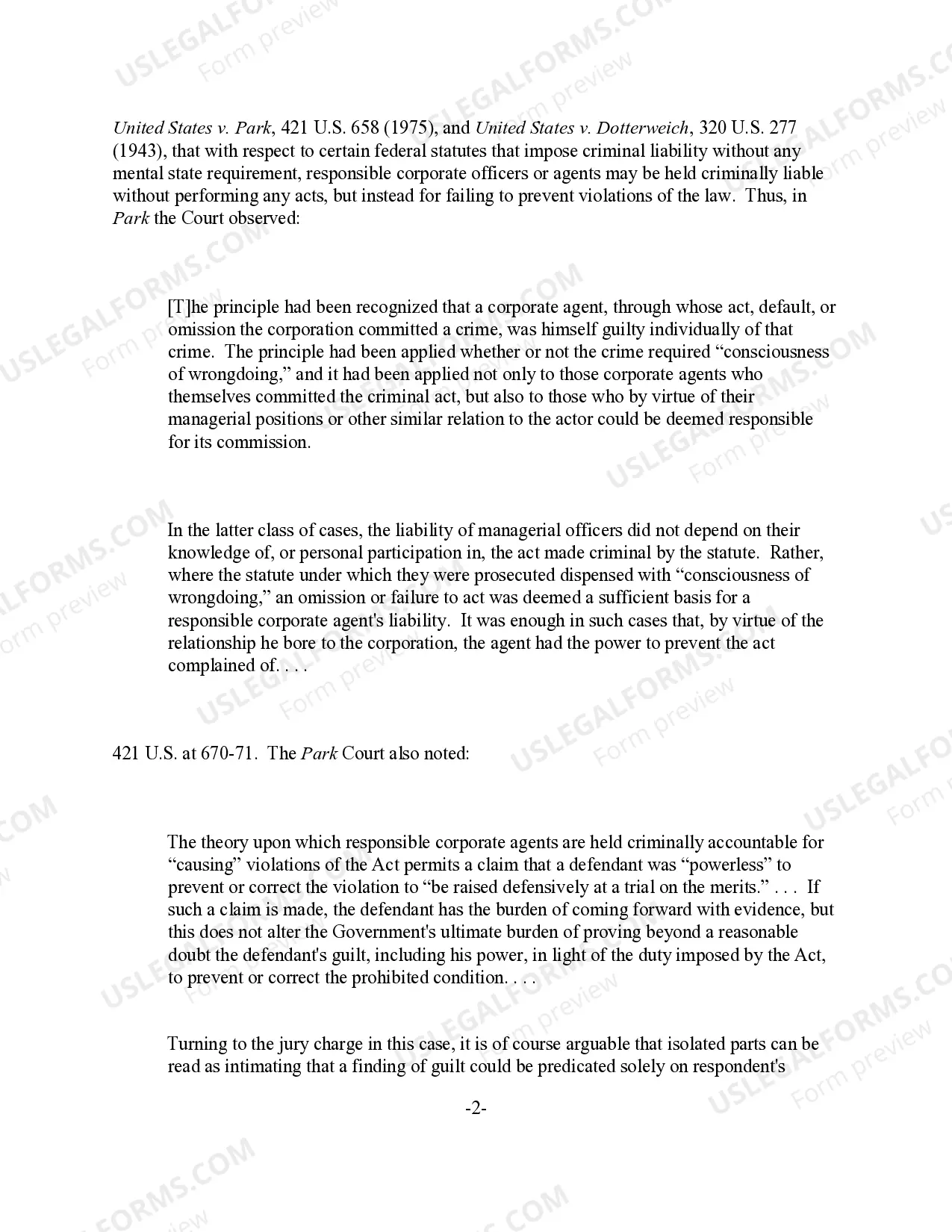
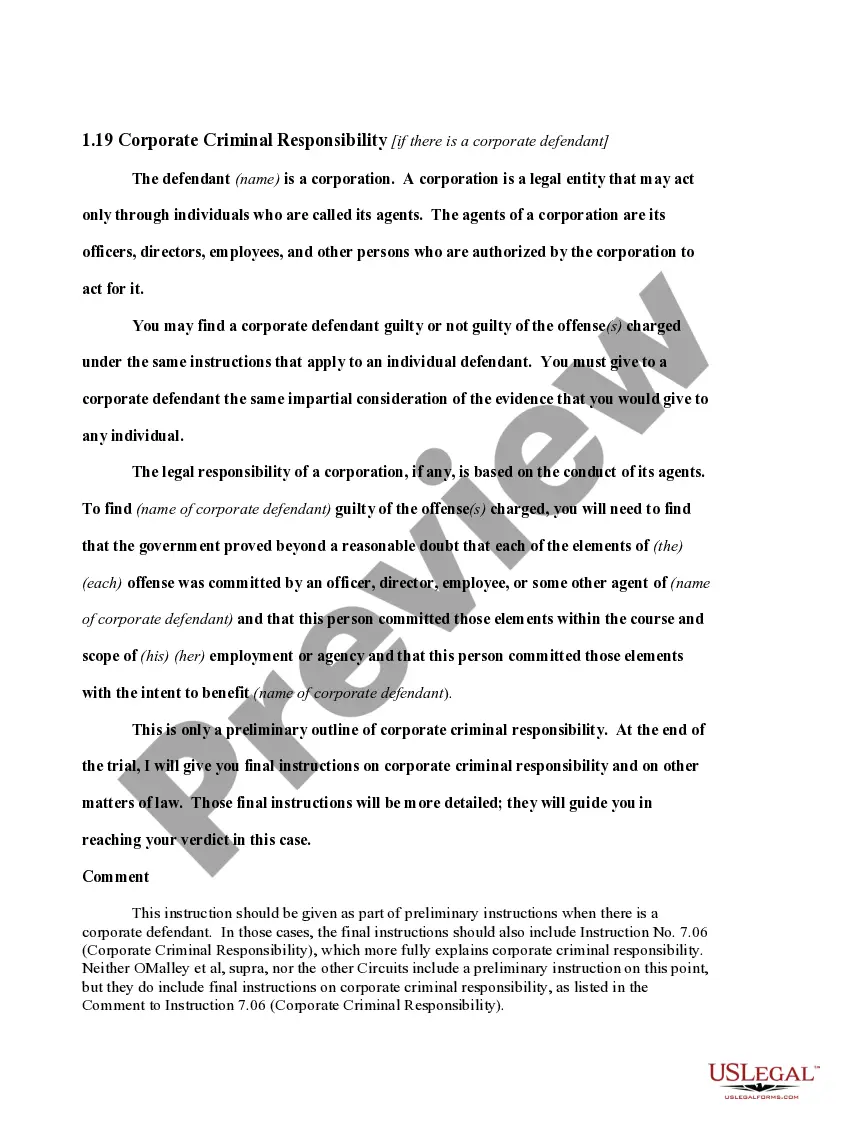
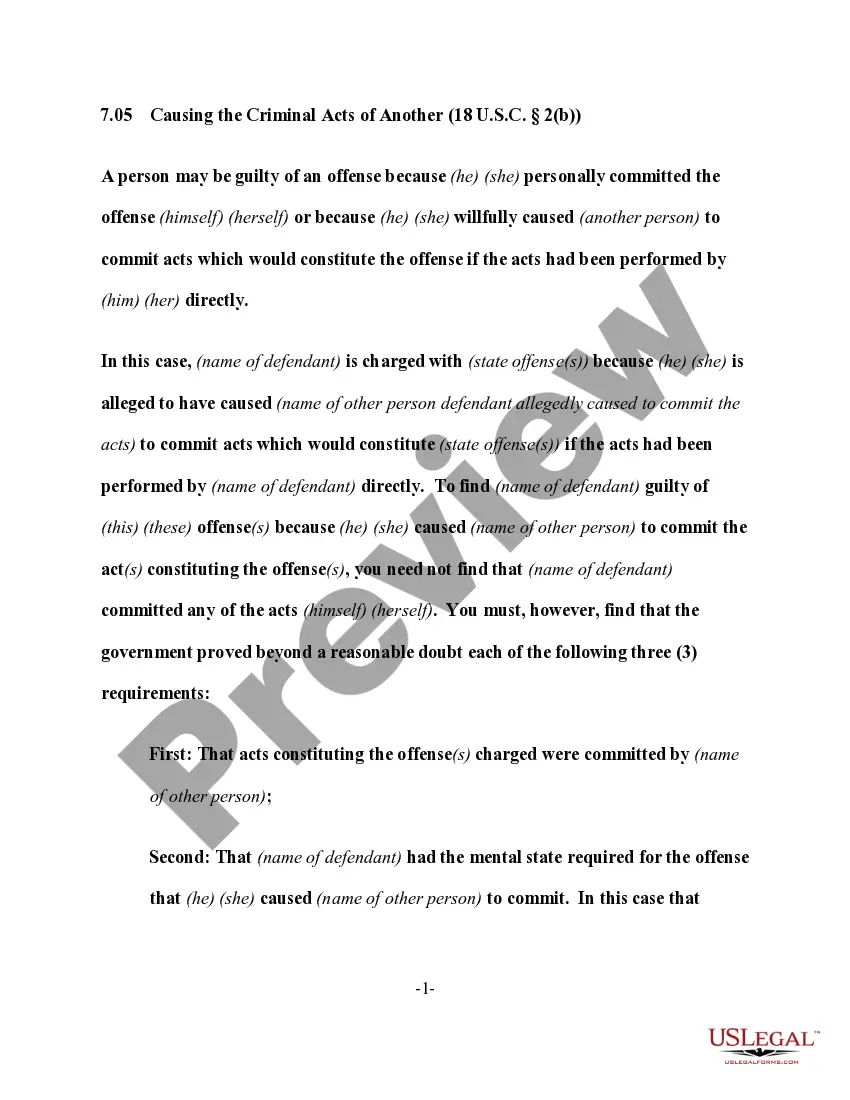
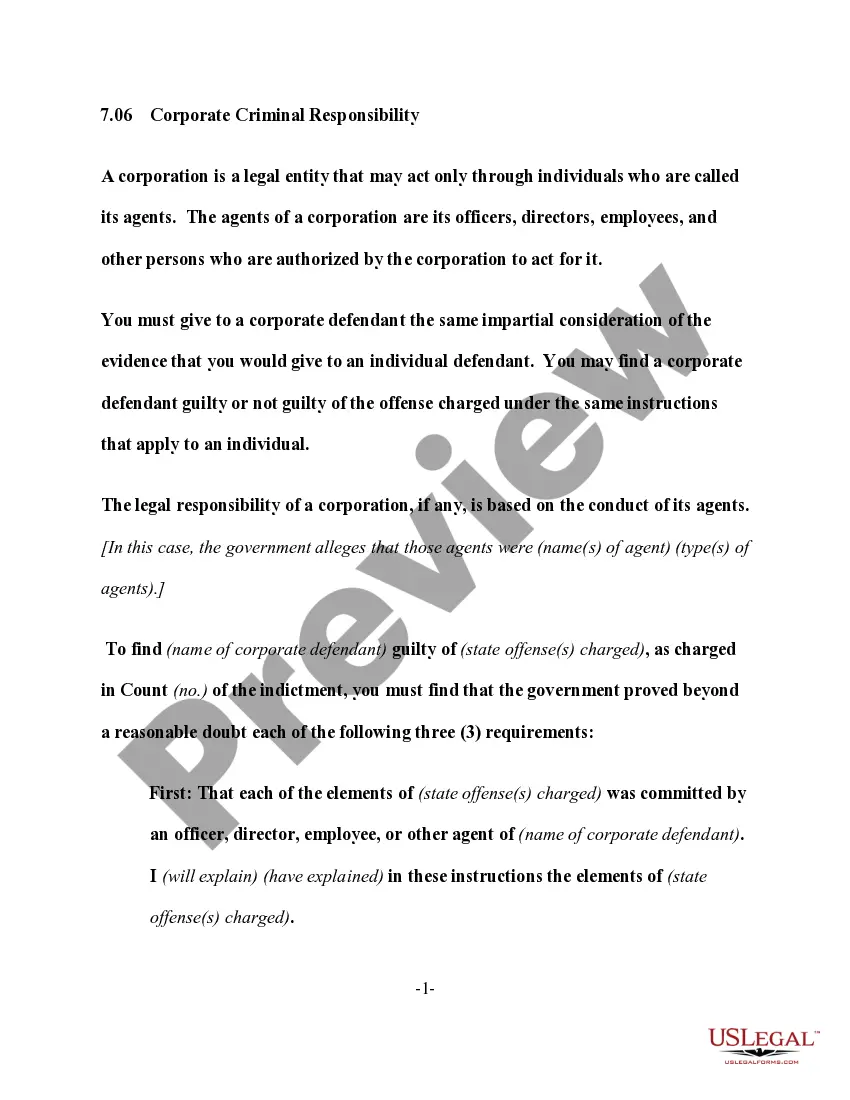
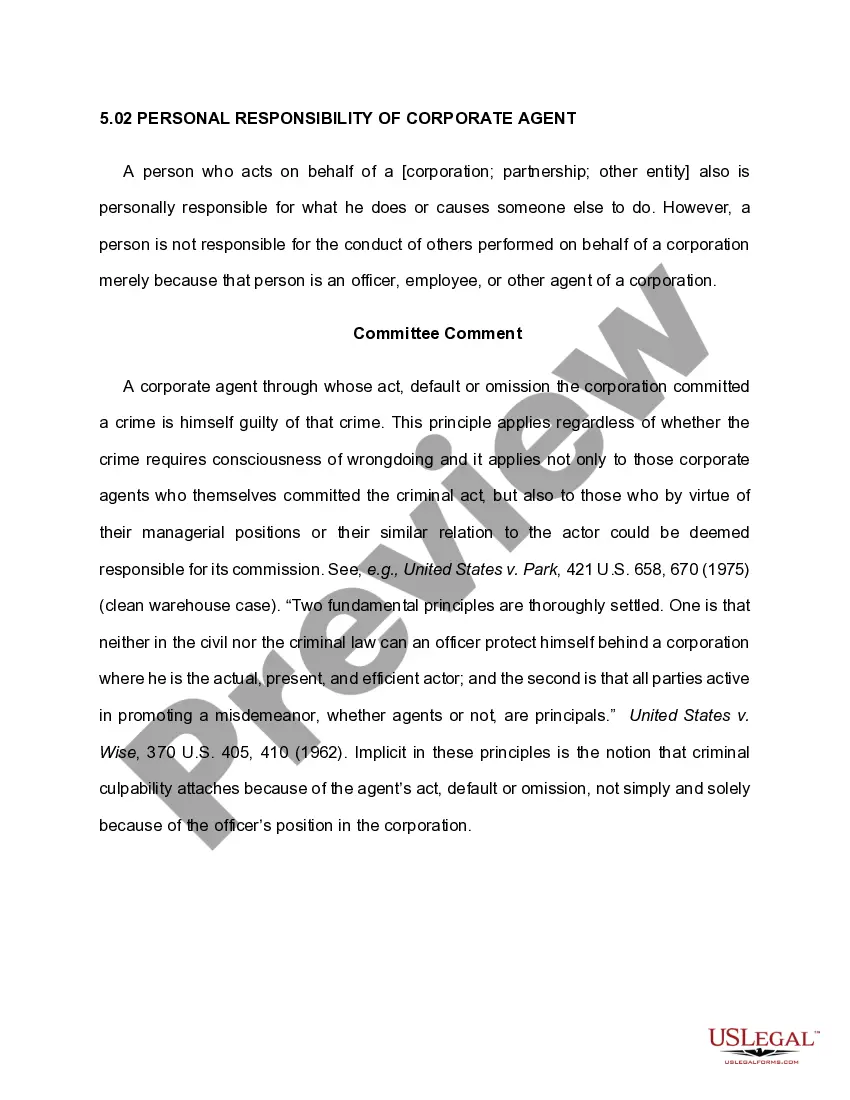
The Personal Criminal Responsibility of a Corporate Agent form outlines the legal principles concerning the personal liability of corporate agents for criminal acts performed on behalf of their corporation. This form differs from other corporate legal forms as it specifically addresses the circumstances under which a corporate agent can be held criminally liable, emphasizing the responsible corporate agent doctrine. It is essential for individuals involved in corporate management to understand their potential legal responsibilities in the event of criminal actions taken by the corporation.
What’s included in this form
- Definition of personal criminal responsibility for corporate agents.
- Clarification on the types of corporate agents (e.g., directors, officers, employees).
- Guidelines on the conditions under which a corporate agent may be held liable for another agent's actions.
- References to relevant legal cases and doctrines regarding corporate liability.
- Instructions for jury charges related to corporate agent liability.

When this form is needed
This form should be used when assessing the potential criminal liability of a corporate agent. It is relevant in cases where a corporate agent is accused of criminal acts carried out on behalf of the corporation, particularly when determining whether they had the authority or responsibility to prevent or correct those actions. Legal counsel may also use this form when preparing cases involving corporate wrongdoing or when guiding corporate officials on compliance with legal standards to avoid liability.
Who should use this form
- Corporate directors and officers who need to understand their legal responsibilities.
- Corporate employees in positions of authority over compliance and regulations.
- Legal professionals advising clients on corporate liability matters.
- Anyone involved in corporate governance or oversight within a corporation.
Steps to complete this form
- Identify the specific corporate agent involved in the alleged criminal acts.
- Specify the type of agent (e.g., director, officer, employee) pertinent to the case.
- Assess the level of authority the agent had to prevent or correct the alleged violations.
- Reference applicable legal cases and doctrines that support the charge.
- Prepare the jury instructions accordingly to clarify the responsibilities of the agent.
Notarization guidance
In most cases, this form does not require notarization. However, some jurisdictions or signing circumstances might. US Legal Forms offers online notarization powered by Notarize, accessible 24/7 for a quick, remote process.
Get your form ready online
Our built-in tools help you complete, sign, share, and store your documents in one place.
Make edits, fill in missing information, and update formatting in US Legal Forms—just like you would in MS Word.
Download a copy, print it, send it by email, or mail it via USPS—whatever works best for your next step.
Sign and collect signatures with our SignNow integration. Send to multiple recipients, set reminders, and more. Go Premium to unlock E-Sign.
If this form requires notarization, complete it online through a secure video call—no need to meet a notary in person or wait for an appointment.
We protect your documents and personal data by following strict security and privacy standards.

Make edits, fill in missing information, and update formatting in US Legal Forms—just like you would in MS Word.

Download a copy, print it, send it by email, or mail it via USPS—whatever works best for your next step.

Sign and collect signatures with our SignNow integration. Send to multiple recipients, set reminders, and more. Go Premium to unlock E-Sign.

If this form requires notarization, complete it online through a secure video call—no need to meet a notary in person or wait for an appointment.

We protect your documents and personal data by following strict security and privacy standards.
Common mistakes to avoid
- Failing to accurately identify the type of corporate agent involved.
- Not referencing significant case law that clarifies corporate liability.
- Overlooking the importance of establishing the agent's authority in preventing the violation.
- Misinterpreting the responsible corporate agent doctrine.
Benefits of using this form online
- Convenient access to current legal templates tailored for corporate liability cases.
- Editable forms that allow users to customize details specific to their situation.
- Reliable format drafted by licensed attorneys, ensuring compliance with legal standards.
Legal use & context
- This form clarifies the legal framework for holding corporate agents accountable.
- It establishes a clear distinction between personal and corporate liability.
- The responsible corporate agent doctrine is critical for regulatory compliance in various industries.
- Failure to understand these principles may expose corporate agents to unintended legal consequences.
Looking for another form?
Form popularity
FAQ
Officers and directors may also be liable to the corporation or its shareholders. Because they can be incredibly influential in the direction and operation of a company, officers and directors must be held accountable to the corporation for their actions.
Yes. A corporation can be prosecuted for essentially all of the same crimes as individuals and, if proven guilty beyond a reasonable doubt, convicted of felonies and misdemeanors.
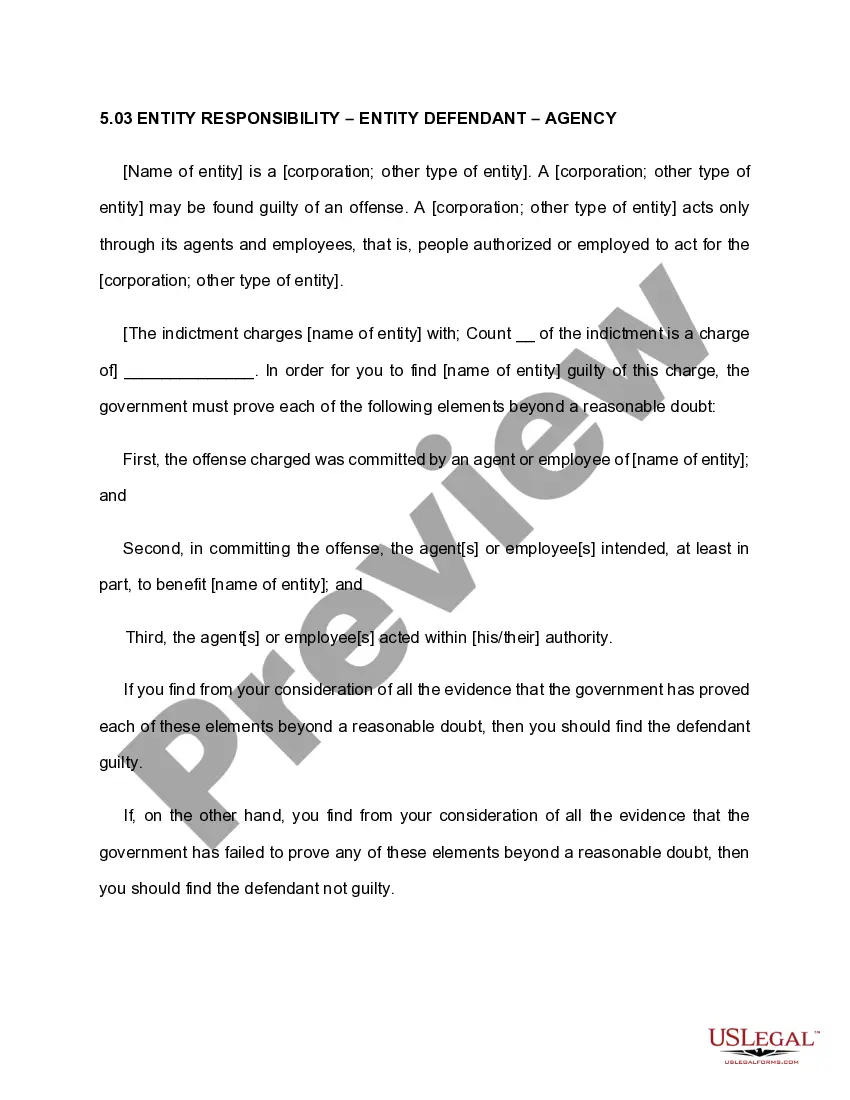
Under the law of corporate criminal liability, corporations are only liable for the acts of employees when employees are acting within the scope and nature of their employment; and a corporation will not be liable for its employees' acts unless the acts are designed to benefit the corporation.
The corporation's board of directors, officers, as well as other high-ranking officials will typically be held criminally liable as well. In addition, an individual can be held criminally liable for the illegal acts of other employees under an accomplice liability theory.
While they're independent entities, corporations can't act on their own behalf, so one of the corporation's agents ? like a director or board member ? has to perform any actions. When the action is done within the scope of that person's employment, then the corporation can be held liable for what the agent did.
A corporation can be held liable for the criminal acts of its employees as long as the employees are acting within the scope of their authority and their conduct benefits the corporation.
As long as one employee at any level can be found who might have the requisite criminal intent, the corporation itself is potentially liable for any crime committed. It is not a defense to assert that officers, directors, or high-level managers had no knowledge of what was occurring.