California Summary of Fair Credit Reporting Act Rights
Overview of this form
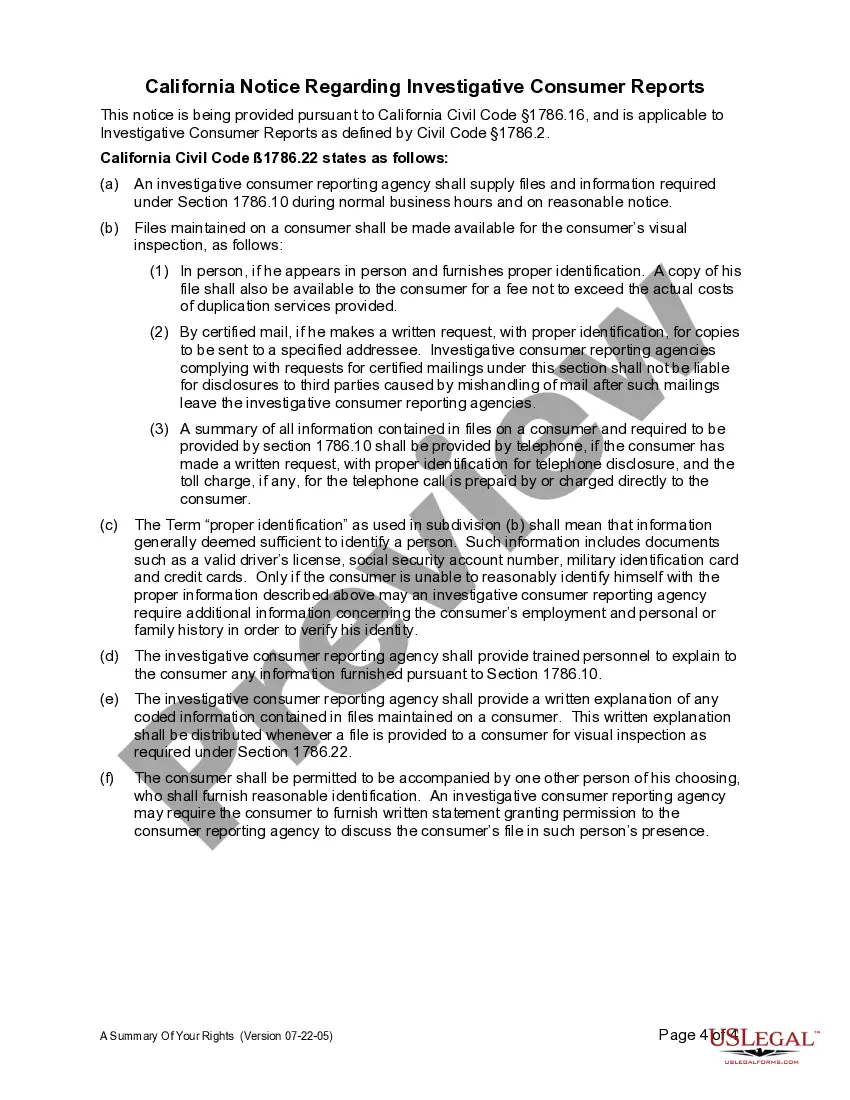
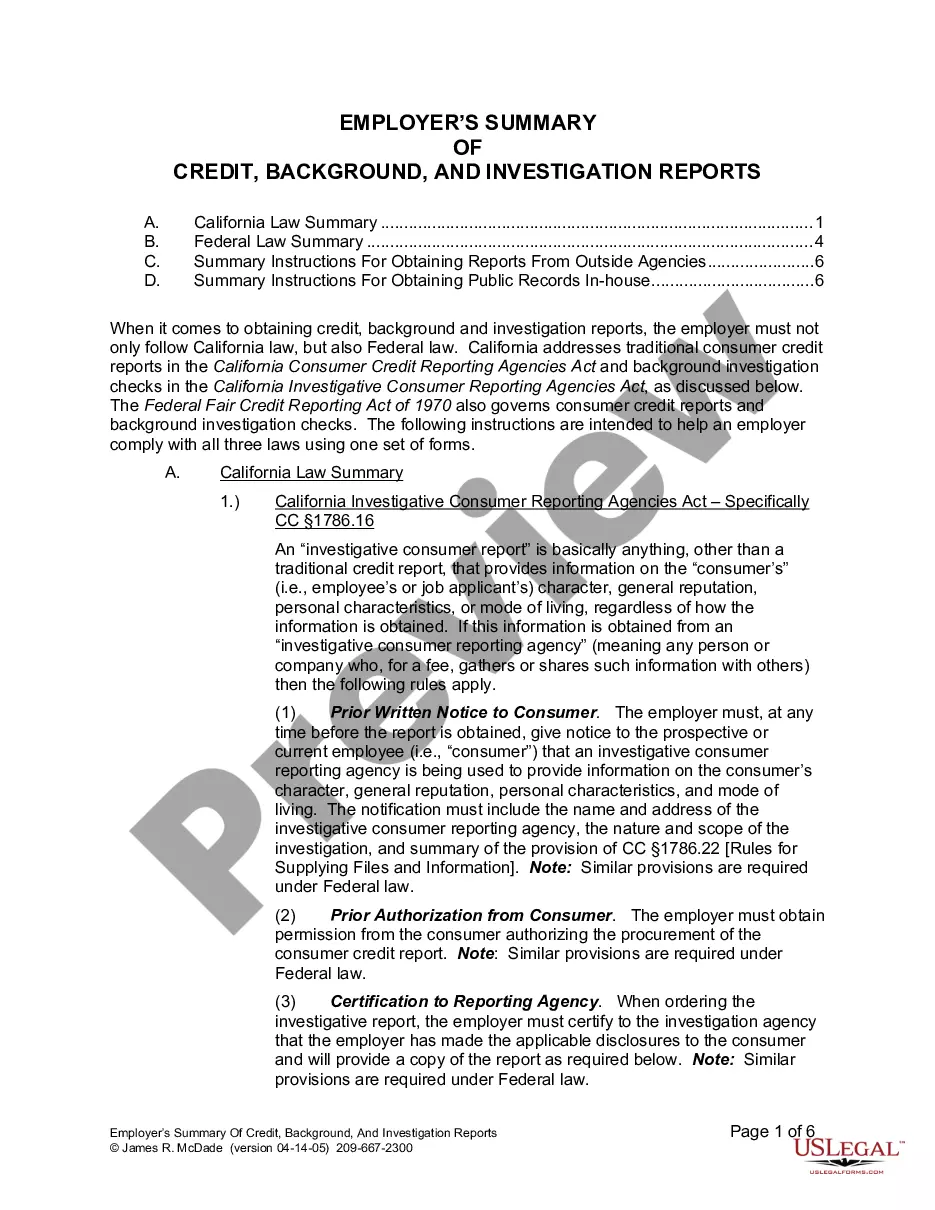
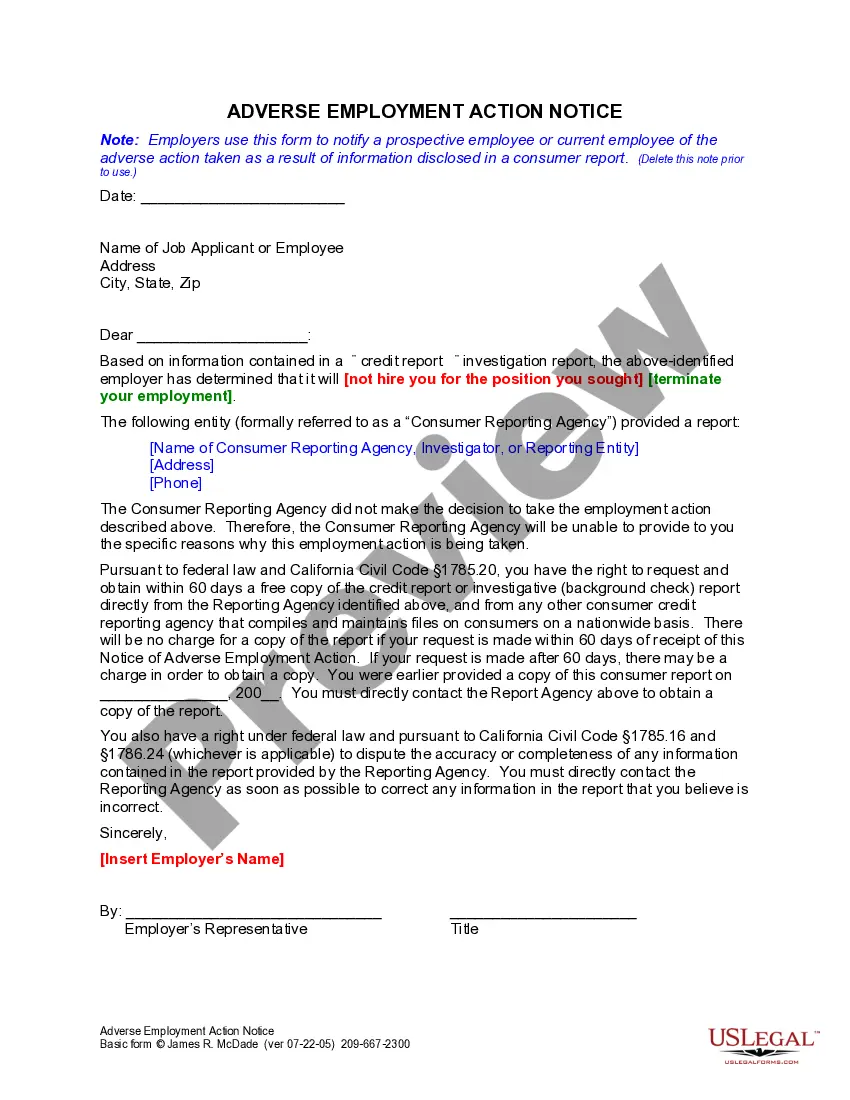
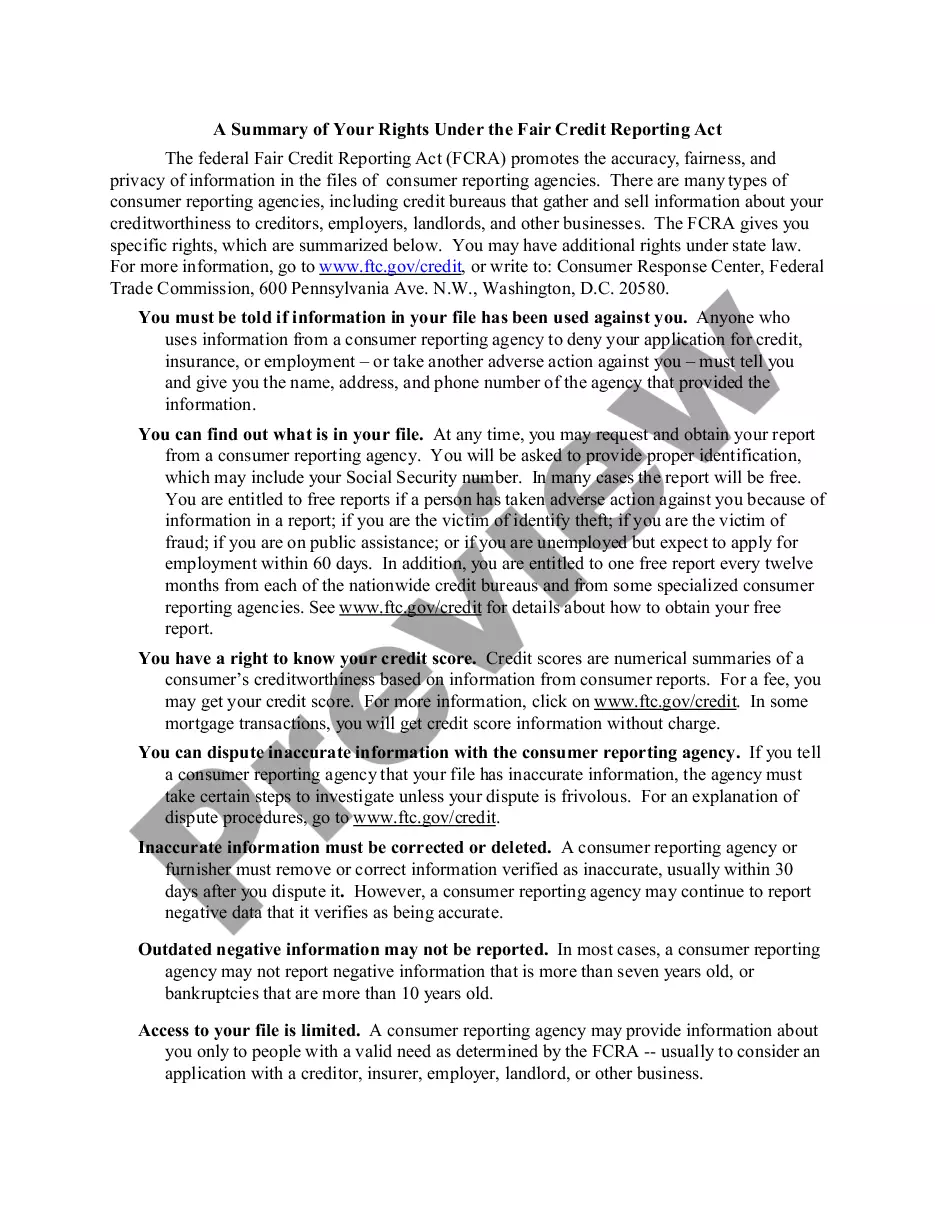
The Summary of Fair Credit Reporting Act Rights form provides job applicants and employees with essential information regarding their rights under the Fair Credit Reporting Act (FCRA). This document is particularly important when employers request a credit or background report for employment purposes. It helps ensure transparency and protects individuals from unfair information usage in credit and employment decisions.
Form components explained
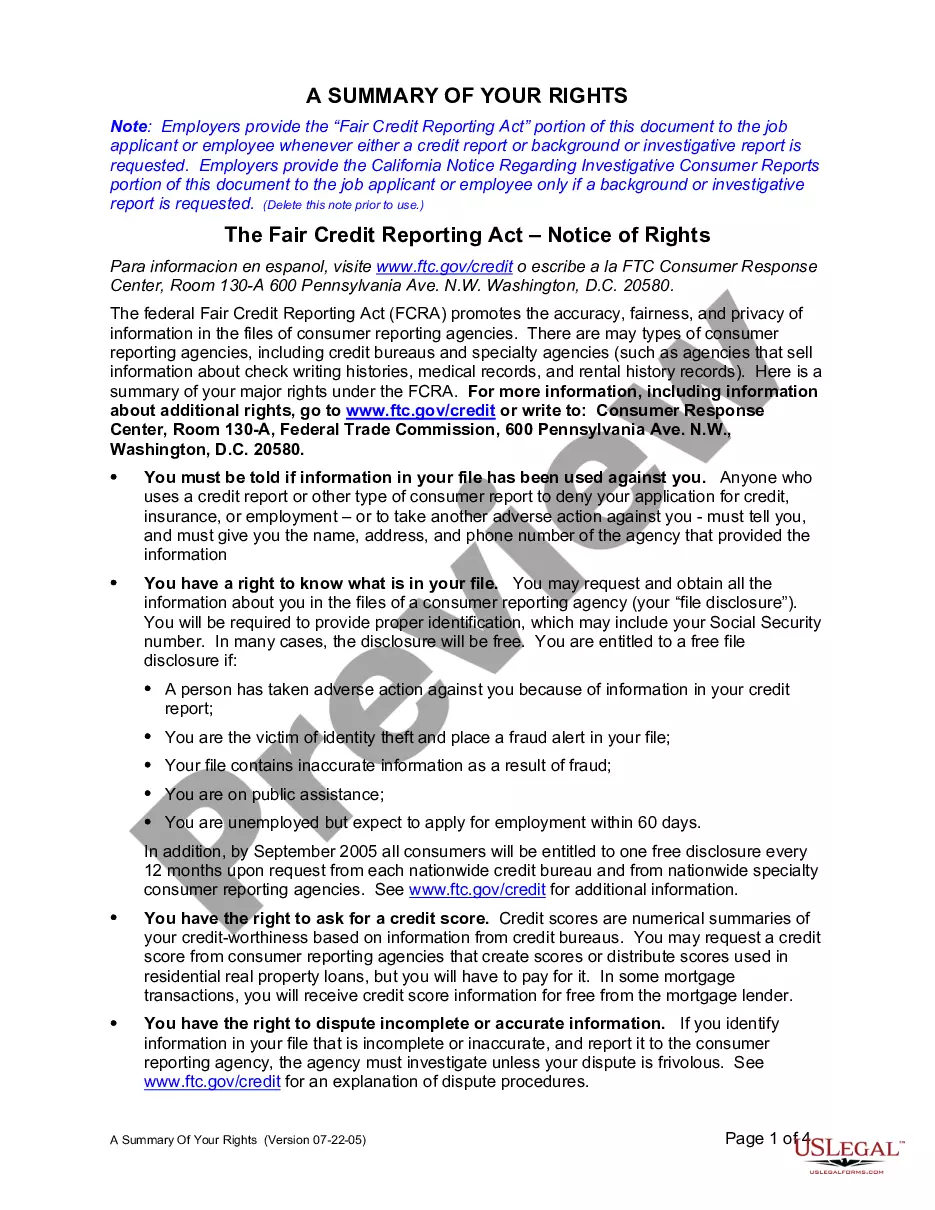
- Notification of rights if a credit report is used against the individual.
- Right to know what information is in the consumer reporting agency's files.
- Eligibility for a free credit file disclosure under certain circumstances.
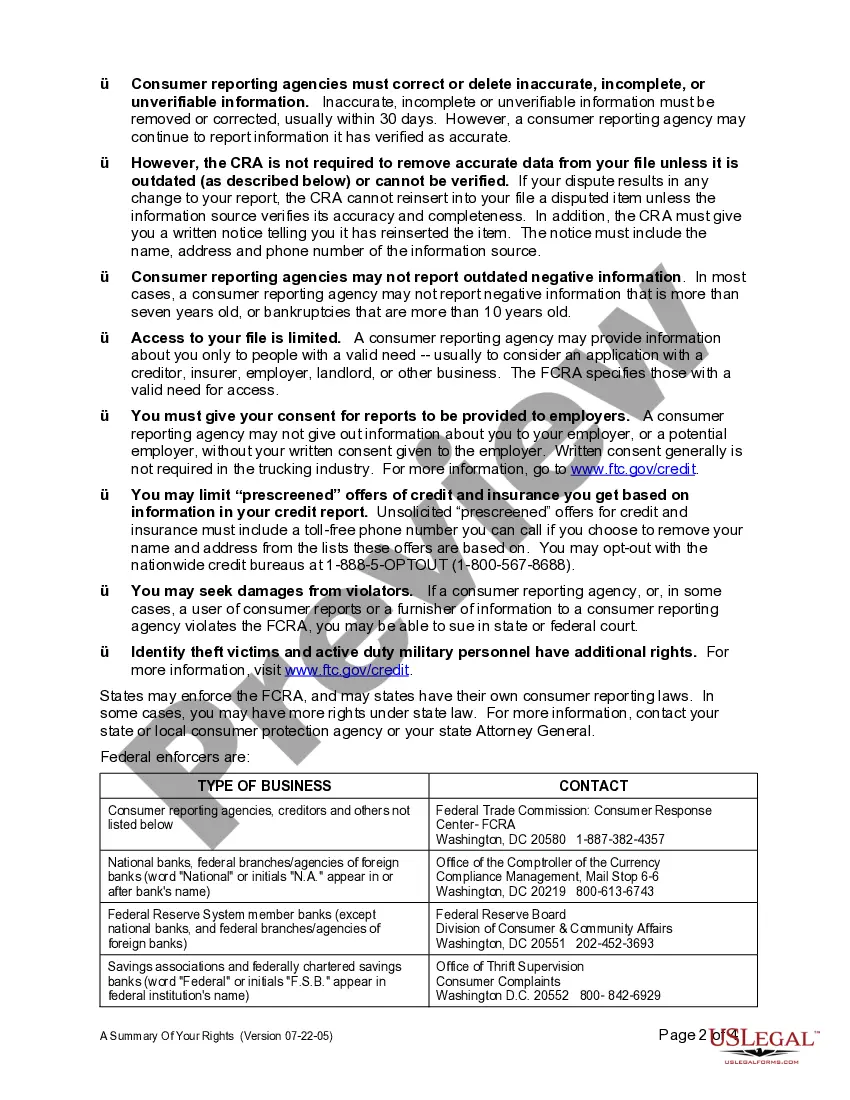
- Guidance on disputing inaccurate or incomplete information in credit reports.
- Limits on how long negative information can remain on a report.
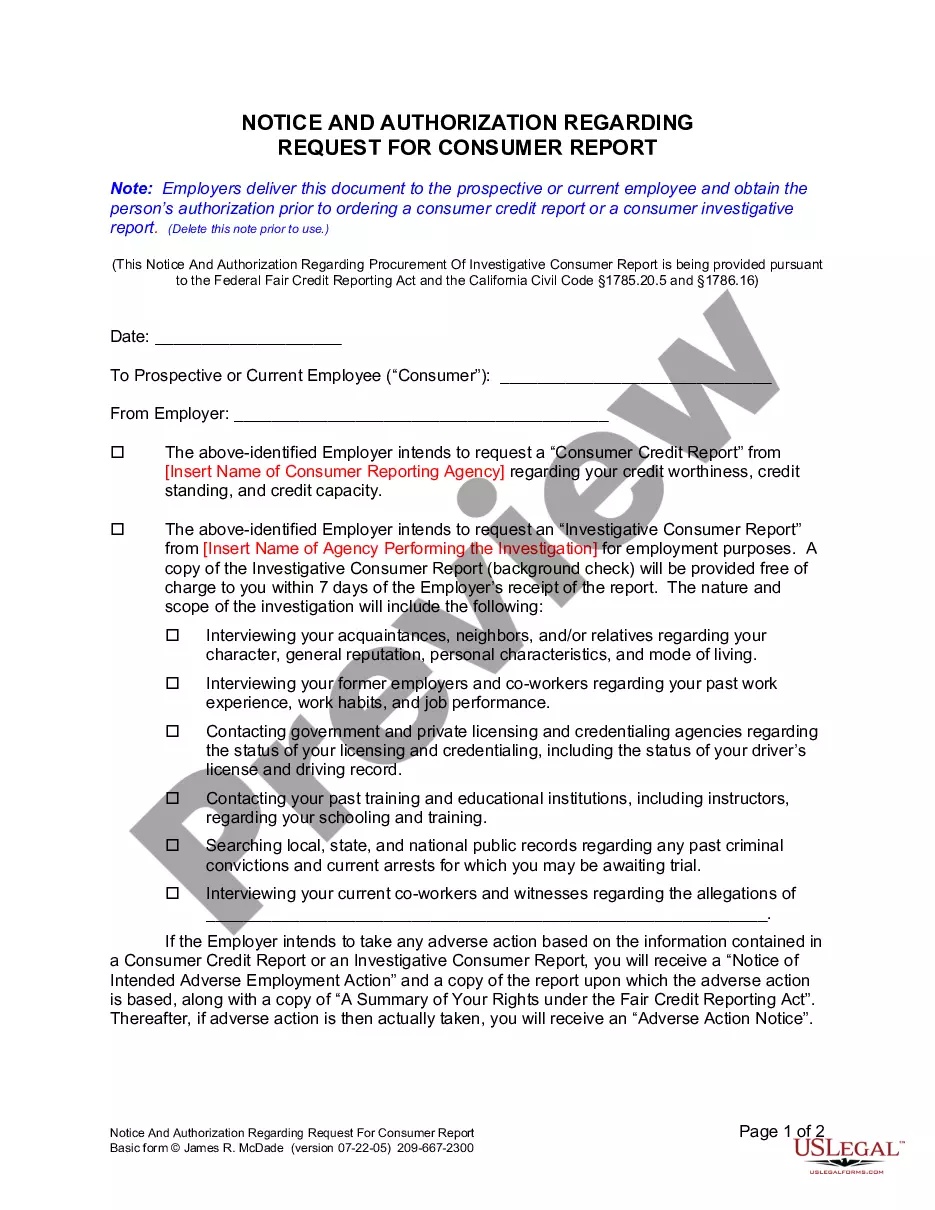
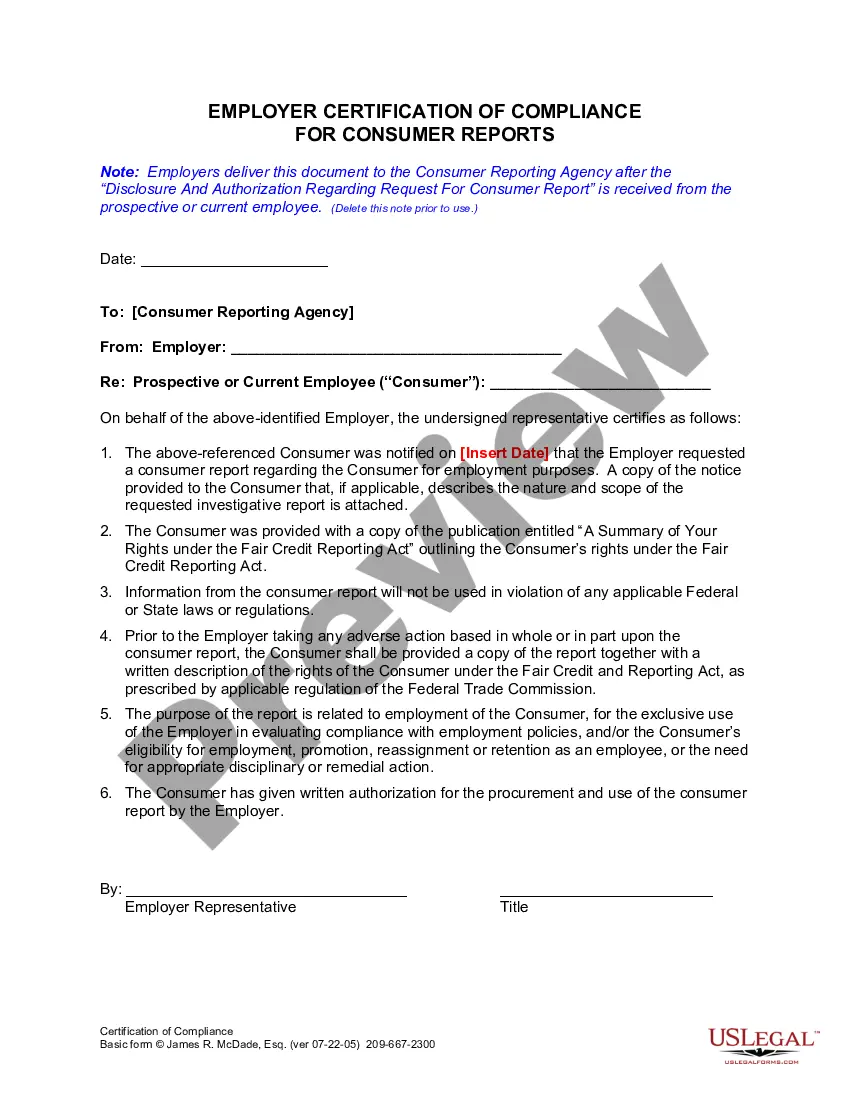
- Requirements for obtaining consent before using reports for employment purposes.
Situations where this form applies
This form should be provided by employers to job applicants and employees whenever a credit report or background check is requested. It is essential for ensuring candidates understand their rights regarding the information that may affect employment decisions.
Who this form is for
- Employers who plan to conduct background checks on job applicants or employees.
- Job applicants who wish to understand their rights under the Fair Credit Reporting Act.
- Employees concerned about the use of their credit information in employment evaluations.
Instructions for completing this form
- Identify the recipient: Ensure the form is prepared for the specific job applicant or employee.
- Review the rights listed under the FCRA to verify compliance with requirements.
- Provide the form alongside any requests for credit or background checks.
- Ensure the form is signed by the recipient to confirm their receipt and understanding.
- Maintain a copy for your records to support compliance and transparency.
Does this document require notarization?
Notarization is not commonly needed for this form. However, certain documents or local rules may make it necessary. Our notarization service, powered by Notarize, allows you to finalize it securely online anytime, day or night.
Get your form ready online
Our built-in tools help you complete, sign, share, and store your documents in one place.
Make edits, fill in missing information, and update formatting in US Legal Forms—just like you would in MS Word.
Download a copy, print it, send it by email, or mail it via USPS—whatever works best for your next step.
Sign and collect signatures with our SignNow integration. Send to multiple recipients, set reminders, and more. Go Premium to unlock E-Sign.
If this form requires notarization, complete it online through a secure video call—no need to meet a notary in person or wait for an appointment.
We protect your documents and personal data by following strict security and privacy standards.

Make edits, fill in missing information, and update formatting in US Legal Forms—just like you would in MS Word.

Download a copy, print it, send it by email, or mail it via USPS—whatever works best for your next step.

Sign and collect signatures with our SignNow integration. Send to multiple recipients, set reminders, and more. Go Premium to unlock E-Sign.

If this form requires notarization, complete it online through a secure video call—no need to meet a notary in person or wait for an appointment.

We protect your documents and personal data by following strict security and privacy standards.
Common mistakes to avoid
- Failing to provide the form before requesting a credit report.
- Not informing the individual of the specific information used against them.
- Omitting details about how to dispute inaccurate information.
- Neglecting to provide the name and contact details of the reporting agency.
Why use this form online
- Convenience: Easily download and customize the form without the need for printing or mailing.
- Editability: Adapt the form to meet specific needs and state requirements.
- Reliability: Ensure compliance with federal and state laws regarding consumer reporting.
Legal use & context
- The FCRA mandates specific rights and information must be communicated to individuals regarding their credit files.
- Violation of these rights may result in legal ramifications for employers.
- Individuals have recourse through state and federal courts if their rights under the FCRA are not upheld.
Main things to remember
- The Summary of Fair Credit Reporting Act Rights informs individuals of their rights when a credit report is accessed.
- Employers must provide this form before conducting background checks or using credit reports for employment decisions.
- Understanding these rights helps protect individuals from unfair practices and promotes transparency in the hiring process.
Looking for another form?
Form popularity
FAQ
The California Financial Information Act lays down regulations regarding the handling of personal financial information by businesses. It ensures transparency and accountability in how consumer data is gathered and used, thereby enhancing consumer trust. This act is vital for anyone dealing with financial institutions in California. When combined with the California Summary of Fair Credit Reporting Act Rights, it provides a robust framework for protecting your financial information.
A Fair Credit Reporting Act disclosure statement is a document provided to you that outlines your rights under the FCRA. This statement ensures you are aware of how your credit information may be used and what your options are when disputes arise. Recognizing this disclosure is crucial for protecting your financial health. The California Summary of Fair Credit Reporting Act Rights complements this with additional specific information pertinent to California consumers.
The California version of the FCRA builds upon the federal framework by offering enhanced consumer rights. This state-specific legislation includes provisions for more stringent protections regarding how credit information is handled. Familiarizing yourself with these local laws is vital for understanding your rights. The California Summary of Fair Credit Reporting Act Rights details these key provisions and how they protect you.
The Fair Credit Reporting Act (FCRA) is a federal law that regulates how credit information is collected and used. In California, there are additional protections that enhance consumer rights, ensuring that your credit information is accurate and used responsibly. This includes your right to dispute errors and to be informed about the use of your credit report. The California Summary of Fair Credit Reporting Act Rights elaborates on these important provisions.
The California Consumer Privacy Act (CCPA) grants residents of California certain rights regarding their personal information. It requires businesses to disclose the information they collect and provides options for consumers to opt out of data selling. With the CCPA, individuals can better control their data privacy. When you combine it with the California Summary of Fair Credit Reporting Act Rights, you can better safeguard your sensitive financial information.
The Fair Credit Billing Act is a federal law aimed at protecting consumers from unfair billing practices. It allows you to dispute charges and ensures timely resolution of any errors on your credit billing statement. Understanding these rights is crucial for managing your finances effectively. The California Summary of Fair Credit Reporting Act Rights provides additional state-level protections for consumers in this area.
Filing a complaint with the Consumer Financial Protection Bureau (CFPB) can be quite impactful. This action allows you to communicate your concerns about violations of your rights, which can lead to investigations. Moreover, referencing your California Summary of Fair Credit Reporting Act Rights can strengthen your complaint and show that you are informed and proactive about protecting your rights.
Reporting a Fair Credit Reporting Act violation involves several steps. Start by contacting the credit reporting agency involved and informing them of the violation. Additionally, utilizing services like UsLegalForms can simplify this process for you, as they provide templates and guidance to help you assert your California Summary of Fair Credit Reporting Act Rights effectively.
To report a Fair Credit Reporting Act violation, you should first gather all relevant information about the incident. Document it thoroughly, including names, dates, and any evidence. You can then contact the credit reporting agency directly, or consider using resources such as UsLegalForms, which can guide you through the reporting process while ensuring your California Summary of Fair Credit Reporting Act Rights are protected.
The Fair Credit Billing Act is a federal law that offers consumers rights when disputing billing errors on credit card accounts. It ensures you have the ability to challenge charges and receive a prompt resolution from your credit card issuer. This law complements the California Summary of Fair Credit Reporting Act Rights by enhancing consumer protections in financial transactions. By knowing your rights, you can hold credit card companies accountable.