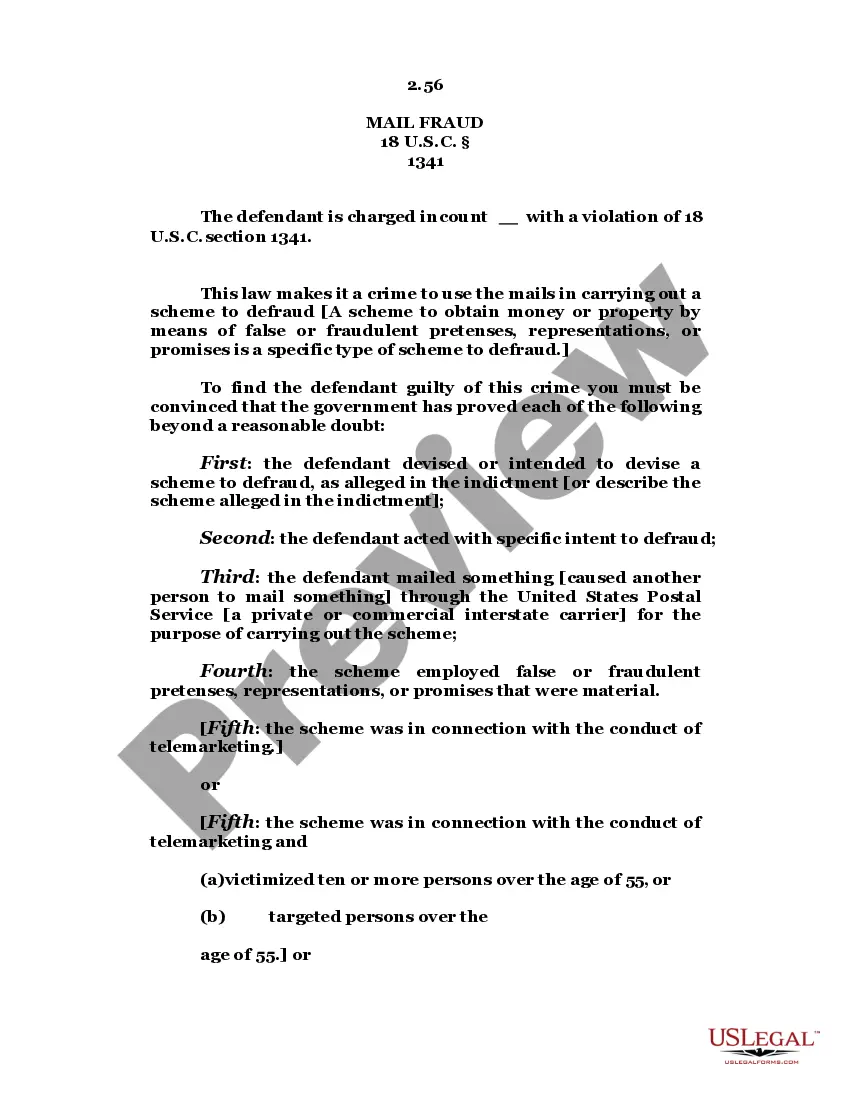
MAIL FRAUD / 18 U.S.C. Sec. 1341
What this document covers
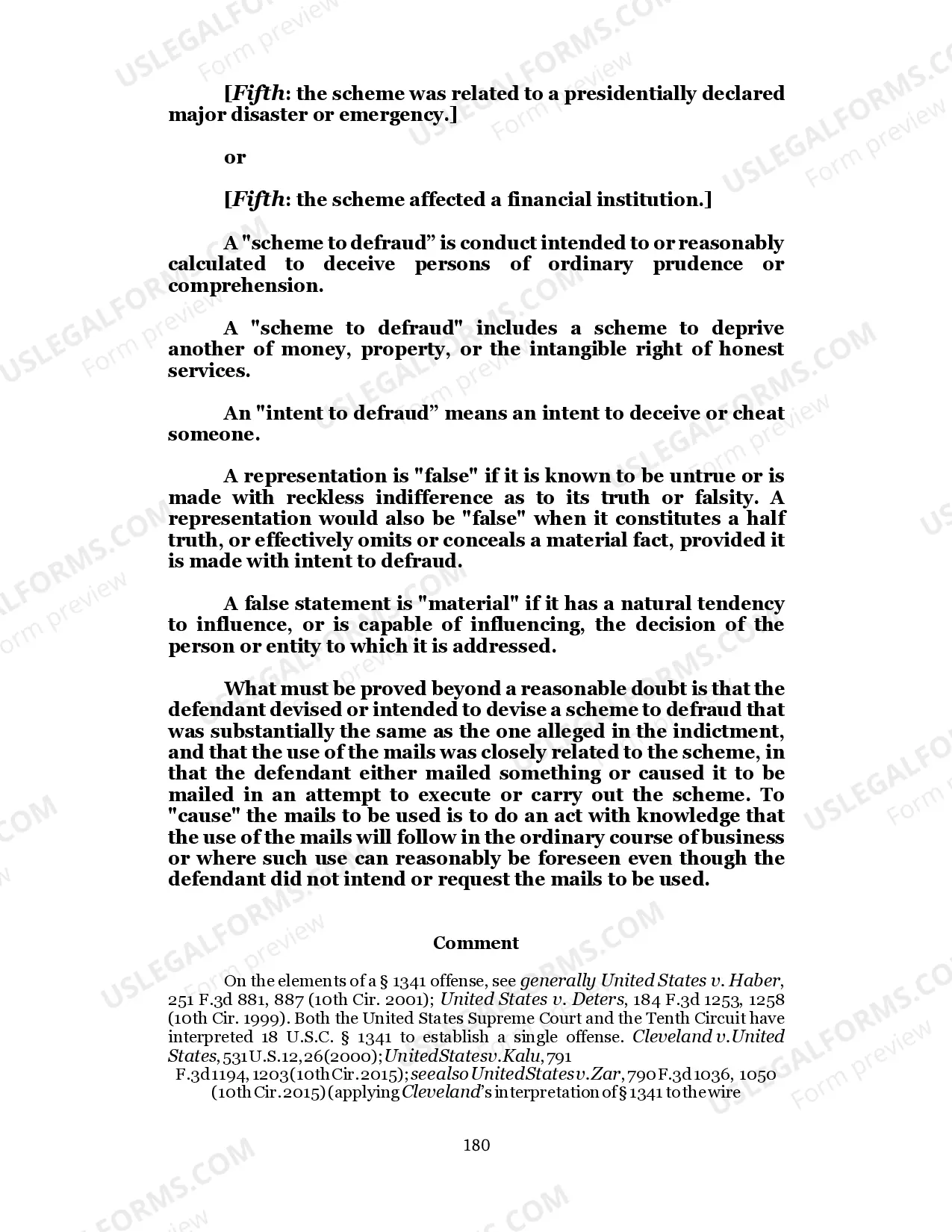
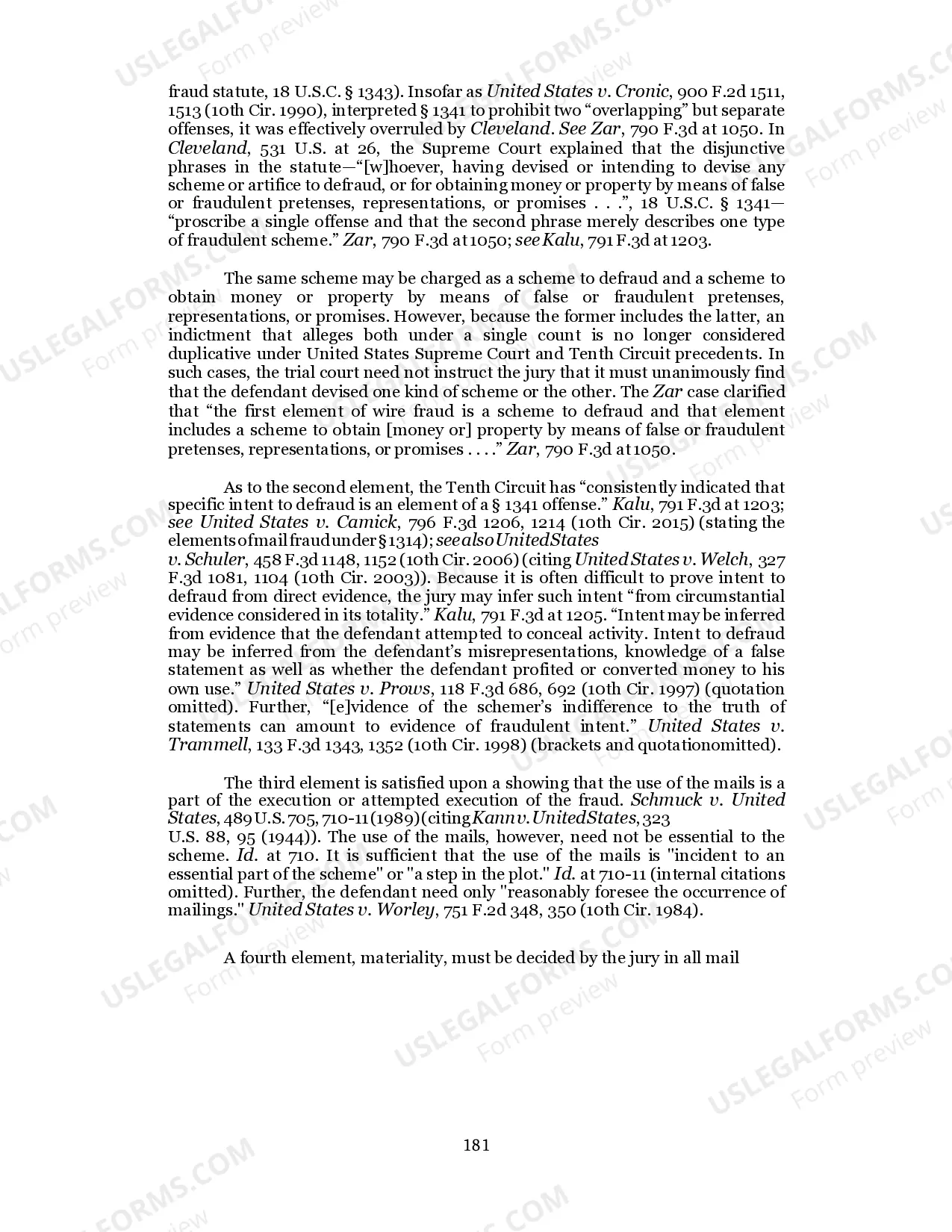
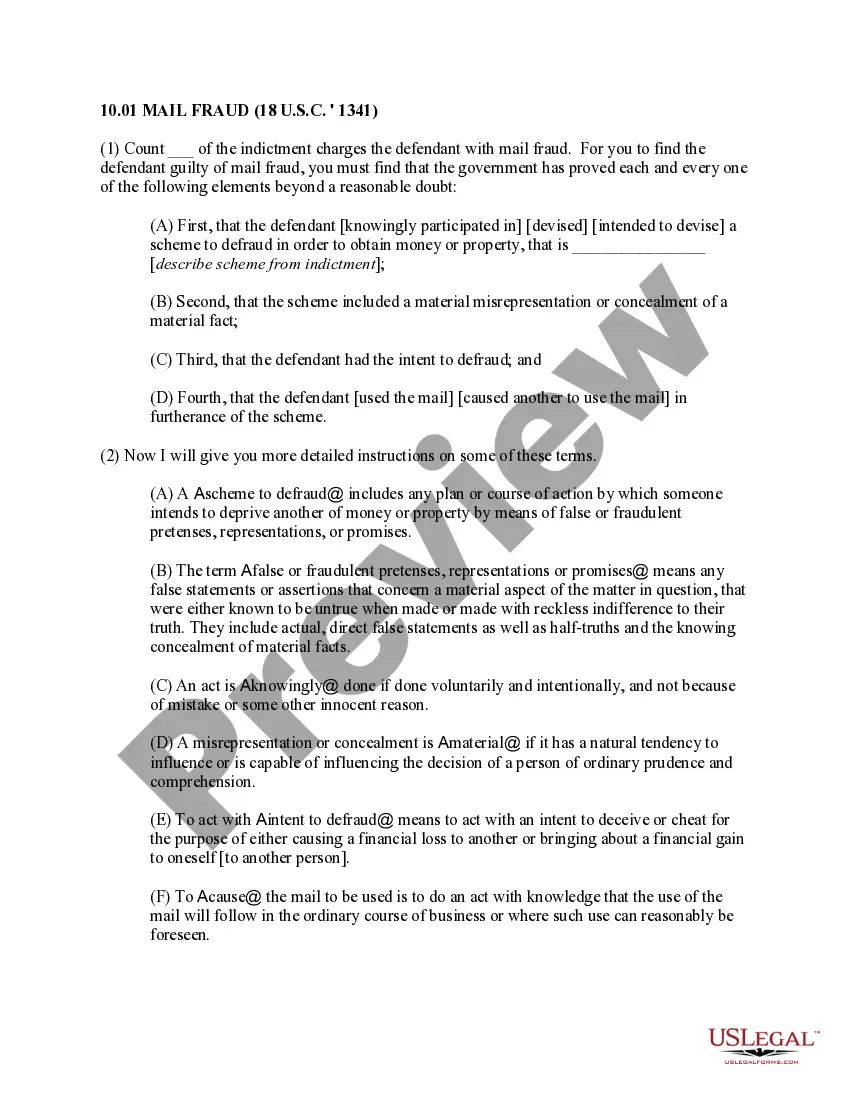
The Mail Fraud form, under 18 U.S.C. Sec. 1341, is a legal document used to address fraudulent activities conducted via the mail. It outlines the elements necessary for proving a case of mail fraud, which involves schemes intended to defraud individuals or entities through false representations or promises. This form is crucial for legal professionals and individuals encountering charges or allegations of mail fraud, serving as a comprehensive resource distinct from other forms of fraud due to its specific focus on mail use in fraudulent activities.
Key parts of this document
- Definition of mail fraud and scheme to defraud
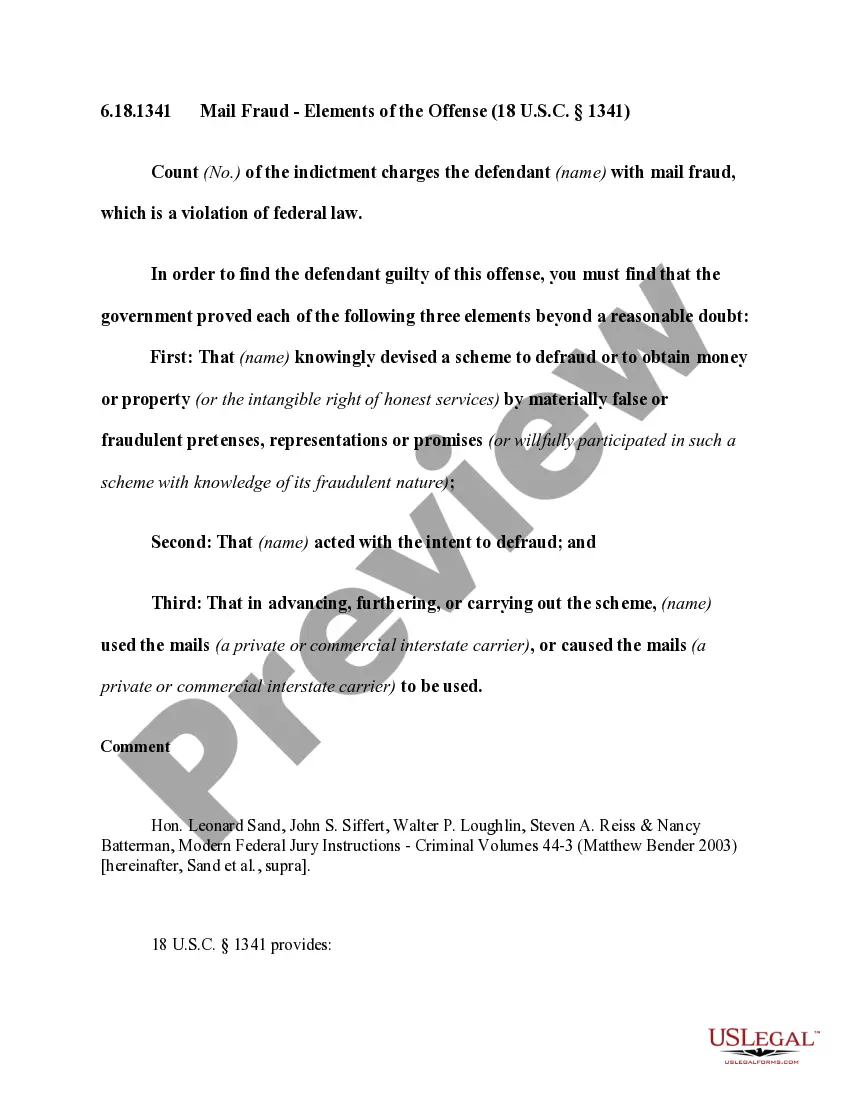
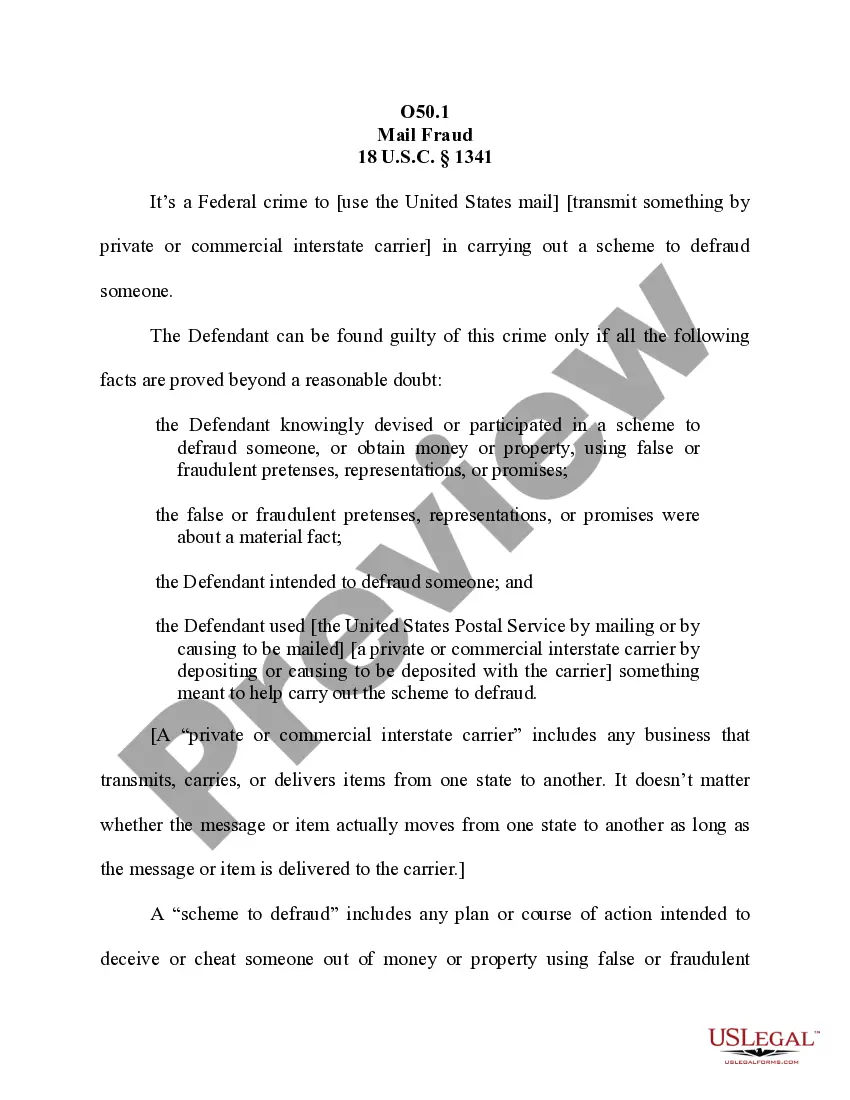
- Elements required to prove guilt beyond a reasonable doubt
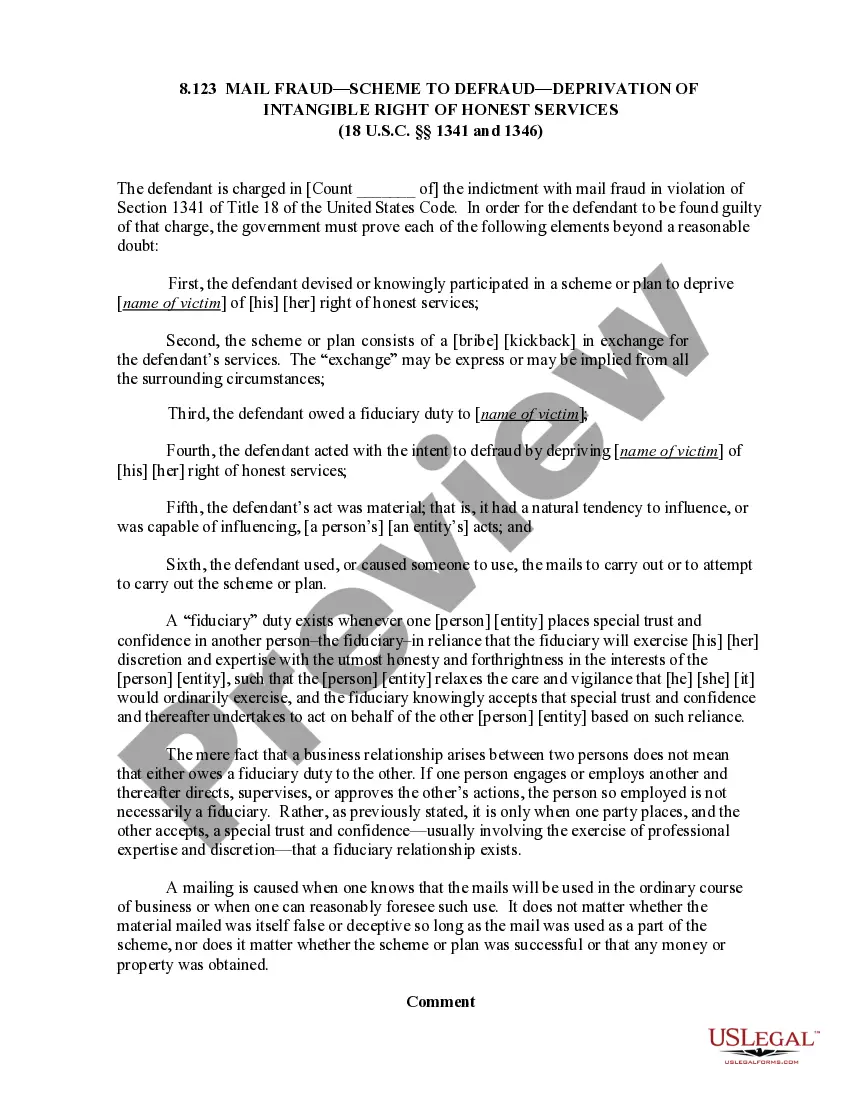
- Clarification of "specific intent to defraud"
- Conditions under which mail services were used
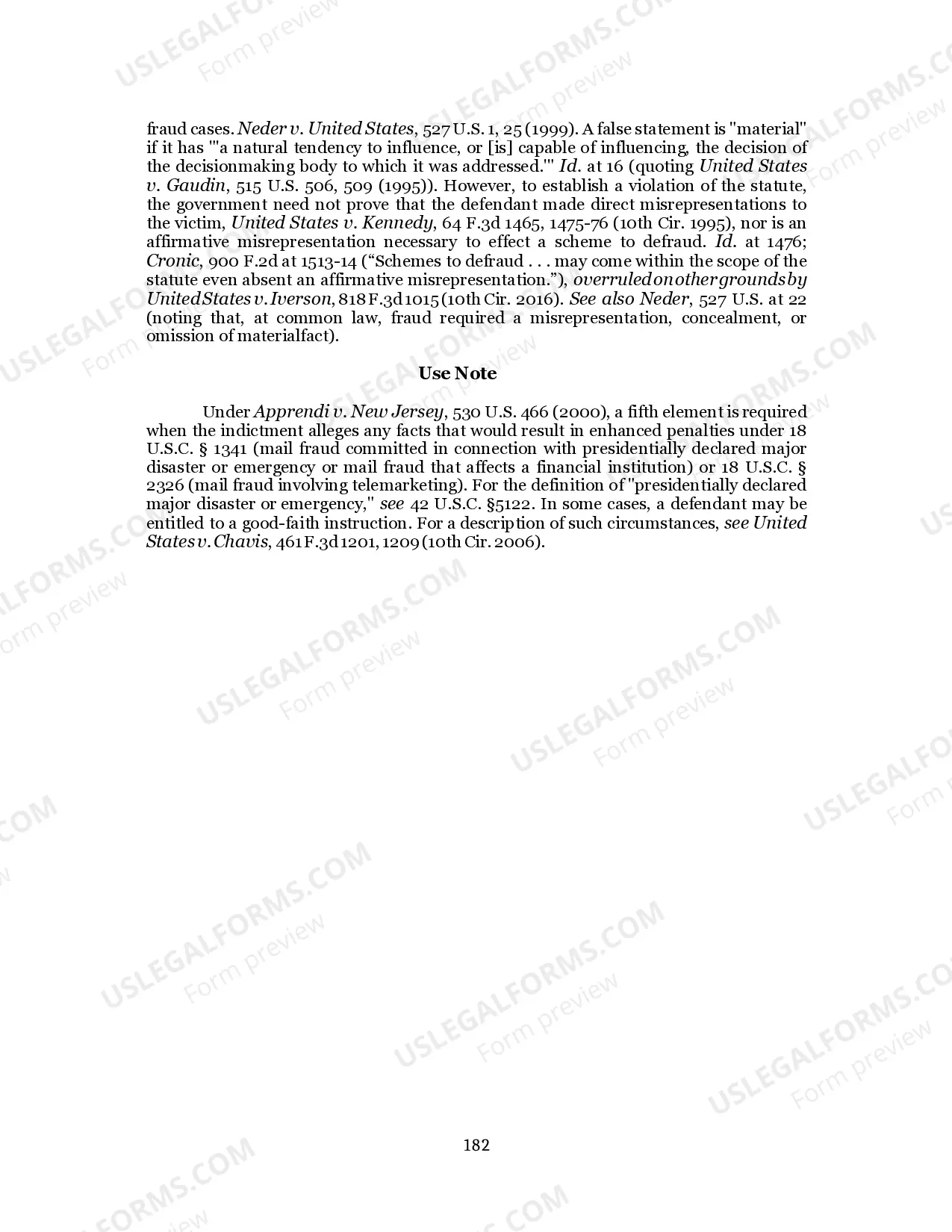
- Criteria for material false statements
- Potential for enhanced penalties under certain conditions
When this form is needed
This form is applicable when an individual or entity is accused of committing mail fraud or needs to understand the legal framework surrounding such allegations. It is also relevant for attorneys preparing a defense or prosecution for cases involving schemes to defraud where mailing services were used. Additionally, this form can guide individuals involved in telemarketing schemes or those affecting financial institutions.
Intended users of this form
This form is intended for:
- Defendants facing mail fraud charges
- Defense attorneys representing clients in mail fraud cases
- Prosecutors handling fraud cases
- Individuals seeking to understand their rights and obligations regarding mail fraud
Instructions for completing this form
- Identify the parties involved in the scheme.
- Clearly outline the alleged fraudulent scheme.
- Specify the methods of mailing or communication used.
- Describe the false representations or promises that were made.
- Include any relevant details about intended victims or financial institutions affected.
Does this form need to be notarized?
This form does not typically require notarization to be legally valid. However, some jurisdictions or document types may still require it. US Legal Forms provides secure online notarization powered by Notarize, available 24/7 for added convenience.
Get your form ready online
Our built-in tools help you complete, sign, share, and store your documents in one place.
Make edits, fill in missing information, and update formatting in US Legal Forms—just like you would in MS Word.
Download a copy, print it, send it by email, or mail it via USPS—whatever works best for your next step.
Sign and collect signatures with our SignNow integration. Send to multiple recipients, set reminders, and more. Go Premium to unlock E-Sign.
If this form requires notarization, complete it online through a secure video call—no need to meet a notary in person or wait for an appointment.
We protect your documents and personal data by following strict security and privacy standards.

Make edits, fill in missing information, and update formatting in US Legal Forms—just like you would in MS Word.

Download a copy, print it, send it by email, or mail it via USPS—whatever works best for your next step.

Sign and collect signatures with our SignNow integration. Send to multiple recipients, set reminders, and more. Go Premium to unlock E-Sign.

If this form requires notarization, complete it online through a secure video call—no need to meet a notary in person or wait for an appointment.

We protect your documents and personal data by following strict security and privacy standards.
Typical mistakes to avoid
- Failing to adequately describe the fraudulent scheme.
- Not demonstrating a specific intent to defraud.
- Overlooking the requirement to link mail usage directly to the scheme.
- Neglecting to address materiality of false statements.
Advantages of online completion
- Convenient access to legally vetted templates at any time.
- Edit and customize your documents easily to fit specific needs.
- Reliable legal formatting ensured by professional standards.
- Time-saving solution compared to traditional legal services.
Legal use & context
This form serves as a guideline for understanding the intricacies of mail fraud under federal law. It clarifies the elements that must be proven in court and acknowledges varying interpretations that may arise depending on jurisdiction. The enforcement of the law can differ based on state legal standards, even when the core elements are governed by federal regulation.
Summary of main points
- Mail fraud is a serious offense that involves deception via the postal service.
- Four main elements must be proven for a conviction.
- Understanding the law can aid in defensive or prosecutorial strategies.
- This form is applicable on a federal level but may have state-specific considerations.
Looking for another form?
Form popularity
FAQ
L. 101?73 inserted at end ?If the violation affects a financial institution, such person shall be fined not more than $1,000,000 or imprisoned not more than 20 years, or both.?
Whoever, having devised or intending to devise any scheme or artifice to defraud, or for obtaining money or property by means of false or fraudulent pretenses, representations, or promises, or to sell, dispose of, loan, exchange, alter, give away, distribute, supply, or furnish or procure for unlawful use any
"There are two elements in mail fraud: (1) having devised or intending to devise a scheme to defraud (or to perform specified fraudulent acts), and (2) use of the mail for the purpose of executing, or attempting to execute, the scheme (or specified fraudulent acts)." Schmuck v.
It states says a person will be imprisoned for up to 20 years. In addition, any violation that impacts a financial institution can lead to a prison sentence of up to 30 years and a fine up to $1 million dollars. or both jail and a fine.
Wire fraud occurs when someone uses wire, radio, or television communications to defraud others. This can include sending false information in order to obtain money or property, or sending threats to harm another person. Wire fraud is punishable by up to 20 years in prison, and can result in a fine of up to $250,000.
1343?Elements of Wire Fraud. The elements of wire fraud under Section 1343 directly parallel those of the mail fraud statute, but require the use of an interstate telephone call or electronic communication made in furtherance of the scheme. United States v.
Whoever, having devised or intending to devise any scheme or artifice to defraud, or for obtaining money or property by means of false or fraudulent pretenses, representations, or promises, transmits or causes to be transmitted by means of wire, radio, or television communication in interstate or foreign commerce, any
18 U.S.C. § 1349, entitled Attempt and Conspiracy, allows the government to prosecute cases where federal fraud was attempted but ultimately unsuccessful.