Collections Coordinator Checklist
About this form
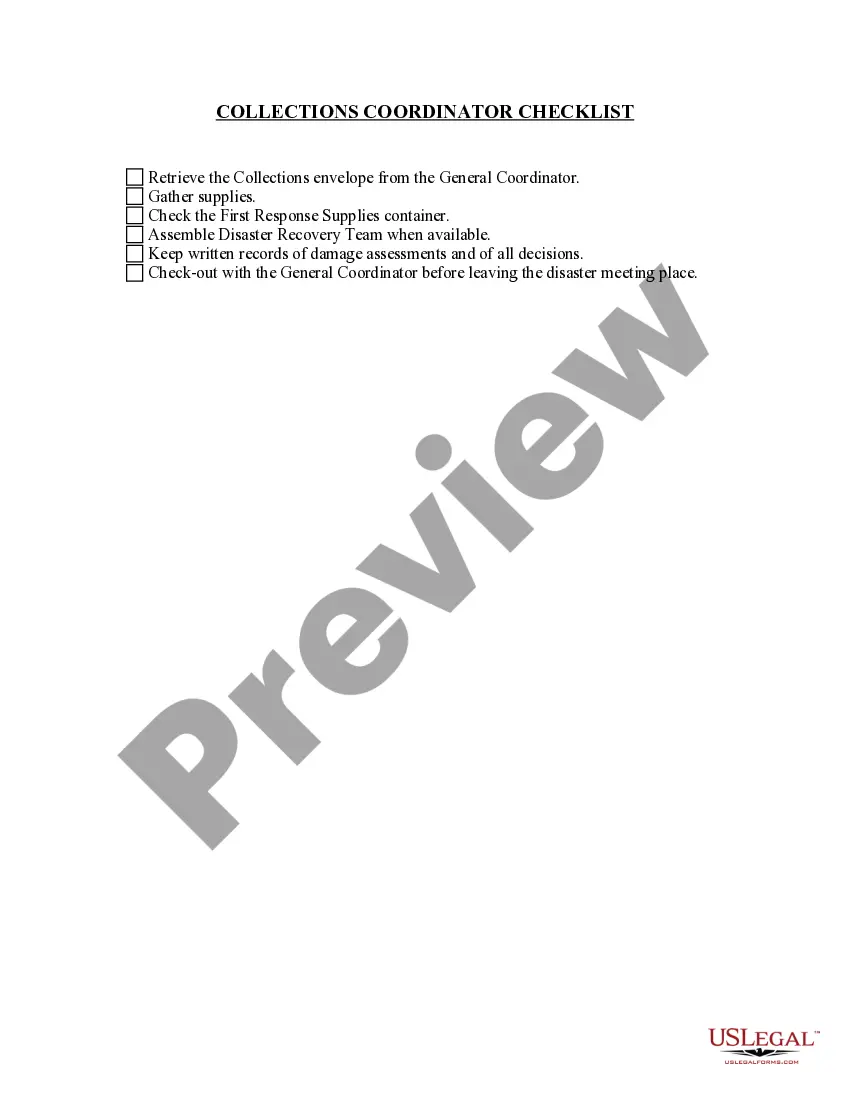
The Collections Coordinator Checklist is a document that outlines the potential responsibilities of a collections coordinator during disaster recovery efforts. This form helps ensure that all necessary tasks are completed efficiently and precisely, distinguishing it from other general checklists by focusing specifically on the role of the collections coordinator in the aftermath of an emergency.
Key components of this form
- Retrieve the collections envelope from the general coordinator.
- Gather required supplies for operations.
- Check the First Response Supplies container for necessary items.
- Assemble the Disaster Recovery Team when available.
- Keep written records of damage assessments and decisions made.
- Check out with the general coordinator before leaving the disaster meeting place.
Situations where this form applies
This form should be used during disaster recovery situations where a collections coordinator is assigned specific tasks. It can serve as a guide to ensure that all essential duties are fulfilled in a timely manner, helping the organization to respond effectively to emergencies.
Who this form is for
- Collections coordinators involved in disaster recovery.
- General coordinators overseeing disaster recovery efforts.
- Emergency management teams who require a structured approach to disaster response.
How to prepare this document
- Retrieve the collections envelope as instructed and ensure you have all necessary supplies.
- Check the First Response Supplies container to confirm availability of items.
- Organize a Disaster Recovery Team, if possible, to ensure collaborative efforts.
- Document all damage assessments and decisions made throughout the process.
- Before departing, confirm your check-out with the general coordinator at the specified meeting location.
Notarization requirements for this form
This form does not typically require notarization to be legally valid. However, some jurisdictions or document types may still require it. US Legal Forms provides secure online notarization powered by Notarize, available 24/7 for added convenience.
Get your form ready online
Our built-in tools help you complete, sign, share, and store your documents in one place.
Make edits, fill in missing information, and update formatting in US Legal Forms—just like you would in MS Word.
Download a copy, print it, send it by email, or mail it via USPS—whatever works best for your next step.
Sign and collect signatures with our SignNow integration. Send to multiple recipients, set reminders, and more. Go Premium to unlock E-Sign.
If this form requires notarization, complete it online through a secure video call—no need to meet a notary in person or wait for an appointment.
We protect your documents and personal data by following strict security and privacy standards.

Make edits, fill in missing information, and update formatting in US Legal Forms—just like you would in MS Word.

Download a copy, print it, send it by email, or mail it via USPS—whatever works best for your next step.

Sign and collect signatures with our SignNow integration. Send to multiple recipients, set reminders, and more. Go Premium to unlock E-Sign.

If this form requires notarization, complete it online through a secure video call—no need to meet a notary in person or wait for an appointment.

We protect your documents and personal data by following strict security and privacy standards.
Typical mistakes to avoid
- Not retrieving the collections envelope before beginning tasks.
- Failing to keep written records, which can lead to disorganization.
- Overlooking the need to check out with the general coordinator.
- Neglecting to assemble the Disaster Recovery Team when available.
Why complete this form online
- Immediate access to the form for quick printing or downloading.
- Editability allows for customization based on specific needs or preferences.
- Reliable templates drafted by licensed attorneys ensure legal compliance.
Key takeaways
- The Collections Coordinator Checklist is essential for managing collection tasks effectively during emergencies.
- Prompt assembly of the Disaster Recovery Team is critical.
- Thorough documentation of assessments and decisions is vital for clarity and future reference.
Looking for another form?

Form popularity
FAQ
Collections officers attempt to collect payment on overdue bills by informing customers of their debt and their various options for repayment.Collections officers typically work in call center and office environments during daytime, evening, and weekend work shifts, both full- and part-time hours.
Collections clerks are tasked with calling delinquent customers to collect overdue payments. They are employed primarily by collection agencies and accounts receivable departments of businesses, such as credit card companies, and some work as independent contractors.
What Do Collections Coordinators Do? Identify and communicate with customers with delinquent accounts by mail, phone, etc. Work out terms for payment or initiates other actions as necessary. Ensure collections operations function smoothly and effectively.
Collect payments on past due bills. Create a list of people who have not made payments. Organize list according to severity of delinquency. Locate customers using credit bureau information, background checks, loan documents, and other paperwork or databases. Call customers using telephone.
Maintaining files and records so they remain updated and easily accessible. Sorting and distributing incoming mail and prepare outgoing mail. Answering the phone to take messages or redirecting calls to appropriate colleagues.
Monitor accounts on a daily basis. Identify outstanding account receivables. Investigate historical data for debts and bills. Take actions in order to encourage timely payments. Process payments and refunds. Resolve billing issues. Resolve customer credit issues.
Great Listener. Understands How to Overcome Objections. Gets Past the Gatekeeper. Closes the Deal. Comfortable Communicator. Creative Problem Solver. Balances Empathy with Collections.
The role of a Collections Specialist is to serve as the liaison between the creditors and consumers of a company. They are in charge of observing accounts to identify overdue payments, report collection activity, address client queries, and develop repayment plans. Also known as a Collections Agent.