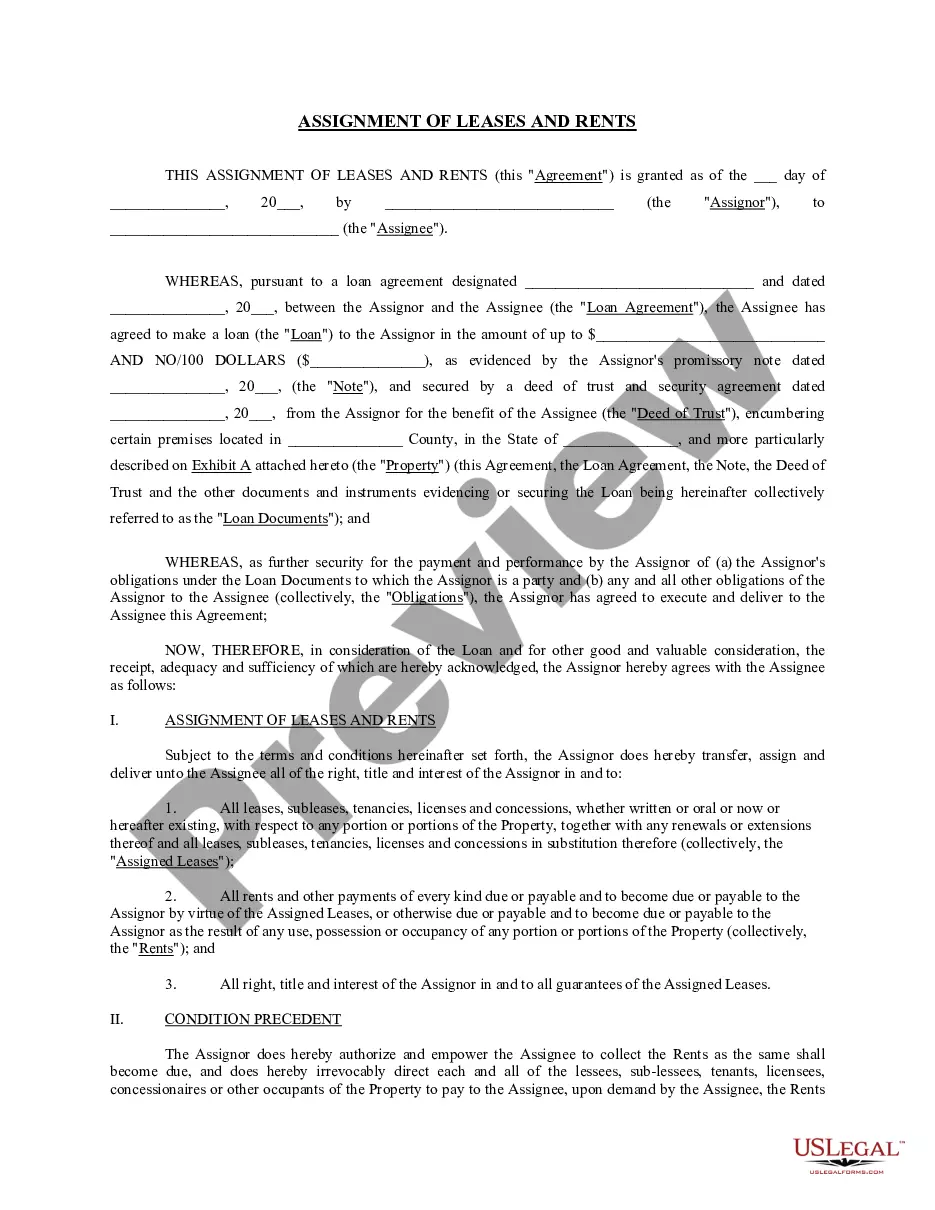
Massachusetts Affidavit Regarding Federal Estate Taxes
What is this form?
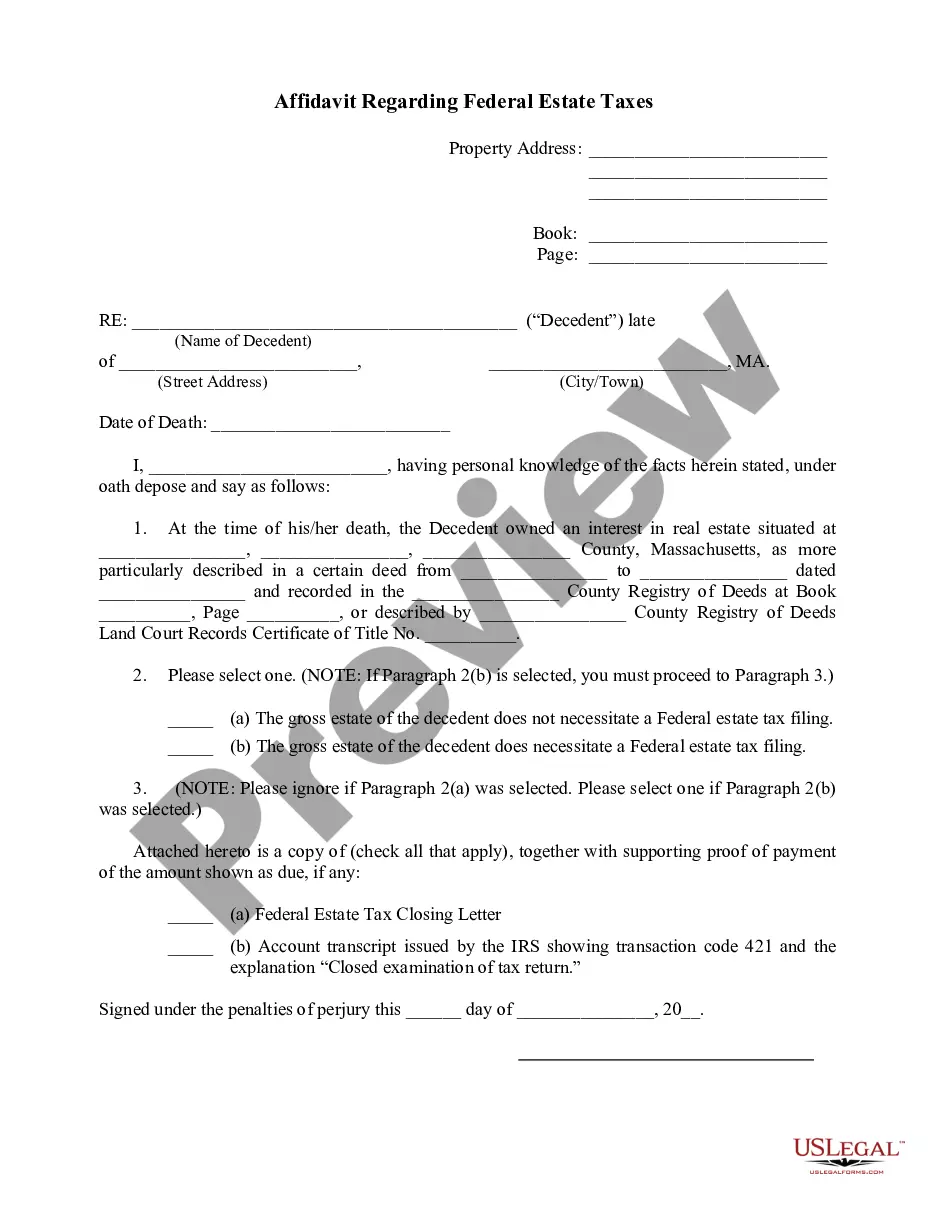
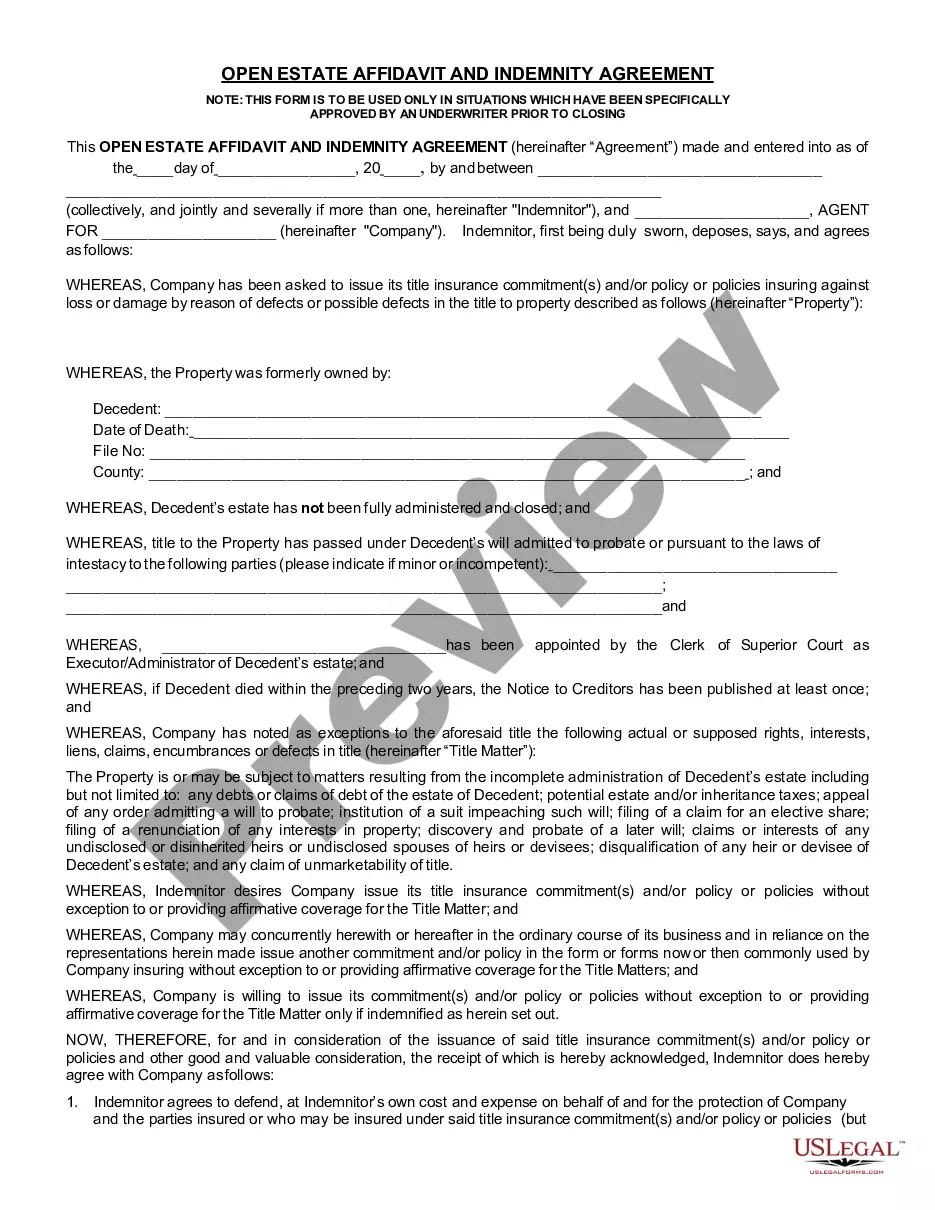
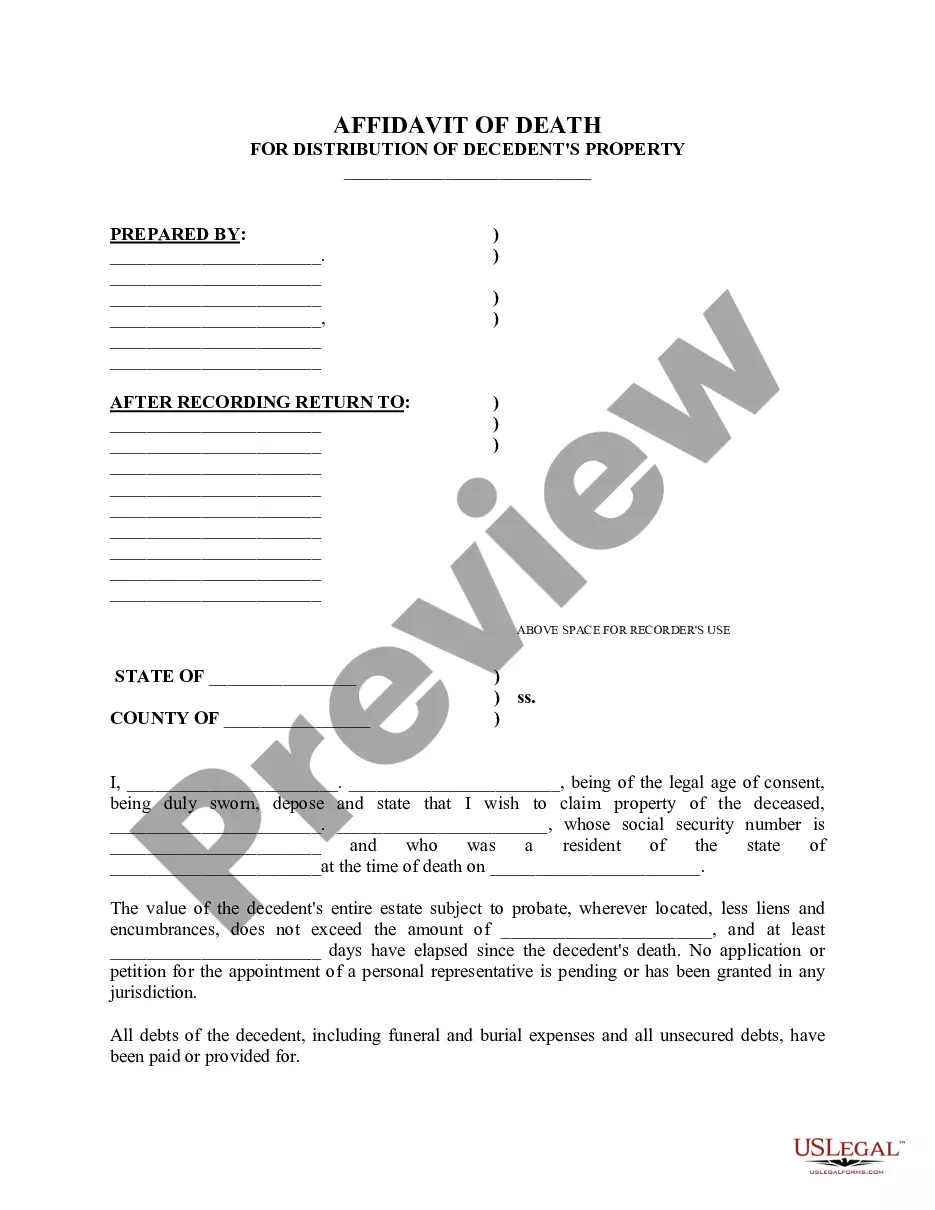
The Affidavit Regarding Federal Estate Taxes is a legal document that certifies whether the decedent's gross estate is subject to federal estate tax filing requirements. This form ensures compliance with tax laws related to estate management and helps clarify any obligations that may exist after the decedent's death. It is distinct from other estate planning forms because it specifically addresses federal tax implications.
Main sections of this form
- Property address: Location of the real estate owned by the decedent.
- Decedent's details: Name and address of the deceased individual.
- Date of death: The exact date when the decedent passed away.
- Statement on federal estate tax obligation: Indicates if a filing is necessary.
- Supporting documentation: Option to attach evidence of federal estate tax filings or payments.
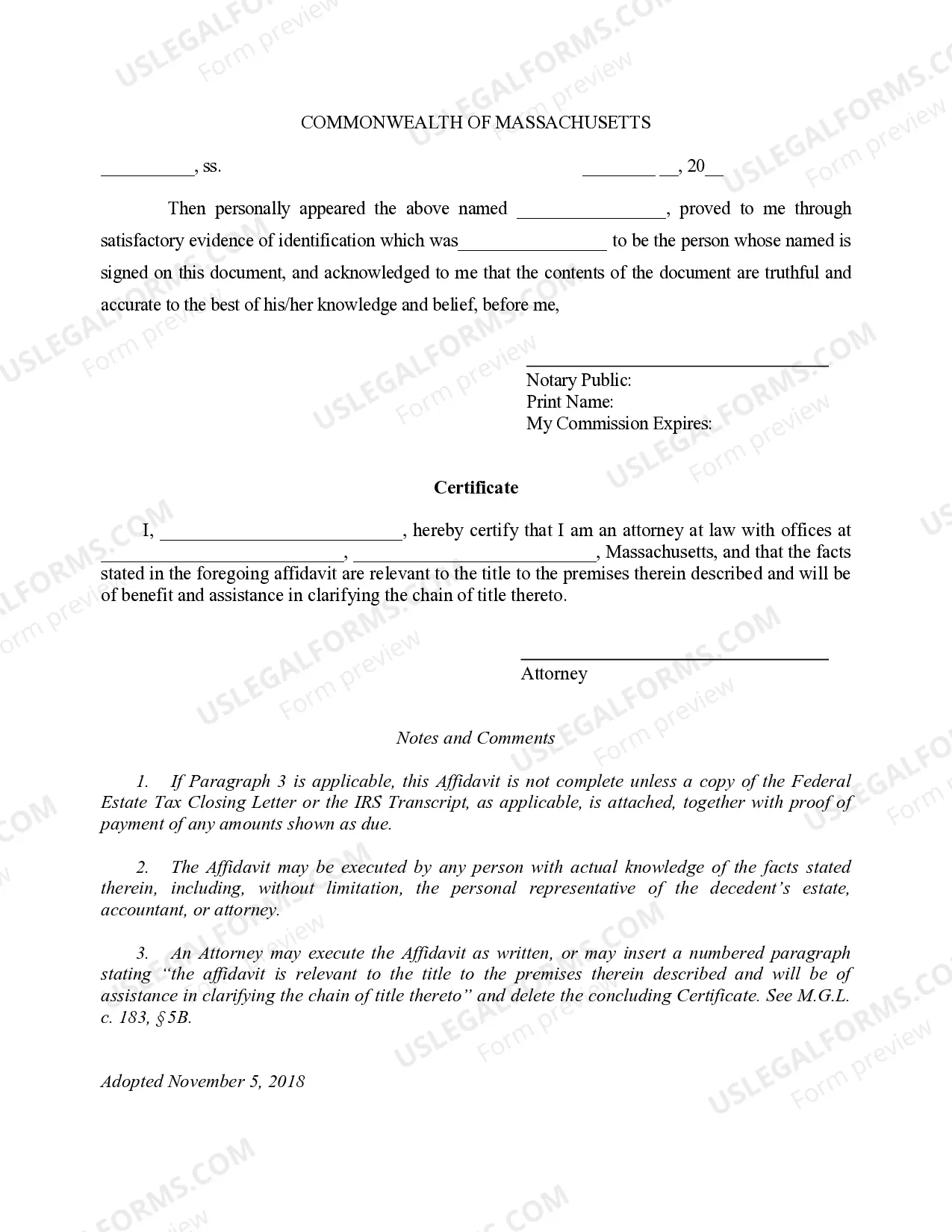
- Notarization section: Acknowledgement by a notary public regarding the document's validity.
When this form is needed
This affidavit should be used when managing the estate of a decedent, specifically to determine and declare whether their gross estate requires filing a federal estate tax return. It is particularly relevant when the estate includes real estate, as it provides necessary details about the property involved and the tax implications of the decedent's estate.
Intended users of this form
- Personal representatives of the decedentâs estate.
- Attorneys representing the decedent's estate.
- Accountants or tax professionals involved in estate management.
- Any individual with personal knowledge of the decedentâs estate and its tax obligations.
Steps to complete this form
- Enter the property address where the decedent owned real estate.
- Provide the decedent's full name and address along with the date of death.
- State whether the decedent's gross estate requires a federal estate tax filing.
- If necessary, attach relevant documentation such as the Federal Estate Tax Closing Letter or IRS transcript.
- Sign the affidavit under penalties of perjury, and ensure it is notarized.
Is notarization required?
Yes, this form must be notarized to be legally valid. Notarization confirms the identity and authenticity of the individual signing the affidavit. US Legal Forms offers integrated online notarization services that are available 24/7, ensuring a secure and efficient process without the need to travel.
Get your form ready online
Our built-in tools help you complete, sign, share, and store your documents in one place.
Make edits, fill in missing information, and update formatting in US Legal Forms—just like you would in MS Word.
Download a copy, print it, send it by email, or mail it via USPS—whatever works best for your next step.
Sign and collect signatures with our SignNow integration. Send to multiple recipients, set reminders, and more. Go Premium to unlock E-Sign.
If this form requires notarization, complete it online through a secure video call—no need to meet a notary in person or wait for an appointment.
We protect your documents and personal data by following strict security and privacy standards.

Make edits, fill in missing information, and update formatting in US Legal Forms—just like you would in MS Word.

Download a copy, print it, send it by email, or mail it via USPS—whatever works best for your next step.

Sign and collect signatures with our SignNow integration. Send to multiple recipients, set reminders, and more. Go Premium to unlock E-Sign.

If this form requires notarization, complete it online through a secure video call—no need to meet a notary in person or wait for an appointment.

We protect your documents and personal data by following strict security and privacy standards.
Common mistakes to avoid
- Failing to attach required documents if the gross estate necessitates a federal filing.
- Incorrectly filling out the decedent's name or property details.
- Not obtaining notarization, which can affect the affidavit's legality.
- Forgetting to check the appropriate box regarding tax filing obligations.
Why complete this form online
- Convenience of downloading and editing the form at home.
- Access to up-to-date legal language drafted by licensed attorneys.
- Ability to complete the form at your own pace, minimizing stress.
Quick recap
- The Affidavit Regarding Federal Estate Taxes helps clarify federal tax responsibilities after a person's death.
- It is essential for individuals managing estates, particularly in Massachusetts.
- Proper completion and notarization of this form are critical to ensure legal compliance.
Looking for another form?
Form popularity
FAQ
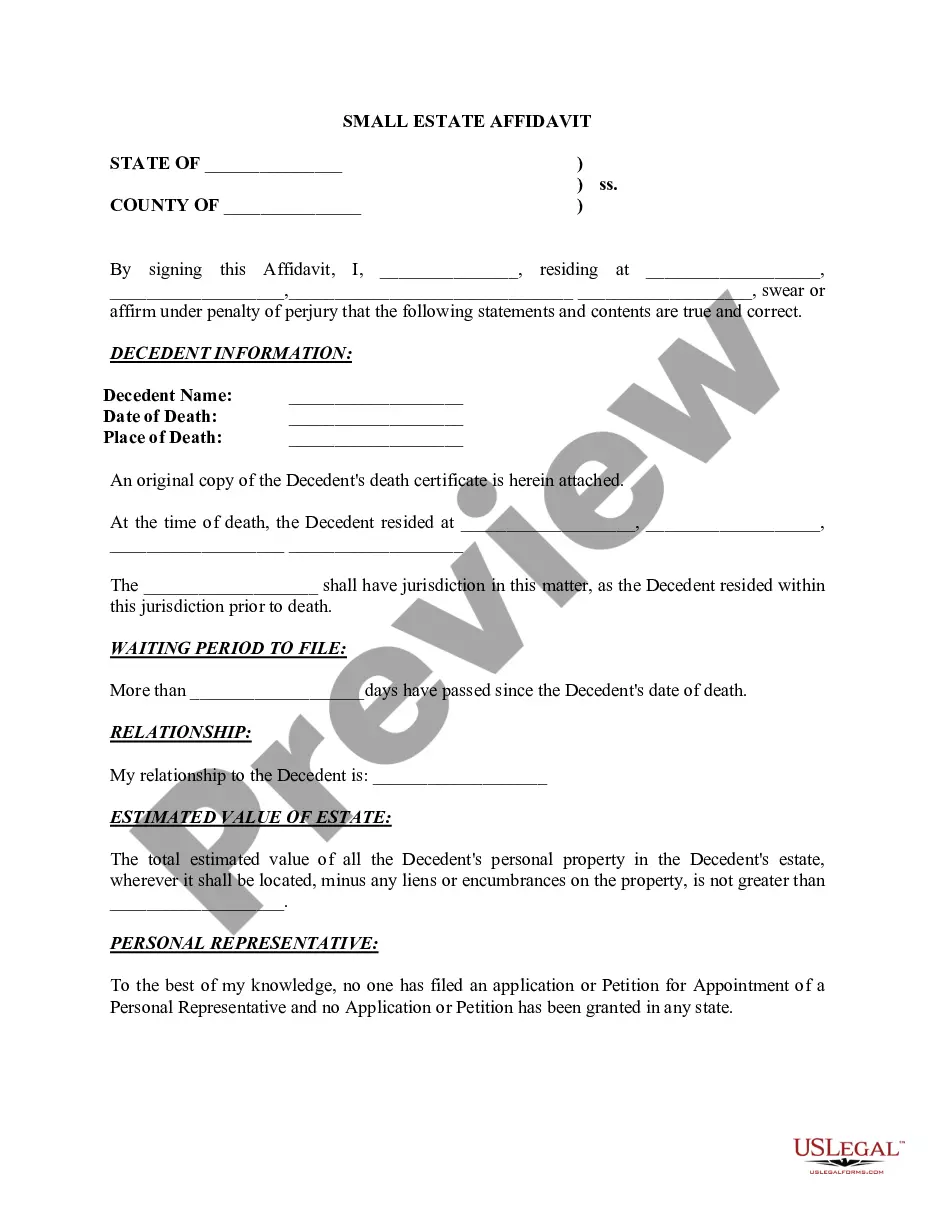
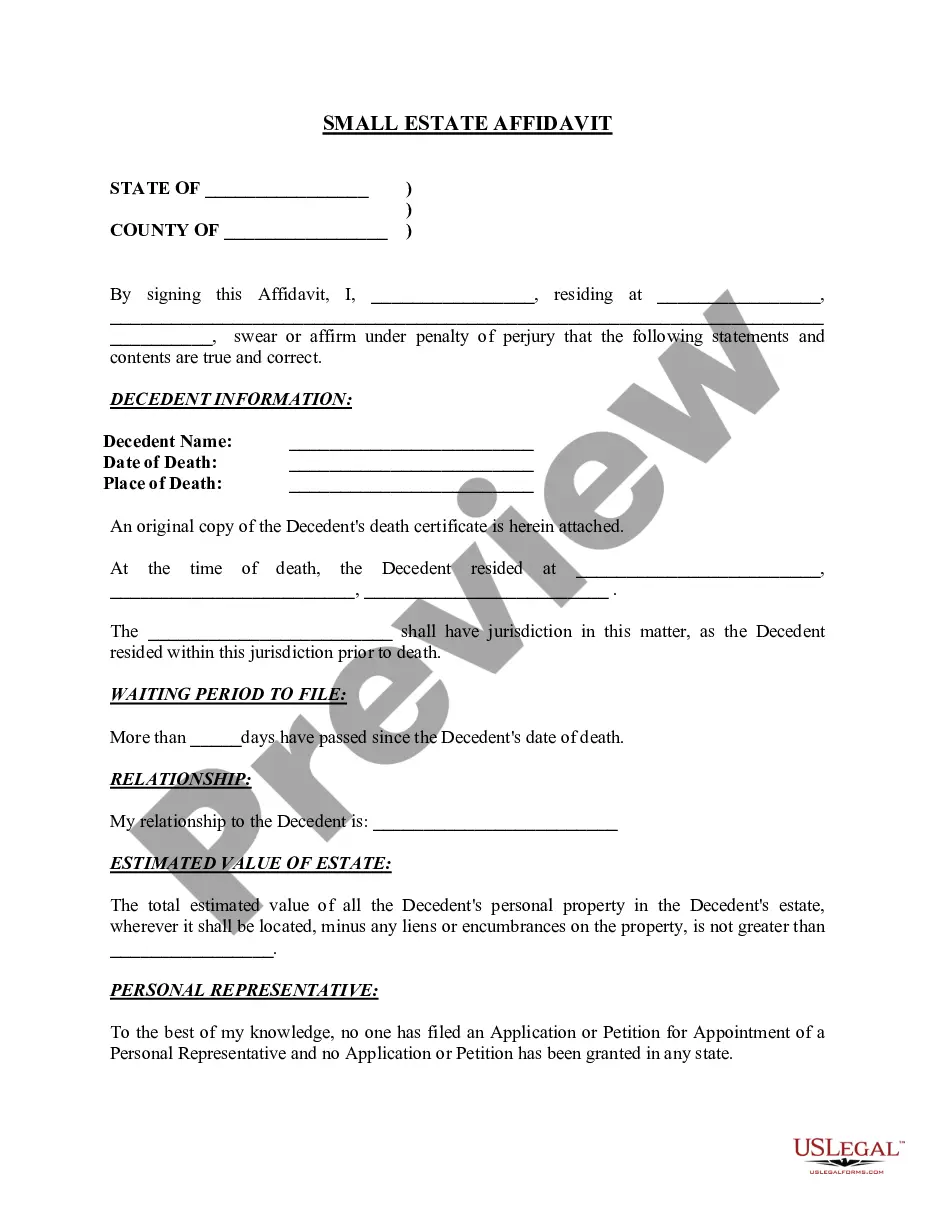
A Massachusetts small estate affidavit is a legal document used to present a claim on the estate or part of the estate of a deceased loved one. The petitioner, or affiant, must provide detailed information about the estate, the property in question, the decedent, and any other potential heirs.
The estate tax, sometimes also called the "death tax," is a tax that's levied on a deceased person's assets. In 2023, the federal estate tax ranges from rates of 18% to 40% and generally only applies to assets over $12.92 million. In 2022, the exemption was $12.06 million.
2023 Massachusetts estate tax filing threshold = $1 million. It is not indexed for inflation. Once the threshold is met, a Massachusetts estate tax return must be filed (Form M-706). The estate tax rate is a graduated rate that starts at 0.8% and caps out at 16%.
Massachusetts does not have an inheritance tax. If you're inheriting money from someone who lived out of state, though, check the local laws. In Kentucky, all in-state property is subject to the inheritance tax, regardless of where the heir lives. Massachusetts also does not have its own gift tax.
The affidavits are prepared by the personal representative of the estate, any person in actual or constructive possession of any real property of the decedent or by some person acting on his or her behalf. The affidavits are filed in the Registry of Deeds for the county in which the real property is located.
Massachusetts Small Estate Affidavit - EXPLAINED - YouTube YouTube Start of suggested clip End of suggested clip And the will if it exists. Step two fill out the affidavit. Complete the affidavit using theMoreAnd the will if it exists. Step two fill out the affidavit. Complete the affidavit using the information collected. And get it notarized. Step three file with the probate court filed the affidavit.
This means, if the value of an estate exceeds the $1 million threshold, anything above $40,000 will be taxed. Massachusetts uses a graduated tax rate, which ranges between 0.8% and a maximum of 16%. Your estate will only attract the 0% tax rate if it's valued at $40,000 and below.
For example, the estate tax on a $2 million estate would be $103,920. This is approximately 10.4% of the portion over $1 million, but is only 5.2% of the entire value of the estate. This is still a significant tax, but does not approach the highest rate of 16%.