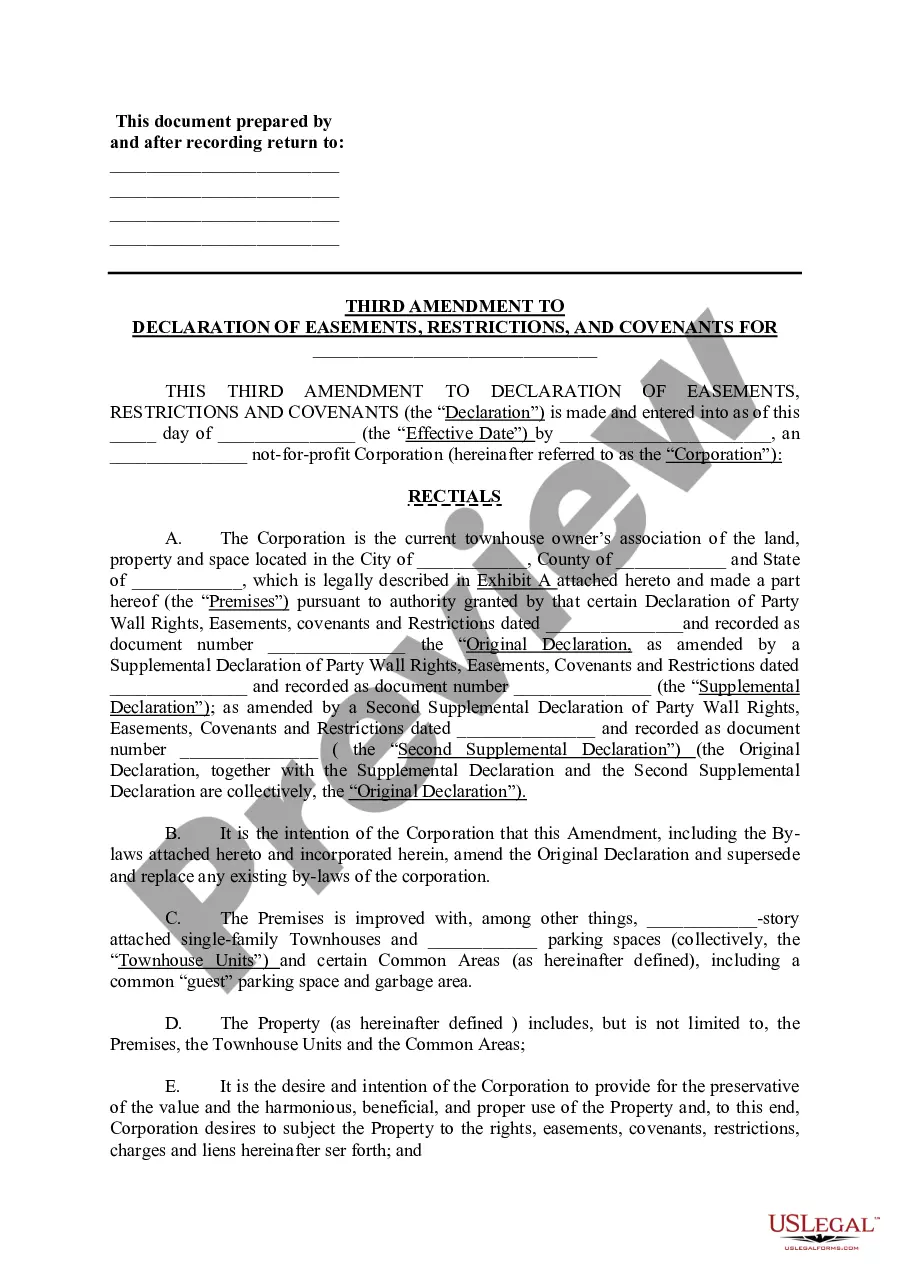
Letter Agreement Between Company and Inventor Relating to Submission of Idea for Appraisal
What this document covers
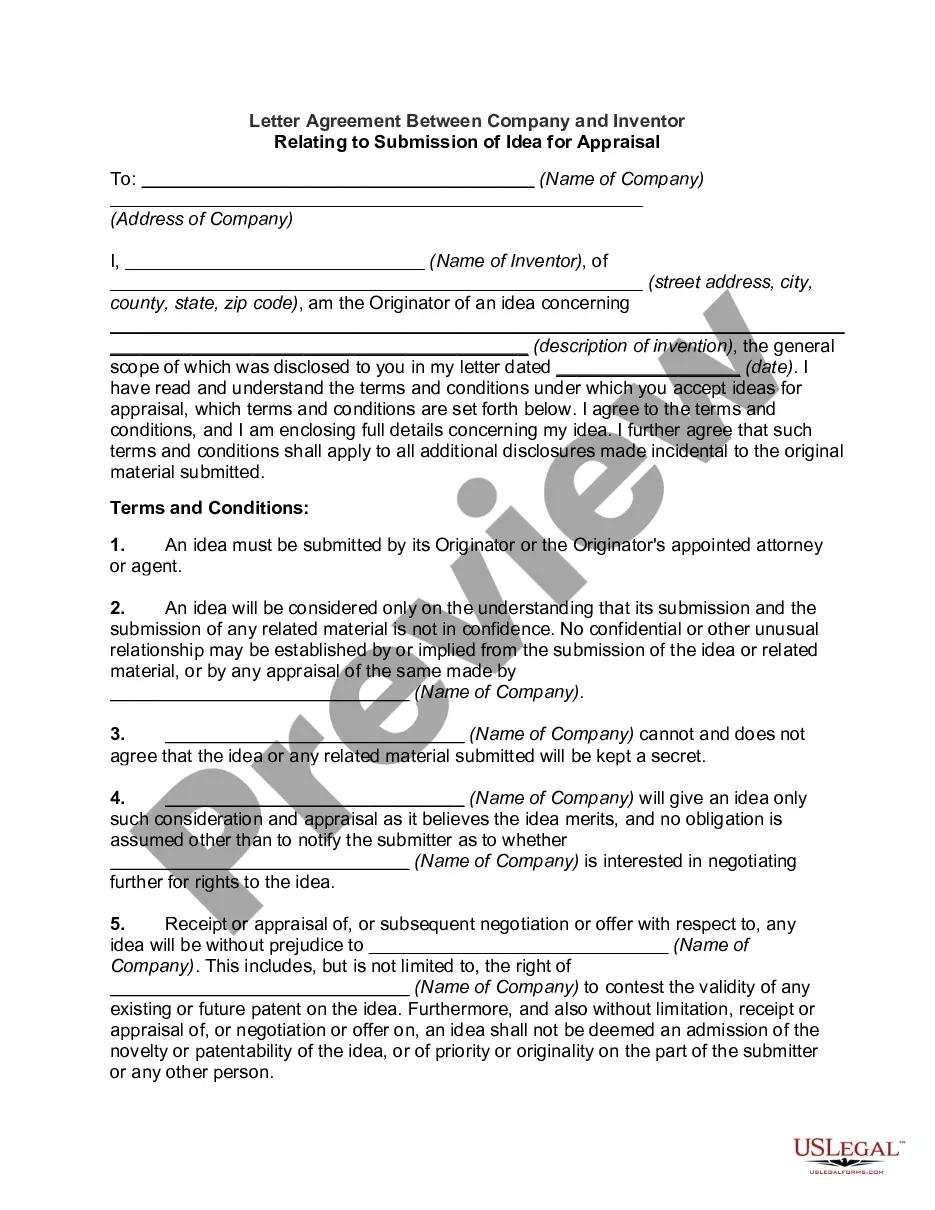
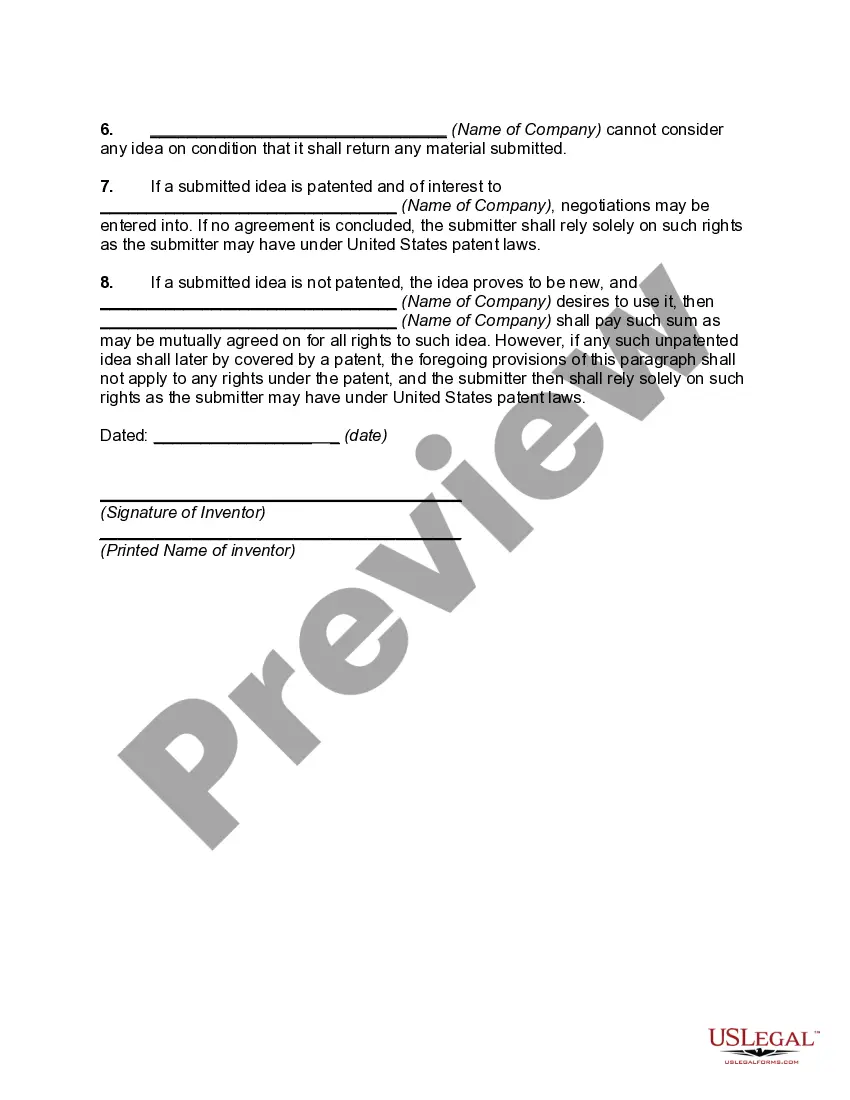
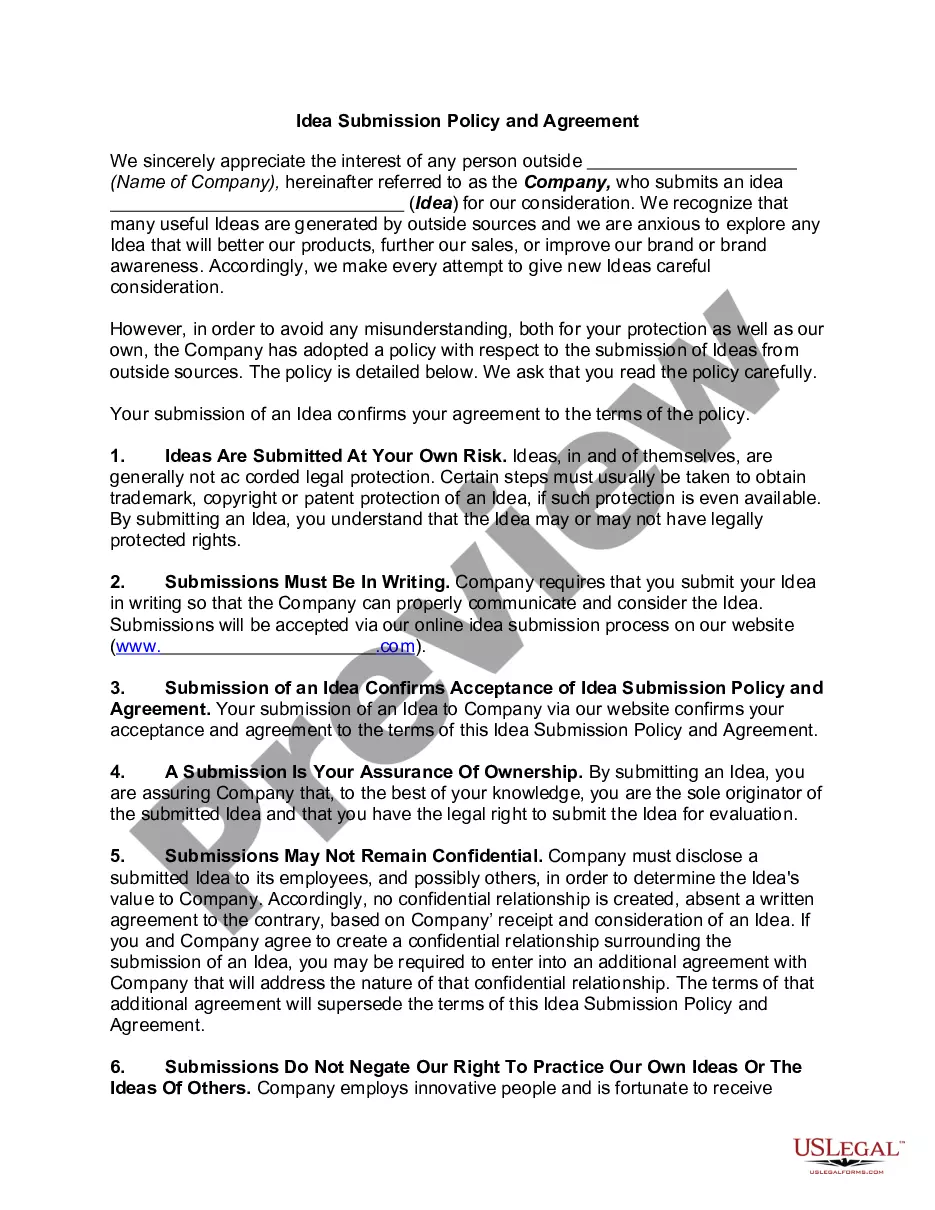
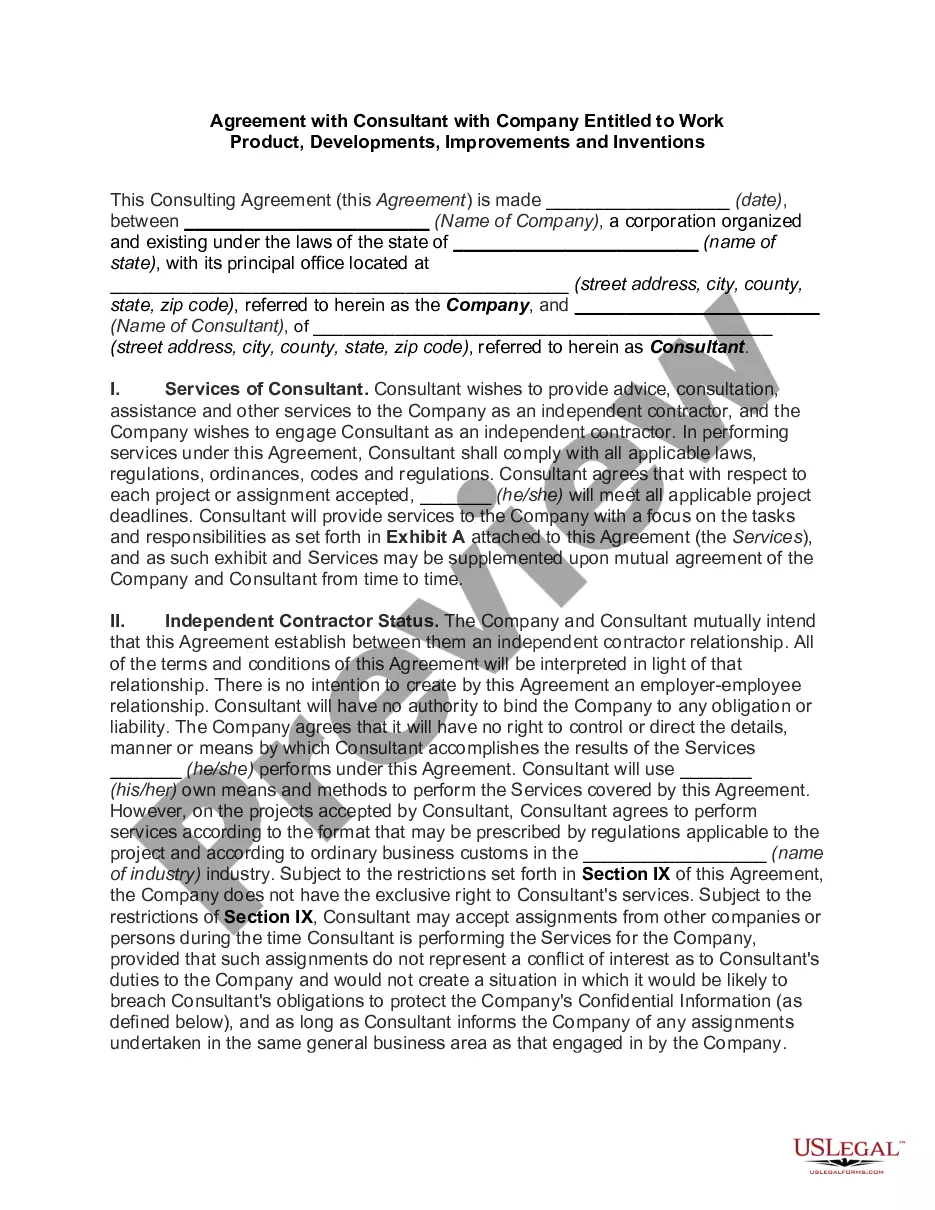
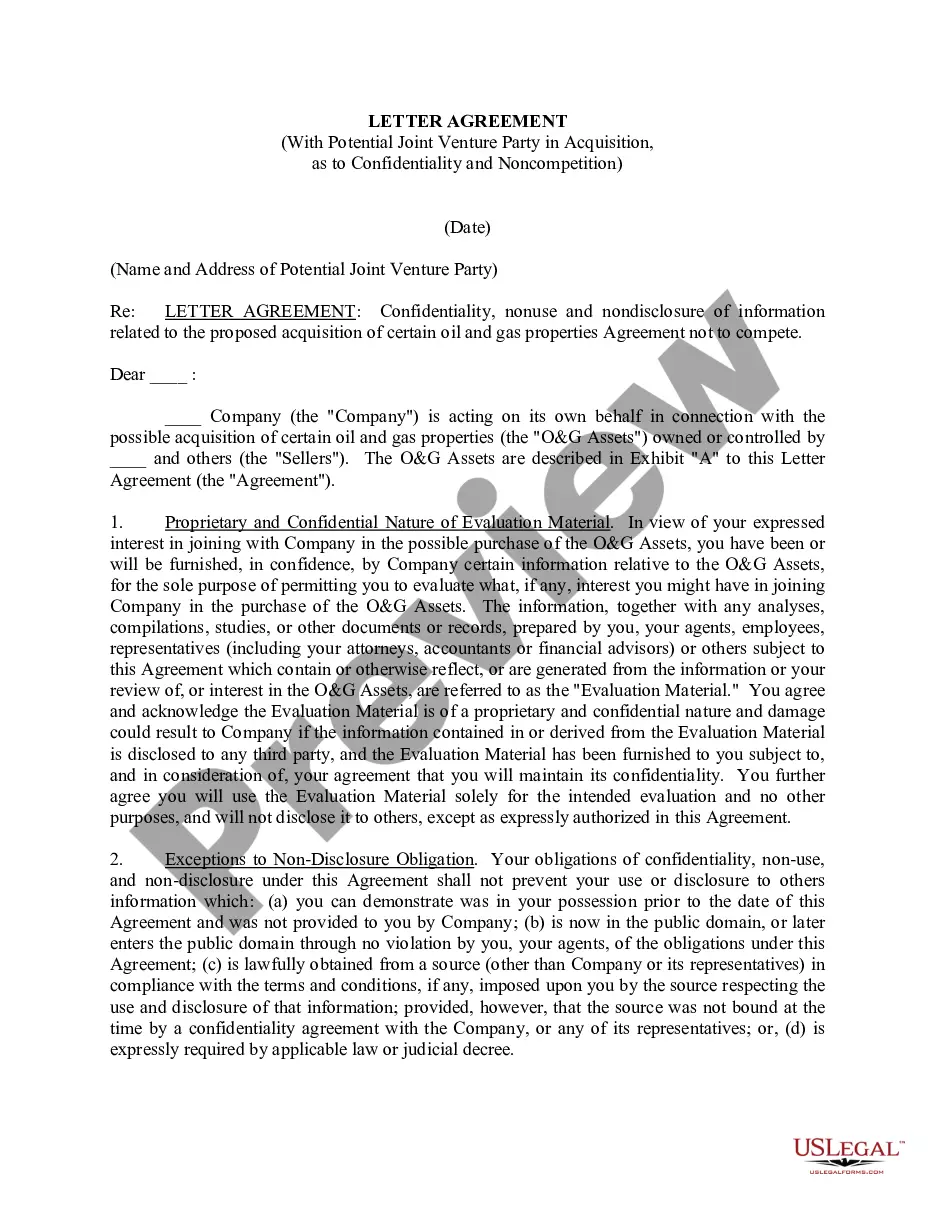
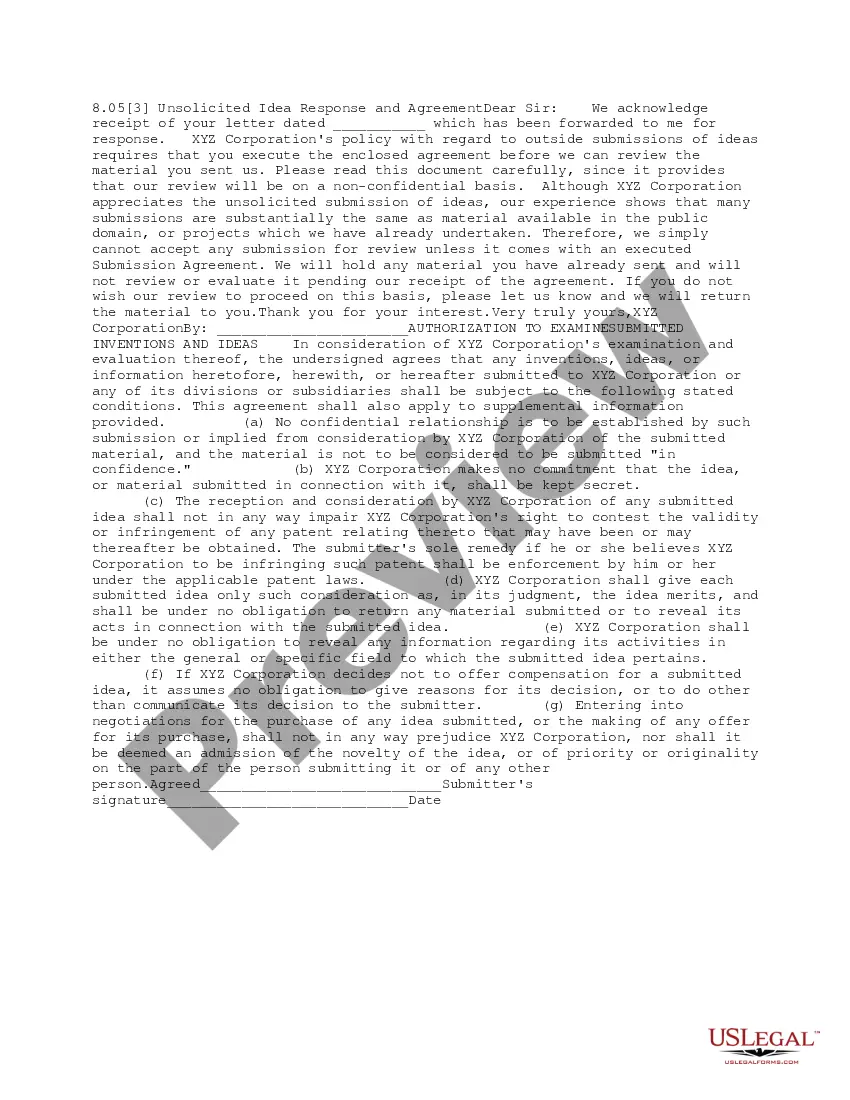
The Letter Agreement Between Company and Inventor Relating to Submission of Idea for Appraisal is a legal document that establishes the terms under which an inventor can submit their idea to a company for evaluation. This agreement outlines both parties' rights and responsibilities, ensuring a clear understanding of how the submitted ideas will be handled. It is important to note that this form is designed to comply with the American Inventors Protection Act of 1999, which grants inventors specific rights when dealing with invention promoters. This form differs from other agreement forms by explicitly stating that submissions are not confidential, distinguishing it from traditional nondisclosure agreements.
Form components explained
- Identification of the inventor and the company receiving the idea.
- Description of the submission idea and its originator.
- Clear terms and conditions governing the appraisal process.
- Statement about confidentiality and the handling of submitted ideas.
- Provisions regarding patent considerations and negotiation terms.
Situations where this form applies
This form should be used when an inventor wishes to present an idea to a company for appraisal and potential development. It is particularly useful when the inventor wants to ensure that the submission is documented legally and that both parties understand the nature of the submission, including the lack of confidentiality. This is often applicable in scenarios where individual inventors approach companies to pitch their innovations, inventions, or creative ideas for evaluation and possible collaboration.
Who should use this form
- Individual inventors who have unique ideas they wish to present to companies.
- Startup companies seeking to evaluate proposals from inventors or third parties.
- Attorneys representing inventors who facilitate idea submissions.
How to prepare this document
- Identify the name and address of the company that will receive the idea.
- Provide your name and contact information as the inventor.
- Clearly describe the invention or idea being submitted.
- Sign and date the agreement to confirm acceptance of the terms.
- Include any additional materials relevant to the submission, as needed.
Notarization guidance
This form does not typically require notarization unless specified by local law. However, verifying the requirements of your state is advisable to ensure compliance.
Get your form ready online
Our built-in tools help you complete, sign, share, and store your documents in one place.
Make edits, fill in missing information, and update formatting in US Legal Forms—just like you would in MS Word.
Download a copy, print it, send it by email, or mail it via USPS—whatever works best for your next step.
Sign and collect signatures with our SignNow integration. Send to multiple recipients, set reminders, and more. Go Premium to unlock E-Sign.
If this form requires notarization, complete it online through a secure video call—no need to meet a notary in person or wait for an appointment.
We protect your documents and personal data by following strict security and privacy standards.

Make edits, fill in missing information, and update formatting in US Legal Forms—just like you would in MS Word.

Download a copy, print it, send it by email, or mail it via USPS—whatever works best for your next step.

Sign and collect signatures with our SignNow integration. Send to multiple recipients, set reminders, and more. Go Premium to unlock E-Sign.

If this form requires notarization, complete it online through a secure video call—no need to meet a notary in person or wait for an appointment.

We protect your documents and personal data by following strict security and privacy standards.
Common mistakes
- Failing to provide a clear description of the invention.
- Not fully understanding the terms and conditions outlined in the agreement.
- Neglecting to include a signature or date on the document.
- Assuming confidentiality when it is explicitly stated that submissions are not confidential.
Why complete this form online
- Immediate access to a professionally drafted legal document.
- Convenience of downloading and filling out the form at your own pace.
- Editability allows for customization to meet specific needs.
- Ensures compliance with relevant legal standards without the need for an attorney.
Looking for another form?
Form popularity
FAQ
However, patent lawyers are bound by ethics and professional responsibility requirements. Stealing an idea would be a serious breach of duty for a lawyer that can expose him or her to punishments from the bar, and the original inventor would likely be able to sue for theft.
An invention assignment agreement is a contract that gives the employer certain rights to inventions created or conceptualized by the employee during the employment relationship.In other words, all inventions not listed are assumed to be the property of the employer.
Step 1: Document It. Image credit: Shutterstock. Step 2: Research It. Image credit: Shutterstock. Step 3: Make a Prototype. Image credit: Shutterstock. Step 4: File a Patent. Image credit: Shutterstock. Step 5: Market Your Invention. Image credit: Shutterstock.
An application form (paper or online form) a description of your invention. claims. an abstract. drawings if they illustrate your invention. an indication of a deposit if the application involves a deposit of biological material as referred to in section 8 a of the Finnish Patents Act.
No. Patents are granted by patent offices in exchange for a full disclosure of the invention.Can I discuss details of my invention with a potential investor before filing a patent application? It is important to file a patent application before publicly disclosing the details of an invention.
As soon as you file a patent application with the U.S. Patent and Trademark Office (USPTO), your invention is "Patent Pending." Once your application is submitted, nobody can steal, sell, or use your invention without your permission.
If you determine that the invention is probably not patentable, the most effective way to protect yourself is to have prospective licensees sign a nondisclosure agreement before you reveal your invention. This document is sometimes called an "NDA" or a "confidentiality agreement," but the terms are similar.
Don't send hand-written submissions. Do put your contact information on each piece of paper you send. Don't waste a product reviewer's time detailing how you came up with your idea. Don't use the phrase, My idea is worth millions. Let the company decide that.