Employee Invention Agreement
Overview of this form
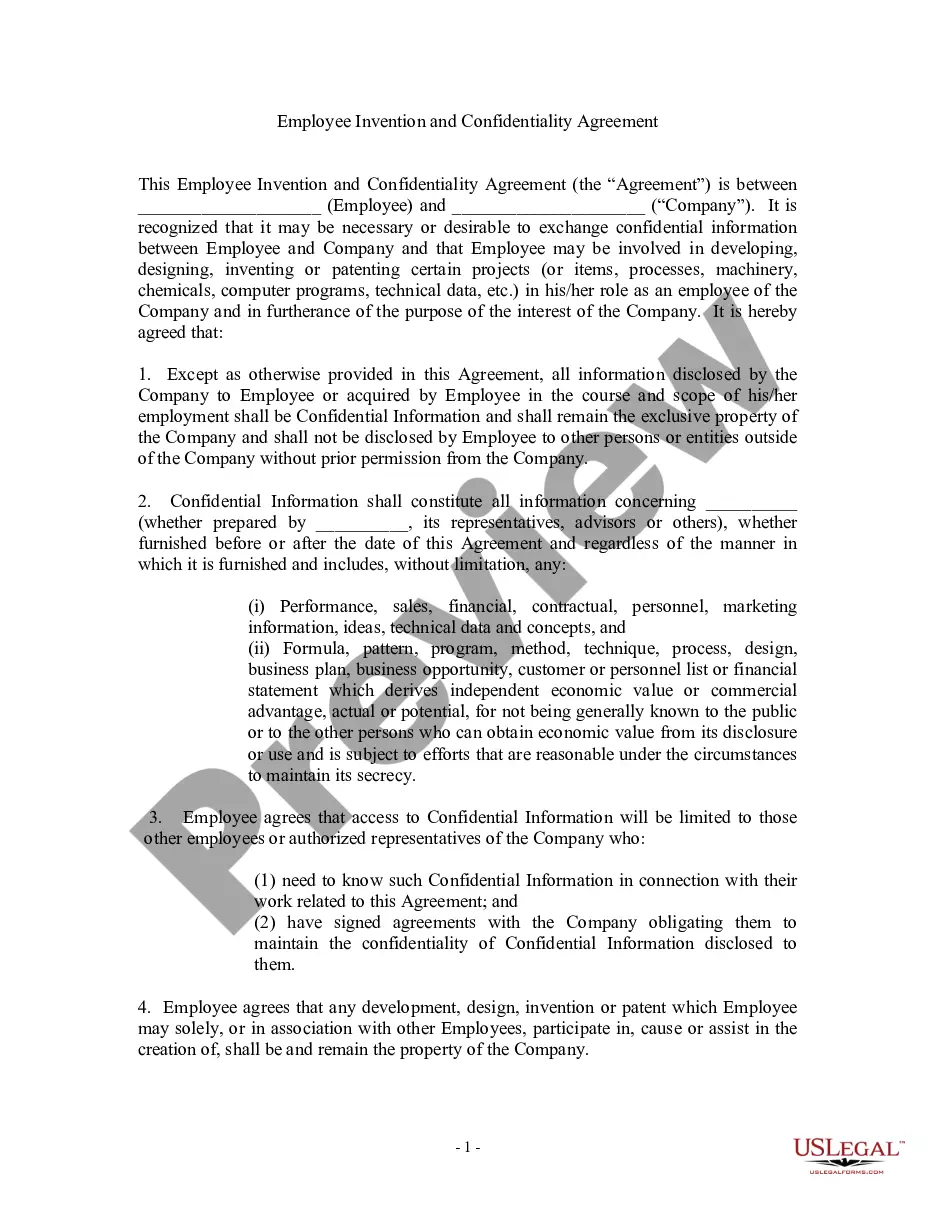
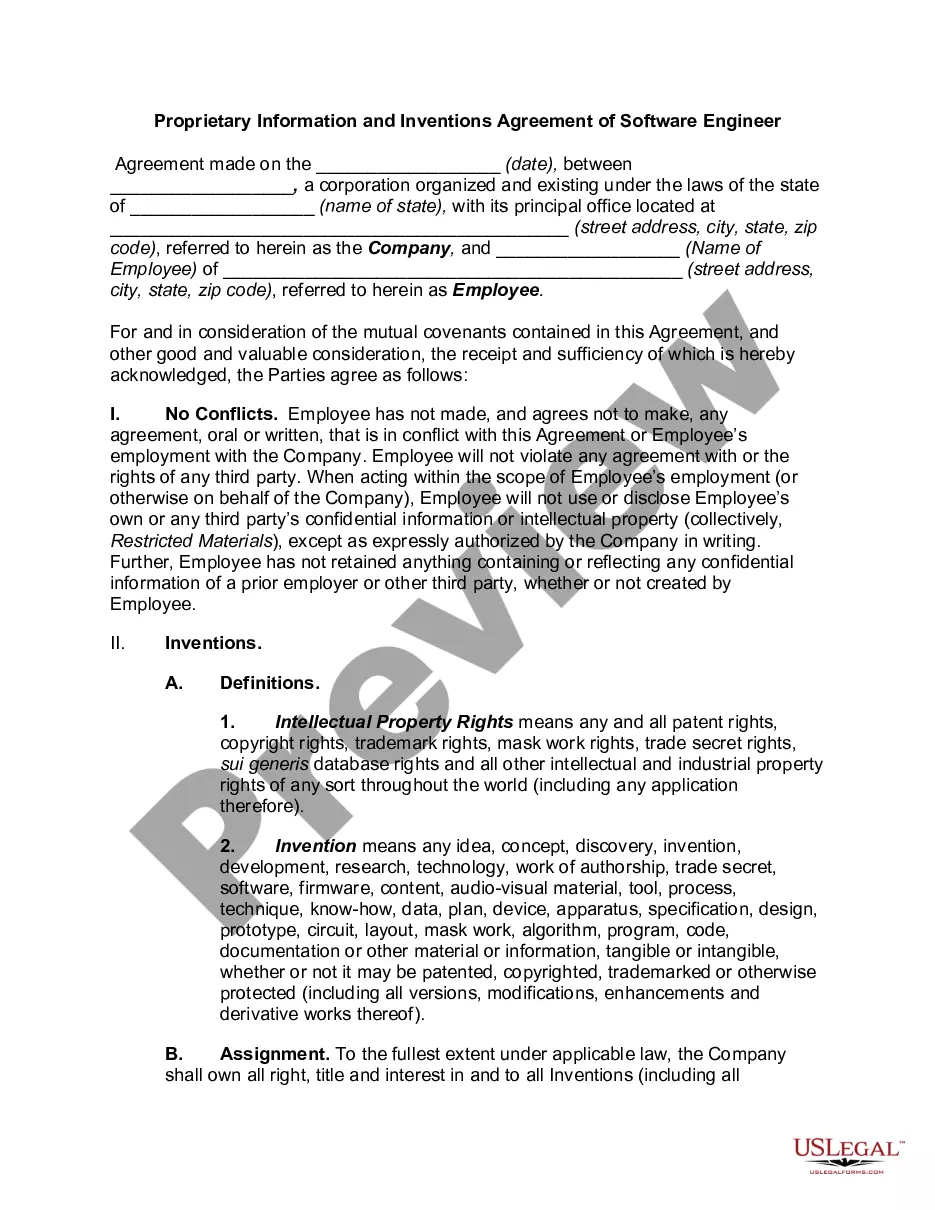
The Employee Invention Agreement is a legal document that outlines the terms of invention rights and confidentiality between an employee and their employer. This form ensures that any inventions, designs, or processes developed by the employee during the course of their employment are owned by the employer. It is essential for businesses to protect their intellectual property and maintain confidentiality regarding sensitive information shared with employees.
Key parts of this document
- Identification of parties involved: Employee and Company
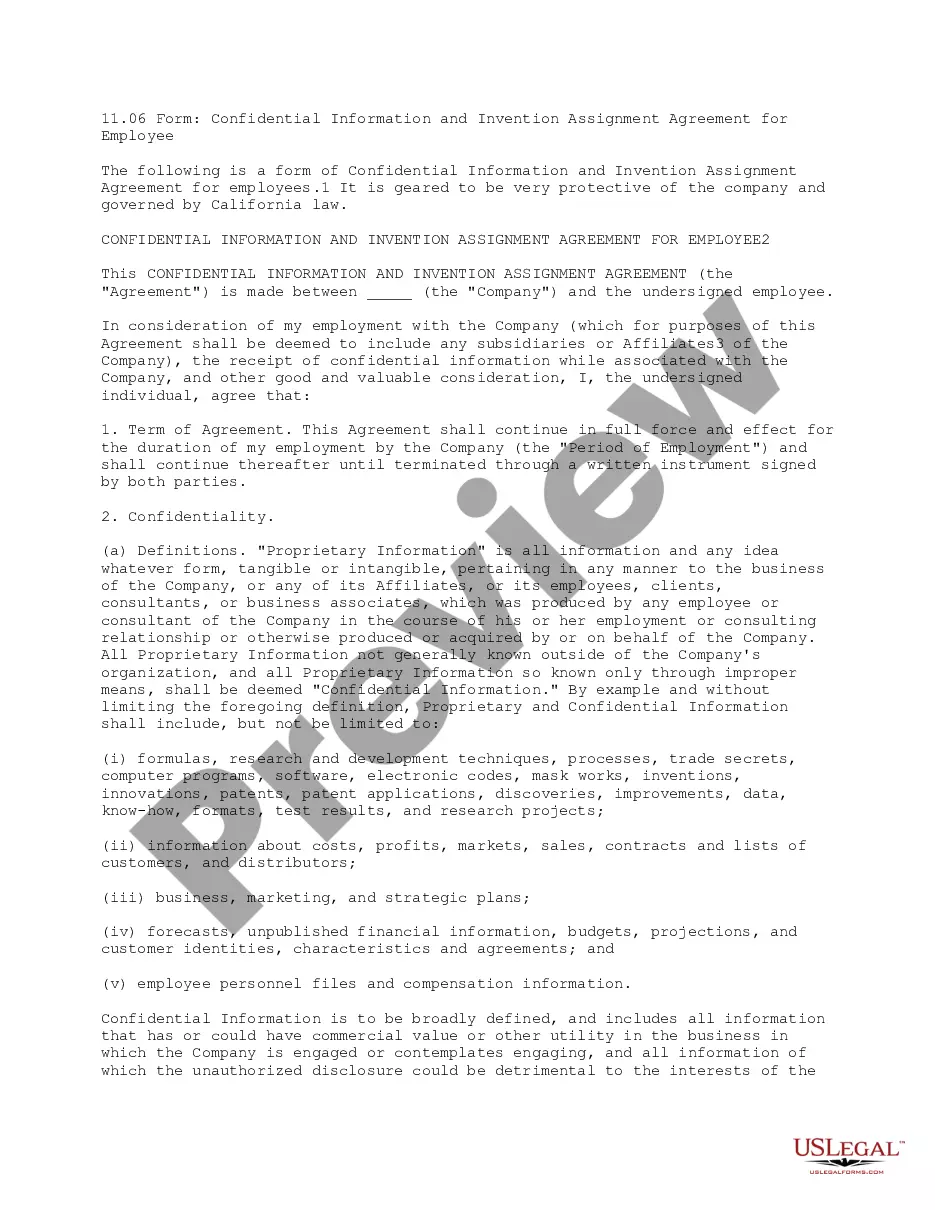
- Definition of confidential information and its exclusivity
- Restriction on disclosure of confidential information
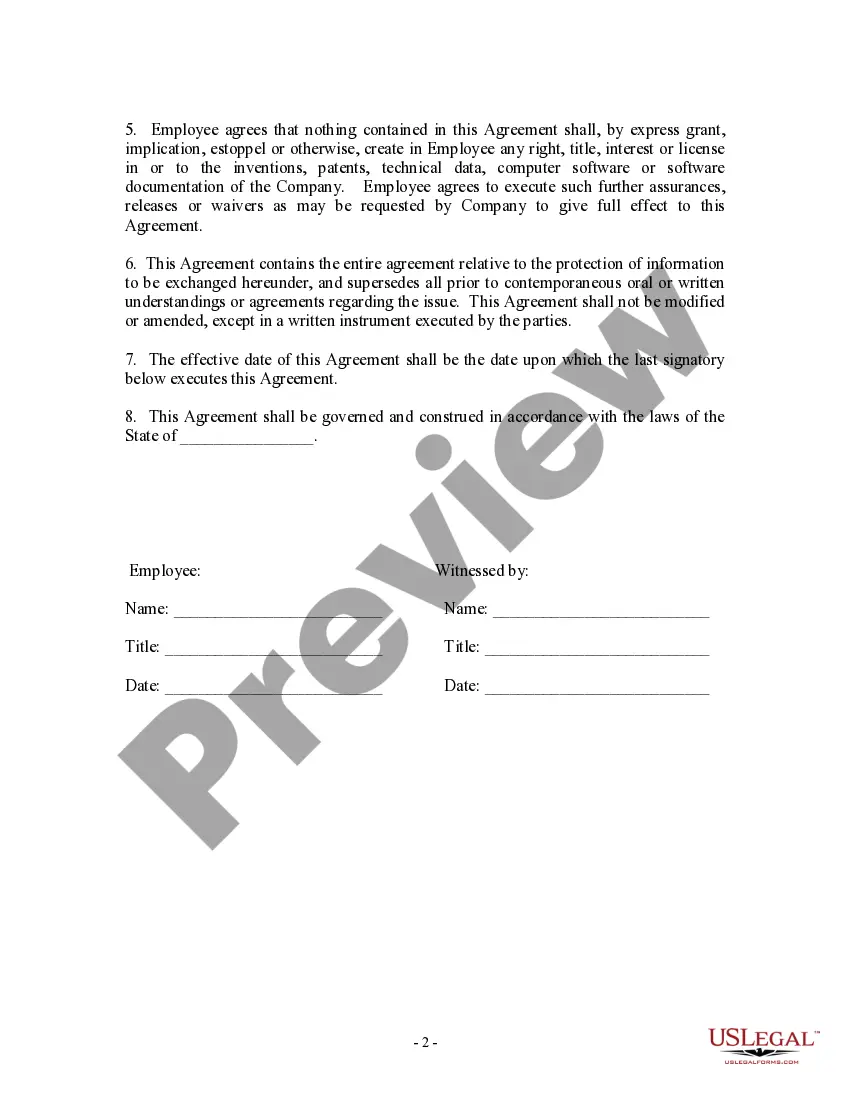
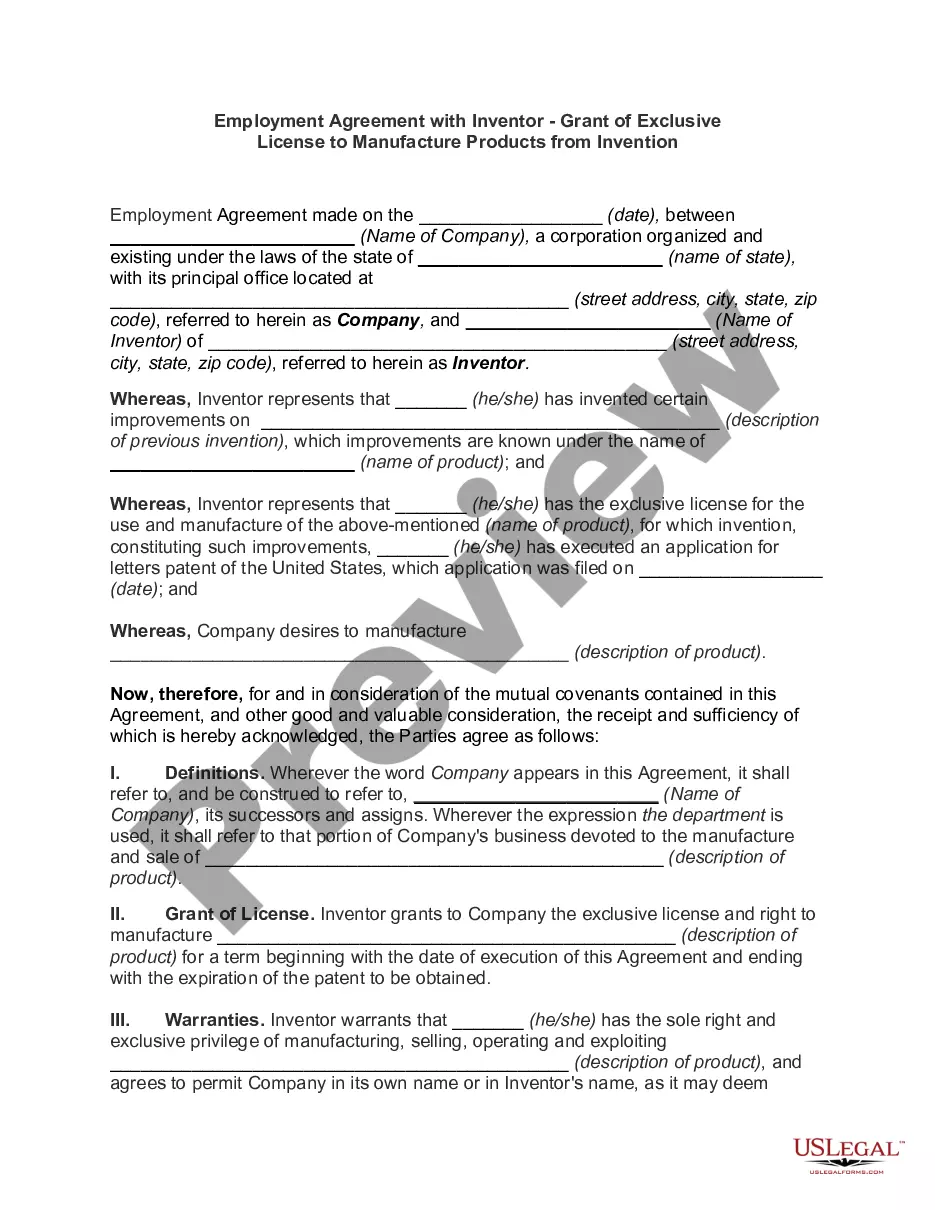
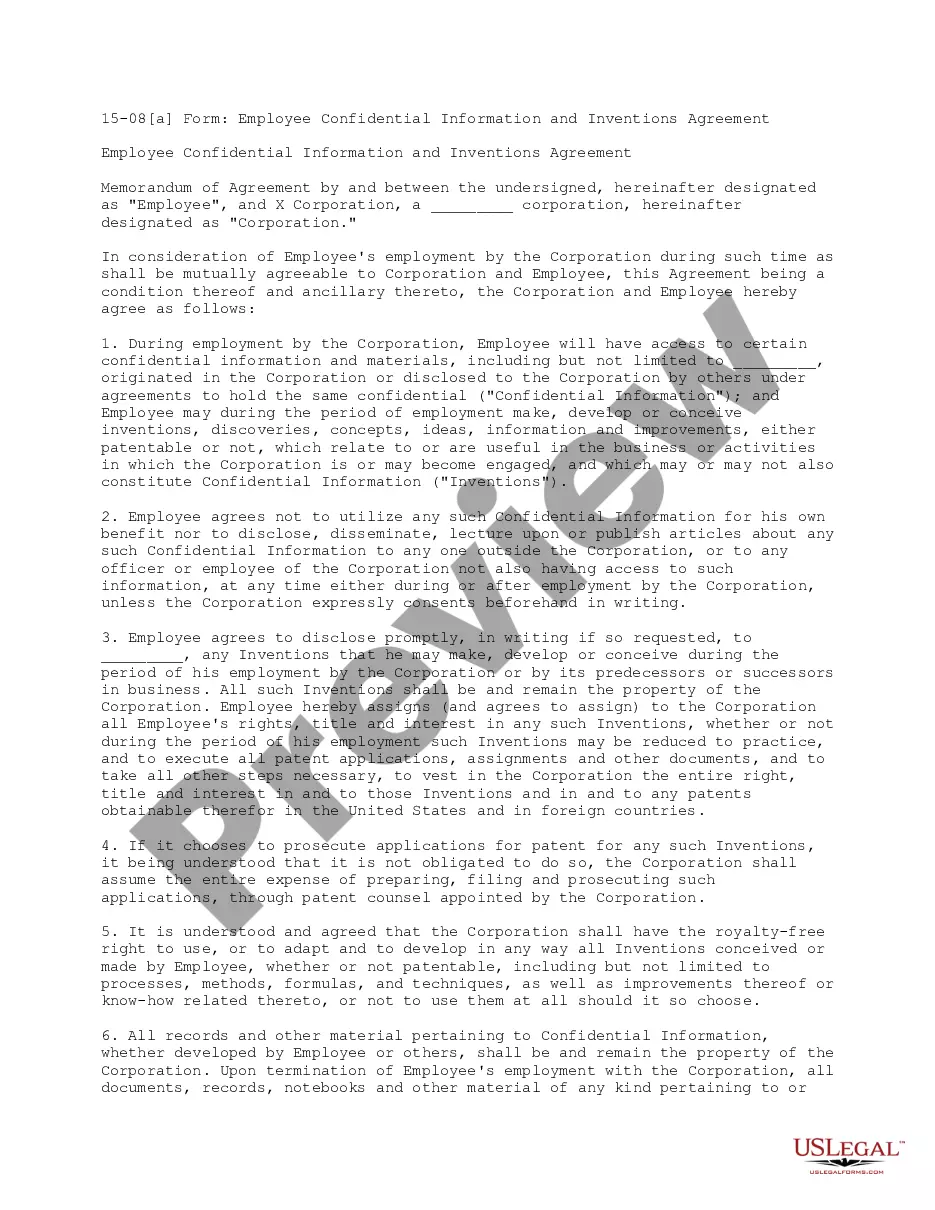
- Ownership of inventions and patent rights developed during employment
- Entire agreement clause, superseding prior agreements
- Governing law clause indicating applicable state laws
Situations where this form applies
This form should be used by companies when hiring employees who may have access to sensitive information or opportunities to create new intellectual property. It protects the company's interests and ensures that any innovations developed during employment are officially assigned to the company. This is particularly relevant in industries like technology, manufacturing, and research, where employee inventions can significantly impact business success.
Intended users of this form
- Employers seeking to protect their intellectual property
- Businesses in technology, research, and development sectors
- Startups and small businesses with innovative products or services
- Employers looking to clearly define confidentiality agreements with their employees
- Any organization that hires individuals in research or creative roles
How to prepare this document
- Identify the Employee and Company by entering their respective names.
- Clearly define what constitutes confidential information.
- Outline the expectations concerning the ownership of inventions created by the Employee.
- Specify the governing law applicable to this agreement.
- Both parties should sign and date the agreement to validate it.
Notarization requirements for this form
In most cases, this form does not require notarization. However, some jurisdictions or signing circumstances might. US Legal Forms offers online notarization powered by Notarize, accessible 24/7 for a quick, remote process.
Get your form ready online
Our built-in tools help you complete, sign, share, and store your documents in one place.
Make edits, fill in missing information, and update formatting in US Legal Forms—just like you would in MS Word.
Download a copy, print it, send it by email, or mail it via USPS—whatever works best for your next step.
Sign and collect signatures with our SignNow integration. Send to multiple recipients, set reminders, and more. Go Premium to unlock E-Sign.
If this form requires notarization, complete it online through a secure video call—no need to meet a notary in person or wait for an appointment.
We protect your documents and personal data by following strict security and privacy standards.

Make edits, fill in missing information, and update formatting in US Legal Forms—just like you would in MS Word.

Download a copy, print it, send it by email, or mail it via USPS—whatever works best for your next step.

Sign and collect signatures with our SignNow integration. Send to multiple recipients, set reminders, and more. Go Premium to unlock E-Sign.

If this form requires notarization, complete it online through a secure video call—no need to meet a notary in person or wait for an appointment.

We protect your documents and personal data by following strict security and privacy standards.
Mistakes to watch out for
- Failing to define confidential information clearly.
- Not including all necessary parties in the agreement.
- Omitting the effective date of the agreement.
- Neglecting to update the agreement after significant changes in company structure or employee roles.
Why use this form online
- Convenient access to a legally vetted template that can be customized.
- Editable format allowing for easy updates to reflect company policies.
- Reliable source of legal information designed by licensed attorneys.
- Quick download and immediate use without the need for expensive consultations.
Legal use & context
- This agreement protects the employer's intellectual property rights.
- It is enforceable in court, provided it is signed by both parties.
- Failure to use this form can lead to disputes over ownership of inventions.
Summary of main points
- The Employee Invention Agreement is vital for protecting company inventions.
- Clearly defining confidential information is crucial to avoid disputes.
- This form should be used for employees with potential access to sensitive information and intellectual property development.
- Consult local laws for specific requirements related to employee agreements.
Looking for another form?

Form popularity
FAQ
Employment relationships, intellectual property and ownership of newly developed ideas may feel like a gray area, but there are some very clear laws defining it all. Typically, employers are entitled to all intellectual property created at/for their business, unless there exists a contract stating otherwise.
Excluded Inventions means any information (including, without limitation, business plans and/or business information), technology, know-how, materials, notes, records, designs, ideas, inventions, improvements, devices, developments, discoveries, compositions, trade secrets, processes, methods and/or techniques, whether
It is understood that all Inventions, if any, patented or unpatented, which Employee made prior to the date that the Company and Employee entered into this Agreement, are excluded from the scope of this Agreement.
PIIA is the acronym for the most common name for these agreements, ''proprietary information and invention assignment'' agreements.The agreement also requires that the employee agree that whatever the employee creates, discovers, develops or invents while employed with the company is owned by the company.
So, be aware that your employer may consider your side hustle and all the proceeds from it to be theirs unless you make it legally clear otherwise.
First, if you're in California, Labor Code § 2870 puts significant limits on what your employer can claim, regardless of the contract. Basically, they can't claim anything you developed before you arrived or anything that's unrelated to their business (unless you used their facilities to develop it).
An invention assignment agreement is a contract that gives the employer certain rights to inventions created or conceptualized by the employee during the employment relationship.
A Proprietary Information Agreement is a legally binding contract that stipulates that a number of parties must not disclose confidential supplies, data, or information as outlined by the contract to a different third party.
Also known as Proprietary Information and Inventions Assignment Agreements (or PIIAAs), Confidential Information and Inventions Assignment Agreements ensure that intellectual property and other proprietary rights created by employees during the course of their employment are assigned to the employer.