Idaho Heirship Affidavit - Descent

Overview of this form
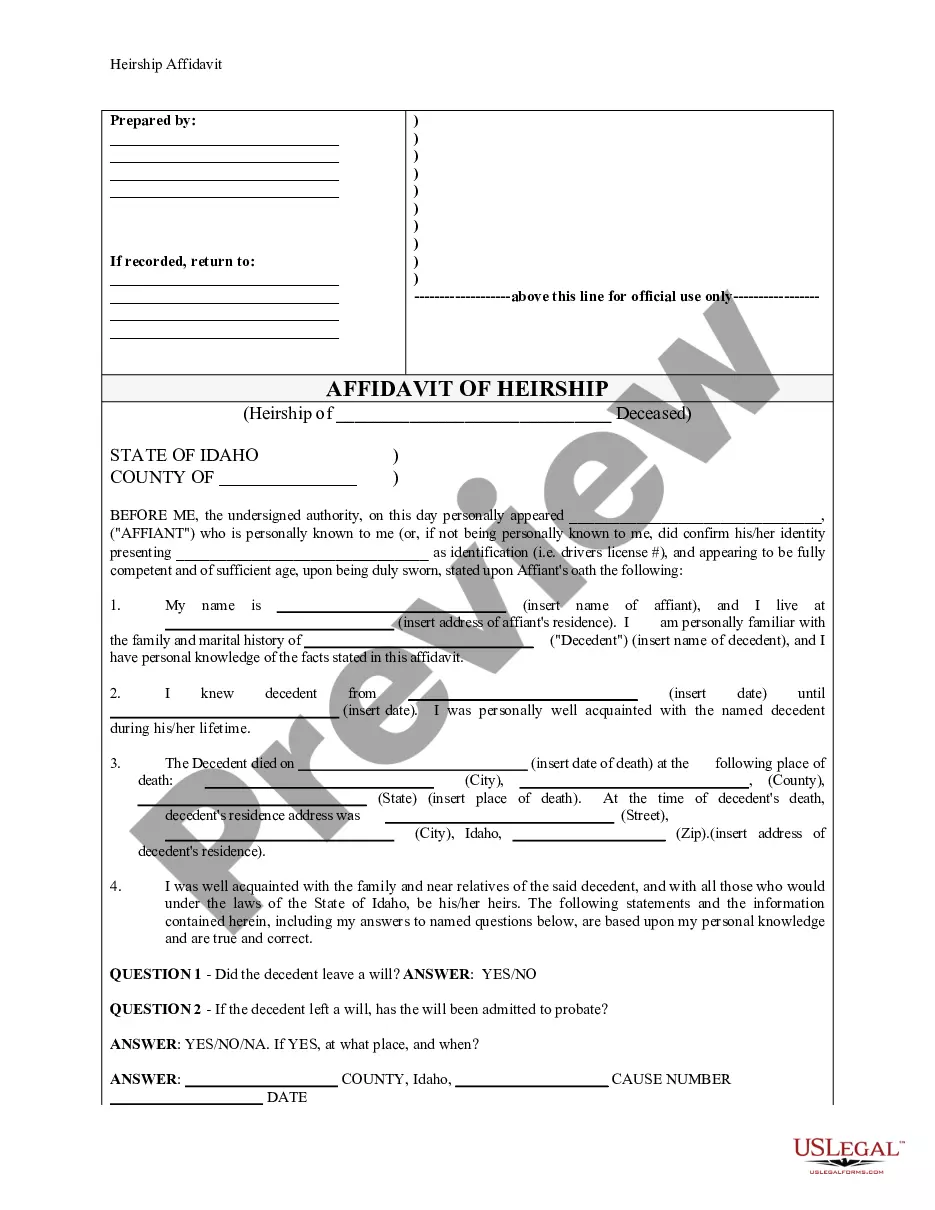
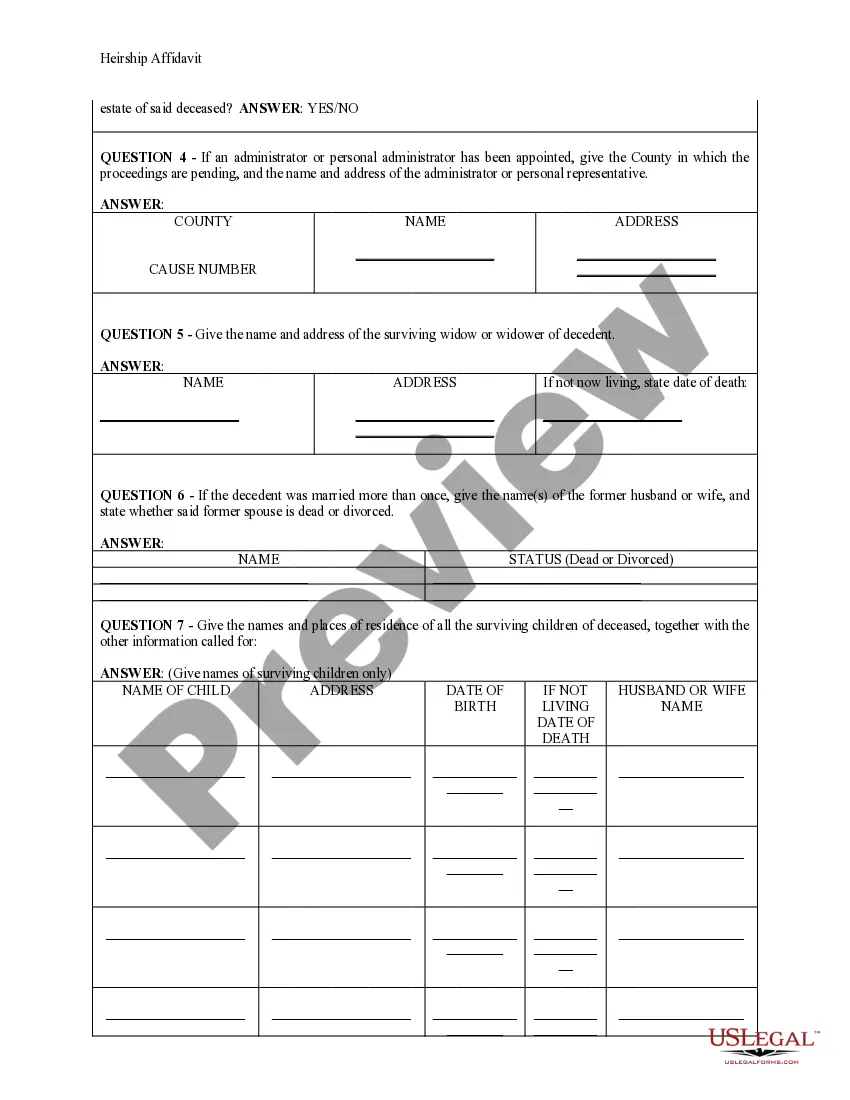
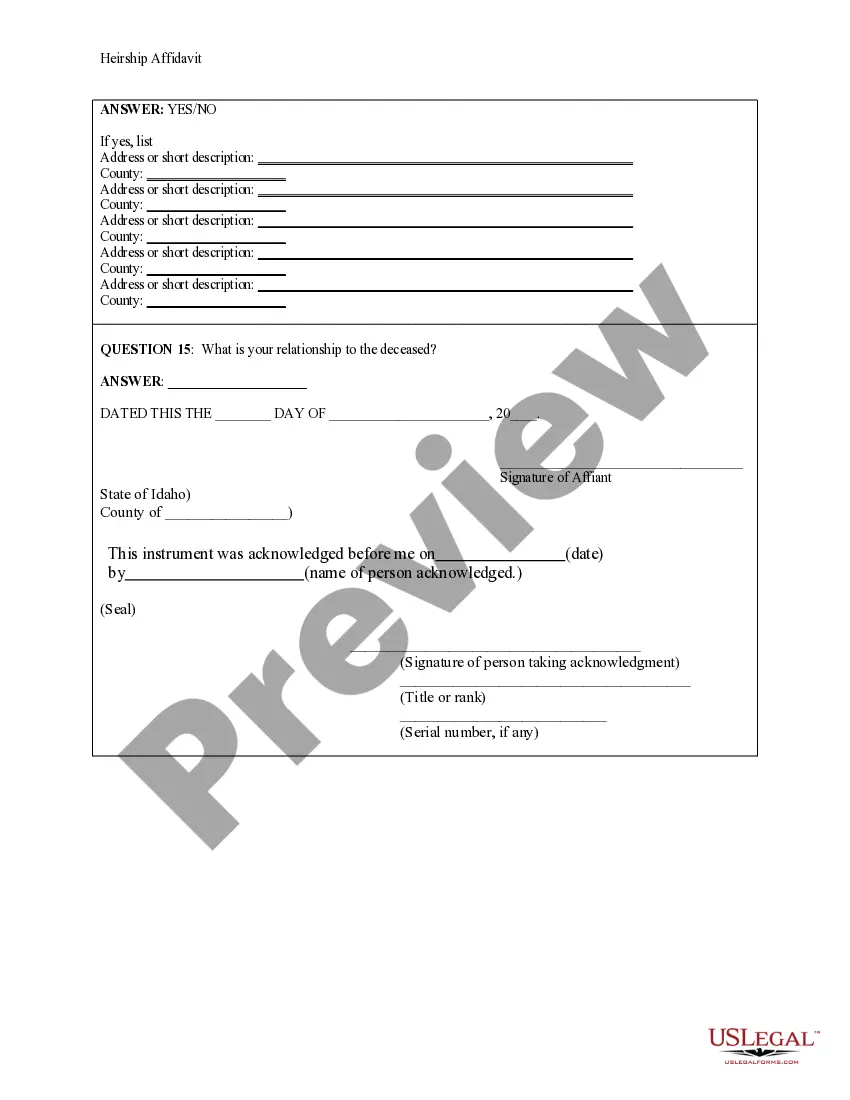
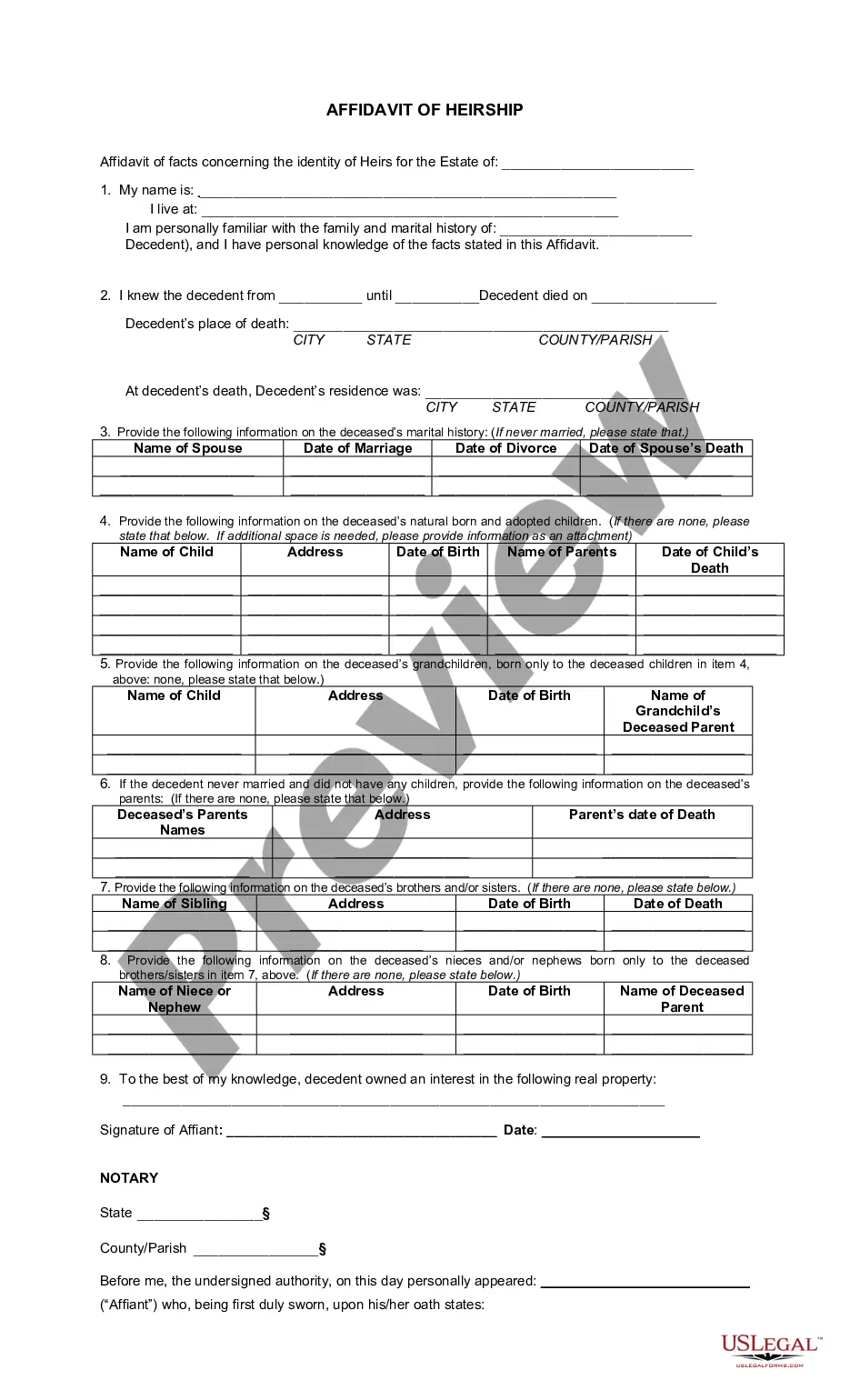
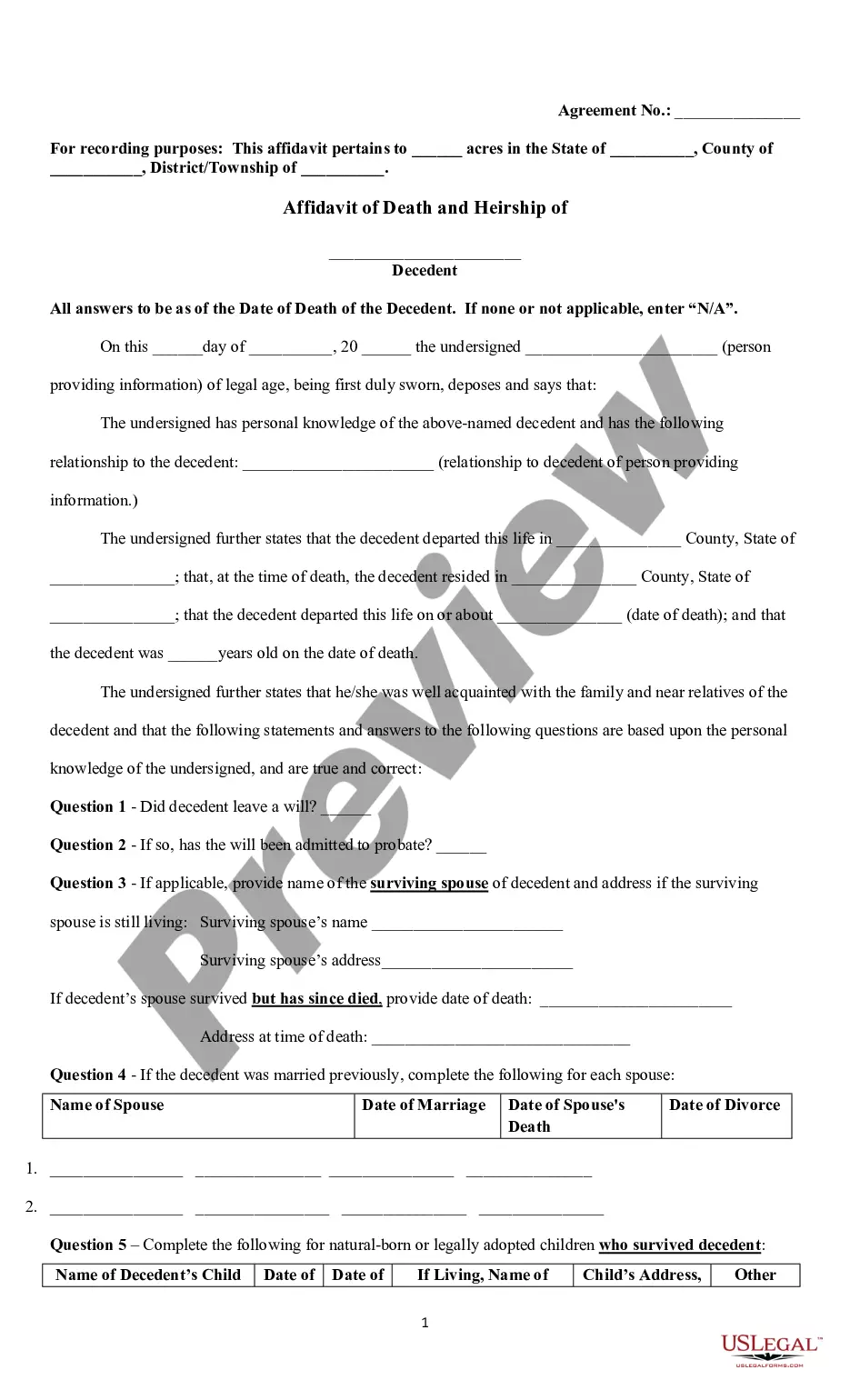
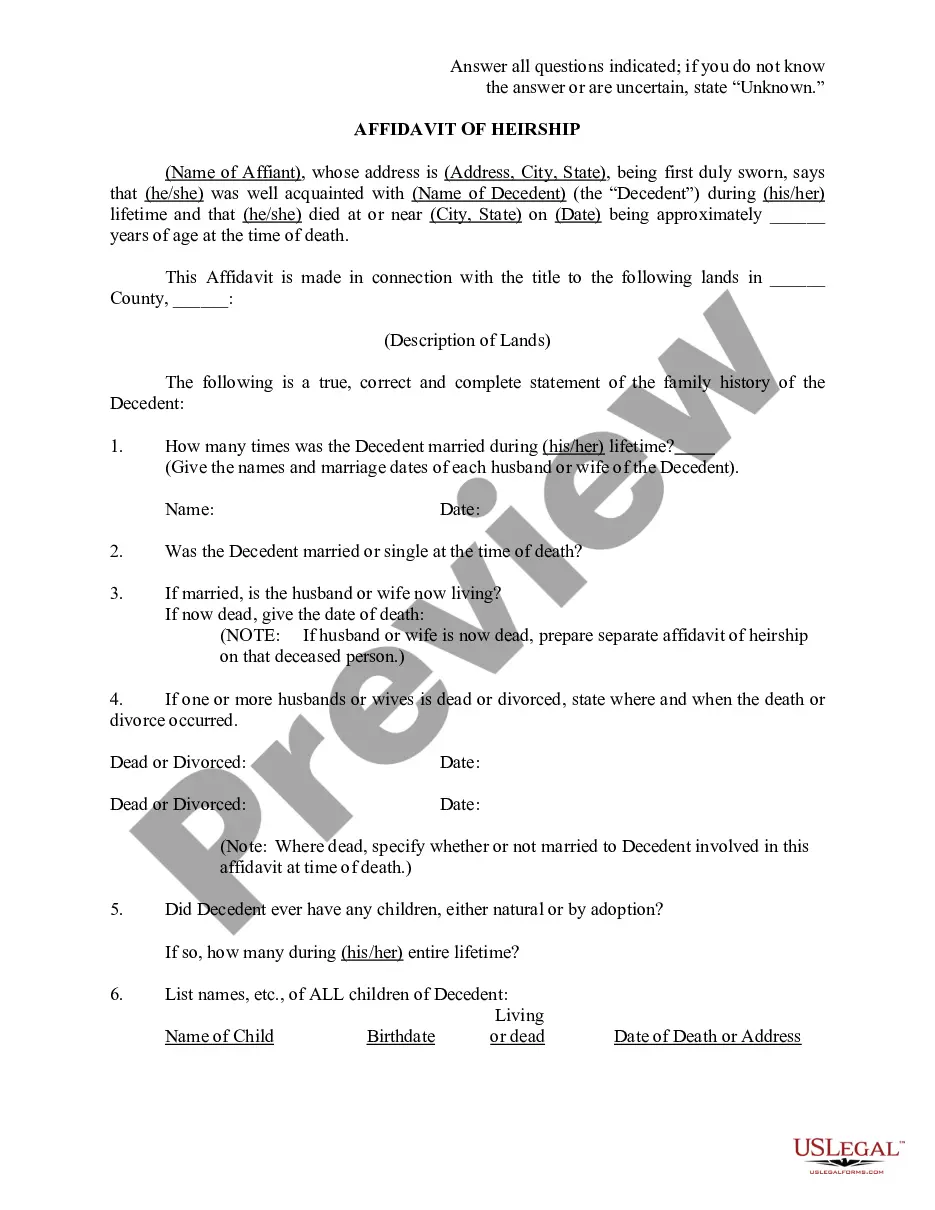
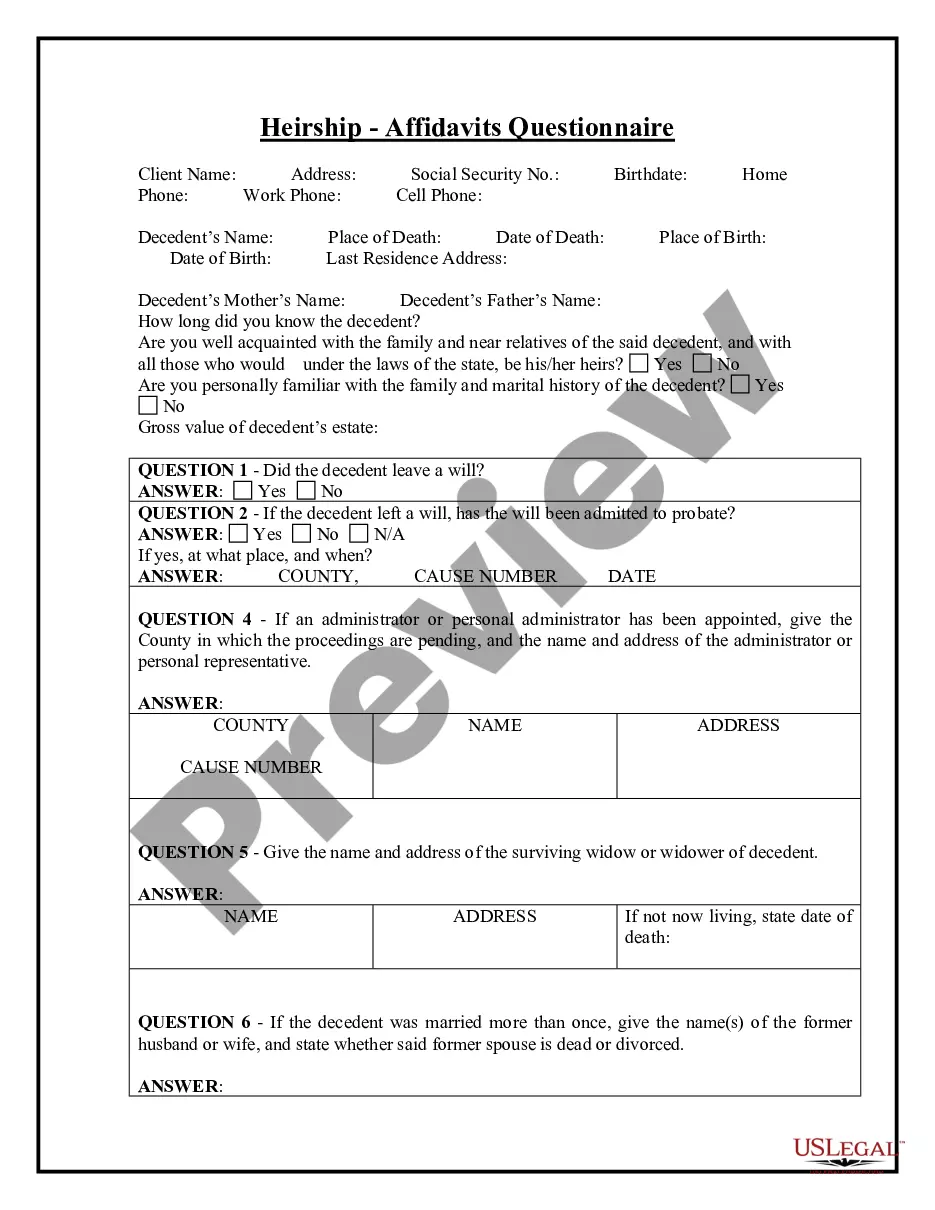
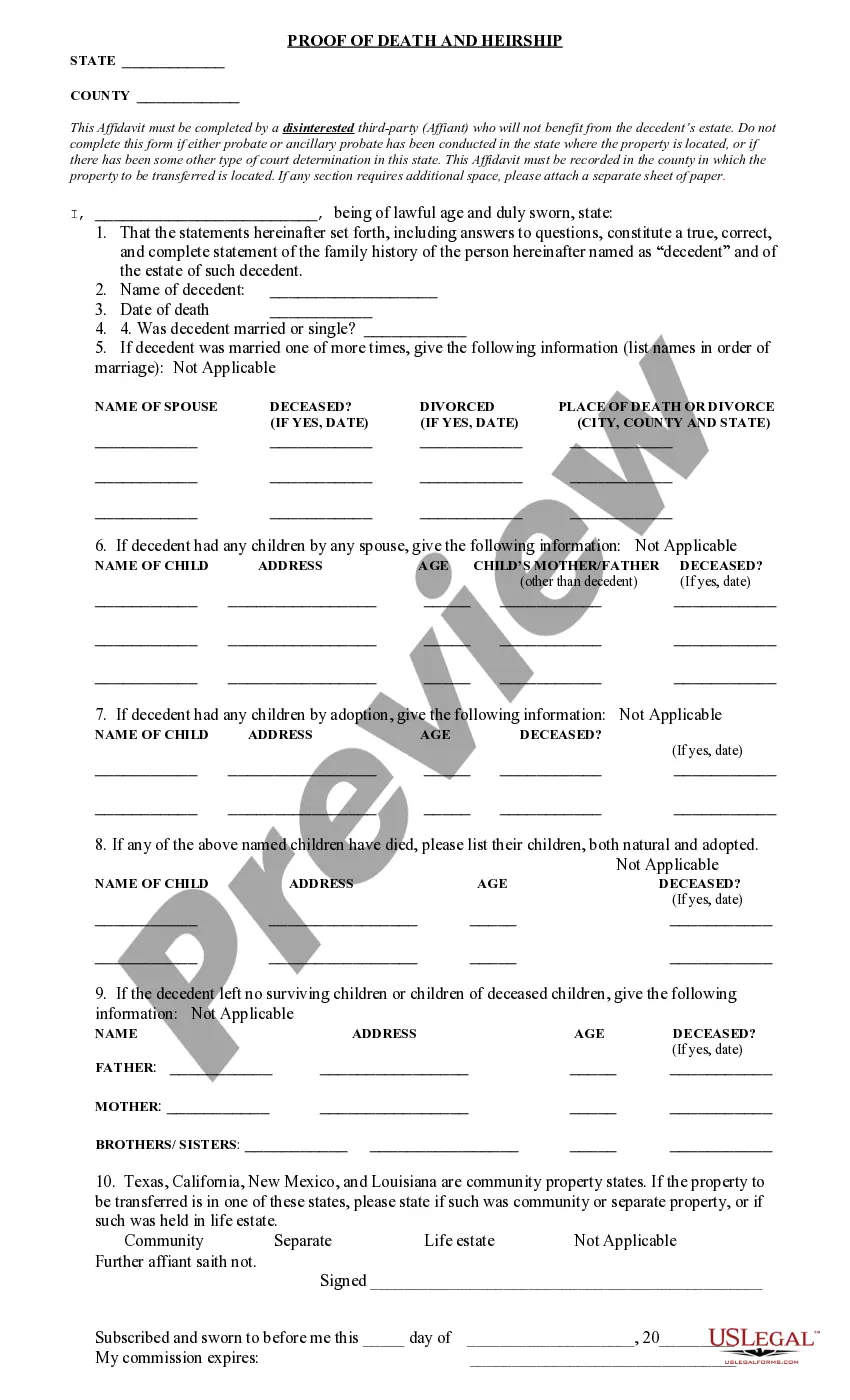
The Heirship Affidavit - Descent is a legal document used to declare the heirs of a deceased person. This form serves as a declaration by an individual who has personal knowledge of the deceased's family history and estate. It is particularly useful when a person dies without a will, enabling heirs to claim ownership of both personal and real property. Unlike a will, which is a document created by the deceased, the heirship affidavit provides evidence of relationships and intended heirs, helping to facilitate property transfers without the delay of probate in certain cases.
What’s included in this form
- Name and address of the affiant, the person completing the form.
- Date of the decedent's death and last known address.
- Questions regarding the existence of a will and any probate proceedings.
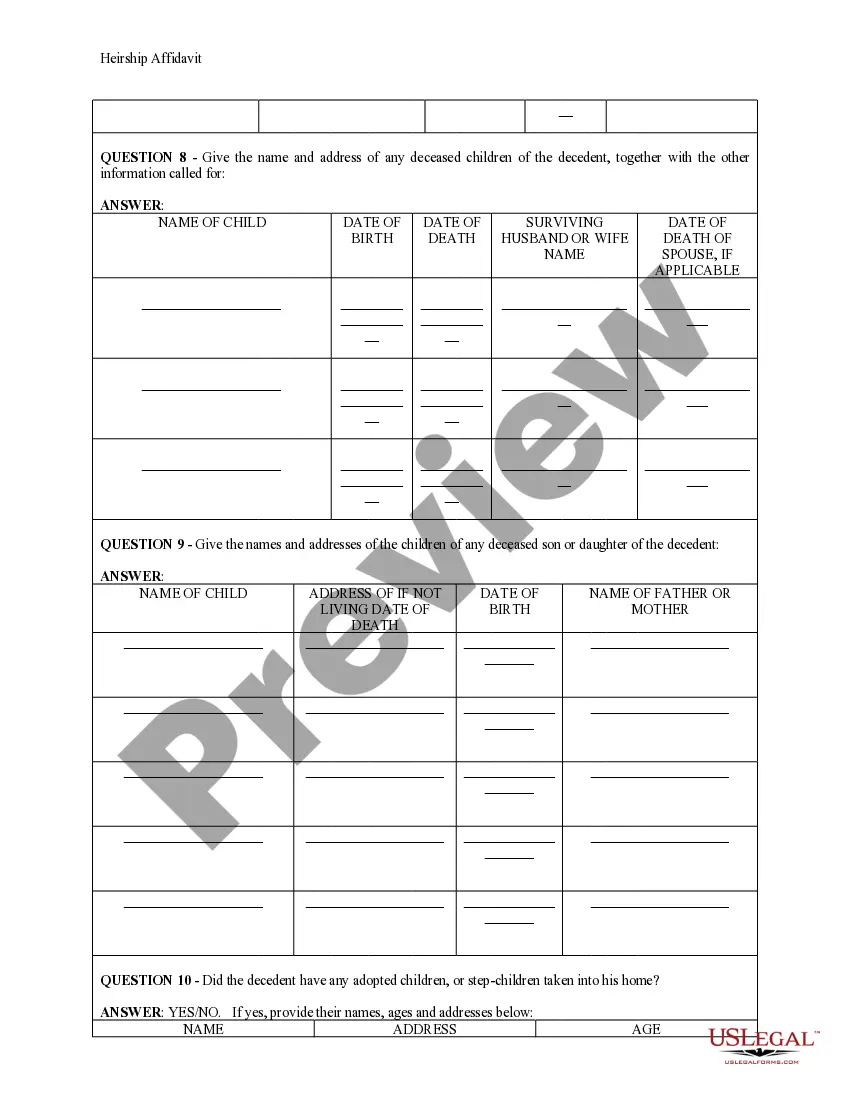
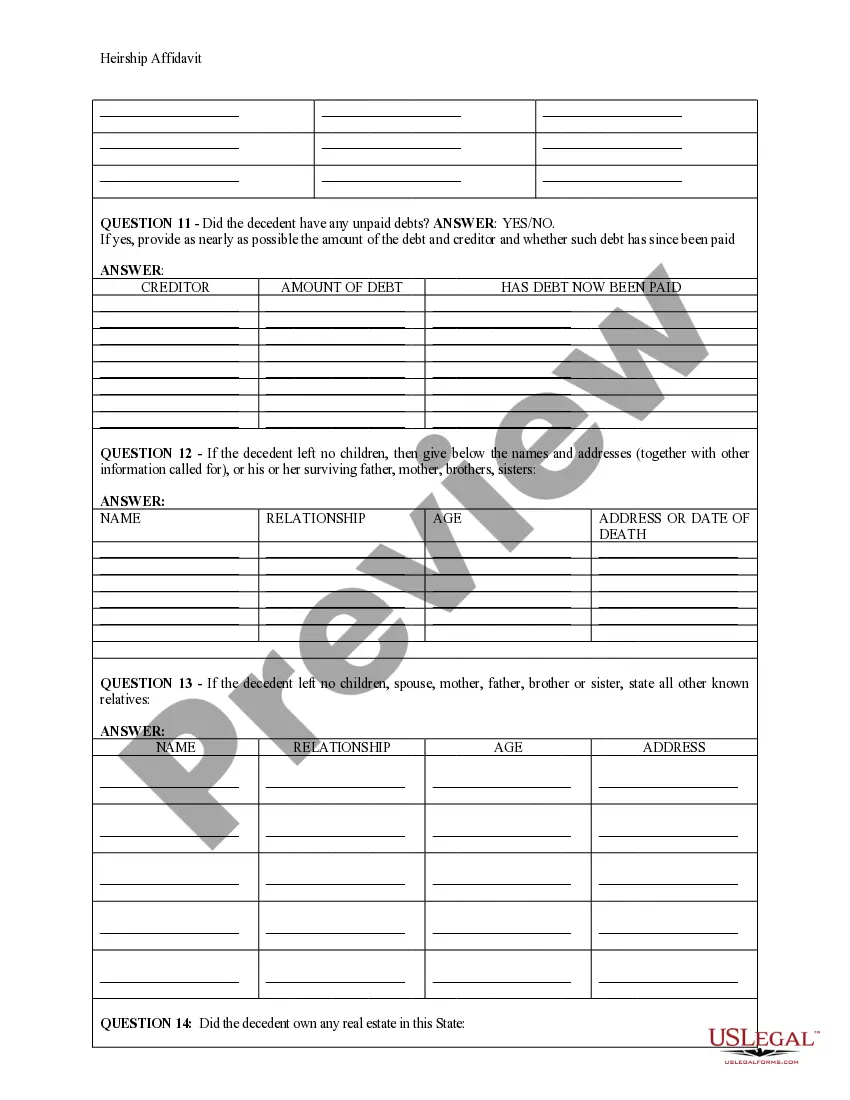
- Details about surviving relatives, including children, spouses, and other potential heirs.
- Personal knowledge statements regarding the decedent's family history.
- Signature of the affiant and notarization details for validation.
Situations where this form applies
This form is needed in situations where a person has died intestate, meaning without a formal will. For example, if the deceased owned property and there is no opened estate or will, this affidavit can help establish heirs to facilitate the transfer of real estate or other assets. It is useful when heirs need to prove their right to inherit or sell property, especially during transactions, like selling inherited land.
Intended users of this form
This affidavit is typically completed by:
- Individuals who were closely acquainted with the deceased and can provide accurate historical information.
- Heirs or beneficiaries looking to establish their right to the deceased's assets.
- Person designated as the affiant, who is usually not an heir themselves.
Instructions for completing this form
- Identify the parties involved, including the deceased and the affiant.
- Provide the dates of acquaintance with the deceased and their date of death.
- Answer questions regarding the existence of a will and other administrative details of the estate.
- List the names and addresses of surviving relatives and potential heirs.
- Sign the affidavit before a notary public to validate the information.
Does this form need to be notarized?
This form needs to be notarized to ensure legal validity. US Legal Forms provides secure online notarization powered by Notarize, allowing you to complete the process through a verified video call, available anytime.
Get your form ready online
Our built-in tools help you complete, sign, share, and store your documents in one place.
Make edits, fill in missing information, and update formatting in US Legal Forms—just like you would in MS Word.
Download a copy, print it, send it by email, or mail it via USPS—whatever works best for your next step.
Sign and collect signatures with our SignNow integration. Send to multiple recipients, set reminders, and more. Go Premium to unlock E-Sign.
If this form requires notarization, complete it online through a secure video call—no need to meet a notary in person or wait for an appointment.
We protect your documents and personal data by following strict security and privacy standards.

Make edits, fill in missing information, and update formatting in US Legal Forms—just like you would in MS Word.

Download a copy, print it, send it by email, or mail it via USPS—whatever works best for your next step.

Sign and collect signatures with our SignNow integration. Send to multiple recipients, set reminders, and more. Go Premium to unlock E-Sign.

If this form requires notarization, complete it online through a secure video call—no need to meet a notary in person or wait for an appointment.

We protect your documents and personal data by following strict security and privacy standards.
Mistakes to watch out for
- Failing to include all necessary information about the deceased's family structure.
- Not having the form notarized, if required under local law.
- Incorrectly answering questions related to wills or probate.
- Omitting names or addresses of surviving heirs.
Benefits of using this form online
- Convenience of downloading the form immediately without the need for a physical visit to a lawyer.
- Editable format allows users to fill in specific information based on personal circumstances.
- Access to professionally drafted templates ensures compliance with legal standards.
Looking for another form?

Form popularity
FAQ
If you die without a will in Idaho, your children will receive an intestate share of your property.For children to inherit from you under the laws of intestacy, the state of Idaho must consider them your children, legally.
An affidavit of heirship is needed to transfer a deceased person's interest in real or personal property to his or her heirs when the decedent dies without leaving a last will and testament or without disposing of all of his or her property in a will.
When a person who owns real property dies intestate, and there is no survivor mentioned in the deed, the heirs of the decedent, must file an affidavit of descent to establish their chain of title to the property. This affidavit, is known as an affidavit of descent.
Some of the most common ways states provide for transferring property into the name of an heir when there was no will include filing a small estates affidavit or affidavit of heirship, requesting letters of administration, and initiating court proceedings.
The heirship of a deceased person is determined through a document called an Affidavit of Heirship. This is a form that gives a detailed explanation of the heirs at law of the deceased person at the time of his/her death.The deceased, DOROTHY, died at Anytown, Illinois on January 1, 2015.
(A judgment in this case is a court order, in writing, reciting that the deceased person is dead, the date of death and a list of who are the heirs.) Proof. Once the judgment is issued, copies of the judgment can be used to show proof as to who is entitled to estate assets.
Get a copy of the probated will. Obtain a certified copy of the death certificate. Draft a new deed that names you as the property owner. Sign the new deed and have it notarized.
First, a probate is required in Idaho anytime an estate has a value of $100,000 or more regardless of the property that is contained in the estate.Second, a probate is required in Idaho anytime an estate holds any real property, regardless of the value of the real property. (Idaho Code § 15-3-711.)
A fee of $15 for the first page and $4 for each additional page is common. Ask if you can file the two affidavits of heirship as one document. Some counties let you file the two affidavits of heirship as one document if the decedent and property descriptions are the same.