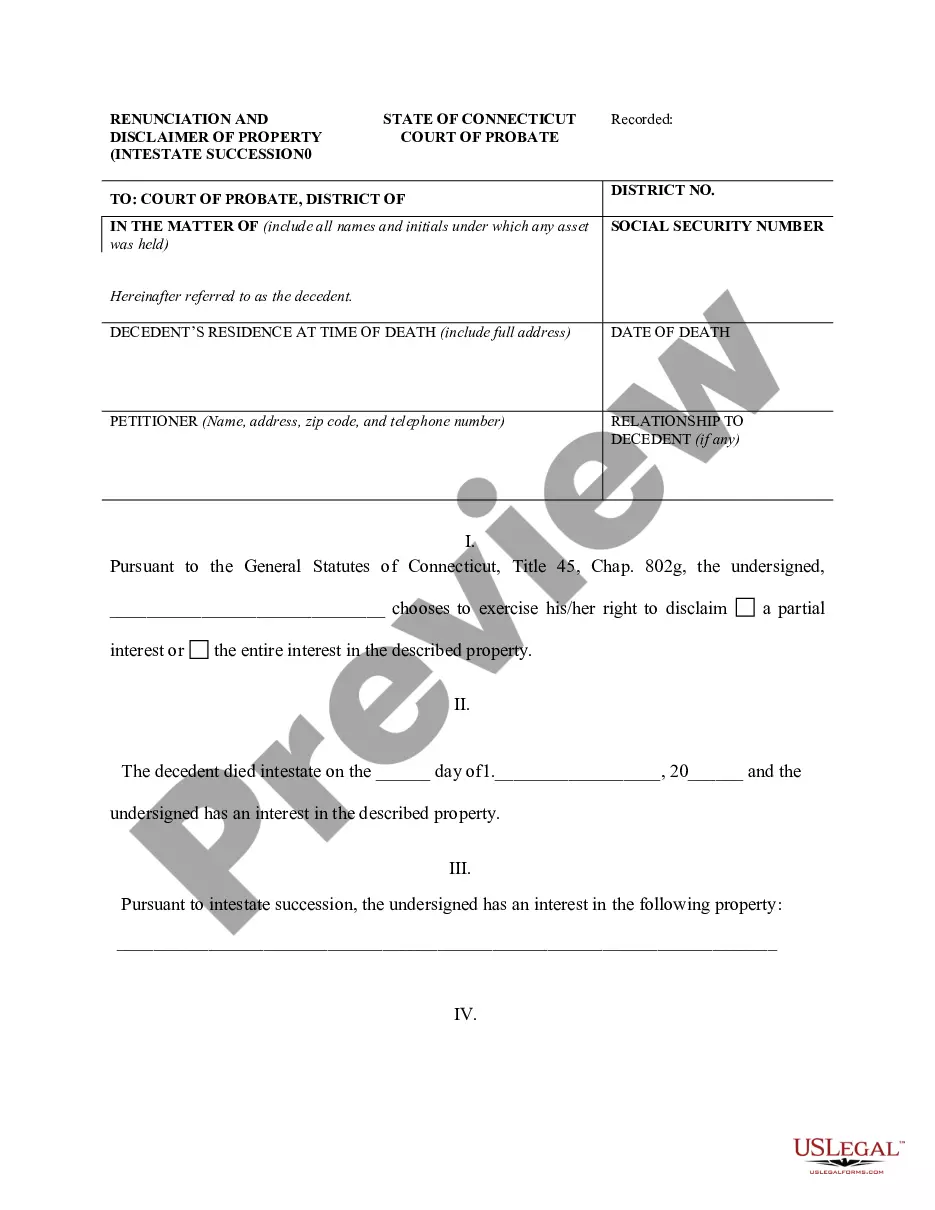
Wire Transfer Instructions Form
About this form
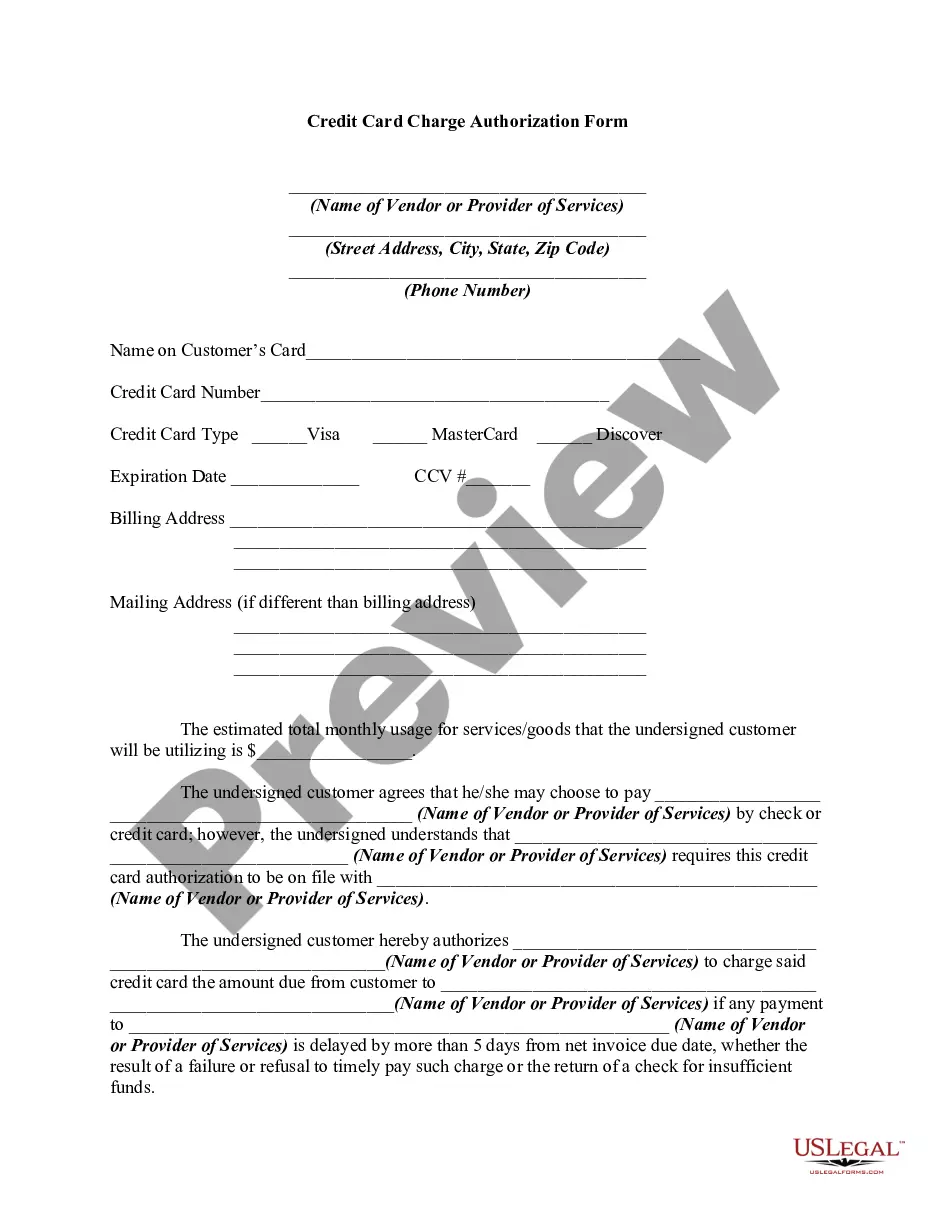
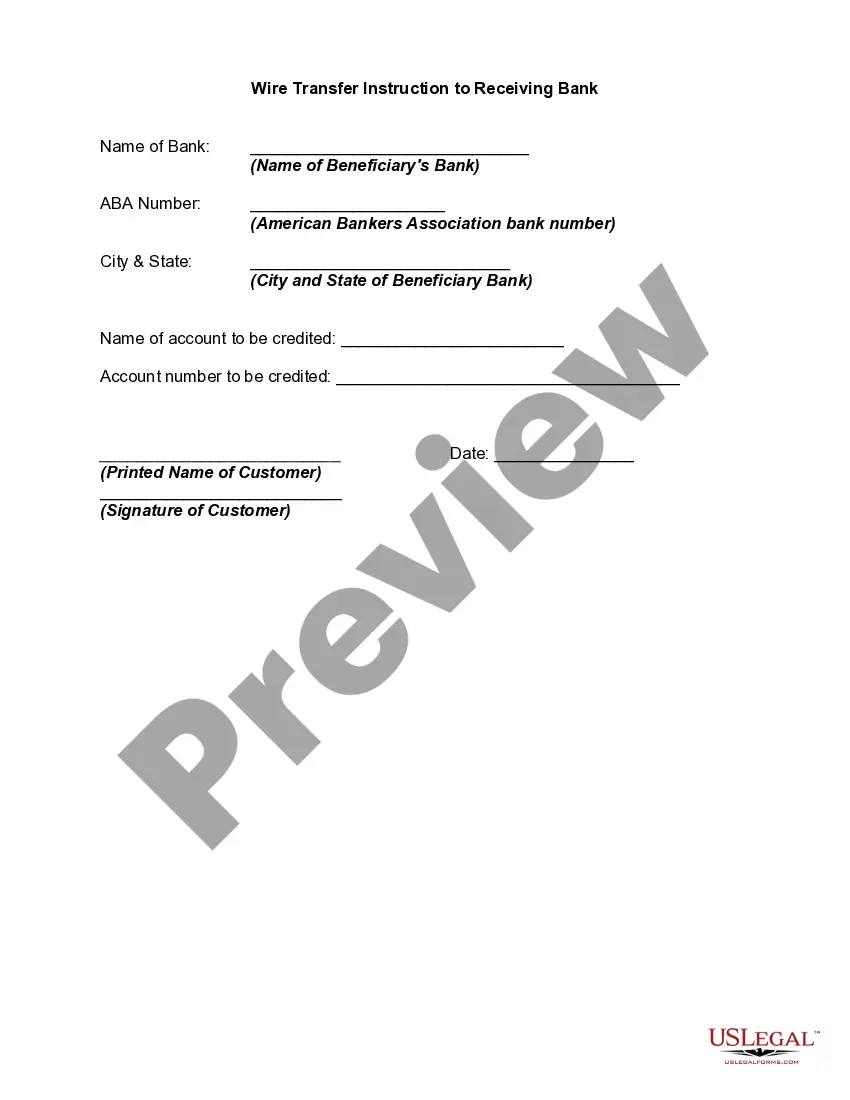
The Wire Transfer Instructions Form is a crucial document used for detailing the necessary information to securely transfer funds between bank accounts. This form ensures that all relevant data is provided accurately, distinguishing it from general payment forms or invoice documents. A correct wire transfer can expedite payments, making it an essential tool for businesses and individuals who need to move money efficiently.
Key components of this form
- Remit to: Name of the recipient bank account.
- ABA Number: The routing number for the bank where the funds will be sent.
- Account Number: The account number of the recipient.
- For Credit To: Identifies the name or designation for the funds.
- Reference: Field for additional identification, such as invoice number.
- Contact Information: Details of the account manager and sender for any inquiries.

When to use this document
This form should be used whenever a wire transfer needs to be initiated. Common scenarios include paying suppliers, transferring funds between business accounts, or conducting real estate transactions that require rapid fund delivery. It's particularly useful when specific instructions are necessary for the recipient's bank to process the transfer correctly.
Who this form is for
- Business owners managing payments to vendors.
- Individuals wishing to send money securely between bank accounts.
- Finance professionals handling large transactions.
- Anyone needing to document wire transfer details for record-keeping.
Completing this form step by step
- Identify the bank account you are sending money to by completing the "Remit to" field.
- Provide the ABA Number for the bank's routing information.
- Enter the Account Number associated with the recipient's bank account.
- Fill in the "For Credit To" section to specify how the funds should be credited.
- Add a Reference for the transaction, such as an invoice number, to clarify the purpose.
- Include your contact information as well as the account manager's details for assistance, if needed.
Is notarization required?
This form does not typically require notarization unless specified by local law.
Get your form ready online
Our built-in tools help you complete, sign, share, and store your documents in one place.
Make edits, fill in missing information, and update formatting in US Legal Forms—just like you would in MS Word.
Download a copy, print it, send it by email, or mail it via USPS—whatever works best for your next step.
Sign and collect signatures with our SignNow integration. Send to multiple recipients, set reminders, and more. Go Premium to unlock E-Sign.
If this form requires notarization, complete it online through a secure video call—no need to meet a notary in person or wait for an appointment.
We protect your documents and personal data by following strict security and privacy standards.

Make edits, fill in missing information, and update formatting in US Legal Forms—just like you would in MS Word.

Download a copy, print it, send it by email, or mail it via USPS—whatever works best for your next step.

Sign and collect signatures with our SignNow integration. Send to multiple recipients, set reminders, and more. Go Premium to unlock E-Sign.

If this form requires notarization, complete it online through a secure video call—no need to meet a notary in person or wait for an appointment.

We protect your documents and personal data by following strict security and privacy standards.
Common mistakes
- Forgetting to double-check the ABA number, leading to funds being sent to the wrong account.
- Omitting the account number, which can delay or prevent the transfer.
- Using unclear references that might confuse recipients.
Why complete this form online
- Convenient access and download options available anytime, which saves time.
- Editability allows users to adjust details as necessary before finalizing.
- Reliability ensures that the form is crafted by licensed attorneys, enhancing its validity.
Looking for another form?


Form popularity
FAQ
The Wire Transfer Instructions Form is a document used to detail the information needed to securely transfer funds between bank accounts. It collects Remit to, ABA Number, Account Number, For Credit To, Reference, and Contact Information to ensure accurate instructions. Use it whenever a wire transfer is initiated, such as paying suppliers or moving funds between business accounts.
To fill the Wire Transfer Instructions Form, enter the recipient bank details in the designated fields: Remit to, ABA Number, Account Number, For Credit To, Reference, and Contact Information. Ensure all data matches the recipient’s bank records and double-check for accuracy before submitting.
Required information for a wire transfer includes Remit to (recipient bank account name), ABA Number (routing number), Account Number (recipient’s account), For Credit To (funds’ designation), Reference (invoice or identifier), and Contact Information (account manager and sender). This ensures the sending bank has complete, verifiable instructions.
Wire instructions should clearly present the Remit to, ABA Number, Account Number, For Credit To, Reference, and Contact Information in a straightforward layout. Clear, complete data helps the recipient bank process the transfer quickly and reduces the chance of errors.
This Wire Transfer Instructions Form collects specific instructions to ensure a correct wire transfer, including who the funds are sent to (Remit to), where they should go (For Credit To and Account Number), the routing number (ABA Number), an identifying Reference, and contact details for follow-up.
The difference is that ACH instructions and wire transfer instructions address different payment methods. The Wire Transfer Instructions Form focuses on wire transfers, capturing data such as Remit to, ABA Number, Account Number, For Credit To, Reference, and Contact Information to enable immediate bank-to-bank delivery, whereas ACH involves batch processing.