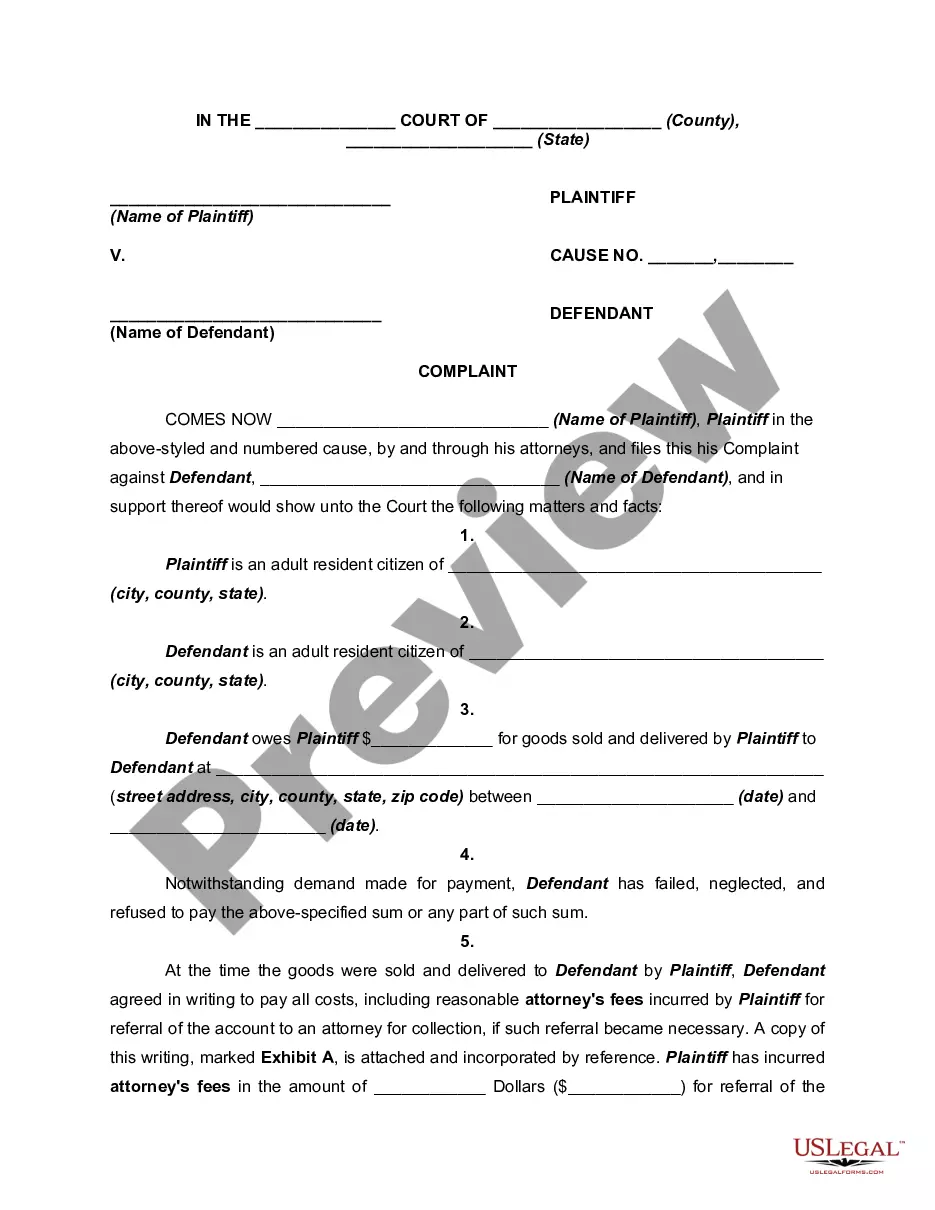
Texas Closing Statement

Understanding this form
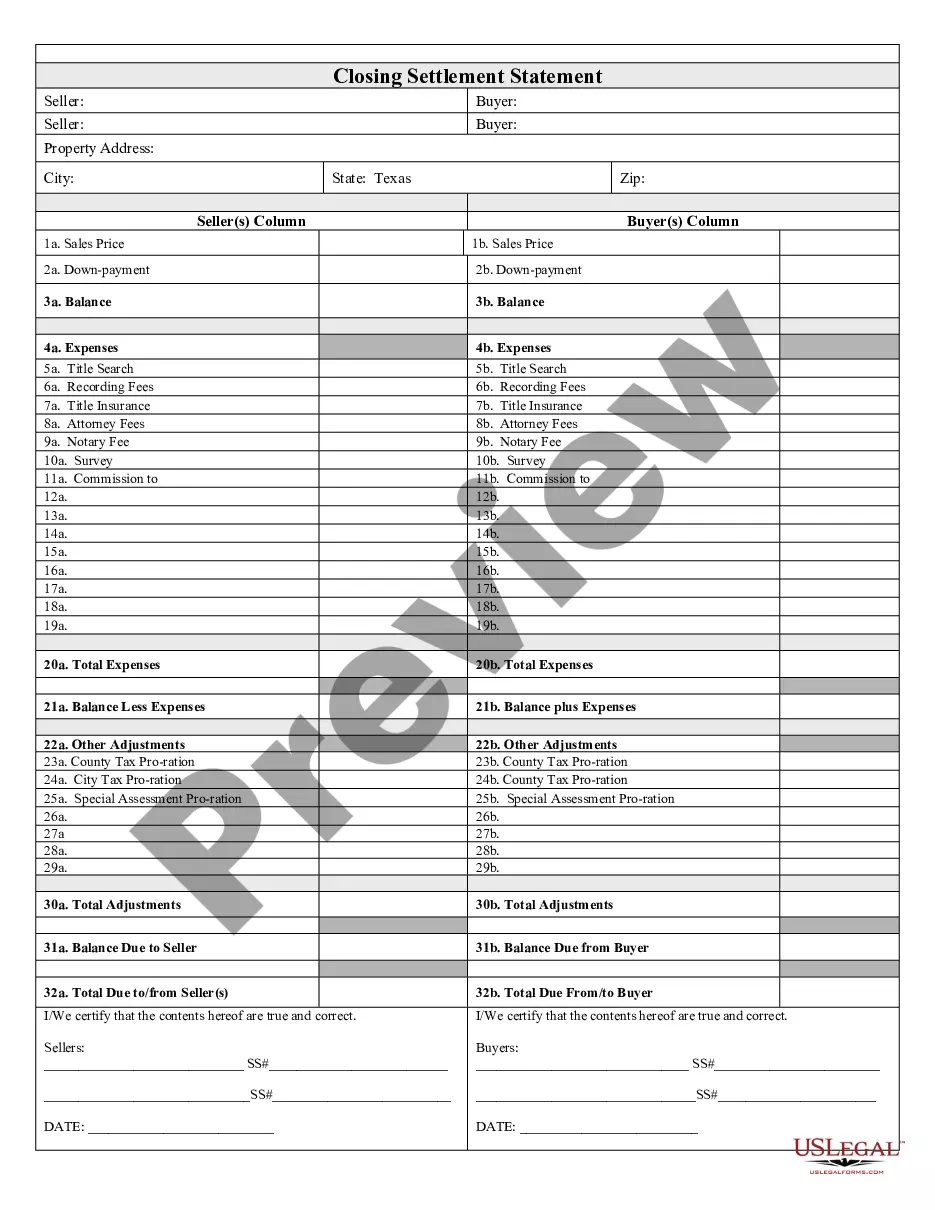
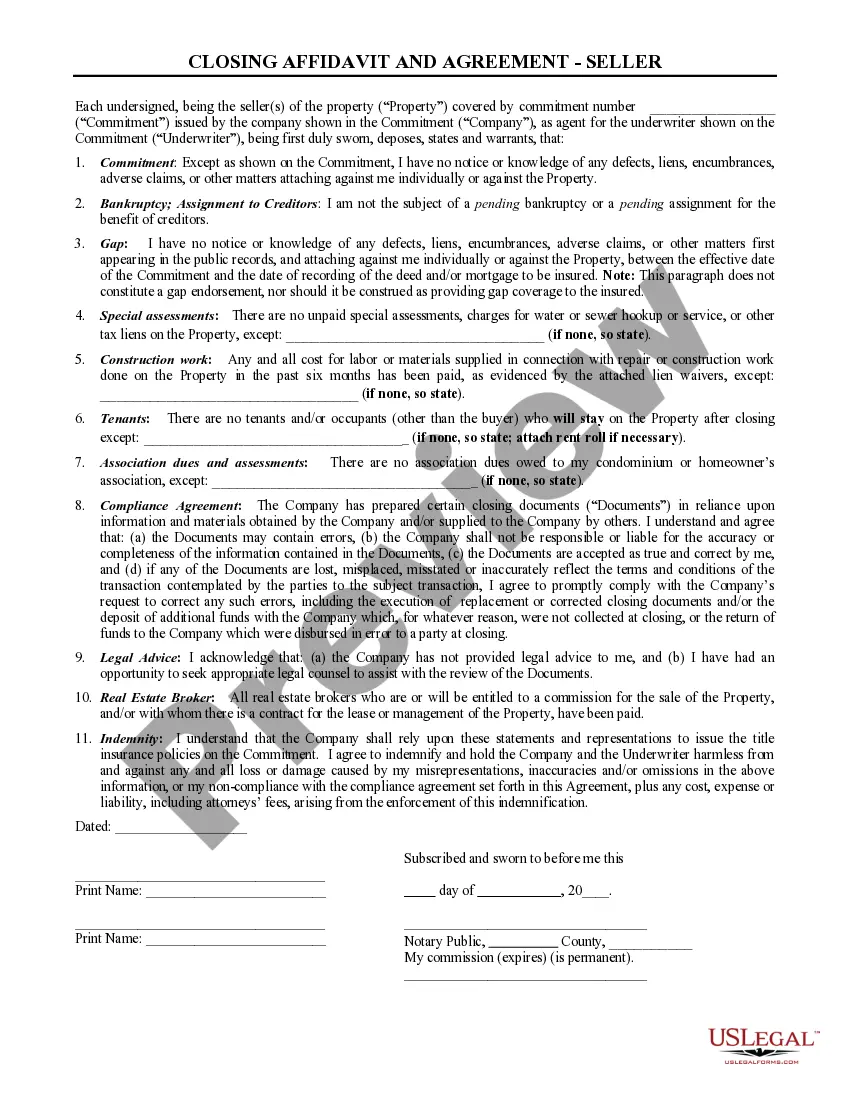
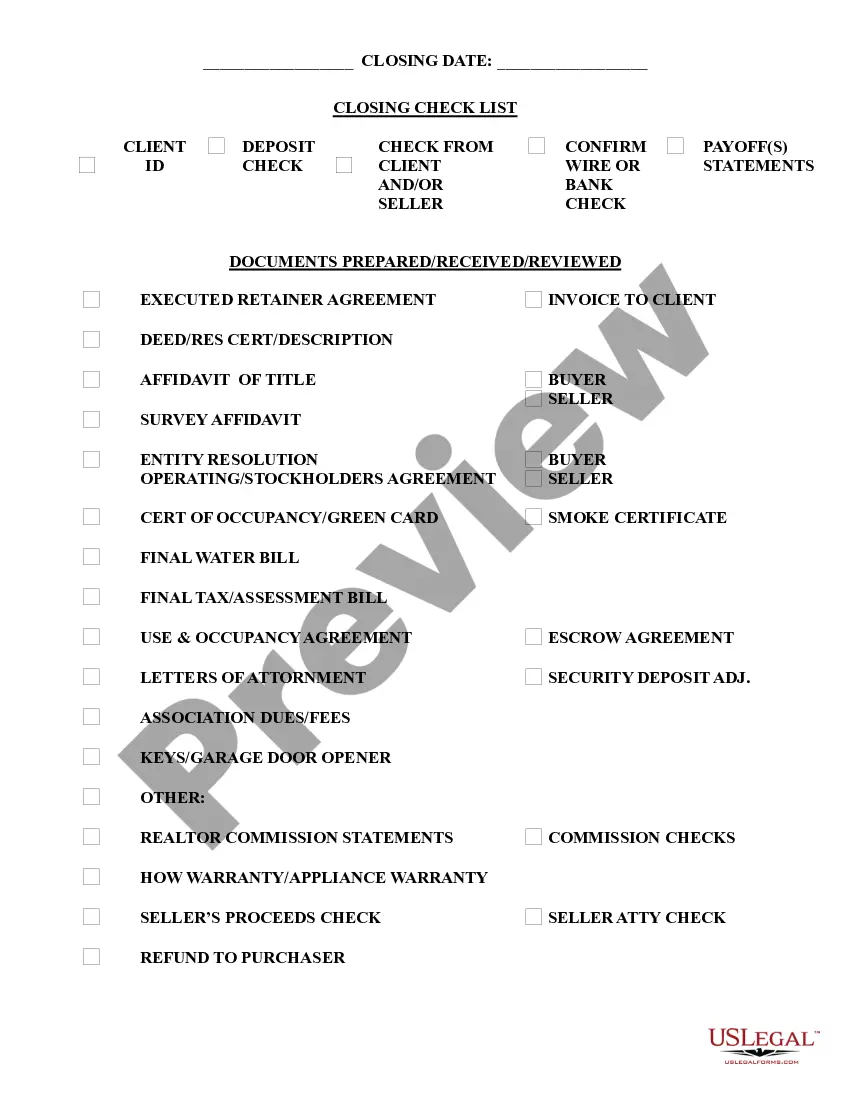
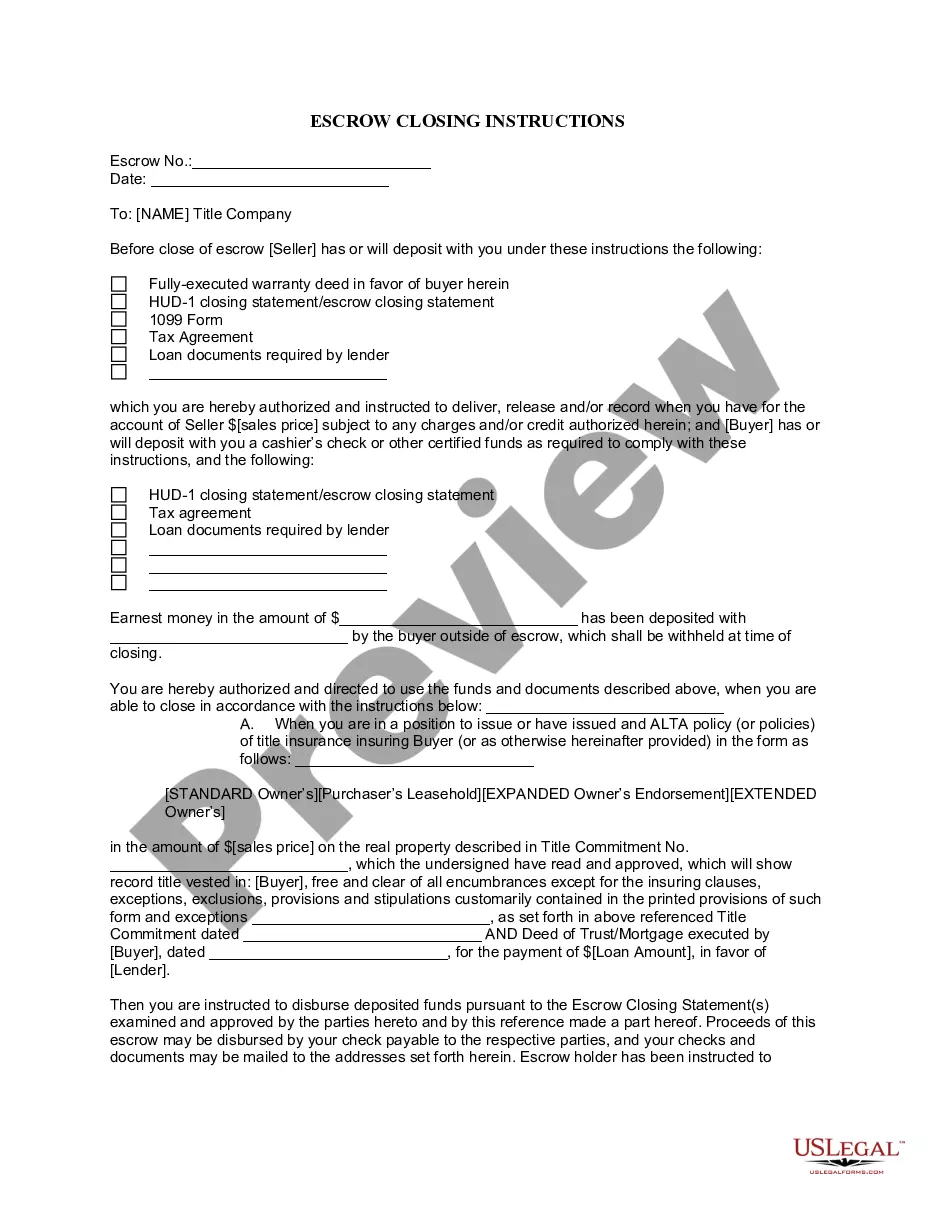
The Closing Statement is an essential document used in real estate transactions, particularly for cash sales or owner financing arrangements. This form provides a detailed accounting of all costs and financial adjustments related to the sale, ensuring that both the buyer and seller have a clear understanding of their financial obligations. Unlike other real estate forms, the Closing Statement specifically itemizes expenses and balances, making it unique to the settlement process.
Main sections of this form
- Balance calculations for buyer and seller.
- Itemization of expenses such as title search, recording fees, and attorney fees.
- Total adjustments including taxes and special assessments.
- Certification area for signatures of both the seller and buyer, affirming the accuracy of the document.
- Sections detailing any other financial adjustments required to finalize the transaction.

When to use this form
You should use this Closing Statement when selling or buying real estate through a cash transaction or owner financing. It is necessary to ensure transparency in the financial aspects of the transaction, providing both parties with a clear record of all costs and adjustments. This form is particularly useful at the closing meeting, where final payments and document transfers occur.
Who should use this form
This form is intended for:
- Real estate sellers who are finalizing the sale of their property.
- Real estate buyers engaged in a cash transaction or owner financing agreement.
- Real estate agents or attorneys involved in the closing process.
How to prepare this document
- Identify all parties involved in the transaction, including full names and contact information.
- Specify the details of the property being sold, including its address and legal description.
- List all expenses incurred during the transaction, including fees for title search, recording, and attorney services.
- Calculate total adjustments, including proration of county and city taxes.
- Have both the seller and buyer sign and date the form to certify the accuracy of the information provided.
Does this form need to be notarized?
This form must be notarized to be legally valid. US Legal Forms provides secure online notarization powered by Notarize, allowing you to complete the process through a verified video call.
Get your form ready online
Our built-in tools help you complete, sign, share, and store your documents in one place.
Make edits, fill in missing information, and update formatting in US Legal Forms—just like you would in MS Word.
Download a copy, print it, send it by email, or mail it via USPS—whatever works best for your next step.
Sign and collect signatures with our SignNow integration. Send to multiple recipients, set reminders, and more. Go Premium to unlock E-Sign.
If this form requires notarization, complete it online through a secure video call—no need to meet a notary in person or wait for an appointment.
We protect your documents and personal data by following strict security and privacy standards.

Make edits, fill in missing information, and update formatting in US Legal Forms—just like you would in MS Word.

Download a copy, print it, send it by email, or mail it via USPS—whatever works best for your next step.

Sign and collect signatures with our SignNow integration. Send to multiple recipients, set reminders, and more. Go Premium to unlock E-Sign.

If this form requires notarization, complete it online through a secure video call—no need to meet a notary in person or wait for an appointment.

We protect your documents and personal data by following strict security and privacy standards.
Common mistakes
- Failing to accurately list all expenses, leading to confusion at closing.
- Incorrectly calculating total adjustments or balances.
- Not obtaining signatures from both parties, which can invalidate the document.
- Overlooking local laws that may require additional disclosures or information.
Why use this form online
- Convenience of immediate download, allowing for quick preparation.
- Easily editable format to customize according to the specifics of your transaction.
- Access to templates drafted by licensed attorneys, ensuring legal validity.
- Secure storage of documents for future reference.
Looking for another form?
Form popularity
FAQ
Total closing costs to purchase a $300,000 home could cost anywhere from approximately $6,000 to $12,000 or even more. The funds can't typically be borrowed because that would raise the buyer's loan ratios to a point where they might no longer qualify.
Are Sellers & Buyers at closing together? No. Texas is what's called an escrow state, which means that a trusted third party, like your title company, holds both the money and the signed deed and makes all the necessary arrangements for the transfer.
A settlement statement is also known as a HUD-1 form or a closing statement. Until 2015, when the rules changed, this form was provided twice. First, within three business days of applying for a mortgage loan, the borrower receives one in the mail with the person's estimated closing costs.
Closing arguments are the opportunity for each party to remind jurors about key evidence presented and to persuade them to adopt an interpretation favorable to their position.
A closing agent prepares the closing statement, which is settlement sheet. It's a comprehensive list of every expense that the buyer and seller must pay to complete the real estate transaction. Fees listed on this sheet include commissions, mortgage insurance, and property tax deposits.
What is the seller's closing statement, aka settlement statement? The seller's closing statement is an itemized list of fees and credits that shows your net profits as the seller, and summarizes the finances of the entire transaction.
The deed and mortgage documents are filed with the county recorder and these become public record. 3feff You can always obtain copies of these from the recorder's office or from a title company. Most documents are digitized in some form, especially those related to the transaction.
How much are closing costs in Texas? Though all the taxes, fees, lender charges and insurance add up, generally neither party pays 100% of all the closing costs. Instead, the seller will typically pay between 5% to 10% of the sales price and the buyer will pay between 3% to 4% in closing costs.
A closing statement, also called a HUD1 or settlement sheet, is a legal form your closing or settlement agent uses to itemize all of the costs you and the seller will have to pay at closing to complete a real estate transaction.