Mississippi Answer
Overview of this form
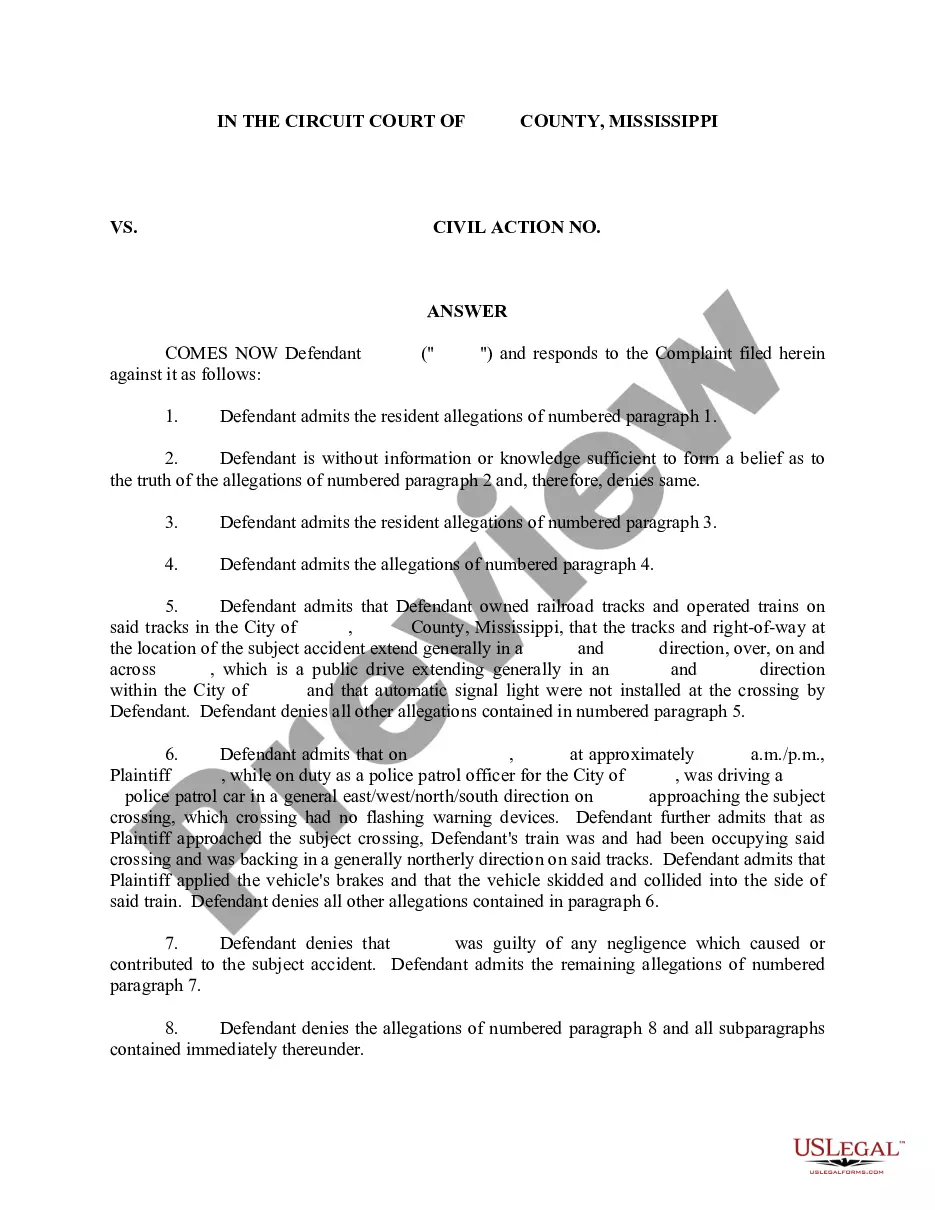
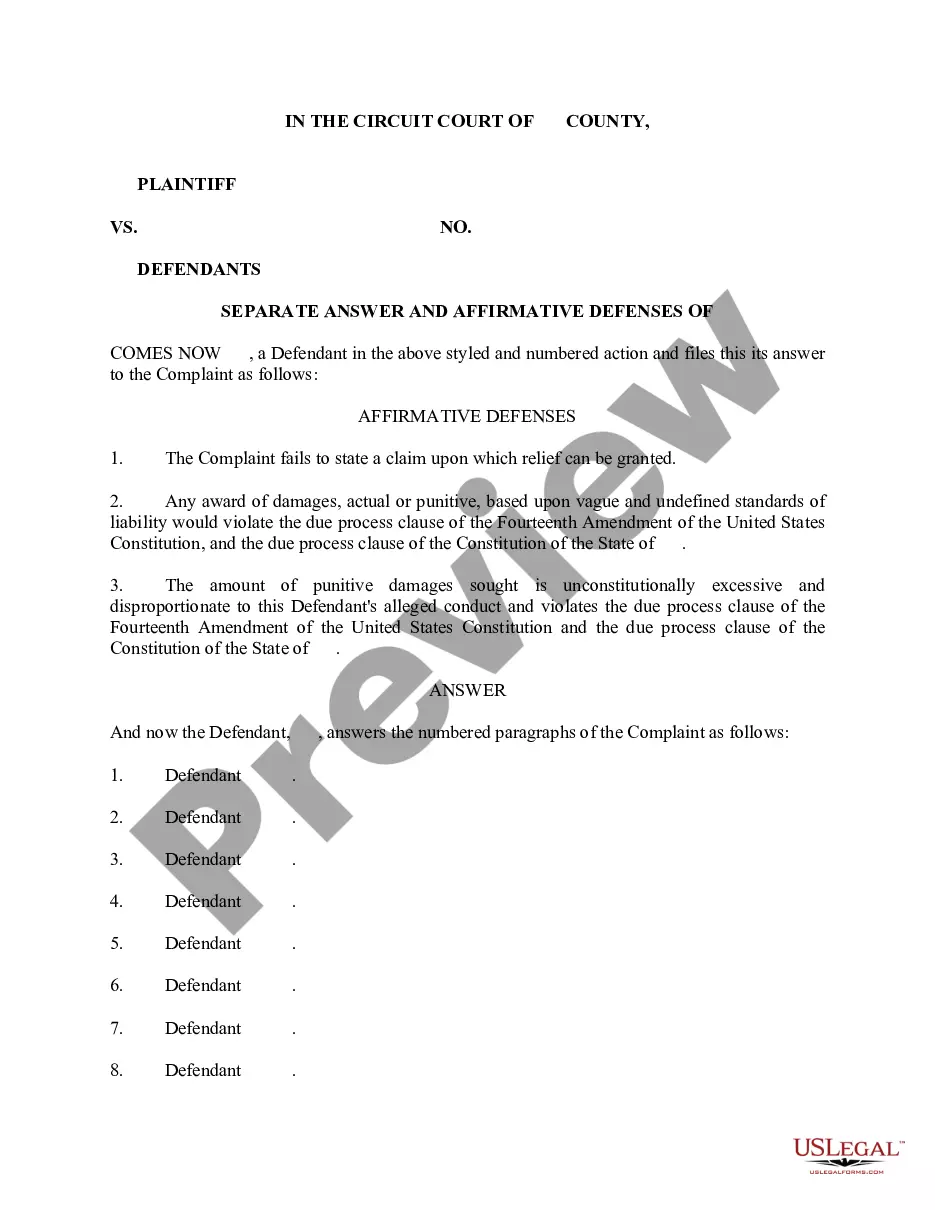
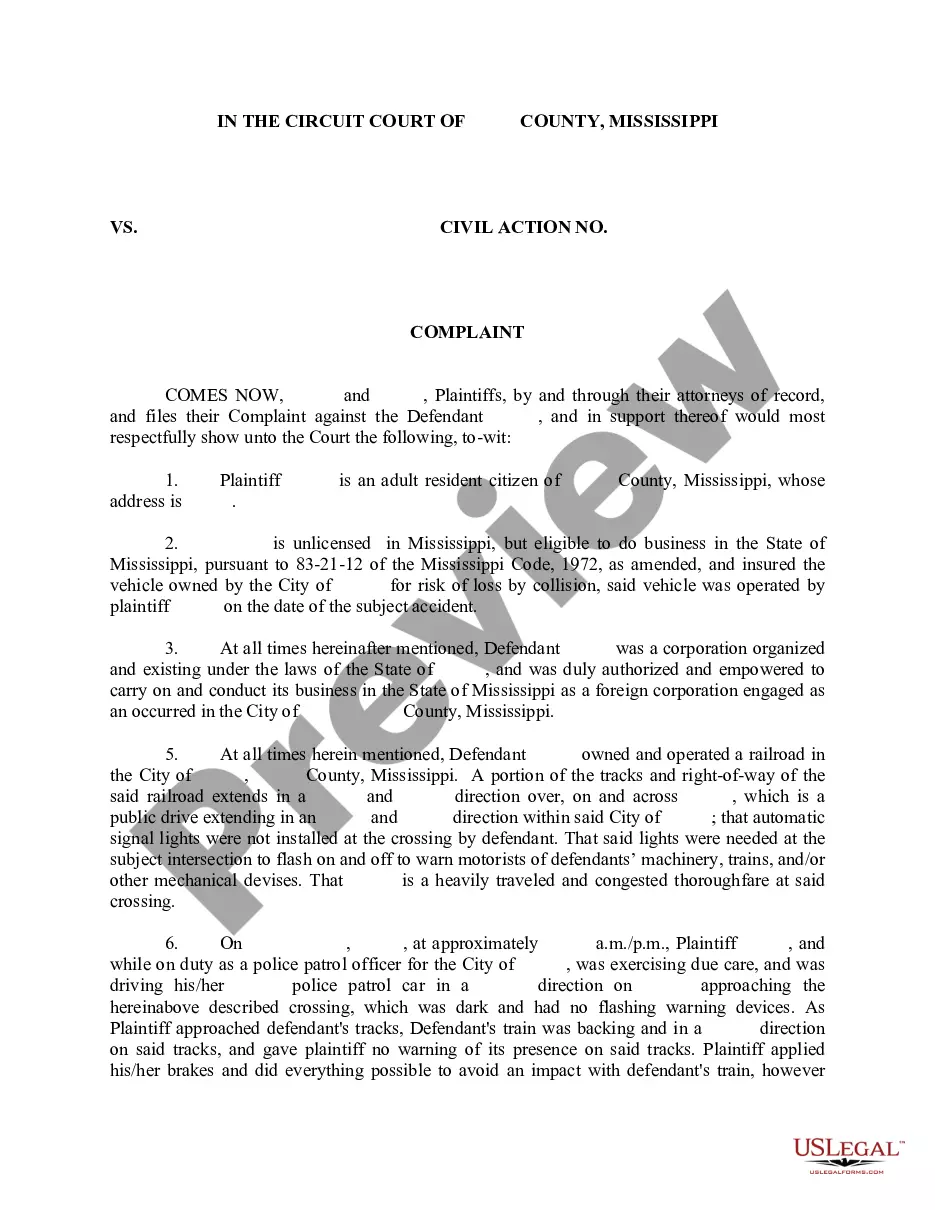
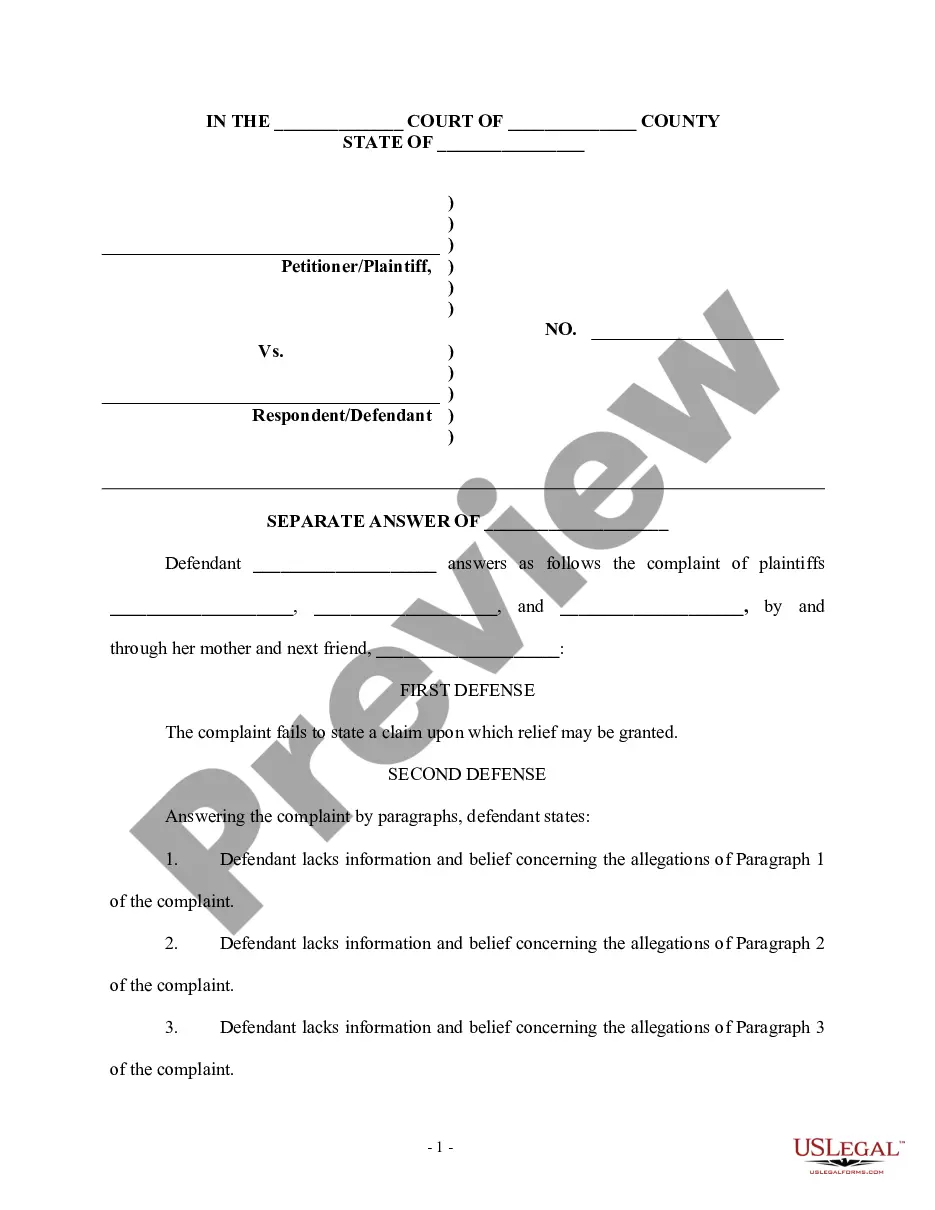
The Answer form is a legal document filed in response to a Complaint in a lawsuit, specifically for cases involving an automobile and train collision. This form allows the Defendant to address allegations made by the Plaintiff and assert any affirmative defenses. Unlike other responses that may not cover specific scenarios, this Answer is tailored for situations where a train and vehicle incident has occurred, ensuring that the legal responses are relevant and applicable.
What’s included in this form
- Admission or denial of specific allegations made in the Plaintiff's Complaint.
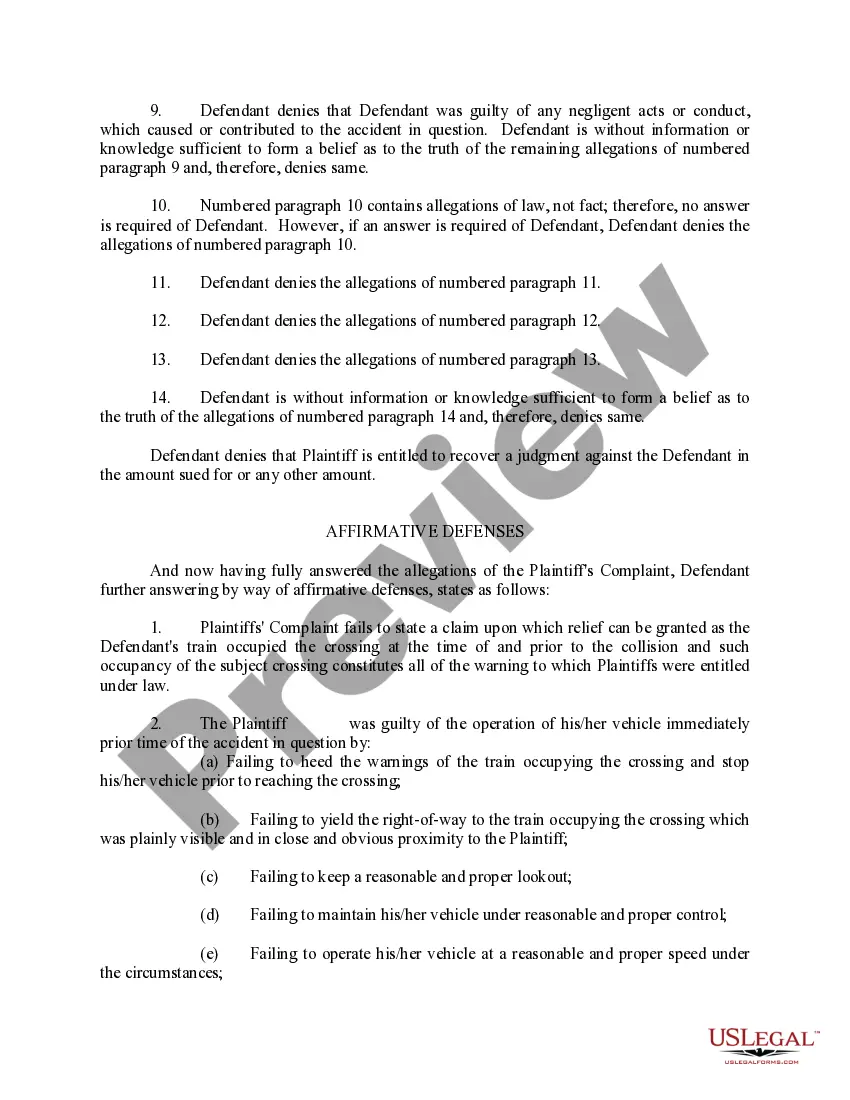
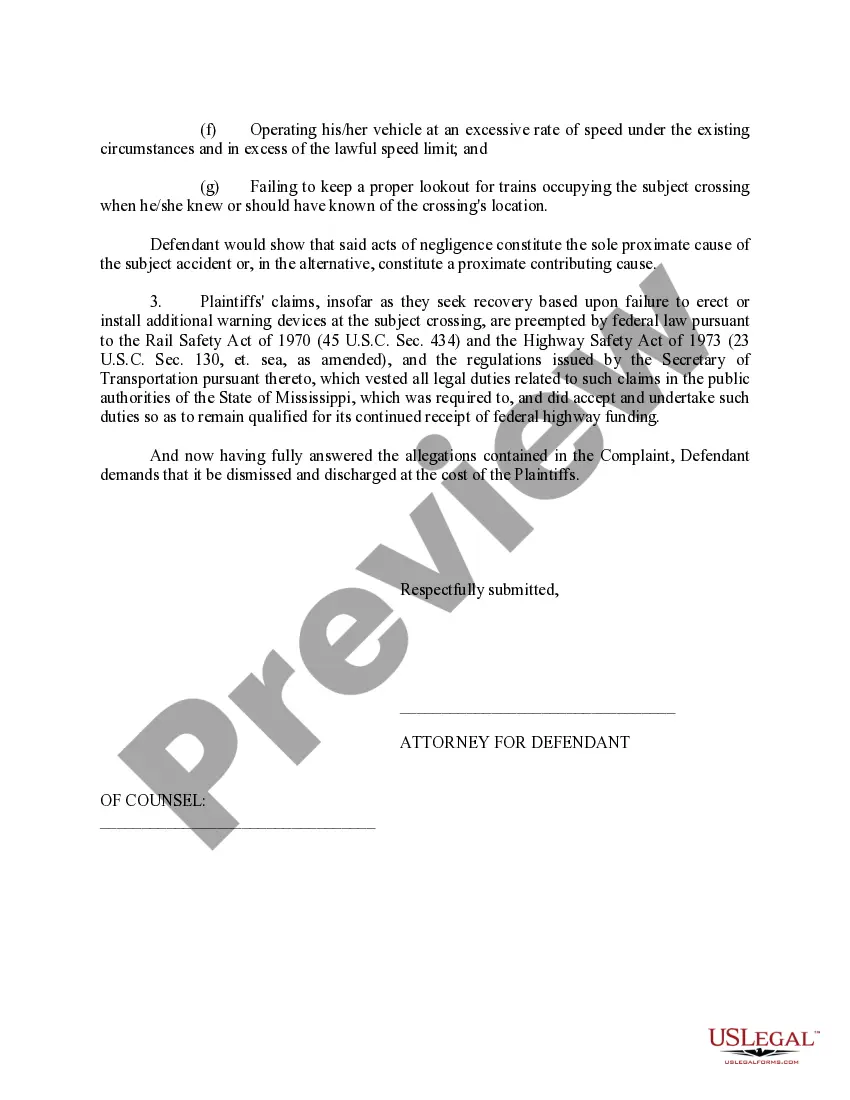
- A section dedicated to affirmative defenses, outlining reasons the Defendant believes they should not be held liable.
- Reference to knowledge or information limitations regarding certain allegations.
- Legal assertions regarding the incident, including the actions of the Plaintiff that may have contributed to the accident.
When to use this form
This Answer form should be used when you are a Defendant responding to a Complaint in a lawsuit that involves a collision between an automobile and a train. It is important to file this document within the legal time frame specified by the court after receiving the Complaint to ensure you maintain your right to defend against any allegations made.
Who should use this form
- Individuals or entities named as Defendants in a lawsuit involving an automobile and train collision.
- Legal representatives acting on behalf of the Defendant.
- Anyone seeking to respond formally to claims made against them that they believe are unfounded or misrepresentative of the facts.
Steps to complete this form
- Identify all parties involved, ensuring accurate names and details of the Defendant and Plaintiff are entered.
- Read through the Complaint carefully to determine which allegations you admit or deny.
- Fill out the affirmative defenses by specifying any counterclaims or defenses against the Plaintiff's allegations.
- Ensure all denials are clearly stated, particularly where you lack sufficient knowledge.
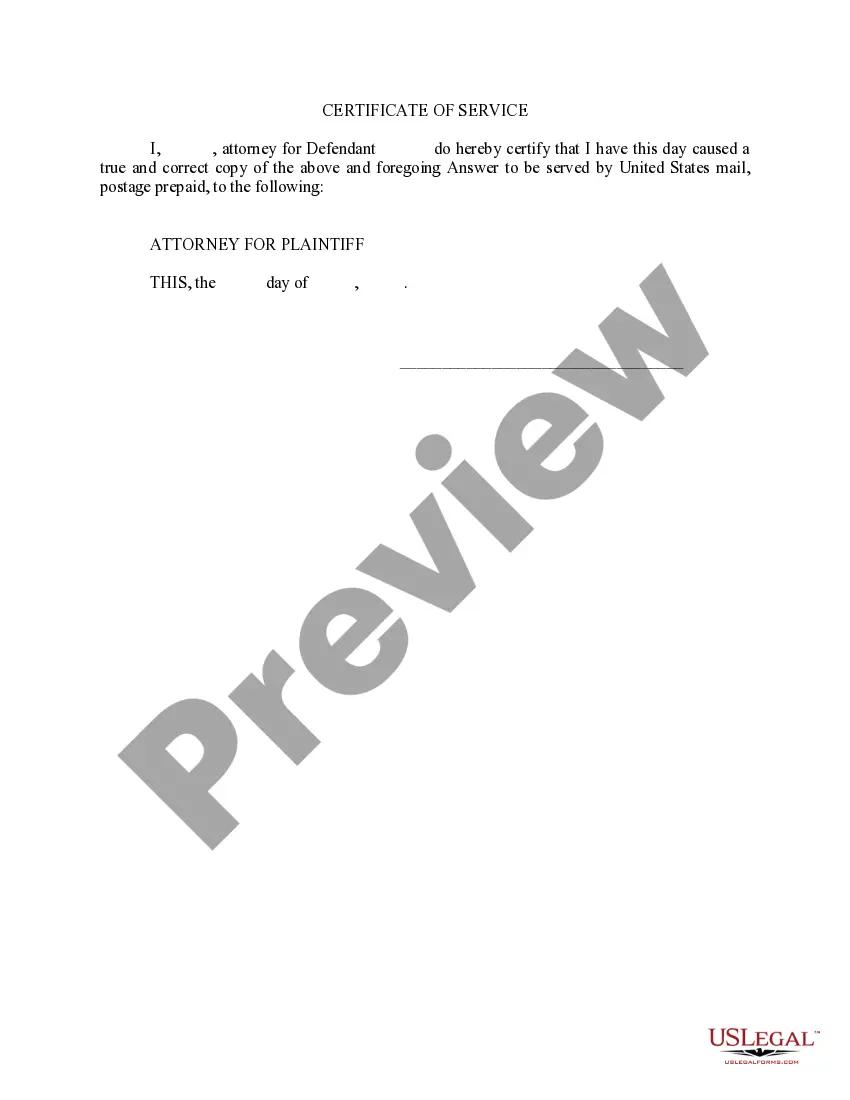
- Complete any required identification details, dates, and signatures before submitting the form to the court.
Notarization requirements for this form
This form does not typically require notarization unless specified by local law. However, be sure to check the specific requirements of your jurisdiction to ensure that your filing is valid.
Get your form ready online
Our built-in tools help you complete, sign, share, and store your documents in one place.
Make edits, fill in missing information, and update formatting in US Legal Forms—just like you would in MS Word.
Download a copy, print it, send it by email, or mail it via USPS—whatever works best for your next step.
Sign and collect signatures with our SignNow integration. Send to multiple recipients, set reminders, and more. Go Premium to unlock E-Sign.
If this form requires notarization, complete it online through a secure video call—no need to meet a notary in person or wait for an appointment.
We protect your documents and personal data by following strict security and privacy standards.

Make edits, fill in missing information, and update formatting in US Legal Forms—just like you would in MS Word.

Download a copy, print it, send it by email, or mail it via USPS—whatever works best for your next step.

Sign and collect signatures with our SignNow integration. Send to multiple recipients, set reminders, and more. Go Premium to unlock E-Sign.

If this form requires notarization, complete it online through a secure video call—no need to meet a notary in person or wait for an appointment.

We protect your documents and personal data by following strict security and privacy standards.
Typical mistakes to avoid
- Failing to respond within the required timeframe after receiving the Complaint.
- Omitting important admissions or denials related to the allegations.
- Not providing adequate reasons for affirmative defenses.
- Using vague language that does not clearly address specific claims.
Why complete this form online
- Convenience of downloading the form in Word or Rich Text formats for easy editing.
- Reliability of attorney-drafted content, ensuring legal compliance and accuracy.
- Time-saving as it allows for immediate access and completion without traveling to a lawyer's office.
Legal use & context
- This Answer form is legally binding once filed with the court.
- It can significantly influence the outcome of the case by clearly stating the Defendantâs defenses.
- Proper completion and filing of this form can help in negotiating settlements or preparing for trial.
Looking for another form?
Form popularity
FAQ
Personal injury implies any type of injury sustained in accidents. These types of injuries may arise from car accidents, slip and fall accidents, defective products, or wrongful death claims. On the other hand, bodily injury is more limited and may imply injuries sustained by another person, usually in a car accident.
Sometimes, insurance companies use multipliers to determine pain and suffering. The multiplier ranges from 1 to 4 (sometimes more). They multiply this by the number of actual damages, including past and future damages to arrive at a total pain and suffering amount.
The damages to which you are entitled are typically calculated based on the severity of your injuries, the underlying circumstances of the incident in question, and whether the case settles or proceeds to a trial. The following factors are typically considered: Medical treatment expenses.
It should include your name, address, and a date for the letter. If sending to an insurance company, you would include their name, address, and a line directing the personal injury demand letter to the attention of an adjustor by name and title if one has been assigned to your claim.
Statement of Facts: Describe everything that happened before, during, and after the crash. Liability: Point out the evidence showing the other driver caused the collision. Injuries: Describe your injuries and how the crash impacted your life.
The multiplier method is an equation frequently used by insurance companies and is a common way to calculate pain and suffering damages. You add up all actual damages (also called special damages) and multiply that number by a number between 1.5 to 5.
Say who you are. Set out the accident circumstances. Allege negligence or fault or breach of statute. Describe your injuries and financial losses. Request sight of relevant documentation. Nominate medical experts.
The multiplier method is an equation frequently used by insurance companies and is a common way to calculate pain and suffering damages. You add up all actual damages (also called special damages) and multiply that number by a number between 1.5 to 5.
The basic formula insurance companies use to calculate auto accident settlements is: special damages x (multiple reflecting general damages) + lost wages = settlement amount.