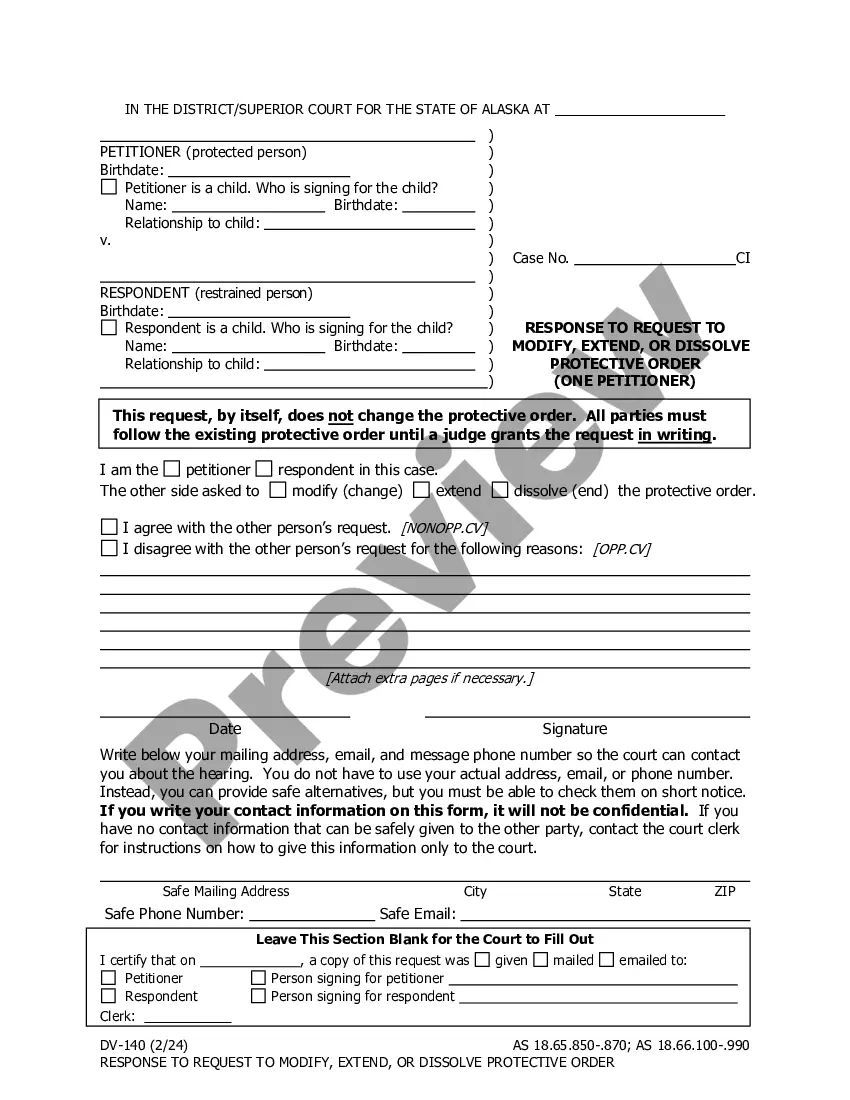
Hippa Release Form for Mental Health
Overview of this form
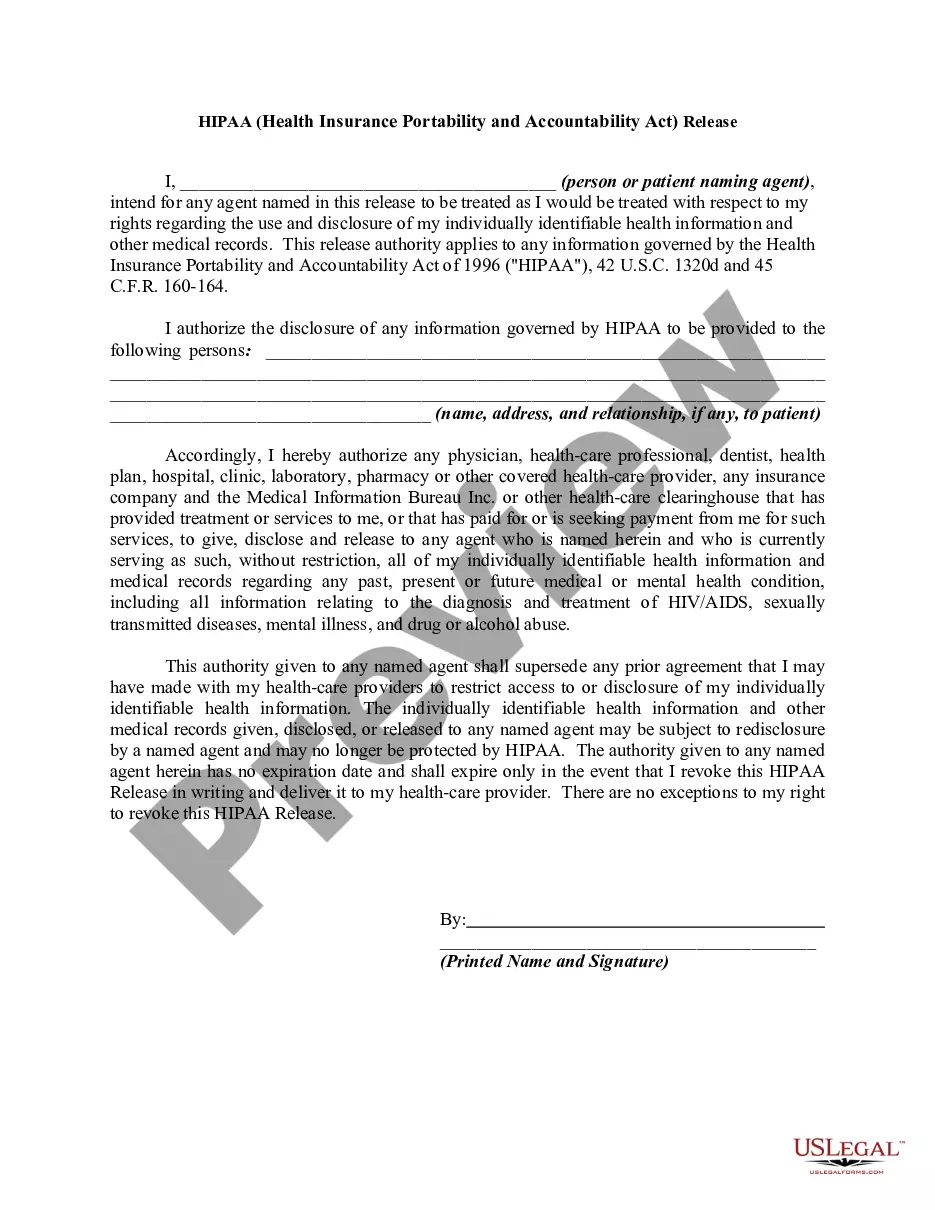
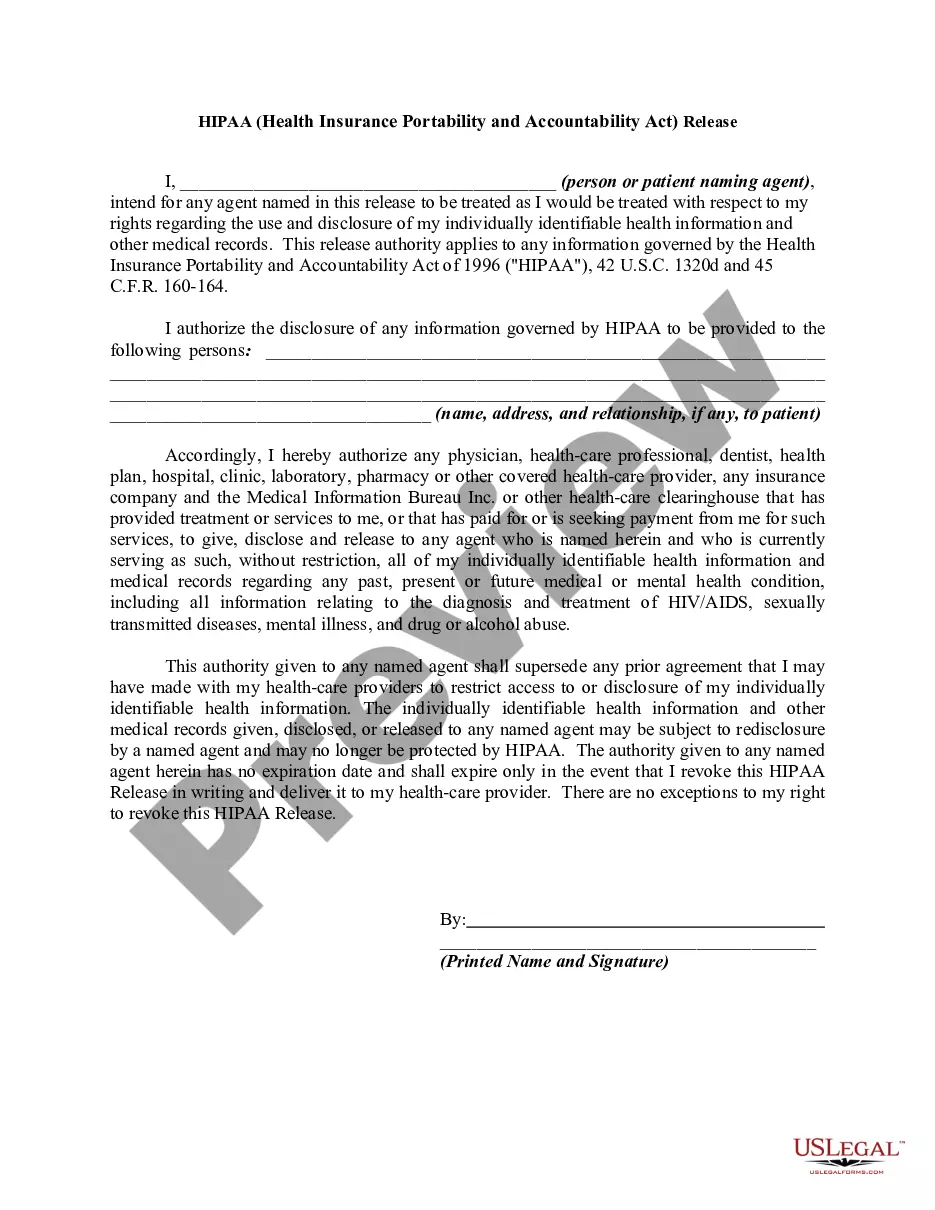
The HIPAA Release Form for Mental Health is a legal document that allows individuals to authorize the disclosure of their health information, specifically regarding mental health treatment. This form is essential for ensuring that designated agents can access personal medical records, thereby facilitating communication between health care providers and those authorized by the patient. Unlike general health information releases, this form is tailored to include sensitive mental health information under the Health Insurance Portability and Accountability Act (HIPAA).
Key parts of this document
- Patientâs name and information of the authorized agent.
- Specific authorization for the disclosure of mental health records.
- Contact information of those authorized to receive the patient's health information.
- Definition of the scope of information being shared, including sensitive topics.
- Expiration details of the release authority and conditions for revocation.
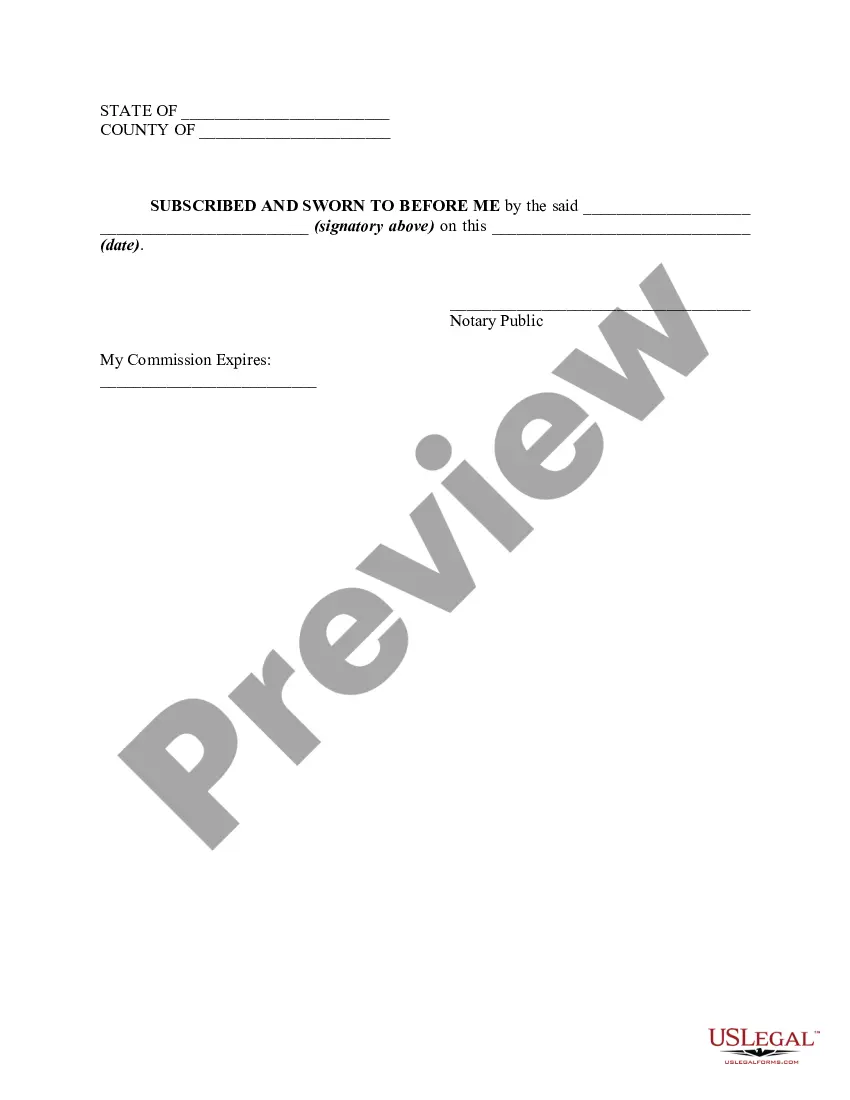
- Certification by a notary public to validate the form.
When to use this form
This form should be used when a patient wishes to grant permission for specific individuals or entities to access their mental health records. Common scenarios include when seeking treatment from new health care providers, during legal proceedings that involve mental health, or when sharing information with trusted family members who may assist in decision-making regarding the patient's care.
Who this form is for
- Individuals undergoing mental health treatment who want to share their records with designated agents.
- Patients needing to allow family members or friends to assist with their mental health care.
- Anyone who requires documentation to submit to health care providers for mental health record disclosure.
Steps to complete this form
- Identify the patient by providing their full name and contact information.
- Clearly name the agent or agents being authorized to access the health information.
- Specify the types of mental health information to be shared, including any limitations if necessary.
- Include the date and a signature from the patient to authorize the disclosure.
- If required, submit the form to a notary public for certification.
Notarization requirements for this form
Yes, this form must be notarized to be legally valid. Notarization ensures that the signature is authentic and protects against fraud. US Legal Forms offers integrated online notarization for convenience, allowing users to complete the process via secure video call, available twenty-four hours a day, without the need for physical visits.
Get your form ready online
Our built-in tools help you complete, sign, share, and store your documents in one place.
Make edits, fill in missing information, and update formatting in US Legal Forms—just like you would in MS Word.
Download a copy, print it, send it by email, or mail it via USPS—whatever works best for your next step.
Sign and collect signatures with our SignNow integration. Send to multiple recipients, set reminders, and more. Go Premium to unlock E-Sign.
If this form requires notarization, complete it online through a secure video call—no need to meet a notary in person or wait for an appointment.
We protect your documents and personal data by following strict security and privacy standards.

Make edits, fill in missing information, and update formatting in US Legal Forms—just like you would in MS Word.

Download a copy, print it, send it by email, or mail it via USPS—whatever works best for your next step.

Sign and collect signatures with our SignNow integration. Send to multiple recipients, set reminders, and more. Go Premium to unlock E-Sign.

If this form requires notarization, complete it online through a secure video call—no need to meet a notary in person or wait for an appointment.

We protect your documents and personal data by following strict security and privacy standards.
Avoid these common issues
- Failing to provide complete information about the authorized agent.
- Not specifying the scope of information to be shared, which can limit its effectiveness.
- Overlooking necessary signatures or notary requirements for validity.
Advantages of online completion
- Convenience of immediate access to the form from any location.
- Editability allows users to fill in the form accurately according to their specific needs.
- Reliable formatting and legal compliance ensured by licensed attorneys.
Looking for another form?
Form popularity
FAQ
A HIPAA-compliant HIPAA release form must, at the very least, contain the following information: A description of the information that will be used/disclosed. The purpose for which the information will be disclosed. The name of the person or entity to whom the information will be disclosed.
In general, a covered entity may only use or disclose PHI if either: (1) the HIPAA Privacy Rule specifically permits or requires it; or (2) the individual who is the subject of the information gives authorization in writing. We note that this blog only discusses HIPAA; other federal or state privacy laws may apply.
Whether you are or were a voluntary or involuntary patient, your mental health records are confidential. This means all information obtained in the course of your mental health services or treatment is not to be shared by anyone, except in the situations listed below.
A: No. The HIPAA privacy rule requires covered entities to obtain an acknowledgment when they first give their notice of privacy practices to patients. Covered entities do not have to reissue the notice or obtain a new acknowledgment on subsequent visits unless there are material (significant) changes to the notice.
Q: Do I need to notarize the signed form? A: No. The HIPAA Privacy Rule does not require you to notarize authorization forms or have a witness.
A HIPAA-compliant HIPAA release form must, at the very least, contain the following information: A description of the information that will be used/disclosed. The purpose for which the information will be disclosed. The name of the person or entity to whom the information will be disclosed.
The HIPAA Privacy Rule establishes national standards to protect individuals' medical records and other personal health information and applies to health plans, health care clearinghouses, and those health care providers that conduct certain health care transactions electronically.
HIPAA permits health care providers to disclose to other health providers any protected health information (PHI) contained in the medical record about an individual for treatment, case management, and coordination of care and, with few exceptions, treats mental health information the same as other health information.
A HIPAA authorization form is a document in that allows an appointed person or party to share specific health information with another person or group. Your appointed person can be a doctor, a hospital, or a health care provider, as well as certain other entities such as an attorney.