Alabama Chain of Custody
About this form
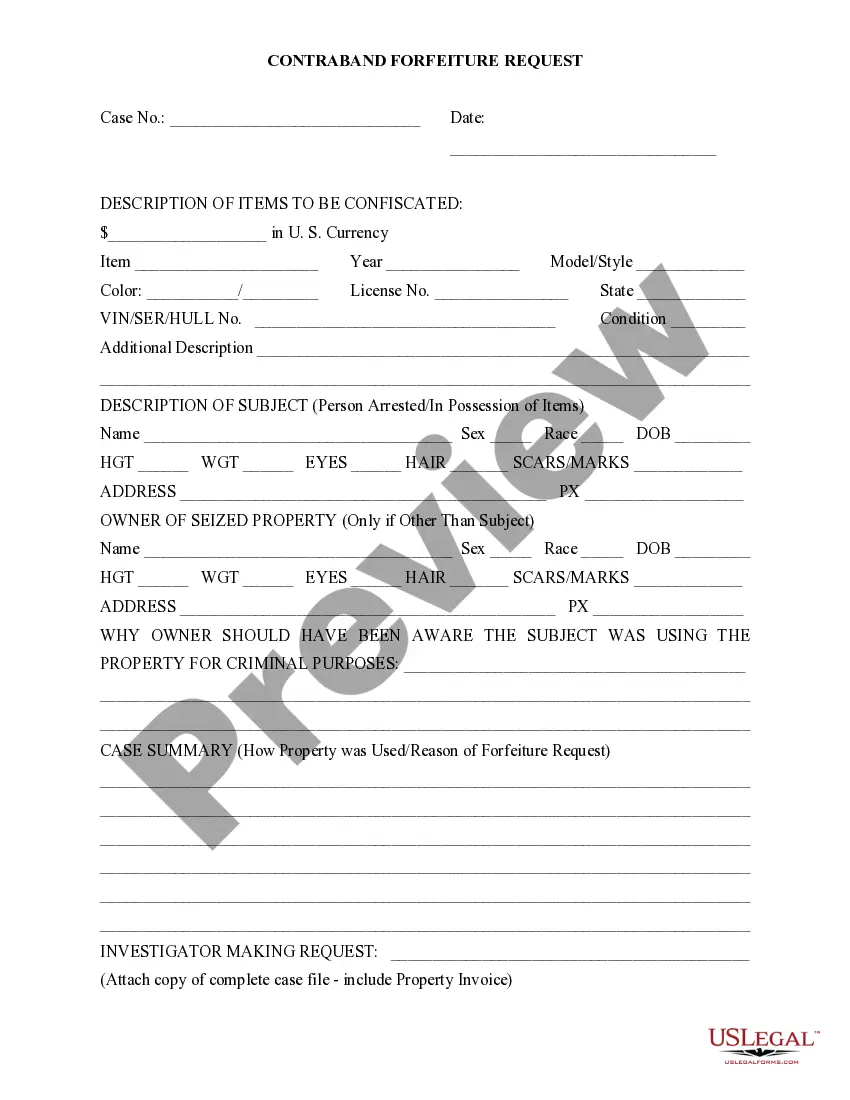
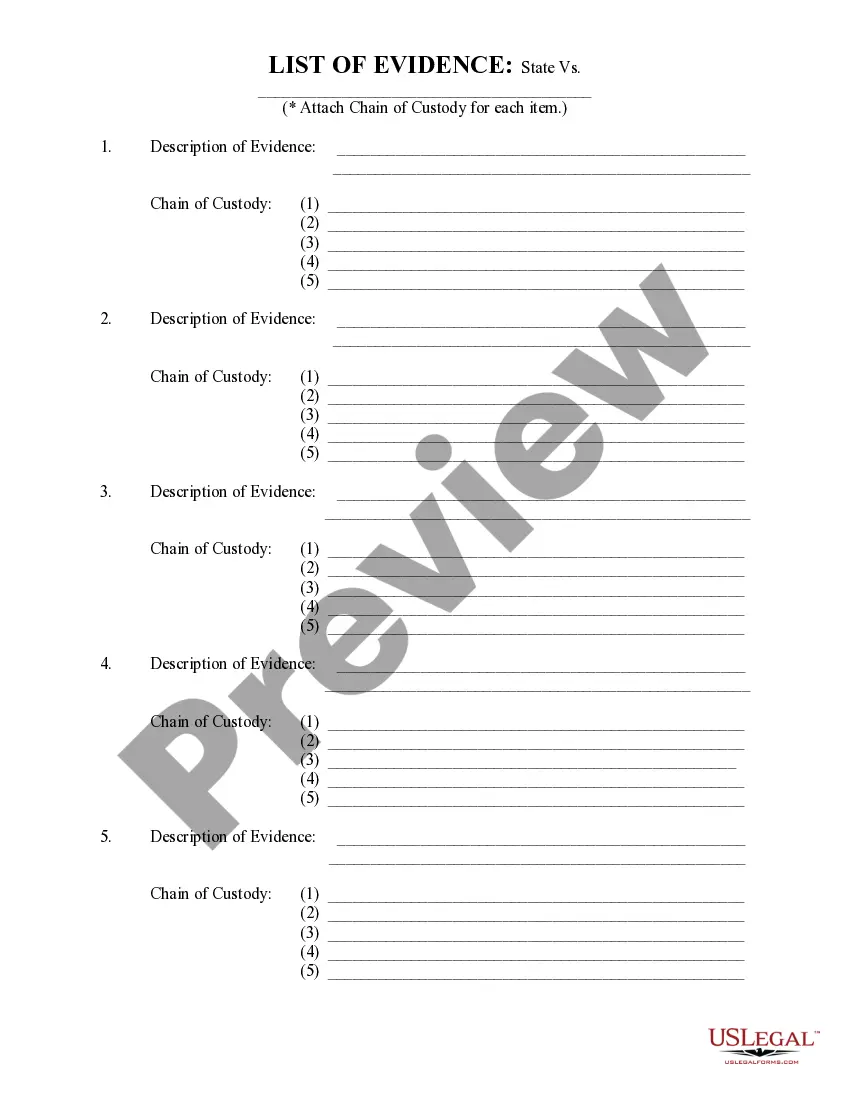
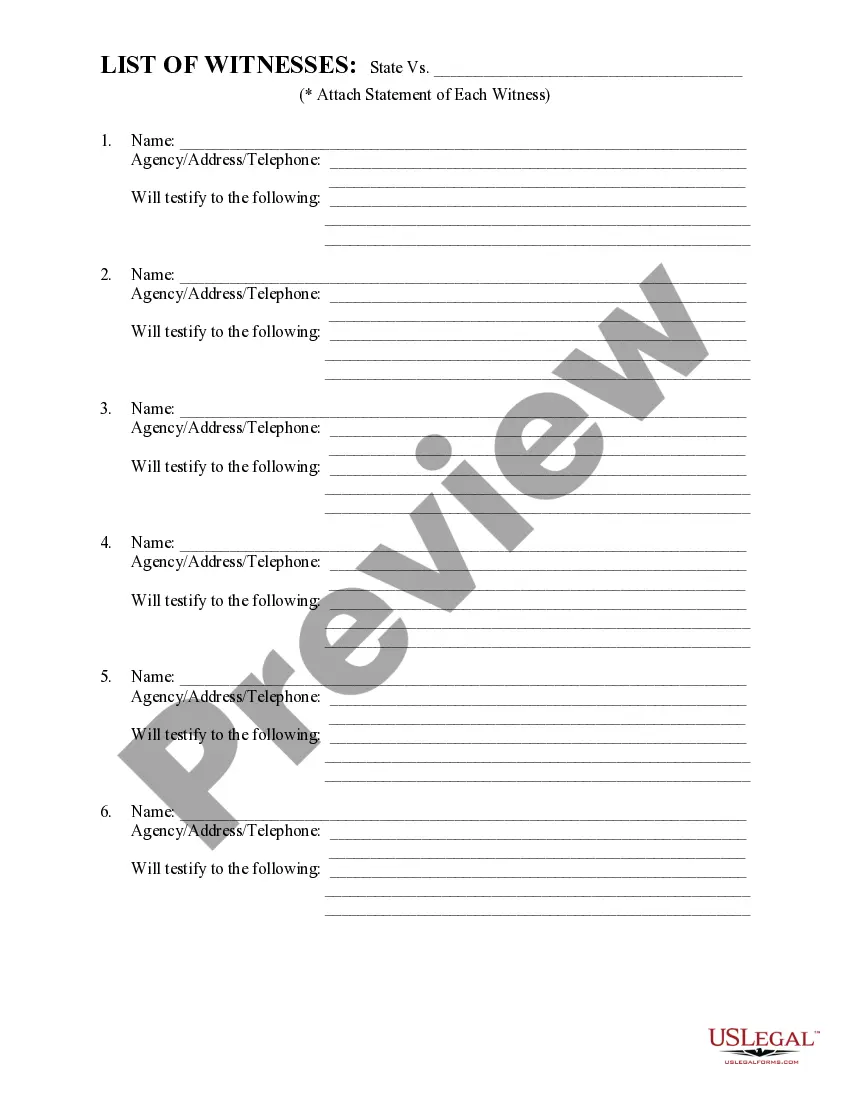
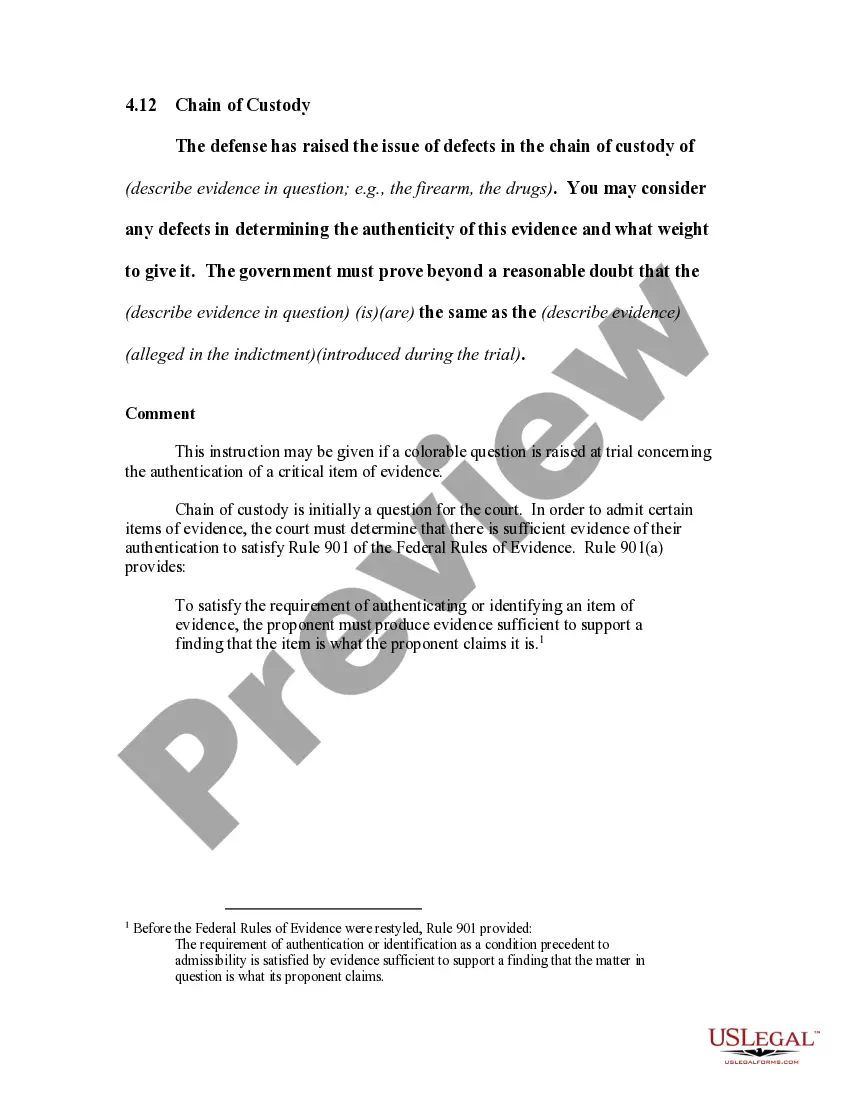
The Chain of Custody form is a crucial document used in criminal cases to meticulously track the handling of tangible evidence from the moment it is collected until it is presented in court. This form ensures the integrity and authenticity of evidence by documenting each person who handles it and the circumstances under which the handling occurred. Unlike other evidence documentation forms, the Chain of Custody specifically emphasizes the chronological journey of the evidence, making it vital for maintaining a strong case in legal proceedings.
Main sections of this form
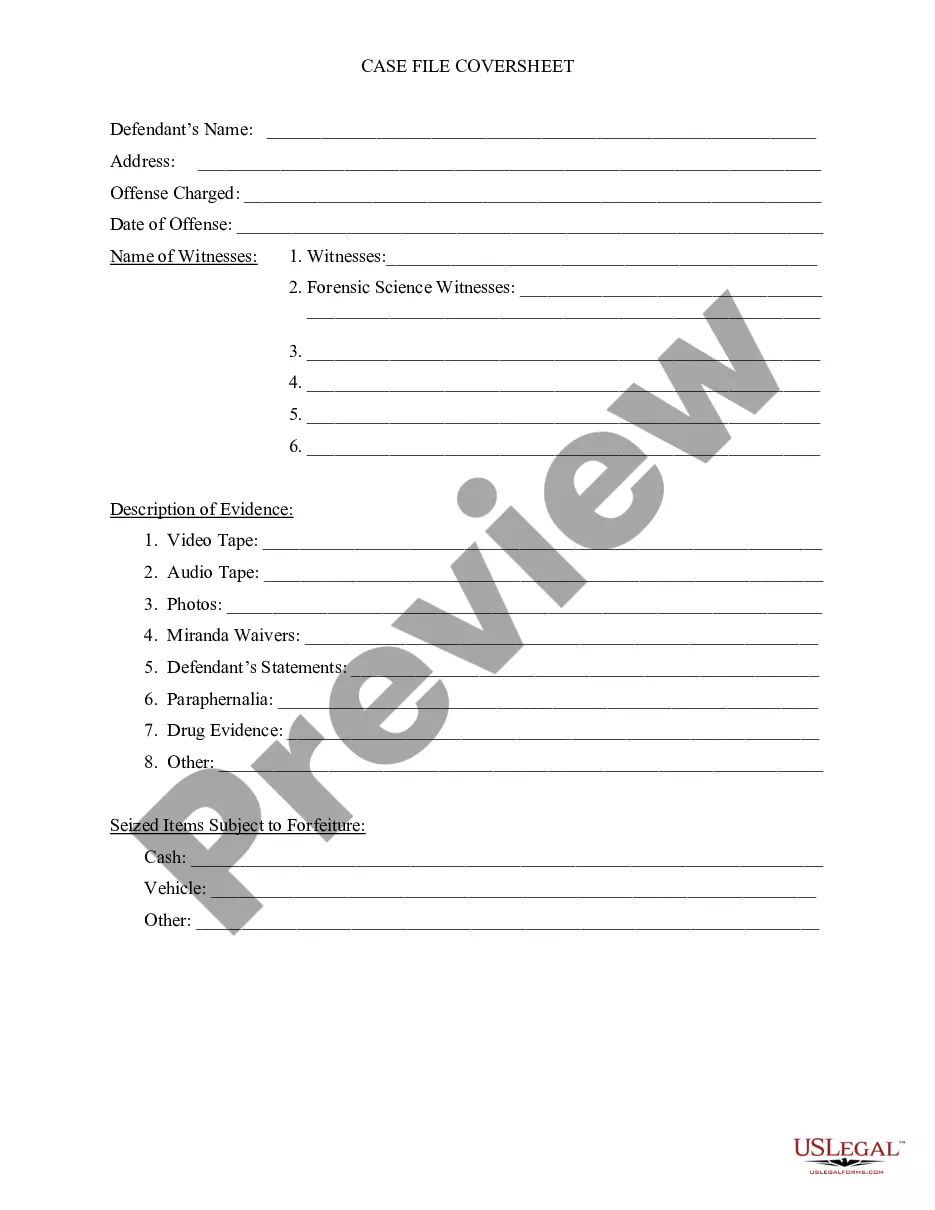
- Item description: Space to provide a clear identification of the evidence.
- Name of suspect: Records the individual associated with the evidence.
- Received by: Captures who received the evidence, along with date and time.
- Reason for collection: Details the cause for obtaining the evidence.
- Location: Determines where the evidence was stored or found.
- Chain of custody log: Series of entries documenting every transfer of the evidence.




Situations where this form applies
The Chain of Custody form should be used whenever law enforcement collects physical evidence related to a crime. It is essential in scenarios such as drug arrests, assaults, or any criminal activity where physical proof must be preserved and its handling must be documented. The form ensures that the evidence can withstand scrutiny during legal proceedings, maintaining its admissibility in court.
Who should use this form
- Law enforcement officers responsible for evidence collection.
- Legal professionals handling criminal cases.
- Investigators who need to document evidence handling.
- Forensic personnel who work with physical evidence.
Completing this form step by step
- Identify the item of evidence by providing a detailed description.
- Enter the name of the suspect related to the evidence.
- Document who received the evidence, including the date and time of transfer.
- Specify the reason for collecting the evidence.
- Indicate the location where the evidence is stored or found.
- Complete the chain of custody log by recording each transfer of the evidence.
Does this document require notarization?
This form does not typically require notarization unless specified by local law, ensuring it remains easy to use without additional steps for most users.
Get your form ready online
Our built-in tools help you complete, sign, share, and store your documents in one place.
Make edits, fill in missing information, and update formatting in US Legal Forms—just like you would in MS Word.
Download a copy, print it, send it by email, or mail it via USPS—whatever works best for your next step.
Sign and collect signatures with our SignNow integration. Send to multiple recipients, set reminders, and more. Go Premium to unlock E-Sign.
If this form requires notarization, complete it online through a secure video call—no need to meet a notary in person or wait for an appointment.
We protect your documents and personal data by following strict security and privacy standards.

Make edits, fill in missing information, and update formatting in US Legal Forms—just like you would in MS Word.

Download a copy, print it, send it by email, or mail it via USPS—whatever works best for your next step.

Sign and collect signatures with our SignNow integration. Send to multiple recipients, set reminders, and more. Go Premium to unlock E-Sign.

If this form requires notarization, complete it online through a secure video call—no need to meet a notary in person or wait for an appointment.

We protect your documents and personal data by following strict security and privacy standards.
Mistakes to watch out for
- Failing to provide a complete description of the evidence.
- Not recording every person who handles the evidence.
- Leaving out the date and time of transfers.
- Omitting the reason for collecting the evidence.
Benefits of completing this form online
- Easy access to downloadable templates that can be filled out as needed.
- The flexibility to edit the form and customize it for different cases.
- Reliable legal guidance provided by forms created by licensed attorneys.
Legal use & context
- The Chain of Custody form is essential for preventing evidence tampering and establishing a clear legal chain of evidence.
- Completing this form correctly helps ensure the admissibility of evidence in court.
- Failure to maintain a detailed chain of custody may result in the exclusion of evidence during a trial.
Summary of main points
- The Chain of Custody form is crucial for maintaining the integrity of physical evidence.
- Proper documentation is essential for legal proceedings involving evidence.
- All parties handling the evidence should be clearly documented with signatures for accountability.
Looking for another form?





Form popularity
FAQ
The chain of custody is a tracking record beginning with detailed scene notes that describe where the evidence was received or collected. Collection techniques, preservation, packaging, transportation, storage and creation of the inventory list are all part of the process used in establishing the chain of custody.
The bill now defines an unfit parent as one who "fails to properly care for his or her child and maintain the emotional health and overall well-being of the child in such a manner the failure will seriously harm the child."
The Relevance of the Chain of Custody Documentation Each sample container label must receive a unique identification code and other relevant information such as location, date and time of collection, the name, and signature of the person who collected the sample, and signature of the witness(es).
In Alabama, child custody is decided based on the best interests of the children. When you make a decision that affects the minor children, ask yourself if that decision is in their best interests. If the decision is not in the best interests of the children, then don't do it.
Date and time of collection. Location of collection. Name of investigator(s) Name or owner of the media or computer. Reason for collection. Matter name or case number. Type of media. Serial number of media if available.
The term Chain of Custody form is commonly referred in acronym usage as a CCF or CoC, and references a document or paper trail showing the seizure, custody, control, transfer, analysis, and disposition of physical and electronic evidence of a human specimen test.
In practice, a chain of custody is a chronological paper trail documenting when, how, and by whom individual items of physical or electronic evidencesuch as cell phone logswere collected, handled, analyzed, or otherwise controlled during an investigation.
A fee of $25 is generally required for filing either a custody or visitation petition in court. There may be an additional fee for serving the other parent with the custody papers, which is usually done by a sheriff, third party, or process server.
Alabama law states that the court may give custody to either the father or mother as the court deems right and proper after consideration of the moral character and prudence of the parents, as well as the age and sex of the children. Ala.