Chain of Custody
What is this form?
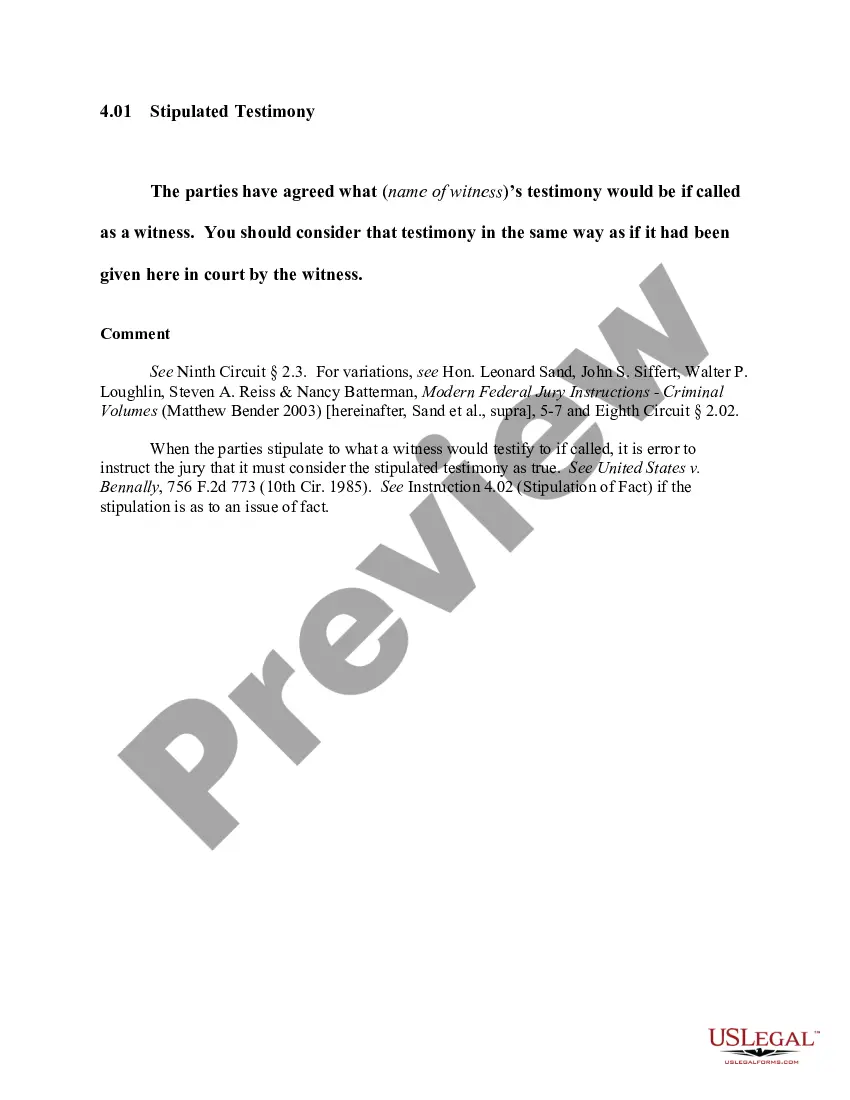
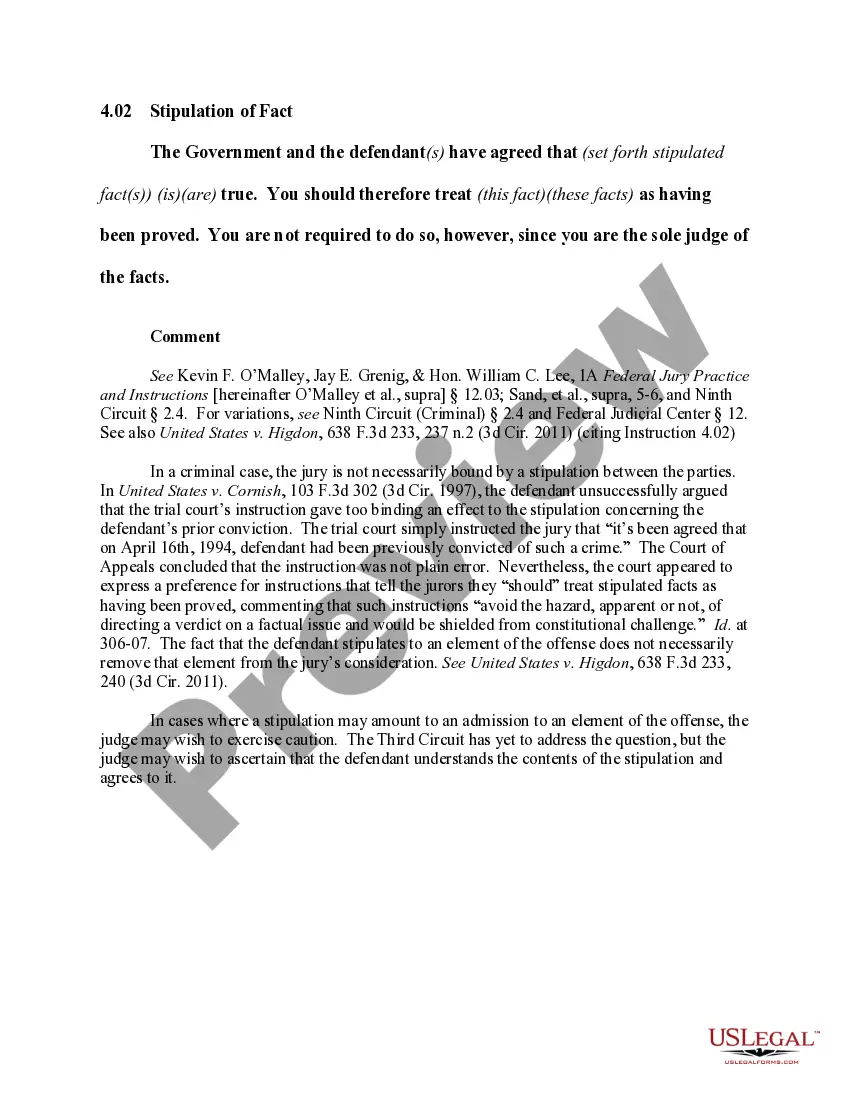
The Chain of Custody form is a legal document that outlines the process of maintaining and documenting the handling of evidence in a criminal case. Its primary purpose is to ensure that evidence is preserved accurately, preventing contamination or tampering that could undermine its validity in court. This form is essential for establishing the authenticity of evidence, distinct from other legal forms related to evidence presentation and admissibility.
What’s included in this form
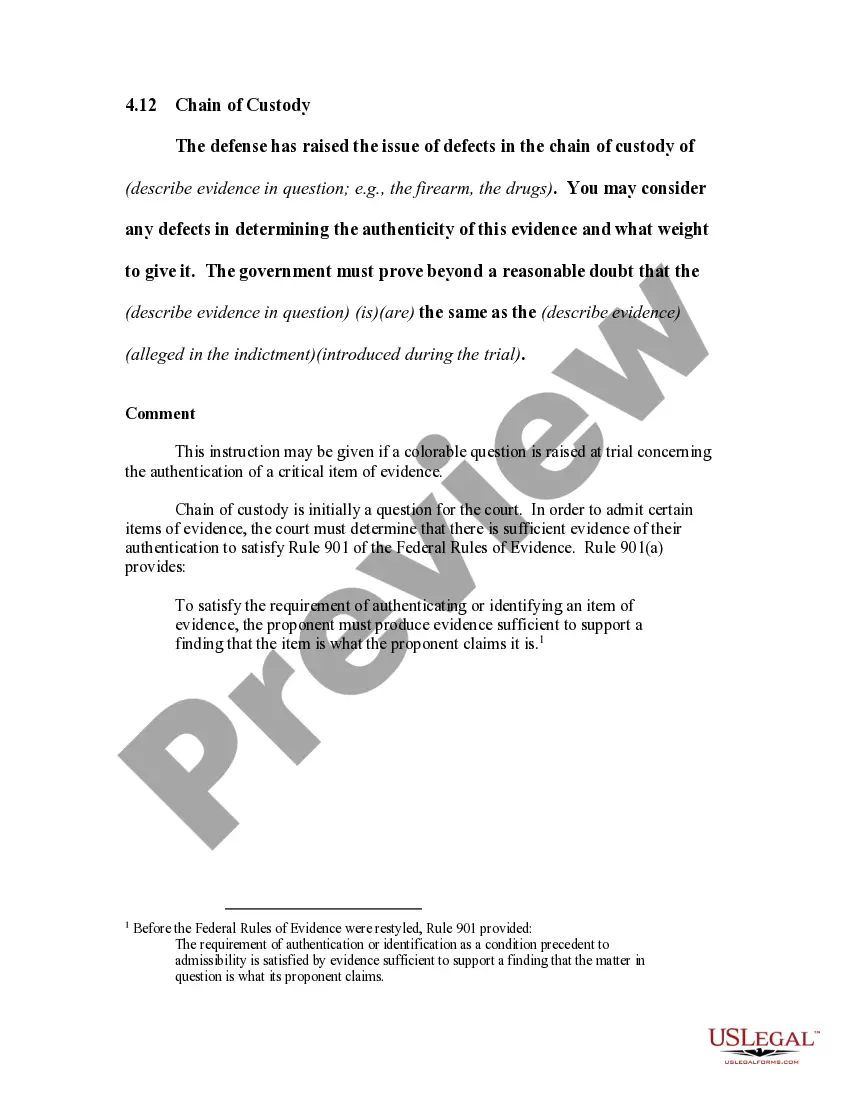
- Description of the evidence in question (e.g., firearm, drugs).
- Details regarding any defects in the chain of custody.
- Consideration of the weight and authenticity of the evidence presented.
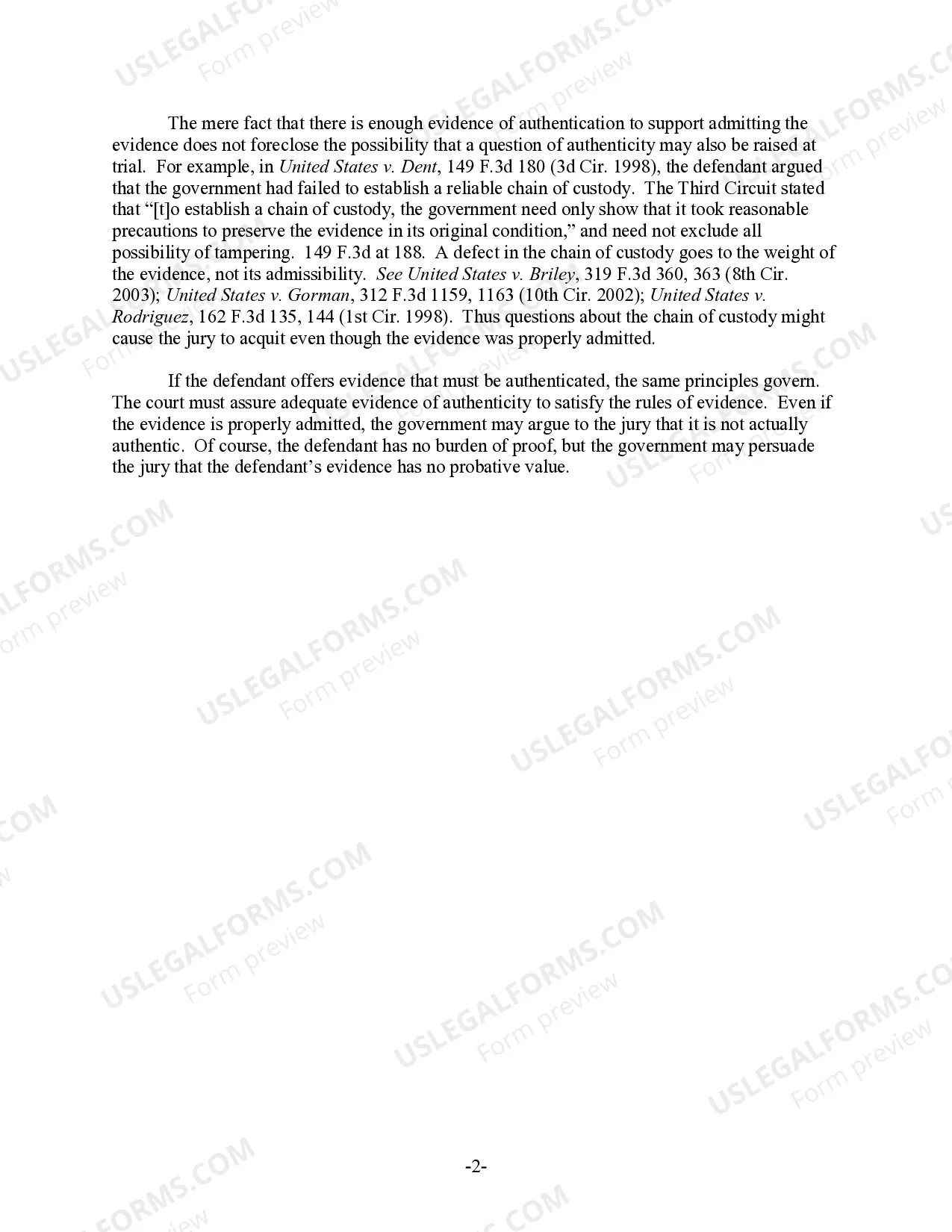
- Citations of relevant rules and case law related to evidence authentication.
- Instructions for determining if the evidence is the same as that alleged in the indictment.

Common use cases
This form is utilized when there is a question about the integrity of evidence presented in a criminal trial. Parties in a case, typically the defense, may raise issues regarding the proper handling of crucial evidence, such as weapons or illegal substances. The Chain of Custody form helps to clarify whether the evidence has been maintained without tampering or alteration, which is vital for its admissibility.
Who this form is for
This form is appropriate for:
- Defense attorneys seeking to challenge the admissibility of evidence.
- Prosecutors aiming to establish the integrity of evidence presented to the court.
- Law enforcement officers involved in the collection and handling of evidence.
- Individuals involved in a criminal case where evidence authenticity is contested.
How to complete this form
- Identify the evidence in question and provide a clear description.
- Document any issues or defects regarding the chain of custody observed.
- Cite relevant legal principles or case law that support claims about the evidence.
- Specify the burden of proof necessary for the government to establish authenticity.
- Sign and date the form as required by legal standards.
Does this form need to be notarized?
Notarization is not commonly needed for this form. However, certain documents or local rules may make it necessary. Our notarization service, powered by Notarize, allows you to finalize it securely online anytime, day or night.
Get your form ready online
Our built-in tools help you complete, sign, share, and store your documents in one place.
Make edits, fill in missing information, and update formatting in US Legal Forms—just like you would in MS Word.
Download a copy, print it, send it by email, or mail it via USPS—whatever works best for your next step.
Sign and collect signatures with our SignNow integration. Send to multiple recipients, set reminders, and more. Go Premium to unlock E-Sign.
If this form requires notarization, complete it online through a secure video call—no need to meet a notary in person or wait for an appointment.
We protect your documents and personal data by following strict security and privacy standards.

Make edits, fill in missing information, and update formatting in US Legal Forms—just like you would in MS Word.

Download a copy, print it, send it by email, or mail it via USPS—whatever works best for your next step.

Sign and collect signatures with our SignNow integration. Send to multiple recipients, set reminders, and more. Go Premium to unlock E-Sign.

If this form requires notarization, complete it online through a secure video call—no need to meet a notary in person or wait for an appointment.

We protect your documents and personal data by following strict security and privacy standards.
Common mistakes
- Failing to provide a complete description of the evidence.
- Not documenting all individuals who handled the evidence.
- Neglecting to include references to pertinent case law and rules.
- Overlooking signatures or dates that validate the form.
Why use this form online
- Convenient access to pre-drafted legal templates specific to your needs.
- Editability allows users to tailor the form accurately for their case.
- Reliability from professional legal standards ensuring compliance with key regulations.
Legal use & context
- This form is vital for establishing the admissibility of evidence in court.
- Proper chain of custody documentation can significantly impact jury perceptions and trial outcomes.
- Failure to adhere to chain of custody protocols can lead to evidence being deemed inadmissible.
What to keep in mind
- The Chain of Custody form is essential for ensuring evidence integrity in criminal cases.
- Proper documentation can affect the authenticity and weight of evidence during trials.
- Understanding and completing this form accurately helps protect legal rights in court proceedings.
Looking for another form?




Form popularity
FAQ
The chain of custody is the most critical process of evidence documentation. It is a must to assure the court of law that the evidence is authentic, i.e., it is the same evidence seized at the crime scene. It was, at all times, in the custody of a person designated to handle it and for which it was never unaccounted.
The chain of custody is a tracking record beginning with detailed scene notes that describe where the evidence was received or collected. Collection techniques, preservation, packaging, transportation, storage and creation of the inventory list are all part of the process used in establishing the chain of custody. Module 03 :: Chain of Custody - NFSTC Projects nfstc.org ? module03 ? prom03t17 nfstc.org ? module03 ? prom03t17
The term ?Chain of Custody? form is commonly referred in acronym usage as a CCF or CoC, and references a document or paper trail showing the seizure, custody, control, transfer, analysis, and disposition of physical and electronic evidence of a human specimen test.
The chain of custody is established whenever an investigator takes custody of evidence at a crime scene. The chain is maintained when evidence is received from another officer or detective.
Definition(s): A process that tracks the movement of evidence through its collection, safeguarding, and analysis lifecycle by documenting each person who handled the evidence, the date/time it was collected or transferred, and the purpose for the transfer. chain of custody - Glossary - NIST Computer Security Resource Center nist.gov ? glossary ? term ? chainofcustody nist.gov ? glossary ? term ? chainofcustody
Definition(s): A process that tracks the movement of evidence through its collection, safeguarding, and analysis lifecycle by documenting each person who handled the evidence, the date/time it was collected or transferred, and the purpose for the transfer.
An example of chain of custody would be the recovery of a bloody knife at a murder scene: Officer Andrew collects the knife and places it into a container, then gives it to forensics technician Bill. Forensics technician Bill takes the knife to the lab and collects fingerprints and other evidence from the knife.
It is crucial to note that the police also break the chain of custody if they lose evidence. When evidence is deemed ?inadmissible? or ?suppressed?, it means that it cannot be used against a defendant by being presented to a jury, or even considered by the judge.
The chain of custody documentation provides information regarding the collection, transportation, storage, and general handling of the electronic evidence. A typical chain of custody document may include: Date and time of collection. Location of collection.