Employment Application for Real Estate Agent
What is this form?
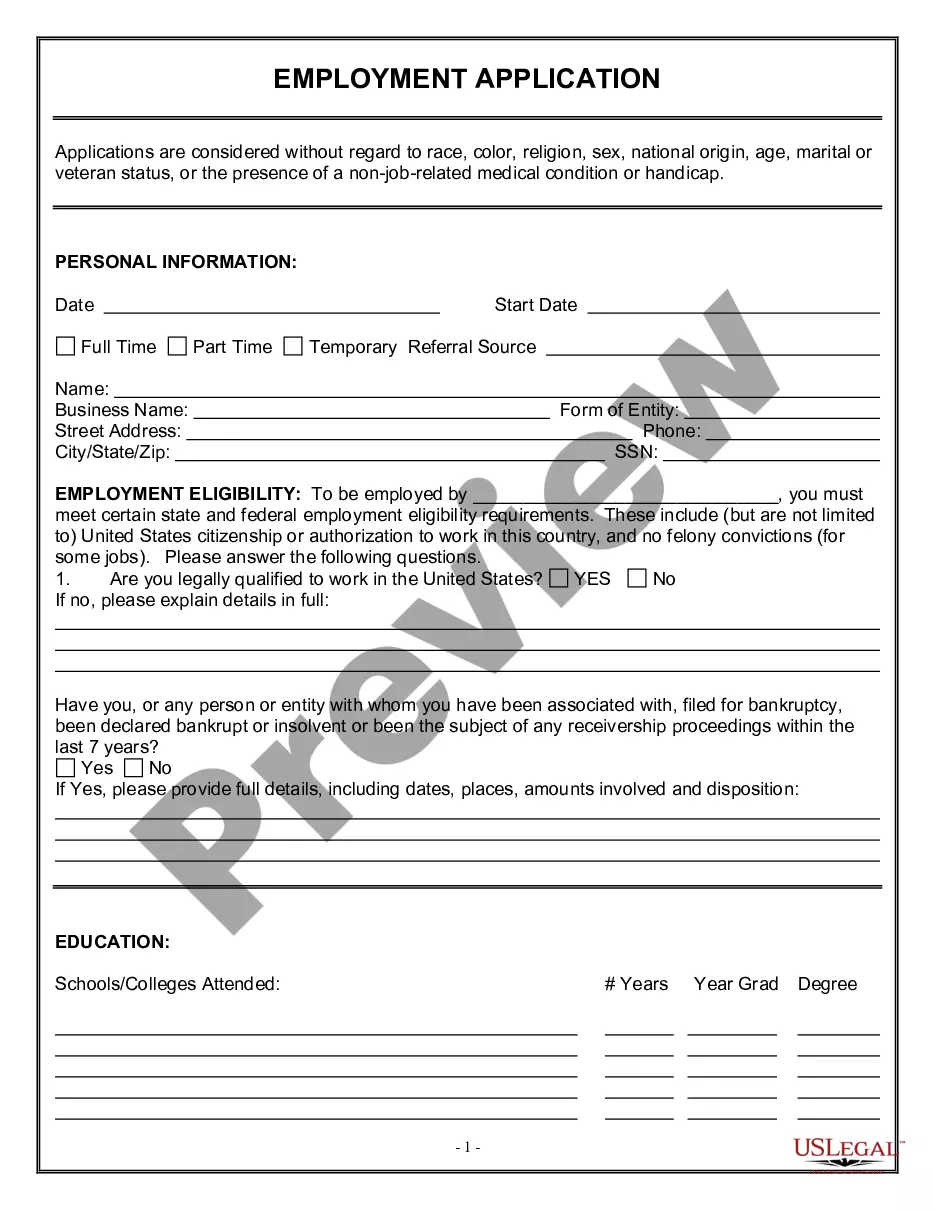
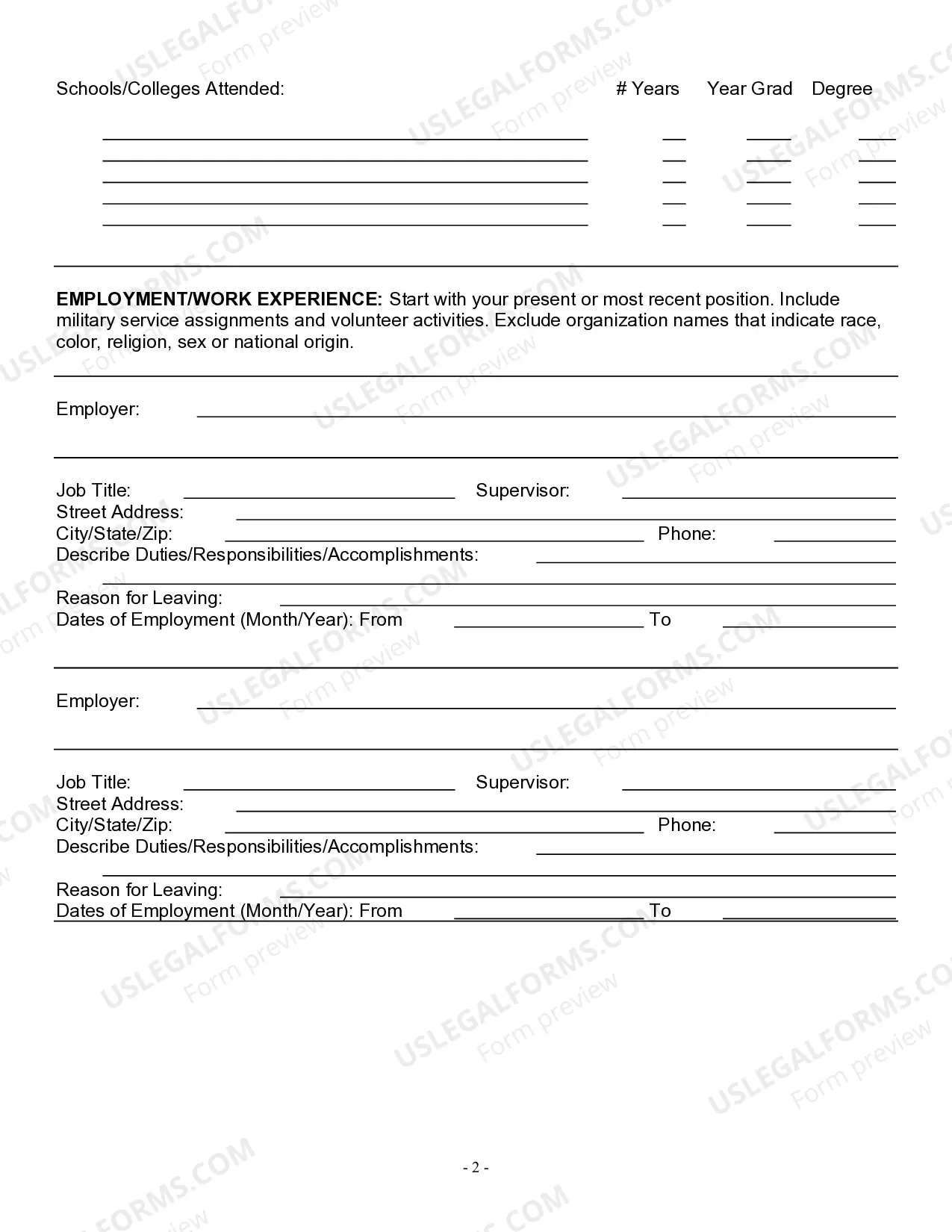
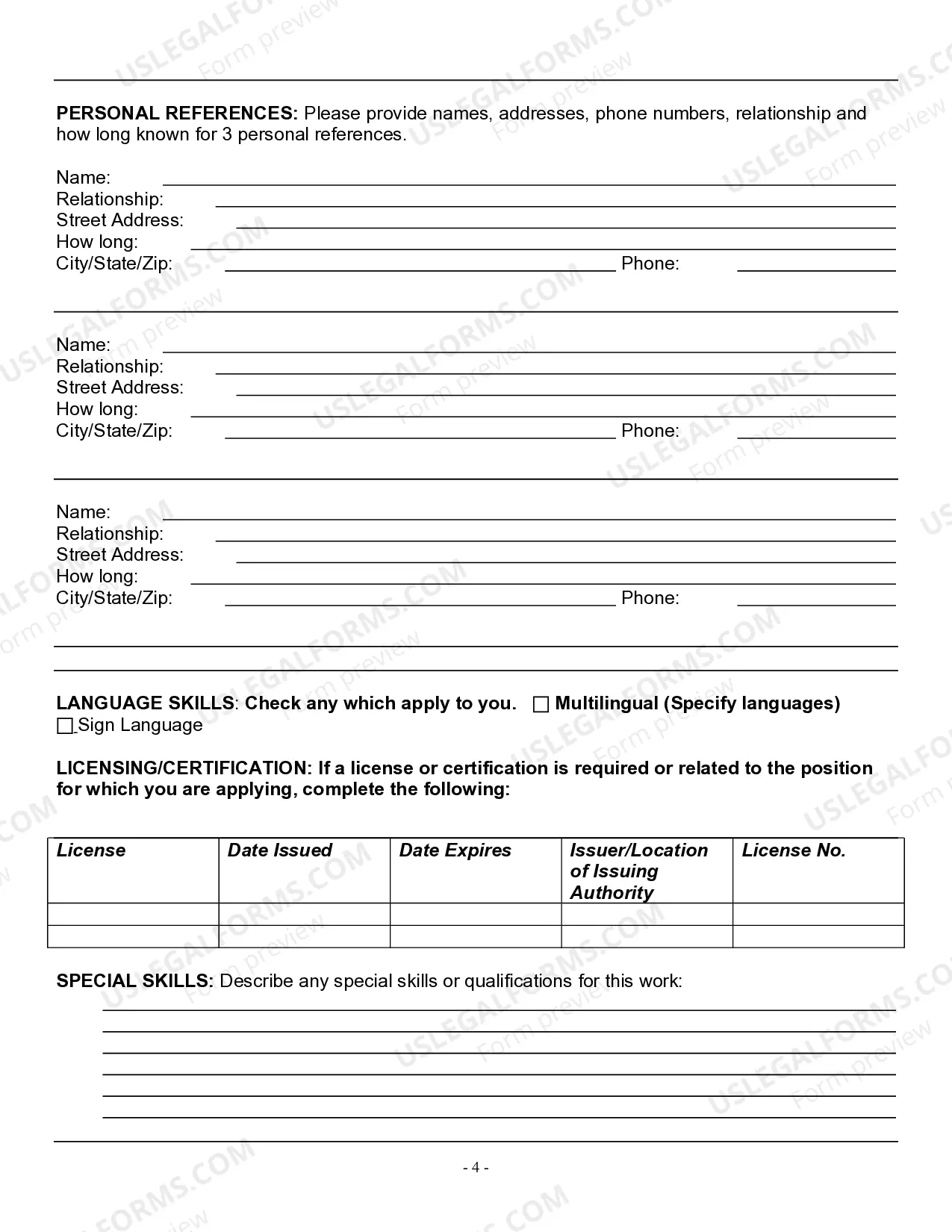
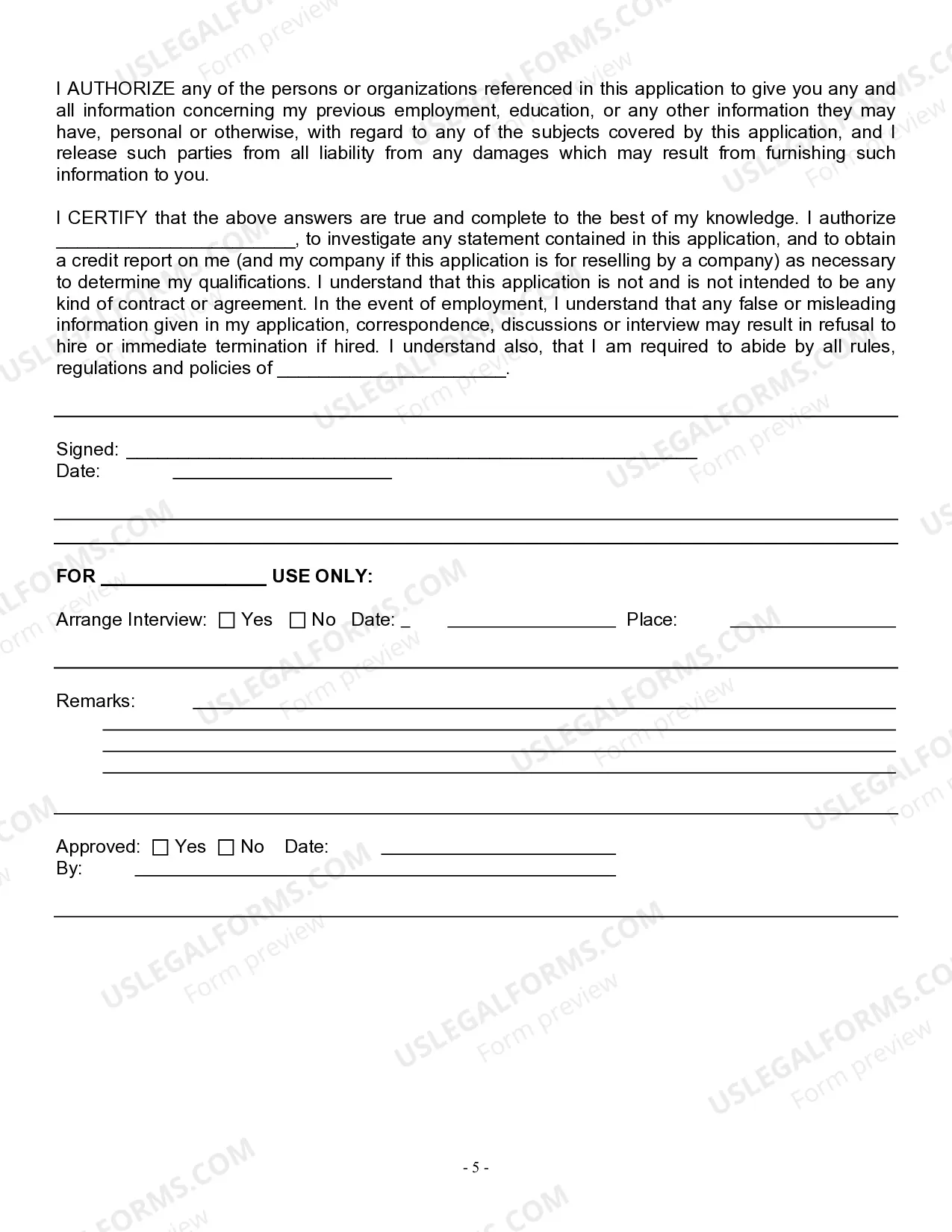
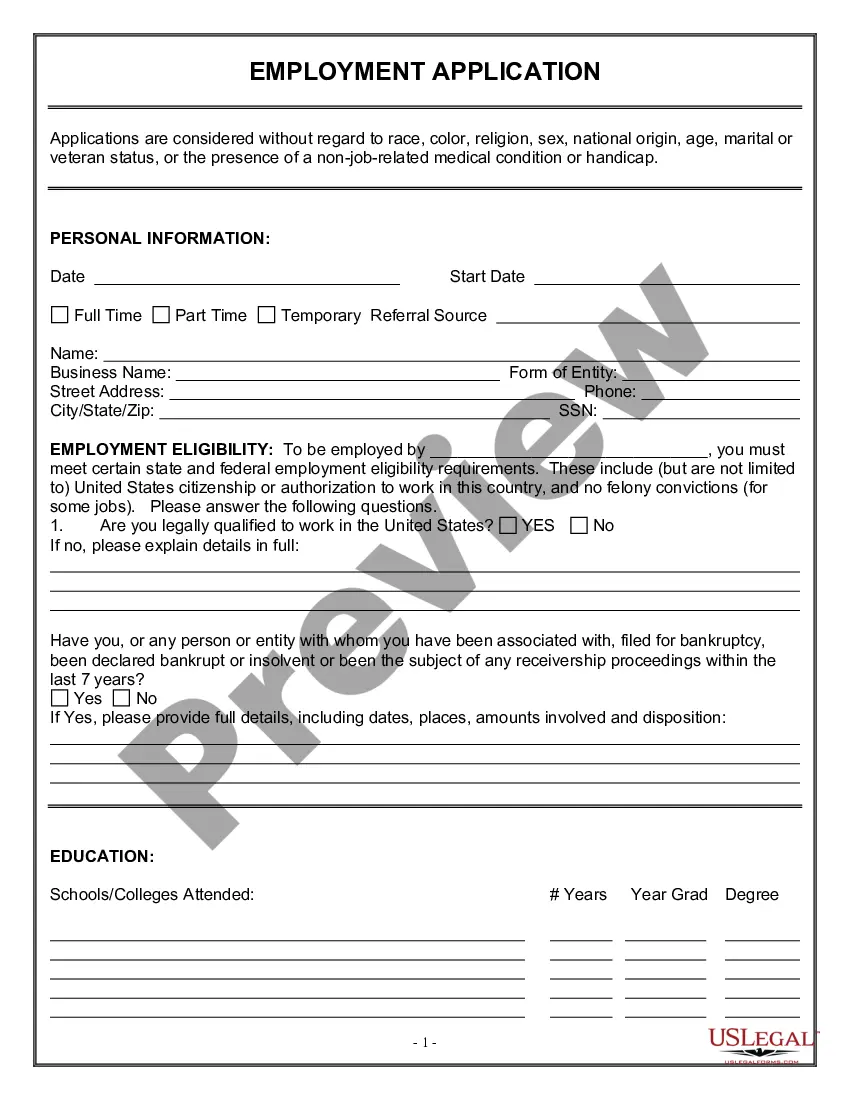
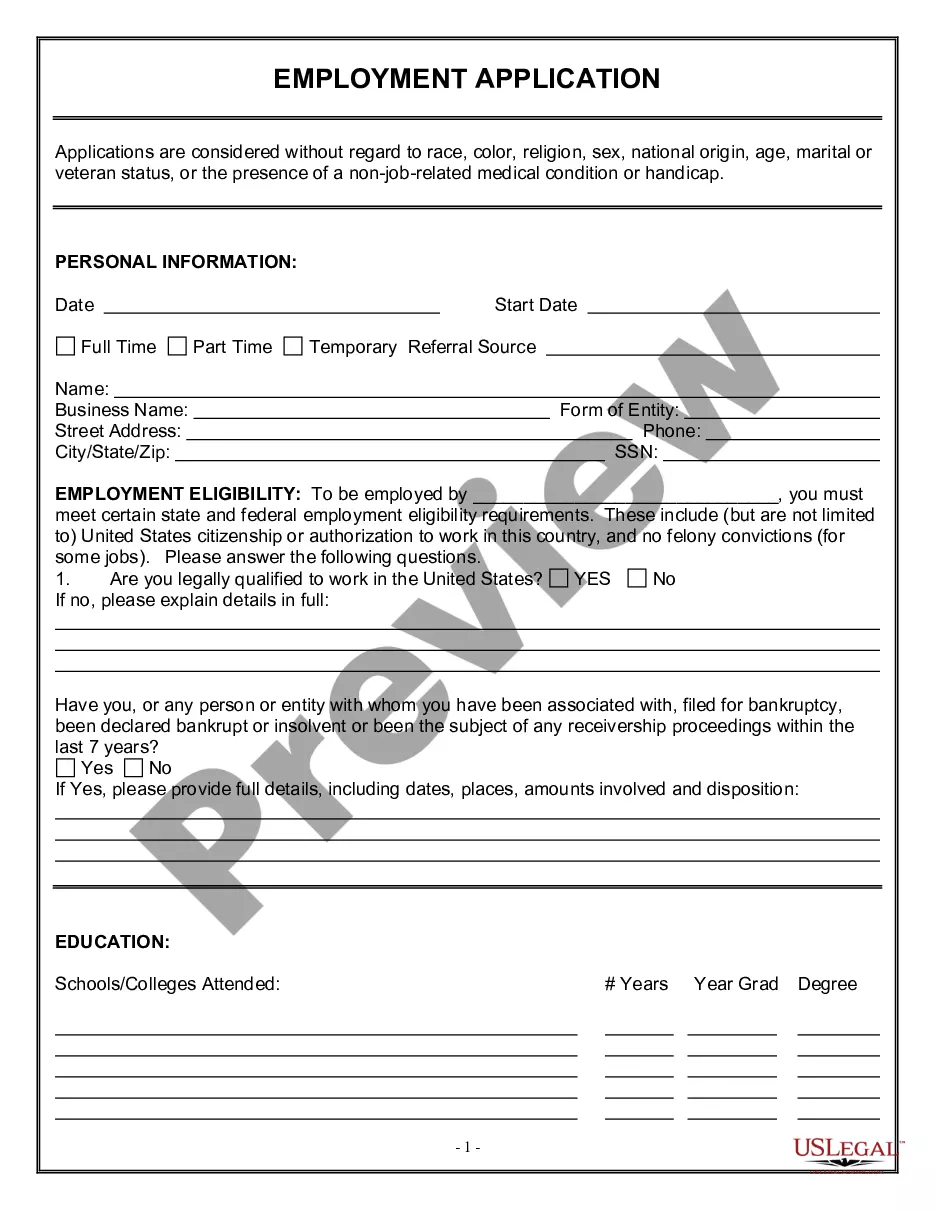
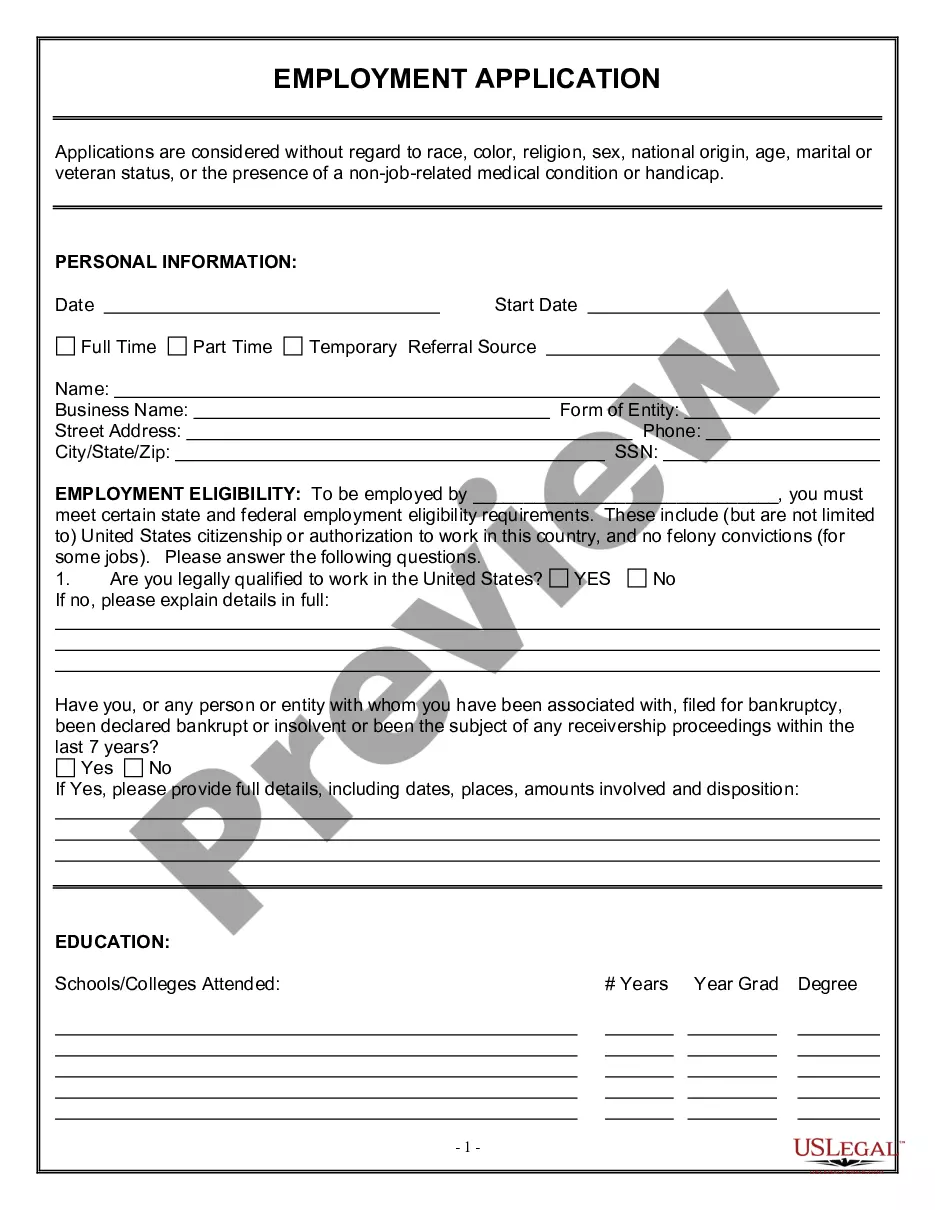
The Employment Application for Real Estate Agent is a legal document used by real estate firms to collect information from prospective agents. This form ensures that applications are accepted without discrimination based on race, color, religion, or veteran status. It provides a structured way for applicants to present their qualifications for employment, making it distinct from generic job applications.
What’s included in this form
- Personal information section, including qualifications to work in the United States.
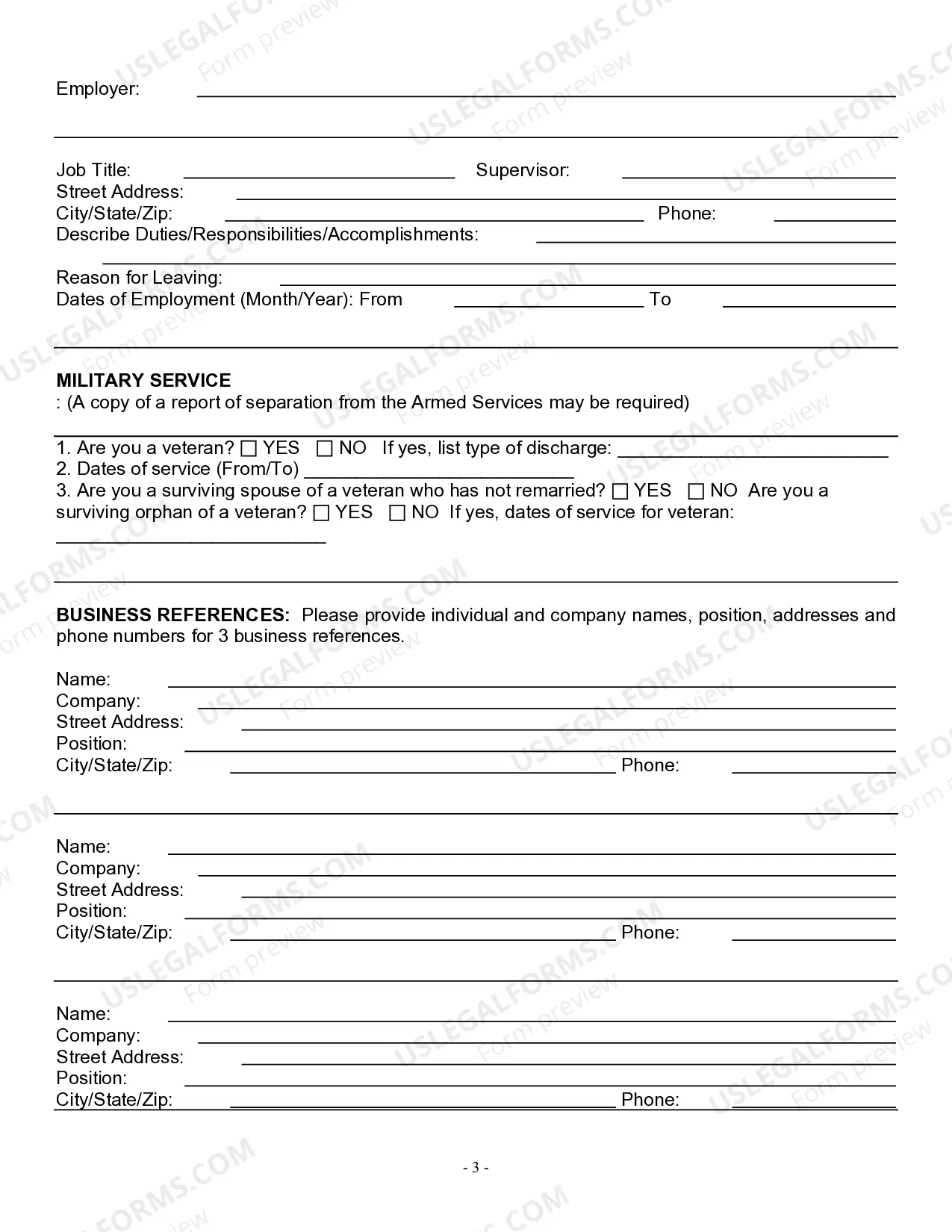
- Disclosure of veteran status and eligibility for preference.
- Dates of service for veterans, if applicable.


When to use this form
This form should be used whenever an individual wishes to apply for a position as a real estate agent. It is typically required by real estate companies to ensure a thorough evaluation of applicants and their qualifications for the role. Use this form to communicate your skills, experience, and commitment to a potential employer in the real estate industry.
Intended users of this form
- Individuals seeking employment as a real estate agent.
- Employers in the real estate sector needing to collect standardized application information.
- Job seekers looking for an organized method to present their qualifications to employers.
Completing this form step by step
- Start by entering your personal information, including your full name, contact details, and current address.
- Indicate whether you are legally qualified to work in the United States by selecting "Yes" or "No." If you answer "No," provide further details.
- If you are a veteran or a spouse/orphan of a veteran, complete the relevant sections to disclose your status and provide dates of service.
- Review your application to ensure accuracy and completeness before submitting it to the employer.
Notarization guidance
This form does not typically require notarization unless specified by local law. Ensure you understand any specific requirements based on your state or employer's guidelines.
Get your form ready online
Our built-in tools help you complete, sign, share, and store your documents in one place.
Make edits, fill in missing information, and update formatting in US Legal Forms—just like you would in MS Word.
Download a copy, print it, send it by email, or mail it via USPS—whatever works best for your next step.
Sign and collect signatures with our SignNow integration. Send to multiple recipients, set reminders, and more. Go Premium to unlock E-Sign.
If this form requires notarization, complete it online through a secure video call—no need to meet a notary in person or wait for an appointment.
We protect your documents and personal data by following strict security and privacy standards.

Make edits, fill in missing information, and update formatting in US Legal Forms—just like you would in MS Word.

Download a copy, print it, send it by email, or mail it via USPS—whatever works best for your next step.

Sign and collect signatures with our SignNow integration. Send to multiple recipients, set reminders, and more. Go Premium to unlock E-Sign.

If this form requires notarization, complete it online through a secure video call—no need to meet a notary in person or wait for an appointment.

We protect your documents and personal data by following strict security and privacy standards.
Typical mistakes to avoid
- Failing to provide accurate contact information.
- Omitting important details about employment history.
- Not disclosing all relevant qualifications or experiences related to the position.
Why complete this form online
- Convenience of downloading and completing the form at your own pace.
- Editable format allows you to personalize your application easily.
- Ensured reliability by using a template drafted by licensed attorneys.
Main things to remember
- The Employment Application for Real Estate Agent is essential for aspiring agents seeking employment.
- Proper completion of the form can enhance your chances of securing a position.
- Standardized applications help employers evaluate candidates efficiently and fairly.
Looking for another form?




Form popularity
FAQ
The short answer is no. In fact, the future of real estate agents looks fairly promising. Regardless of how advanced real estate tools and predictive analytics get, buyers and sellers will always turn to agents for professional guidance.
There will be a continued demand for real estate brokers and sales agents, because people turn to these workers when looking for a new home, relocating, or purchasing property for a business, among other reasons. Employment is projected to grow along with the real estate market.
However, this does not mean that every real estate agent ends up being successful. How many real estate agents fail? Research has shown that as many as 80% of new real estate agents fail or quit within their first year in real estate.
It takes hard work, dedication, and perseverance to become a successful real estate agent. To become an agent, you must take classes, pass a test, and find a broker to work for. Once you get your license, the work is not over. You must learn to sell houses, which they do not teach in real estate school.
Get licensed in your state. Choose a brokerage. Join the National Association of Realtors. Find a path to get training. Create a business plan. Build your business using your contacts. Develop your professional image. Be ready to meet your first client.
There are currently an estimated 348,800 real estate agents in the United States. The real estate agent job market is expected to grow by 5.8% between 2016 and 2026.
Step 1: Take a pre-licensing course. Cost: $200 to $300. Step 2: Take the licensing exam. Cost: $100 to $300. Step 3: Active your real estate agent license. Pass the test? Step 4: Consider becoming a Realtor® Step 5: Join a brokerage.
You get paid differently The hardest part of being in real estate for new agents is financial and technical, she says. It is financially challenging because most people are used to salaried positions. They are accustomed to getting a paycheck every two weeks after putting in a certain amount of work.