Municipal Water Line Easement
About this form
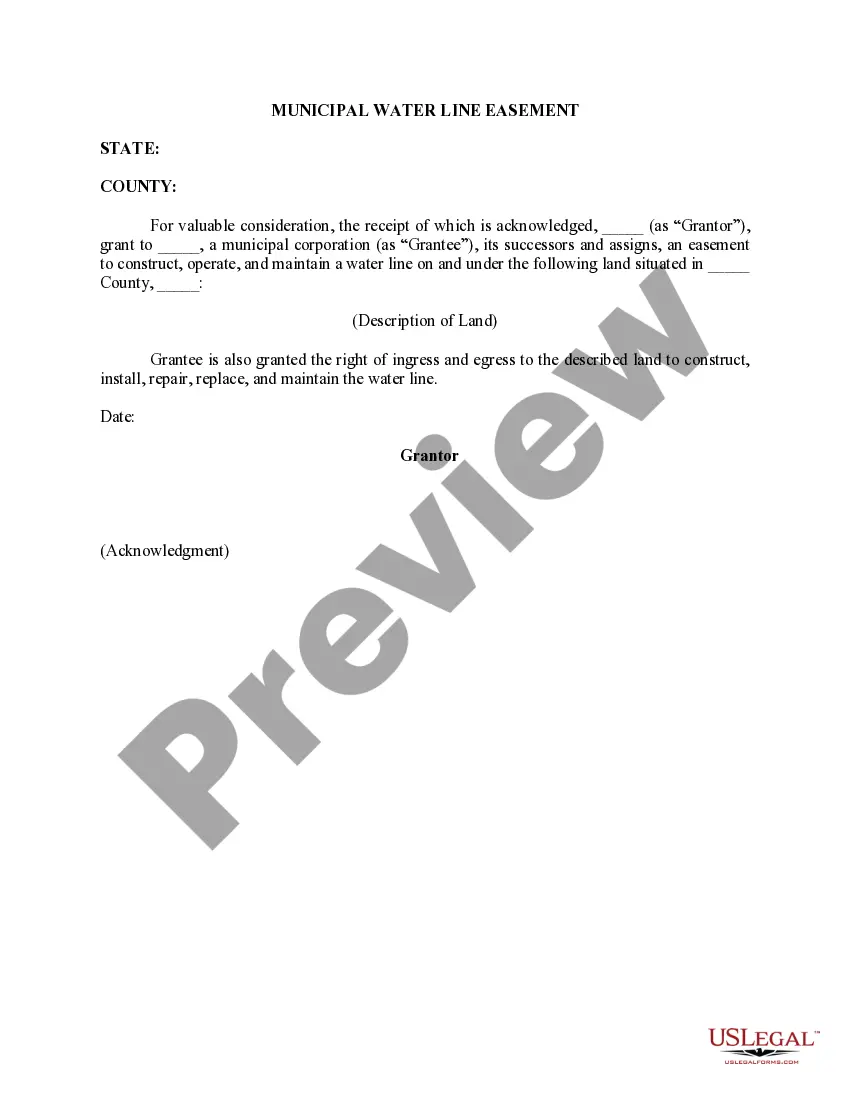
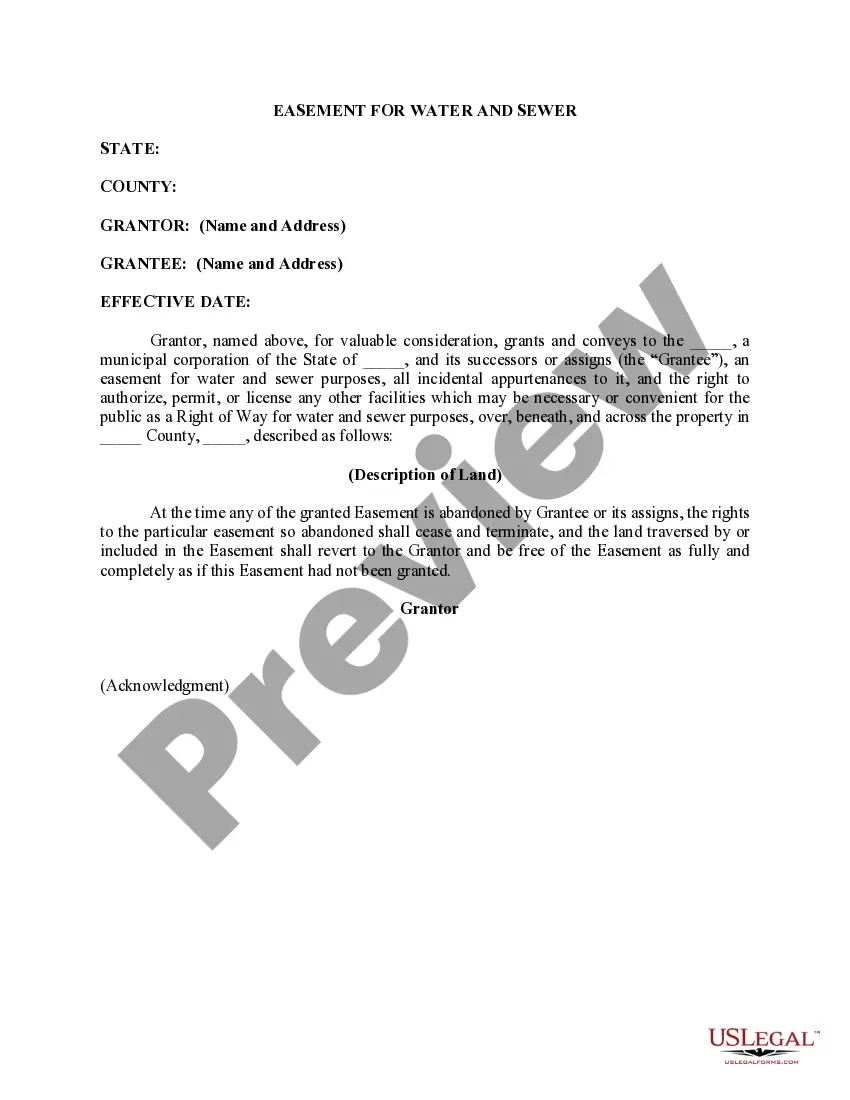
The Municipal Water Line Easement form grants a municipal corporation the right to construct, operate, and maintain a water line on and under specified property. Unlike other property easements, this form focuses specifically on water lines, ensuring proper legal permissions are in place for municipal utility operations.
Form components explained
- Grantor Details: Information regarding the individual or entity granting the easement.
- Grantee Details: Identifies the municipal corporation receiving the easement rights.
- Property Description: Clear identification of the land where the easement applies.
- Right of Ingress and Egress: Details the rights granted to the grantee for accessing the property.
- Date of Agreement: The date when the easement comes into effect.
Situations where this form applies
This form is needed when a municipal corporation requires access to private land for the installation and maintenance of water lines. It ensures that the municipality has the legal authority to perform necessary utility work without legal complications, protecting both the municipality and the property owner.
Who can use this document
- Property owners who need to grant easements for municipal water line projects.
- Municipal corporations seeking legal rights to construct and maintain water lines.
- Attorneys representing either party in easement agreements.
How to prepare this document
- Identify and enter the names of the Grantor and Grantee.
- Specify the property by providing a detailed description of the land involved.
- Include the date when the form is signed to establish the effective date of the easement.
Is notarization required?
This form does not typically require notarization unless specified by local law. However, confirming with legal counsel regarding your local requirements is always advisable.
Get your form ready online
Our built-in tools help you complete, sign, share, and store your documents in one place.
Make edits, fill in missing information, and update formatting in US Legal Forms—just like you would in MS Word.
Download a copy, print it, send it by email, or mail it via USPS—whatever works best for your next step.
Sign and collect signatures with our SignNow integration. Send to multiple recipients, set reminders, and more. Go Premium to unlock E-Sign.
If this form requires notarization, complete it online through a secure video call—no need to meet a notary in person or wait for an appointment.
We protect your documents and personal data by following strict security and privacy standards.

Make edits, fill in missing information, and update formatting in US Legal Forms—just like you would in MS Word.

Download a copy, print it, send it by email, or mail it via USPS—whatever works best for your next step.

Sign and collect signatures with our SignNow integration. Send to multiple recipients, set reminders, and more. Go Premium to unlock E-Sign.

If this form requires notarization, complete it online through a secure video call—no need to meet a notary in person or wait for an appointment.

We protect your documents and personal data by following strict security and privacy standards.
Typical mistakes to avoid
- Failing to accurately describe the property can lead to disputes over the easement's boundaries.
- Not including the date of the agreement can create confusion about when the easement is effective.
- Neglecting to have both parties sign may invalidate the easement.
Benefits of completing this form online
- Convenience of downloading the form directly, allowing for immediate use.
- Editability so users can fill in specific details pertinent to their situation.
- Reliability, knowing the form has been drafted by licensed attorneys to meet legal standards.
Summary of main points
- The Municipal Water Line Easement allows municipalities to access private property for water line installation and maintenance.
- It is essential to accurately complete the form to avoid common mistakes.
- Consider local regulations that may affect the easementâs validity.
Looking for another form?
Form popularity
FAQ
Rights of way (similar to the driveway example, but also including walkways or pathways); Public utilities, such as gas, electricity or water and sewer mains; Parking areas; Access to light and air; and. Shared walls.
An easement can decrease the value of a real estate, increase the value of the real estate or it can have no impact on the value of the real estate at all. The most important fact is that each property and situation should be evaluated on individual basis, taking into account all the circumstances.
Express Grant by Instrument. An express grant by written instrument is the most common source of an easement. Implied. The owner of a large tract of land splits up the land with one or more parcels that do not abut a public highway or road. Necessity. Dedication.
When termed as a utility easement, it means a utility company's right to access and control the portion of another person's land that is located near utility facilities and structures (i.e. utility poles, transformers, overhead or underground electrical lines).
The bottom line is that developers and builders who are presented with utility company easement forms should not just sign them, but think about the kinds of issues they can present. It is easier to negotiate these concessions up front before the lines go in, than to ask the utility company to amend its easement later.
Easements can be created in a variety of ways. They can be created by an express grant, by implication, by necessity, and by adverse possession.
An easement is a legal right to use someone else's land for a particular purpose. For example, the municipal water company may have an easement to run water pipes under your property.Easements are sometimes in writing and referred to in property deeds or title papers prepared by a title insurance company or attorney.