Non-Disturbance, Attornment, Estoppel & Subordination Agreement
What this document covers
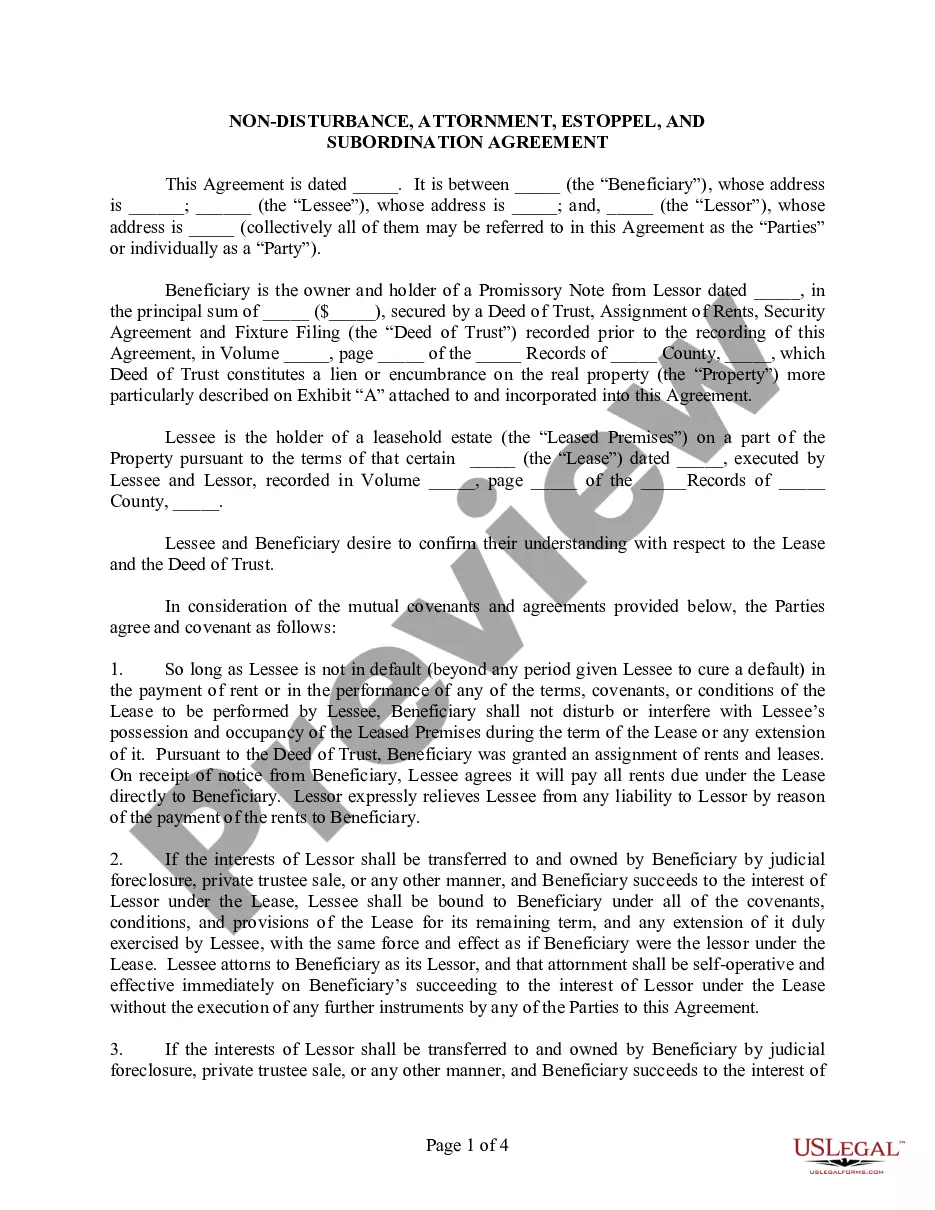
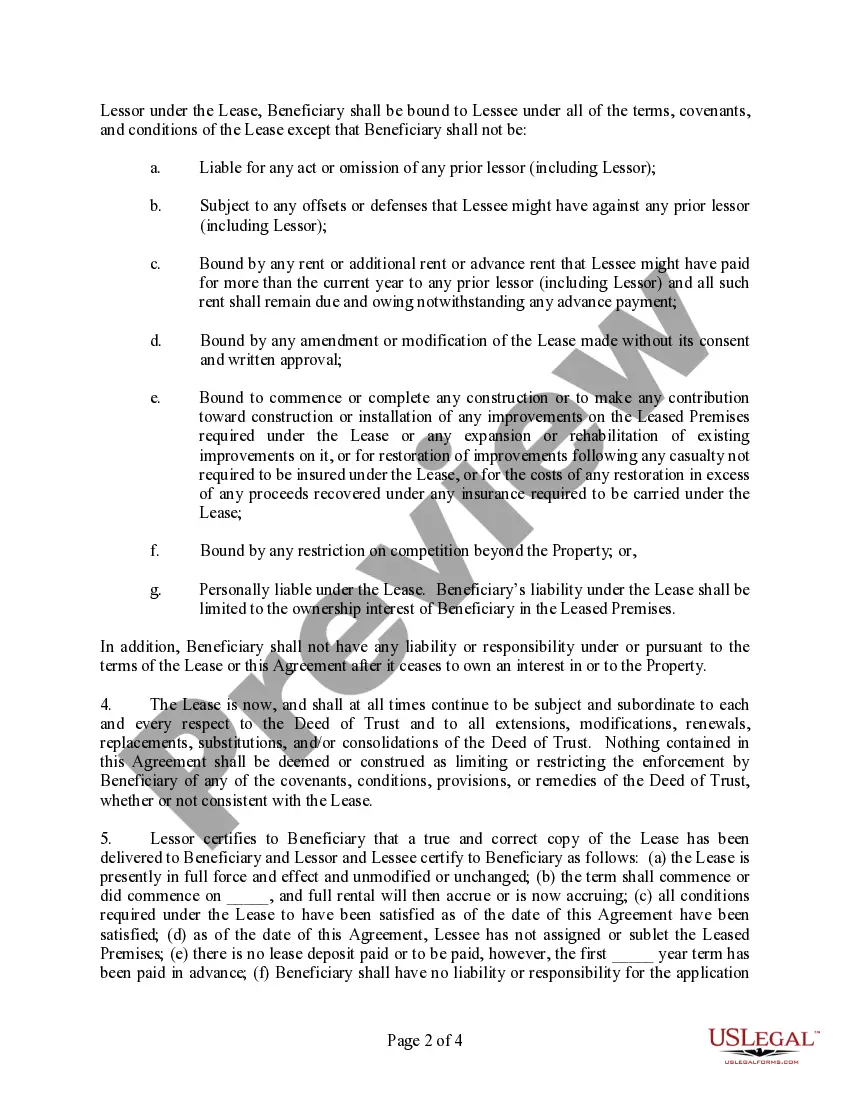
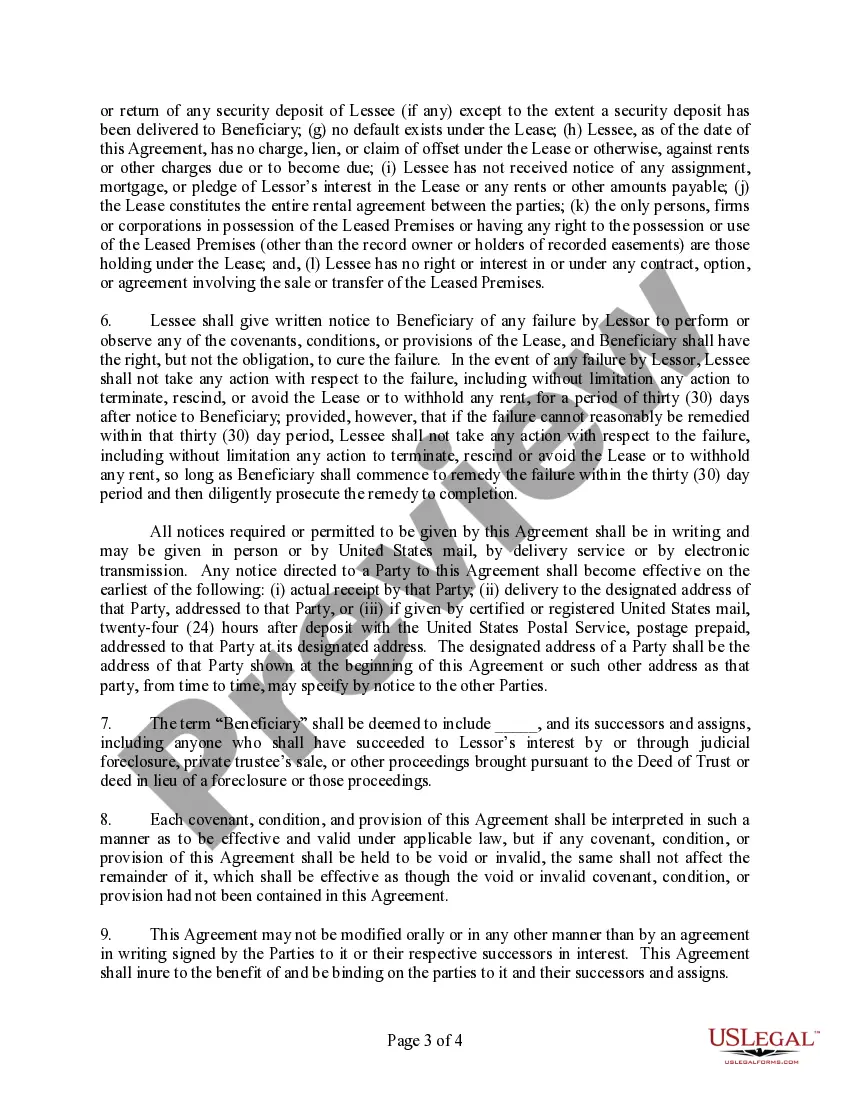
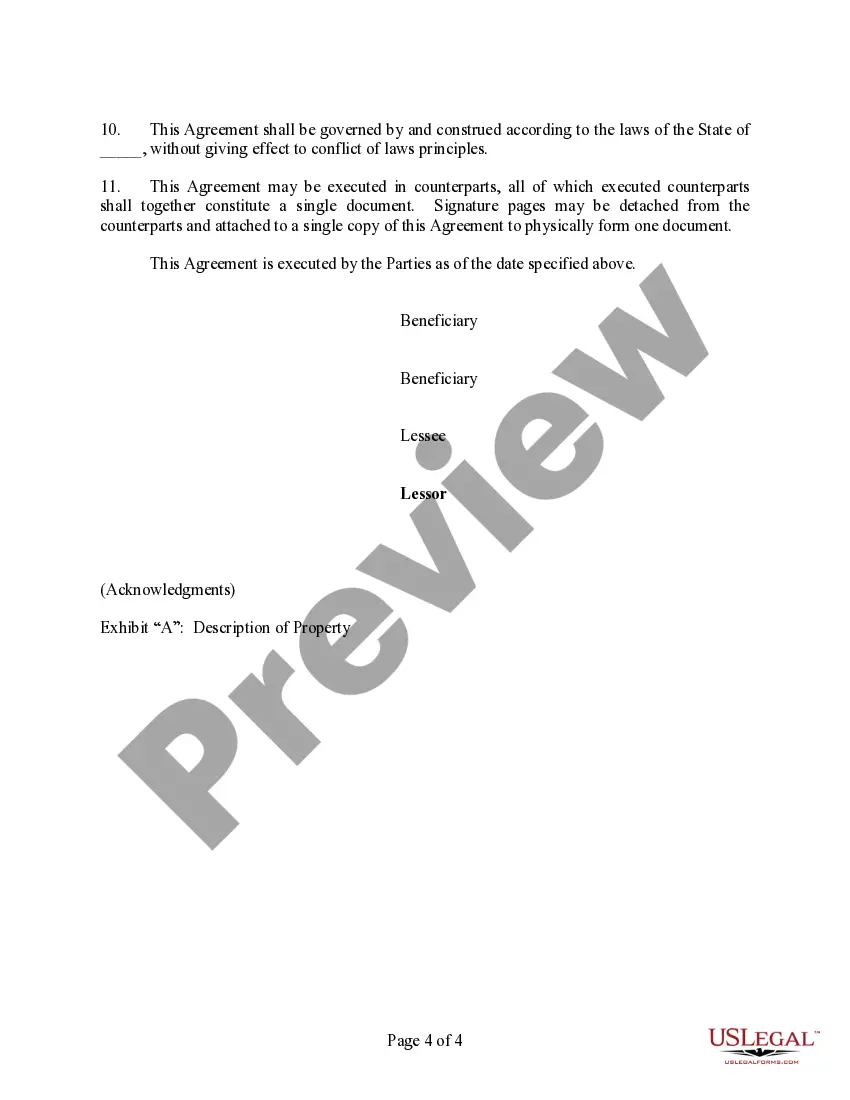
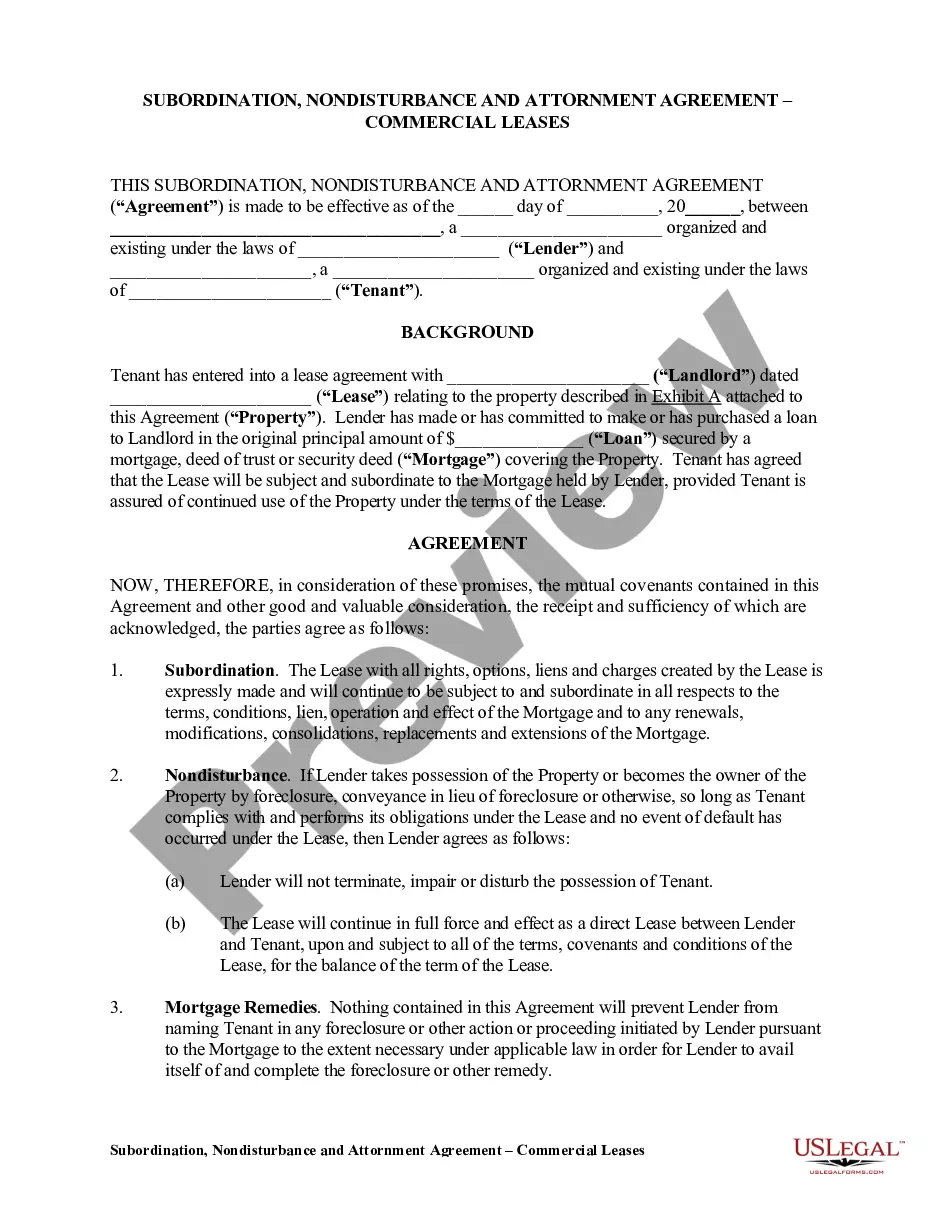
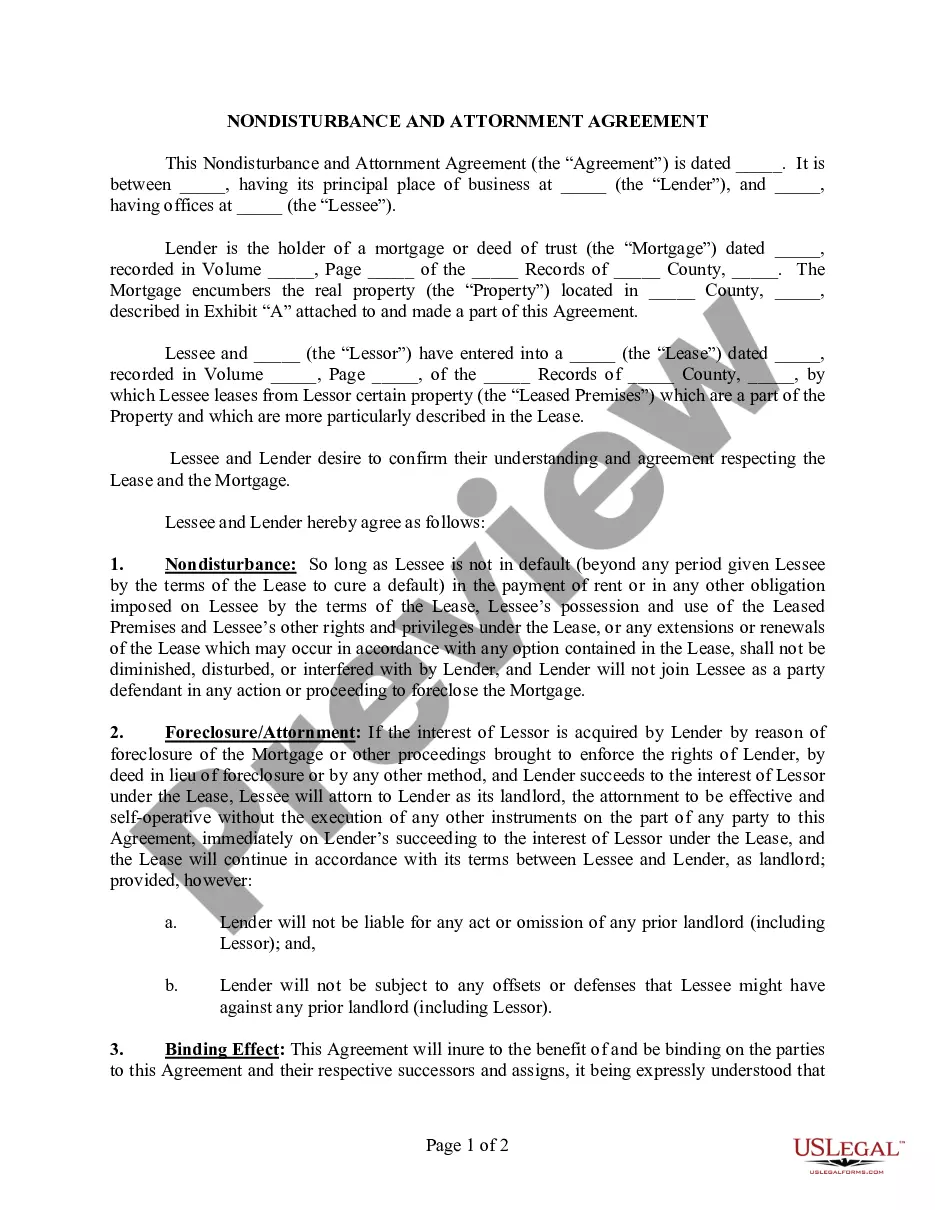
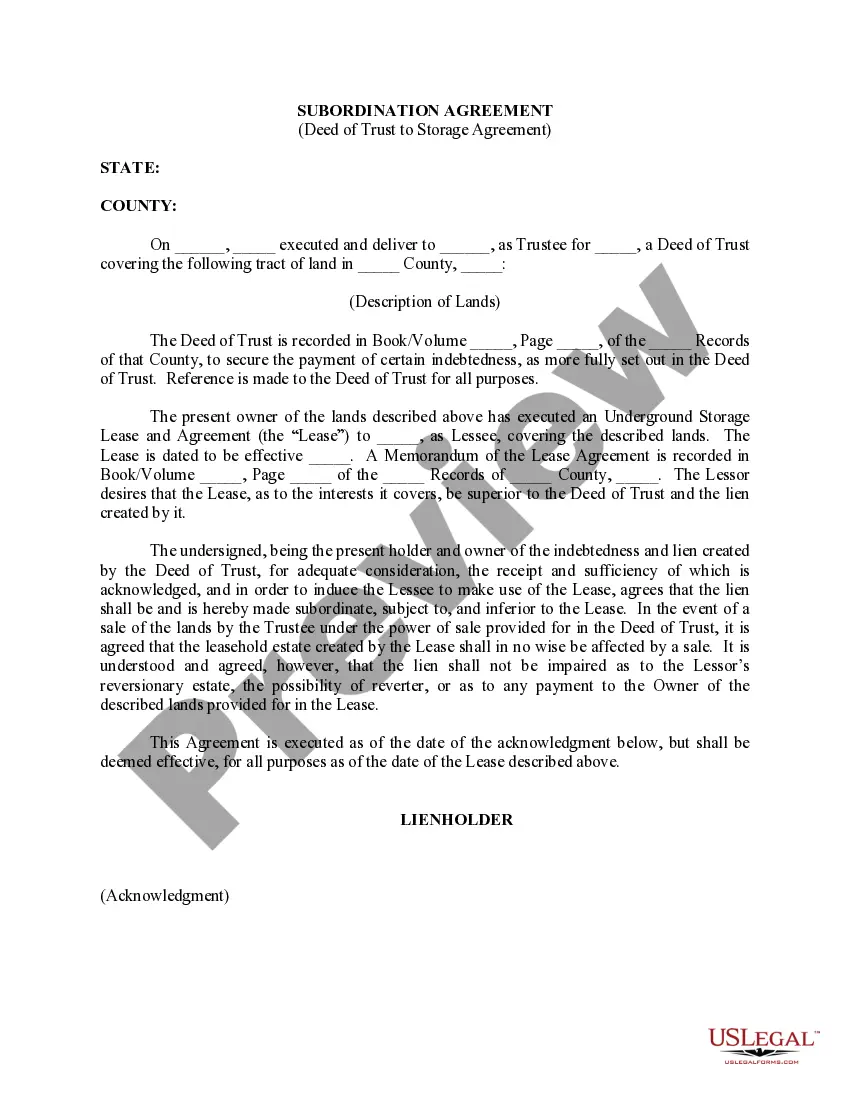
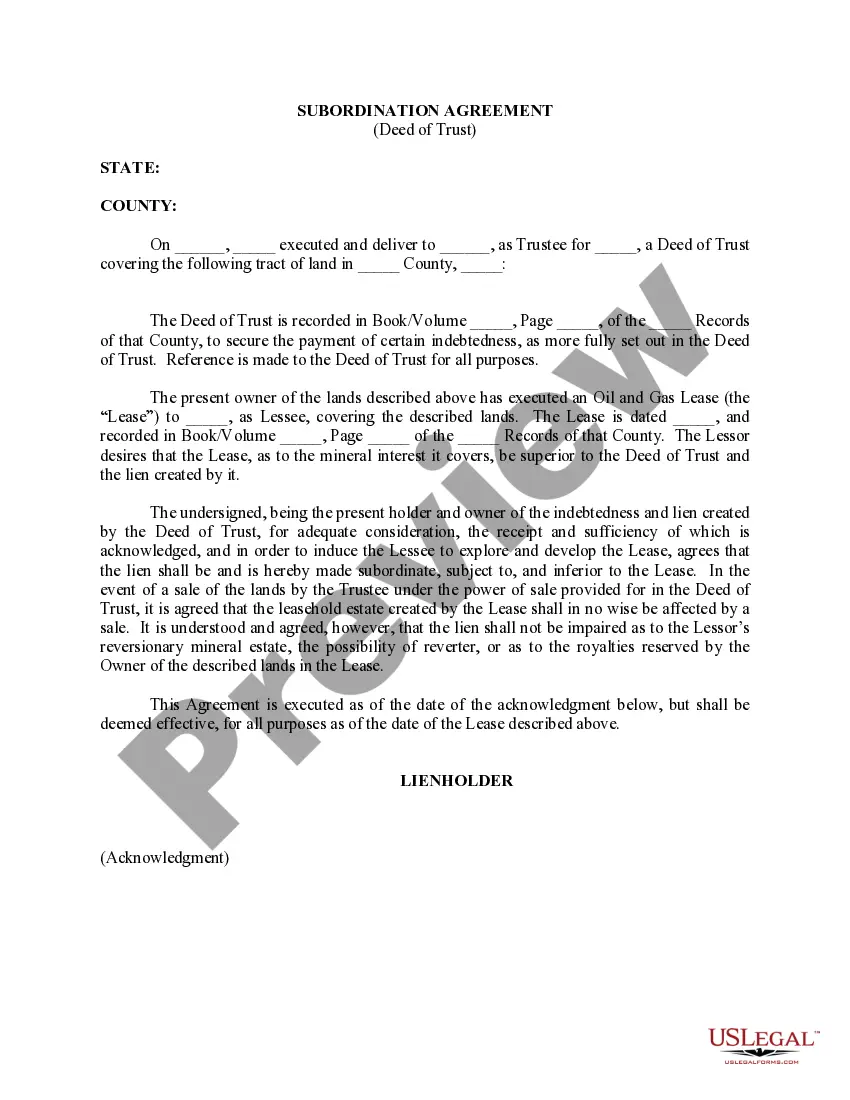
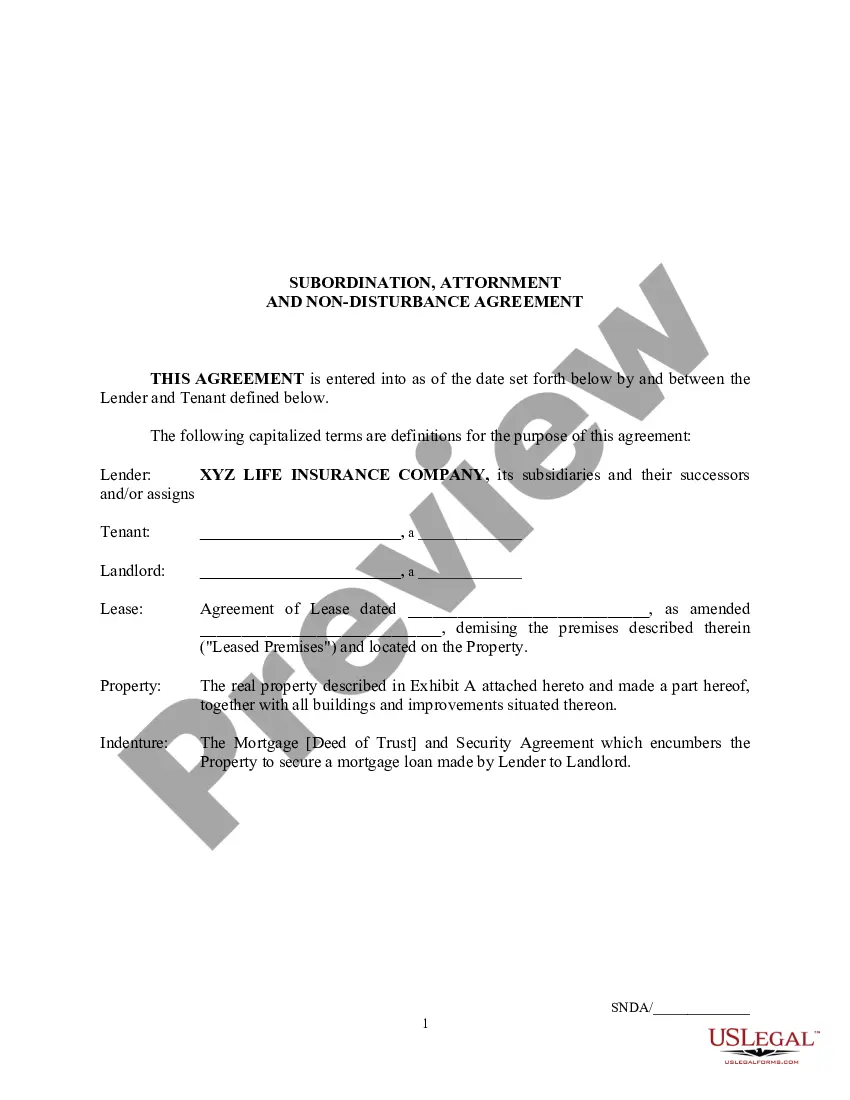
The Non-Disturbance, Attornment, Estoppel & Subordination Agreement is a legal document that outlines the relationships and responsibilities between a lessee (tenant), lessor (landlord), and beneficiary (lender). This form ensures that the lessee's rights to occupy a property are protected even if the property is sold or foreclosed on. It differs from other lease and rental agreements by focusing on the mutual agreements between the parties concerning the lease and the lien holder's interests.
Form components explained
- Date of the agreement and identification of the parties involved.
- Description of the property and leasehold estate.
- Mutual covenants ensuring the lessee's rights are not disturbed.
- Obligations for rent payment directly to the beneficiary upon notice.
- Provisions for attornment to the beneficiary in the event of foreclosure.
- Certification of the lease's status and obligations by the lessor.
Situations where this form applies
This form is commonly used in scenarios involving commercial or residential leases where the property is subject to a mortgage or other financial encumbrance. It is essential when the lessee wishes to ensure their tenancy rights will not be adversely affected by any changes in property ownership, especially in the case of foreclosure or sale of the property. Using this agreement can help prevent disputes between the lessee, lessor, and lender, maintaining clarity and security for all parties involved.
Who can use this document
- Lessee (tenant) who is leasing property under a lease agreement.
- Lessor (landlord) who owns the property and has a mortgage on it.
- Beneficiary (lender) who holds a mortgage or lien on the property.
- Property management companies that handle leases on behalf of landlords.
- Legal professionals assisting clients involved in real estate transactions.
How to complete this form
- Identify and list all parties involved in the agreement (Beneficiary, Lessee, and Lessor).
- Provide a detailed description of the property and lease.
- Enter key dates, including the date of the agreement and lease commencement.
- Fill in fields concerning rent payments and obligations.
- Include all necessary certifications and signatures from each party.
Notarization requirements for this form
This form does not typically require notarization unless specified by local law. However, it is advisable to consult with your legal professional to confirm if notarization is necessary in your jurisdiction.
Get your form ready online
Our built-in tools help you complete, sign, share, and store your documents in one place.
Make edits, fill in missing information, and update formatting in US Legal Forms—just like you would in MS Word.
Download a copy, print it, send it by email, or mail it via USPS—whatever works best for your next step.
Sign and collect signatures with our SignNow integration. Send to multiple recipients, set reminders, and more. Go Premium to unlock E-Sign.
If this form requires notarization, complete it online through a secure video call—no need to meet a notary in person or wait for an appointment.
We protect your documents and personal data by following strict security and privacy standards.

Make edits, fill in missing information, and update formatting in US Legal Forms—just like you would in MS Word.

Download a copy, print it, send it by email, or mail it via USPS—whatever works best for your next step.

Sign and collect signatures with our SignNow integration. Send to multiple recipients, set reminders, and more. Go Premium to unlock E-Sign.

If this form requires notarization, complete it online through a secure video call—no need to meet a notary in person or wait for an appointment.

We protect your documents and personal data by following strict security and privacy standards.
Common mistakes to avoid
- Failing to properly identify all parties involved in the agreement.
- Not providing an accurate description of the property.
- Omitting necessary signatures and dates, which can invalidate the document.
- Neglecting to review state-specific requirements that may impact the agreement.
Why use this form online
- Immediate access to a professionally drafted document tailored by licensed attorneys.
- Convenient download and editing options to customize the form to your needs.
- Secure storage and retrieval options for future reference.
- Easy-to-follow instructions and guidance throughout the completion process.
Looking for another form?
Form popularity
FAQ
The Purpose of Tenant Estoppel Certificates By definition, an estoppel certificate is a signed statement by a party (such as a tenant or mortgagee) certifying for anoth- er's benefit that certain facts are correct, as that a lease exists, that there are no defaults, and that rent is paid to a certain date.
What does estoppel mean in a real estate transaction? An association estoppel is defined as a legal document obtained from a property's governing homeowners' association, condominium owners' association, or some other common interest community, and shows all outstanding fees or fines due as of a certain date.
A nondisturbance clause is a provision in a mortgage contract that ensures that a rental agreement between the tenant and the landlord will continue under any circumstances.A nondisturbance clause ensures that a tenant will not be evicted in the event that the landlord goes bankrupt.
An SNDA is an agreement entered into between a tenant and the lender of the landlord (and, ideally, the landlord) to establish the relationship between the tenant and lender (who would not otherwise have a direct relationship) and provide relative priorities between them.
An SNDA is enforceable between the parties signing it (lender, landlord, and tenant) whether or not it is recorded. However, a recorded SNDA provides greater protection because it puts third-party buyers at a foreclosure sale on notice that the tenant's lease cannot be terminated by means of a foreclosure.
Estoppels and SNDAs are usually initiated by the lender; however, well written documents serve the interest of the tenant just as well. An estoppel certificate is a certification from a landlord and a tenant that outlines the terms and conditions of the lease.
In the case of commercial property changing hands, an attornment clause in a subordination, non-disturbance, and attornment (SNDA) agreement requires the tenant to acknowledge a new owner as their landlord and to continue paying rent regardless of whether the property changes hands through a normal sale or a
Further, the SNDA is a document that typically states that the lease will be subordinate to the mortgage loan and the lender's interest in the property and that the tenant agrees to attorn to, or recognize, the lender or its assignee or transferee, as the new landlord.