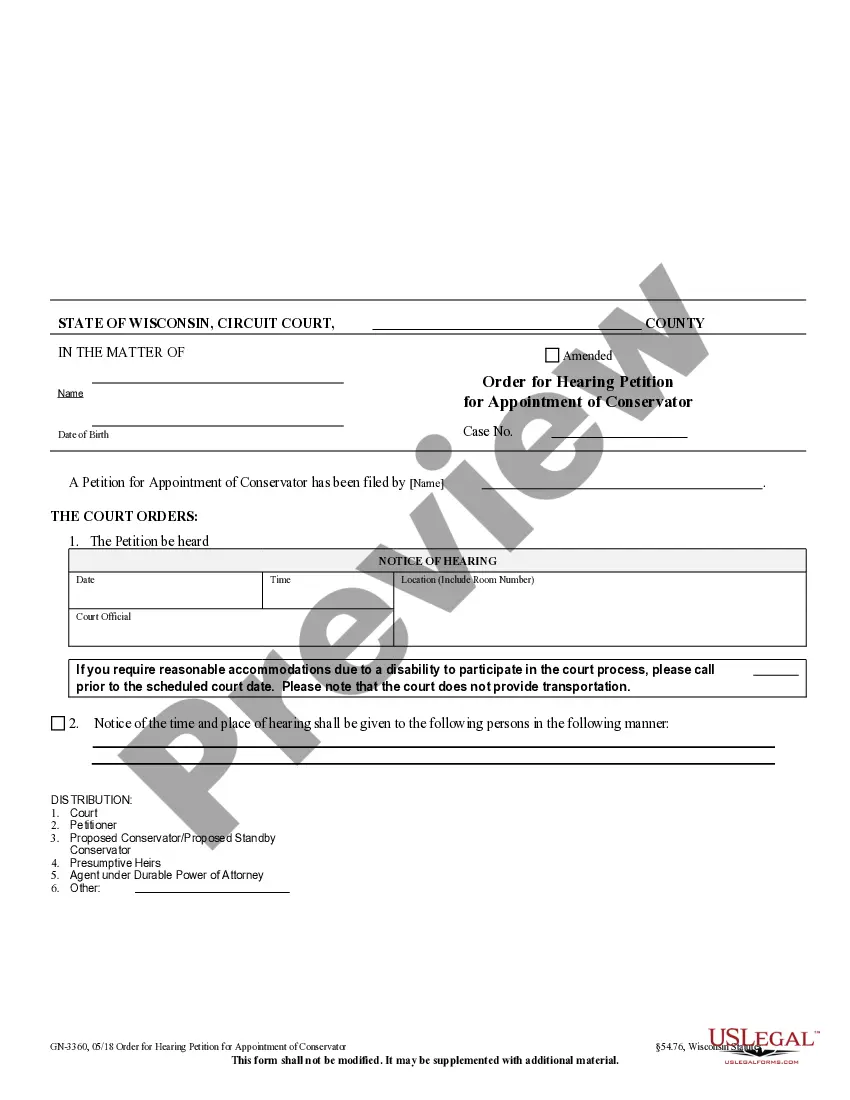
Non-Disturbance and Attornment Agreement
What this document covers
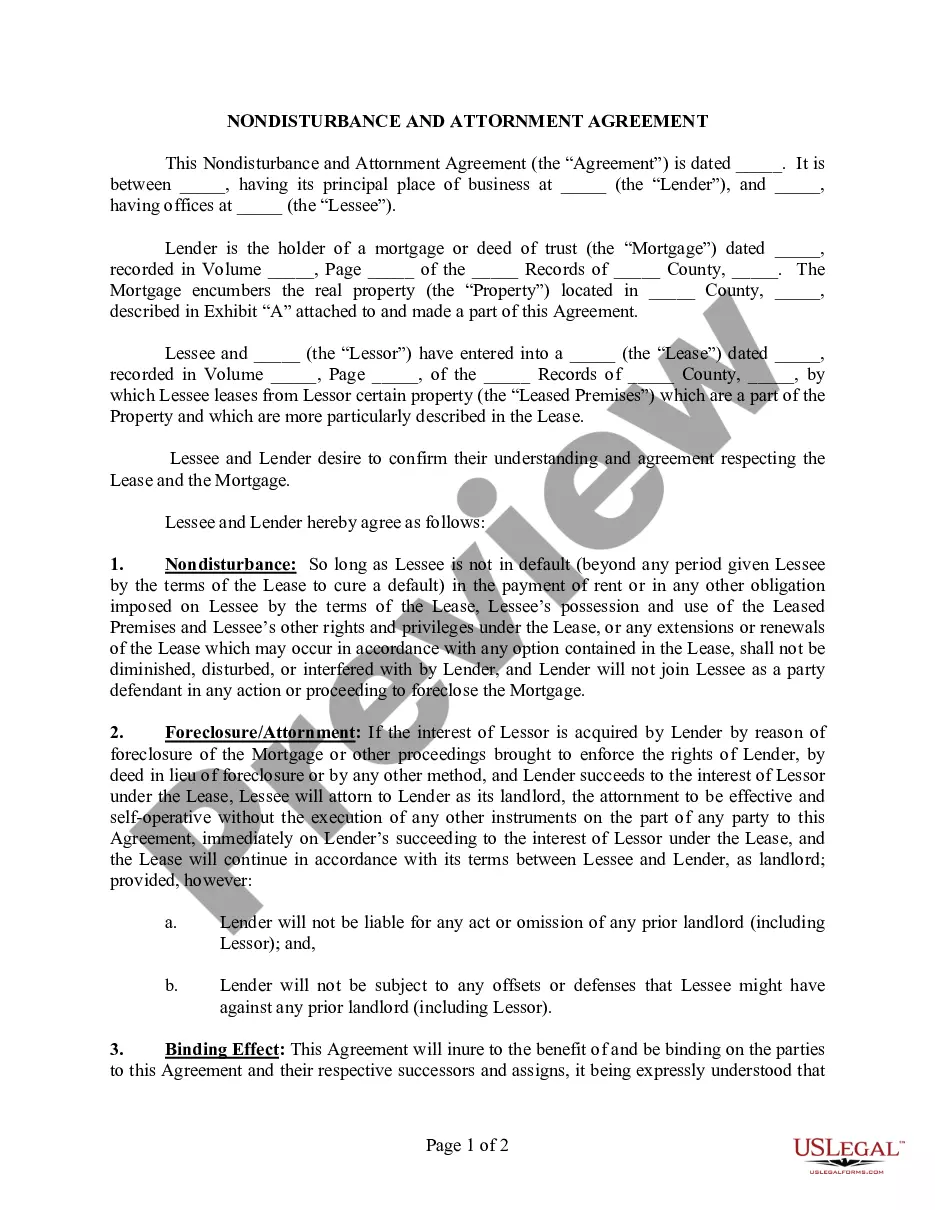
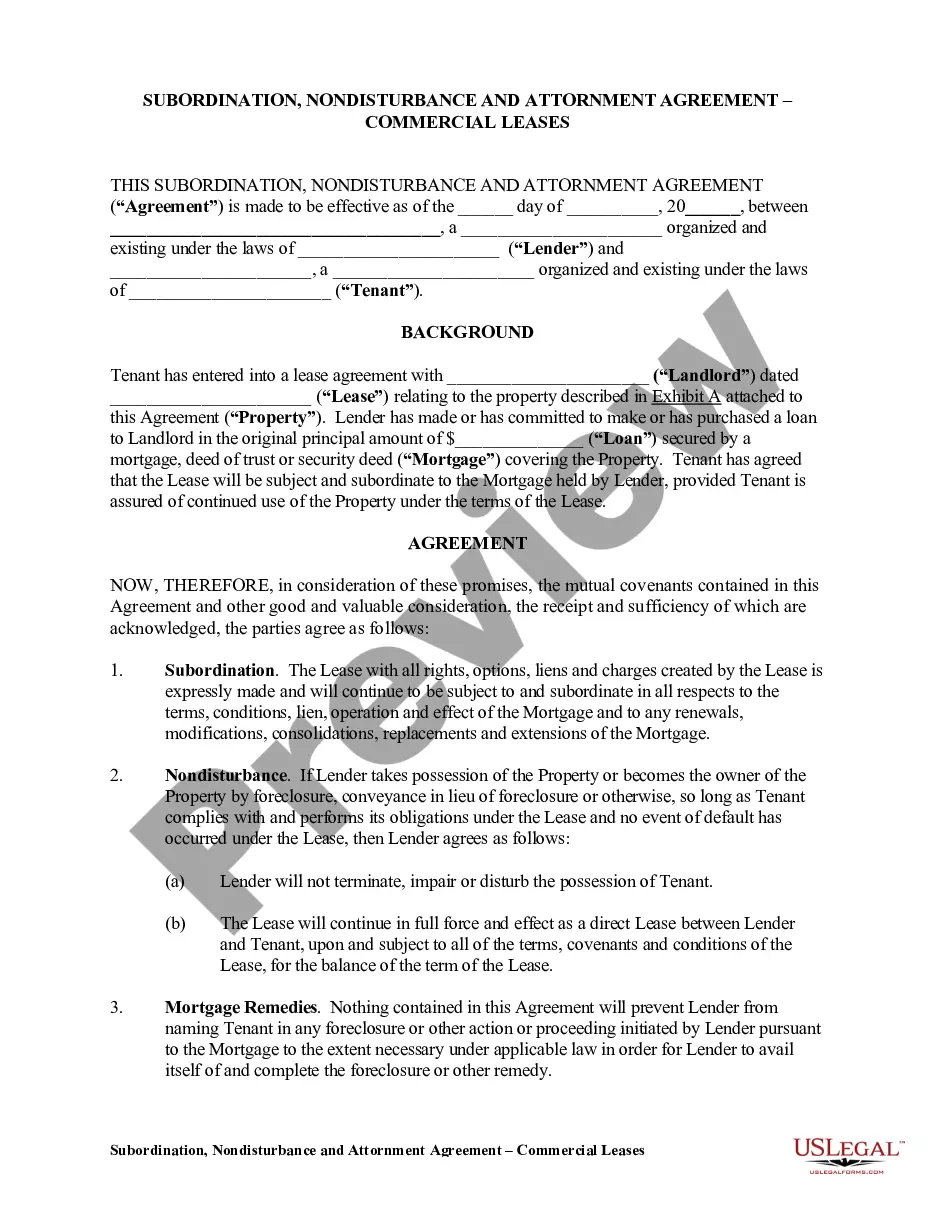
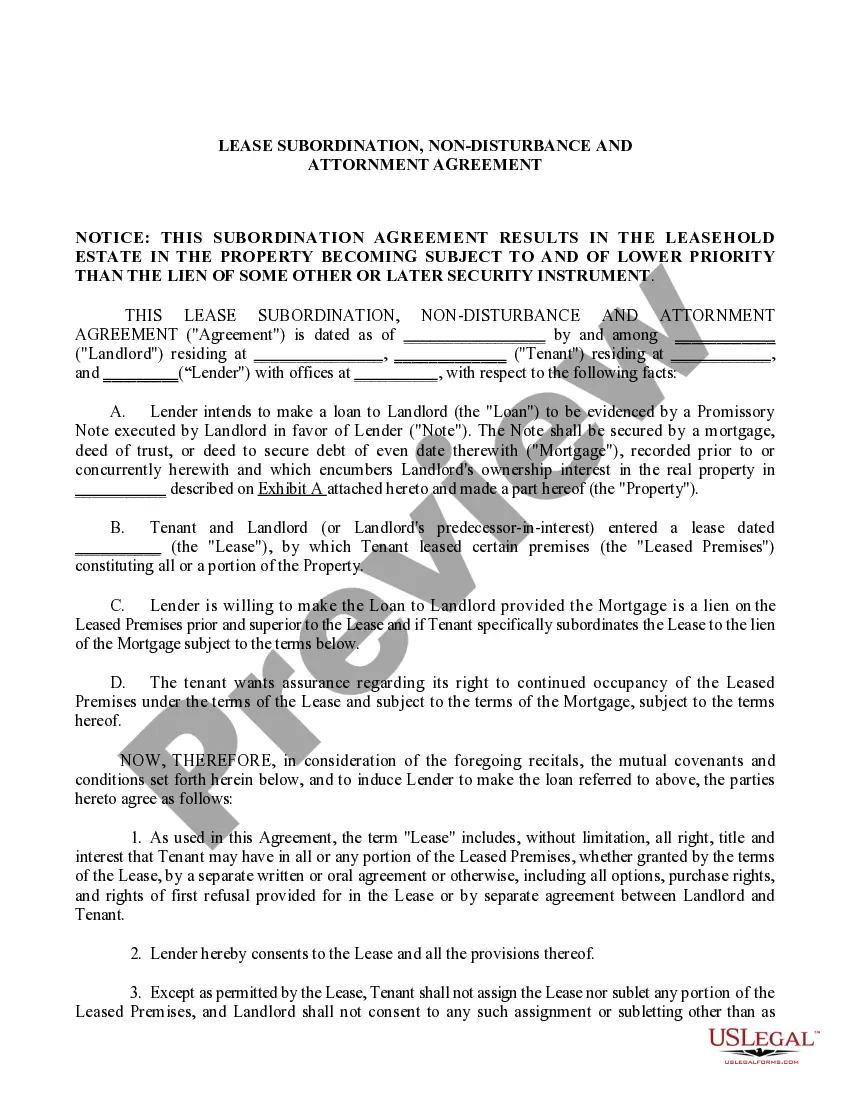
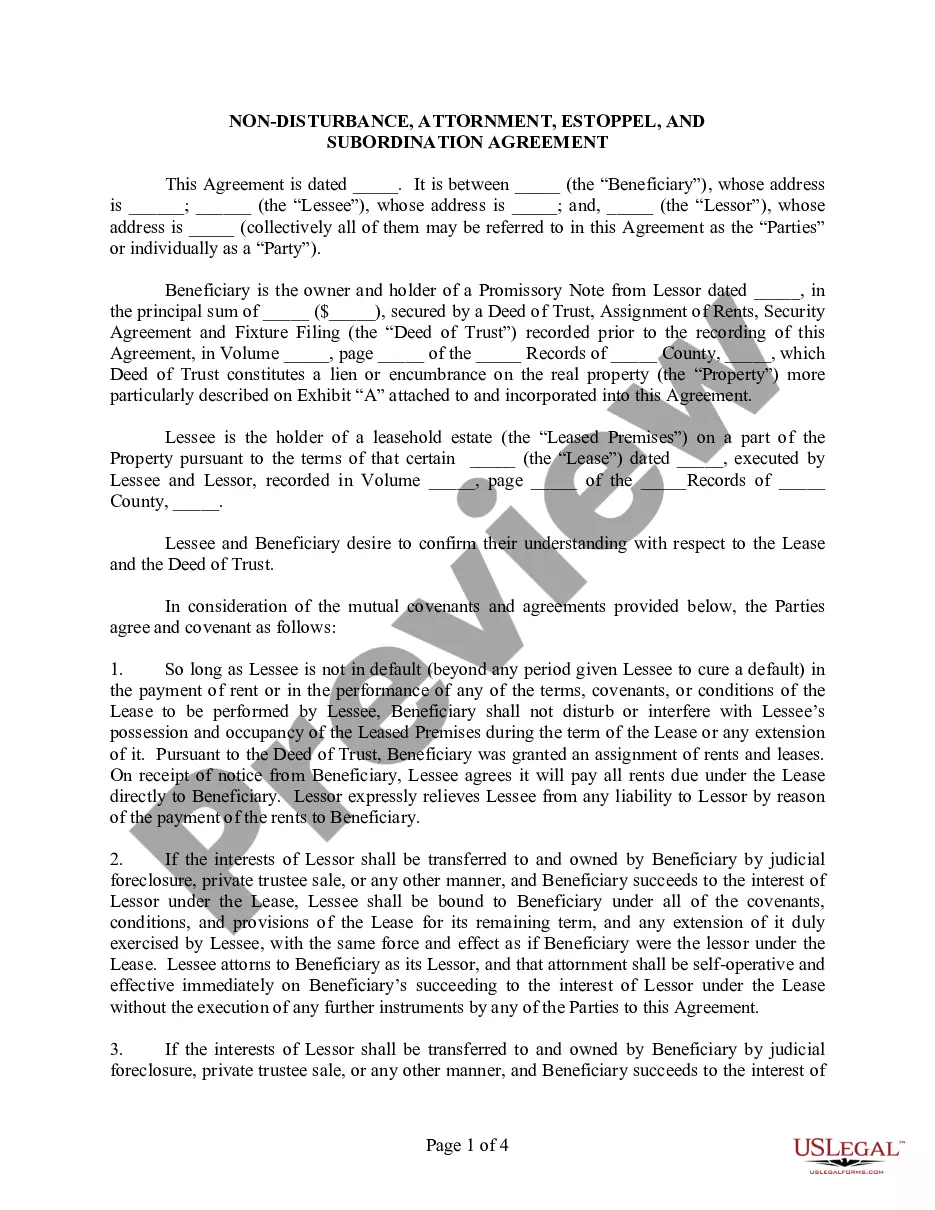
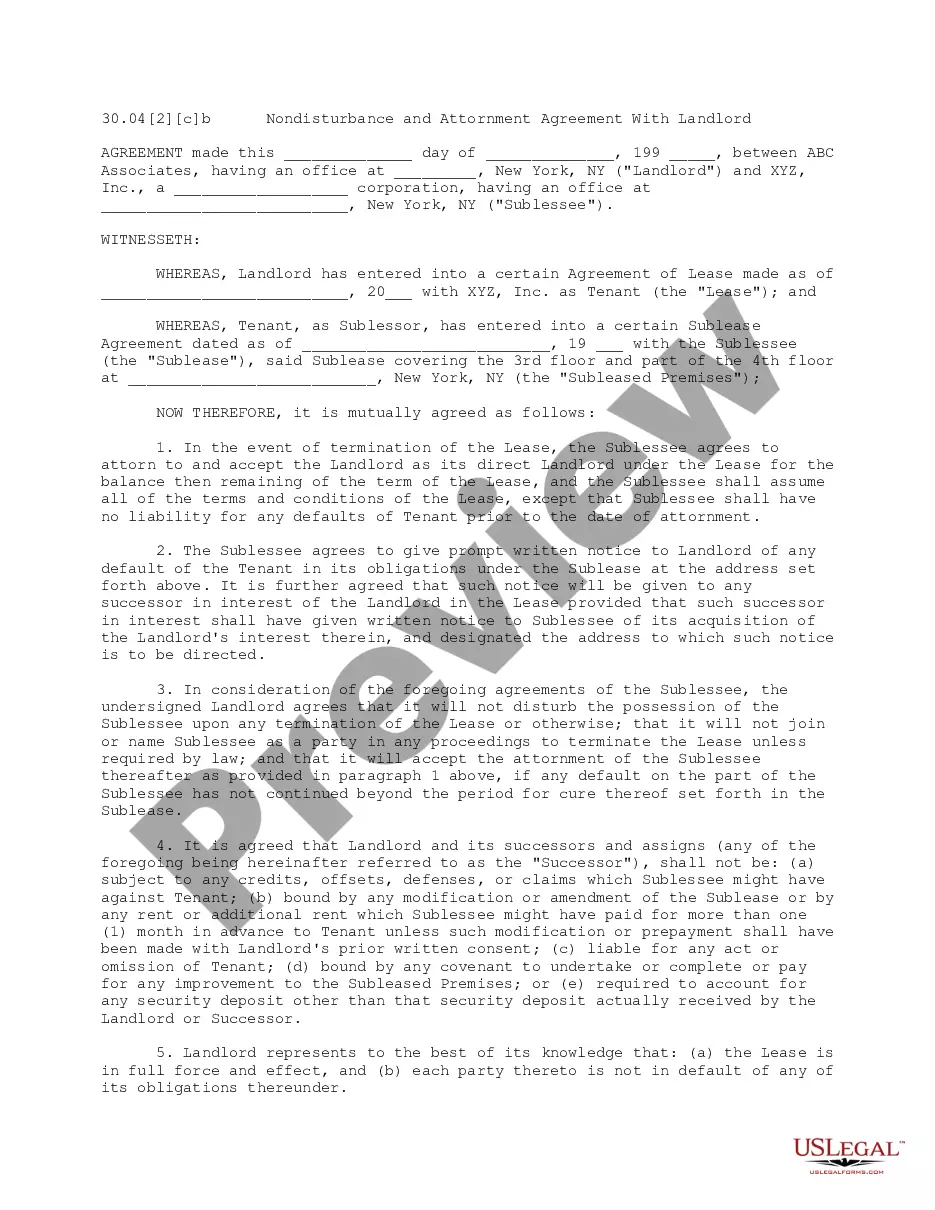
The Non-Disturbance and Attornment Agreement is a legal document that ensures the rights and obligations of tenants when a property is foreclosed by the mortgage lender. This agreement protects tenants from being disturbed in their use of the property, as long as they are fulfilling their lease obligations. Unlike other lease agreements, this form specifically addresses the relationship between the tenant (lessee) and the mortgage lender (lender), ensuring the tenant's rights are retained even if the property is sold or foreclosed.
Form components explained
- Nondisturbance clause: Protects the tenant's right to occupy the leased premises if they are compliant with the lease terms.
- Foreclosure/attornment clause: Outlines the tenant's obligations to recognize the lender as the new landlord in the event of foreclosure.
- Binding effect: Ensures that the agreement applies to all parties and their successors.
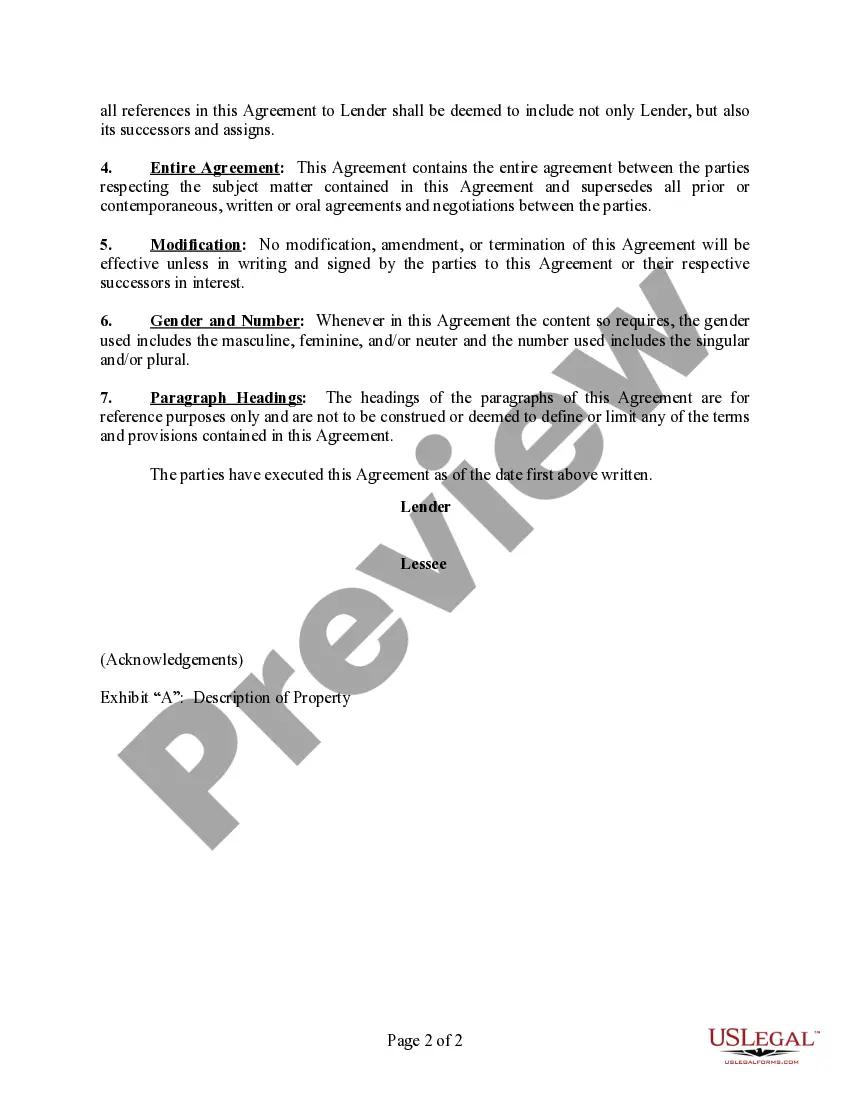
- Entire agreement clause: Confirms that this document represents the complete understanding between the parties involved.
- Modification clause: Specifies that changes to the agreement must be made in writing and signed by all parties.
When this form is needed
This form is used in situations where a tenant wishes to secure their lease agreements despite the possibility of a foreclosure on the property they are renting. It is especially beneficial when the tenant wants assurance that their rights will be honored if the landlordâs mortgage is defaulted upon. This agreement is useful for businesses or individuals leasing property that is subject to a mortgage, and where stability in the lease terms is desired during potential financial instability involving the property owner.
Who should use this form
- Tenants (lessees) who are leasing property that is under a mortgage.
- Landlords (lessors) who are willing to provide additional security to tenants regarding their occupancy rights.
- Mortgage lenders who wish to establish agreements with tenants concerning property leases during foreclosure processes.
How to prepare this document
- Identify the parties involved: Clearly state the names and contact information of the lender and lessee.
- Specify the property: Include the details of the property being leased, as described in the attached Exhibit A.
- Enter dates: Fill in the relevant dates, including the date of the agreement and recordation of the mortgage and lease.
- Review terms: Ensure all clauses are understood, especially regarding the rights during foreclosure.
- Sign the agreement: Obtain all necessary signatures from both the lender and the lessee to make it legally binding.
Does this document require notarization?
This form does not typically require notarization unless specified by local law. However, it is advised to review your state's specific requirements or consult with a legal professional for confirmation.
Get your form ready online
Our built-in tools help you complete, sign, share, and store your documents in one place.
Make edits, fill in missing information, and update formatting in US Legal Forms—just like you would in MS Word.
Download a copy, print it, send it by email, or mail it via USPS—whatever works best for your next step.
Sign and collect signatures with our SignNow integration. Send to multiple recipients, set reminders, and more. Go Premium to unlock E-Sign.
If this form requires notarization, complete it online through a secure video call—no need to meet a notary in person or wait for an appointment.
We protect your documents and personal data by following strict security and privacy standards.

Make edits, fill in missing information, and update formatting in US Legal Forms—just like you would in MS Word.

Download a copy, print it, send it by email, or mail it via USPS—whatever works best for your next step.

Sign and collect signatures with our SignNow integration. Send to multiple recipients, set reminders, and more. Go Premium to unlock E-Sign.

If this form requires notarization, complete it online through a secure video call—no need to meet a notary in person or wait for an appointment.

We protect your documents and personal data by following strict security and privacy standards.
Avoid these common issues
- Failing to clearly identify all parties and their roles in the agreement.
- Not including the complete legal description of the property in Exhibit A.
- Omitting signatures or dates which can render the agreement unenforceable.
- Overlooking state-specific laws that might affect the enforceability of the agreement.
Why use this form online
- Convenience: Access and download the form anytime, without visiting a legal office.
- Editability: Customize the document to fit specific needs with ease.
- Reliability: Forms are drafted by licensed attorneys, ensuring they meet legal standards.
Looking for another form?
Form popularity
FAQ
An SNDA is enforceable between the parties signing it (lender, landlord, and tenant) whether or not it is recorded. However, a recorded SNDA provides greater protection because it puts third-party buyers at a foreclosure sale on notice that the tenant's lease cannot be terminated by means of a foreclosure.
A lender typically wants to have an SNDA because of its subordination clause if, in the absence of such an agreement, the lease would be prior to the mortgage.Therefore, if a mortgage is senior to a lease, the foreclosure of the mortgage will terminate the lease unless there is an agreement that provides otherwise.
In the case of commercial property changing hands, an attornment clause in a subordination, non-disturbance, and attornment (SNDA) agreement requires the tenant to acknowledge a new owner as their landlord and to continue paying rent regardless of whether the property changes hands through a normal sale or a
What are tenant estoppels and SNDAs? Conceptually, the tenant estoppel and SNDA are part of a normal lease transaction. The landlord will request that a tenant estoppel and/or SNDA be signed when the landlord is obtaining financing or when the property is being sold.
A notice of attornment is a notice that the new owner may give to you, providing notice that the building has been sold to them. It will direct you to pay all future rent to the new landlord.
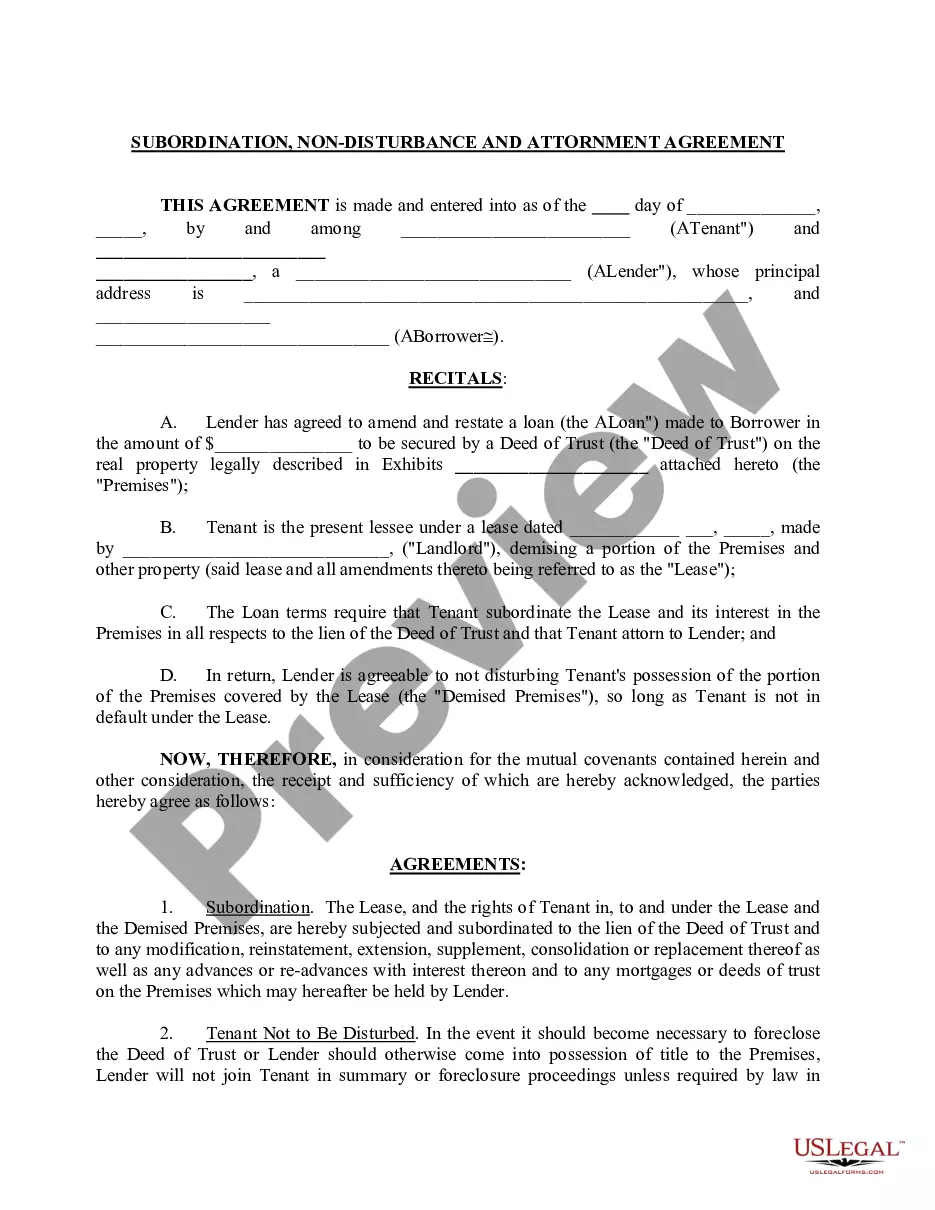
Further, the SNDA is a document that typically states that the lease will be subordinate to the mortgage loan and the lender's interest in the property and that the tenant agrees to attorn to, or recognize, the lender or its assignee or transferee, as the new landlord.
An SNDA is an agreement entered into between a tenant and the lender of the landlord (and, ideally, the landlord) to establish the relationship between the tenant and lender (who would not otherwise have a direct relationship) and provide relative priorities between them.
An attornment occurs when the title to an immovable property is transferred from the hands of one lessor to another. In such cases, the existing lessor will usually send a letter of attornment to the lessee notifying him of such sale and request him to make all further lease payments directly to the new lessor.