Illinois Written Revocation of Will
What is this form?
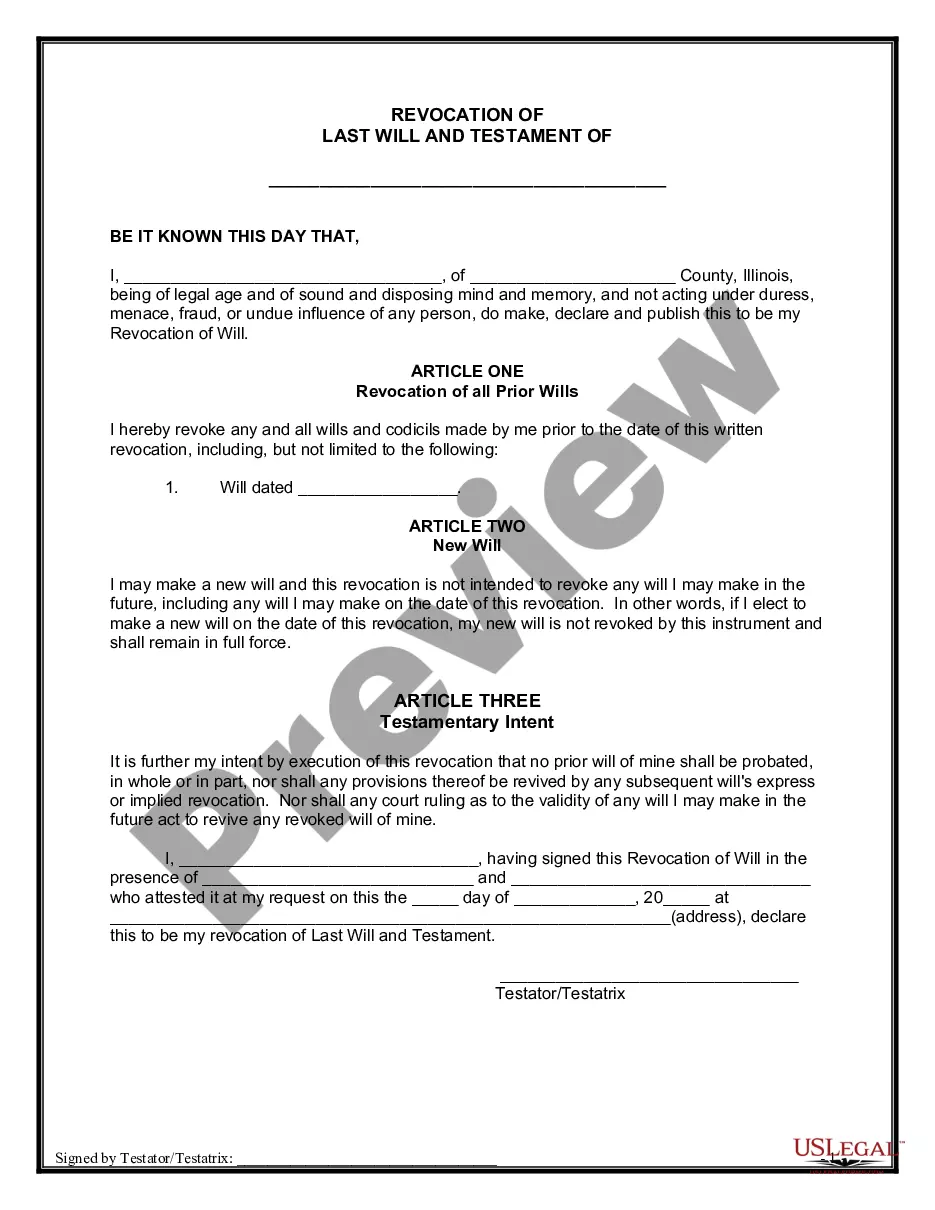
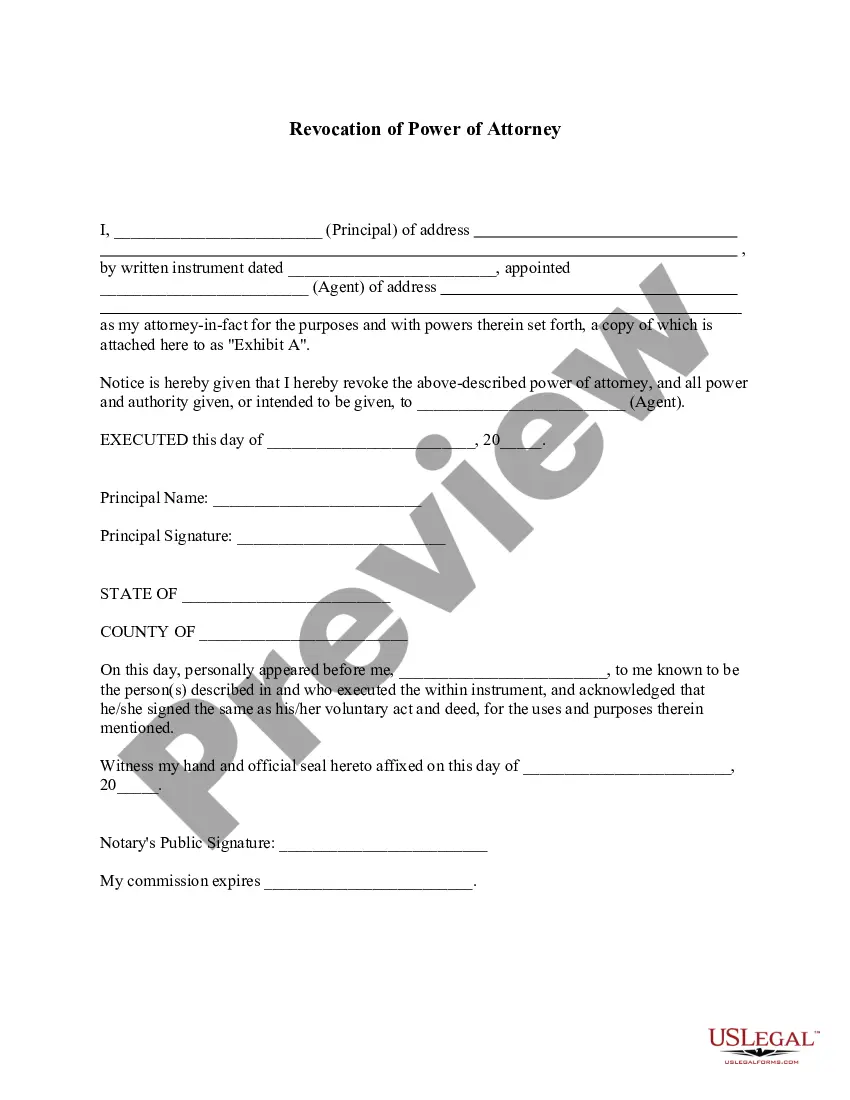
The Written Revocation of Will is a legal document that allows an individual to formally revoke any previously made wills. This form serves as a clear and separate written instrument to indicate that all prior wills are no longer valid. It is particularly useful when a new will does not explicitly contain a clause revoking prior wills, thereby preventing confusion among heirs regarding which will should be probated.
Key parts of this document
- Declaration of revocation, which states that all prior wills are revoked.
- Specification of the prior will being revoked, including its date.
- Intent to create a new will in the future without affecting this revocation.
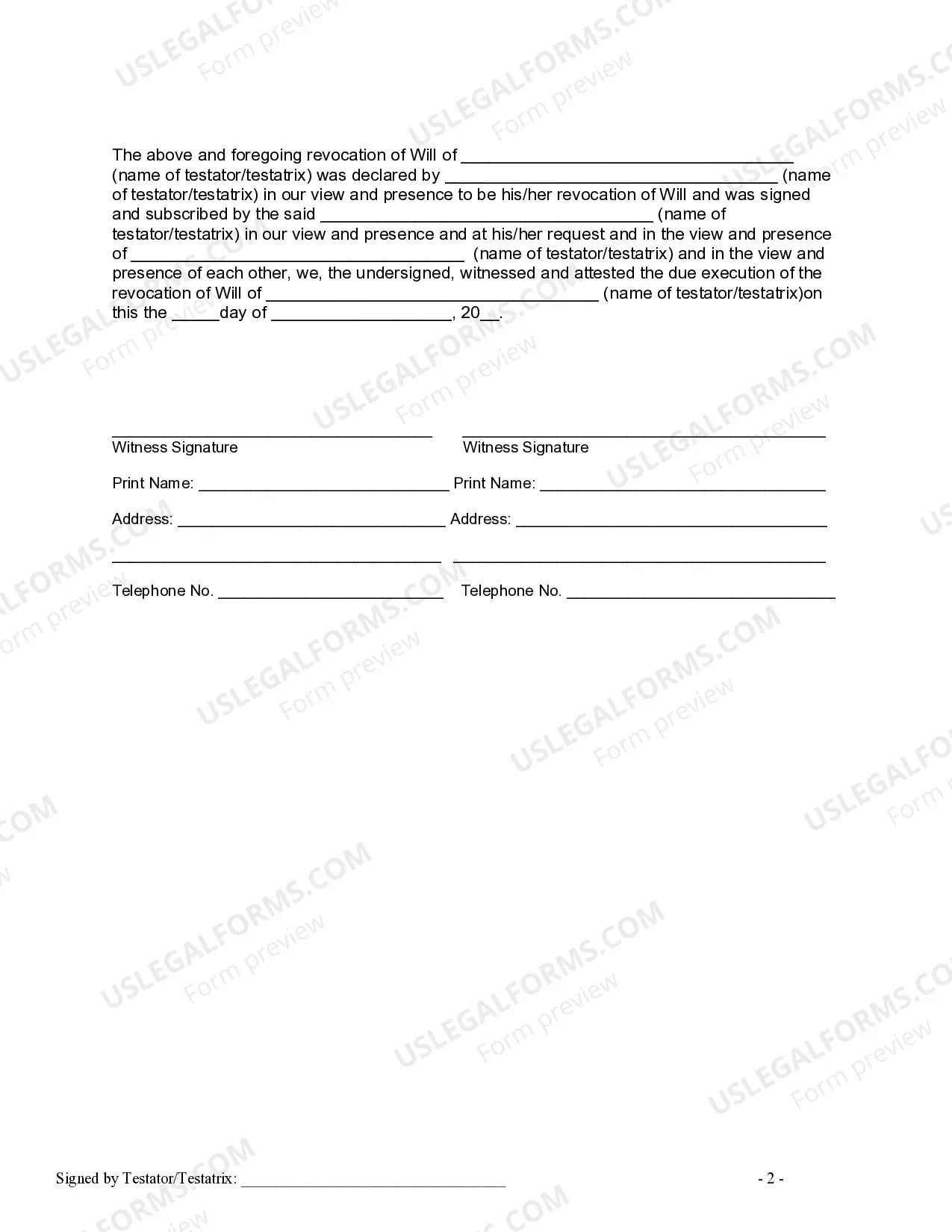
- Witness signatures to validate the execution of the revocation.
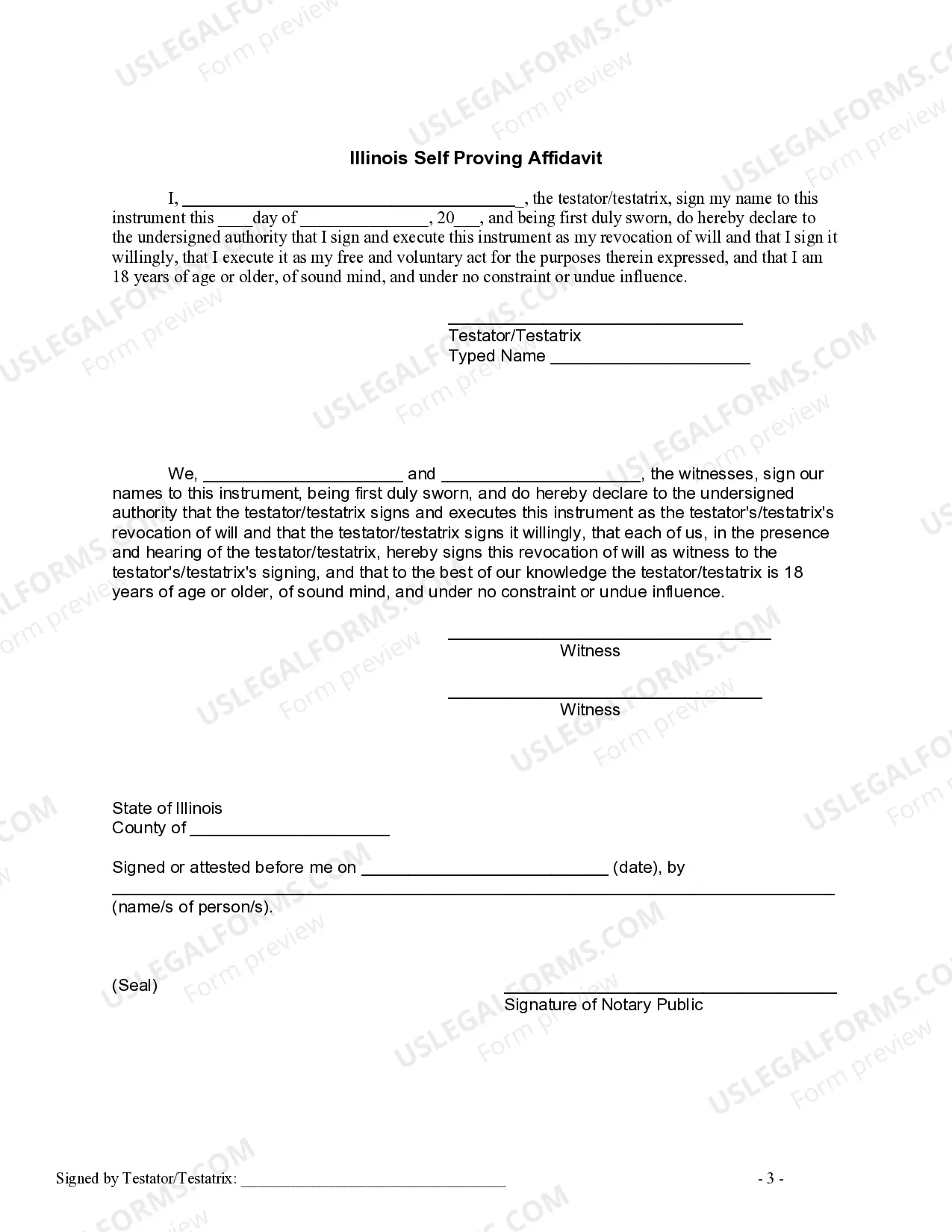
- A notary section for further legal validation if required.
When to use this form
This form should be used when an individual wishes to revoke their existing will to prevent it from being probated alongside a new will or when they no longer want their previous will to be considered valid. It is essential in scenarios where a person wants to ensure that their latest wishes regarding asset distribution are clear and upheld, particularly in family situations where there might be competing interests among heirs.
Who can use this document
- Individuals who have previously created a will and want to revoke it.
- Persons who wish to ensure their current will is the only one recognized by their heirs.
- Anyone planning to create a new will that does not contain a revocation clause for prior documents.
Steps to complete this form
- Fill in your full name and county of residence at the top of the form.
- Clearly state the date of the will you are revoking and indicate that you revoke all previous wills.
- Include a statement that affirms your decision to create a new will in the future if desired.
- Sign the form in the presence of at least two witnesses who will also sign it.
- If required, have a notary public witness the signing and complete the notary section.
Is notarization required?
This form does not typically require notarization unless specified by local law. However, having the form notarized can enhance its legal standing and provide additional proof of its authenticity.
Get your form ready online
Our built-in tools help you complete, sign, share, and store your documents in one place.
Make edits, fill in missing information, and update formatting in US Legal Forms—just like you would in MS Word.
Download a copy, print it, send it by email, or mail it via USPS—whatever works best for your next step.
Sign and collect signatures with our SignNow integration. Send to multiple recipients, set reminders, and more. Go Premium to unlock E-Sign.
If this form requires notarization, complete it online through a secure video call—no need to meet a notary in person or wait for an appointment.
We protect your documents and personal data by following strict security and privacy standards.

Make edits, fill in missing information, and update formatting in US Legal Forms—just like you would in MS Word.

Download a copy, print it, send it by email, or mail it via USPS—whatever works best for your next step.

Sign and collect signatures with our SignNow integration. Send to multiple recipients, set reminders, and more. Go Premium to unlock E-Sign.

If this form requires notarization, complete it online through a secure video call—no need to meet a notary in person or wait for an appointment.

We protect your documents and personal data by following strict security and privacy standards.
Mistakes to watch out for
- Failing to include the date of the prior will being revoked.
- Not having the required witnesses present during the signing of the revocation.
- Assuming that verbal revocation is sufficient without a written document.
- Overlooking the need for notarization, if mandated by state law.
Why use this form online
- Immediate access to downloadable formats that can be filled and printed from home.
- The ability to easily edit and tailor the form to your specific needs.
- Confidence in using professionally drafted legal forms tailored by qualified attorneys.
- Convenient organization and storage of important legal documents.
Legal use & context
- The Written Revocation of Will solidifies your intent to disregard previous estate plans.
- Ensures clarity to heirs, minimizing disputes about your asset distribution.
- Legally recognized if executed properly according to state laws.
What to keep in mind
- This form allows for the clear revocation of prior wills.
- Proper execution, including witness signatures, is crucial.
- It is important to follow state laws to ensure legal validity.
- Online access makes it convenient to draft and customize legal documents.
Looking for another form?



Form popularity
FAQ
In Illinois, to have a valid will it is required that two or more credible witnesses validate or attest the will. This means each witness must watch the testator (person making his or her will) sign or acknowledge the will, determine the testator is of sound mind, and sign the will in front of the testator.
The most common way to revoke a will is to execute a new one that states an intent to revoke all previously made wills. To revoke a will without making a new one, tear, burn, cancel, deface, obliterate or destroy it. This must be done with the intention of revoking it, and not done accidentally.
Physically destroying all copies of the old will is generally sufficient to nullify it. Destruction can occur multiple ways, such as by tearing copies of the will to bits, shredding it, or writing the term VOID in big letters on its pages. To ensure that the will is nullified, it should be destroyed completely.
A will can also be declared invalid if someone proves in court that it was procured by undue influence. This usually involves some evil-doer who occupies a position of trust -- for example, a caregiver or adult child -- manipulating a vulnerable person to leave all, or most, of his property to the manipulator instead
Alberta Wills can be changed at any time simply by visiting your lawyer.In some situations, wills are automatically revoked, such as when you get married. Consider making an entirely new will when you need to make major changes and using a codicil for small changes.
Do I Need to Have My Will Notarized? No, in Illinois, you do not need to notarize your will to make it legal.However, Illinois allows your will to be self-proved without a self-proving affidavit, as long as you sign and witness it correctly.
Destroy It Tearing, burning, shredding or otherwise destroying a will makes it null and void, according to the law office of Barrera Sanchez & Associates.The testator should destroy all physical copies of the will as well to prevent a duplicate from being presented to the probate court after his death.
Handwritten Wills in Illinois In the state of Illinois, holographic wills are not considered to be valid. Illinois does recognize, however, handwritten wills that are signed by two witnesses and satisfy all other requirements for wills as stated in the law.
Generally, you can revoke a will by (1) destroying the old will, (2) creating a new will or (3) making changes to an existing will. In some circumstances, simply giving away all or your property and assets before you die can have the effect of revoking a will (subject to estate tax penalties).