Texas General Warranty Deed
About this form
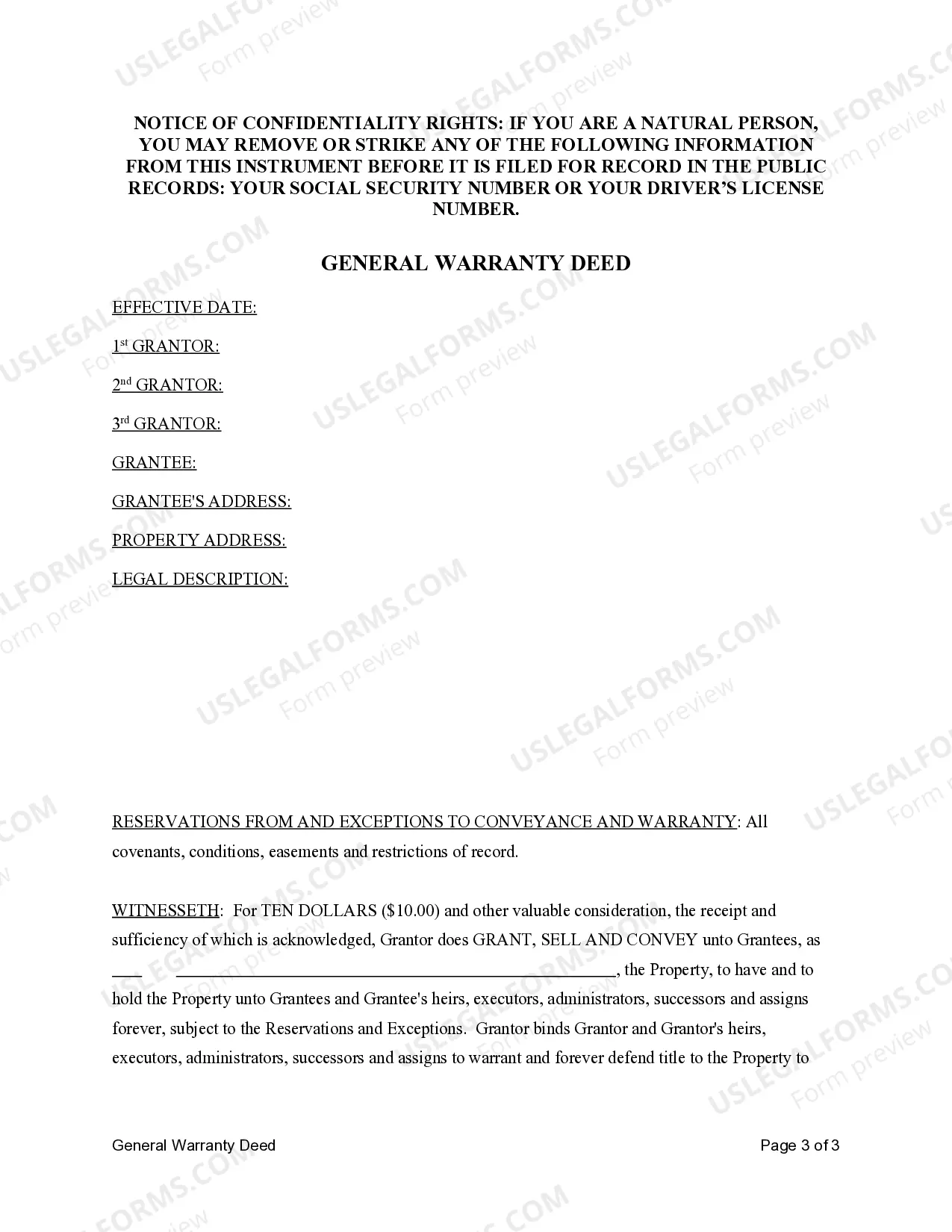
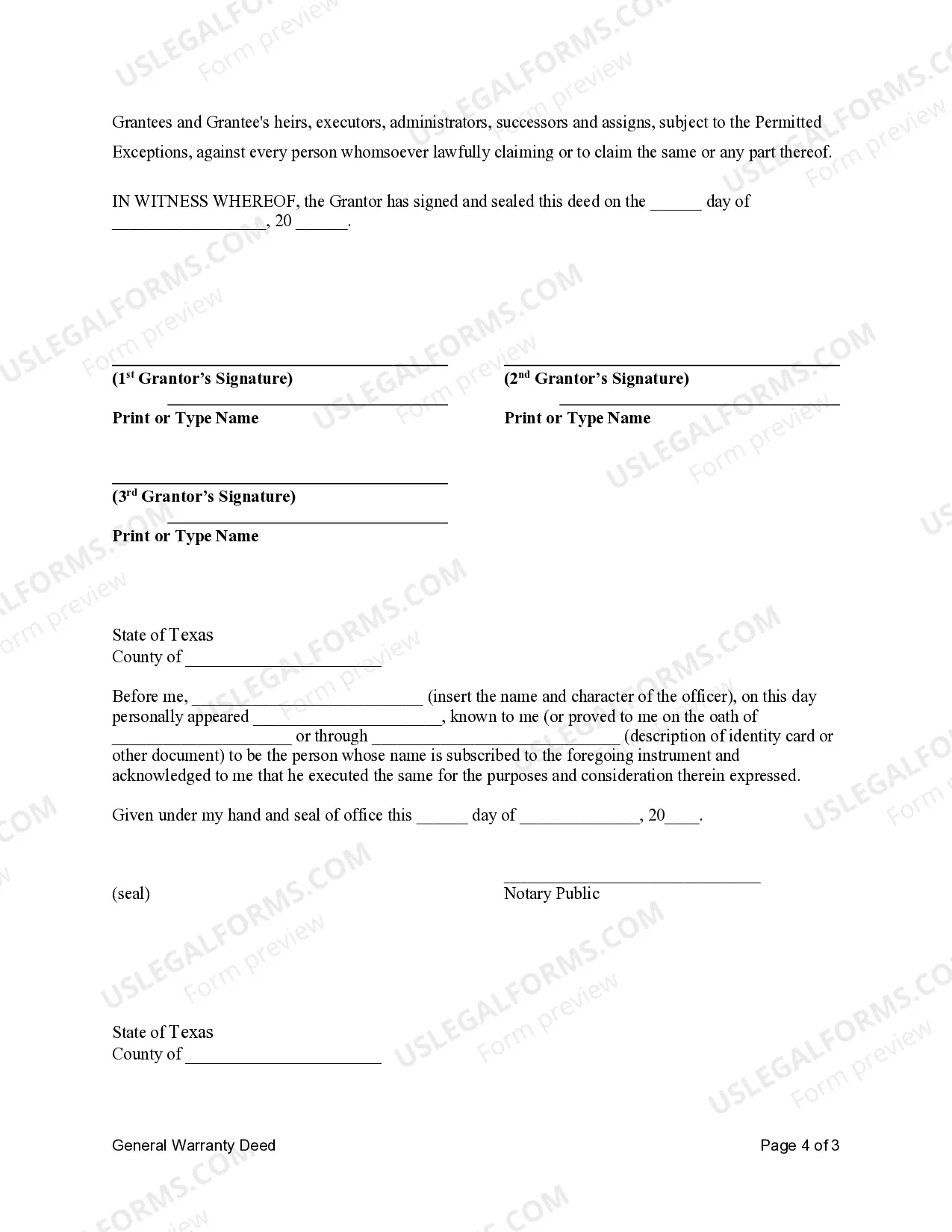
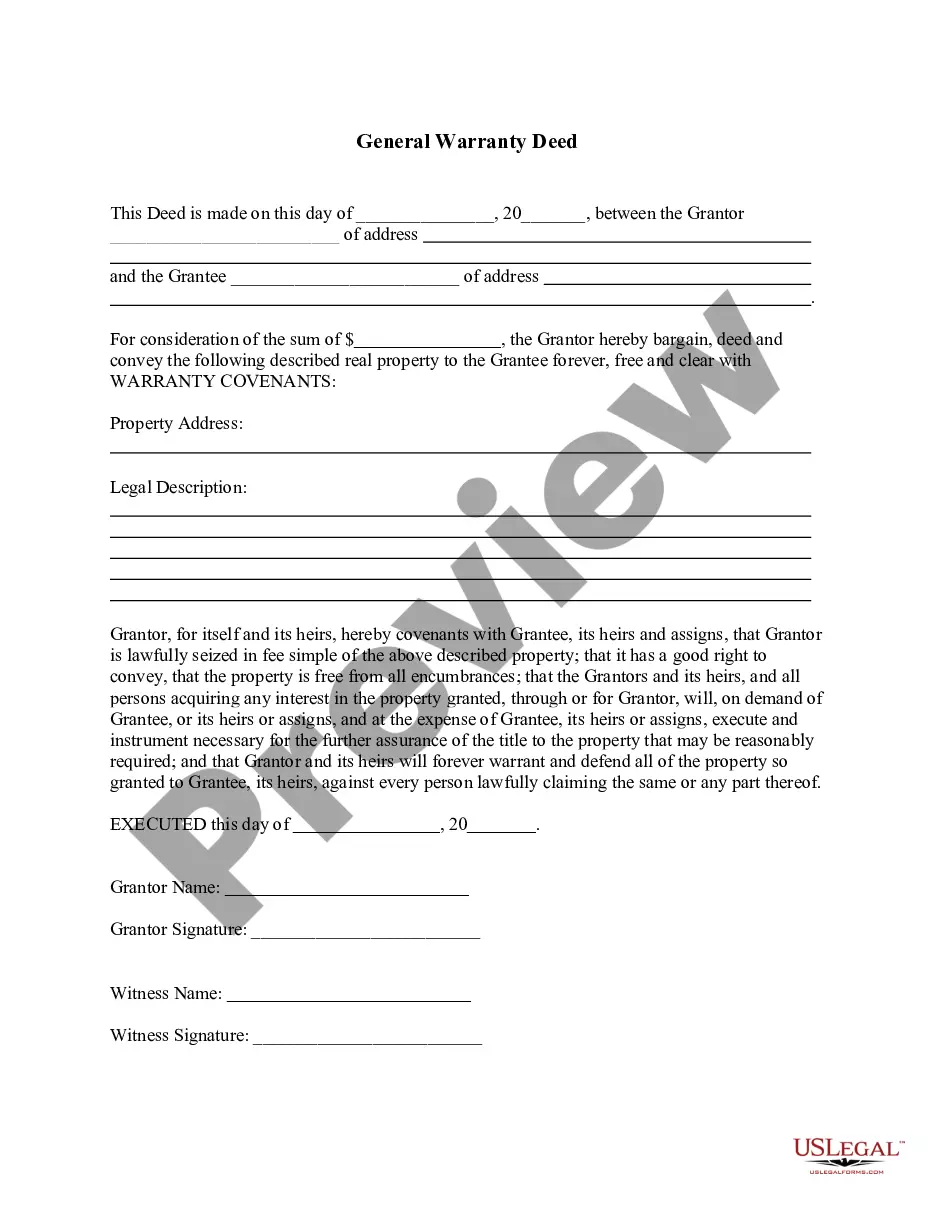
A General Warranty Deed is a legal document used to transfer ownership of real property from one party (the Grantors) to another (the Grantee) with a guarantee of clear title. This form provides assurances that the property is free from any claims or liens, differing from other types of deeds, such as quitclaim deeds, which offer no such guarantees. It includes specific language that complies with state laws to ensure its validity.
Key parts of this document
- Identification of Grantors: Names of the individuals transferring the property.
- Identification of Grantee: Name of the individual receiving the property.
- Legal description of the property: Detailed description of the real estate being transferred.
- Covenants of title: Warranties made by the Grantors regarding the title's validity.
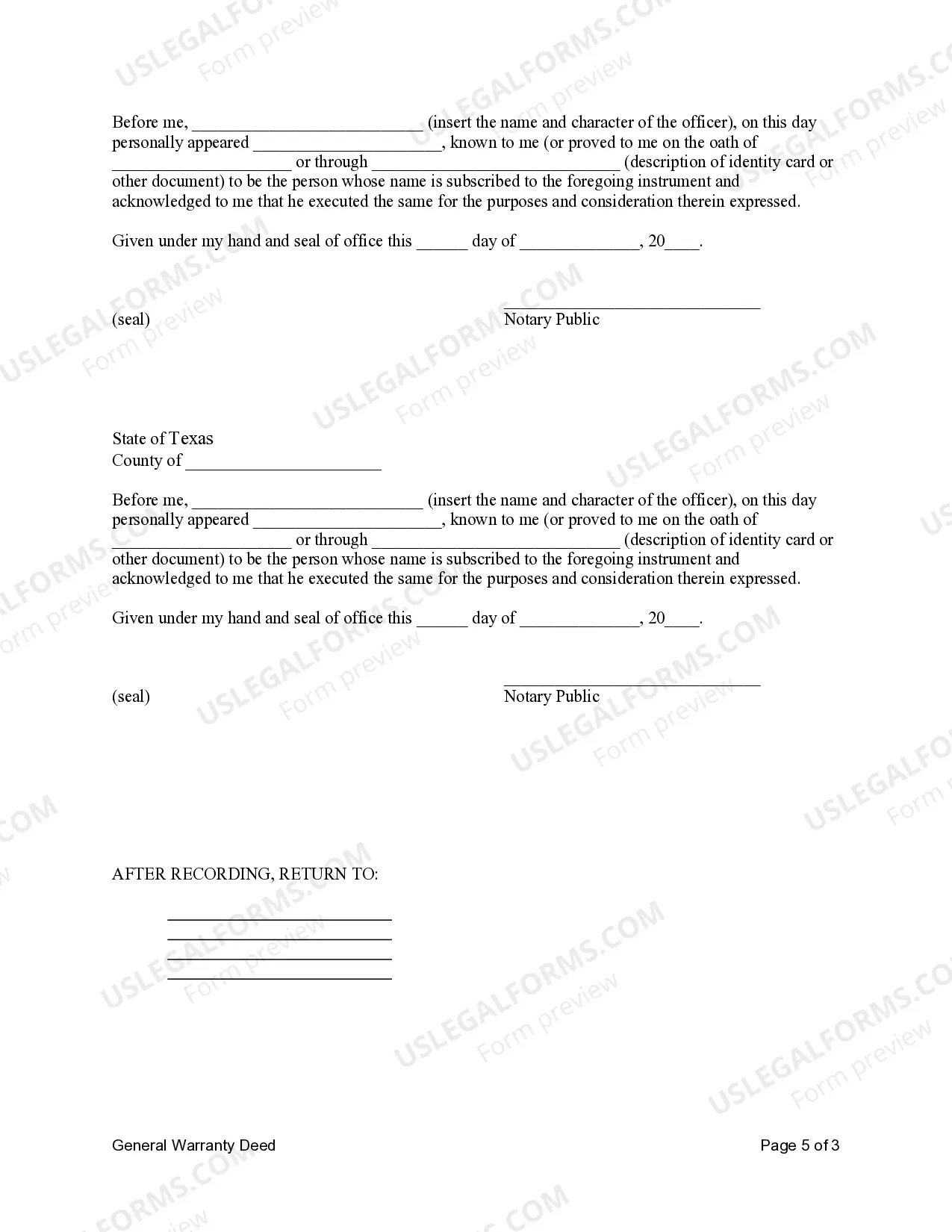
- Signatures and acknowledgment: Required signatures and notarization for legal effectiveness.

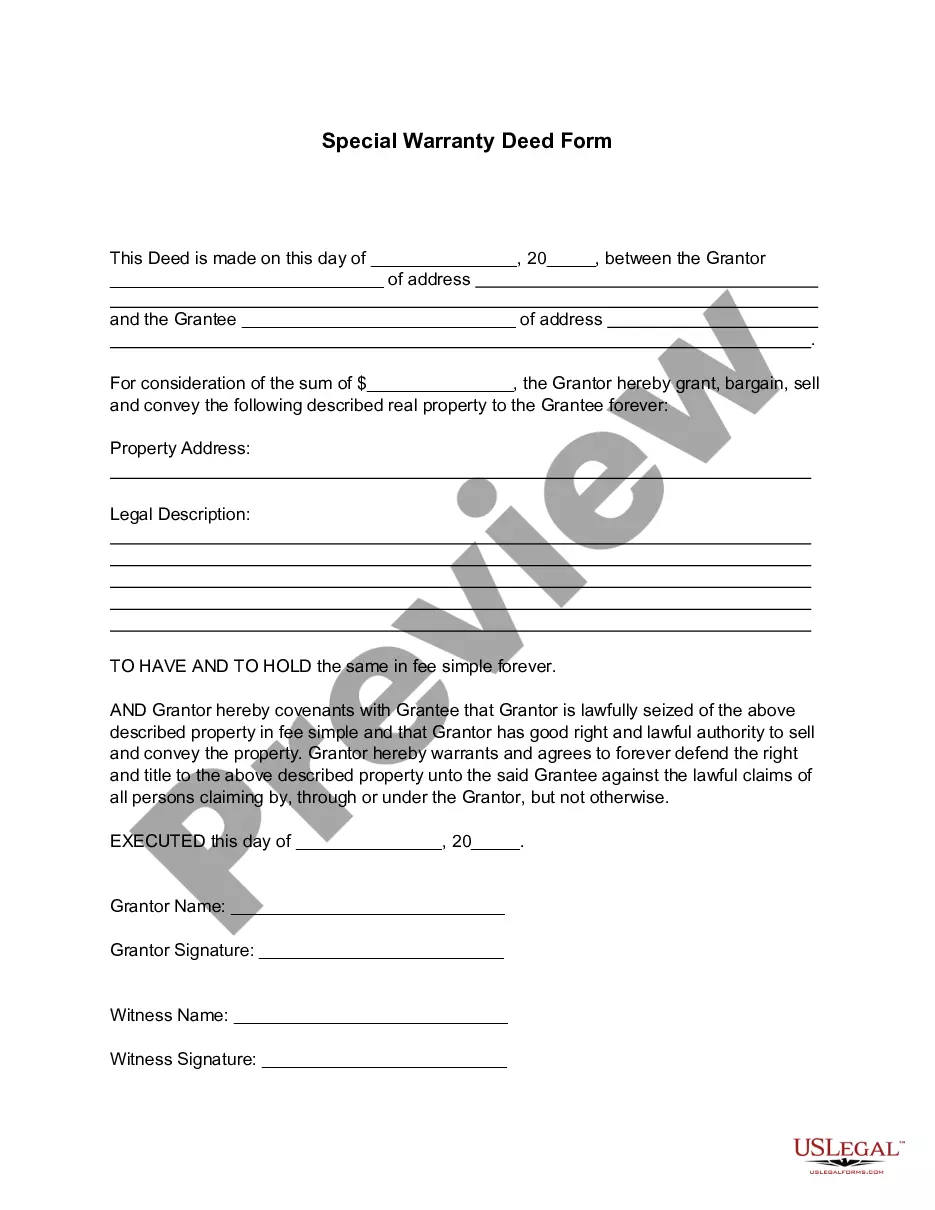
When to use this document
This form should be utilized when an individual is selling or transferring property to another person and wishes to provide full assurance regarding the title. It is suitable in cases of property sales, inheritance, or any scenario where a formal transfer of ownership is required to protect the interests of the Grantee.
Who can use this document
This form is intended for:
- Property owners looking to sell or transfer their property.
- Heirs or beneficiaries inheriting property who wish to transfer it to another party.
- Individuals or businesses involved in real estate transactions requiring a warranty of clear title.
Instructions for completing this form
- Identify all parties involved: Clearly state the names of the Grantors and the Grantee.
- Provide the legal description of the property: Accurately describe the property being transferred.
- Include any covenants or promises: Specify warranties related to the title being transferred.
- Sign and date the form: Ensure all parties involved are present to sign the document.
- Arrange for notarization: Have the form notarized to finalize the transaction legally.
Does this document require notarization?
This form must be notarized to be legally valid. US Legal Forms provides secure online notarization powered by Notarize, allowing you to complete the process through a verified video call.
Get your form ready online
Our built-in tools help you complete, sign, share, and store your documents in one place.
Make edits, fill in missing information, and update formatting in US Legal Forms—just like you would in MS Word.
Download a copy, print it, send it by email, or mail it via USPS—whatever works best for your next step.
Sign and collect signatures with our SignNow integration. Send to multiple recipients, set reminders, and more. Go Premium to unlock E-Sign.
If this form requires notarization, complete it online through a secure video call—no need to meet a notary in person or wait for an appointment.
We protect your documents and personal data by following strict security and privacy standards.

Make edits, fill in missing information, and update formatting in US Legal Forms—just like you would in MS Word.

Download a copy, print it, send it by email, or mail it via USPS—whatever works best for your next step.

Sign and collect signatures with our SignNow integration. Send to multiple recipients, set reminders, and more. Go Premium to unlock E-Sign.

If this form requires notarization, complete it online through a secure video call—no need to meet a notary in person or wait for an appointment.

We protect your documents and personal data by following strict security and privacy standards.
Avoid these common issues
- Failing to provide a complete and accurate legal description of the property.
- Not having all required parties sign the document.
- Neglecting to have the deed notarized, which could invalidate the transfer.
- Using outdated forms that do not comply with current state laws.
Why complete this form online
- Convenience of downloading and completing the form at your own pace.
- Editability allows for quick adjustments without starting from scratch.
- Access to attorney-drafted forms ensures legality and reliability.
- No need to visit a law office; complete the process from home.
Quick recap
- The General Warranty Deed is essential for protecting the grantee's interests in a property transfer.
- Proper completion and notarization are critical for legal validity.
- This form is compliant with Texas laws regulating property transactions.
Looking for another form?
Form popularity
FAQ
The Texas warranty deed is a form of deed that provides an unlimited warranty of title.In Texas, warranty deeds are often used: When a buyer is purchasing residential property from a seller for full value; When the buyer does not intend to purchase title insurance; or.
A warranty deed, also known as a general warranty deed, is a legal real estate document between the seller (grantor) and the buyer (grantee). The deed protects the buyer by pledging that the seller holds clear title to the property and there are no encumbrances, outstanding liens, or mortgages against it.
As a property owner and grantor, you can obtain a warranty deed for the transfer of real estate through a local realtor's office, or with an online search for a template. To make the form legally binding, you must sign it in front of a notary public.
It's important to note that a warranty deed does not actually prove the grantor has ownership (a title search is the best way to prove that), but it is a promise by the grantor that they are transferring ownership and if it turns out they don't actually own the property, the grantor will be responsible for compensating