Texas General Warranty Deed - Trust to Individual
What is this form?
The General Warranty Deed - Trust to Individual is a legal document used to transfer ownership of property from a trust (the Grantor) to an individual (the Grantee). It provides a guarantee that the title is free of any claims or encumbrances, ensuring the Grantee's ownership rights. This form is essential when property held in a trust is being sold or given to a beneficiary, providing stronger protections than other types of deeds such as quitclaim deeds.
What’s included in this form
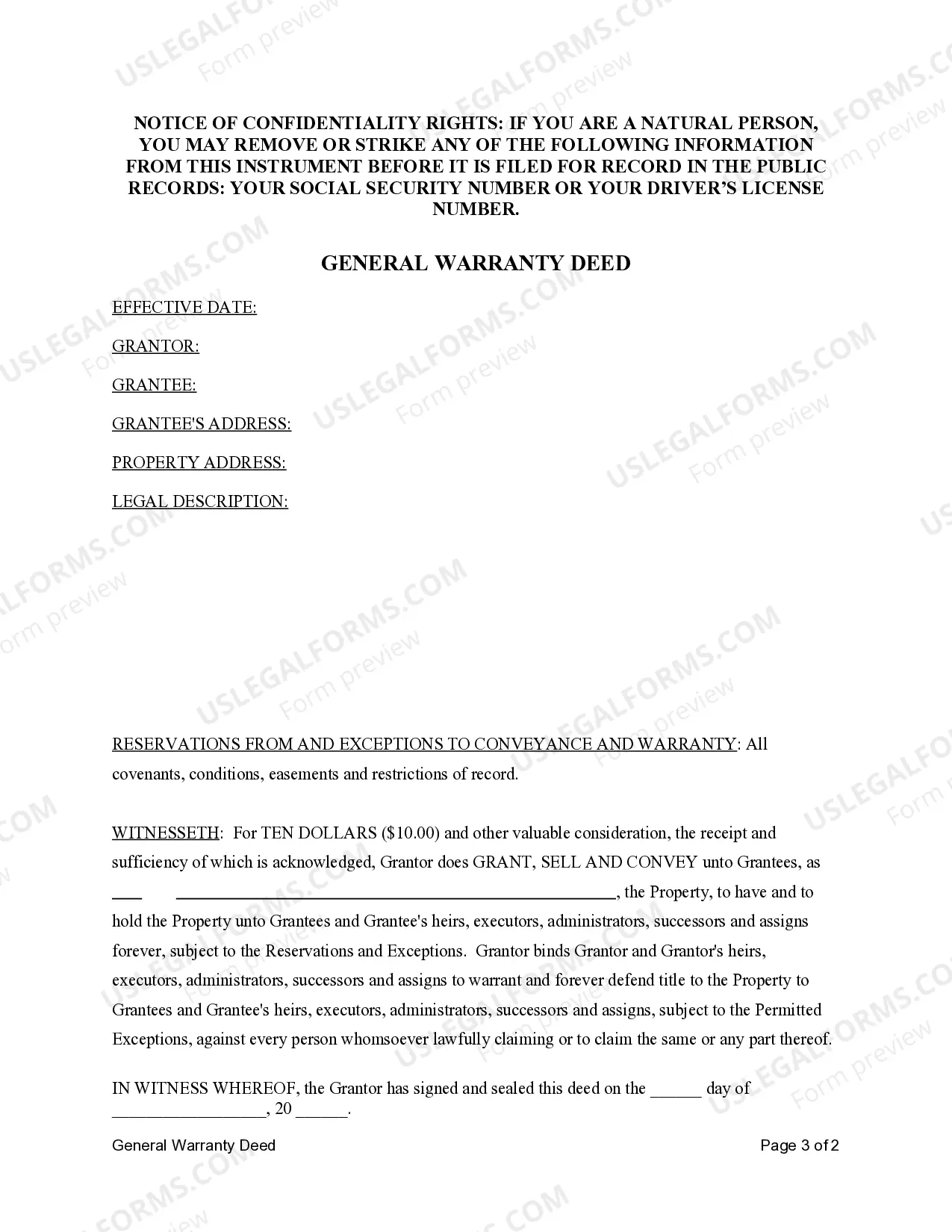
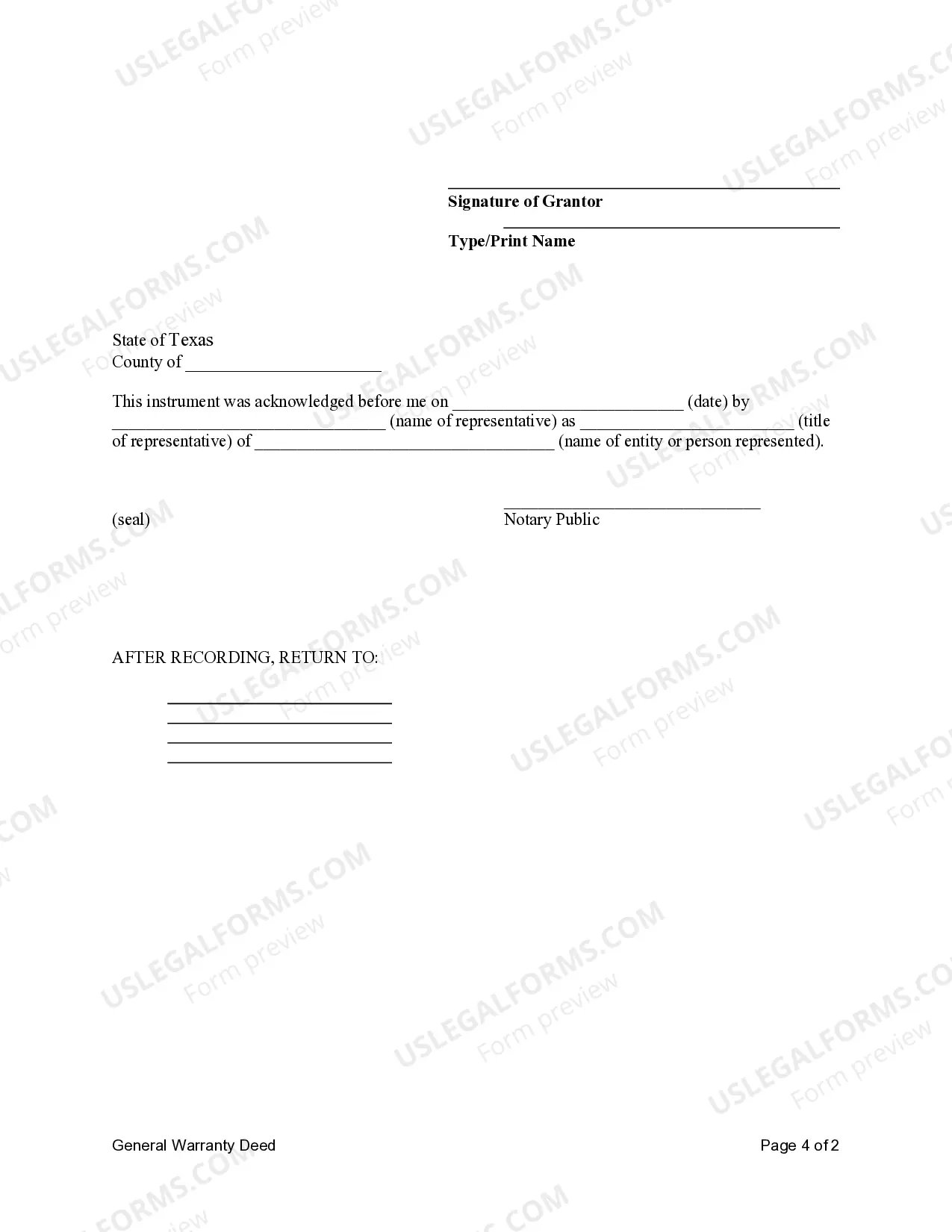
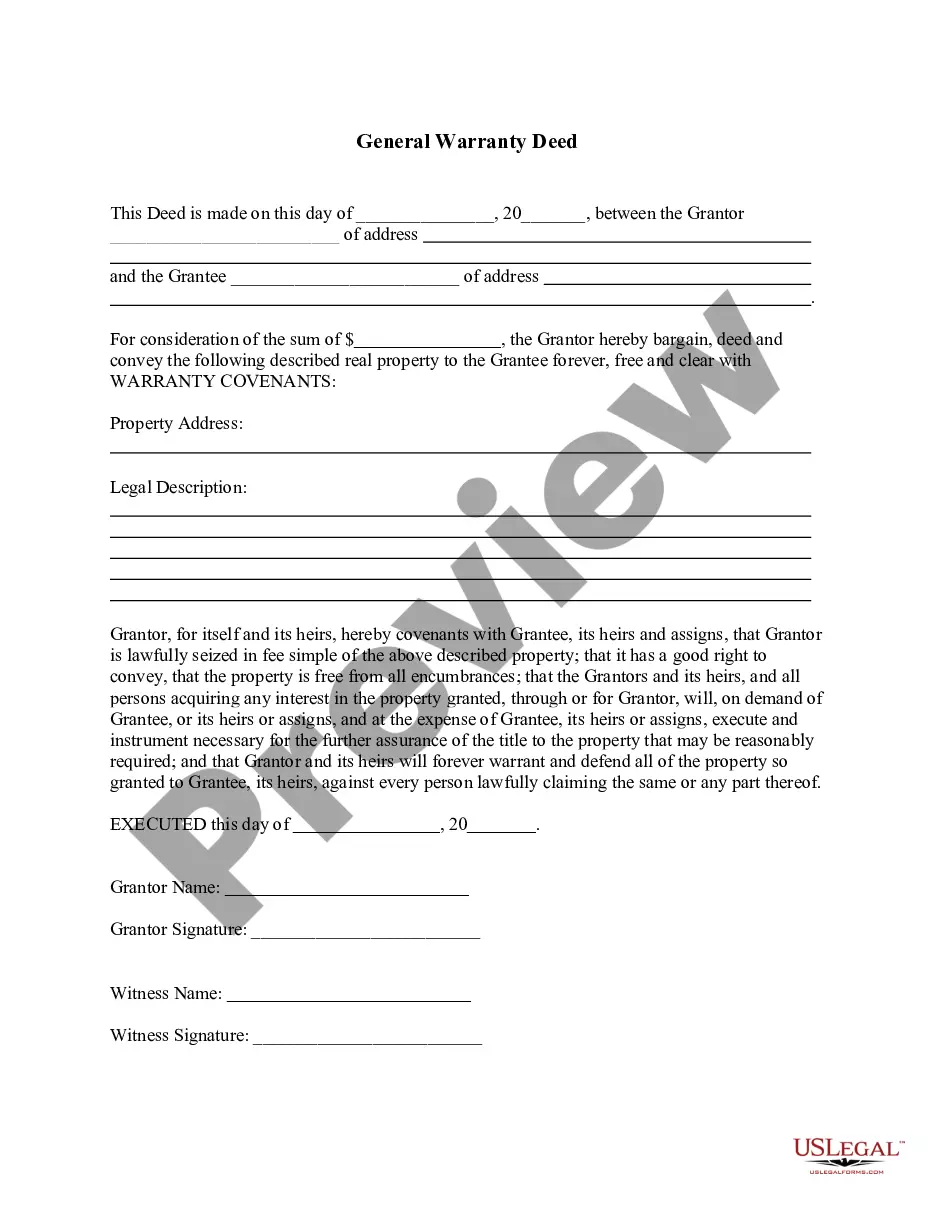
- Identification of the Grantor (Trust) and Grantee (Individual)
- Description of the property being transferred
- Statement of consideration (price paid for the property)
- Warranty of title, ensuring protection against claims
- Date of signing and witness signatures



Situations where this form applies
This form is typically used when a trust wishes to transfer property ownership to an individual. It is crucial in situations such as the sale of estate assets, gifts to family members, or clearing up estate matters after the death of the trust creator. It formalizes the transfer and protects the new owner's rights.
Intended users of this form
This form is intended for:
- Trustees managing a trust with real property
- Individuals receiving property from a trust
- Attorneys handling estate planning or property transfer matters
Instructions for completing this form
- Identify and enter the names of the Grantor (the trust) and Grantee (the individual).
- Clearly describe the property being transferred, including address and legal description.
- Specify the consideration amount (commonly $10 or other valuable consideration).
- Sign and date the document in front of witnesses as required by state law.
- File the completed deed with the appropriate county office to make it formally recognized.
Does this form need to be notarized?
To make this form legally binding, it must be notarized. Our online notarization service, powered by Notarize, lets you verify and sign documents remotely through an encrypted video session.
Get your form ready online
Our built-in tools help you complete, sign, share, and store your documents in one place.
Make edits, fill in missing information, and update formatting in US Legal Forms—just like you would in MS Word.
Download a copy, print it, send it by email, or mail it via USPS—whatever works best for your next step.
Sign and collect signatures with our SignNow integration. Send to multiple recipients, set reminders, and more. Go Premium to unlock E-Sign.
If this form requires notarization, complete it online through a secure video call—no need to meet a notary in person or wait for an appointment.
We protect your documents and personal data by following strict security and privacy standards.

Make edits, fill in missing information, and update formatting in US Legal Forms—just like you would in MS Word.

Download a copy, print it, send it by email, or mail it via USPS—whatever works best for your next step.

Sign and collect signatures with our SignNow integration. Send to multiple recipients, set reminders, and more. Go Premium to unlock E-Sign.

If this form requires notarization, complete it online through a secure video call—no need to meet a notary in person or wait for an appointment.

We protect your documents and personal data by following strict security and privacy standards.
Avoid these common issues
- Failing to include a complete legal description of the property.
- Not signing the deed in the presence of required witnesses.
- Using outdated or incorrect forms that do not comply with current laws.
- Not filing the deed with the necessary county office, which can lead to challenges in property claims.
Why use this form online
- Convenience of completing the form from home without needing to visit an attorney's office.
- Editability allows users to fill in details easily before printing.
- Access to professionally drafted documents ensures compliance with state laws.
- Ability to save and store completed forms for future reference or filing.
Looking for another form?

Form popularity
FAQ
To make the form legally binding, you must sign it in front of a notary public. You must then file your signed and notarized deed with the county office that's in charge of recording property documents. Once the grantee signs the warranty deed, he/she legally has ownership and claim to the property.
Find the most recent deed to the property. It is best to begin with a copy of the most recent deed to the property (the deed that transferred the property to the current grantor). Create a new deed. Sign and notarize the deed. File the documents in the county land records.
Write the county where the property is located on line provided next to the words "County of" beneath the words "The State of Texas." Write the name and address of the grantor on the lines provided after the words "Know all men by these presents, That I."
The name and address of the seller (called the grantor) The name and address of the buyer (called the grantee) A legal description of the property (found on the previous deed) A statement that the grantor is transferring the property to the grantee.
Locate the deed that's in trust. Use the proper deed. Check with your title insurance company and lender. Prepare a new deed. Sign in the presence of a notary. Record the deed in the county clerk's office.
In Texas, you can't add your spouse's name to an existing deed, but you can create a new deed by transferring the property from yourself to you and your spouse jointly. You can do this by using either a deed without warranty or a quit claim deed.
The Texas General Warranty Deed is a form that transfers real estate ownership in the clearest possible manner promising the new owner that there are no title defects such as liens or encumbrances.
In order to make the Warranty Deed legally binding, the Seller needs to sign it front of a notary public. Then signed and notarized deed must be filed at the city or county office for recording property documents. Before filing with this office all previously billed property taxes must be paid in full.
A quitclaim deed can be used to transfer property from a trust, but a Special Warranty Deed seems to be a more common way to do this.