Standard Subcontract Agreement
What is this form?
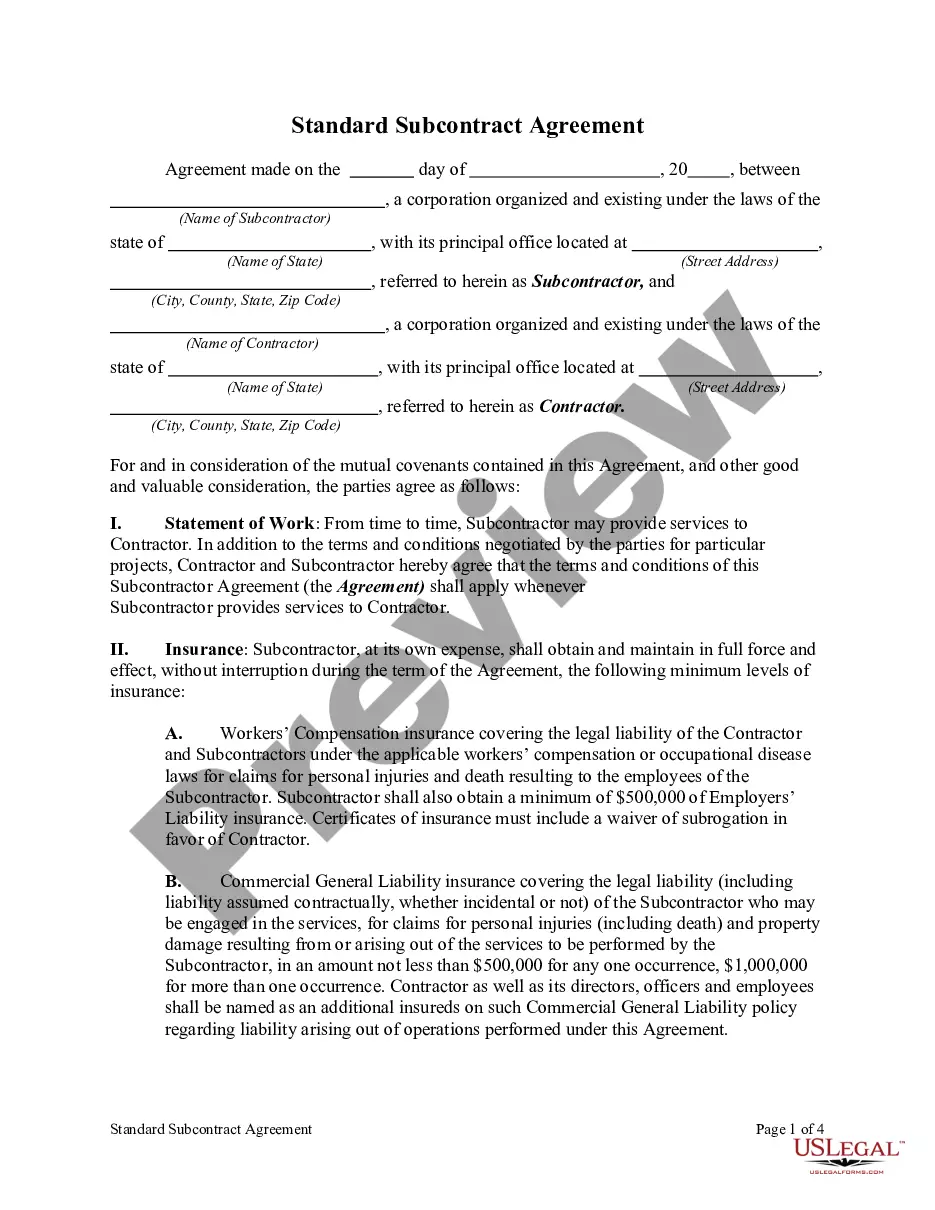
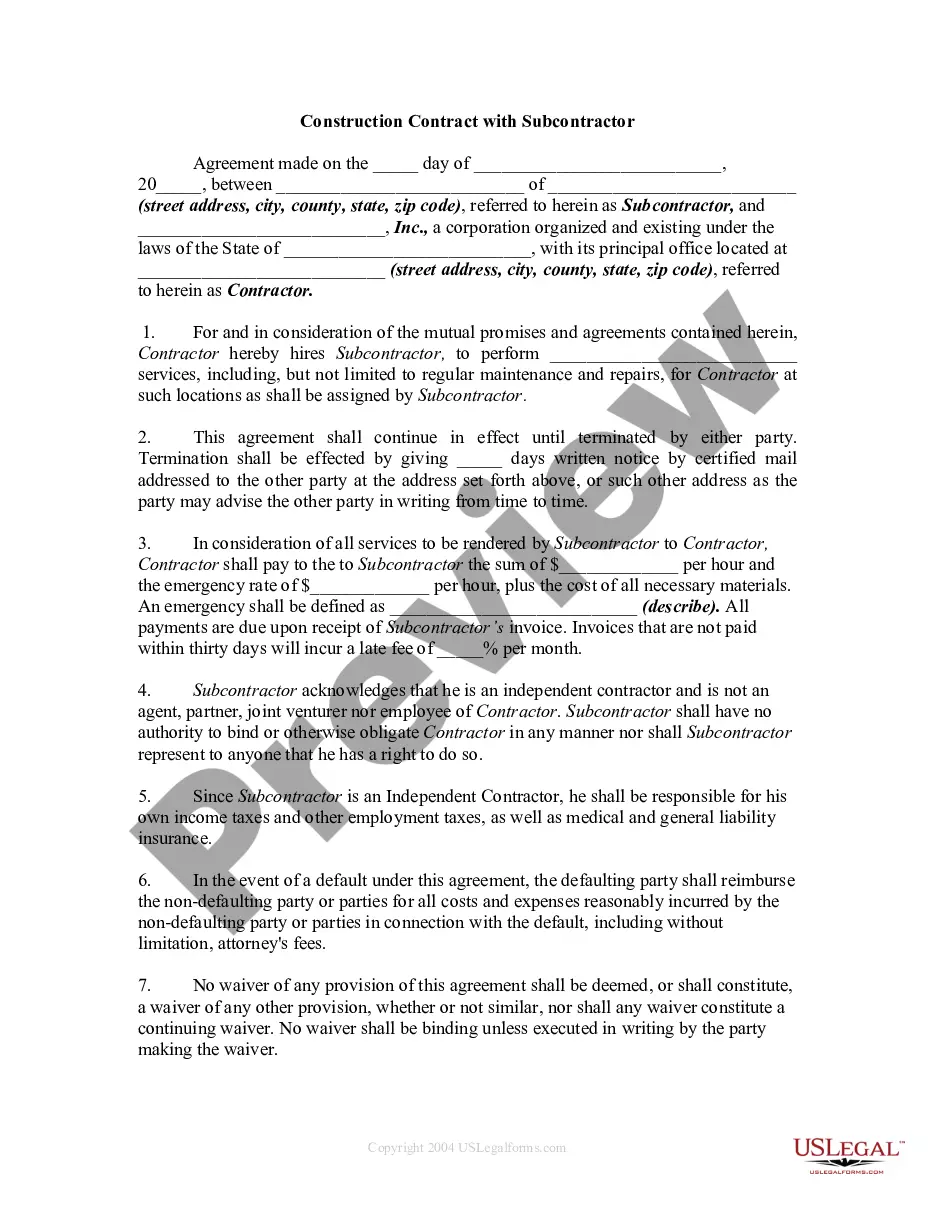
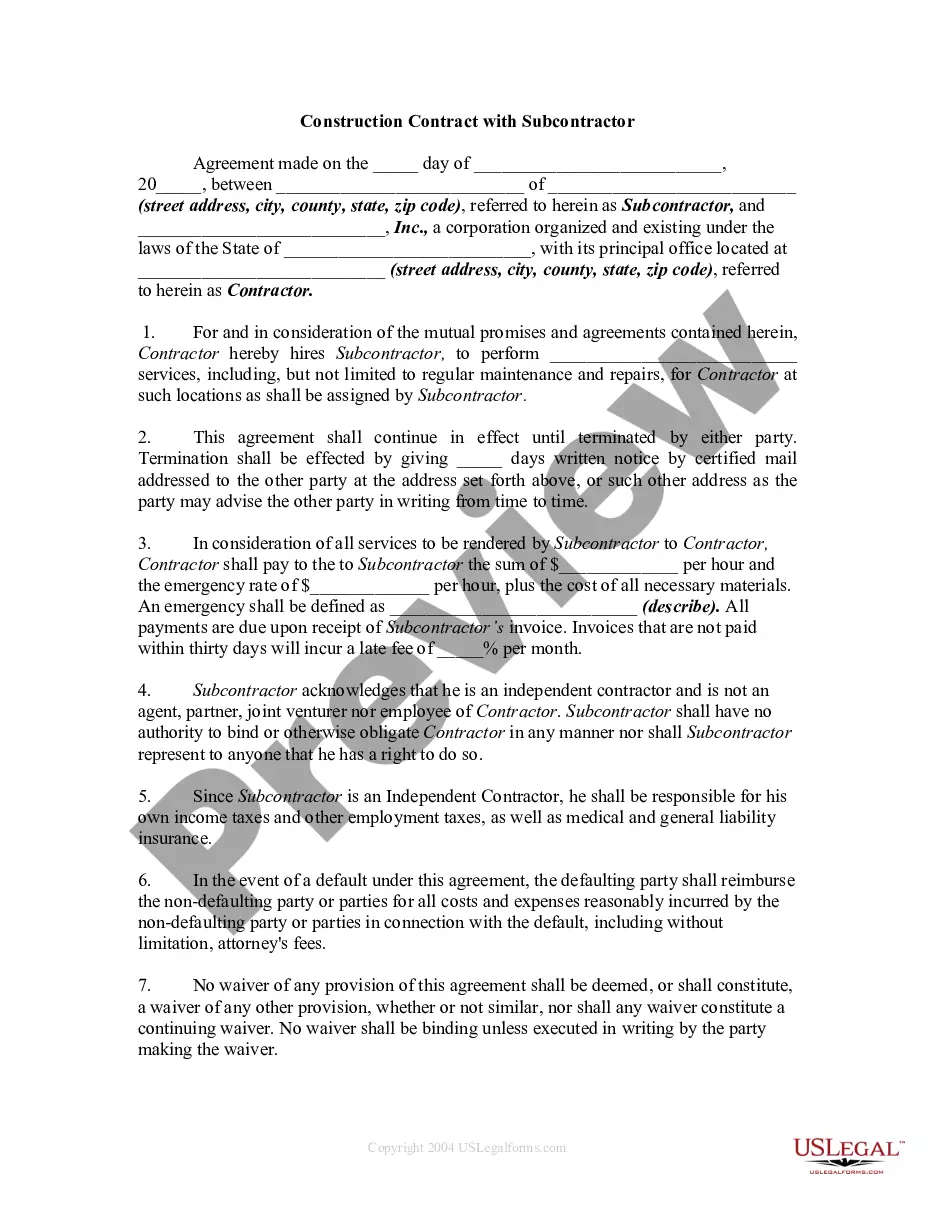
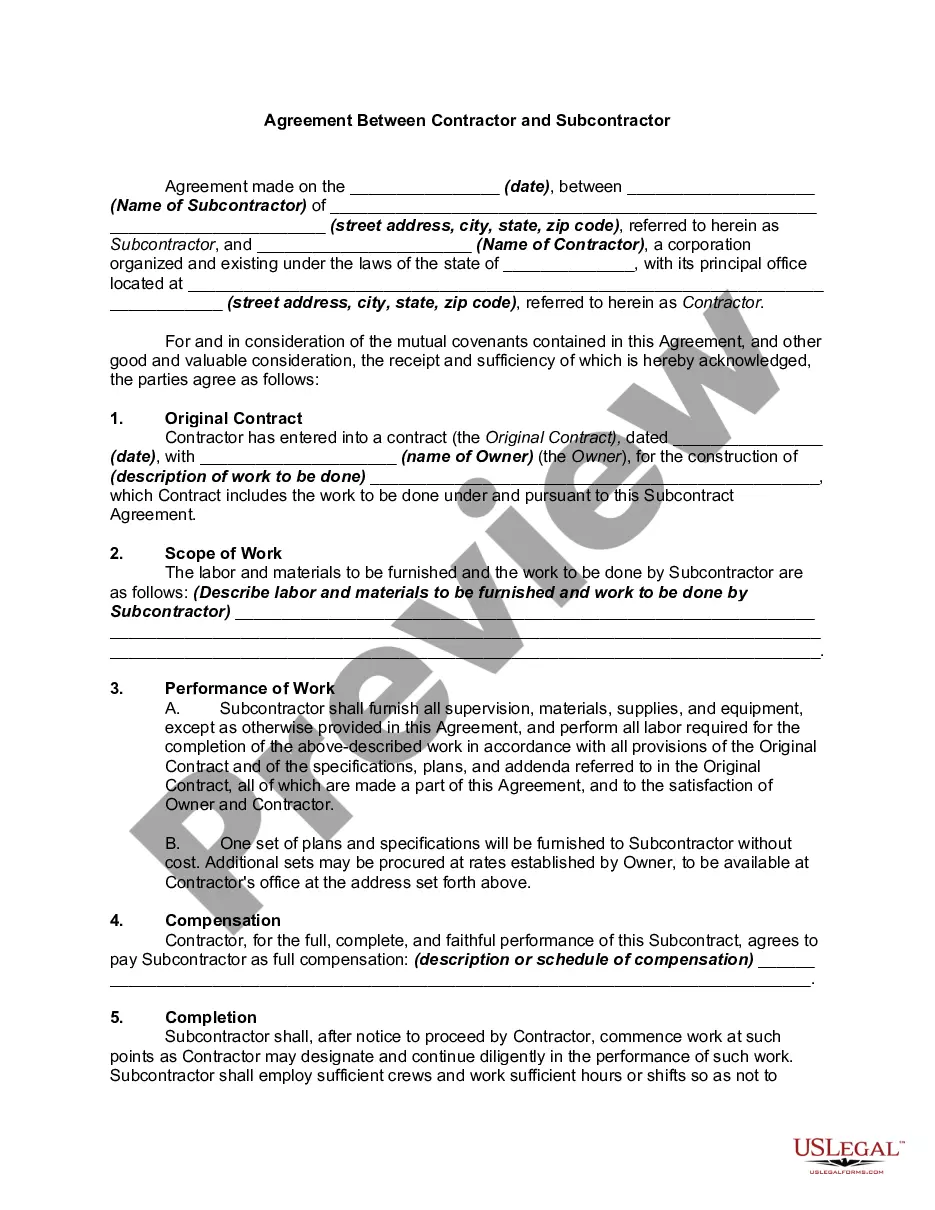
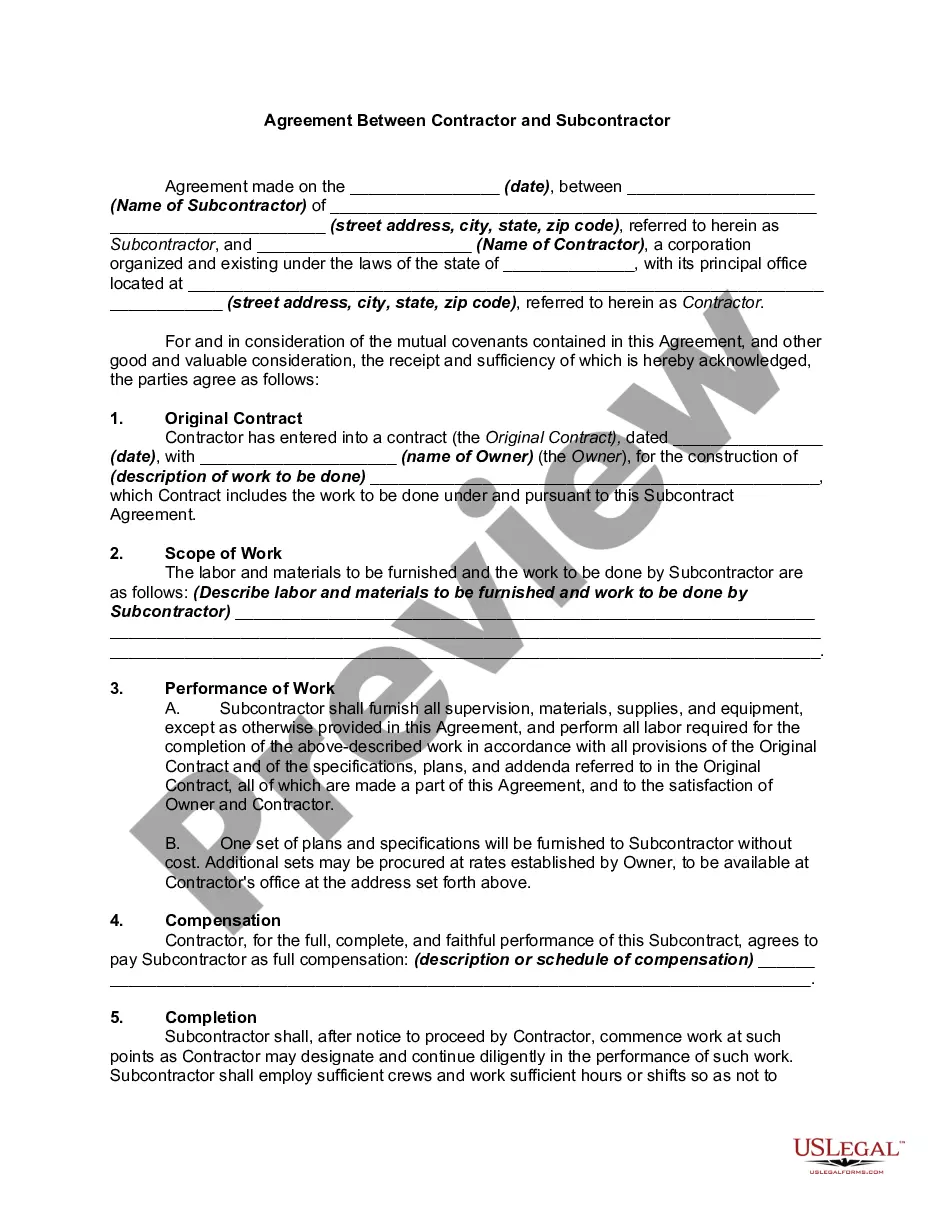
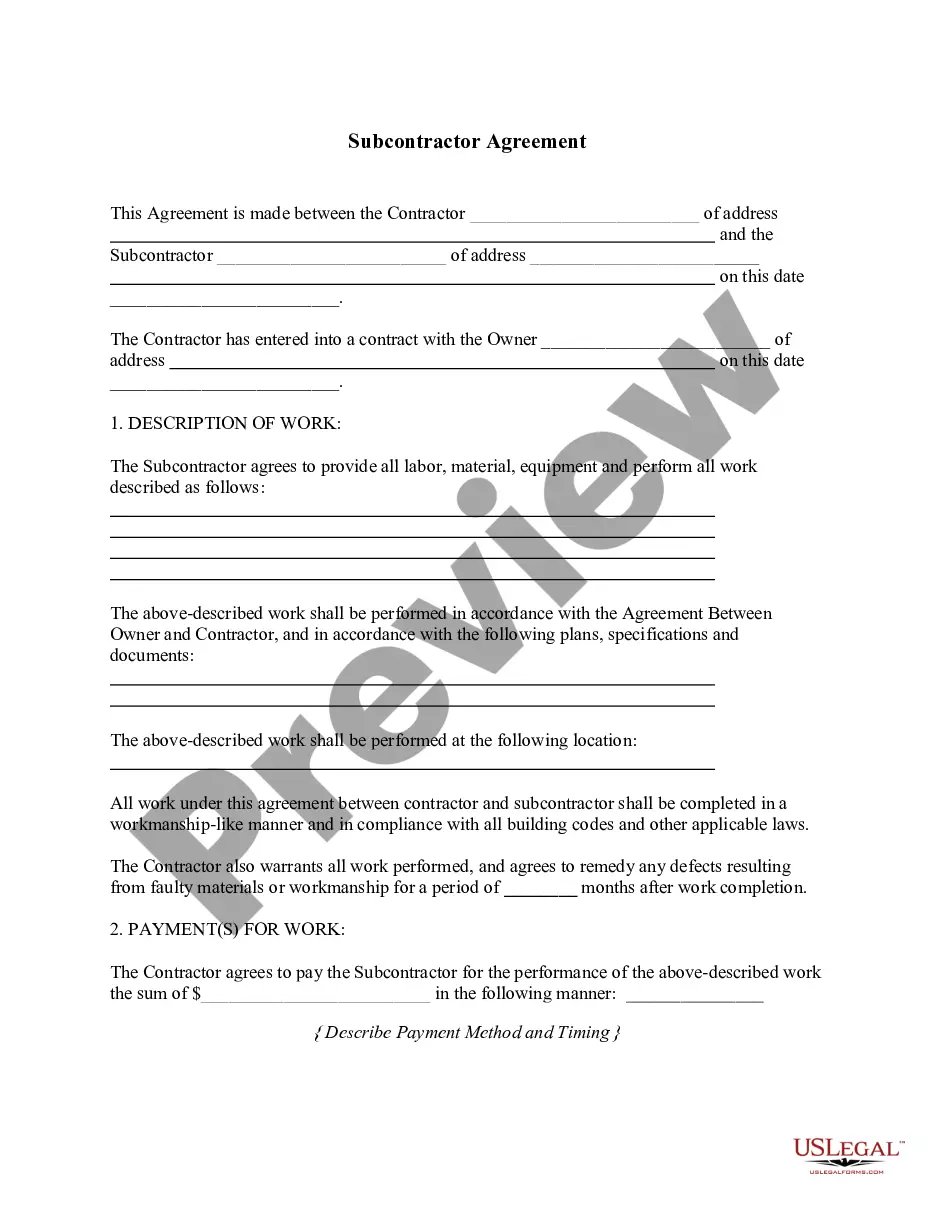
The Standard Subcontract Agreement is a legal document that formalizes the relationship between a general contractor and a subcontractor. This contract outlines the scope of work to be performed by the subcontractor and details responsibilities, insurance requirements, and indemnification clauses. Unlike other contracts, this agreement specifically addresses the arrangement for a portion of a larger project, clarifying the expectations, liabilities, and rights of each party involved.
Key parts of this document
- Statement of Work: Defines the specific services to be provided by the subcontractor.
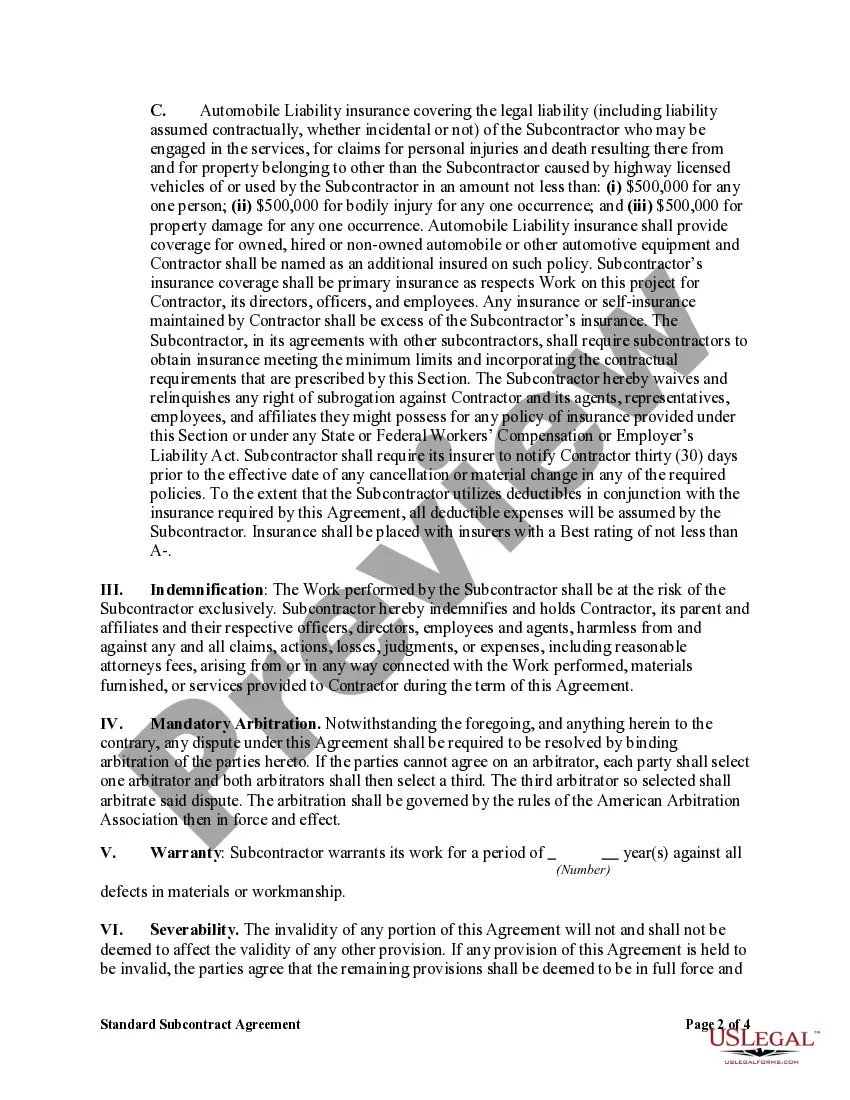
- Insurance Requirements: Outlines the necessary insurance coverages that the subcontractor must maintain.
- Indemnification Clause: Specifies the subcontractor's obligation to protect the contractor from claims related to the work performed.
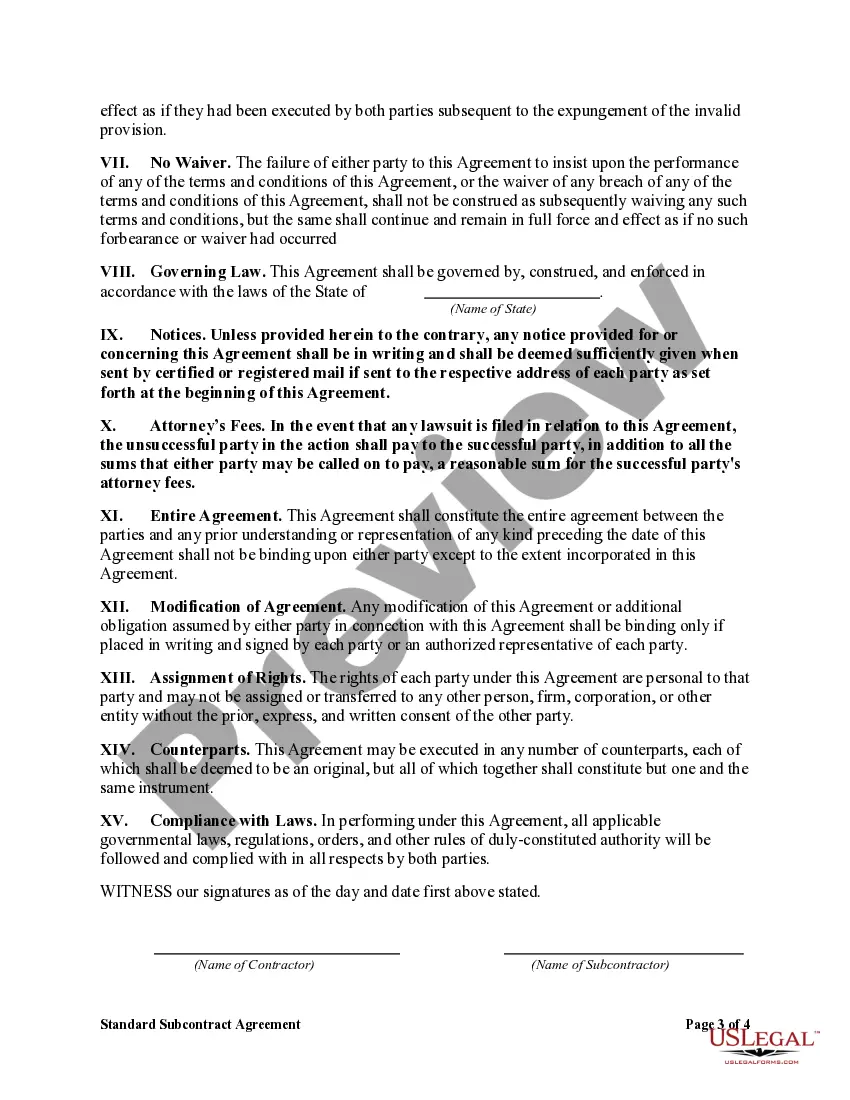
- Mandatory Arbitration: Requires that disputes be resolved through binding arbitration rather than court litigation.
- Modification Process: Details how changes to the agreement can be made valid.
- Attorneys' Fees: Describes the responsibility of the losing party in a legal dispute to cover the other party's legal costs.
Situations where this form applies
This form should be used when a general contractor hires a subcontractor to perform part of a project, particularly in construction or related fields. It is essential whenever there is a need to formalize the terms of work, establish responsibilities, mitigate risk, and ensure compliance with insurance and liability requirements.
Intended users of this form
- General contractors seeking to hire subcontractors for various tasks.
- Subcontractors looking for a clear understanding of their roles and obligations.
- Construction companies needing a standardized document to manage subcontractor relationships.
- Legal professionals drafting agreements for clients in the construction industry.
How to prepare this document
- Identify the parties involved, including the general contractor and the subcontractor.
- Specify the scope of work to be provided by the subcontractor.
- Detail the insurance coverages that the subcontractor must maintain.
- Include the indemnification clauses relating to claims and liability.
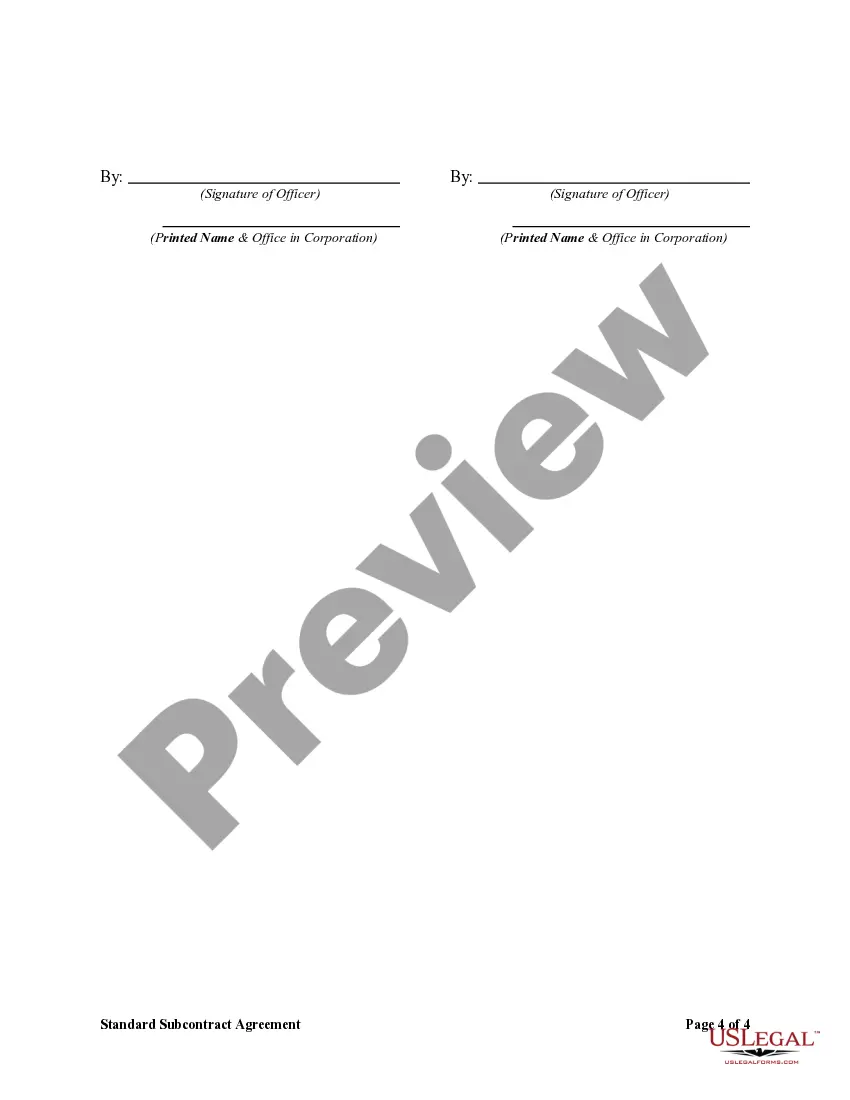
- Ensure both parties sign and date the agreement to make it enforceable.
Notarization requirements for this form
This form does not typically require notarization unless specified by local law. Always check local regulations to ensure compliance.
Get your form ready online
Our built-in tools help you complete, sign, share, and store your documents in one place.
Make edits, fill in missing information, and update formatting in US Legal Forms—just like you would in MS Word.
Download a copy, print it, send it by email, or mail it via USPS—whatever works best for your next step.
Sign and collect signatures with our SignNow integration. Send to multiple recipients, set reminders, and more. Go Premium to unlock E-Sign.
If this form requires notarization, complete it online through a secure video call—no need to meet a notary in person or wait for an appointment.
We protect your documents and personal data by following strict security and privacy standards.

Make edits, fill in missing information, and update formatting in US Legal Forms—just like you would in MS Word.

Download a copy, print it, send it by email, or mail it via USPS—whatever works best for your next step.

Sign and collect signatures with our SignNow integration. Send to multiple recipients, set reminders, and more. Go Premium to unlock E-Sign.

If this form requires notarization, complete it online through a secure video call—no need to meet a notary in person or wait for an appointment.

We protect your documents and personal data by following strict security and privacy standards.
Mistakes to watch out for
- Failing to clearly define the scope of work, leading to misunderstandings.
- Not specifying insurance requirements, which could expose parties to liability.
- Overlooking the need for signatures from both parties, which invalidates the agreement.
- Neglecting to include a dispute resolution process, forcing parties into unfavorable situations.
Why use this form online
- Convenience: Easily accessible for download and completion from any location.
- Editability: Customizable to suit the specific needs of the project and parties involved.
- Reliability: Developed by licensed attorneys to ensure legal accuracy and compliance.
Quick recap
- The Standard Subcontract Agreement is essential for delineating roles between contractors and subcontractors.
- Clear terms can prevent misunderstandings and legal disputes in the project execution.
- Proper insurance and indemnification clauses are crucial for protecting all parties involved.
Looking for another form?


Form popularity
FAQ
The Standard Subcontract Agreement is a template that formalizes the relationship between a general contractor and a subcontractor. It defines the scope of the subcontractor’s work, sets responsibilities, and specifies insurance requirements and indemnification. It’s used to formalize a portion of a larger project and clarify expectations, liabilities, and rights for both parties.
This Standard Subcontract Agreement should include a clear Statement of Work, the Insurance Requirements the subcontractor must maintain, an Indemnification Clause, a Mandatory Arbitration provision, a well-defined Modification Process, and an Attorneys’ Fees provision that explains who pays legal costs.
Across subcontracting documents, the core elements are laid out in this form as six components: a Statement of Work to define the services, Insurance Requirements, an Indemnification Clause, a Mandatory Arbitration clause, a Modification Process, and an Attorneys’ Fees provision. These terms help clarify scope, risk, disputes, and cost recovery.
Beyond general terms, this Standard Subcontract Agreement specifies six concrete provisions: Statement of Work, Insurance Requirements, Indemnification Clause, Mandatory Arbitration, Modification Process, and Attorneys’ Fees. Together they establish the scope, risk allocation, dispute resolution, how changes are made, and how legal costs are handled.
This form emphasizes six key provisions, not five: Statement of Work, Insurance Requirements, Indemnification Clause, Mandatory Arbitration, Modification Process, and Attorneys’ Fees. Each defines scope, risk, dispute resolution, changes, and costs, helping parties stay aligned on expectations throughout the project.
It provides a predefined, template-based structure that includes six specific provisions—Statement of Work, Insurance Requirements, Indemnification, Mandatory Arbitration, Modification Process, and Attorneys’ Fees—ensuring consistent terms across projects. Other subcontract agreements may omit or vary these elements.