Services Contract - Therapist
About this form
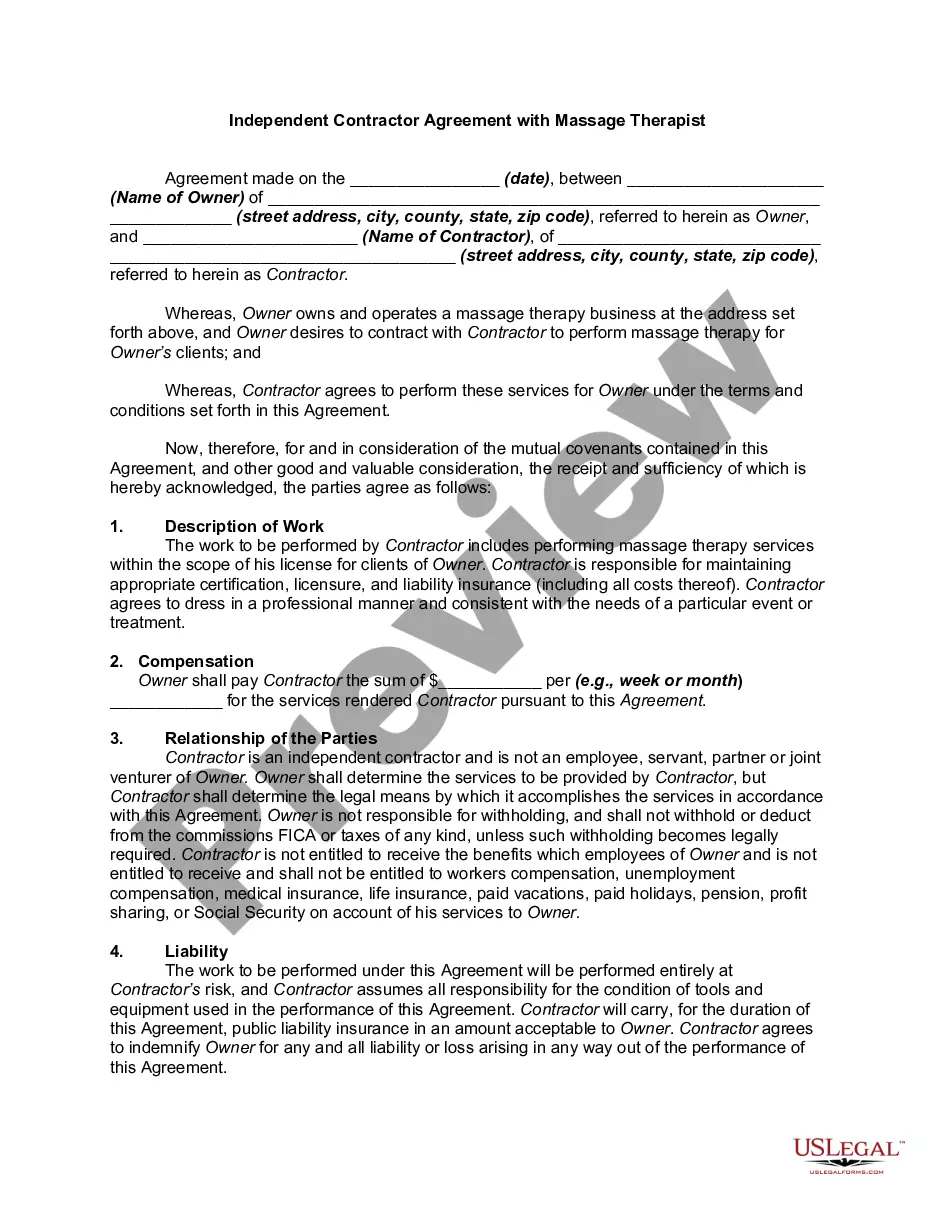
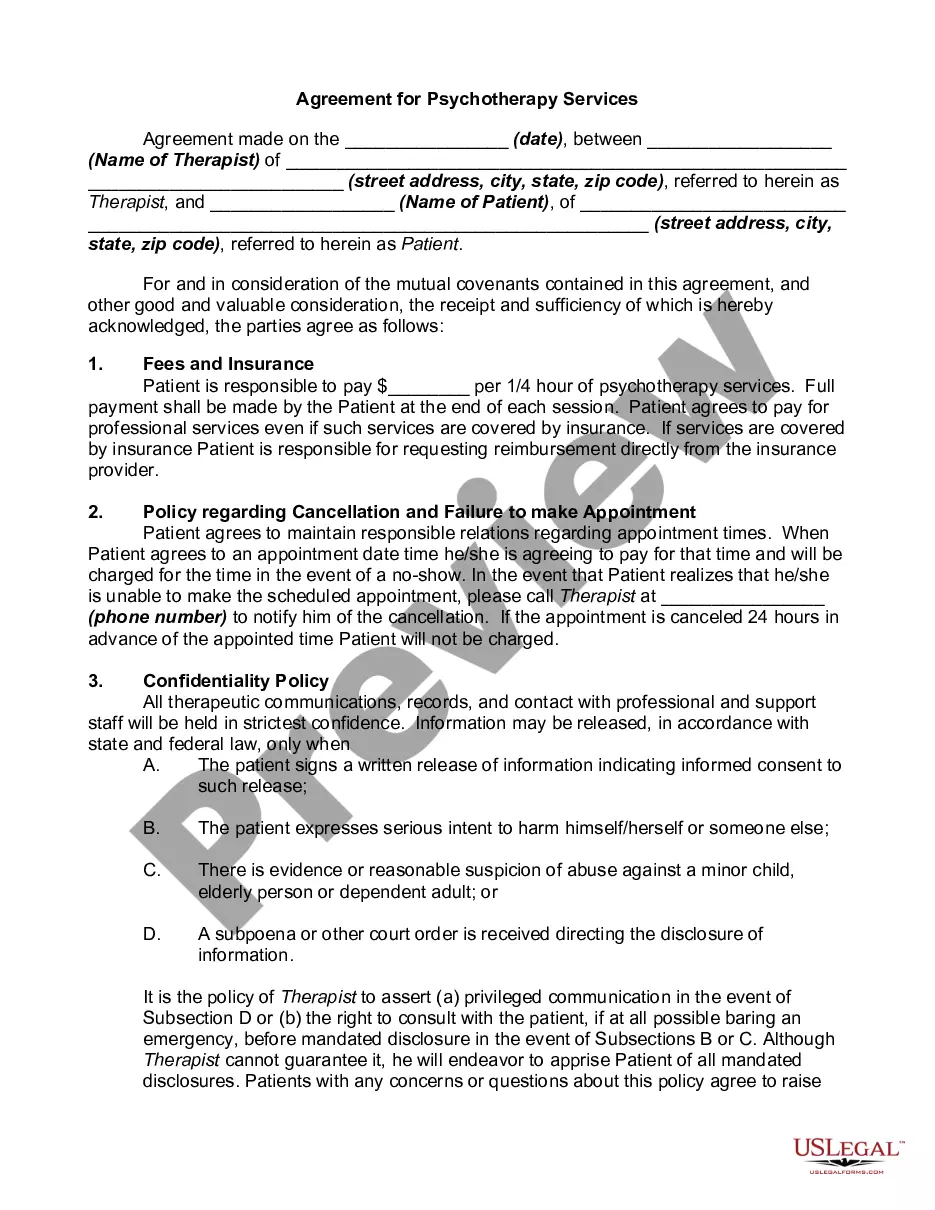
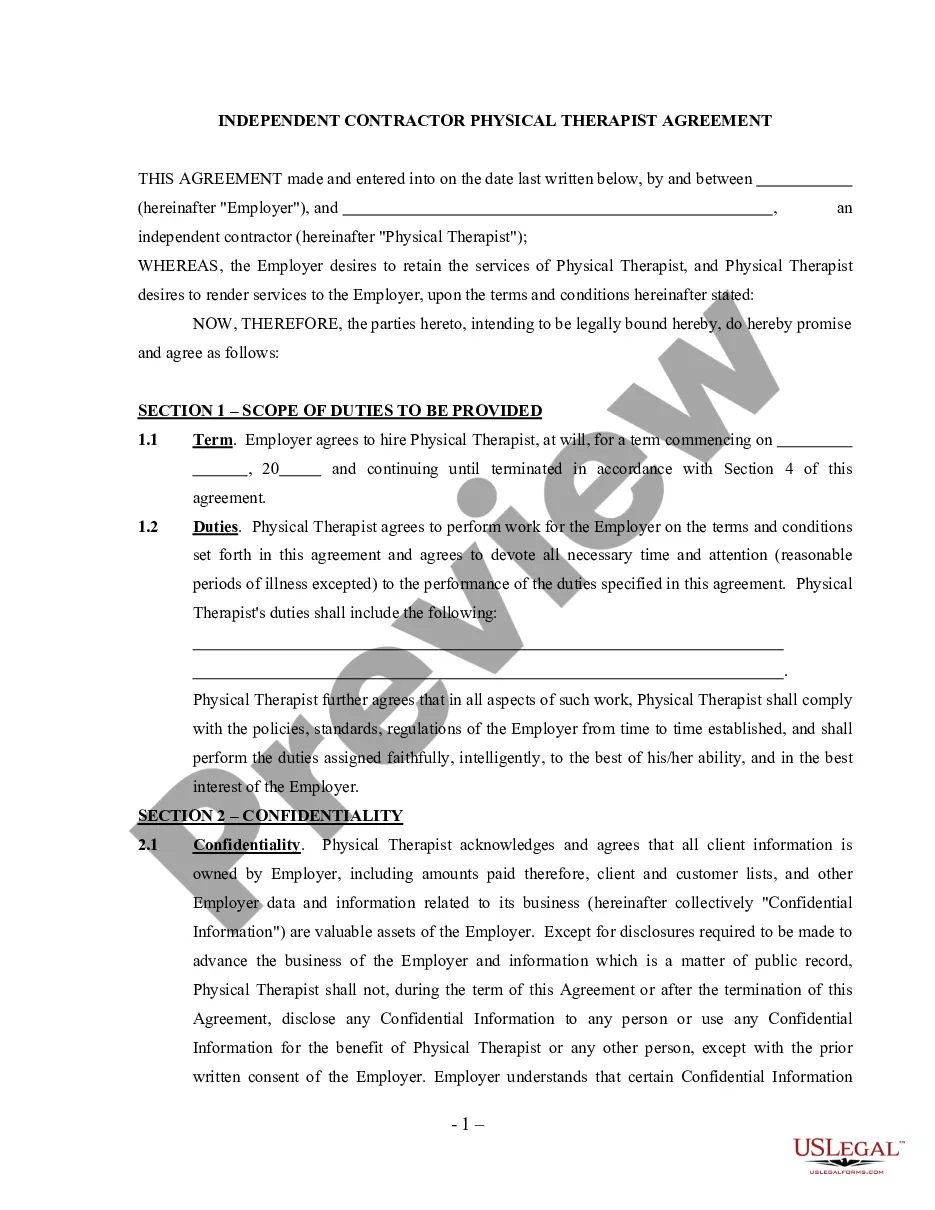
The Services Contract for Therapists is a legal agreement between a therapist and a client. This contract outlines the terms under which the therapist provides professional services, emphasizing that the therapist operates as an independent contractor rather than an employee. It ensures both parties understand their rights and obligations, helping to protect them in case of disputes or misunderstandings. This form is distinct from other service contracts as it specifically caters to therapeutic services provided by licensed health professionals.
Key components of this form
- Parties involved: Names of both the therapist and the client.
- Service description: Specific details on the therapeutic services to be provided.
- Compensation terms: Payment details for services and any additional expenses.
- Performance of services clause: Outlines the therapist's methods and legal compliance.
- Liability disclaimer: Protects the therapist from certain claims.
- Modification clause: Stipulates that changes to the contract must be made in writing.




When this form is needed
This form should be utilized whenever a client hires a therapist for professional therapeutic services. It is particularly useful when establishing a formal understanding of the services provided, compensatory agreements, and liability considerations. Scenarios for using this contract include pain relief therapies, stress reduction sessions, and other health improvement services where a professional relationship is established.
Who this form is for
- Clients seeking therapeutic services from independent licensed therapists.
- Therapists looking to formalize their service agreements and protect their business interests.
- Practitioners in the health service industry who require a structured contract for service provision.
Completing this form step by step
- Identify the parties: Fill in the names of both the therapist and the client at the beginning of the contract.
- Specify the service: Describe the therapeutic services to be provided in detail.
- Enter compensation details: Specify the rates for local and extended services, including travel compensation if applicable.
- Read the performance and liability clauses: Ensure both parties understand their responsibilities and the limitations of liability.
- Sign and date the contract: Both the therapist and client must sign and date to validate the agreement.
Notarization guidance
This form does not typically require notarization unless specified by local law. Always check your state regulations to ensure compliance.
Get your form ready online
Our built-in tools help you complete, sign, share, and store your documents in one place.
Make edits, fill in missing information, and update formatting in US Legal Forms—just like you would in MS Word.
Download a copy, print it, send it by email, or mail it via USPS—whatever works best for your next step.
Sign and collect signatures with our SignNow integration. Send to multiple recipients, set reminders, and more. Go Premium to unlock E-Sign.
If this form requires notarization, complete it online through a secure video call—no need to meet a notary in person or wait for an appointment.
We protect your documents and personal data by following strict security and privacy standards.

Make edits, fill in missing information, and update formatting in US Legal Forms—just like you would in MS Word.

Download a copy, print it, send it by email, or mail it via USPS—whatever works best for your next step.

Sign and collect signatures with our SignNow integration. Send to multiple recipients, set reminders, and more. Go Premium to unlock E-Sign.

If this form requires notarization, complete it online through a secure video call—no need to meet a notary in person or wait for an appointment.

We protect your documents and personal data by following strict security and privacy standards.
Common mistakes
- Failing to specify the services clearly, leading to misunderstandings.
- Not detailing the compensation terms, which can result in disputes over payment.
- Ignoring state-specific requirements or licensing issues.
- Neglecting to have both parties sign the contract.
Advantages of online completion
- Convenience: Easily download and print the form from anywhere.
- Editability: Customize the form to suit specific therapeutic services and pricing.
- Access to professional templates: Forms drafted by licensed attorneys offer peace of mind.
Legal use & context
- This contract establishes a legal framework for the relationship between therapist and client.
- It clarifies that the therapist is an independent contractor, which has implications for liability and tax responsibilities.
- The form aims to limit liability for the therapist while outlining terms for the client, promoting a clear understanding of service expectations.
What to keep in mind
- The Services Contract for Therapists is essential for defining the professional relationship.
- Clearly outlining services and compensation can help prevent misunderstandings.
- A well-drafted contract protects both parties legally and financially.
Looking for another form?








Form popularity
FAQ
If the issue you're hoping to address is relationship-focused, say a problem at work or with a family member, you may find what you need from a psychologist. If you are experiencing debilitating mental health symptoms that are interfering with your daily life, a psychiatrist may be a good place to start.
Therapists, or psychotherapists, are licensed mental health professionals who specialize in helping clients develop better cognitive and emotional skills, reduce symptoms of mental illness, and cope with various life challenges to improve their lives.
As medical doctors psychiatrists can prescribe medication, and while they may provide some counseling, a psychiatrist might refer a patient to a psychologist or therapist for additional counseling or therapy.
Psychodynamic. Behavioral. CBT. Humanistic. Choosing.
A therapist is a licensed medical professional that evaluates, diagnoses, and treats people with emotional and mental disorders. In treating diagnosed mental disorders and nervous disorders or other emotional issues, they apply family systems theories and psychotherapeutic techniques.
Psychologists with either degree can practice therapy but are required to complete several years of supervised practice before becoming licensed.A therapist is a broader umbrella term for professionals who are trainedand often licensedto provide a variety of treatments and rehabilitation for people.
How much does a clinical psychologist earn? Clinical psychologists typically make a lot more than other types of therapist. The average clinical therapist salary is about $96,000, which is tens of thousands more than licensed mental health counselors and clinical social workers usually make.
A therapist will share activities and ideas to build the skills a person needs. People learn ways to solve their problems. Therapy builds helpful thoughts and encourages healthy behaviors. Therapists help people feel encouraged as they learn.
Your child might benefit from seeing a therapist if: They need emotional support and someone to talk to about their feelings. They're struggling with anxiety, depression, anger, or big life changes. You'd like help figuring out how to get along better with your child, and improve tough behavior.