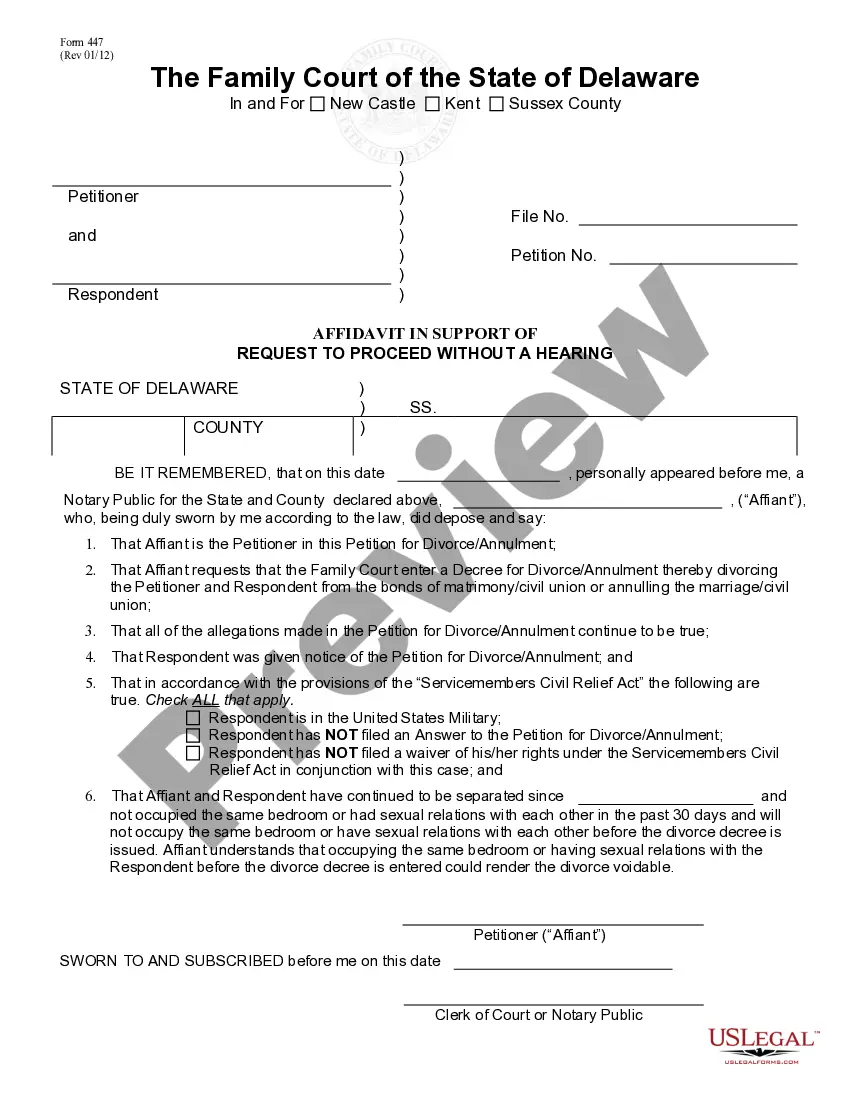
Worksheet - Contingent Worker
What this document covers
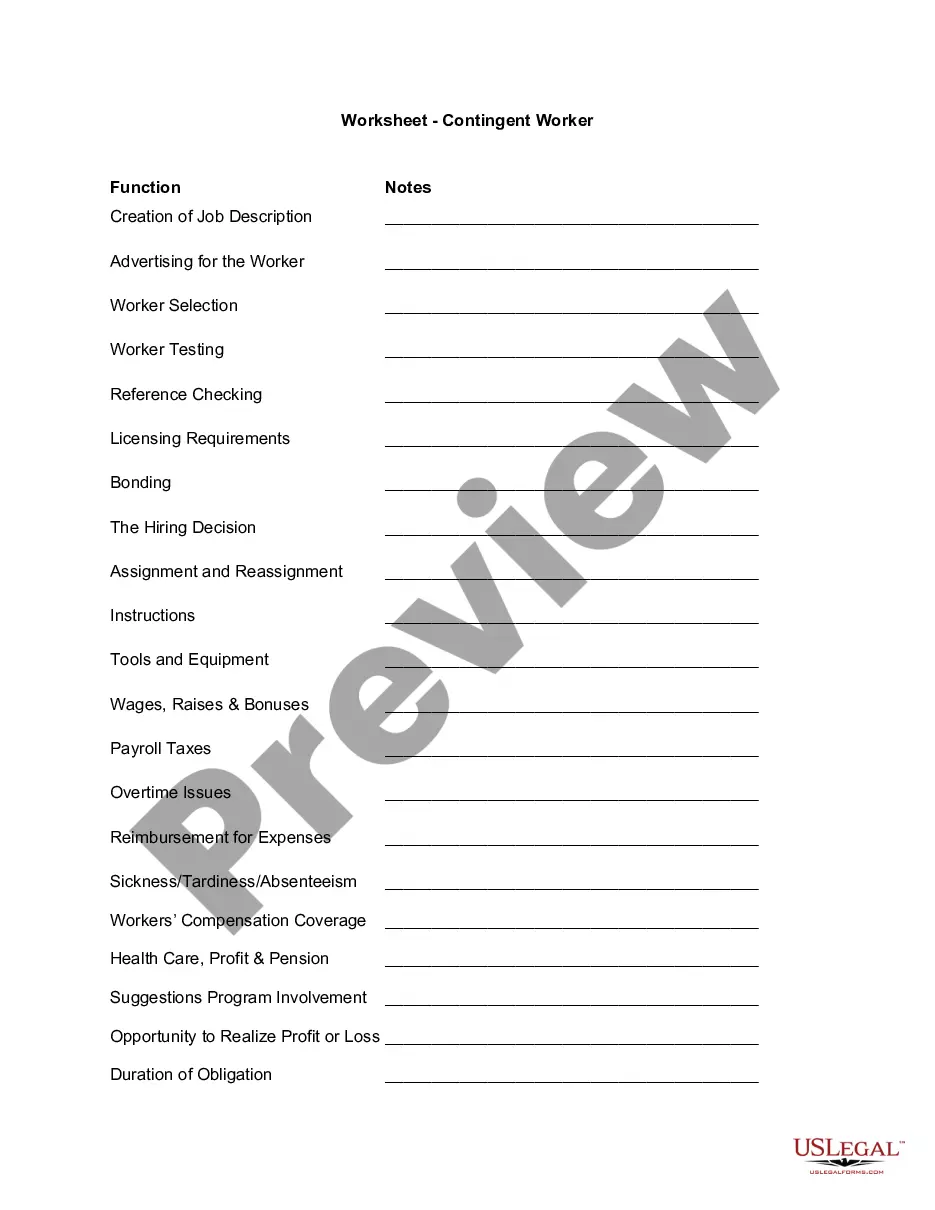
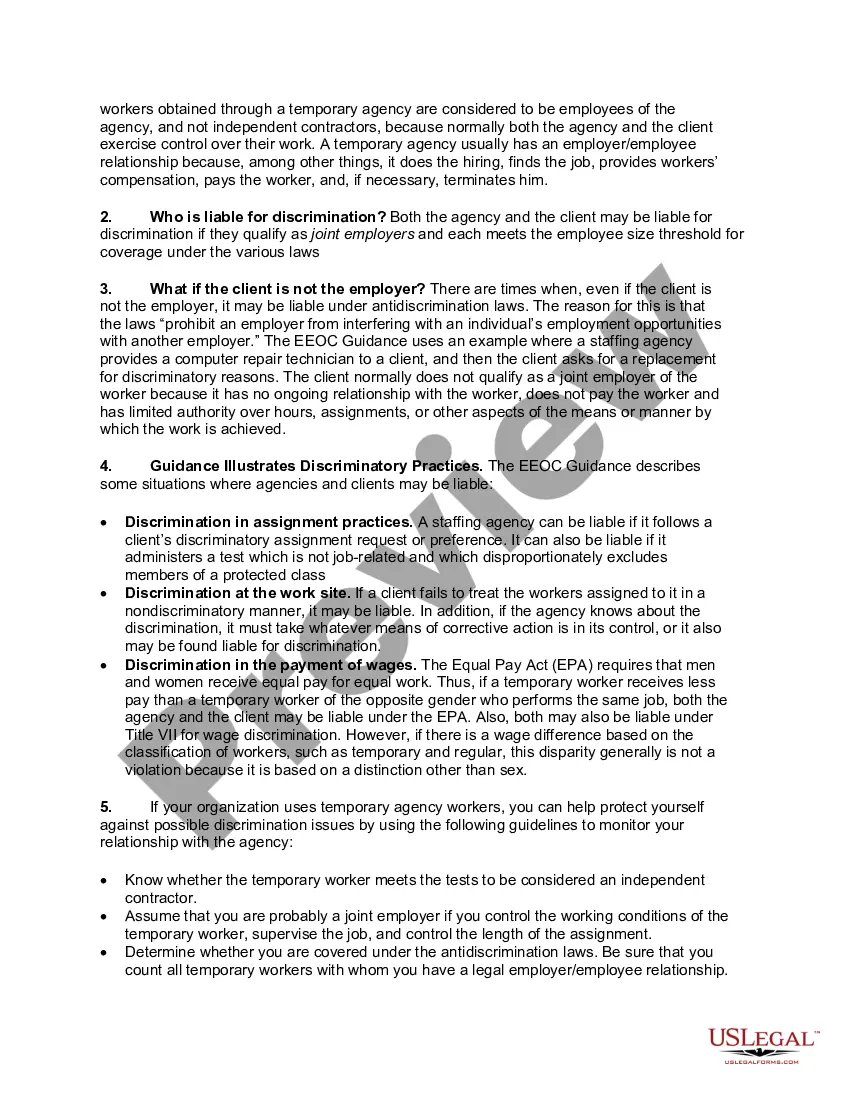
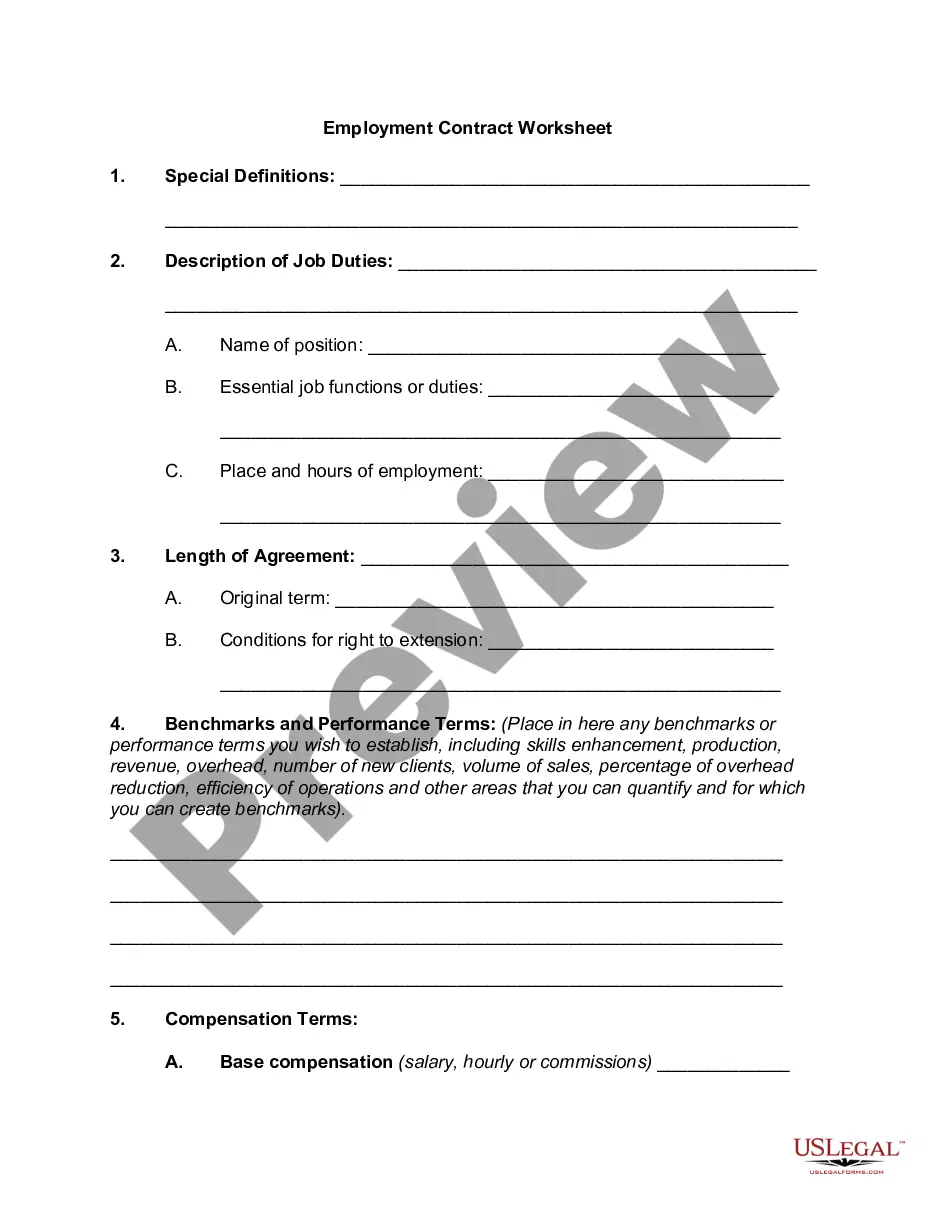
The Worksheet - Contingent Worker is a legal document designed to assist employers in managing temporary and contingent workers. This form serves as a comprehensive guide for the hiring process and includes essential details about job descriptions, worker selection, and compliance with discrimination laws. Unlike standard employment contracts, this worksheet focuses specifically on the nuances of hiring contingent workers, who may be employed directly, through staffing agencies, or as independent contractors. It is crucial for ensuring compliance with legal requirements, including those set forth by the Equal Employment Opportunity Commission (EEOC).
Key components of this form
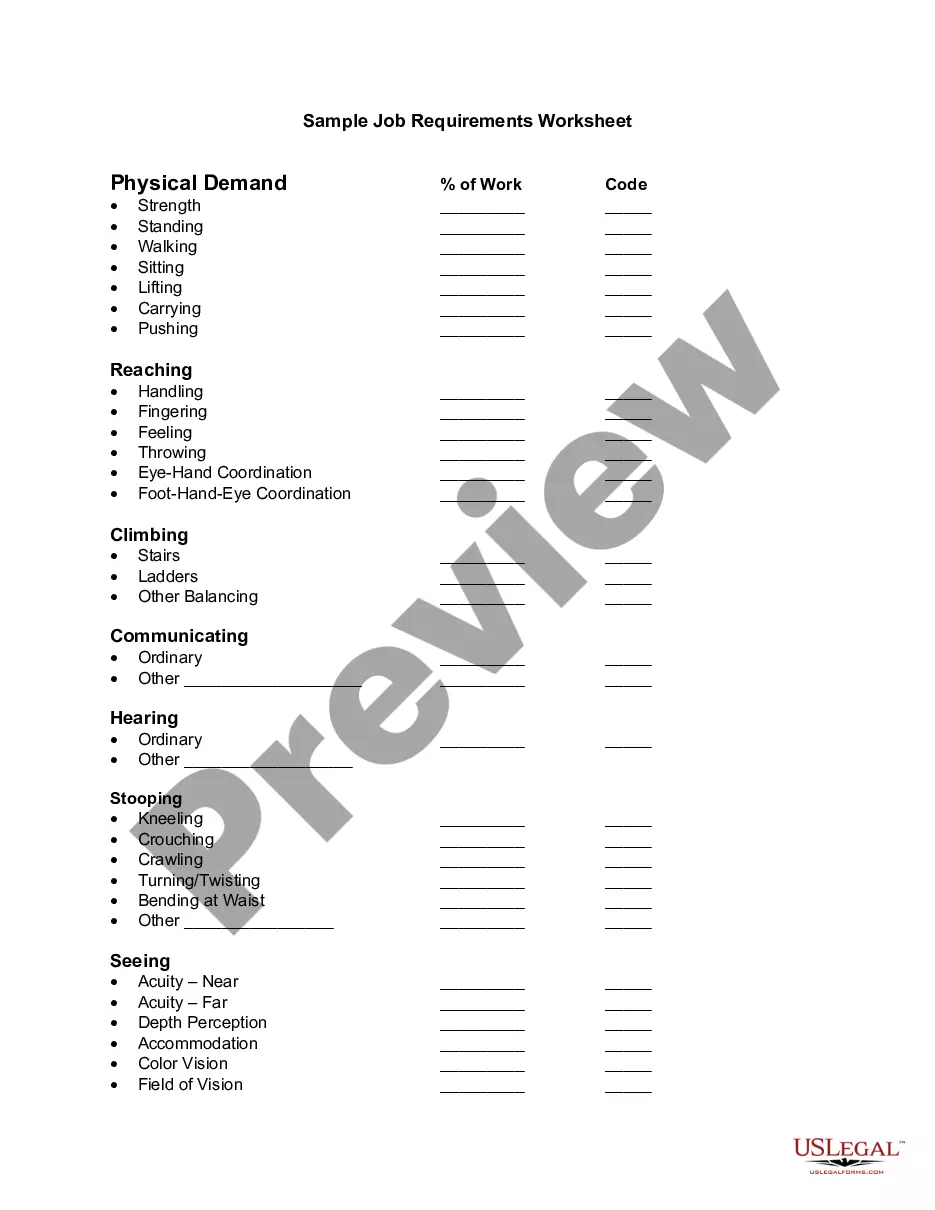
- Creation of job description
- Advertising for the worker
- Worker selection and testing
- Reference checking
- Wages, raises, and bonuses
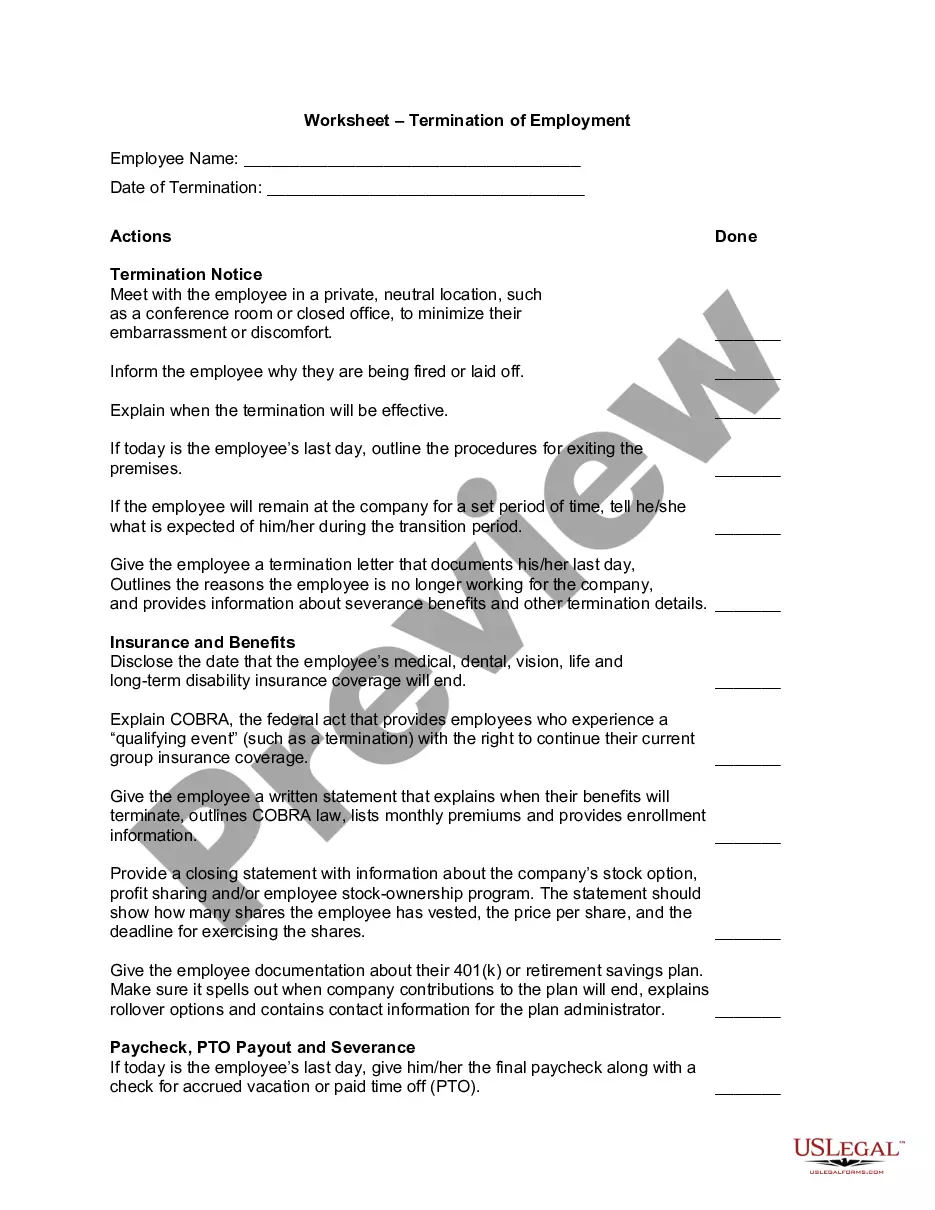
- Training and onboarding processes
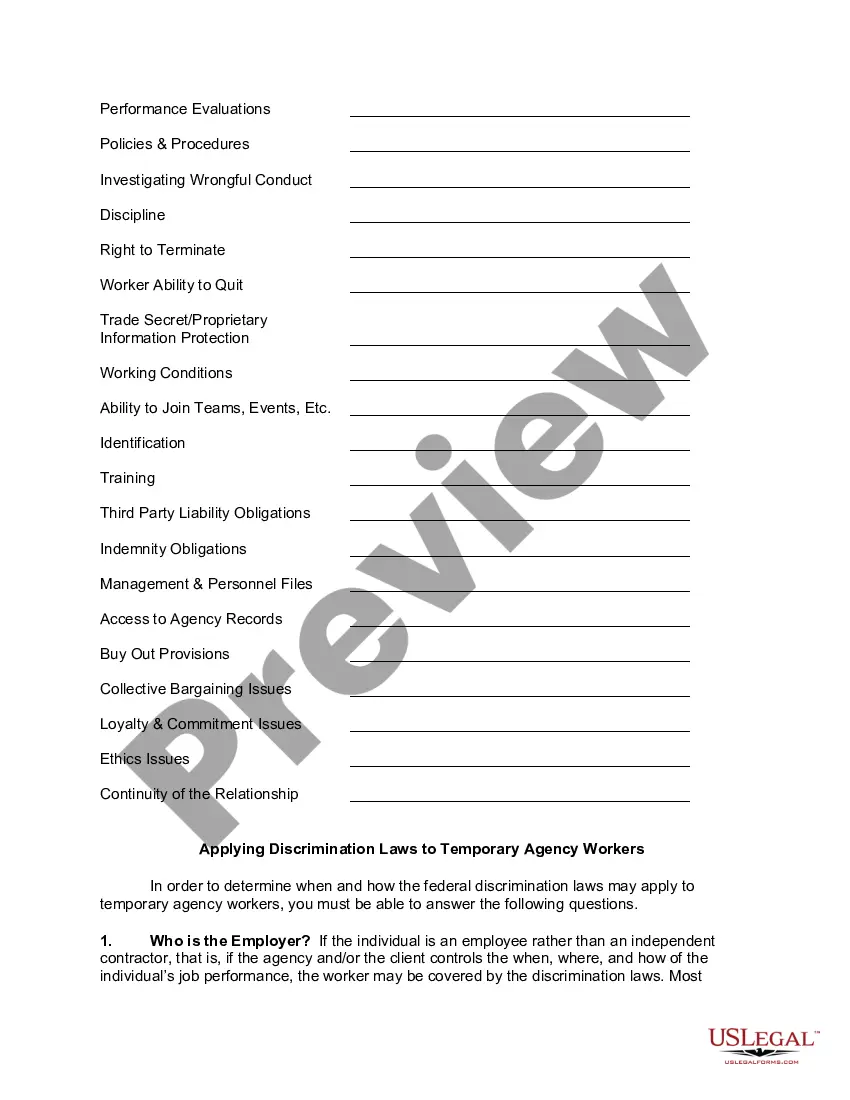
- Policies and procedures for conduct and performance evaluations
- Assigning responsibilities and access rights


When this form is needed
This form should be used when hiring contingent workers who may be temporary employees, independent contractors, or leased employees. It is particularly beneficial for organizations that work with staffing agencies or employ seasonal workers. The worksheet can help ensure that all aspects of the hiring process align with legal compliance, including adherence to EEO laws, worker classification, and conditions of employment. Use this form whenever you need to outline the obligations and rights of both the employer and the worker in a contingent worker arrangement.
Who can use this document
This form is intended for:
- Employers looking to hire temporary or contingent workers
- HR professionals involved in the hiring process
- Business owners who engage staffing agencies for workforce flexibility
- Managers responsible for overseeing contingent workers or independent contractors
Steps to complete this form
- Identify the job role and create a detailed job description.
- Develop a strategy for advertising the position to attract suitable candidates.
- Establish criteria for selecting and testing workers to ensure they meet job requirements.
- Outline the hiring decision process and consider policies for reassignments or terminations.
- Include compensation details such as wages, bonuses, and other financial considerations.
Does this document require notarization?
Notarization is not commonly needed for this form. However, certain documents or local rules may make it necessary. Our notarization service, powered by Notarize, allows you to finalize it securely online anytime, day or night.
Get your form ready online
Our built-in tools help you complete, sign, share, and store your documents in one place.
Make edits, fill in missing information, and update formatting in US Legal Forms—just like you would in MS Word.
Download a copy, print it, send it by email, or mail it via USPS—whatever works best for your next step.
Sign and collect signatures with our SignNow integration. Send to multiple recipients, set reminders, and more. Go Premium to unlock E-Sign.
If this form requires notarization, complete it online through a secure video call—no need to meet a notary in person or wait for an appointment.
We protect your documents and personal data by following strict security and privacy standards.

Make edits, fill in missing information, and update formatting in US Legal Forms—just like you would in MS Word.

Download a copy, print it, send it by email, or mail it via USPS—whatever works best for your next step.

Sign and collect signatures with our SignNow integration. Send to multiple recipients, set reminders, and more. Go Premium to unlock E-Sign.

If this form requires notarization, complete it online through a secure video call—no need to meet a notary in person or wait for an appointment.

We protect your documents and personal data by following strict security and privacy standards.
Common mistakes to avoid
- Failing to classify workers correctly as employees or independent contractors.
- Neglecting to check relevant references and backgrounds effectively.
- Ignoring compliance with anti-discrimination laws during the hiring process.
- Not documenting the terms of engagement or worker expectations clearly.
Benefits of using this form online
- Convenience of accessing the form anytime and from anywhere.
- Editability to tailor the form according to specific hiring needs.
- Reliable documentation created by licensed attorneys, ensuring legal compliance.
Legal use & context
- This form aids in outlining expectations and responsibilities for both employers and contingent workers.
- Ensures compliance with federal discrimination laws as per EEOC guidelines.
- Offers strong documentation that may protect against legal disputes regarding employment conditions.
Quick recap
- The Worksheet - Contingent Worker is essential for managing temporary and independent contractors effectively.
- Key aspects include legal compliance and clear communication of roles and expectations.
- Utilizing this form helps mitigate risks associated with misclassifying workers and discrimination claims.
Looking for another form?

Form popularity
FAQ
Contingent workers are defined as freelancers, independent contractors, consultants, or other outsourced and non-permanent workers who are hired on a per-project basis. They can work on site or remotely.
Contingent Worker MeaningContingent workers are typically defined as people who are not employees of a company.Instead of receiving a salary, a contingent worker receives payment or commissions for completed work. Contingent workers cannot be told how to complete a project, as they work for themselves.
Contingent employment means a worker's position with a company is temporary.Independent contractors, on-call workers, freelancers, contract workers, and any other type of individual hired on a per-project basis are examples of contingent staffing.
Some companies require replacement of contingent workers after a certain number of hours worked, but the maximum number of hours varies greatly, from just under 1000 to 4160, with many different rules in between. Others link limitations to the calendar, such as with 12-, 24-, or 36-month limits.
Employees: Workers are employed directly by the company for which work is performed. Contingent workers: Workers are provided by a staffing firm to the company for which work is performed and are employees of the staffing firm. Independent contractors: Workers submit their own invoices for services provided.
Create a formal job description. Doing so sends the message that the employee and the work he does are important. Orient and introduce. Treat him with respect. Provide a challenging environment. Keep him in the loop. Consider a cash completion incentive. Need short-term, project-based or temporary staff?
1 - Get external support. 2 - Make sure you are vendor neutral. 3 - Reshape and reorganize your company's processes. 4 - Make the most of innovative technology.
More flexibility Your client might not need to add a permanent employee to their workforce to complete certain projects. When your client hires a contingent worker, they have more flexibility. The worker is only hired for a specific amount of time.