District of Columbia 7 Day Notice to Pay Rent or Lease Terminates for Residential Property
What this document covers
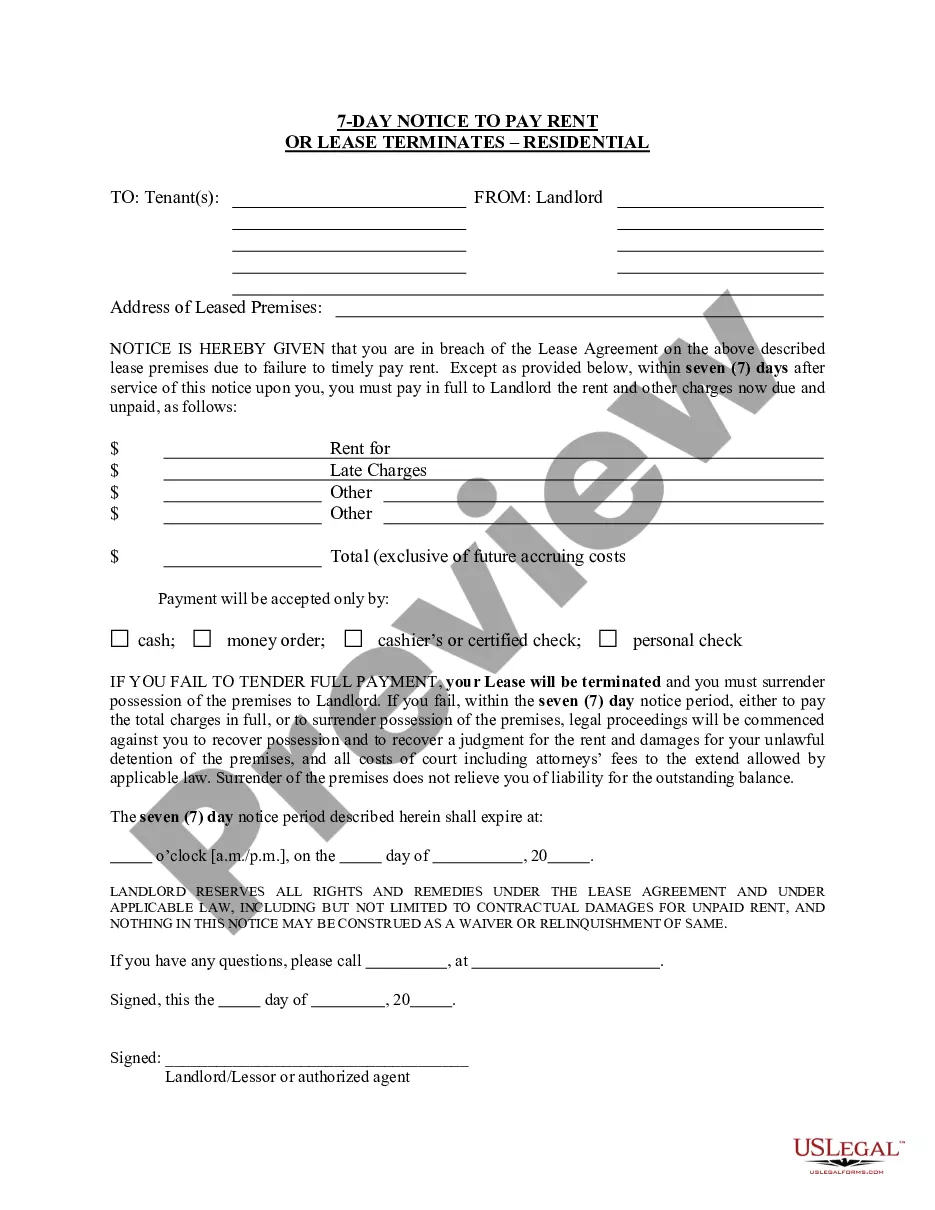
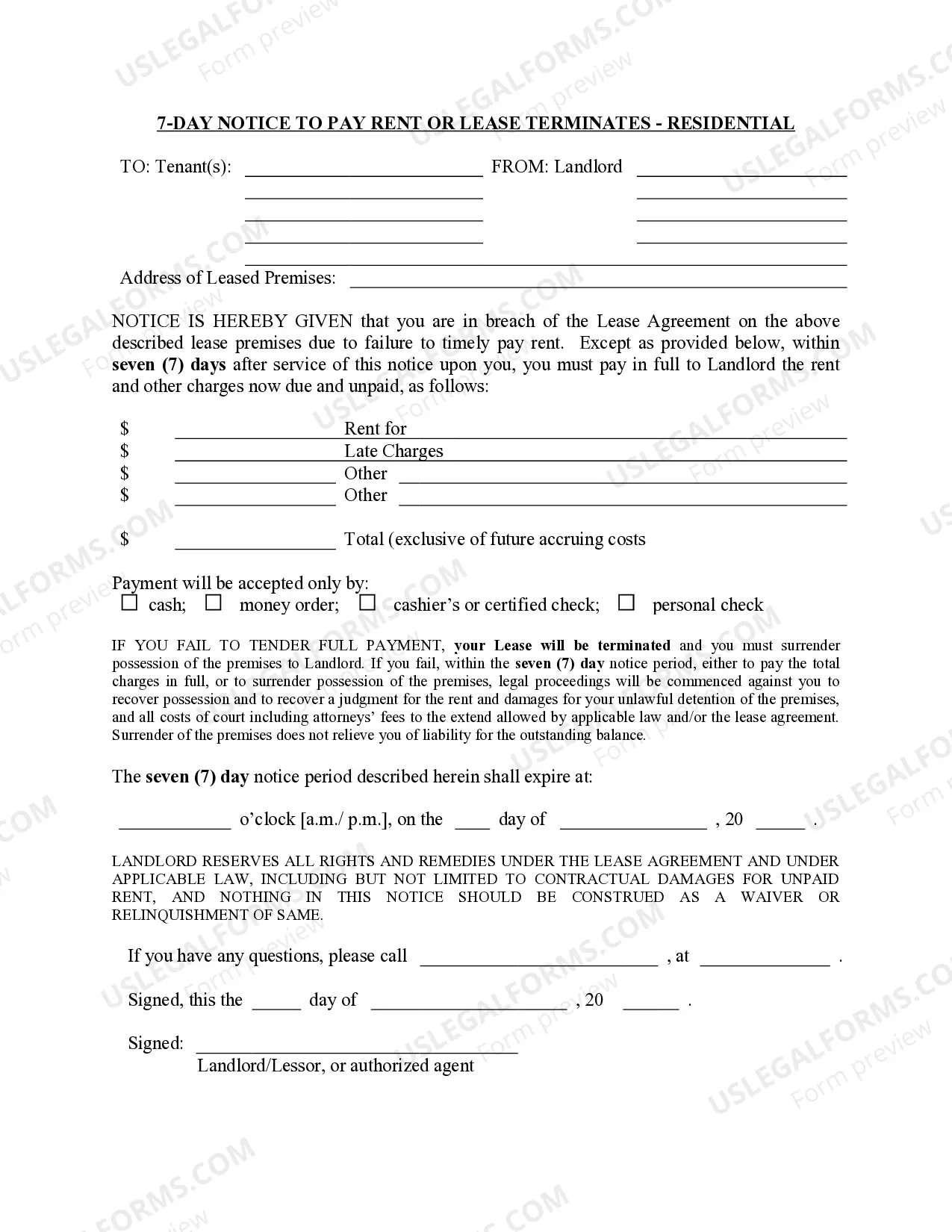
The 7 Day Notice to Pay Rent or Lease Terminates for Residential Property is a legal document that landlords use to demand immediate payment of overdue rent from tenants. This form serves to formally notify tenants that they have seven days to either pay the outstanding rent or face lease termination. This notice is specific to residential properties, such as houses, apartments, or condos, and it outlines the consequences for failing to comply.
What’s included in this form
- Parties involved: Identifies the landlord and tenant.
- Property details: Specifies the residential property in question.
- Amount owed: Clearly states the overdue rent amount.
- Deadline: Indicates the seven-day period for payment.
- Consequences: Describes potential lease termination and eviction proceedings if payment is not made.
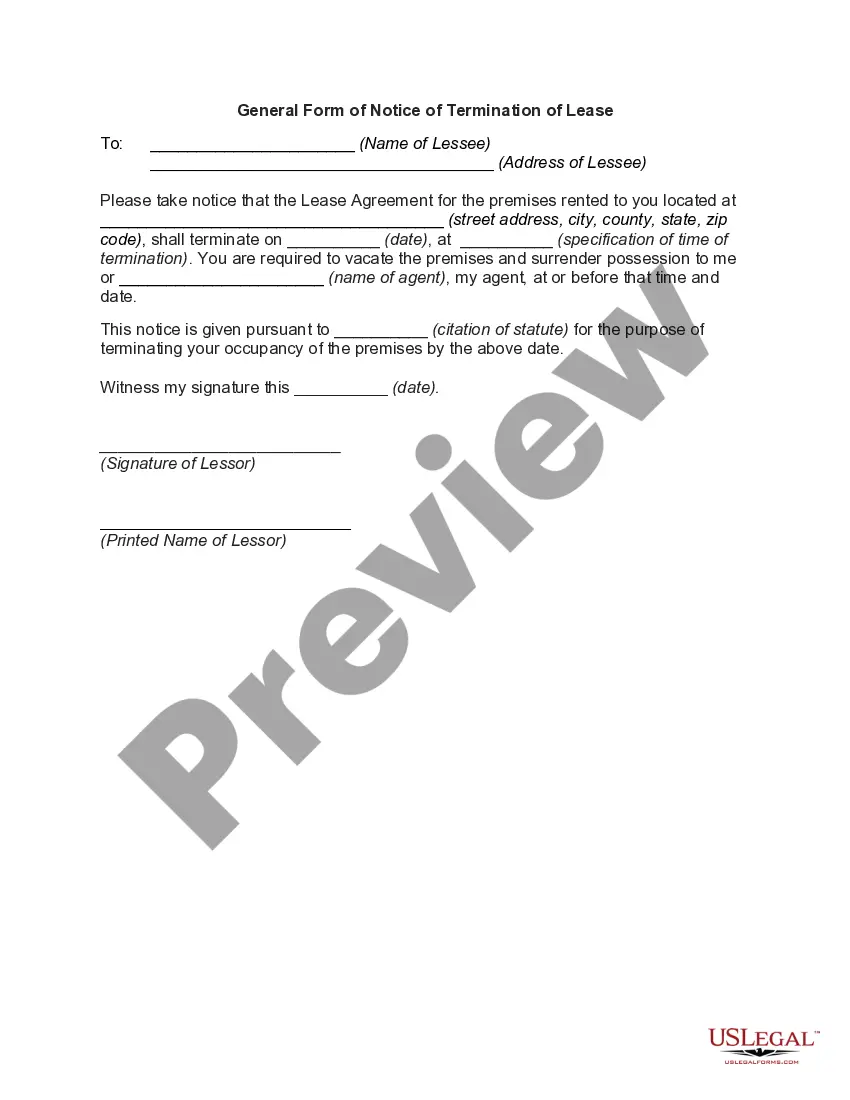
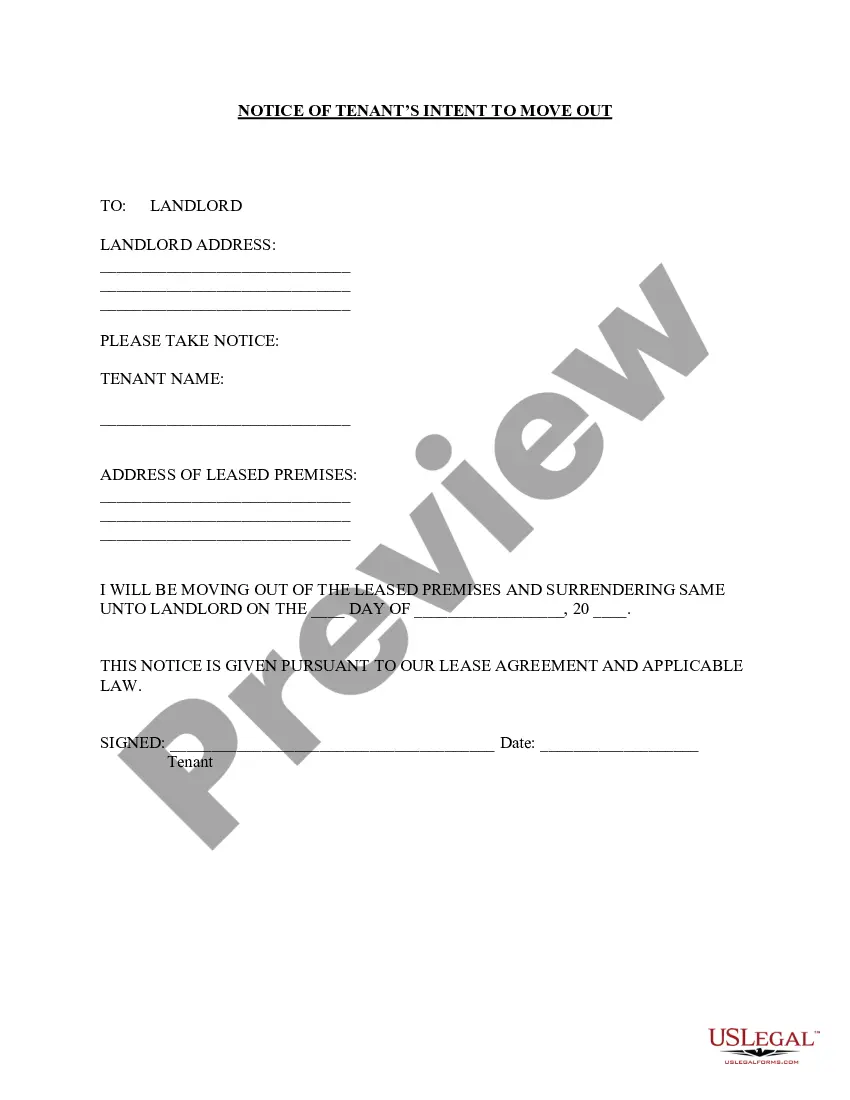
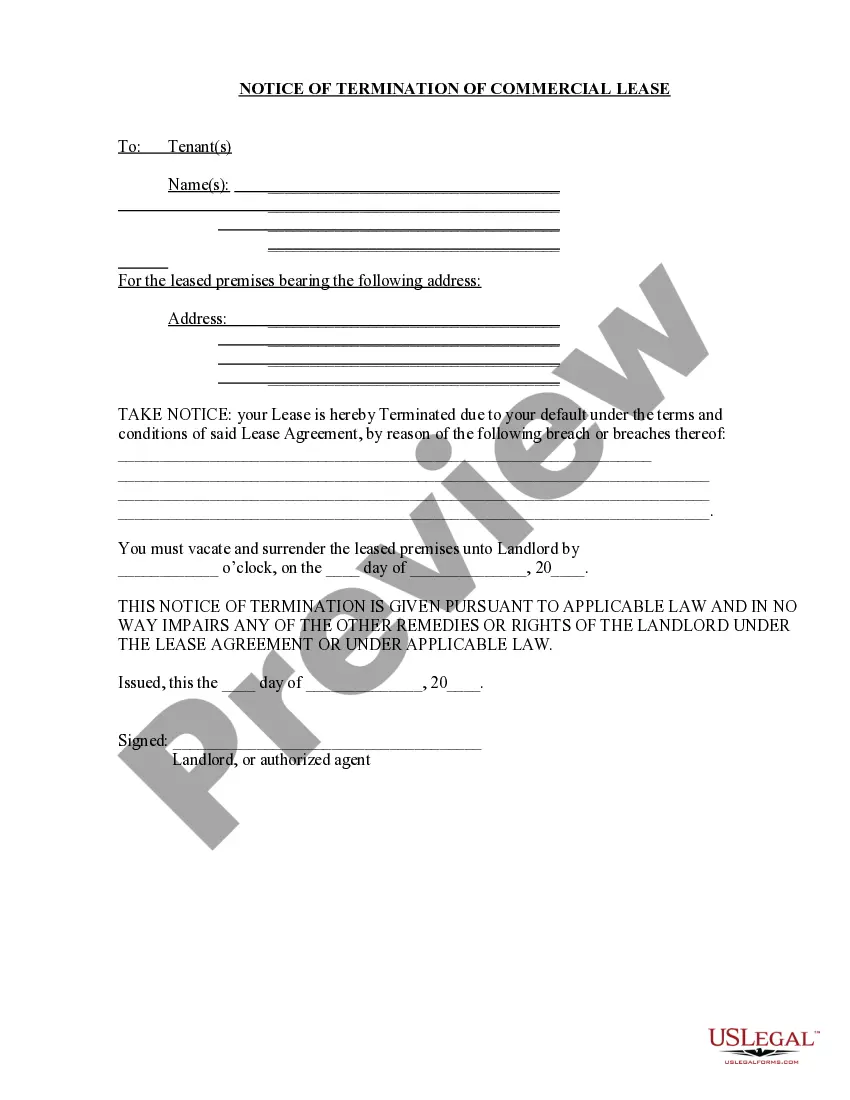
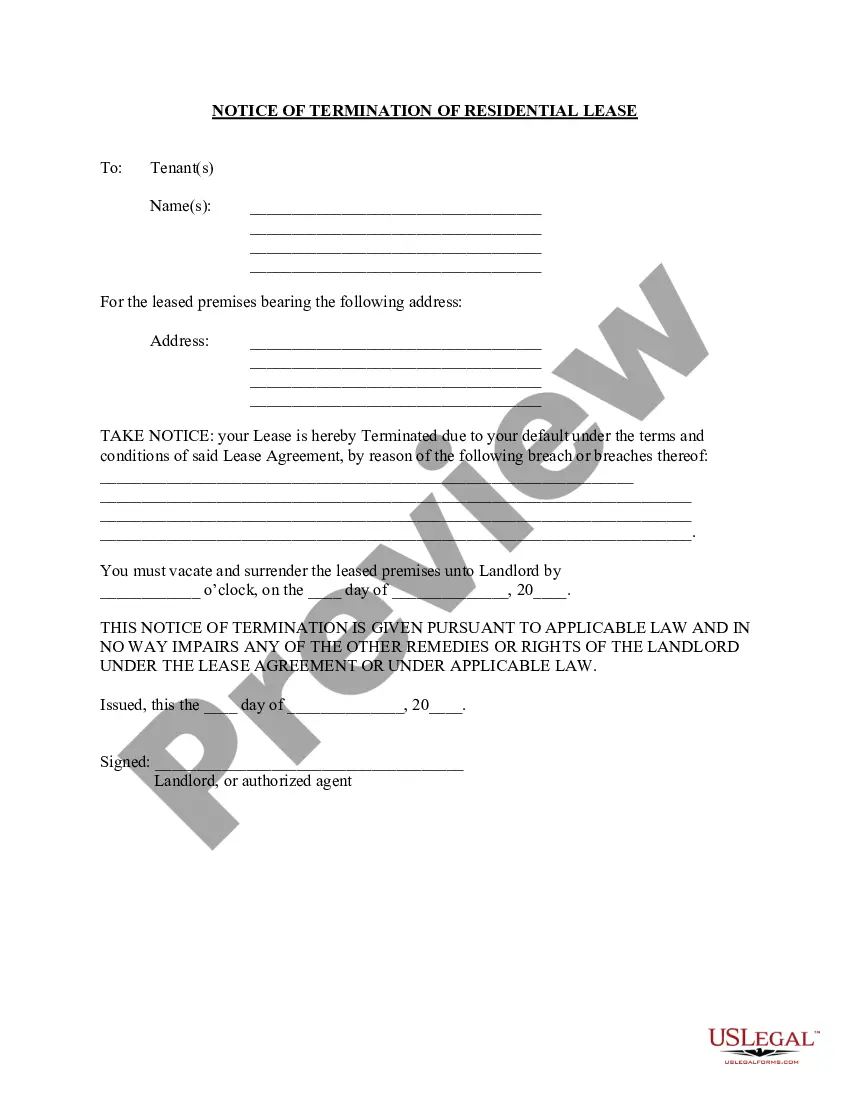
Situations where this form applies
This form should be used when a landlord has not received rent from a tenant for the month and wants to initiate the process of addressing overdue payments. It is particularly essential when the landlord intends to terminate the lease for non-payment if the situation does not resolve within the specified time frame. This form acts as a formal warning to the tenant and outlines the necessary actions for both parties.
Who should use this form
- Landlords seeking to collect overdue rent from tenants.
- Property managers acting on behalf of landlords.
- Individuals renting out a residential property who need to ensure compliance with payment terms.
Completing this form step by step
- Identify the landlord and tenant parties by entering their names and addresses.
- Specify the property address to provide the location of the rental unit.
- Clearly state the amount of overdue rent due.
- Include the date when the notice is written to establish the start of the seven-day period.
- Indicate the deadline for payment and note the consequences of failing to pay.
Does this form need to be notarized?
This form does not typically require notarization to be legally valid. However, some jurisdictions or document types may still require it. US Legal Forms provides secure online notarization powered by Notarize, available 24/7 for added convenience.
Get your form ready online
Our built-in tools help you complete, sign, share, and store your documents in one place.
Make edits, fill in missing information, and update formatting in US Legal Forms—just like you would in MS Word.
Download a copy, print it, send it by email, or mail it via USPS—whatever works best for your next step.
Sign and collect signatures with our SignNow integration. Send to multiple recipients, set reminders, and more. Go Premium to unlock E-Sign.
If this form requires notarization, complete it online through a secure video call—no need to meet a notary in person or wait for an appointment.
We protect your documents and personal data by following strict security and privacy standards.

Make edits, fill in missing information, and update formatting in US Legal Forms—just like you would in MS Word.

Download a copy, print it, send it by email, or mail it via USPS—whatever works best for your next step.

Sign and collect signatures with our SignNow integration. Send to multiple recipients, set reminders, and more. Go Premium to unlock E-Sign.

If this form requires notarization, complete it online through a secure video call—no need to meet a notary in person or wait for an appointment.

We protect your documents and personal data by following strict security and privacy standards.
Common mistakes
- Failing to provide accurate tenant and property information.
- Not including the specific amount of rent overdue.
- Omitting the deadline for payment, which can lead to confusion.
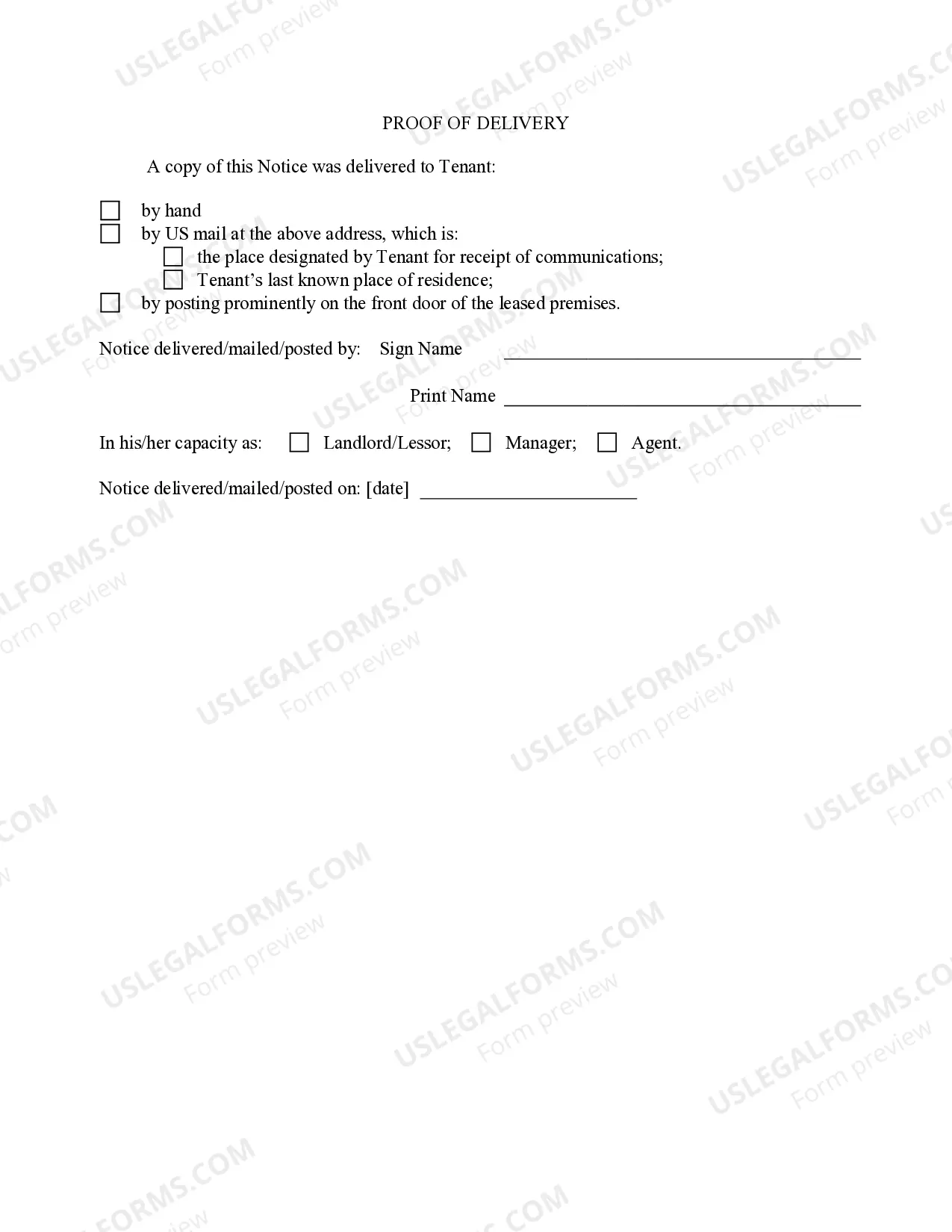
- Not delivering the notice in accordance with state requirements on serving eviction notices.
Benefits of using this form online
- Convenient downloadable format allows for immediate access.
- Edit the form easily to tailor it to specific situations.
- Reliable templates drafted by licensed attorneys ensure legal compliance.
Looking for another form?
Form popularity
FAQ
Eviction rules in Vermont generally require landlords to provide proper notice before filing for eviction. Specific timelines depend on the nature of the violation, whether it’s for nonpayment or lease violations. Landlords must follow legal procedures to avoid complications and ensure their notice meets legal standards. For guidance, consider using tools from US Legal Forms to understand the regulations better.
A notice to vacate is a request for a tenant to leave the property, often given for lease violations or nonpayment. In contrast, an eviction notice is a legal document indicating that formal legal action will be taken if the tenant does not vacate. Understanding the legal differences helps both landlords and tenants navigate their rights and responsibilities. Resources like US Legal Forms provide additional clarification and templates.
If the amount on the eviction notice is incorrect, it could undermine the notice's validity. It's essential to verify the total amount owed, including rent and any late fees. An inaccurate notice may lead to potential disputes in court. To resolve this issue, consider consulting resources like US Legal Forms to correct or dispute the notice effectively.
If the lease expired and the tenant won't leave you'll need to either file an eviction or let the tenant be. If you do nothing than the tenant will become a holdover tenant as discussed earlier in this post. If you're going to proceed forward with an eviction be sure to follow all the proper legal procedures.
Dear (Name of landlord or manager), This letter constitutes my written (number of days' notice that you need to give based on your lease agreement)-day notice that I will be moving out of my apartment on (date), the end of my current lease. I am leaving because (new job, rent increase, etc.)
Step 1: Mention the Reason for Giving a Notice. Step 2: Use Formal Language. Step 3: Mention the Date for Vacating. Step 4: Address the Formalities to Be Taken Care Of. Step 5: Proofread the Letter.
Today's Date. Landlord's Name. Property Address and Unit Number. State Your Desire to Move Out of the Apartment. Include Desired Move-Out Date. That You Expect the Return of Your Security Deposit Under State Law. A Forwarding Address Where Your Security Deposit Can Be Sent. Your Signature.
Give the landlord/agent a written termination notice and vacate move out and return the keys according to your notice, and/or. apply to the NSW Civil & Administrative Tribunal (NCAT) for a termination order.
Dear (Name of landlord or manager), This letter constitutes my written (number of days' notice that you need to give based on your lease agreement)-day notice that I will be moving out of my apartment on (date), the end of my current lease. I am leaving because (new job, rent increase, etc.)
You can send your letter by email if your tenancy agreement says you can. You should say something like: I am giving 1 month's notice to end my tenancy, as required by law. I will be leaving the property on (date xxxxx).