Texas Contract for Deed Package

About this form package
The Texas Contract for Deed Package contains essential legal documents specifically tailored for owner financing of real estate in Texas. This package includes various forms, such as the Agreement or Contract for Deed, Notices, and Disclosures, ensuring a comprehensive approach to facilitate secure and legally binding owner-financed transactions. Unlike generic templates, these forms are designed to comply with Texas laws, providing peace of mind for both sellers and buyers.
Documents contained in this package
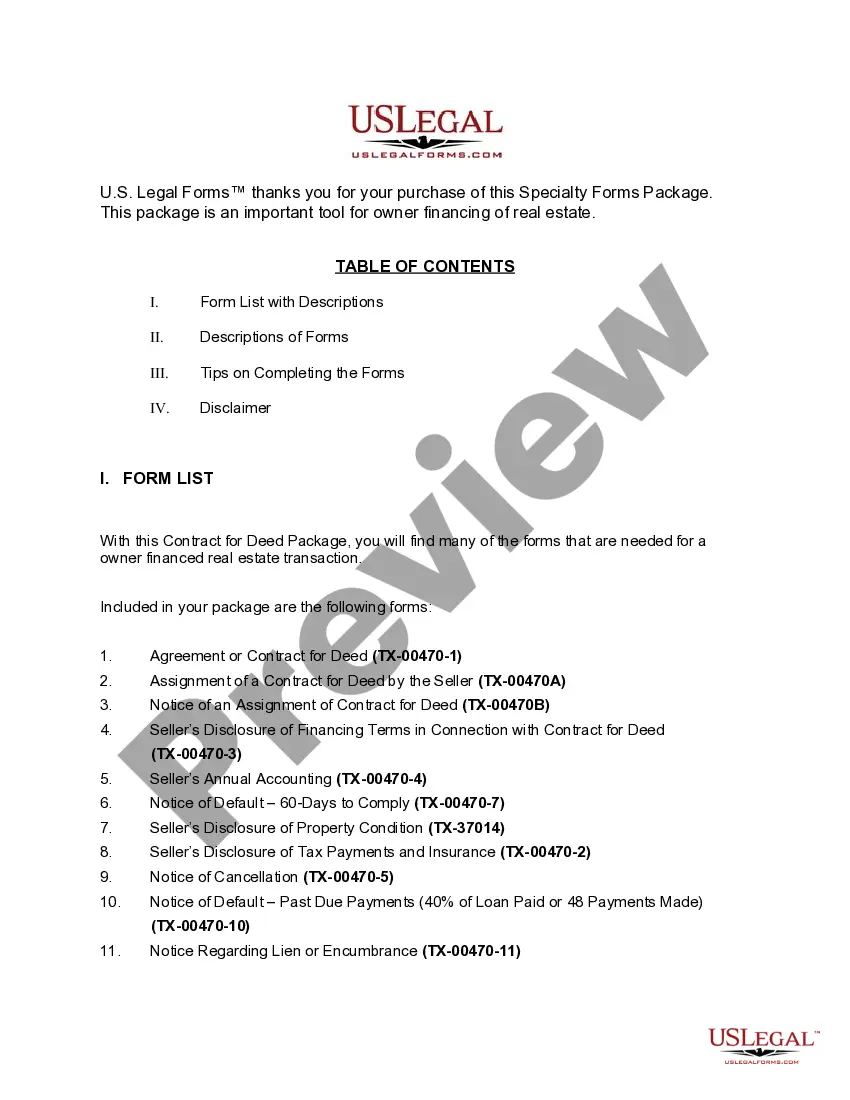
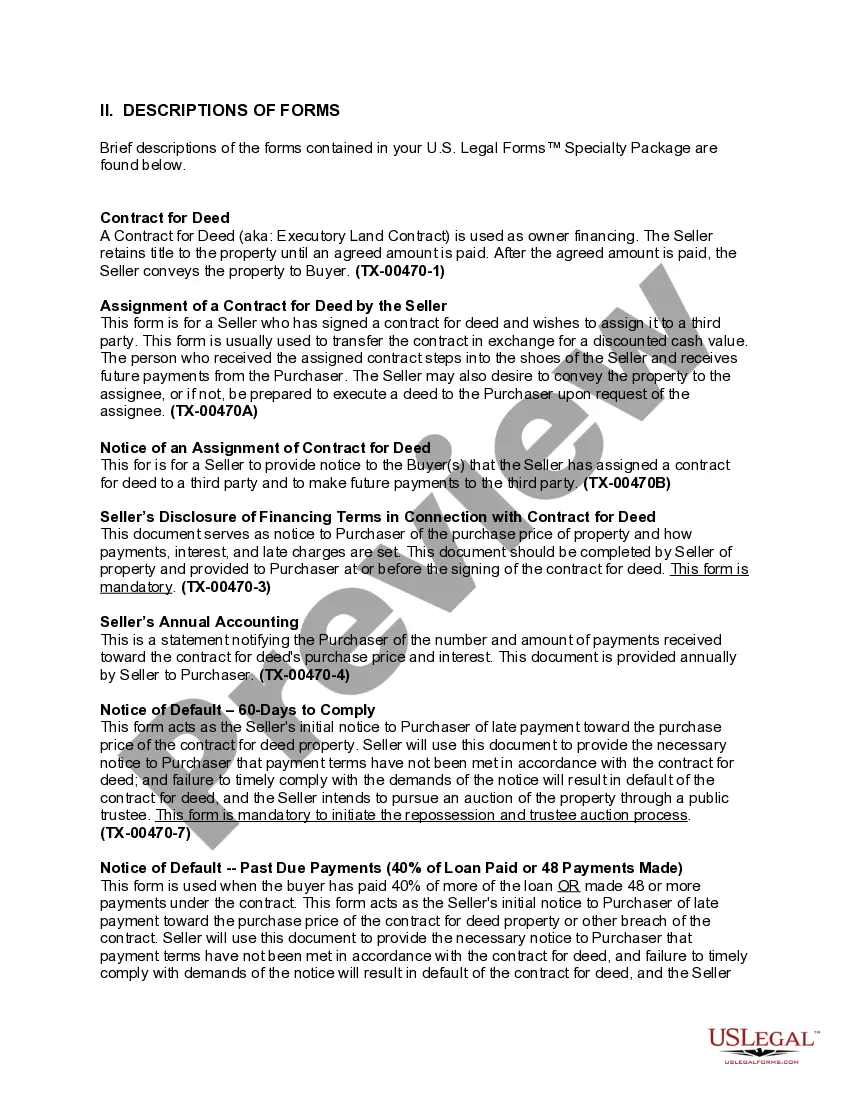
- Contract for Deed Disclosure of Property Condition - Residential - Land Contract, Executory Contract
- Contract for Deed Notice of Default When 40% of Loan Paid or 48 Payments Made
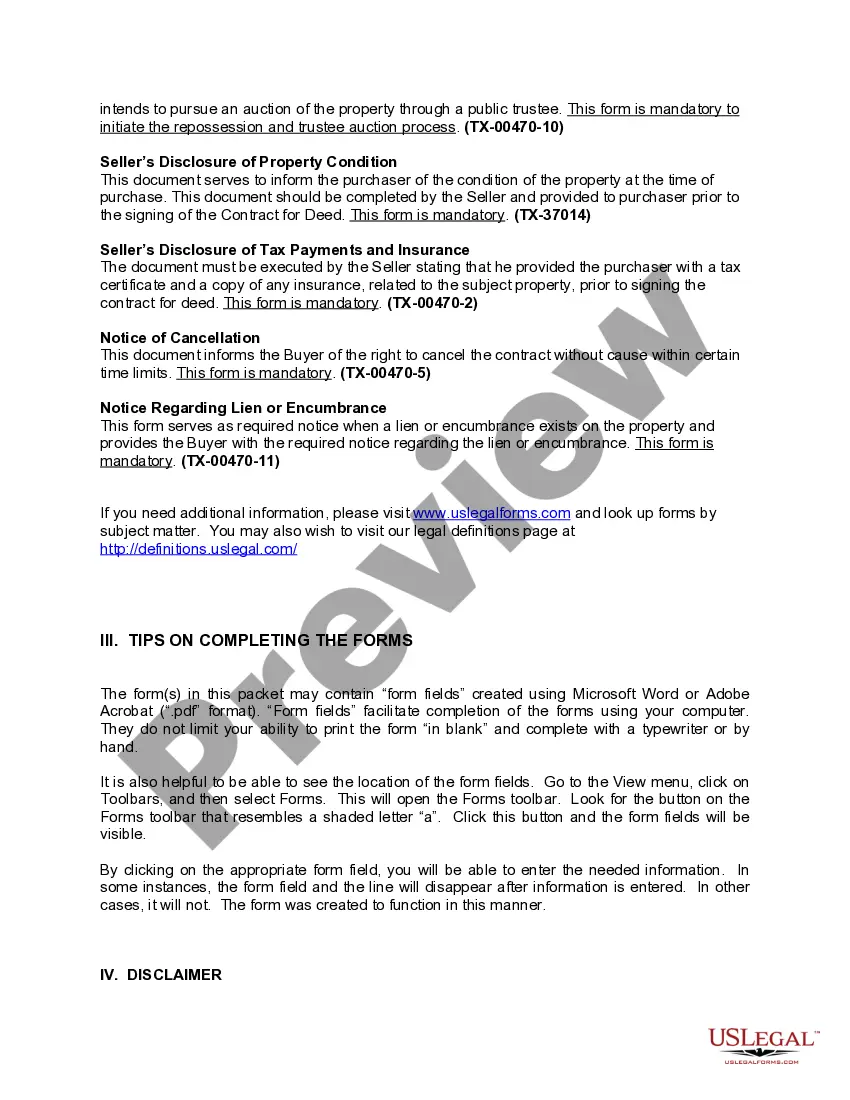
- Notice Regarding Lien or Encumbrance
- Contract for Deed Seller's Disclosure of Tax Payment and Insurance - Residential - Land Contract - Agreement for Deed
- Seller's Disclosure of Financing Terms for Residential Property in connection with Contract or Agreement for Deed a/k/a Land Contract
- Contract for Deed Seller's Annual Accounting Statement to Purchaser - Residential - Land Contract, Executory Contract
- Contract for Deed Notice of Default by Seller to Purchaser
- Notice of Cancellation
- Assignment of Contract for Deed by Seller
- Notice of Assignment of Contract for Deed
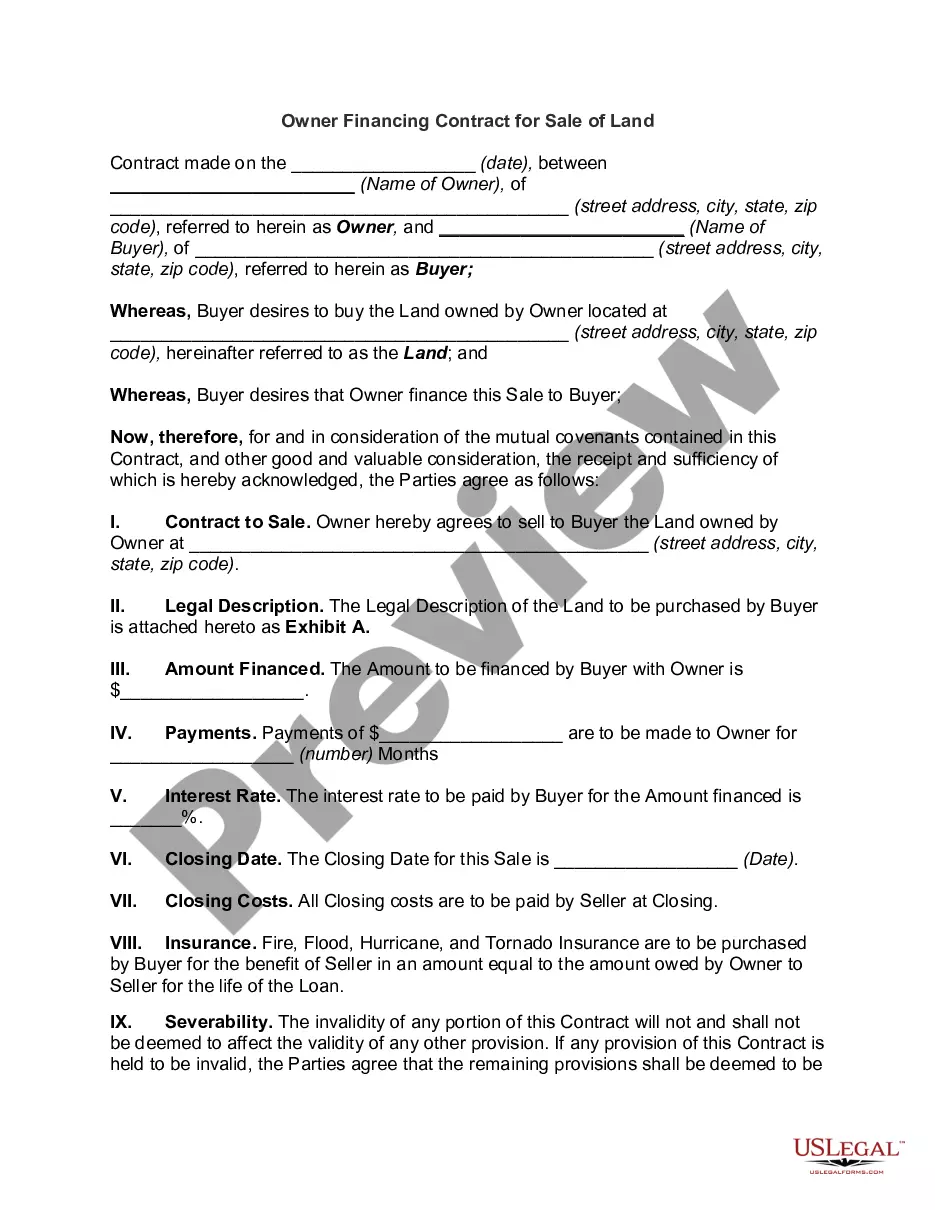
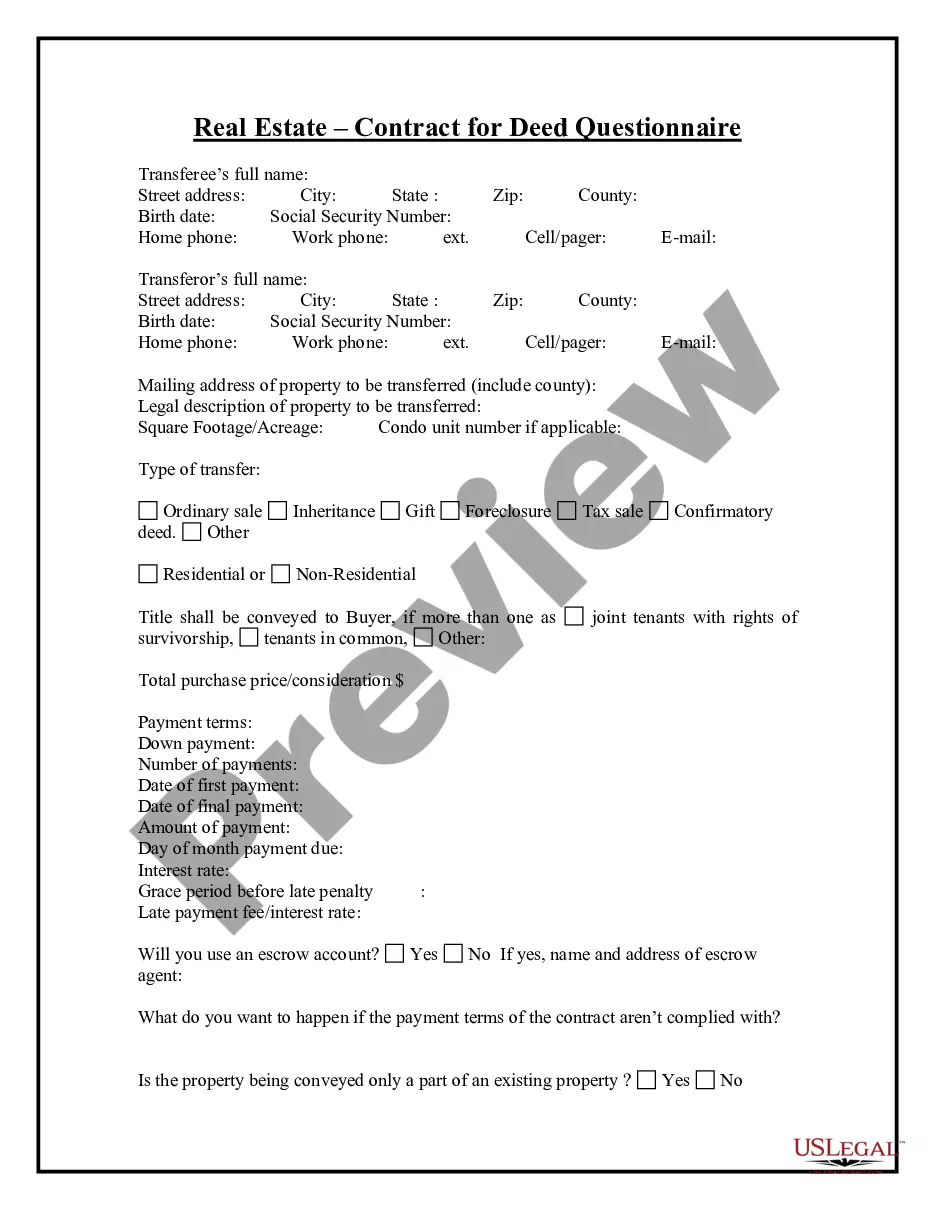
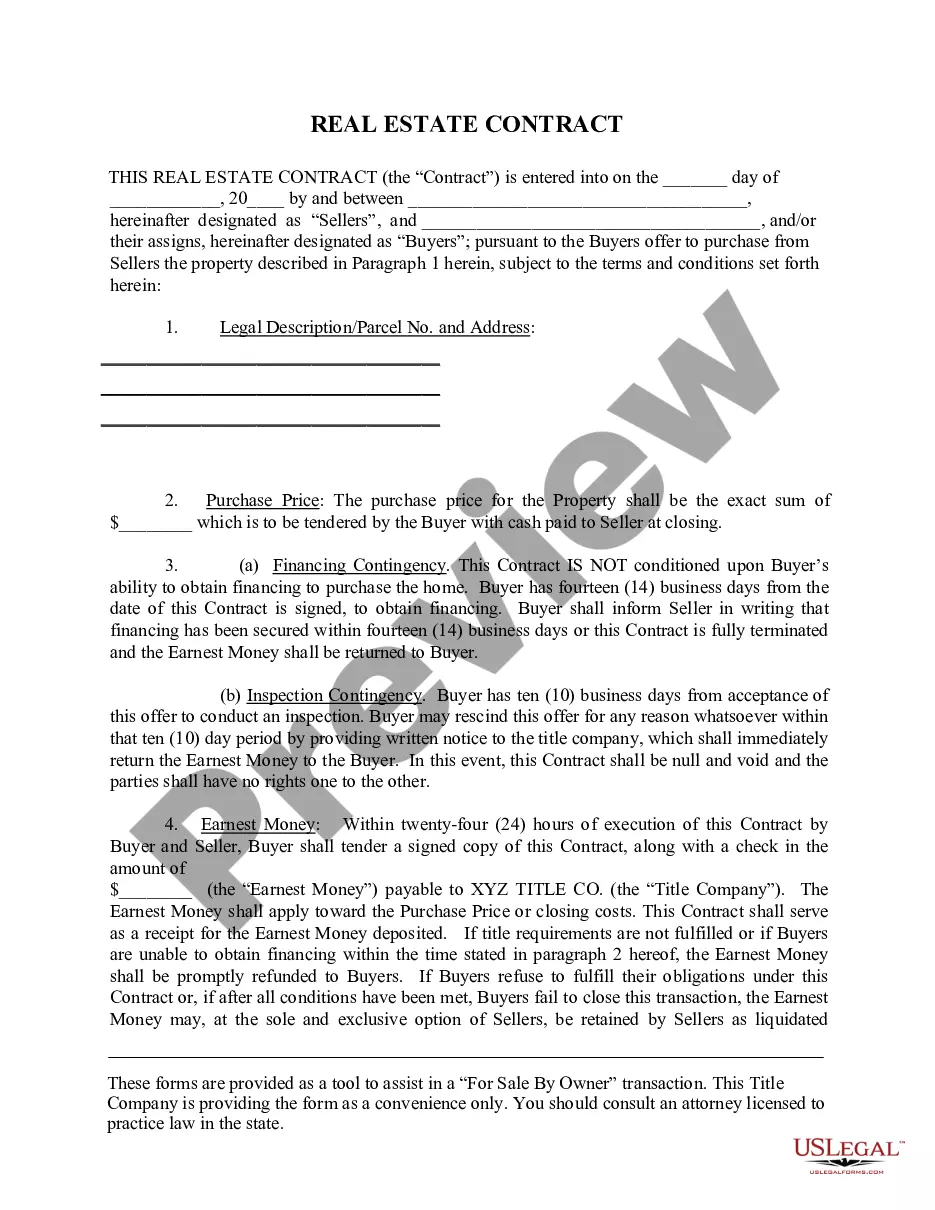
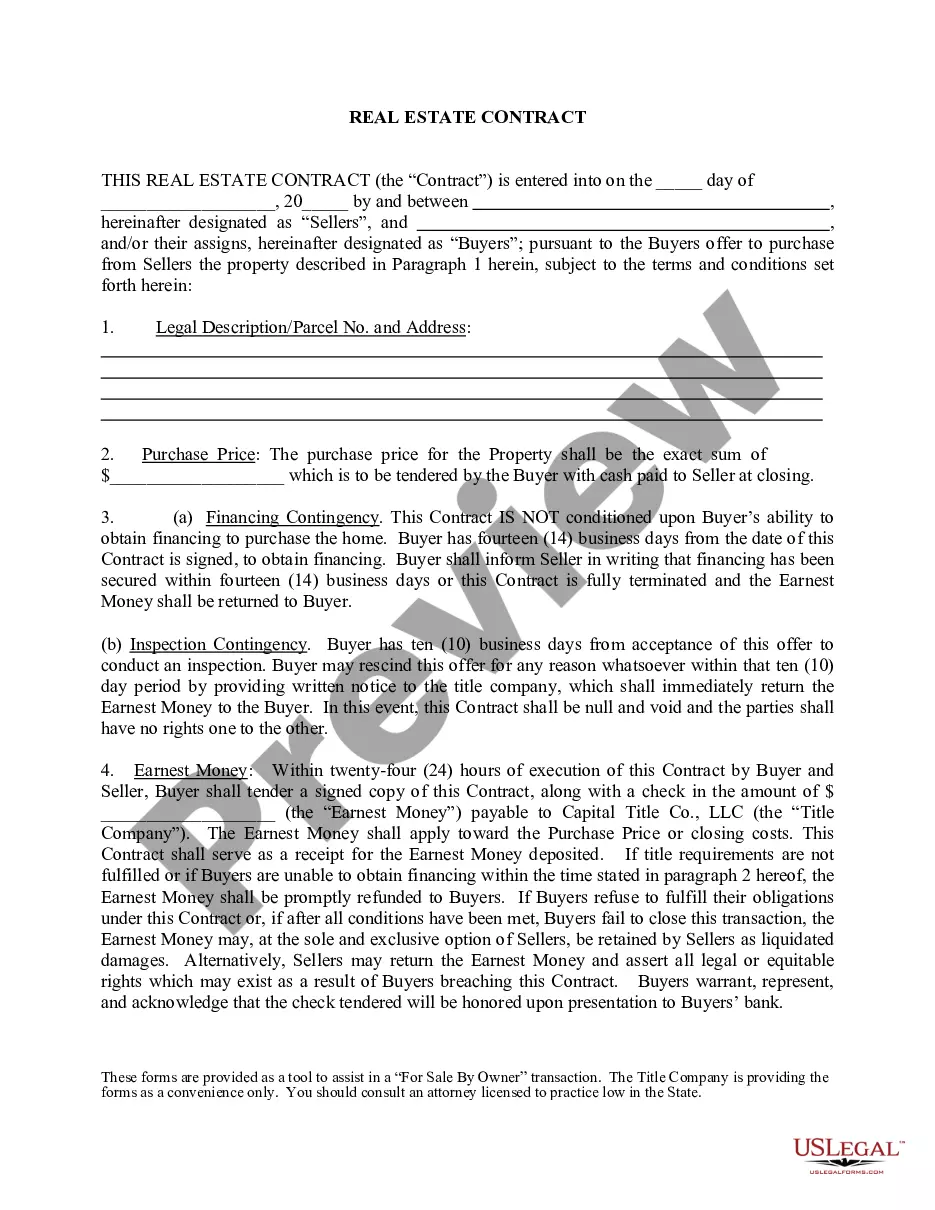
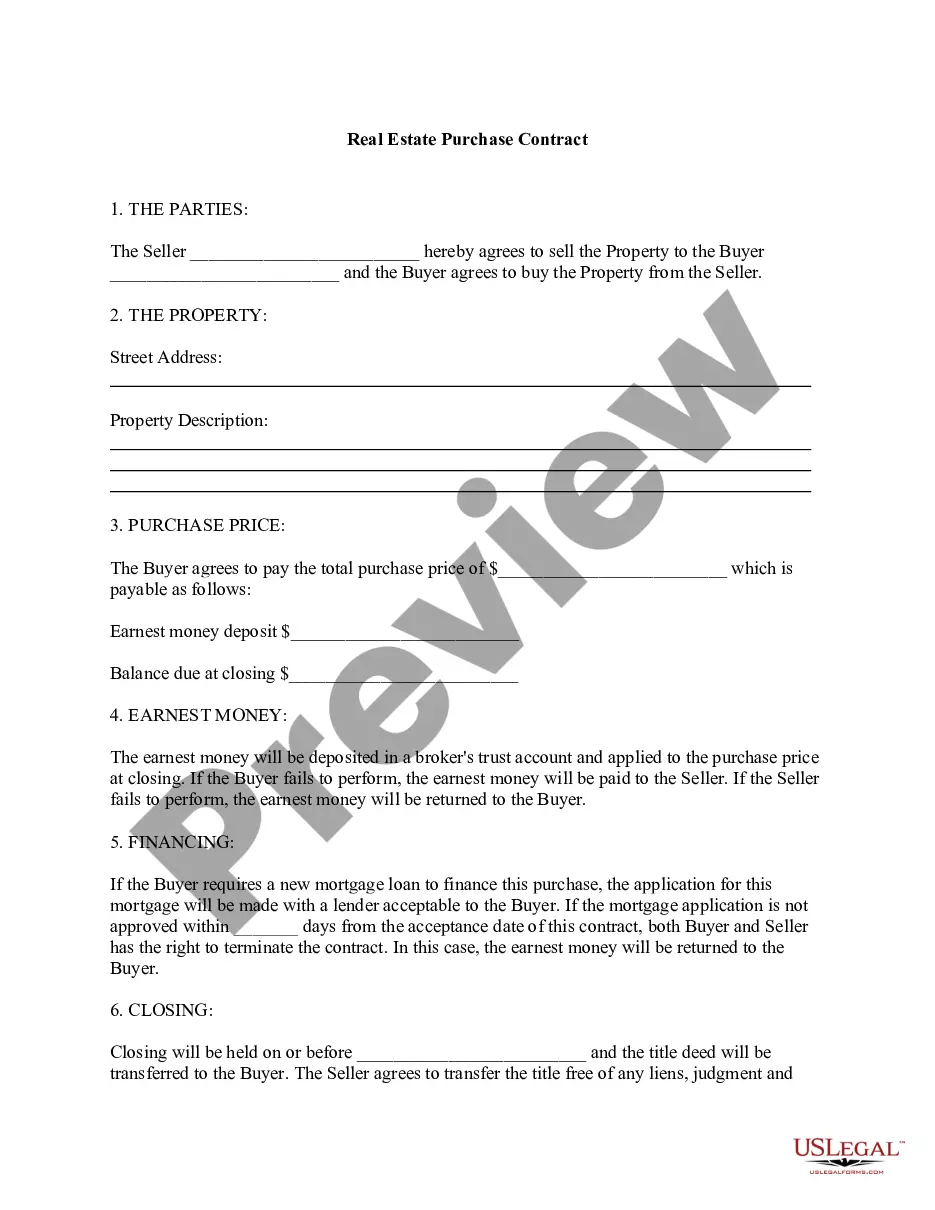
- Agreement or Contract for Deed a/k/a Land or Executory Contract - Residential Use Only
When to use this form package
This package is useful in scenarios where a seller wishes to finance the sale of a property directly to the buyer without the involvement of traditional mortgage lenders. Common situations include:
- When a buyer cannot secure conventional financing due to credit challenges.
- When sellers want to reach a broader market by offering flexible payment terms.
- When both parties agree to alternative financing arrangements outside typical bank protocols.
Who can use this document
- Sellers of real estate properties looking to offer owner financing.
- Buyers seeking alternative methods to finance property purchase.
- Real estate agents or brokers facilitating owner-financed transactions.
- Attorneys advising clients on owner financing agreements in Texas.
How to prepare this document
- Review each form included in the package to understand their specific purpose.
- Identify the parties involved in the transaction and their respective roles.
- Complete the Agreement or Contract for Deed with accurate property details and financing terms.
- Ensure all required disclosures and notices are filled out and provided to the other party.
- Retain copies of all completed documents for your records and ensure proper execution of each document.
Do forms in this package need to be notarized?
Forms in this package typically do not require notarization unless required by local law. It is advisable to double-check any specific legal requirements that may apply to certain documents in Texas.
Get your form ready online
Our built-in tools help you complete, sign, share, and store your documents in one place.
Make edits, fill in missing information, and update formatting in US Legal Forms—just like you would in MS Word.
Download a copy, print it, send it by email, or mail it via USPS—whatever works best for your next step.
Sign and collect signatures with our SignNow integration. Send to multiple recipients, set reminders, and more. Go Premium to unlock E-Sign.
If this form requires notarization, complete it online through a secure video call—no need to meet a notary in person or wait for an appointment.
We protect your documents and personal data by following strict security and privacy standards.

Make edits, fill in missing information, and update formatting in US Legal Forms—just like you would in MS Word.

Download a copy, print it, send it by email, or mail it via USPS—whatever works best for your next step.

Sign and collect signatures with our SignNow integration. Send to multiple recipients, set reminders, and more. Go Premium to unlock E-Sign.

If this form requires notarization, complete it online through a secure video call—no need to meet a notary in person or wait for an appointment.

We protect your documents and personal data by following strict security and privacy standards.
Typical mistakes to avoid
- Failing to provide all required disclosures to the buyer.
- Inaccurate completion of financial terms, leading to potential disputes.
- Not retaining copies of signed agreements, which can complicate legal enforcement.
- Neglecting to notify buyers about assignments or changes in the contract terms.
Why complete this package online
- Convenience of downloading forms instantly without office visits.
- Forms are easy to edit, allowing customization to fit specific transaction details.
- Reliability of documents drafted by licensed Texas attorneys.
Legal use & context
- Contracts for Deed are legally binding agreements once signed by both parties.
- This form package helps establish clear terms between the seller and buyer, reducing disputes.
- It is crucial to ensure that all terms comply with Texas law for enforceability.
Main things to remember
- The Texas Contract for Deed Package includes essential forms for owner financing real estate transactions.
- Understanding when and how to use these forms can facilitate smoother transactions.
- Reviewing and completing the forms accurately is critical to prevent legal issues.
Looking for another form?
Form popularity
FAQ
The Texas Contract for Deed Package is a Texas-specific bundle of documents used to arrange owner financing for real estate. It combines an Agreement or Contract for Deed with notices and disclosures to create a secure, legally binding seller-financed transaction. It’s designed for buyers, sellers, agents, and attorneys managing owner-financed deals in Texas.
The package includes the Agreement or Contract for Deed along with notices and disclosures required to document and govern an owner-financed sale in Texas.
In Texas, while you can use the package forms, it is generally wise to consult a licensed attorney before signing a contract for deed. An attorney can review terms, ensure compliance with Texas law, and help protect both seller and buyer in owner-financed transactions described in this package.
Yes. The Texas Contract for Deed Package is designed for owner financing in Texas and provides the main agreement plus notices and disclosures to support a compliant, fiduciary-friendly arrangement between seller and buyer.
A typical contract for deed in this package includes the main Agreement or Contract for Deed supported by accompanying notices and disclosures, crafted to address Texas owner-financing terms and to clarify payment schedules, rights, and default procedures.
This package bundles the Agreement or Contract for Deed with notices and disclosures tailored to Texas owner financing, specifically addressing seller financing terms and Texas disclosure requirements that generic contracts may not cover.