Texas Contract for Deed Notice of Default When 40% of Loan Paid or 48 Payments Made
About this form
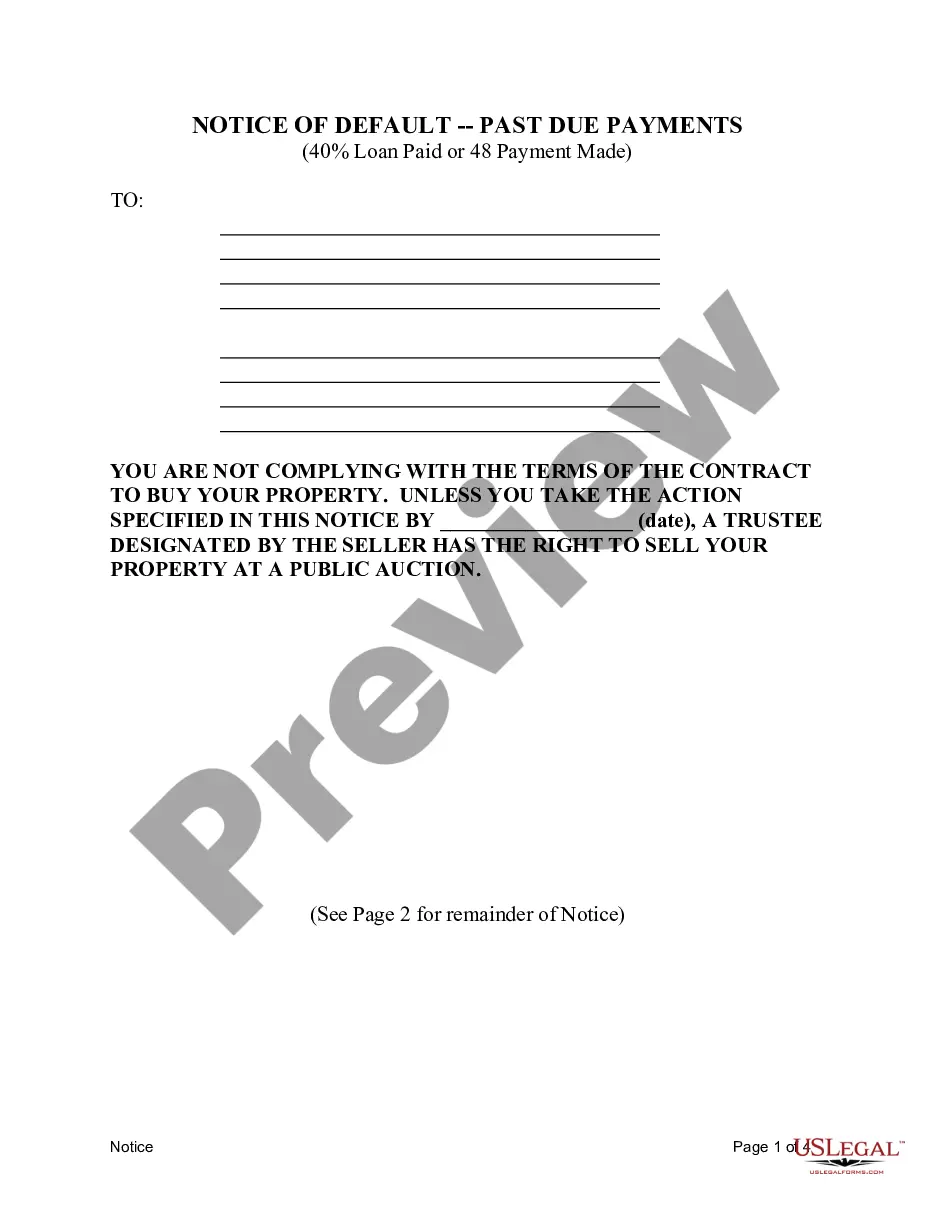
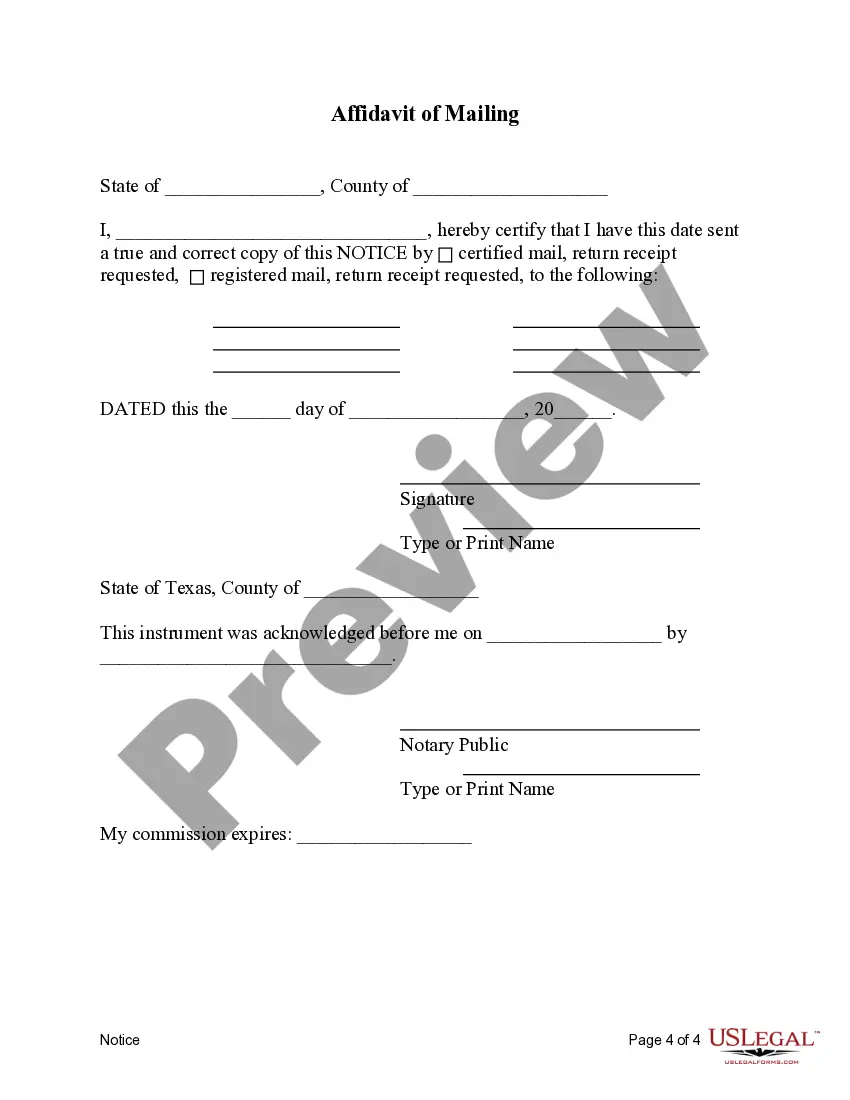
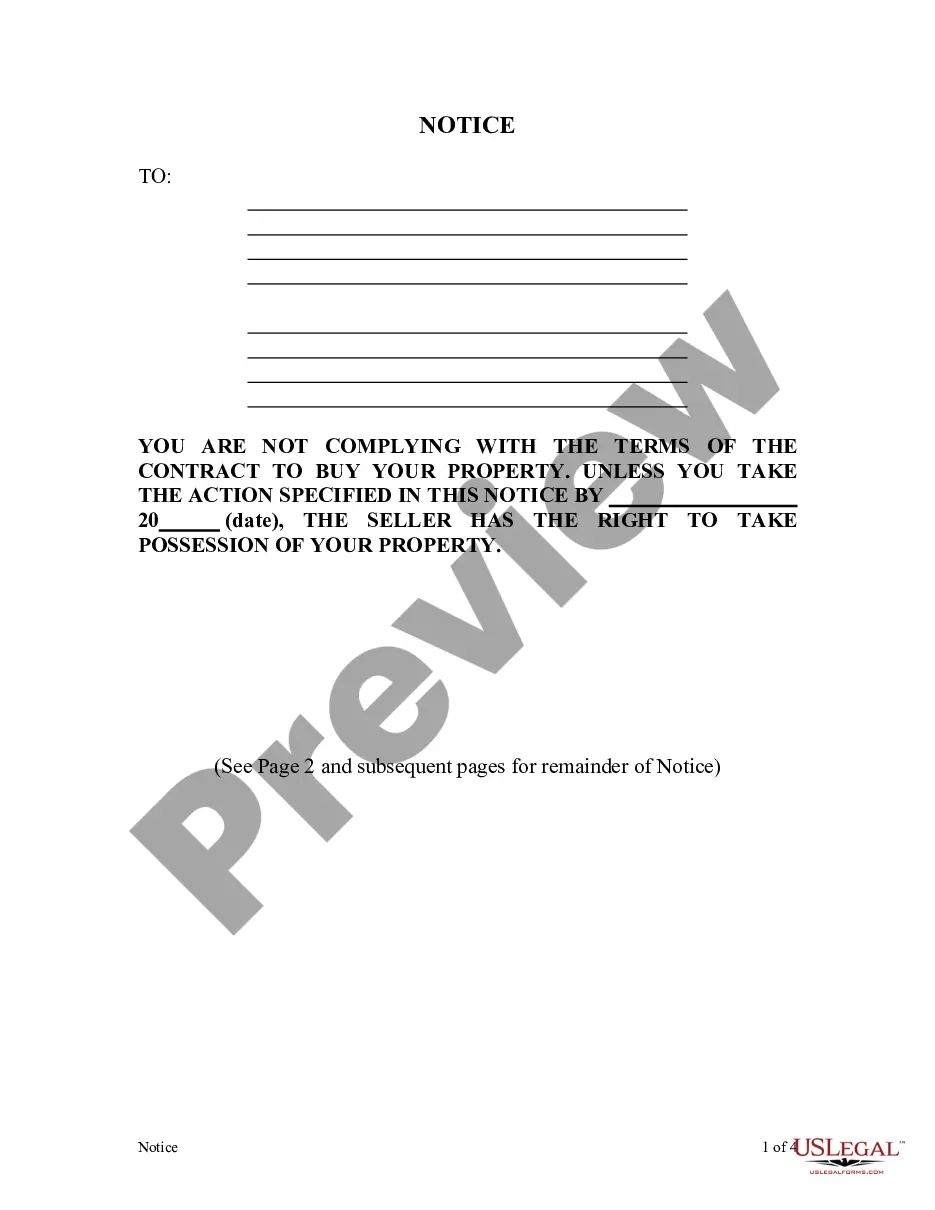
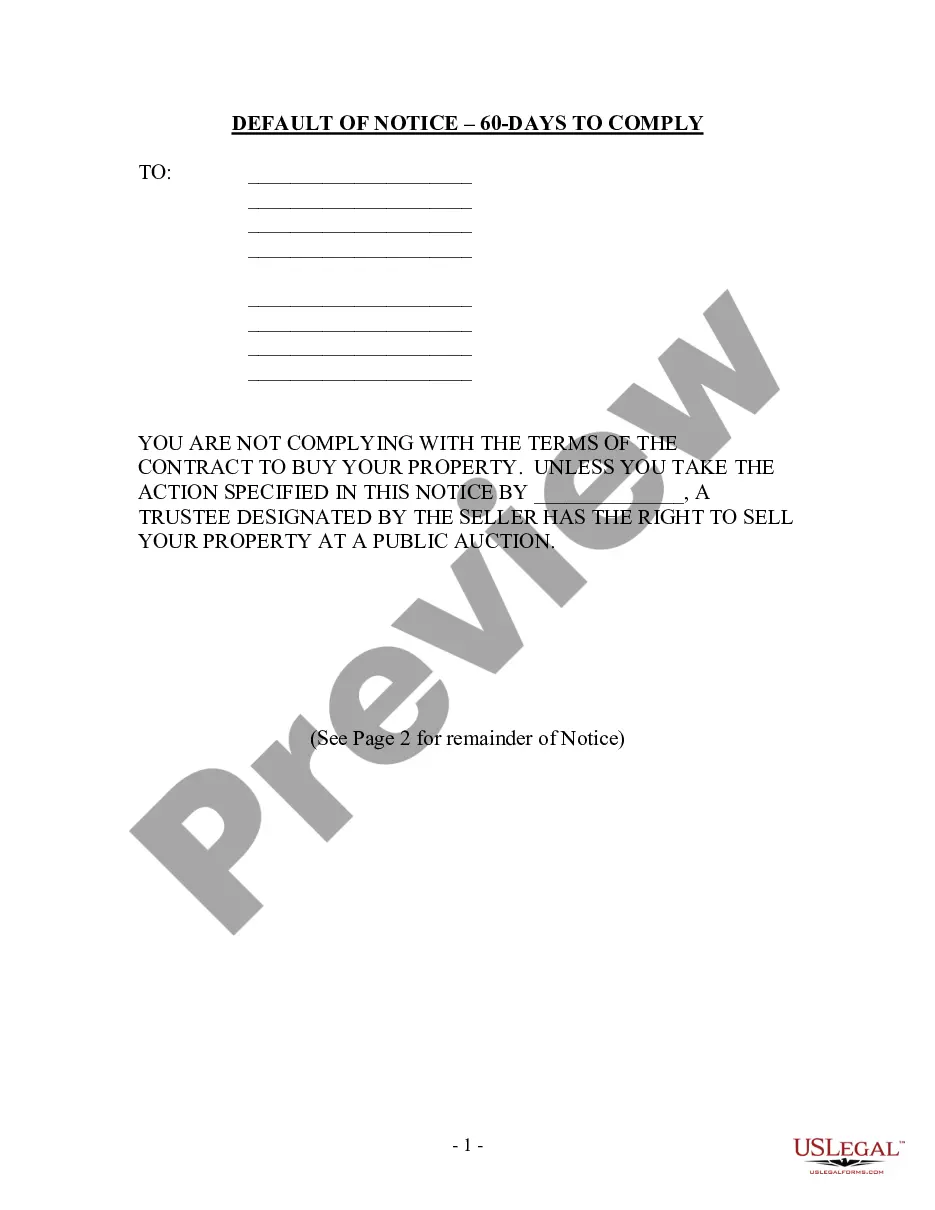
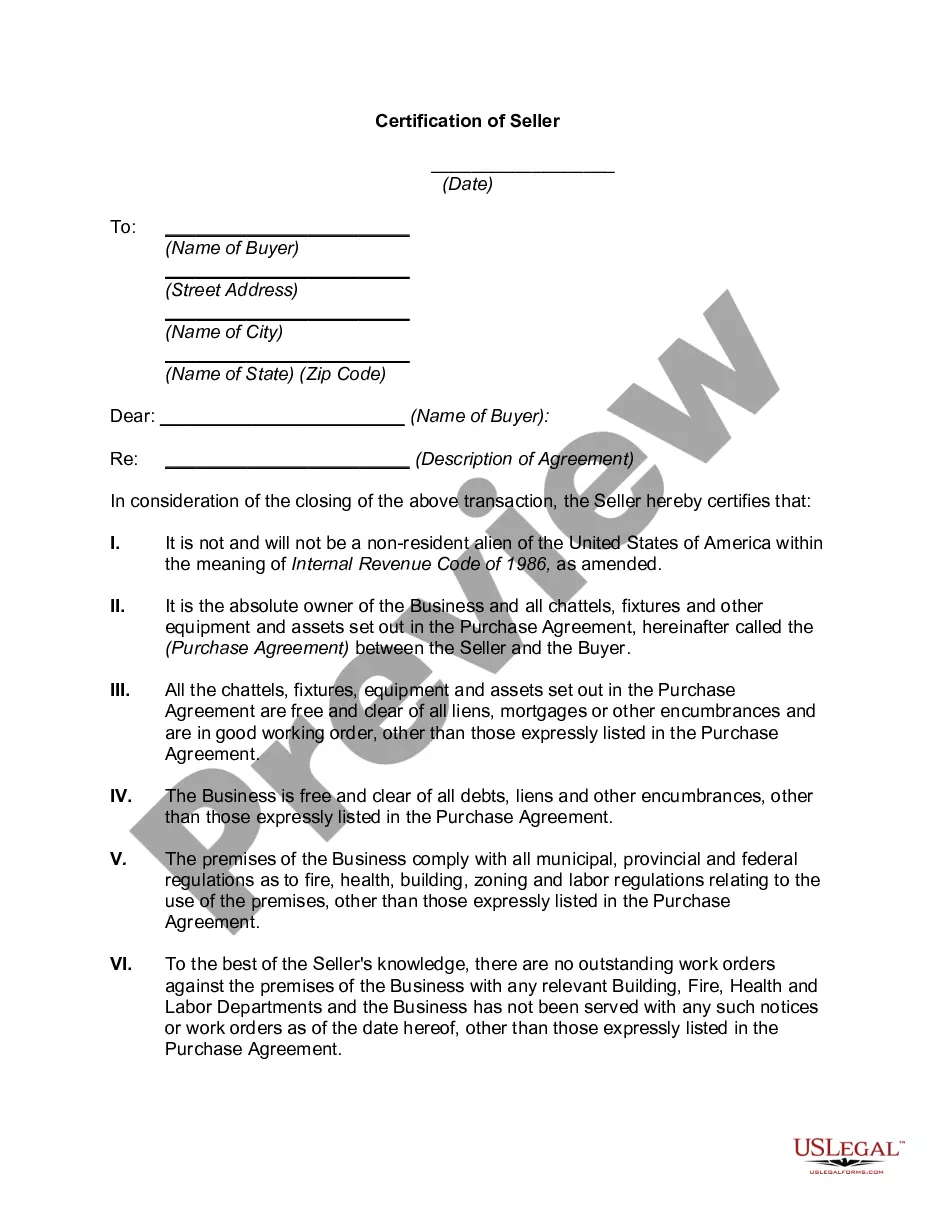
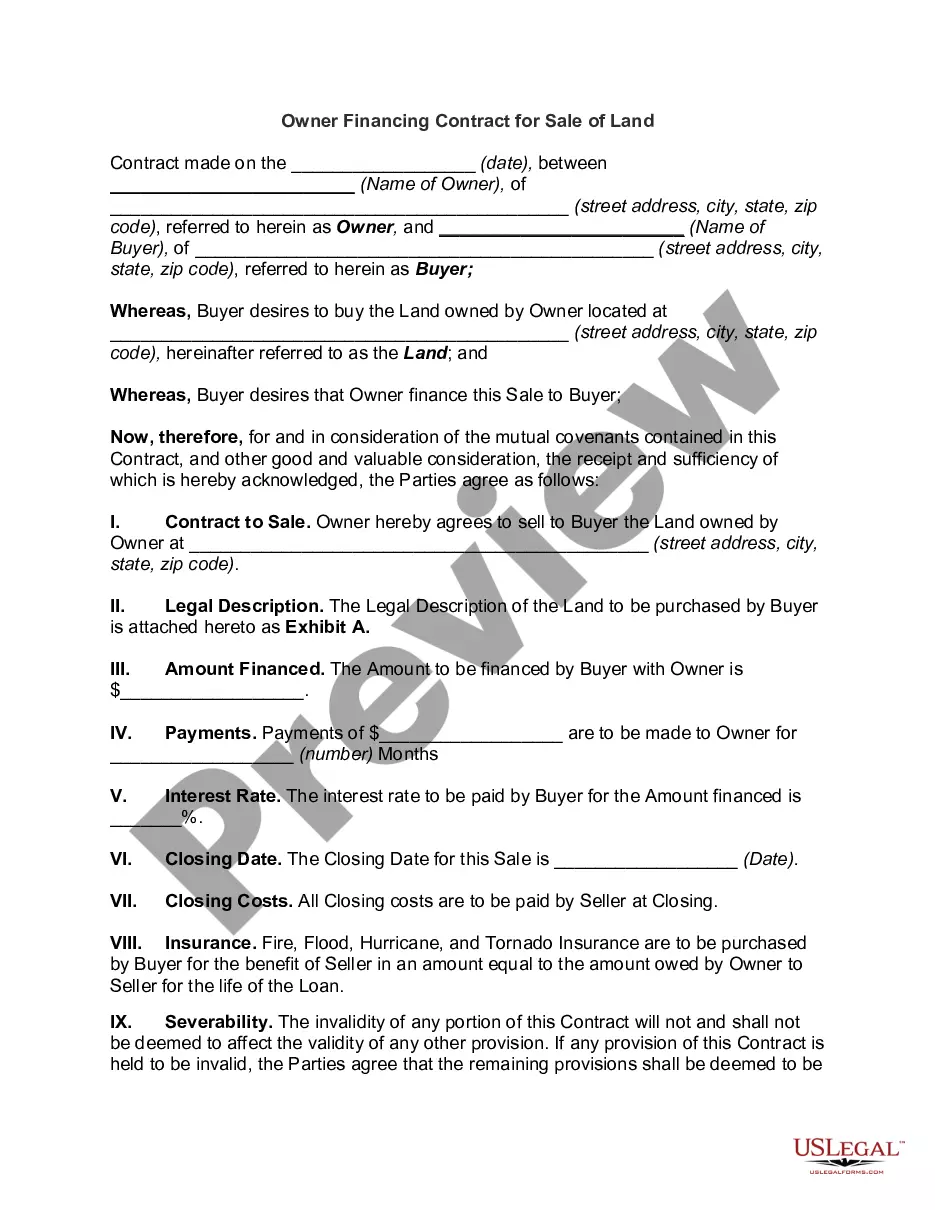
The Contract for Deed Notice of Default form is a legal document used in Texas when a buyer has paid at least 40 percent of the loan amount or has made a total of 48 payments. This form serves to notify the buyer of their default under the terms of the contract and is an essential step in the legal process concerning a Contract for Deed. Unlike other notice forms, this one specifically addresses scenarios based on these payment benchmarks, ensuring compliance with Texas law.
Key components of this form
- Notification details: Provides the purchaser with clear information about their default status.
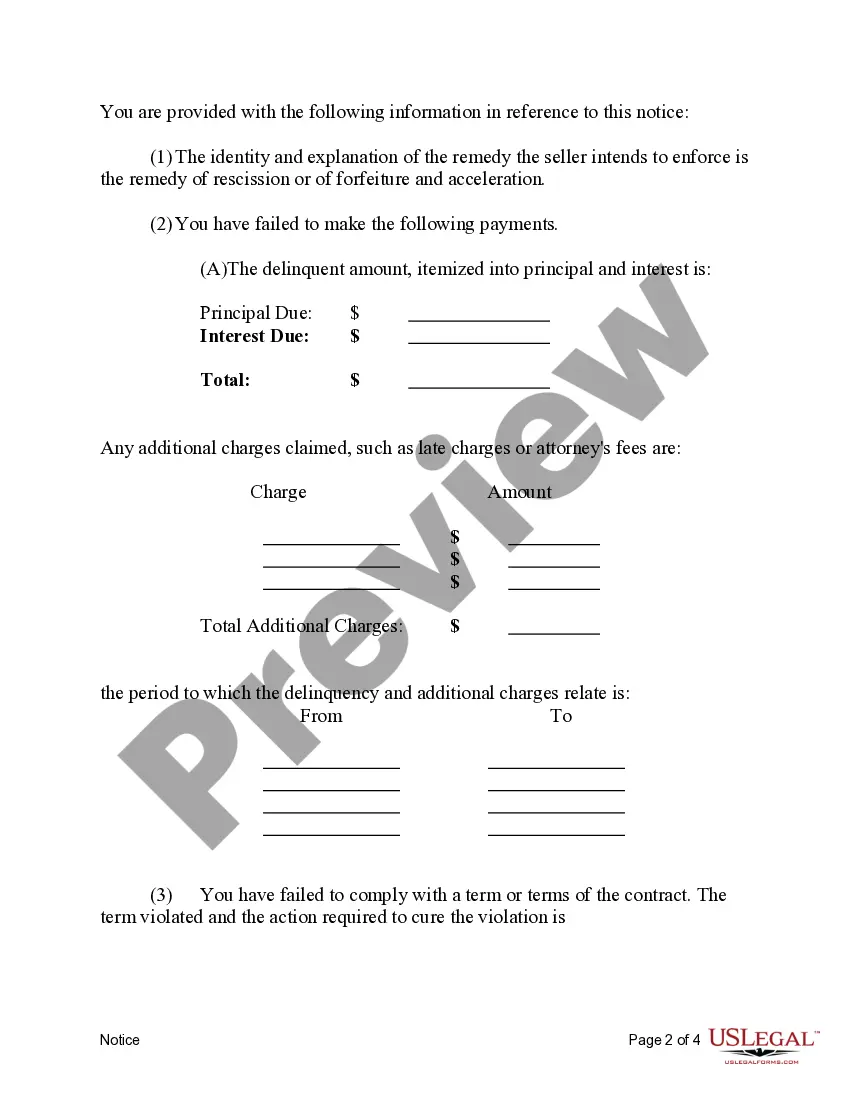
- Payment verification: Confirms the total payments made and percentage of loan paid to date.
- Legal references: Includes necessary citations to Texas law applicable to Contract for Deed transactions.
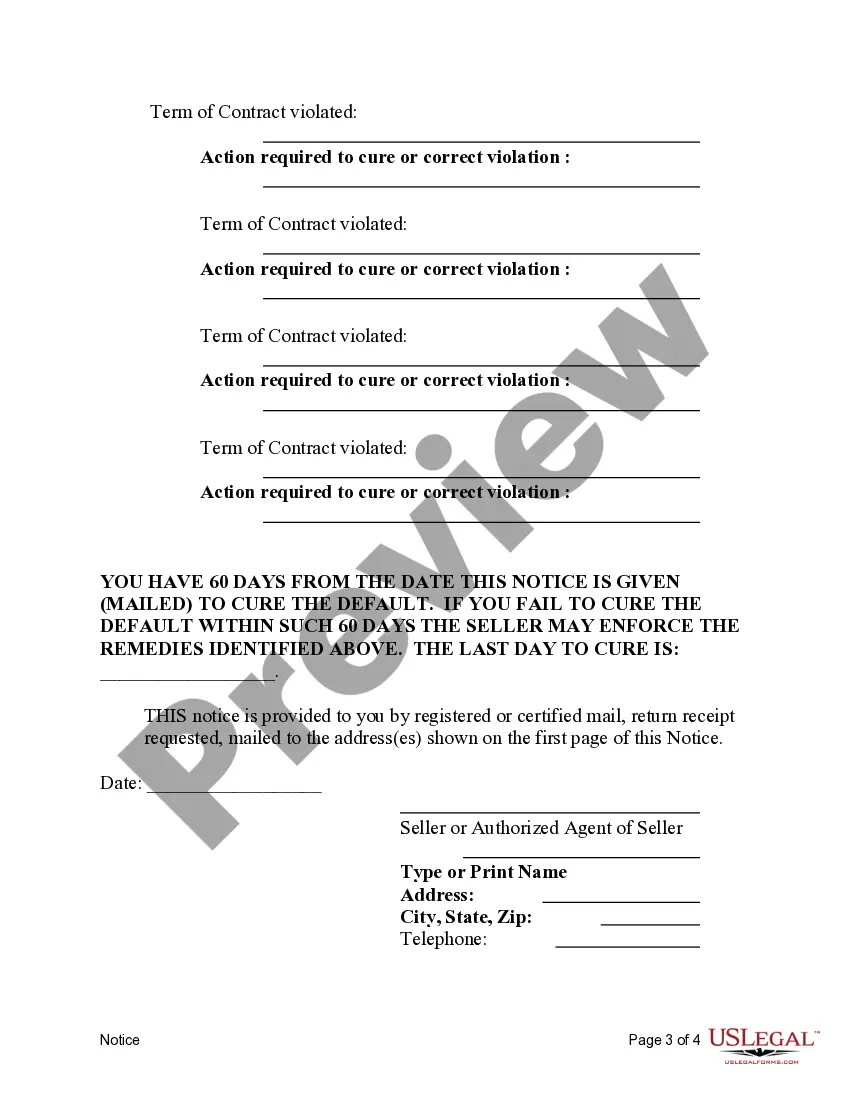
- Signature block: Contains space for the seller's signature to formalize the notice.
Situations where this form applies
This form is typically used when a buyer under a Contract for Deed has reached the payment threshold of either having paid 40 percent of the contract amount or having made 48 payments. It is essential for initiating the process of addressing any defaults in payment and serves as a formal warning to the buyer regarding their obligations.
Who this form is for
- Property sellers who have entered into a Contract for Deed with a buyer.
- Buyers who are nearing a default status under their Contract for Deed agreement.
- Real estate professionals involved in negotiating or managing Contracts for Deed.
Steps to complete this form
- Identify the parties involved: Include the names of both the seller and the buyer.
- Specify payment details: Enter the total payments made by the buyer to date and confirm the percentage of the loan paid.
- Include the property description: Clearly identify the property covered by the Contract for Deed.
- Provide the date of the notice: Enter the date on which the notice is being issued.
- Sign and date the form: The seller must sign and date the form to validate it.
Notarization guidance
This form does not typically require notarization unless specified by local law. It is important to check local regulations regarding notarization requirements before using this notice.
Get your form ready online
Our built-in tools help you complete, sign, share, and store your documents in one place.
Make edits, fill in missing information, and update formatting in US Legal Forms—just like you would in MS Word.
Download a copy, print it, send it by email, or mail it via USPS—whatever works best for your next step.
Sign and collect signatures with our SignNow integration. Send to multiple recipients, set reminders, and more. Go Premium to unlock E-Sign.
If this form requires notarization, complete it online through a secure video call—no need to meet a notary in person or wait for an appointment.
We protect your documents and personal data by following strict security and privacy standards.

Make edits, fill in missing information, and update formatting in US Legal Forms—just like you would in MS Word.

Download a copy, print it, send it by email, or mail it via USPS—whatever works best for your next step.

Sign and collect signatures with our SignNow integration. Send to multiple recipients, set reminders, and more. Go Premium to unlock E-Sign.

If this form requires notarization, complete it online through a secure video call—no need to meet a notary in person or wait for an appointment.

We protect your documents and personal data by following strict security and privacy standards.
Common mistakes to avoid
- Failing to verify the payment amounts before issuing the notice.
- Not properly identifying the property in question.
- Inadequate completion of signature and date sections.
Why complete this form online
- Convenience: Downloadable forms are accessible anytime, allowing for quick and easy completion.
- Editability: Users can fill in information directly in the template, ensuring accuracy and reducing errors.
- Reliability: Forms are drafted by licensed attorneys, ensuring compliance with current laws.
Legal use & context
- The form is enforceable under Texas law when properly completed and delivered.
- Failure to issue this notice properly may impact the seller's ability to proceed with further legal action.
Main things to remember
- The Contract for Deed Notice of Default is crucial for managing defaults in Texas contracts for deed.
- Timely issuance of this notice can protect the interests of sellers while informing buyers of their status.
- Ensure all parties are correctly identified and the form is completed accurately for legal efficacy.
Looking for another form?
Form popularity
FAQ
The buyer must record the contract for deed with the county recorder where the land is located within four months after the contract is signed. Contracts for deed must provide the legal name of the buyer and the buyer's address.
Generally, contract for deed sellers use IRS Form 6252 to report installment sales in the year in which they take place. You also use Form 6252 during each year you receive income from your contract for deed.
The buyer should record the contract for deed with the county recorder where the land is located and does so normally within four months after the contract is signed, though the time may vary depending on state law.
In the first instance, if your deed is not recorded, there is nothing in the public record to stop the seller from conveying the property to another person.The second situation could happen if your seller fails to pay his or her debts and the seller's creditors file liens or judgments against your property.
A contract for deed is a different form of seller-finance. In a contract for deed, the seller keeps the title to the property and the buyer does not receive a deed to the property.In Texas, contracts for deed on residential property are considered potentially predatory and subject to strict consumer-protection laws.
This means that if you default and can?t make your payments, you lose the property and all of the money you have already paid into it (often including repairs and improvements). Unlike a traditional mortgage, a defaulting buyer in a contact for deed may only have 30-60 days to cure the default or move out.
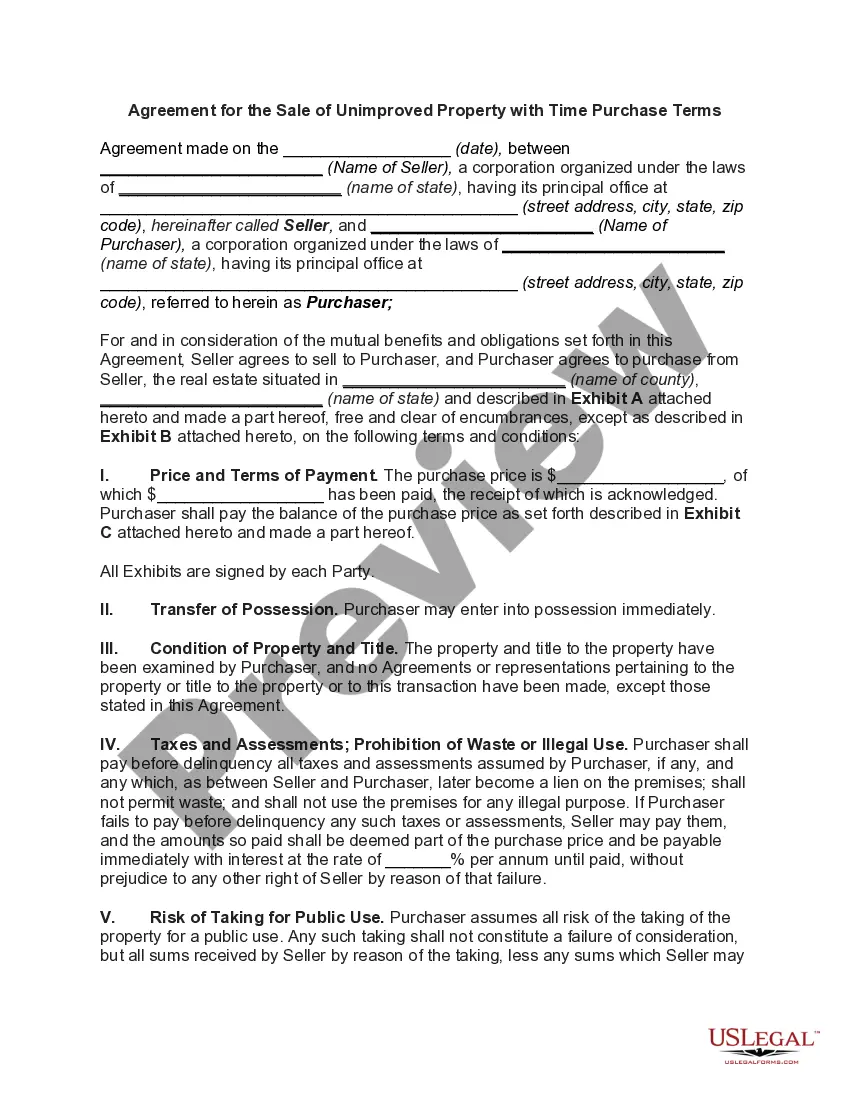
Purchase price. Down payment. Interest rate. Number of monthly installments. Responsibilities of the buyer and seller. Legal remedies for the seller if the buyer does not make payments.