Texas Notice Regarding Lien or Encumbrance
Understanding this form
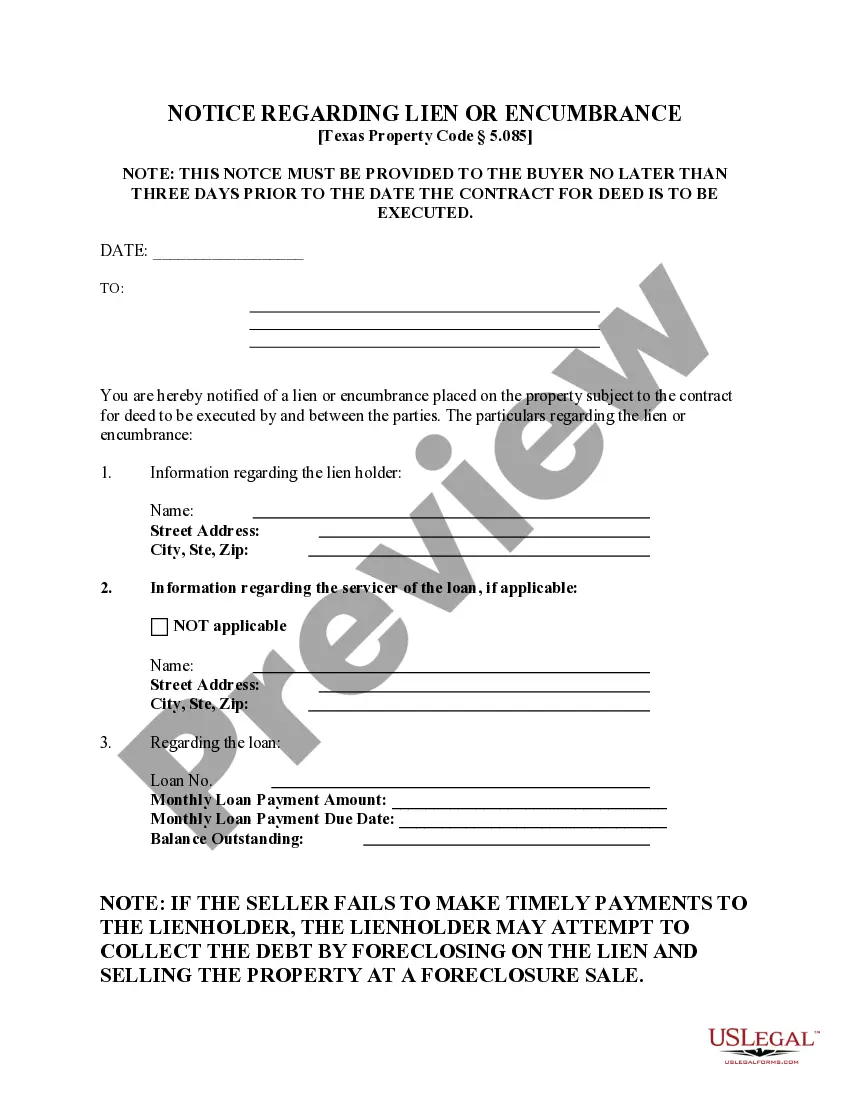
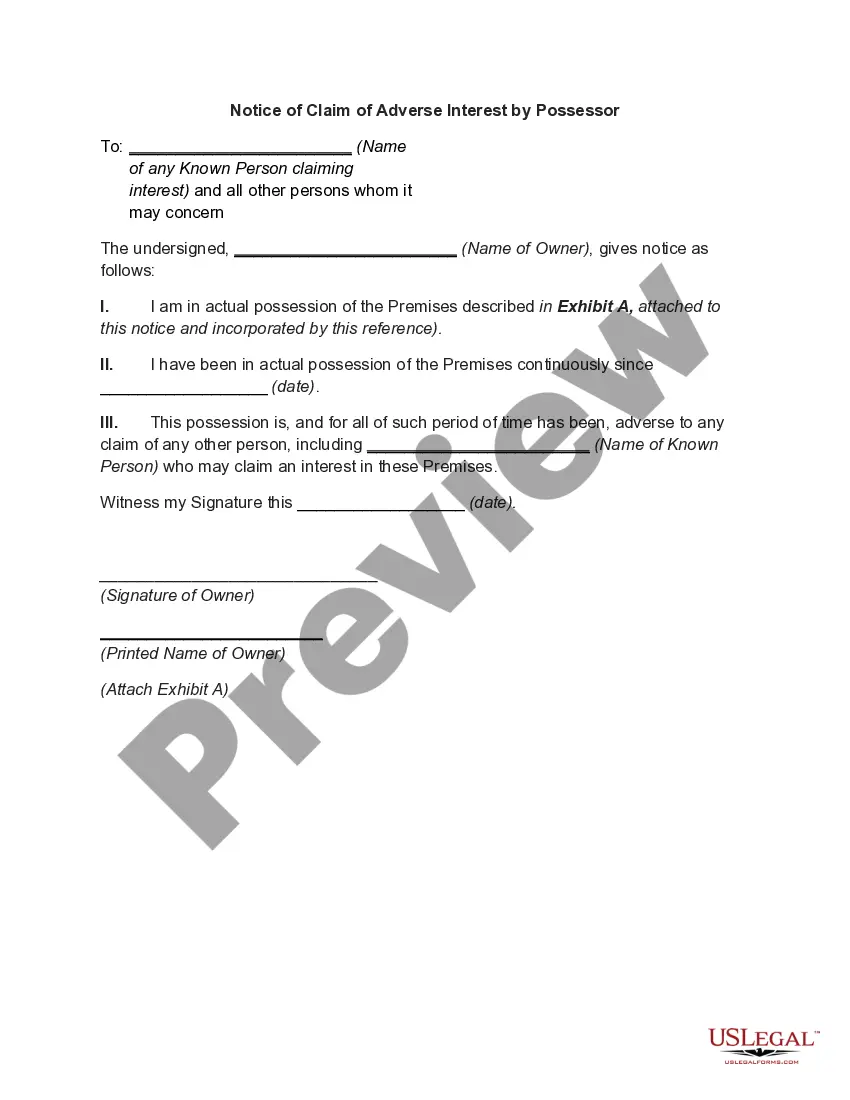
The Notice Regarding Lien or Encumbrance is a legal document used in Texas that informs the Buyer about any liens or encumbrances on a property before entering into a Contract for Deed. This form is essential for ensuring transparency between the Buyer and Seller and is specifically designed to comply with Texas law.
Form components explained
- Date of notice delivery to the Buyer.
- Identification of the parties involved in the transaction.
- Description of the property related to the Contract for Deed.
- Details of any lien or encumbrance on the property.
- Signature line for the Seller to confirm delivery of the notice.
Common use cases
This form should be used when you are selling property through a Contract for Deed in Texas and need to provide official notice to the Buyer about any existing liens or encumbrances. It must be delivered to the Buyer no later than three days before the contract is executed, ensuring compliance with Texas Property Code 5.085.
Who needs this form
- Property Sellers who are entering into a Contract for Deed.
- Real estate agents involved in the sale of properties with liens or encumbrances.
- Buyers who need to be informed about any liabilities on the property before agreeing to a contract.
How to prepare this document
- Determine the date when the notice will be delivered to the Buyer.
- Identify all parties involved in the transaction, including the Seller and Buyer.
- Clearly describe the property associated with the Contract for Deed.
- List and explain any liens or encumbrances affecting the property.
- Have the Seller sign and date the notice after delivery to the Buyer.
Does this document require notarization?
This form does not typically require notarization unless specified by local law.
Get your form ready online
Our built-in tools help you complete, sign, share, and store your documents in one place.
Make edits, fill in missing information, and update formatting in US Legal Forms—just like you would in MS Word.
Download a copy, print it, send it by email, or mail it via USPS—whatever works best for your next step.
Sign and collect signatures with our SignNow integration. Send to multiple recipients, set reminders, and more. Go Premium to unlock E-Sign.
If this form requires notarization, complete it online through a secure video call—no need to meet a notary in person or wait for an appointment.
We protect your documents and personal data by following strict security and privacy standards.

Make edits, fill in missing information, and update formatting in US Legal Forms—just like you would in MS Word.

Download a copy, print it, send it by email, or mail it via USPS—whatever works best for your next step.

Sign and collect signatures with our SignNow integration. Send to multiple recipients, set reminders, and more. Go Premium to unlock E-Sign.

If this form requires notarization, complete it online through a secure video call—no need to meet a notary in person or wait for an appointment.

We protect your documents and personal data by following strict security and privacy standards.
Common mistakes
- Failing to deliver the notice within the required three-day timeframe.
- Not including all necessary details about liens and encumbrances.
- Omitting signatures or dates, rendering the notice invalid.
Benefits of using this form online
- Immediate access to a legally compliant template drafted by licensed attorneys.
- Ability to customize the form to fit specific transaction details easily.
- Convenience of downloading and printing the form at your convenience.
- This notice serves to provide transparency in the property transaction process.
- Non-compliance with the notice requirements can lead to legal challenges and disputes.
What to keep in mind
- The Notice Regarding Lien or Encumbrance is crucial for transparency in property transactions in Texas.
- It must be delivered to the Buyer at least three days prior to executing a Contract for Deed.
- Ensure that all relevant details are included and the form is completed correctly to avoid common mistakes.
Looking for another form?
Form popularity
FAQ
Who you are. The services or materials you provided. The last date you provided the services or materials. How much payment should be. The date on which you will file a lien if you do not receive payment. How the debtor should pay.
In Texas, the notice of intent to lien must be sent by USPS via Return Receipt Requested (RRR), which will provide a receipt for your mailing (keep the receipt for your records). The notice must go to both the owner of the property and the general contractor.
Fill out the appropriate mechanics lien form. (Lien form for Original Contractors Lien form for Subcontractors & Suppliers) Deliver your lien form to the county recorder office. Serve your lien on the property owner.
A suit to foreclose a lien against residential property must be brought within one year after the last day the claimant could have filed a lien affidavit under Texas Property Code §53.052 or within one year after completion, termination, or abandonment of the work under the original contract under which the lien is
To check department records for tax liens, you may view homeownership records online or call our office at 1-800-500-7074, ext. 64471. Please be prepared to provide the complete serial number and HUD Label or Texas Seal number of the home.
Pay off your debt. Fill out a release-of-lien form and have the lien holder sign it. Run out the statute of limitations. Get a court order. Make a claim with your title insurance company. Learn more:
An estate tax lien is created when any US resident dies.This means that the person in possession of the property is liable for the estate tax lien even upon the death of the original property owner. The lifetime of an estate tax lien is 10 years.
The property in a deceased person's estate may be subject to liens when that person's creditors successfully sue the estate for payment. Once the probate court settles an estate's creditor claims, any property going to inheritors is released, sometimes with liens attached.
A property lien is a legal claim to specific assets that have been granted by the courts. A creditor must file and receive approval for a property lien through a county records office or state agency. Each jurisdiction has its own rules and regulations governing property liens.