Informed Consent for Mental Health Treatment with Terms of Service
Understanding this form
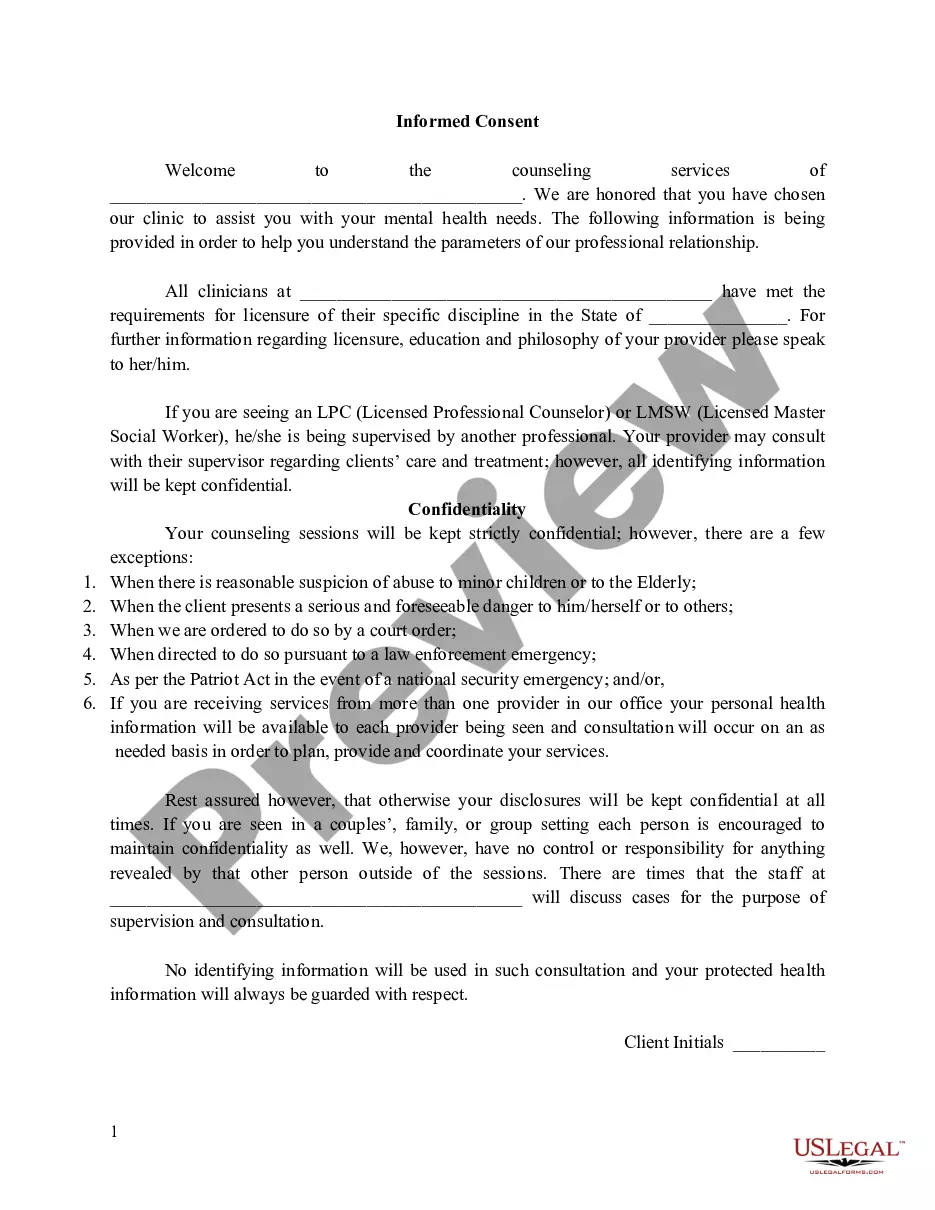
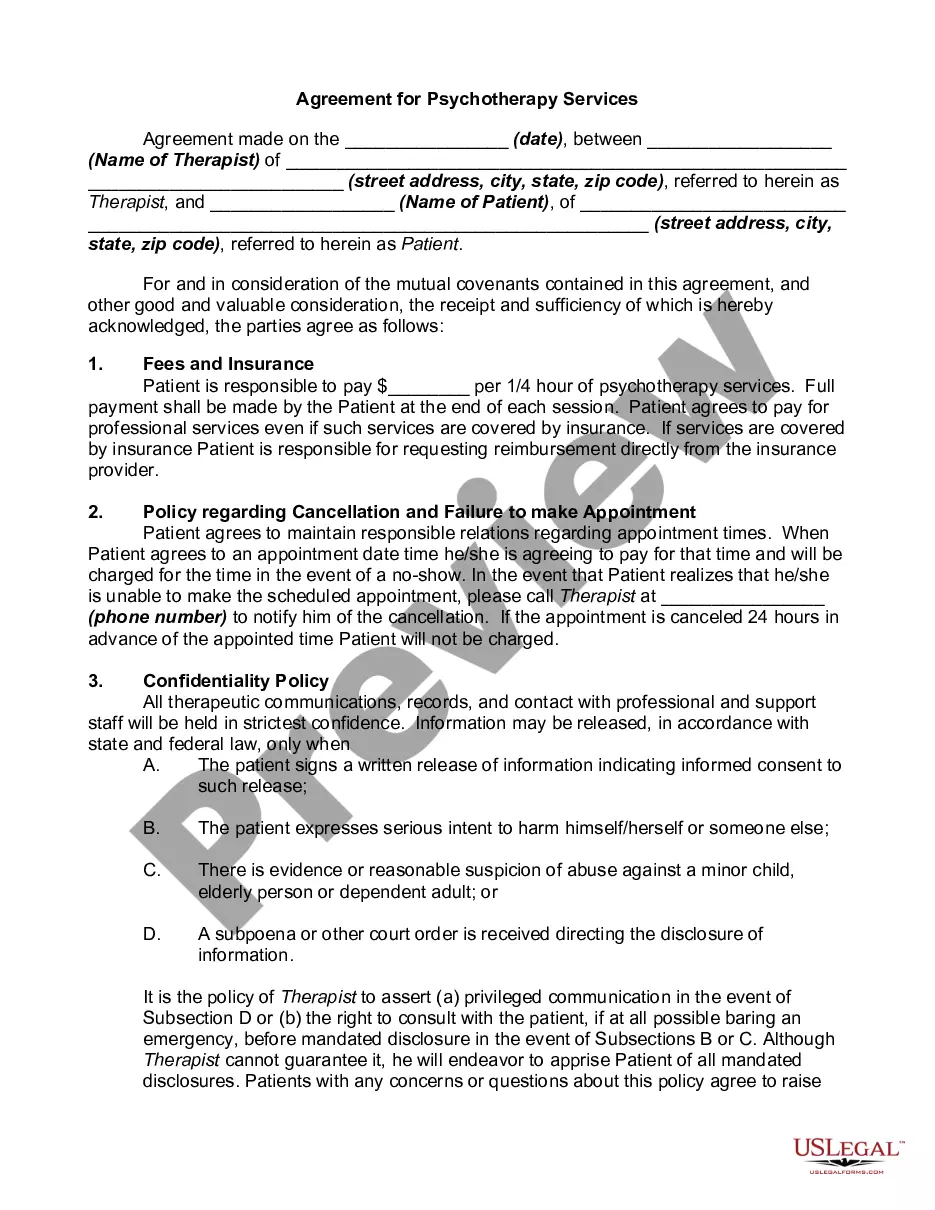
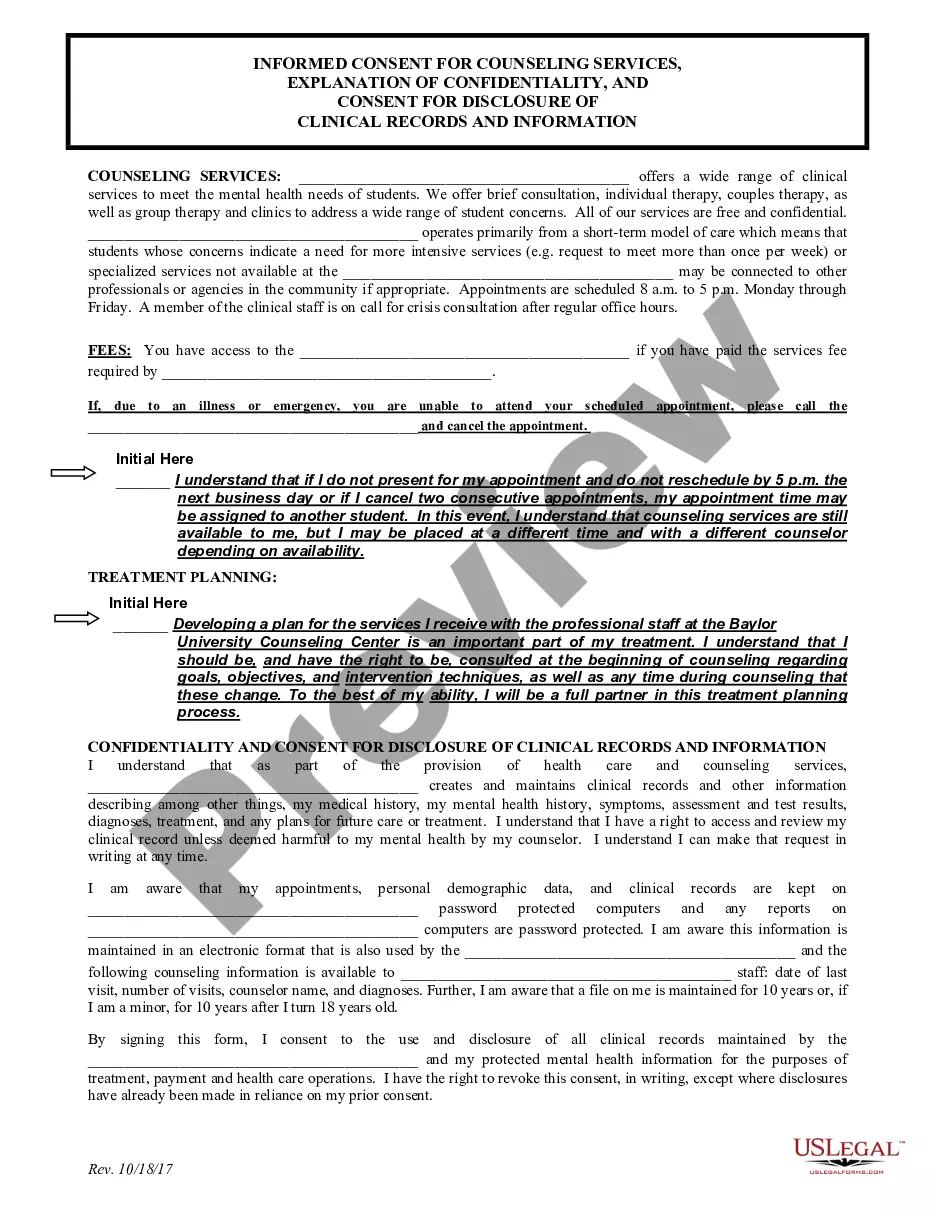
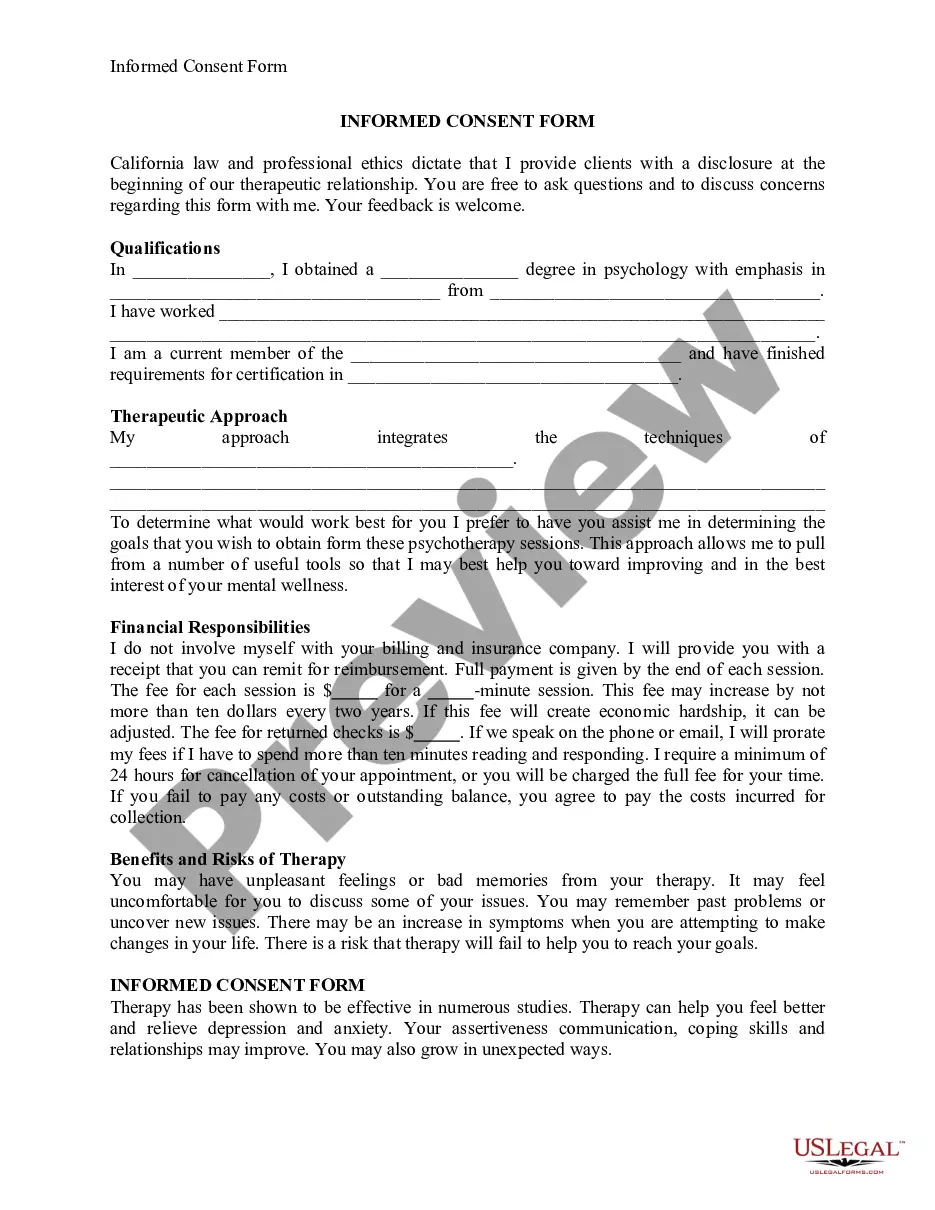
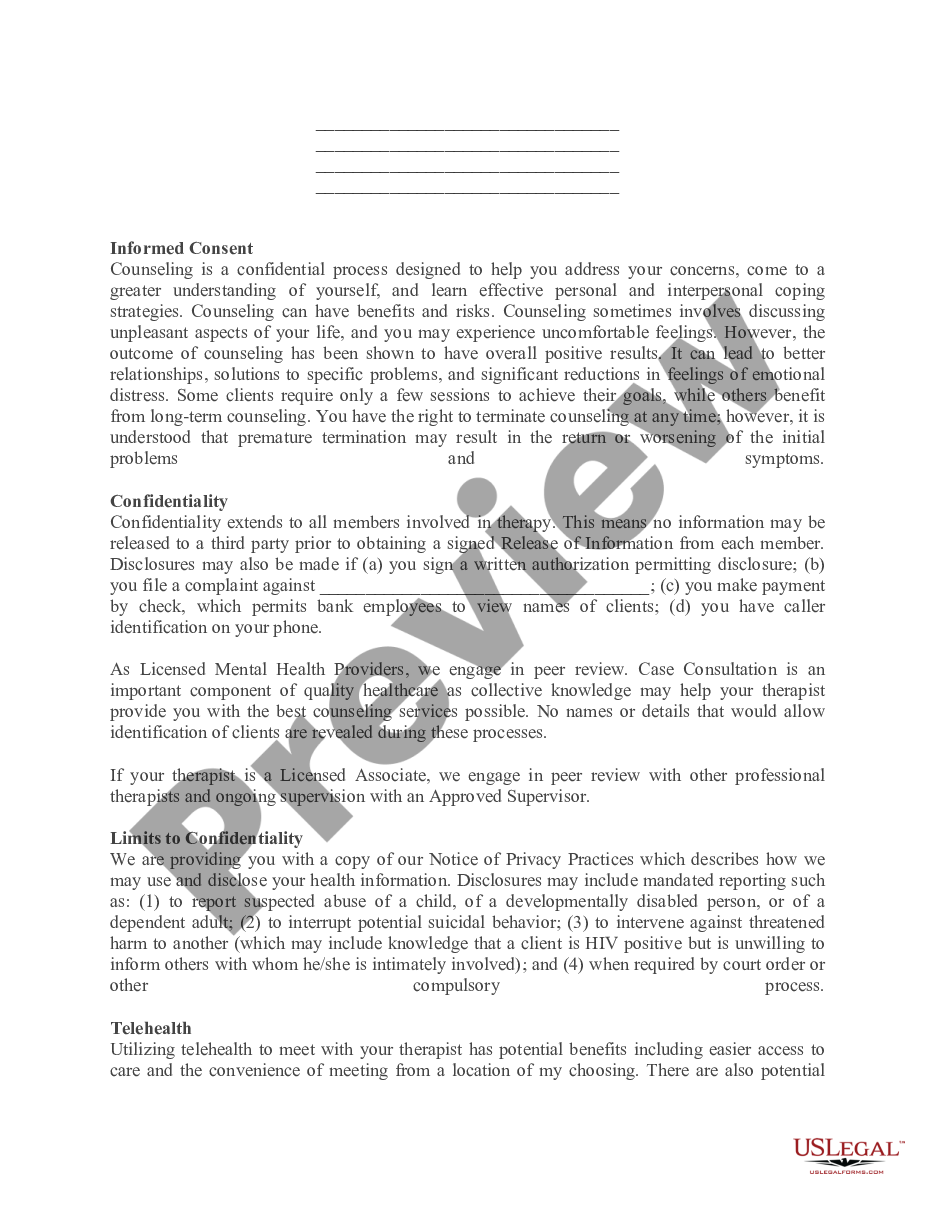
The Informed Consent for Mental Health Treatment with Terms of Service is a critical document that outlines your rights and responsibilities as a client receiving mental health services. This form ensures that you understand the therapeutic process, including confidentiality agreements and the goals of treatment. It is designed to protect both the client and the provider, clarifying the professional nature of the counseling relationship, and ensuring informed consent prior to beginning treatment.
Main sections of this form
- Introduction: Welcomes clients and explains the purpose of the document.
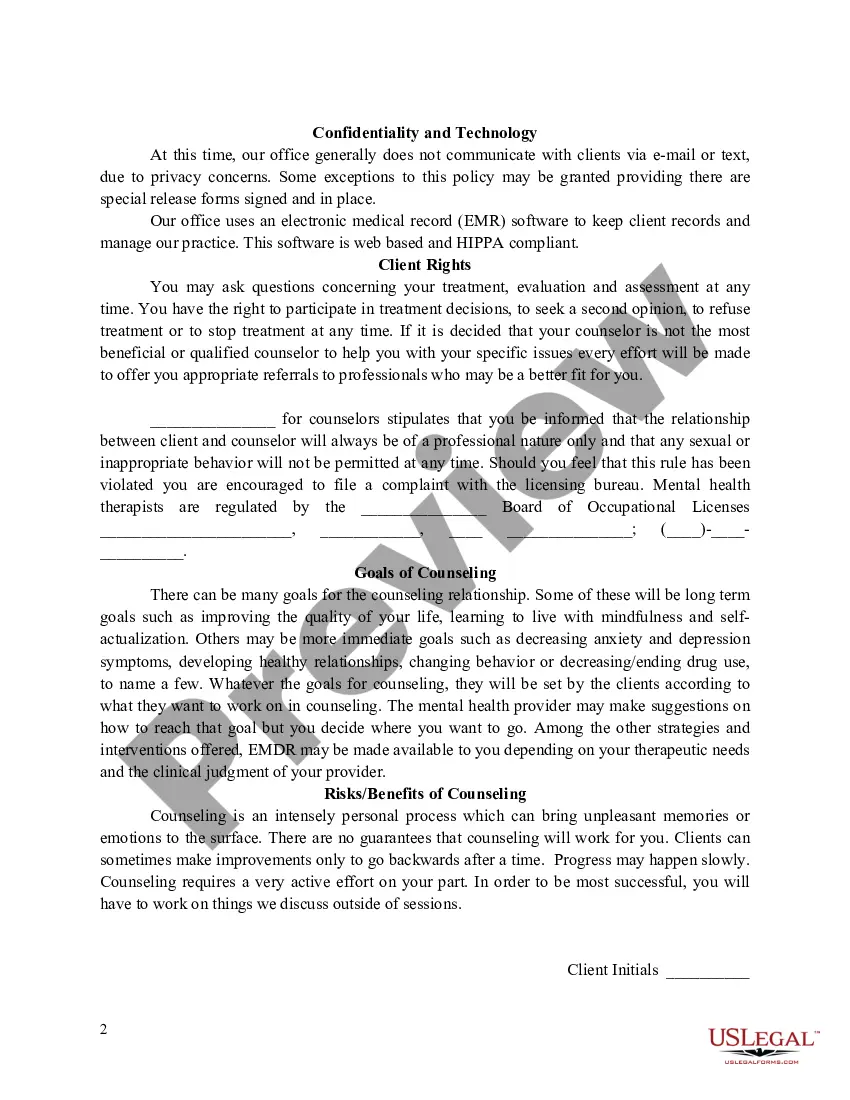
- Confidentiality: Details confidentiality practices and exceptions.
- Client Rights: Outlines client rights and the nature of the professional relationship.
- Goals of Counseling: Discusses potential goals for treatment and how they are determined.
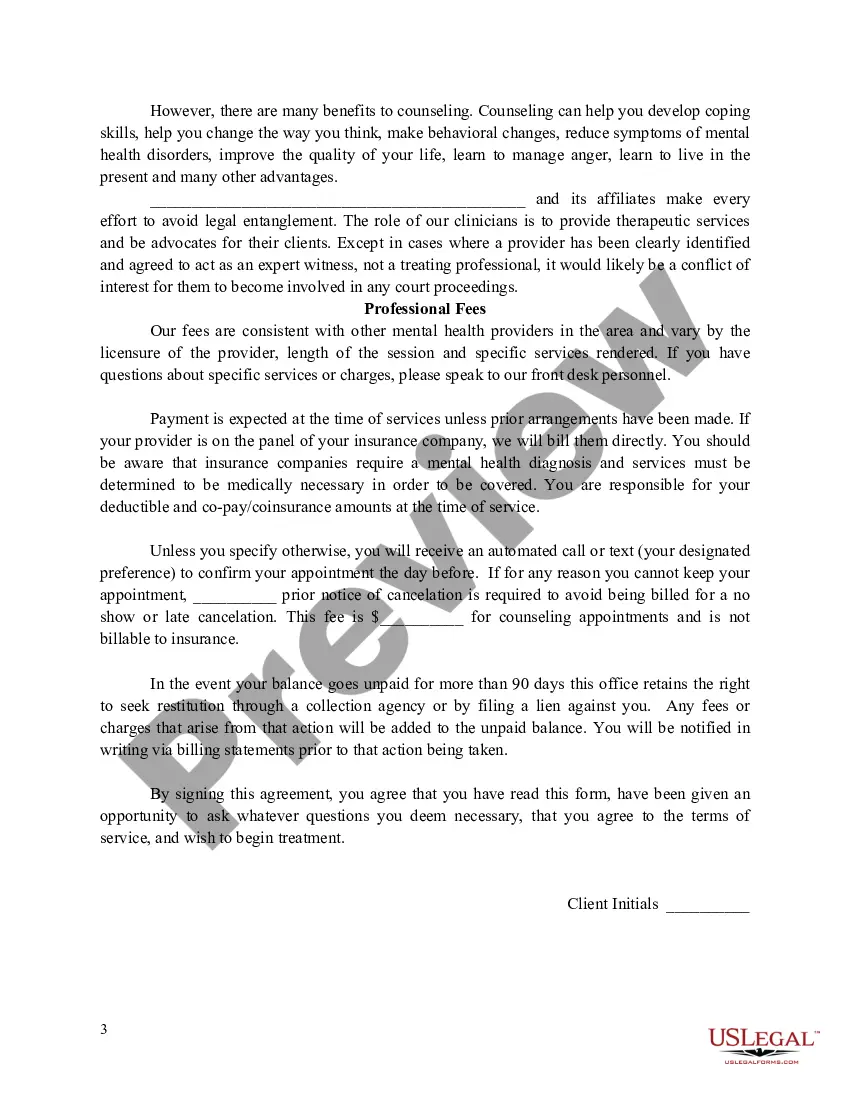
- Risks and Benefits: Explains the personal nature of counseling and potential benefits.
- Professional Fees: Provides information on fees, payment expectations, and billing procedures.
Common use cases
This form should be used when a client is seeking mental health treatment at a counseling clinic. It is essential for ensuring understanding between the client and the clinician about the treatment process, confidentiality, and fees. It is particularly important for establishing a safe and trustworthy therapeutic environment.
Who should use this form
- Individuals seeking mental health therapy or counseling.
- Parents or guardians seeking treatment for minors.
- Those wishing to understand their rights and responsibilities in a therapeutic relationship.
How to complete this form
- Identify the counseling provider by filling in the clinic name.
- Read through the confidentiality agreements and client rights sections carefully.
- Provide the requested personal information as specified in the form.
- Review the goals of counseling and discuss any specific objectives you want to address.
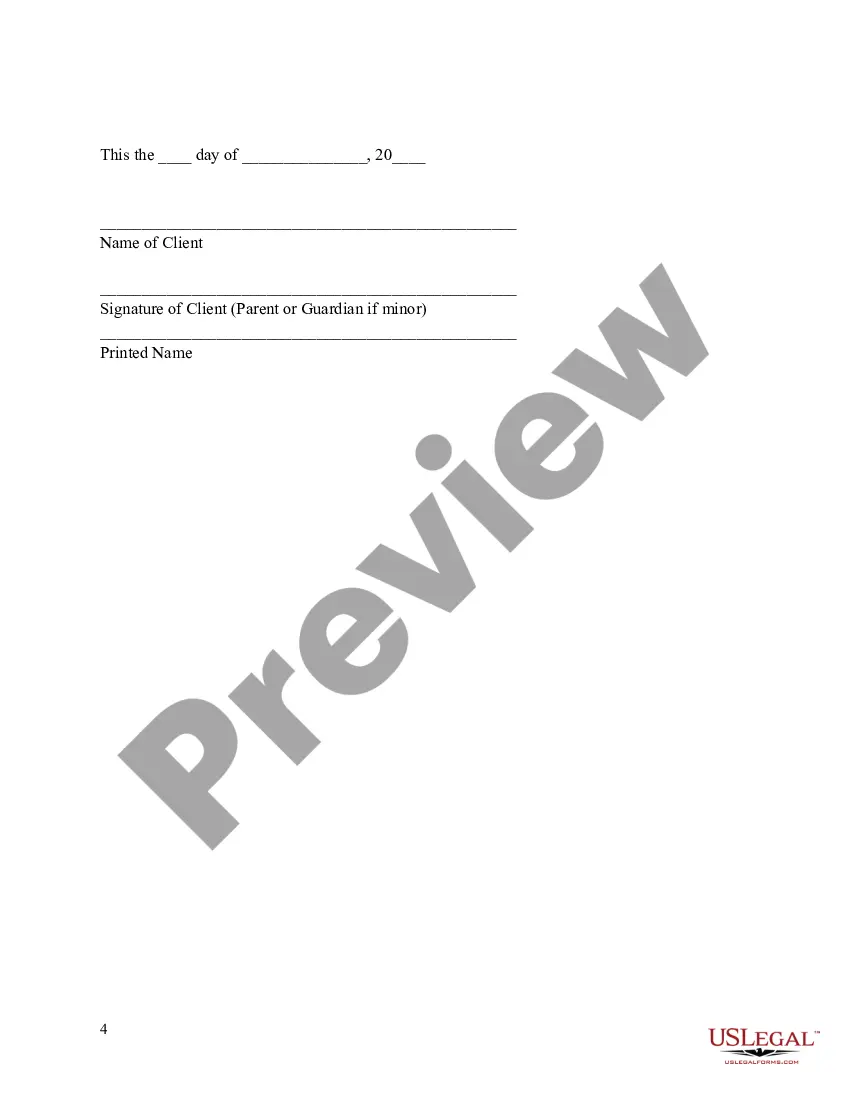
- Sign and date the form to indicate your understanding and agreement to the terms presented.
Notarization guidance
This form does not typically require notarization unless specified by local law. Ensure you check your state's requirements to confirm if notarization is necessary.
Get your form ready online
Our built-in tools help you complete, sign, share, and store your documents in one place.
Make edits, fill in missing information, and update formatting in US Legal Forms—just like you would in MS Word.
Download a copy, print it, send it by email, or mail it via USPS—whatever works best for your next step.
Sign and collect signatures with our SignNow integration. Send to multiple recipients, set reminders, and more. Go Premium to unlock E-Sign.
If this form requires notarization, complete it online through a secure video call—no need to meet a notary in person or wait for an appointment.
We protect your documents and personal data by following strict security and privacy standards.

Make edits, fill in missing information, and update formatting in US Legal Forms—just like you would in MS Word.

Download a copy, print it, send it by email, or mail it via USPS—whatever works best for your next step.

Sign and collect signatures with our SignNow integration. Send to multiple recipients, set reminders, and more. Go Premium to unlock E-Sign.

If this form requires notarization, complete it online through a secure video call—no need to meet a notary in person or wait for an appointment.

We protect your documents and personal data by following strict security and privacy standards.
Common mistakes to avoid
- Failing to read the confidentiality section thoroughly before signing.
- Not asking questions about unclear sections before agreeing to treatment.
- Overlooking payment information and not understanding potential costs.
Advantages of online completion
- Convenience of accessing and completing the form from home.
- Editability allowing clients to customize the document based on their specific needs.
- Reliability of the form being crafted by licensed attorneys to meet legal standards.
Looking for another form?
Form popularity
FAQ
I have read and I understand the provided information and have had the opportunity to ask questions. I understand that my participation is voluntary and that I am free to withdraw at any time, without giving a reason and without cost. I understand that I will be given a copy of this consent form.
The underlying principle of consent isn't particularly complicated: Patients have a right to make an informed, voluntary decision about their care. That means they need to know the nature, risks, and benefits of their options ? which includes declining treatment.
Implied Consent. Participation in a certain situation is sometimes considered proof of consent.Explicit Consent.Active Consent.Passive Consent.Opt-Out Consent.
Types of consent include implied consent, express consent, informed consent and unanimous consent.
Informed consent is about giving a patient the special knowledge that makes him/her competent to take decisions in a more informed way. This would promote individual autonomy and freedom of choice. Informed consent has ethical, clinical and legal dimensions.
Obtaining informed consent in medicine is process that should include: (1) describing the proposed intervention, (2) emphasizing the patient's role in decision-making, (3) discussing alternatives to the proposed intervention, (4) discussing the risks of the proposed intervention and (5) eliciting the patient's
Three basic principles, among those generally accepted in our cultural tradition, are particularly relevant to the ethics of research involving human subjects: the principles of respect of persons, beneficence and justice.
Four core criteria must be met: the patient giving consent must have capacity ? the consent must be freely given ? the consent must be sufficiently specific to the procedure or treatment proposed ? the consent must be informed.