South Carolina MAIL FRAUD
Overview of this form
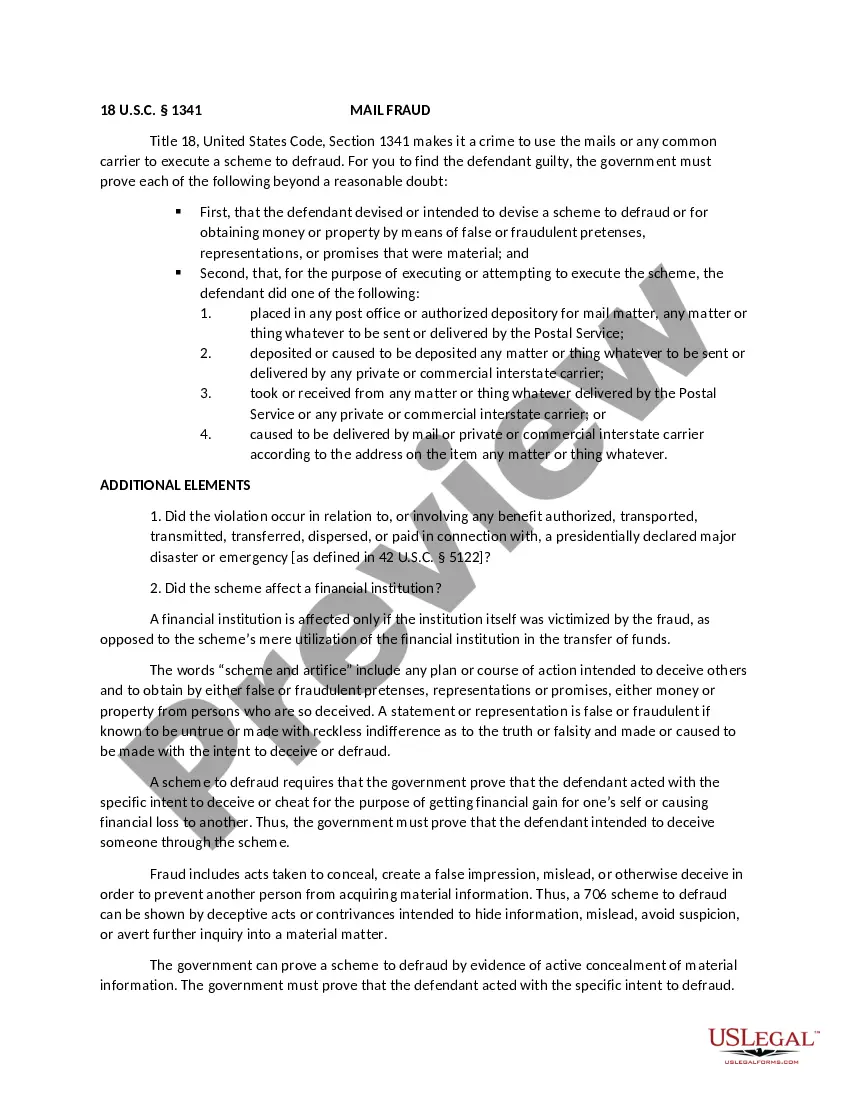
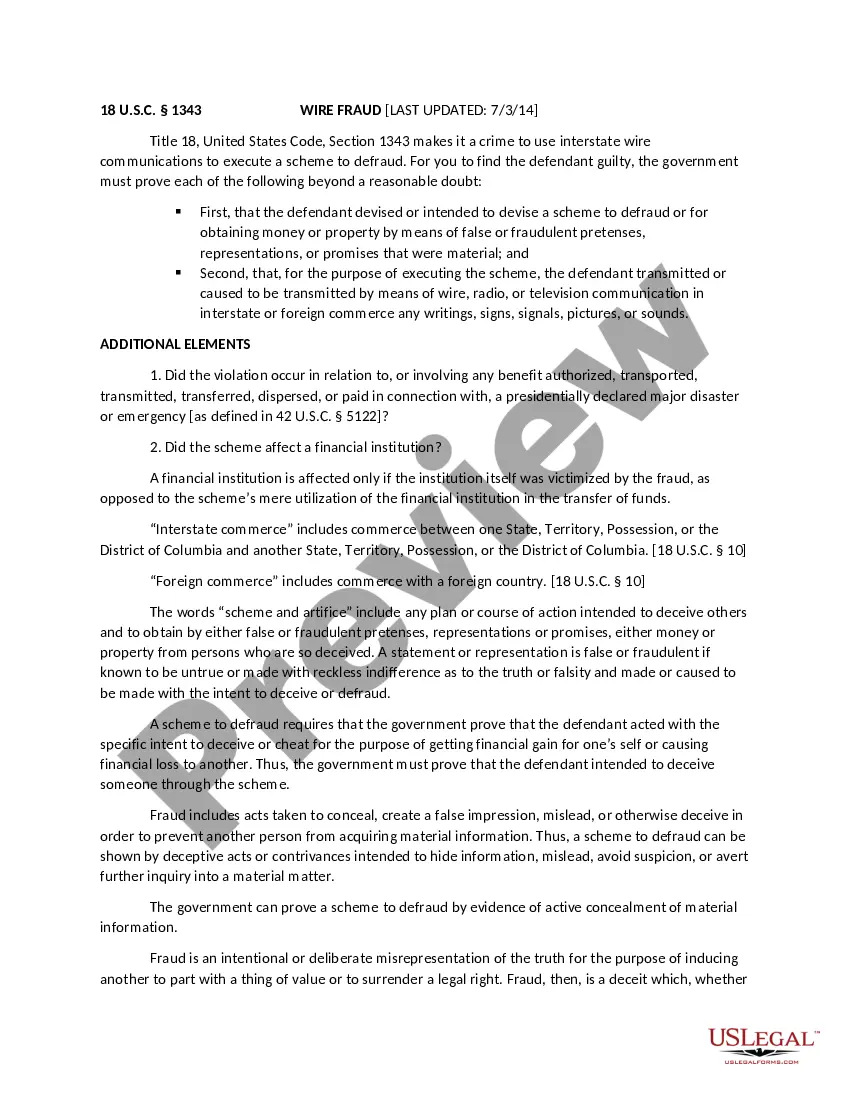
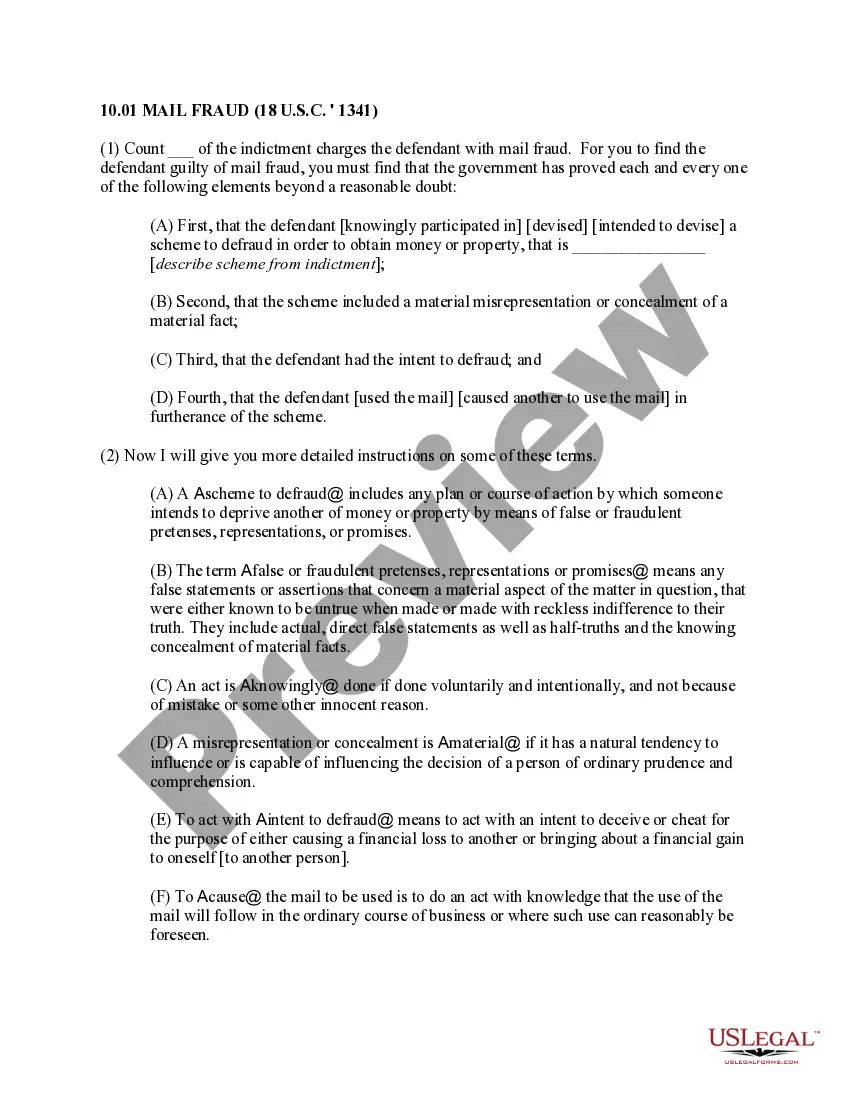
The Mail Fraud form outlines the legal instructions related to the crime of mail fraud under Title 18, United States Code, Section 1341. This form is utilized in federal court cases to provide a structured approach for juries to evaluate evidence of schemes aimed at defrauding others through mail or common carriers. Unlike other legal forms, this template specifically guides users on the criteria required to establish guilt or innocence in mail fraud cases, including necessary elements like intent and materiality.
Main sections of this form
- Description of the crime of mail fraud.
- Criteria for establishing the defendantâs guilt beyond a reasonable doubt.
- Explanation of the necessary elements, including the scheme to defraud and use of mails or carriers.
- Elements that pertain to financial institutions and disaster-relief contexts.
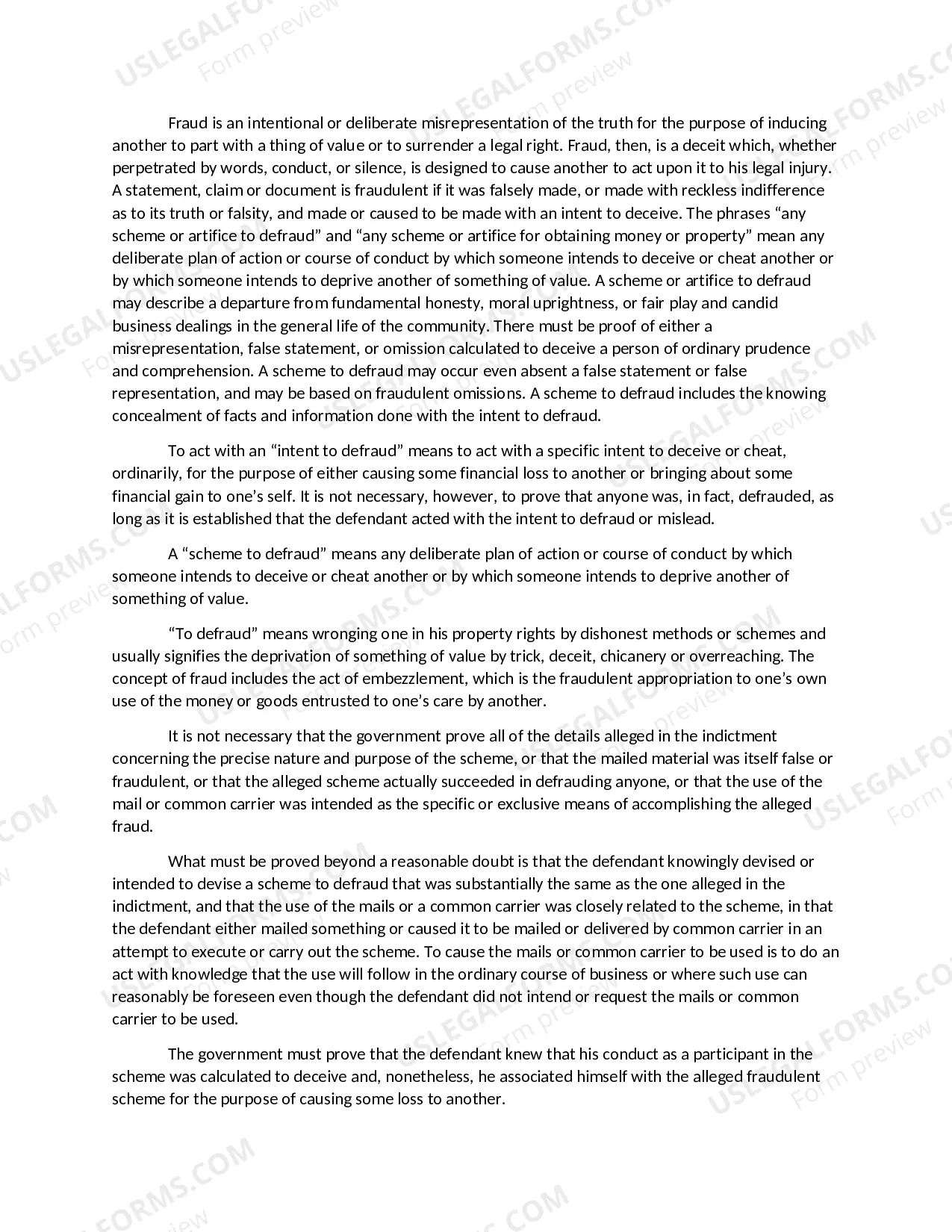
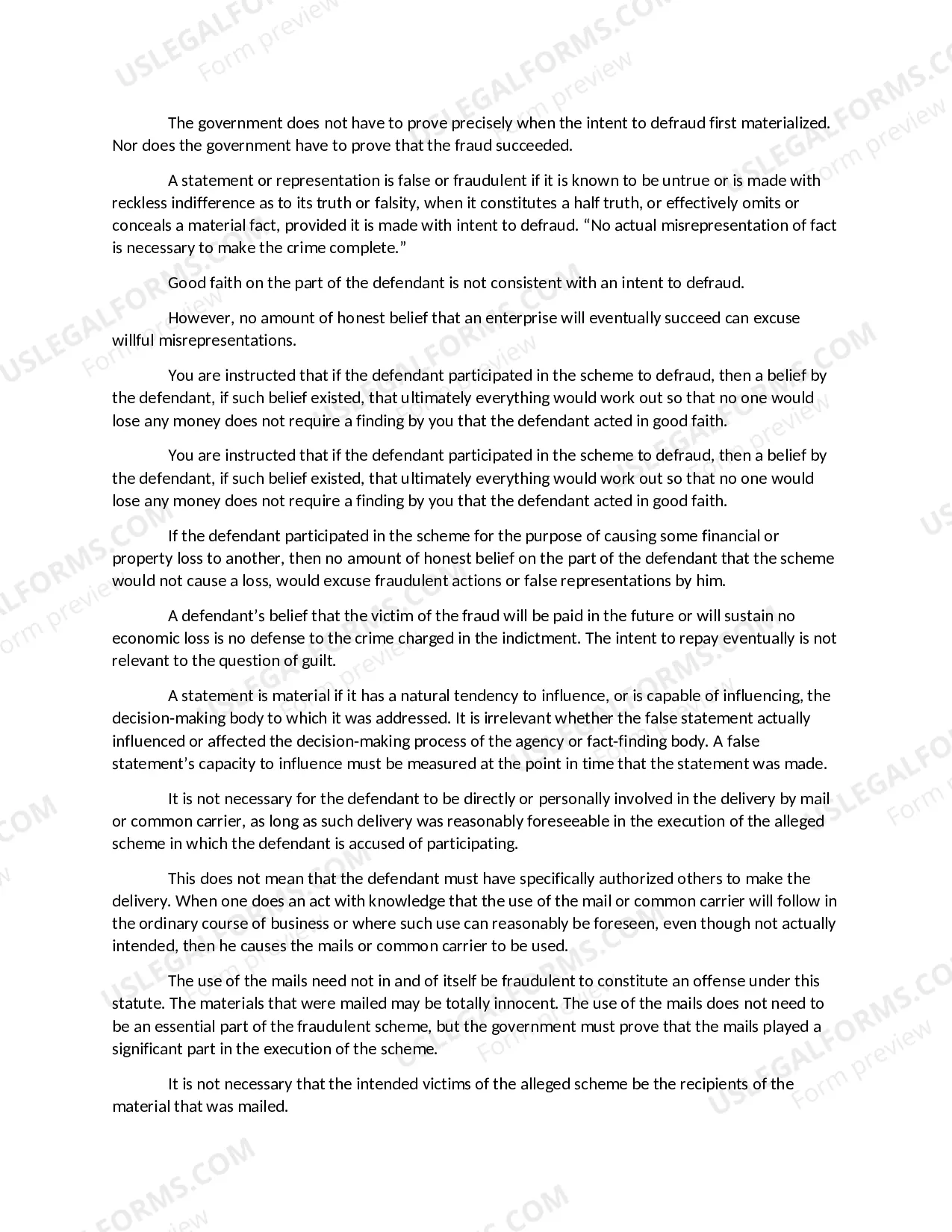
- Legal interpretations and requirements of intent to defraud.
- Demonstrations of fraud through false representations or omissions.
When to use this document
This form should be used when addressing cases involving allegations of mail fraud. It is applicable in situations where individuals or entities are accused of using the postal system or commercial carriers to execute fraudulent schemes that result in deception for financial gain. Scenarios might include fraudulent mailings for solicitation, schemes targeting financial institutions, or any circumstance where deceitful practices occurred via postal services.
Who should use this form
- Legal professionals representing clients in federal mail fraud cases.
- Defendants accused of mail fraud needing a structured definition of the charges against them.
- Jurors involved in federal cases who need to understand the criteria for evaluating evidence of mail fraud.
- Prosecutors preparing for mail fraud cases who require clarity on legal requirements.
Steps to complete this form
- Identify and understand the elements of the scheme to defraud as outlined in the form.
- Gather evidence related to the intent to deceive, including documentation and correspondence.
- Ensure that all aspects of use of postal services or common carriers are documented.
- Consider the presence of fraudulent misrepresentations or omissions within the context of the case.
- Review the criteria for establishing materiality and intent as provided in the instructions.
Is notarization required?
In most cases, this form does not require notarization. However, some jurisdictions or signing circumstances might. US Legal Forms offers online notarization powered by Notarize, accessible 24/7 for a quick, remote process.
Get your form ready online
Our built-in tools help you complete, sign, share, and store your documents in one place.
Make edits, fill in missing information, and update formatting in US Legal Forms—just like you would in MS Word.
Download a copy, print it, send it by email, or mail it via USPS—whatever works best for your next step.
Sign and collect signatures with our SignNow integration. Send to multiple recipients, set reminders, and more. Go Premium to unlock E-Sign.
If this form requires notarization, complete it online through a secure video call—no need to meet a notary in person or wait for an appointment.
We protect your documents and personal data by following strict security and privacy standards.

Make edits, fill in missing information, and update formatting in US Legal Forms—just like you would in MS Word.

Download a copy, print it, send it by email, or mail it via USPS—whatever works best for your next step.

Sign and collect signatures with our SignNow integration. Send to multiple recipients, set reminders, and more. Go Premium to unlock E-Sign.

If this form requires notarization, complete it online through a secure video call—no need to meet a notary in person or wait for an appointment.

We protect your documents and personal data by following strict security and privacy standards.
Common mistakes to avoid
- Failing to adequately prove the specific intent to defraud.
- Overlooking the requirement for materiality in the fraudulent scheme.
- Assuming that good faith can excuse participation in a fraudulent scheme.
- Neglecting to correlate the use of mail services with the fraudulent actions.
Benefits of completing this form online
- Convenient access to legal templates that are ready for download.
- Modifiable content allows users to tailor the form to their specific case needs.
- Reliability of professionally drafted documents ensures compliance with legal standards.
Legal use & context
- This form is a vital tool in presenting and evaluating mail fraud cases in federal court.
- Understanding the elements of mail fraud as defined in federal law helps prevent wrongful convictions and ensures justice.
- It clarifies the legal definitions and applications related to fraudulent schemes, empowering jurors and legal practitioners alike.
Looking for another form?
Form popularity
FAQ
To report fraud, waste, abuse, mismanagement, or misconduct within or involving a state agency, call the State Inspector General at 1-855-723-7283 (1-855-SC-Fraud), or visit the State Inspector General's website to file a complaint online.
Penal Code 532 PC prohibits theft by false pretenses ? which is defined as defrauding someone of money or property by way of false promises or representations. The offense may be prosecuted as a misdemeanor or a felony and carries a penalty of up to 3 years in jail or prison.
As laid out in South Carolina General Code Section 16-13-240, it is a crime to obtain a signature, money, or property from someone under false pretenses or misrepresentation of a fact with ?intent to cheat and defraud a person of that property.? Simply put, if you obtain money, property, or the title to property from
The crime of False Pretenses requires: a false representation. of a material fact (past or present) with the intent to defraud. that causes the victim to pass possession and title of his or her property.
Some examples of mail fraud include Ponzi or pyramid schemes, mail that looks as if it was government issued, and propaganda regarding lotteries or sweepstakes.
False pretenses involves an intent to obtain property or money by means of fraud or misrepresentation. For example: False pretenses occur in situations when a salesperson/contractor promises to provide specified goods or services, receives payment, but intentionally fails to deliver on the promise.
(A)(1) It is unlawful for a person to wilfully give false, misleading, or incomplete testimony under oath in any court of record, judicial, administrative, or regulatory proceeding in this State.
Because of its broad application, mail fraud is one of the most commonly pursued federal criminal charges. Generally defined, mail fraud occurs when someone uses the mail system in an attempt to perpetrate a fraudulent scheme.