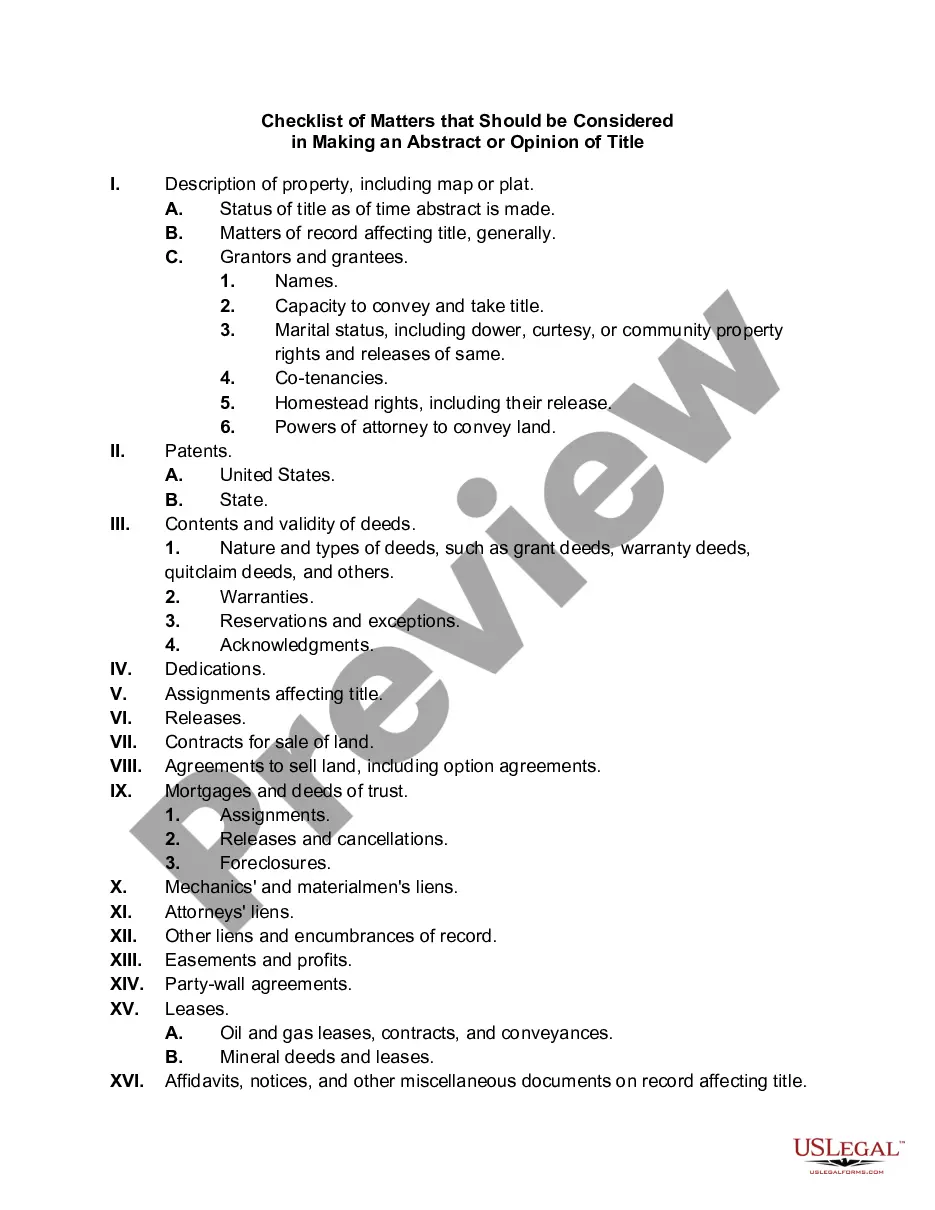
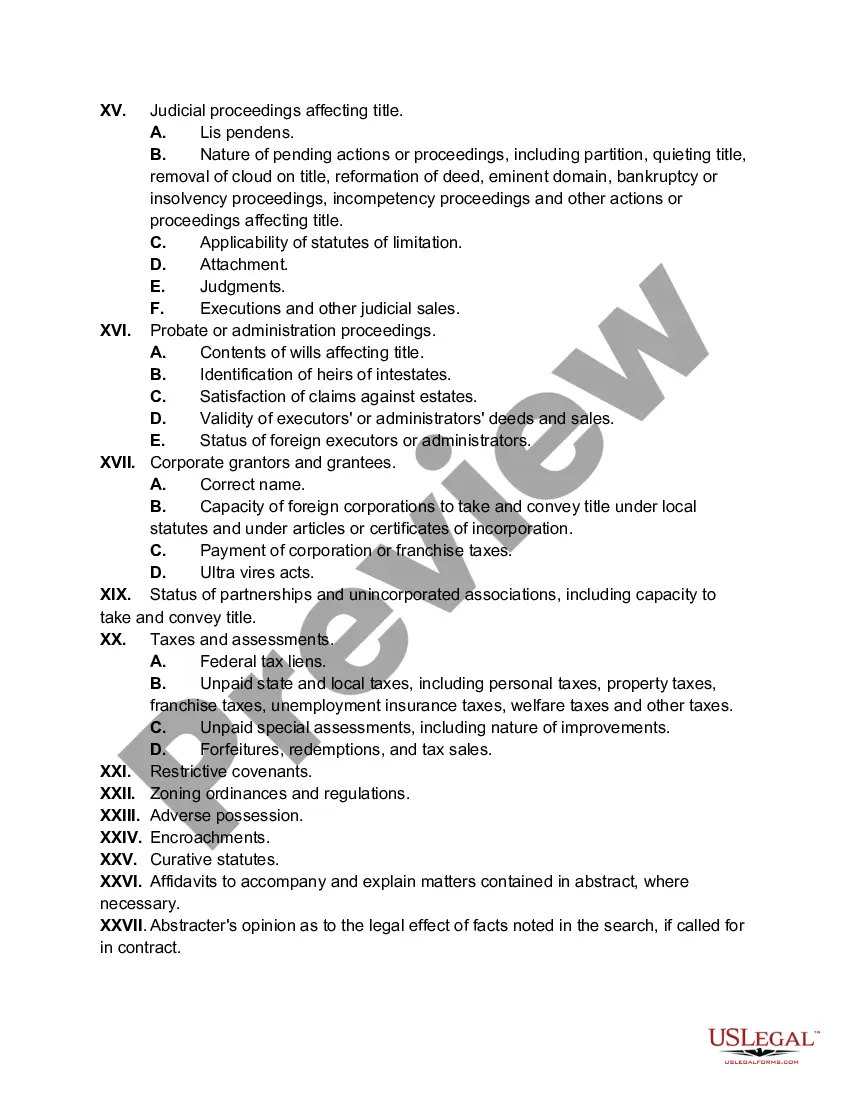
Checklist of Matters that Should be Considered in Making an Abstract or Opinion of Title
What is this form?
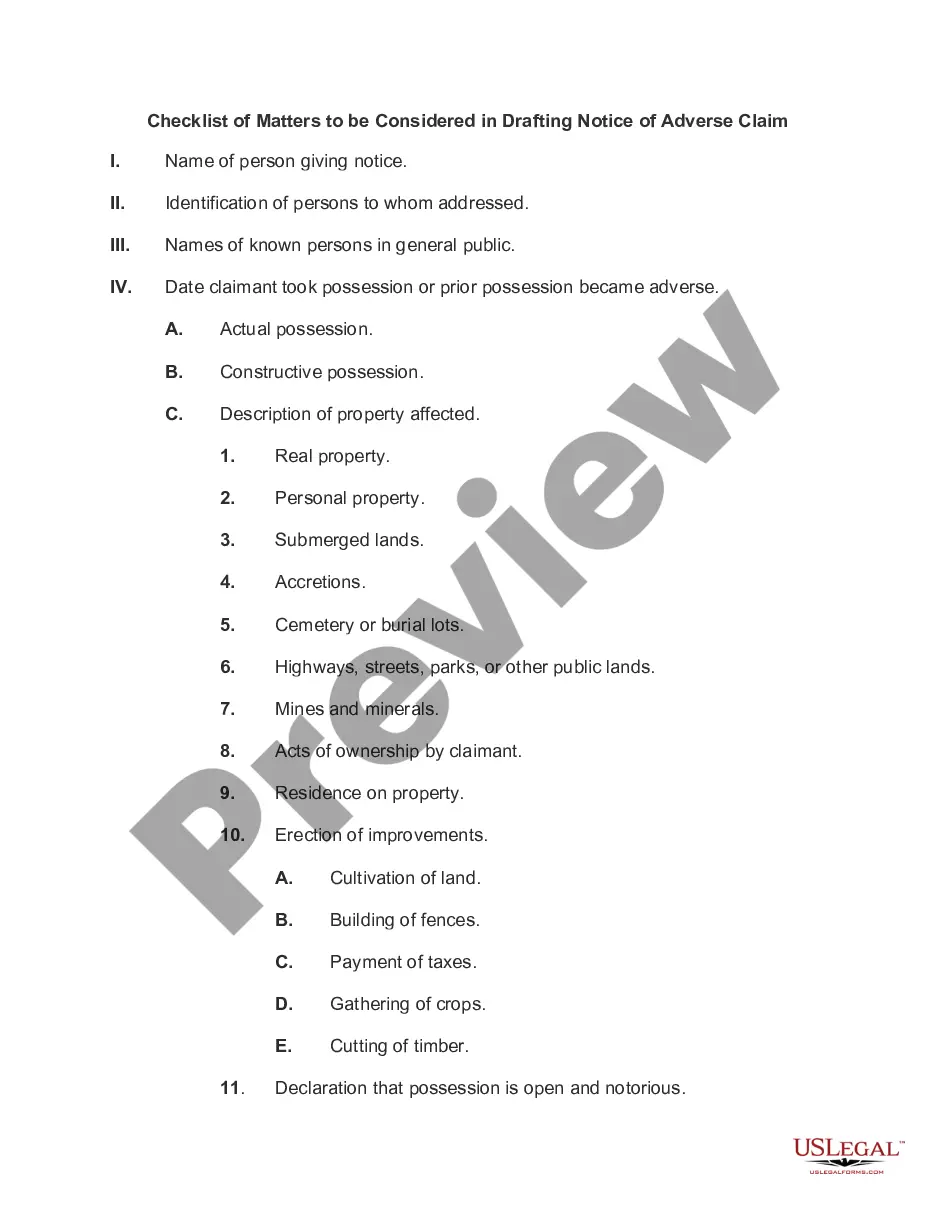
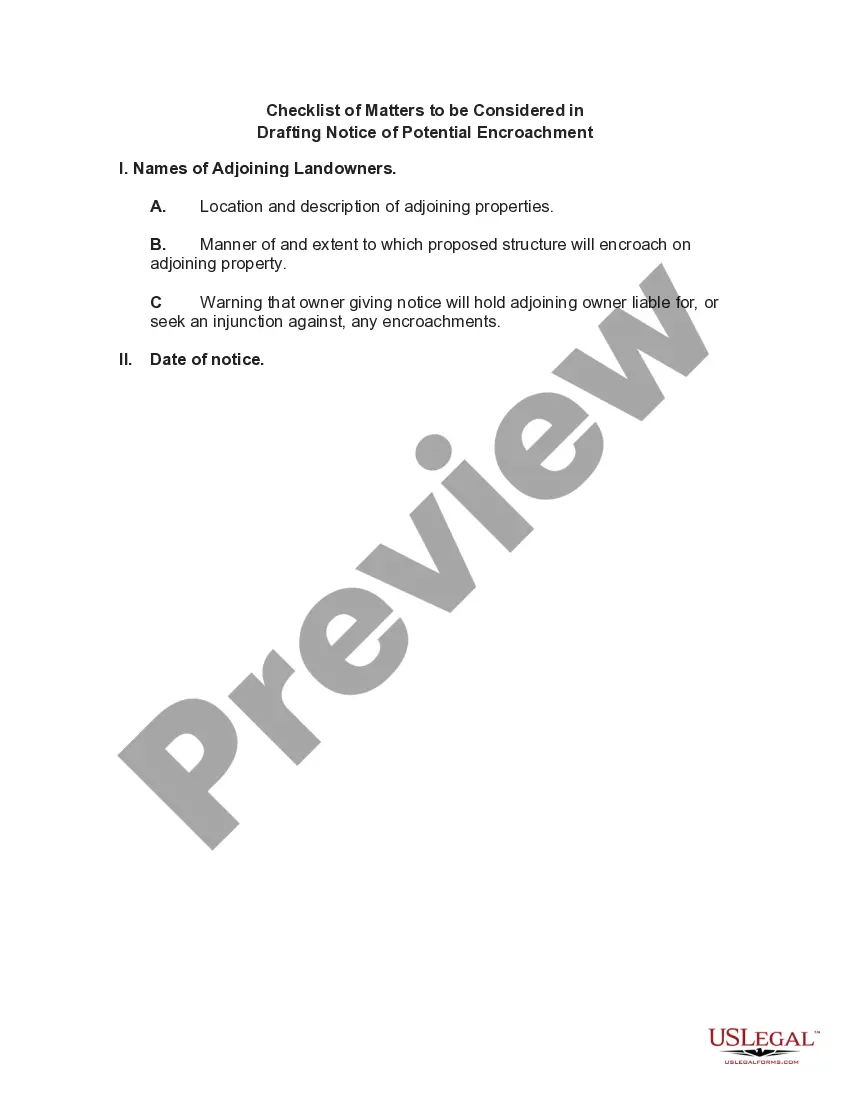
The Checklist of Matters that Should be Considered in Making an Abstract or Opinion of Title is a comprehensive document that helps assess the nature, source, and validity of title to real property. This form provides a structured approach to documenting all relevant records, including grants, conveyances, wills, and other legal documents that affect property ownership. Unlike other forms, this checklist ensures a thorough analysis by highlighting critical aspects of title examination, making it essential for anyone involved in real estate transactions.
Main sections of this form
- Description of property, including maps or plats
When to use this document
This form is particularly useful when conducting a title search prior to buying or selling real property. It is also beneficial when a property owner needs to clear ambiguities surrounding the title, respond to legal disputes regarding property ownership, or when engaged in mortgage or real estate transactions that require verification of title authenticity. Furthermore, it is important for estate executors handling properties that may have complex title histories.
Who can use this document
This checklist is suitable for:
How to complete this form
- Identify the property by providing a detailed description, including maps or plats.
- Document the status of the title as of the abstract preparation date.
- Outline all matters of record that affect the title, including any liens or encumbrances.
- Include any judicial proceedings or claims that may impact ownership rights.
- Review and confirm the validity of all deeds and documents related to the title.
Notarization guidance
This form does not typically require notarization unless specified by local law. It is advisable to check with local regulations to confirm if notarization is necessary for the specific use of this checklist.
Get your form ready online
Our built-in tools help you complete, sign, share, and store your documents in one place.
Make edits, fill in missing information, and update formatting in US Legal Forms—just like you would in MS Word.
Download a copy, print it, send it by email, or mail it via USPS—whatever works best for your next step.
Sign and collect signatures with our SignNow integration. Send to multiple recipients, set reminders, and more. Go Premium to unlock E-Sign.
If this form requires notarization, complete it online through a secure video call—no need to meet a notary in person or wait for an appointment.
We protect your documents and personal data by following strict security and privacy standards.

Make edits, fill in missing information, and update formatting in US Legal Forms—just like you would in MS Word.

Download a copy, print it, send it by email, or mail it via USPS—whatever works best for your next step.

Sign and collect signatures with our SignNow integration. Send to multiple recipients, set reminders, and more. Go Premium to unlock E-Sign.

If this form requires notarization, complete it online through a secure video call—no need to meet a notary in person or wait for an appointment.

We protect your documents and personal data by following strict security and privacy standards.
Common mistakes to avoid
- Failing to include all relevant documents and records that affect the title.
- Not verifying the validity of deeds and other legal documents.
- Neglecting to assess any existing liens or encumbrances on the property.
- Overlooking ongoing judicial proceedings that may influence title ownership.
Why complete this form online
- Convenient access to a structured checklist that simplifies title examination.
- Editable and downloadable format allows for easy customization.
- Reliability of forms drafted by licensed attorneys to ensure legal validity.
Looking for another form?
Form popularity
FAQ
Why are Oklahoma and Iowa the only two states that still do abstracting? This is simply not true. Every state requires some form of "abstracting" and the final product the "abstract".
The title should be descriptive, direct, accurate, appropriate, interesting, concise, precise, unique, and should not be misleading. The abstract needs to be simple, specific, clear, unbiased, honest, concise, precise, stand-alone, complete, scholarly, (preferably) structured, and should not be misrepresentative.
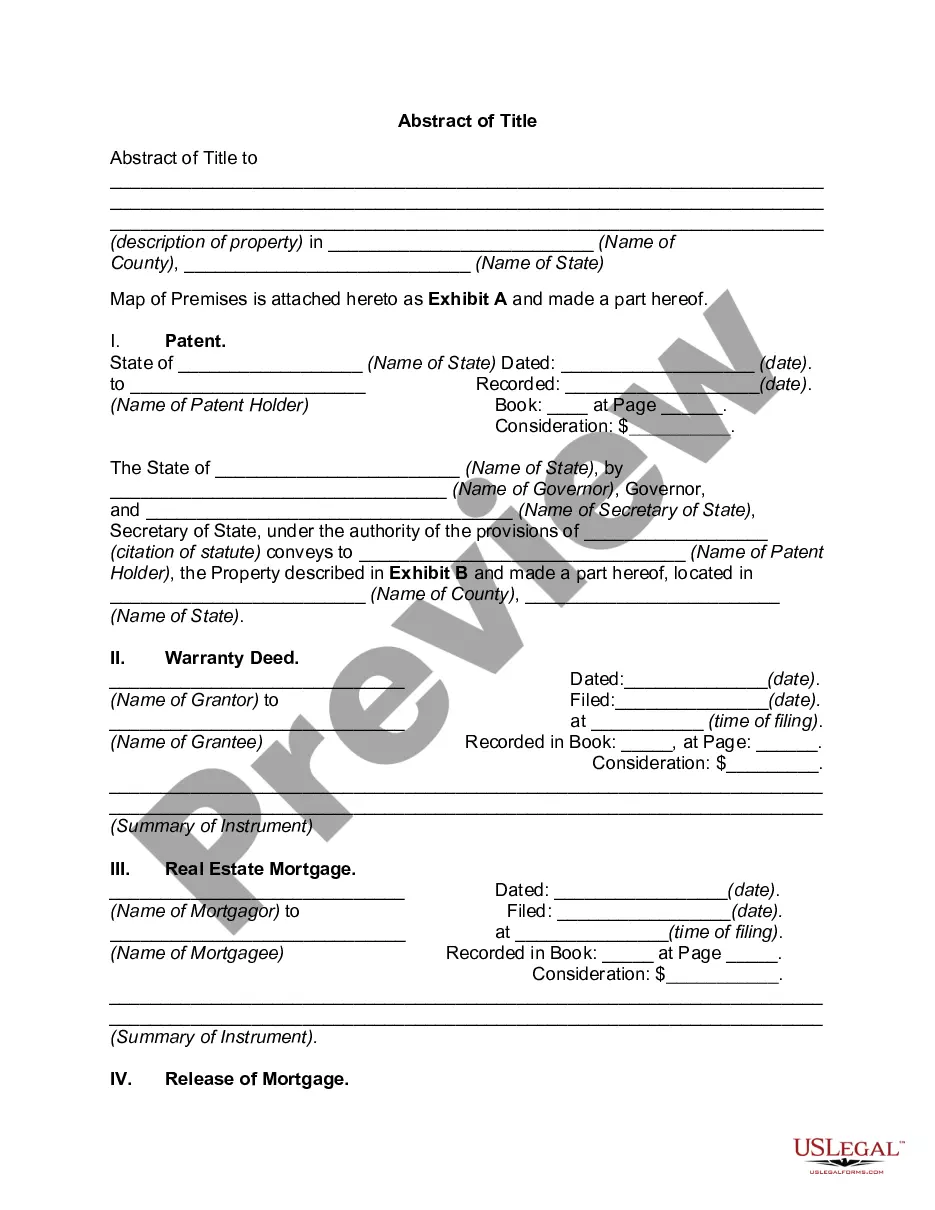
The abstract of title records that transaction history and provides an official provenance. The abstract of title will also record outstanding liens against the property, back taxes owed, or unresolved building code violations.
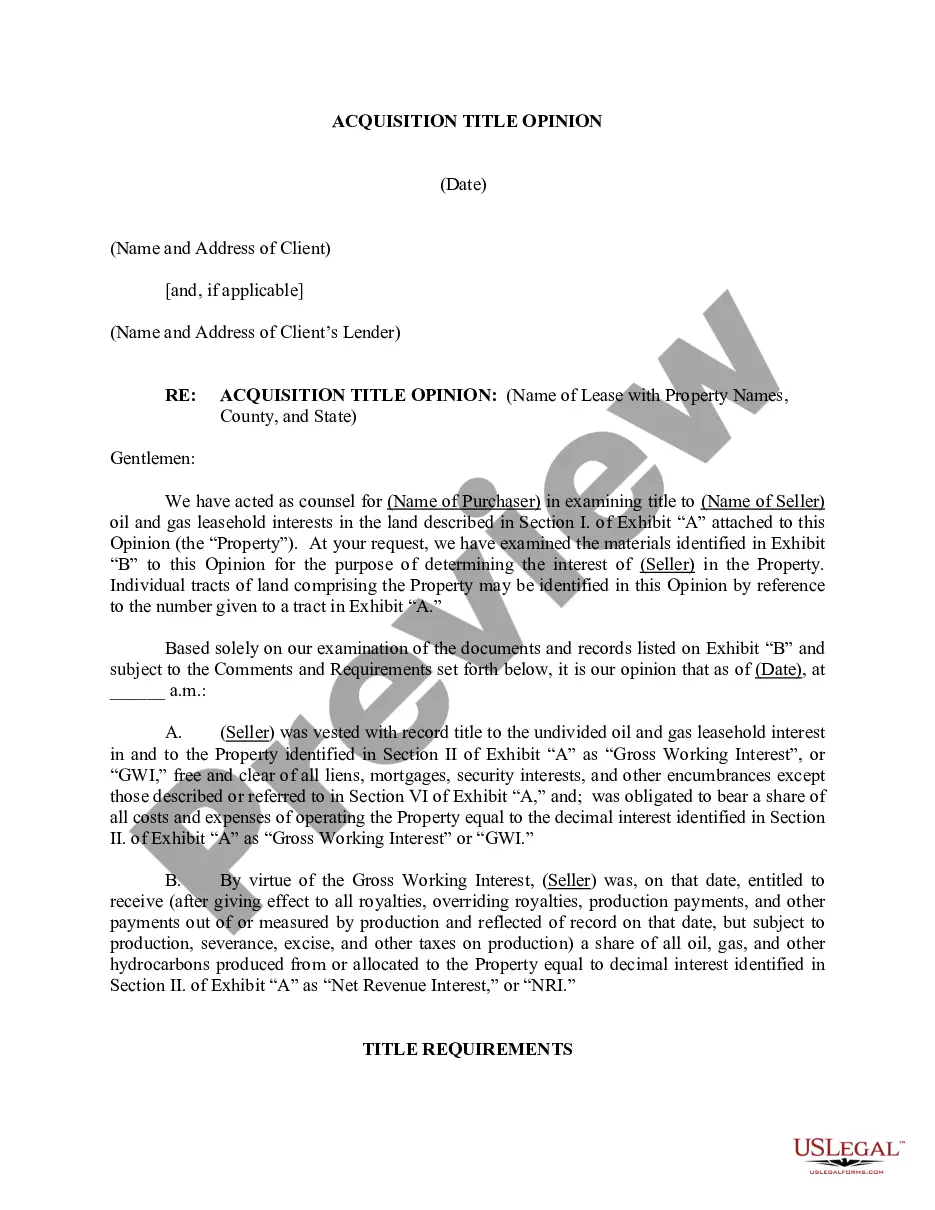
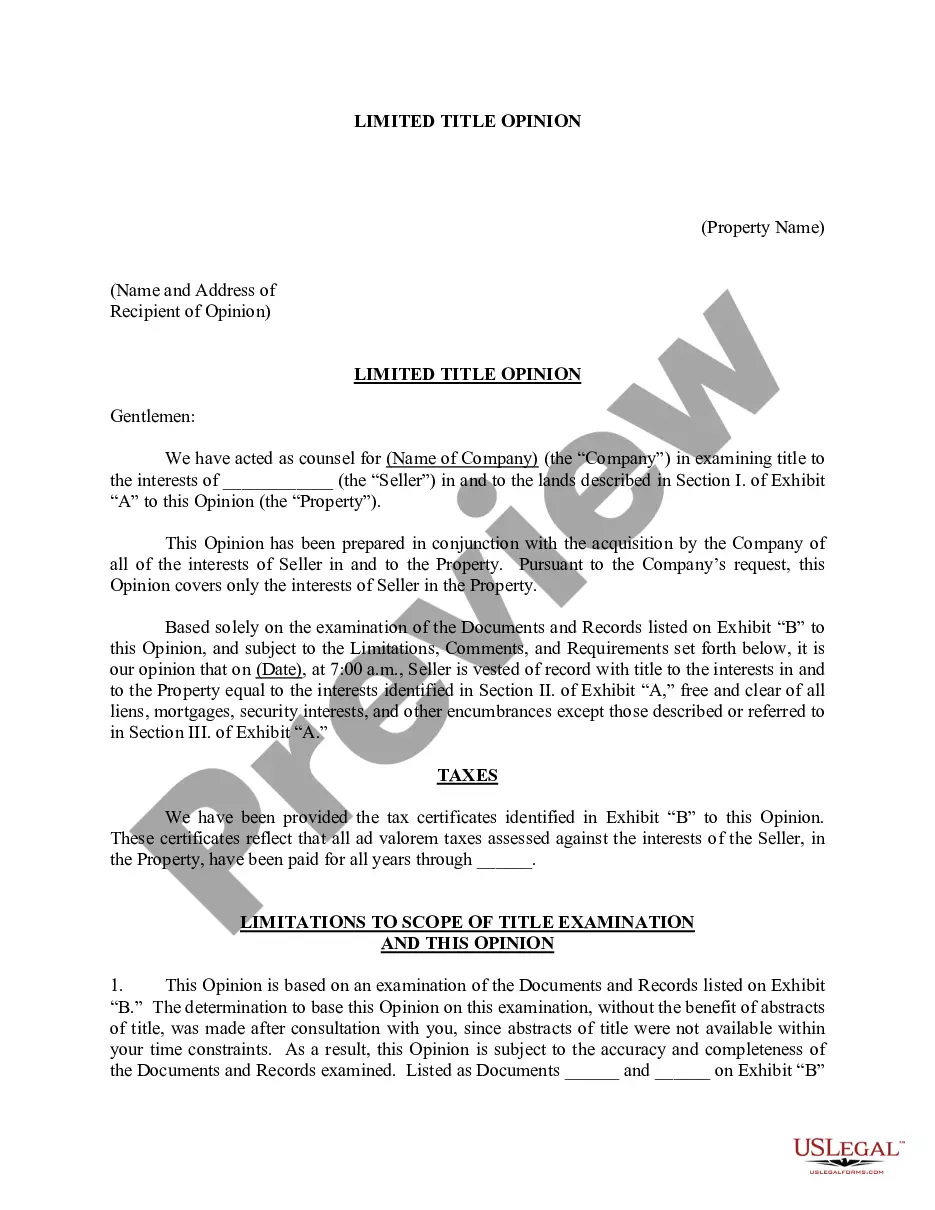
Opinions of title are usually issued by attorneys. Title companies use the opinion made by the attorney to issue a document called a title report. This is a legal document that can be used in varying ways, but is most often in the process of purchasing a property, researching ownership, or verifying a lien status.
Write your paper. Review the requirements. Consider your audience and publication. Determine the type of abstract. Explain the problem. Explain your methods. Describe your results. Give a conclusion.
Today's abstractors typically research a property by searching county records and by using records already stored in their abstract plantssites managed by title-insurance companies to hold copies of documents. Counties typically store their records by year.
An abstractor or abstracter of title is a person who prepares and certifies the condensed history (known as an abstract of title) of the ownership of a particular parcel of real estate, consisting of a summary of the original grant and all subsequent conveyances and encumbrances affecting the property.
The good news is that only a few states require abstracts: Oklahoma, Iowa and certain areas within the Dakotas. There is no standard fee. In each case, the cost is determined by how long it takes to compile the abstract.
Abstracts of title and title insurance commitments are fundamentally different in the information they provide and in their uses. A title commitment provides the foundation for the issuance of an indemnity contract, while an abstract provides documents that affect title to property in chronological order.