Informed Consent & Authorization for Traditional and Virtual Counseling
What this document covers
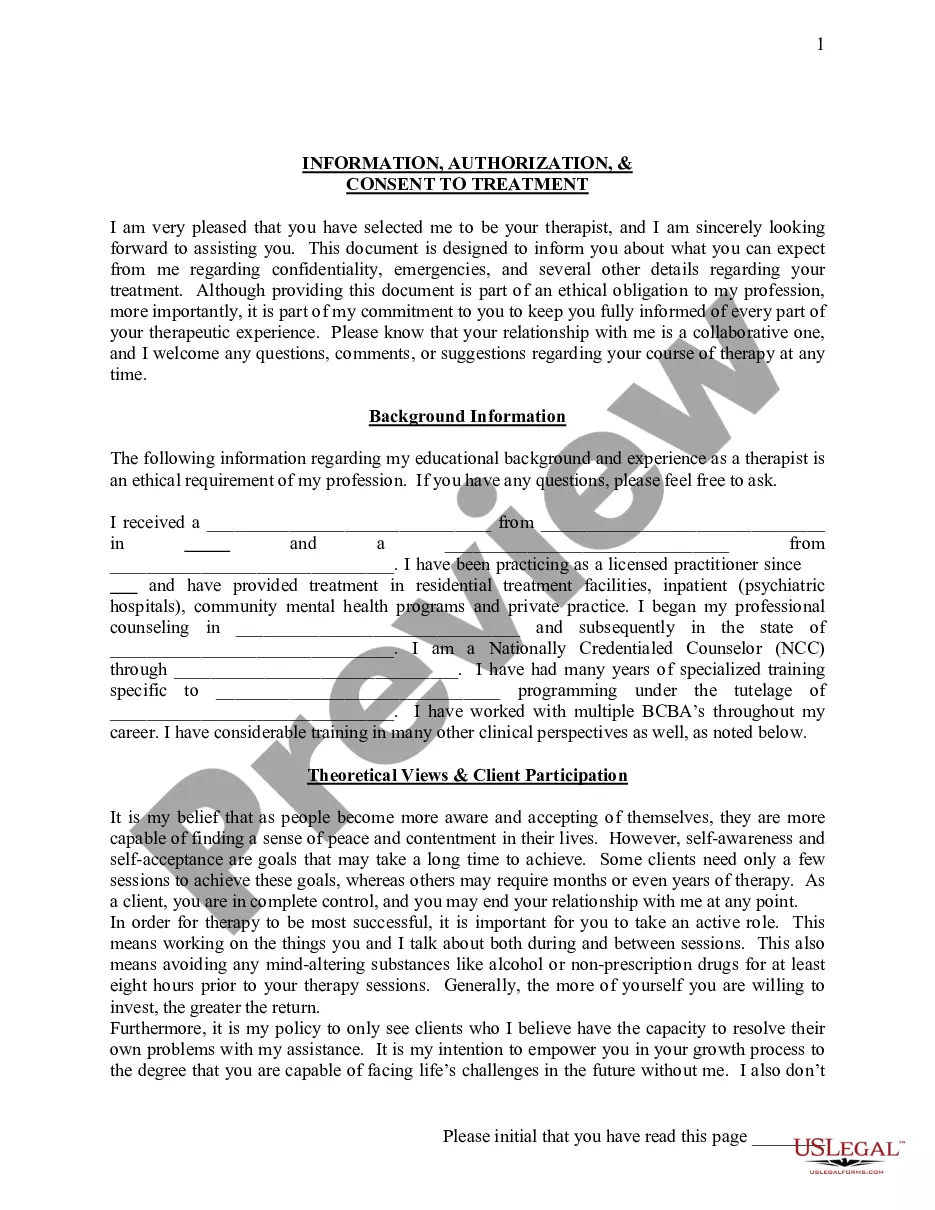
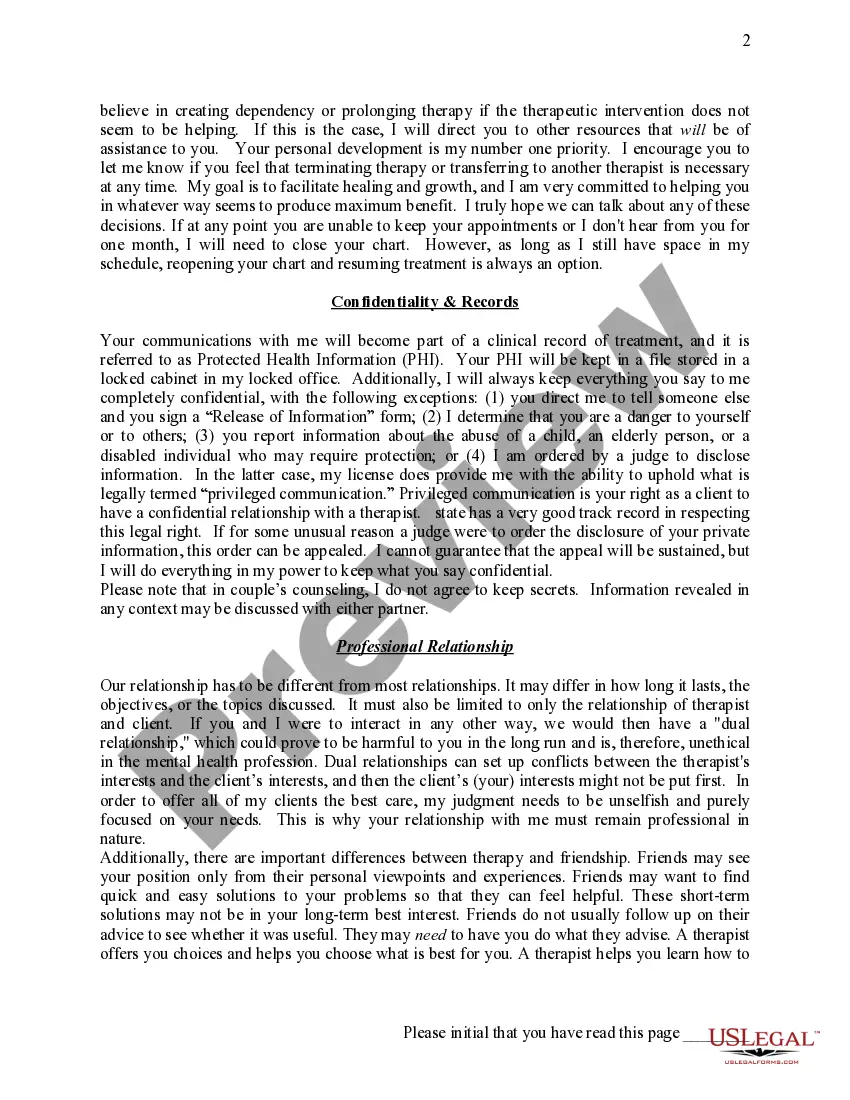
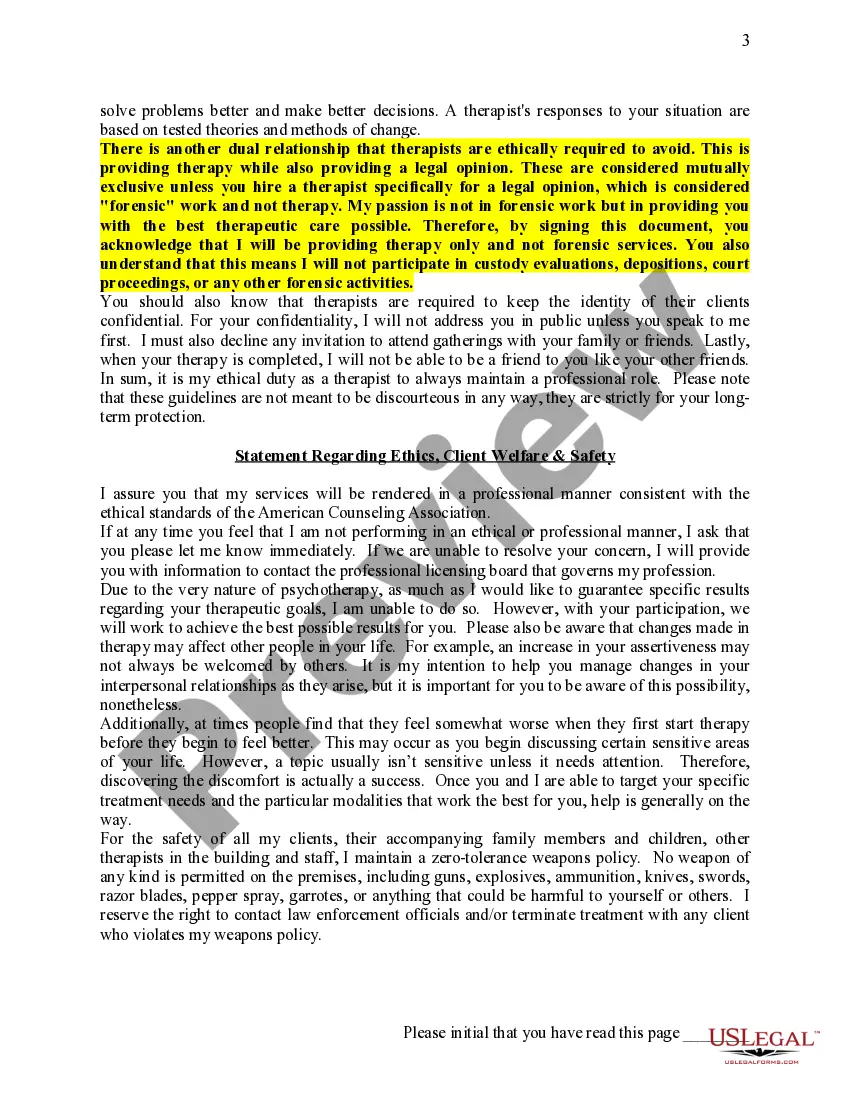
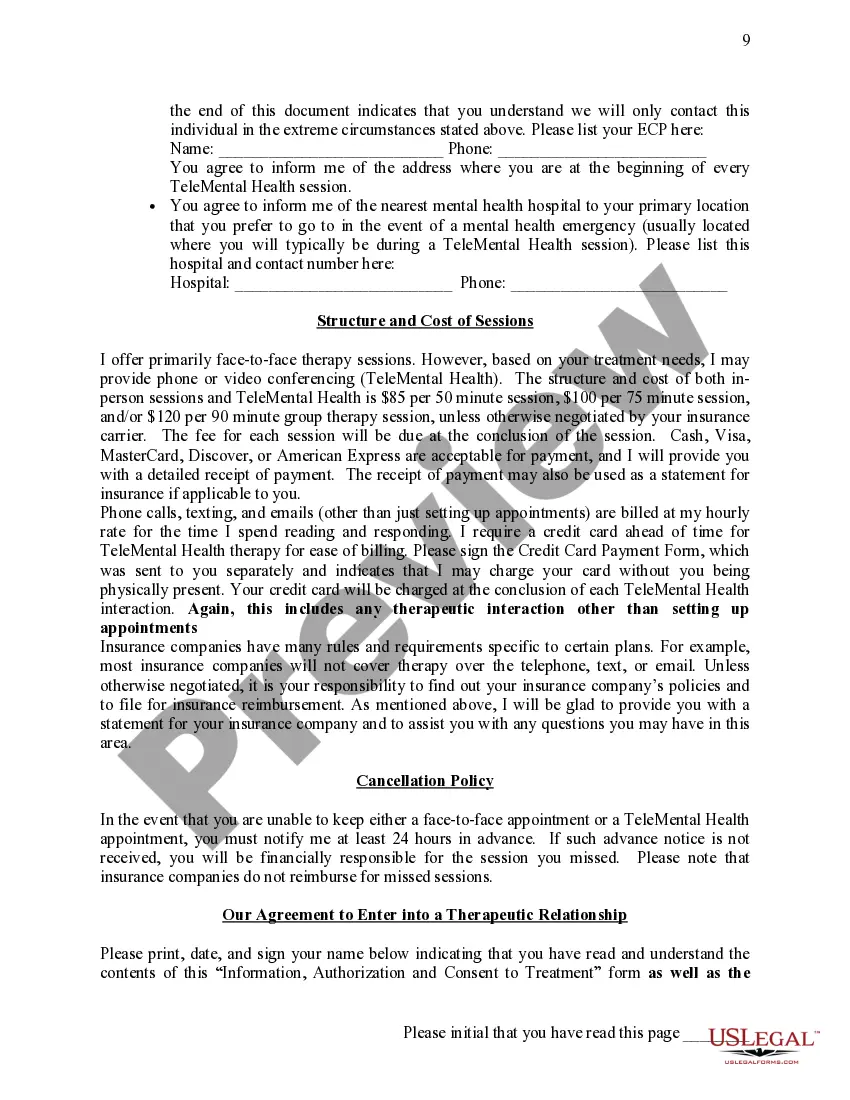
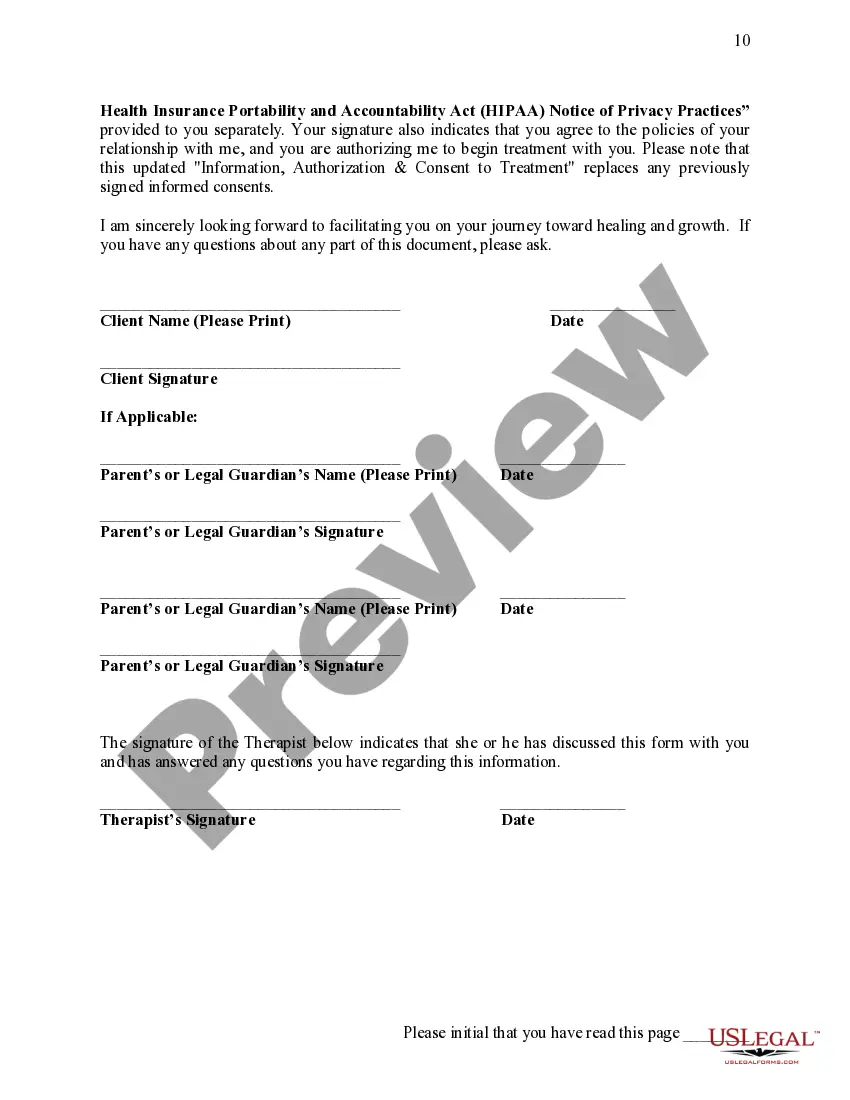
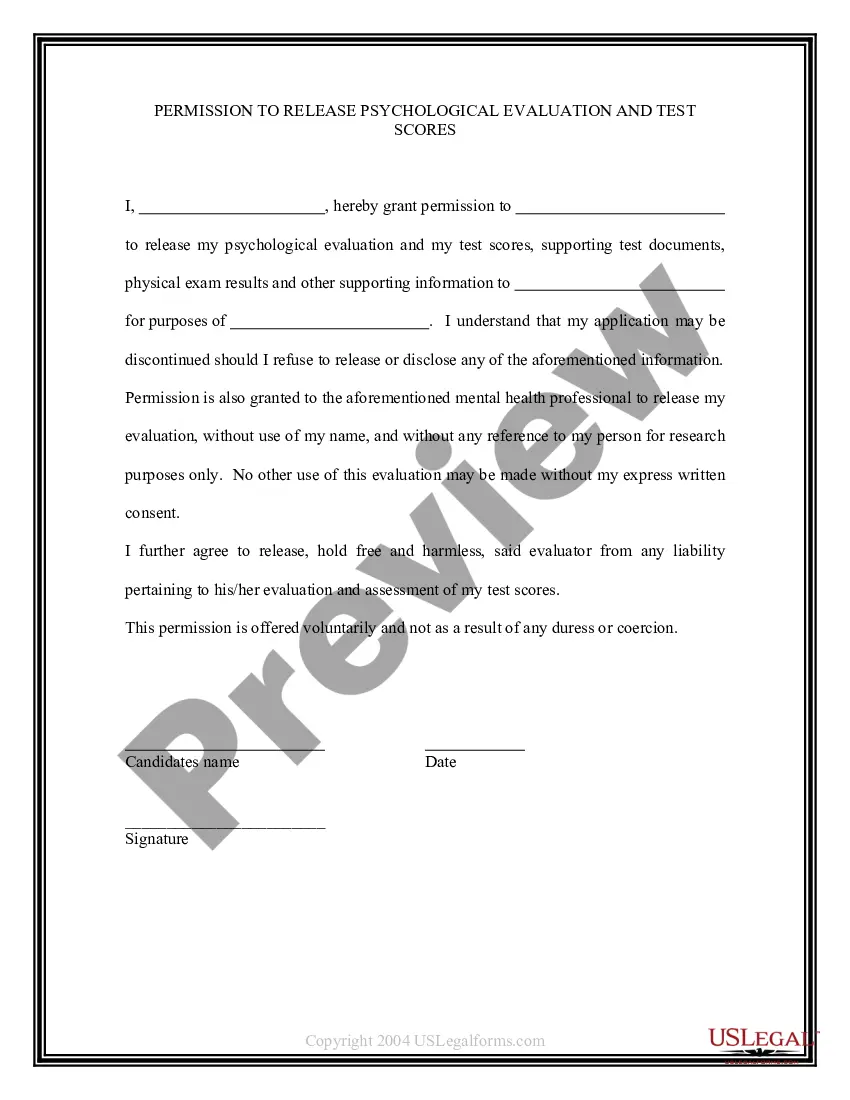
The Informed Consent & Authorization for Traditional and Virtual Counseling form is a legal document that outlines the responsibilities and expectations between a client and their therapist. This form facilitates transparent communication regarding treatment goals, confidentiality, and emergency procedures, distinguishing it from standard consent forms by including specific clauses related to both in-person and online counseling sessions.
Key components of this form
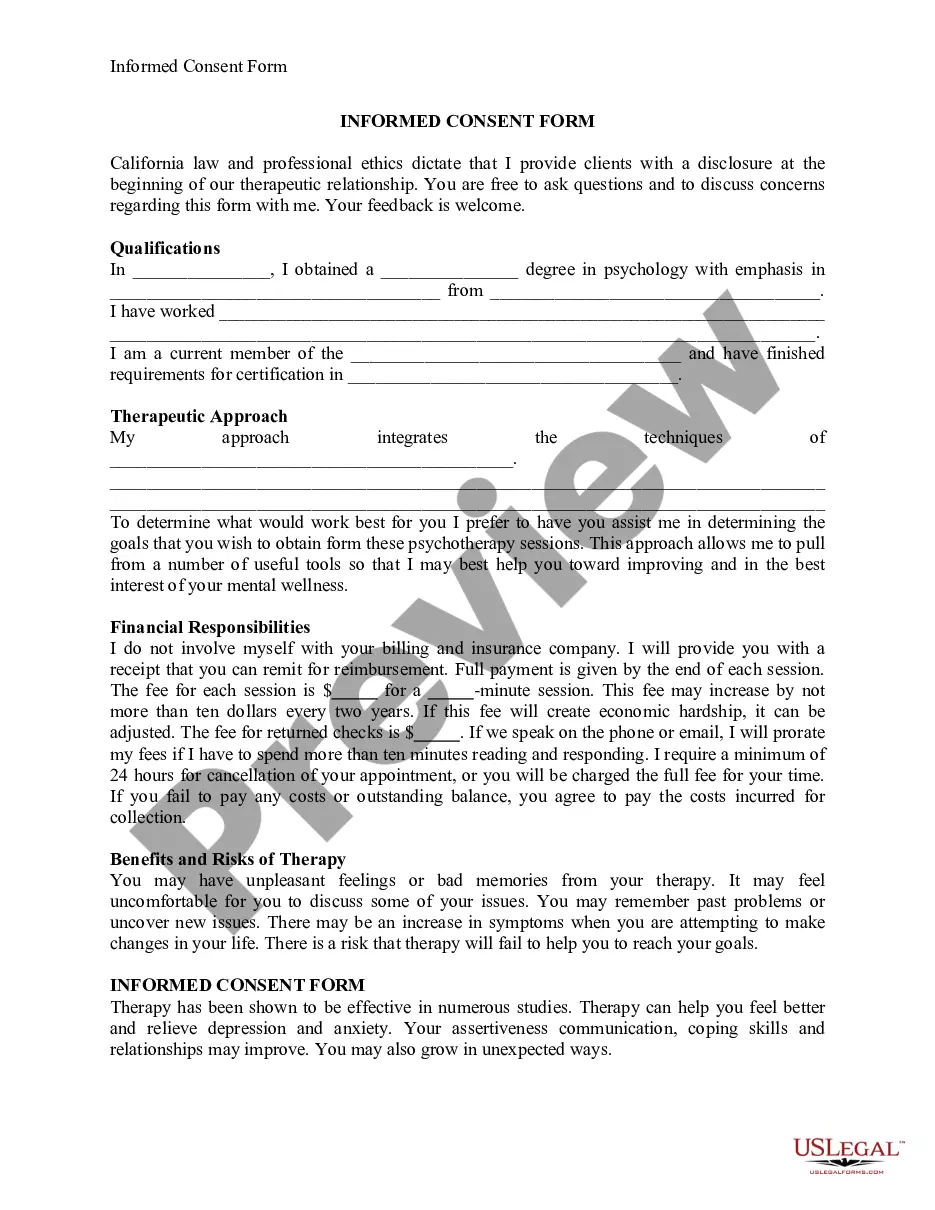
- Information about the therapist's qualifications and ethical responsibilities.
- Client participation requirements, emphasizing the importance of active involvement in therapy.
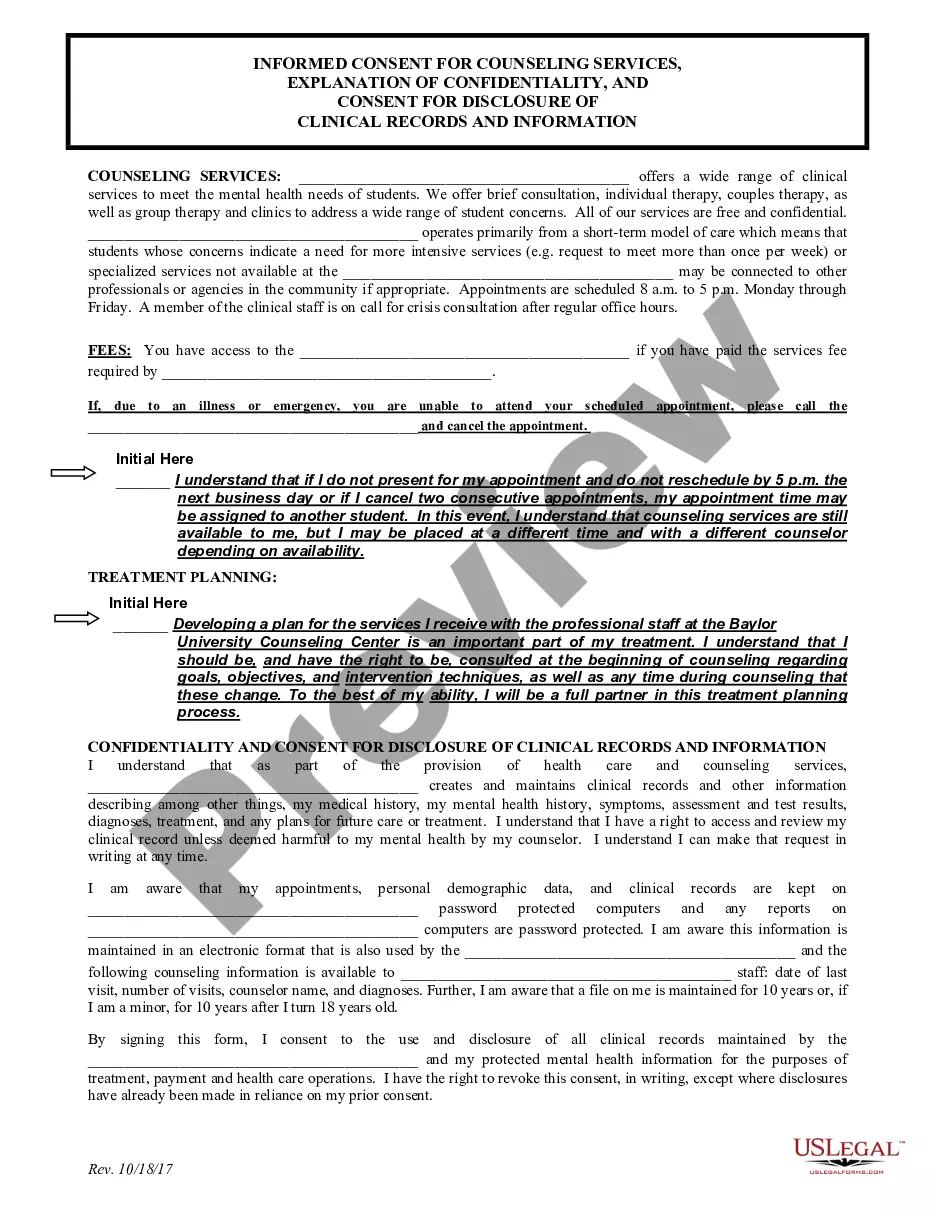
- Confidentiality clauses detailing how personal health information will be protected.
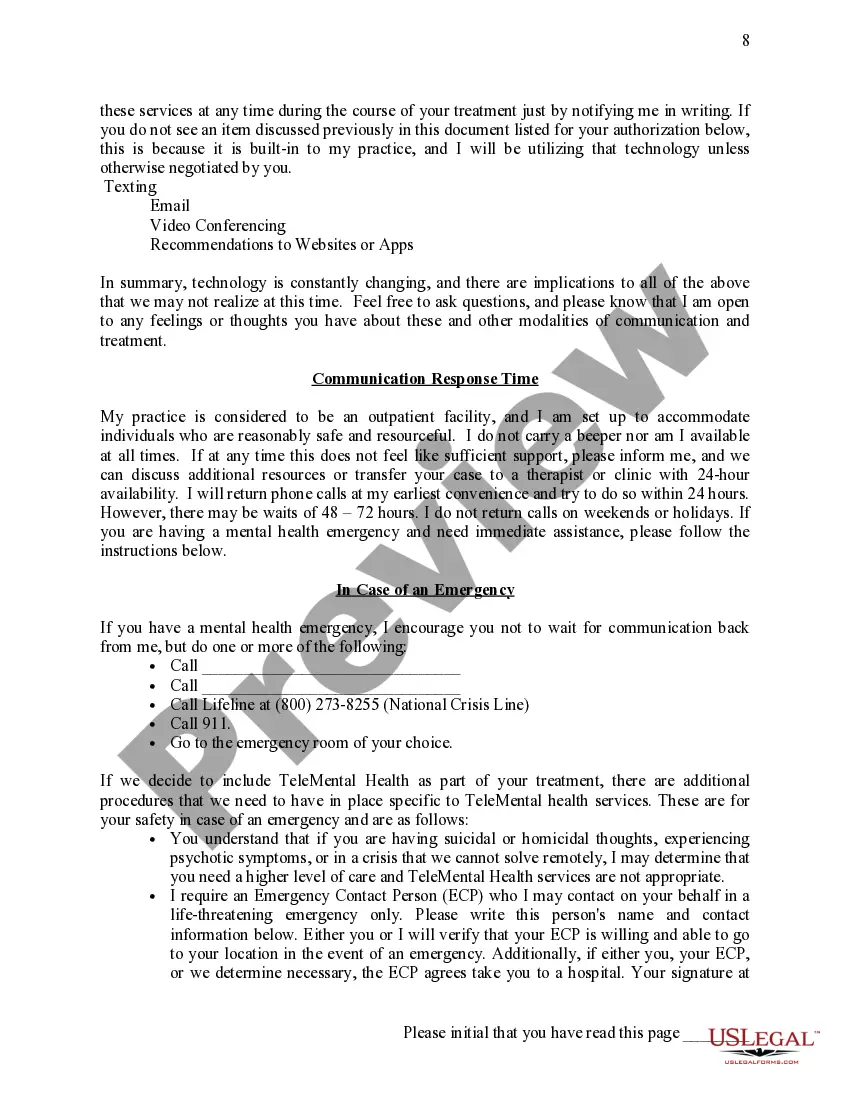
- Emergency procedures and the requirement for an Emergency Contact Person.
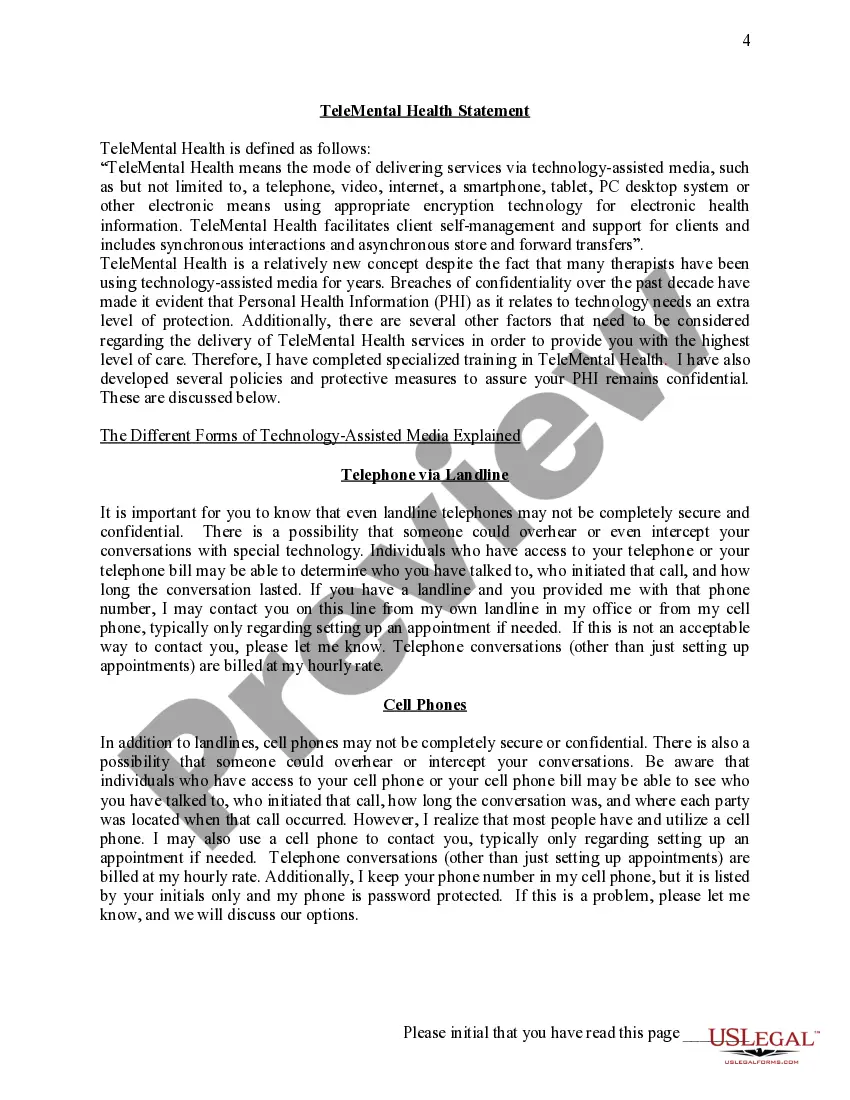
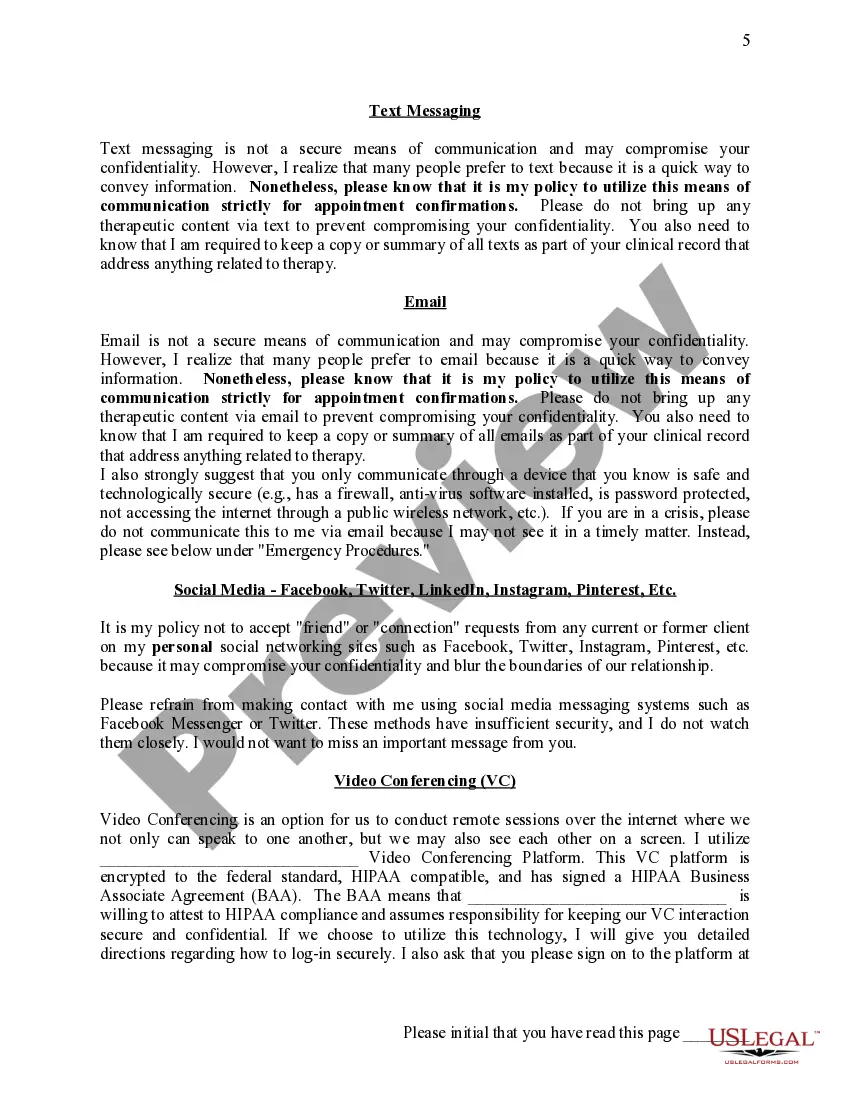
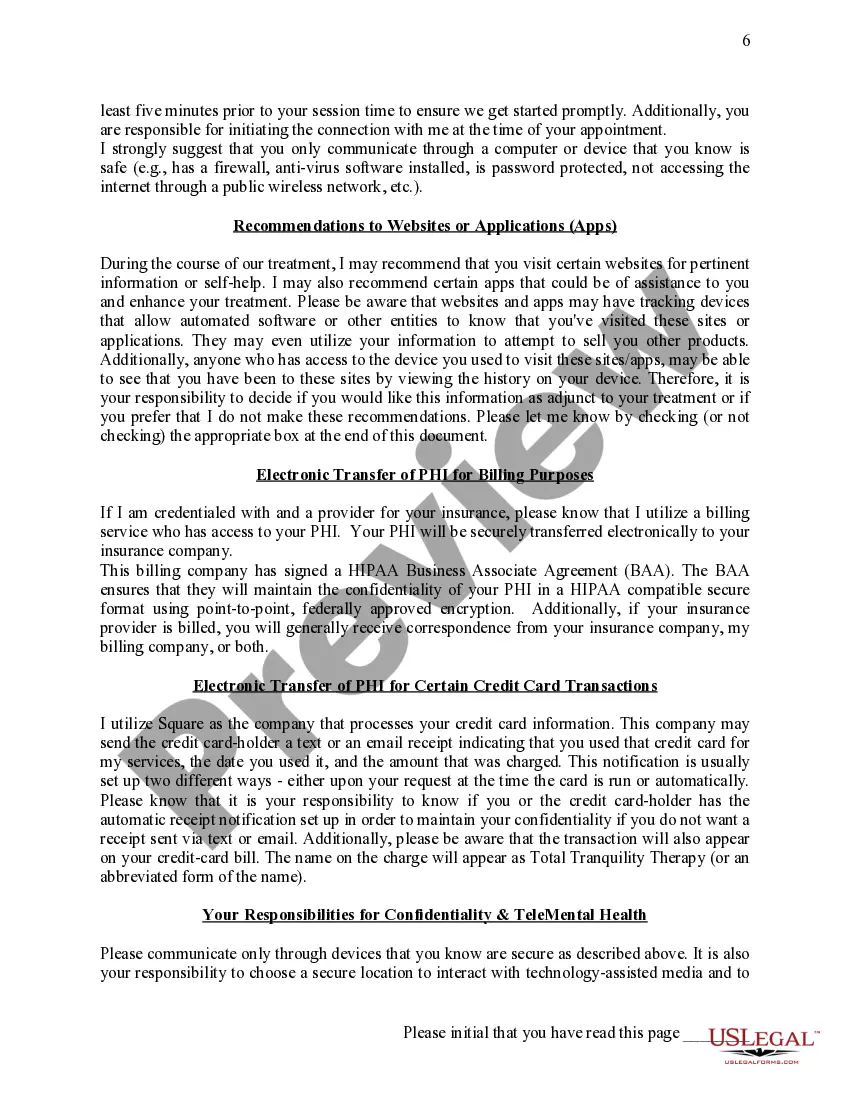
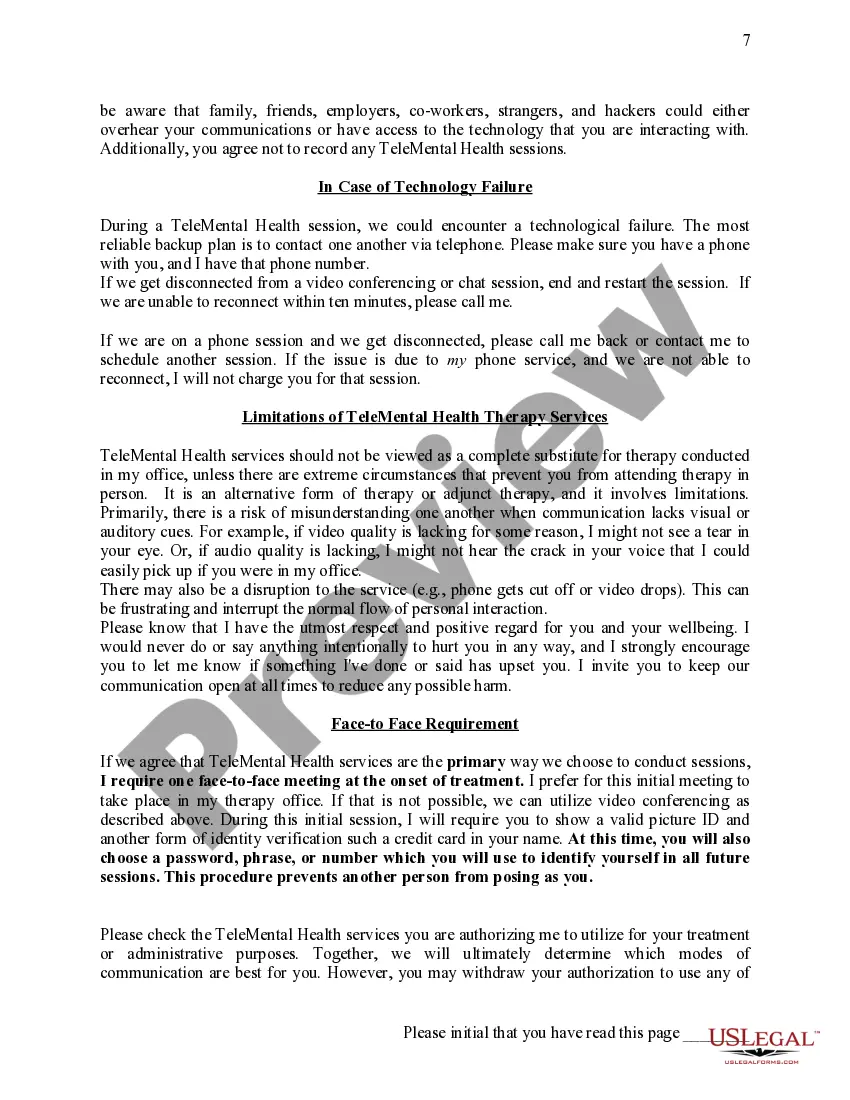
- Policy on the use of TeleMental Health services, including technology security measures.
- Structure and cost of therapy sessions, alongside cancellation policies.
When to use this document
This form should be used when beginning a therapeutic relationship with a mental health counselor, whether for traditional in-person sessions or virtual counseling. It is essential for establishing expectations, ensuring informed consent, and protecting client confidentiality. Utilizing this form is particularly important for first-time clients or those transitioning from in-person therapy to a virtual setting.
Who this form is for
- Individuals seeking counseling services from a licensed therapist.
- Clients participating in both traditional and virtual therapy sessions.
- Parents or guardians of minors who are seeking mental health services for their children.
- Anyone looking to understand their rights and the therapist's obligations regarding treatment.
How to complete this form
- Review the form thoroughly to understand your rights and responsibilities.
- Provide background information requested, including your educational history and previous therapy experiences.
- Sign the form, indicating your consent and understanding of the information presented.
- If applicable, have parents or legal guardians sign the form for minor clients.
- Keep a copy of the signed document for your records.
Notarization requirements for this form
This form does not typically require notarization unless specified by local law. It is essential to ensure that all parties understand and agree to the contents of the form.
Get your form ready online
Our built-in tools help you complete, sign, share, and store your documents in one place.
Make edits, fill in missing information, and update formatting in US Legal Forms—just like you would in MS Word.
Download a copy, print it, send it by email, or mail it via USPS—whatever works best for your next step.
Sign and collect signatures with our SignNow integration. Send to multiple recipients, set reminders, and more. Go Premium to unlock E-Sign.
If this form requires notarization, complete it online through a secure video call—no need to meet a notary in person or wait for an appointment.
We protect your documents and personal data by following strict security and privacy standards.

Make edits, fill in missing information, and update formatting in US Legal Forms—just like you would in MS Word.

Download a copy, print it, send it by email, or mail it via USPS—whatever works best for your next step.

Sign and collect signatures with our SignNow integration. Send to multiple recipients, set reminders, and more. Go Premium to unlock E-Sign.

If this form requires notarization, complete it online through a secure video call—no need to meet a notary in person or wait for an appointment.

We protect your documents and personal data by following strict security and privacy standards.
Common mistakes
- Not reading the entire form before signing, leading to misunderstandings.
- Failing to disclose relevant personal or medical history.
- Not discussing questions or concerns with the therapist prior to signing.
Why use this form online
- Convenience of access; complete the form from anywhere with internet access.
- Easy editing or updates as needed for your circumstances.
- Immediate documentation for creating a clear record of the therapeutic agreement.
Legal use & context
- This form establishes a legal agreement between the therapist and client, ensuring clarity in the therapeutic relationship.
- It protects both parties by outlining confidentiality and ethical obligations.
- Properly completed forms are enforceable in seeking therapeutic services.
Looking for another form?

Form popularity
FAQ
The purpose of informed consent is: To provide a potential subject with appropriate information in an appropriate manner and allow that person to make an informed decision about participation in research.
An informed consent document is typically used to provide subjects with the information they need to make a decision to volunteer for a research study. Federal regulations (45 CFR 46.116 ) provide the framework for the type of information (i.e., the "elements") that must be included as part of the consent process.
What is the purpose of informed consent? Informed consent has become the primary paradigm for protecting the legal rights of patients and guiding the ethical practice of medicine. It may be used for different purposes in different contexts: legal, ethical or administrative (Figure 1).
Informed consent is obtained to assure the researcher that the participant knows every aspect of their participation in the trial ? what the procedures or treatments are going to look like and the potential outcomes, including the benefits and the risks. Obtaining informed consent also benefits the research staff.
I have read and I understand the provided information and have had the opportunity to ask questions. I understand that my participation is voluntary and that I am free to withdraw at any time, without giving a reason and without cost. I understand that I will be given a copy of this consent form.
The informed consent process should ensure that all critical information about a study is completely disclosed, and that prospective subjects or their legally authorized representatives adequately understand the research so that they can make informed choices.
Obtaining informed consent in medicine is process that should include: (1) describing the proposed intervention, (2) emphasizing the patient's role in decision-making, (3) discussing alternatives to the proposed intervention, (4) discussing the risks of the proposed intervention and (5) eliciting the patient's
You have the right to fully understand and agree to any medical procedure or treatment you receive before it proceeds. Informed consent is your understanding and agreement. Your healthcare provider is responsible for effectively communicating with you about your condition and your testing and treatment options.