South Carolina WIRE FRAUD
Understanding this form
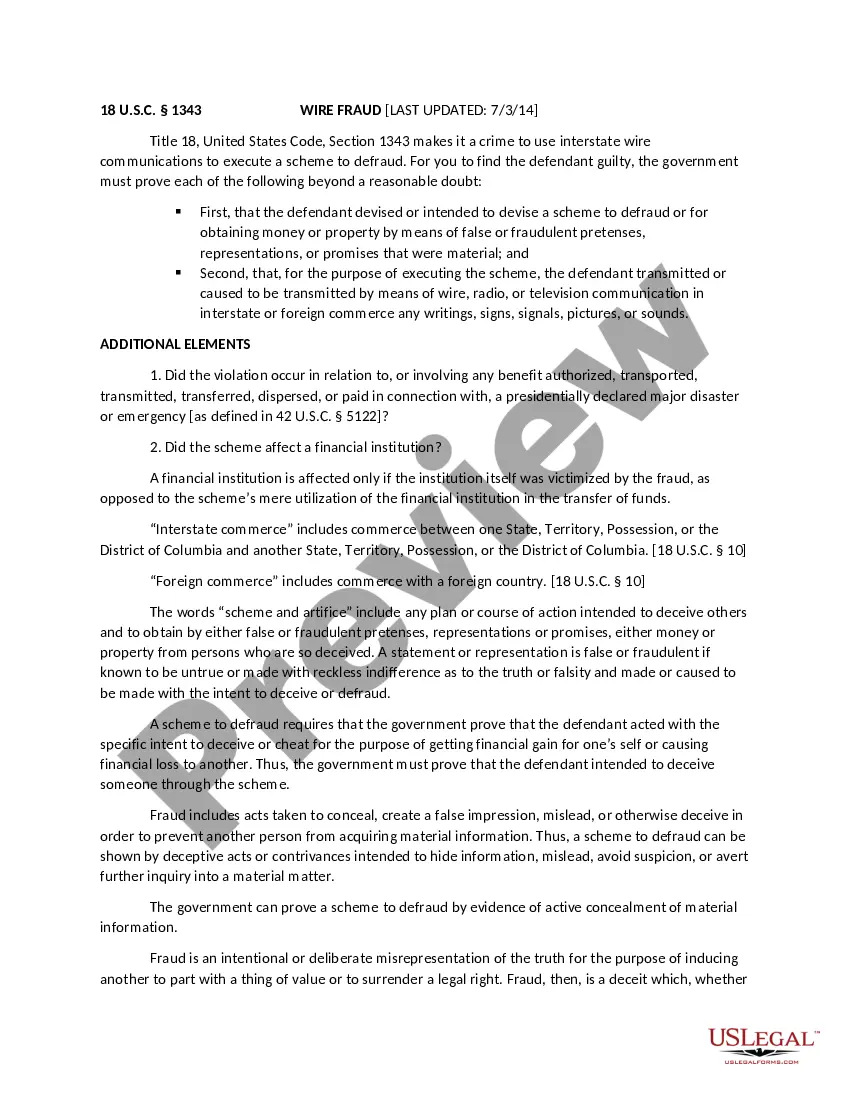
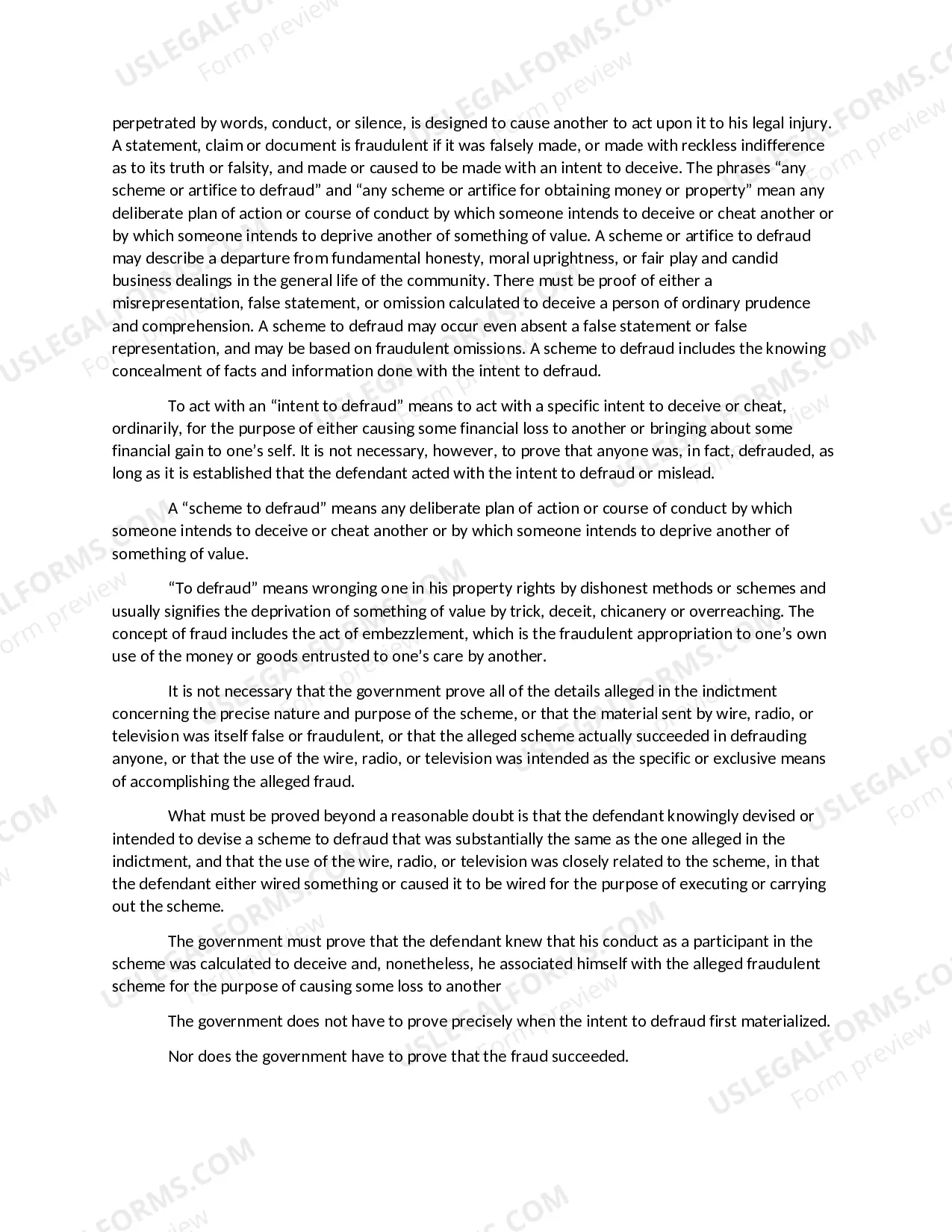
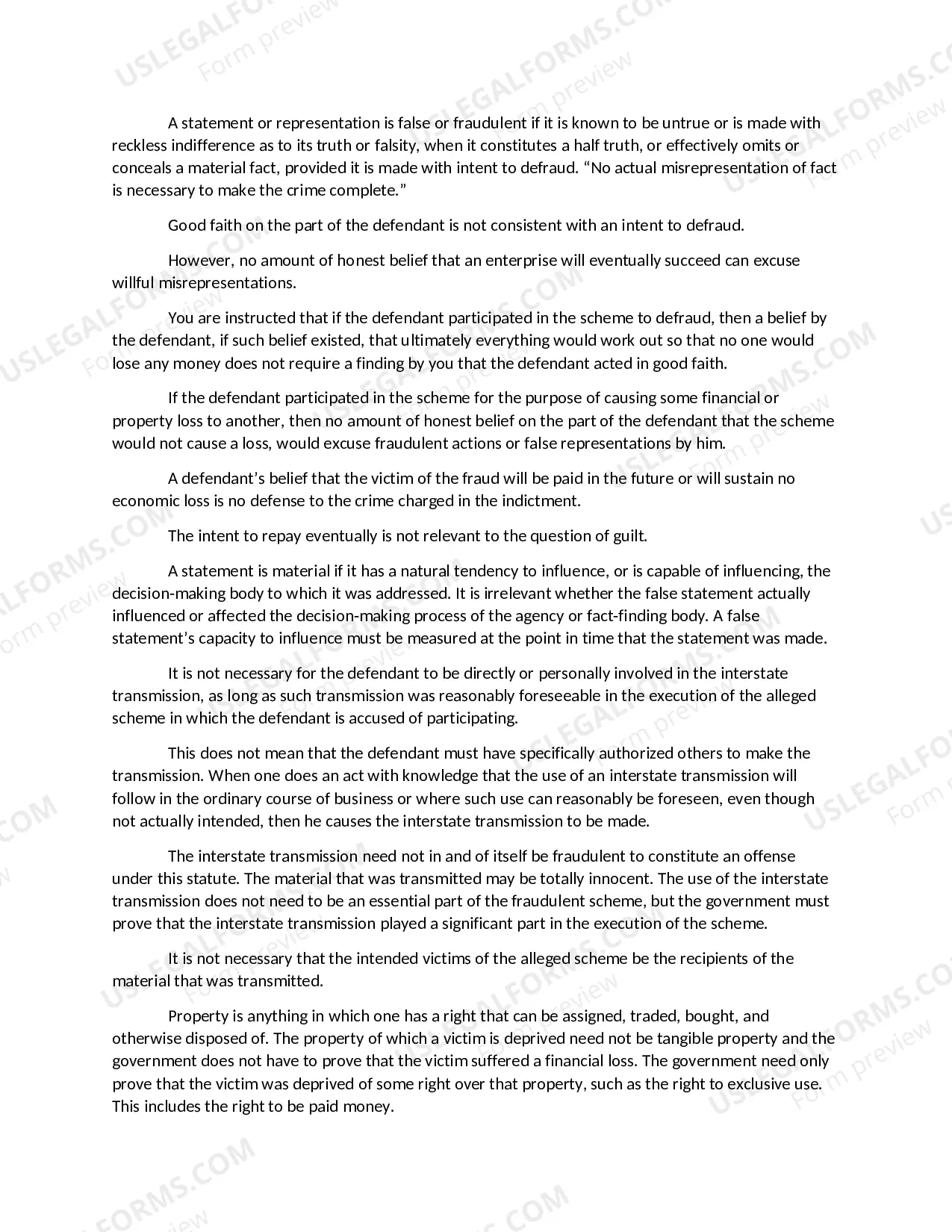
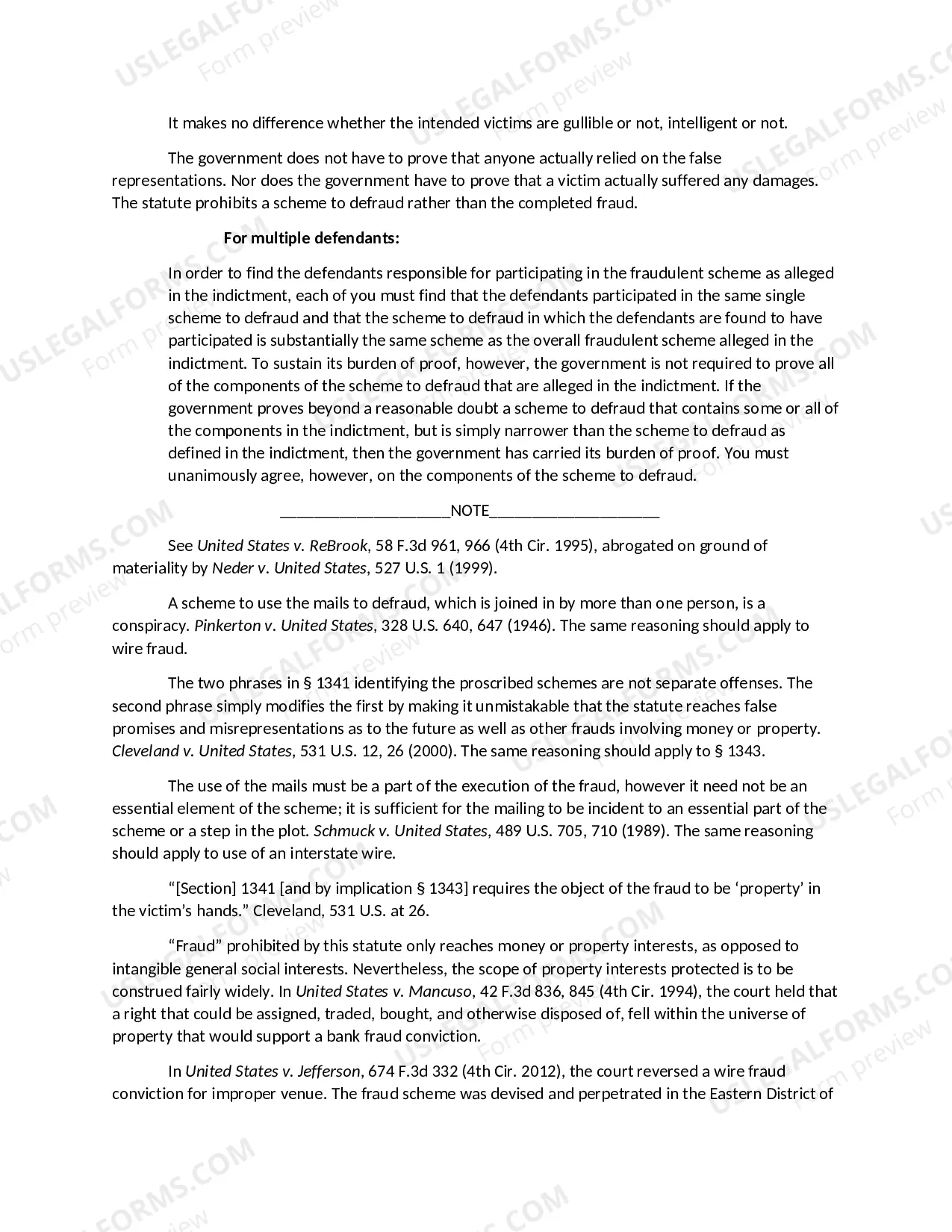
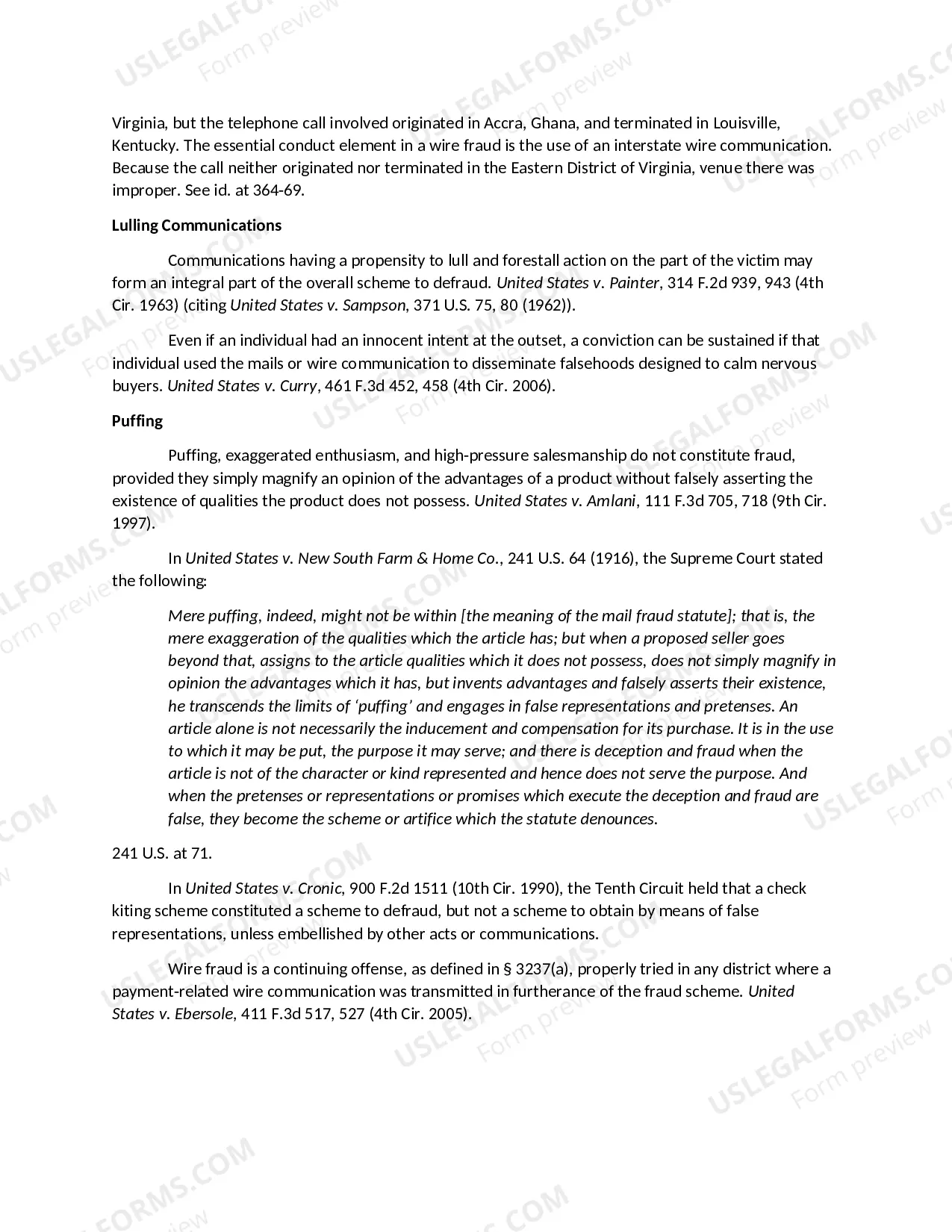
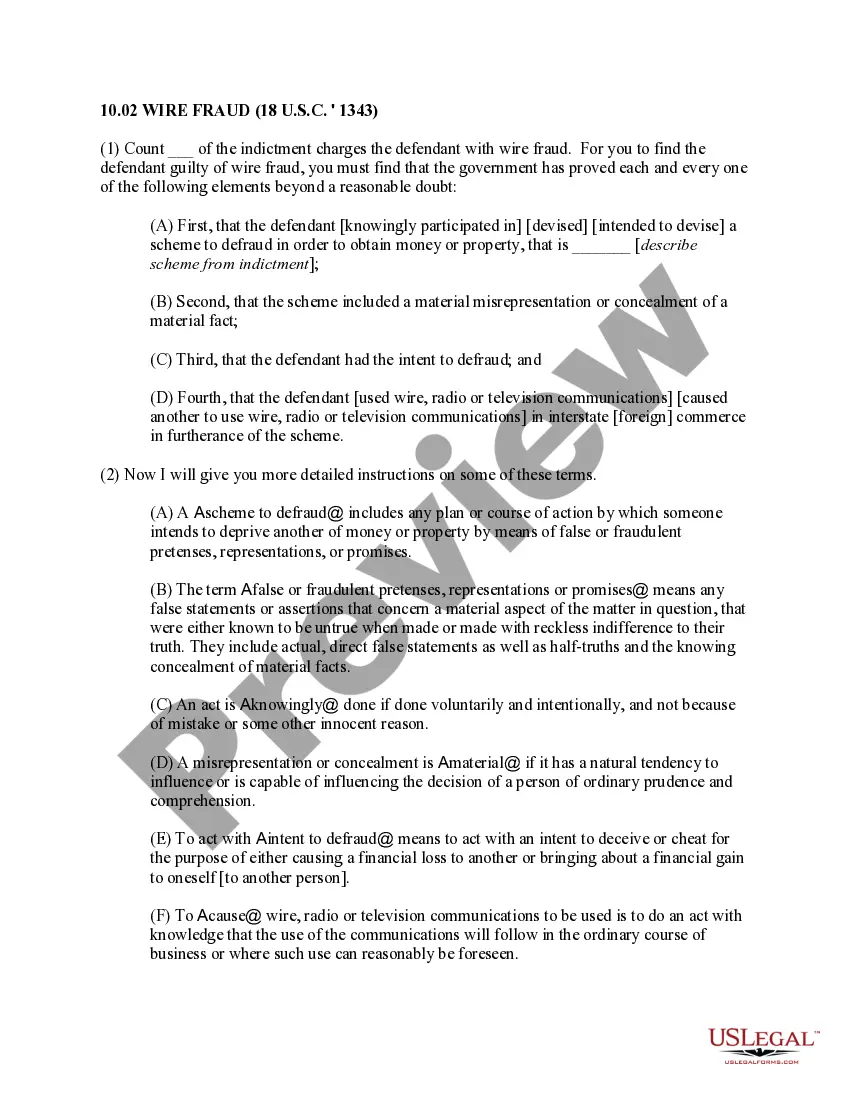
The Wire Fraud form provides the official Pattern Jury Instructions for Criminal Cases in Federal District Court of South Carolina. It outlines the legal framework under Title 18, United States Code, Section 1343, which addresses crimes involving schemes to defraud using interstate wire communications. This form is essential for understanding the elements of wire fraud, the legal implications, and the responsibilities of both the prosecution and the accused in criminal cases involving fraudulent schemes. Unlike generic legal forms, this document specifically serves as a guideline for jury instructions related to wire fraud cases in federal court, ensuring consistency and legal accuracy.
Main sections of this form
- Definition of wire fraud and scheme to defraud.
- Criteria for establishing guilt beyond a reasonable doubt.
- Clarification of actions constituting transmission via wire communications.
- Explanation of the intent to defraud and its implications.
- Legal context surrounding involvement of financial institutions.
- Requirements regarding proof of materiality and effects of the fraud scheme.
When to use this form
This form should be used in federal criminal proceedings concerning allegations of wire fraud. It is applicable when an accused party is charged with using electronic communications, such as phone calls or the internet, to execute a scheme to defraud others. The form provides the legal instructions essential for jurors to understand the specific elements that must be proved for conviction, making it an important resource during trials involving wire fraud charges.
Who should use this form
- Lawyers and legal representatives involved in federal wire fraud cases.
- Jurors tasked with deliberating on wire fraud trials.
- Legal scholars or students studying federal criminal procedures.
- Defendants facing wire fraud charges seeking to understand their case.
How to prepare this document
- Review the definitions and criteria for wire fraud outlined in the instructions.
- Pay close attention to the elements that the government must prove for a conviction.
- Ensure that all factual evidence is gathered to substantiate claims or defenses.
- Analyze how the intent to defraud is established through the defendant's actions.
- Prepare to discuss the significance of any financial institutions involved in the scheme.
Does this document require notarization?
This form usually doesn’t need to be notarized. However, local laws or specific transactions may require it. Our online notarization service, powered by Notarize, lets you complete it remotely through a secure video session, available 24/7.
Get your form ready online
Our built-in tools help you complete, sign, share, and store your documents in one place.
Make edits, fill in missing information, and update formatting in US Legal Forms—just like you would in MS Word.
Download a copy, print it, send it by email, or mail it via USPS—whatever works best for your next step.
Sign and collect signatures with our SignNow integration. Send to multiple recipients, set reminders, and more. Go Premium to unlock E-Sign.
If this form requires notarization, complete it online through a secure video call—no need to meet a notary in person or wait for an appointment.
We protect your documents and personal data by following strict security and privacy standards.

Make edits, fill in missing information, and update formatting in US Legal Forms—just like you would in MS Word.

Download a copy, print it, send it by email, or mail it via USPS—whatever works best for your next step.

Sign and collect signatures with our SignNow integration. Send to multiple recipients, set reminders, and more. Go Premium to unlock E-Sign.

If this form requires notarization, complete it online through a secure video call—no need to meet a notary in person or wait for an appointment.

We protect your documents and personal data by following strict security and privacy standards.
Common mistakes to avoid
- Failing to prove all elements of wire fraud beyond a reasonable doubt.
- Missing key details in documenting the intent to defraud.
- Overlooking the importance of materiality in statements made during the scheme.
- Inadequately addressing the role of wire communications in executing the fraud.
Advantages of online completion
- Convenient access to crucial legal instructions anytime, anywhere.
- Easy to download and edit to fit specific case requirements.
- Utilizes reliable templates drafted by licensed attorneys.
- Cost-effective compared to hiring legal counsel for drafting instructions from scratch.
Legal use & context
- This form serves as an official guideline for juror instructions in wire fraud cases.
- Understanding the legal context helps ensure proper deliberation and verdicts.
- Utilizing this form can prevent common legal pitfalls in wire fraud trials.
Looking for another form?
Form popularity
FAQ
Phishing, telemarketing frauds, Nigerian prince scams, identity thefts, etc., are common examples of wire fraud. The wire fraud penalty depends on whether it was an individual or financial institution that the fraudster targeted. For individuals, a single act of fraud can result in a prison sentence of up to 20 years.
A single act of wire fraud can result in fines and up to 20 years in prison. However, if the wire fraud scheme affects a financial institution or is connected to a presidentially declared disaster or emergency, the potential penalties are fines of up to $1,000,000 and up to 30 years in prison.
3d 1006 (1st Cir. 1993) (to prove wire fraud government must show (1) scheme to defraud by means of false pretenses, (2) defendant's knowing and willful participation in scheme with intent to defraud, and (3) use of interstate wire communications in furtherance of scheme); United States v.
Individuals who commit wire fraud face a maximum of twenty years in prison and a $250,000 fine. The maximum penalties in cases involving financial institutions are 30 years in prison and a $1 million fine.
Wire fraud is the most simple and clear cut way for a prosecutor to convince a jury at trial that a crime was committed. Proving fraud can be tricky because it requires a jury to believe that someone knew what they were doing was wrong and illegal, and they did it anyway.
Wire fraud occurs when someone uses wire, radio, or television communications to defraud others. This can include sending false information in order to obtain money or property, or sending threats to harm another person. Wire fraud is punishable by up to 20 years in prison, and can result in a fine of up to $250,000.