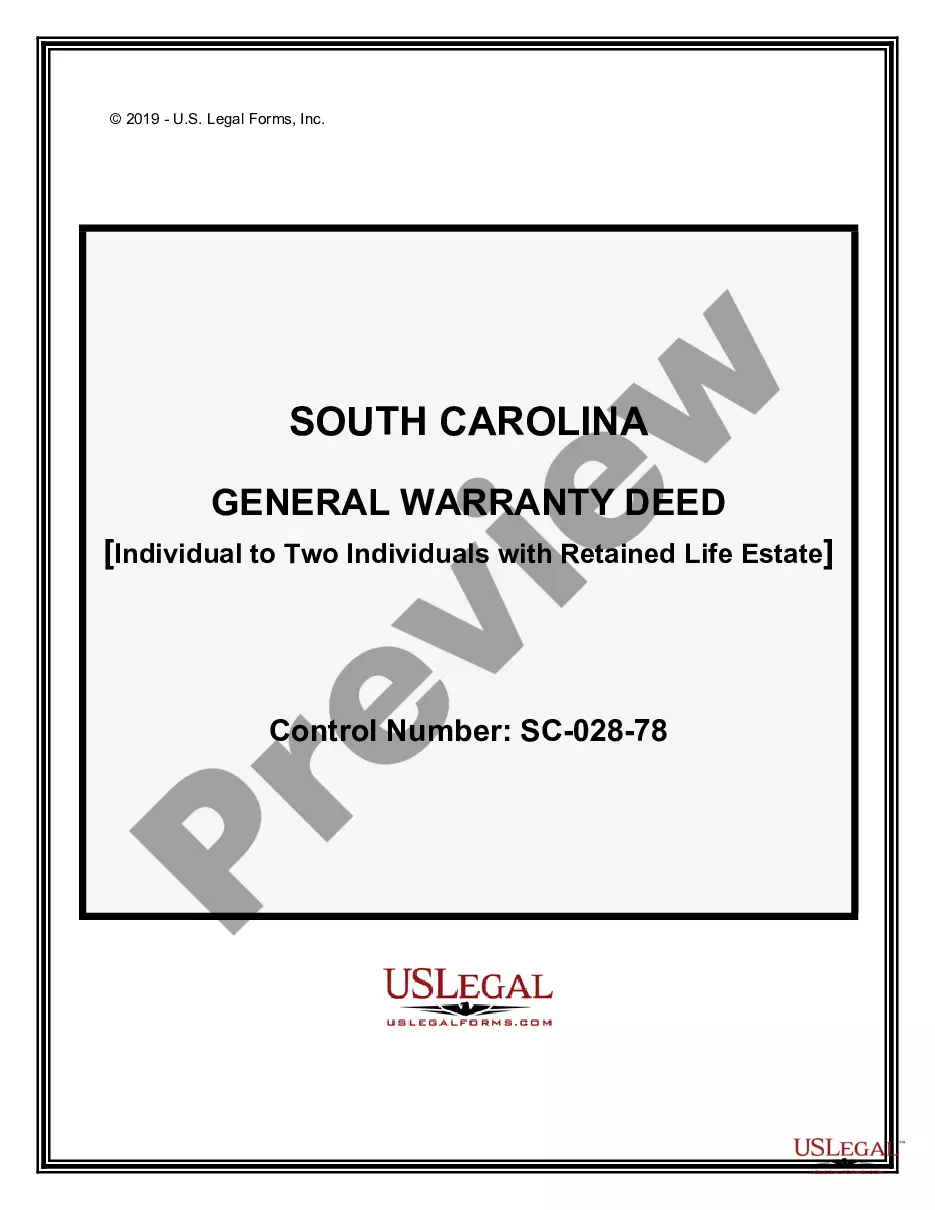
South Carolina General Warranty Deed from an Individual to Two Individuals with a Retained Life Estate in Grantor
About this form
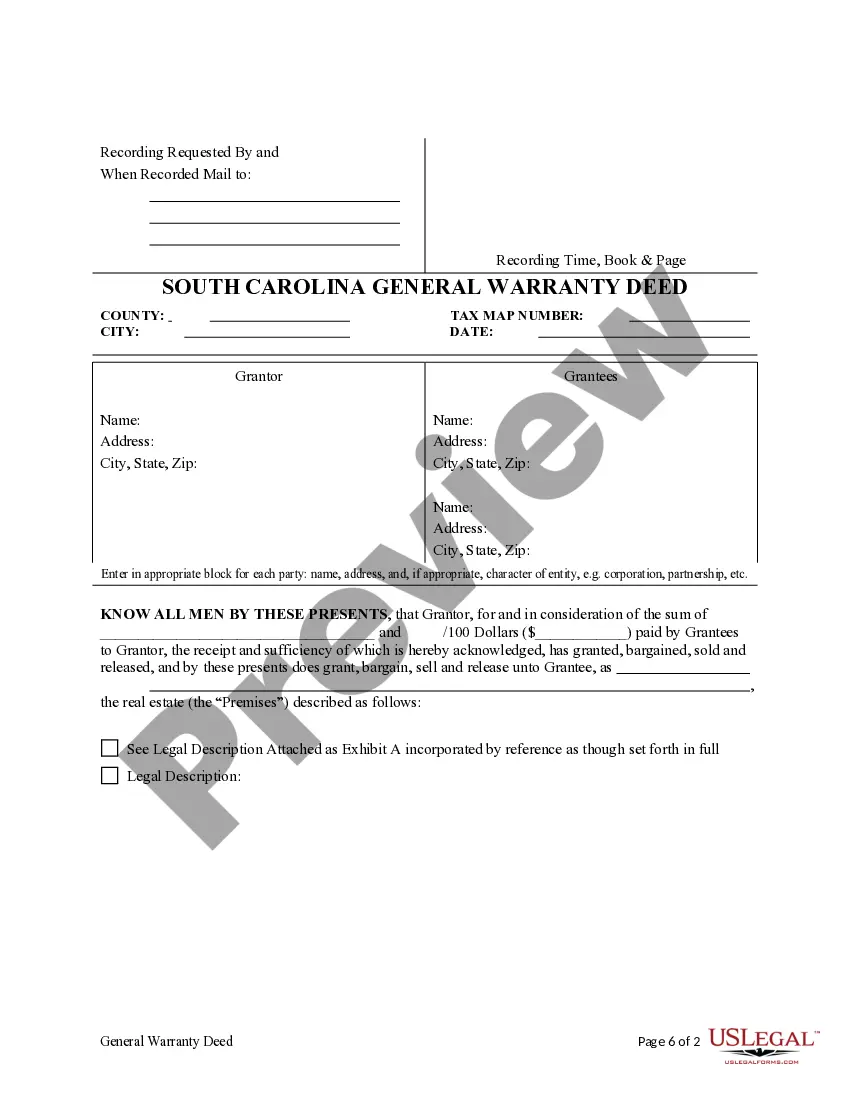
This General Warranty Deed is a legal document that facilitates the transfer of property from an individual (the Grantor) to two individuals (the Grantees) while allowing the Grantor to retain a life estate in the property. Unlike other types of deeds, a General Warranty Deed provides a comprehensive guarantee of title, ensuring that the property is free of any claims or encumbrances, except as stated in the deed itself. This form is particularly useful for personal property transfers where the Grantor wishes to establish a clear legal framework for ownership and rights associated with the property.
Form components explained
- Details of the Grantor and Grantees, including names and addresses.
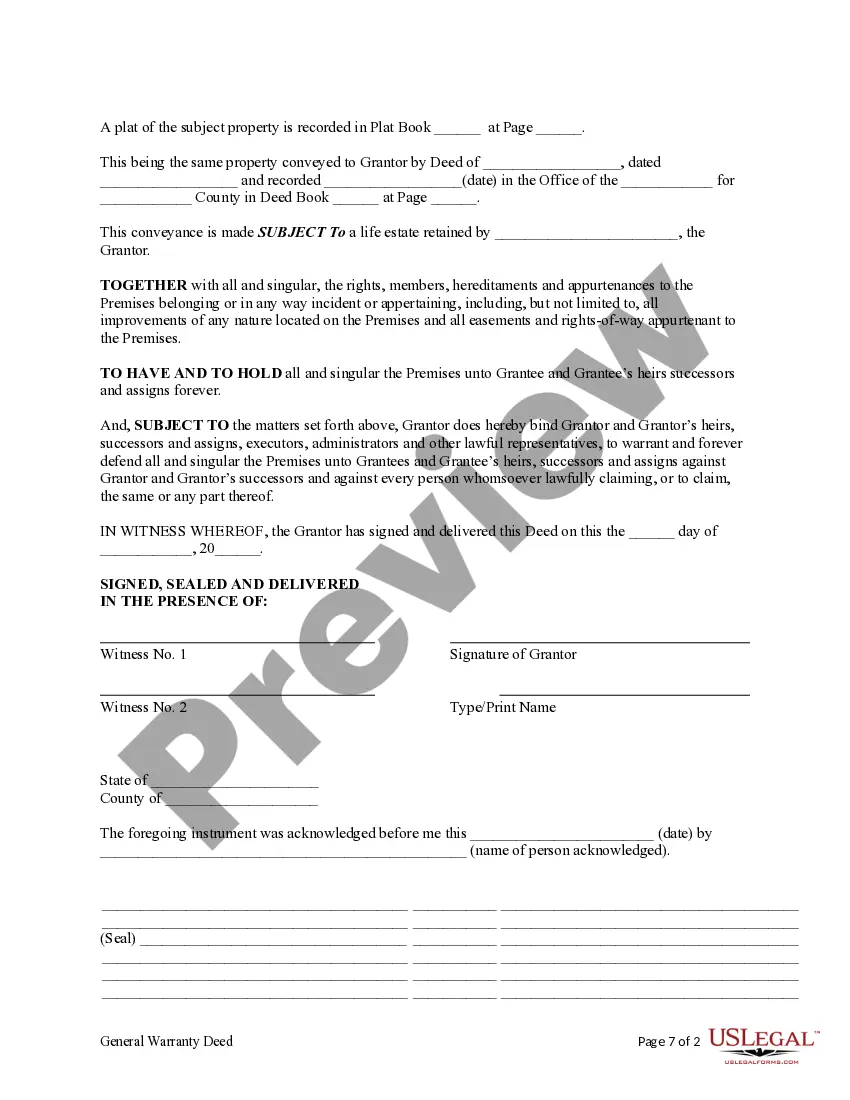
- Description of the property being transferred, including legal and geographical details.
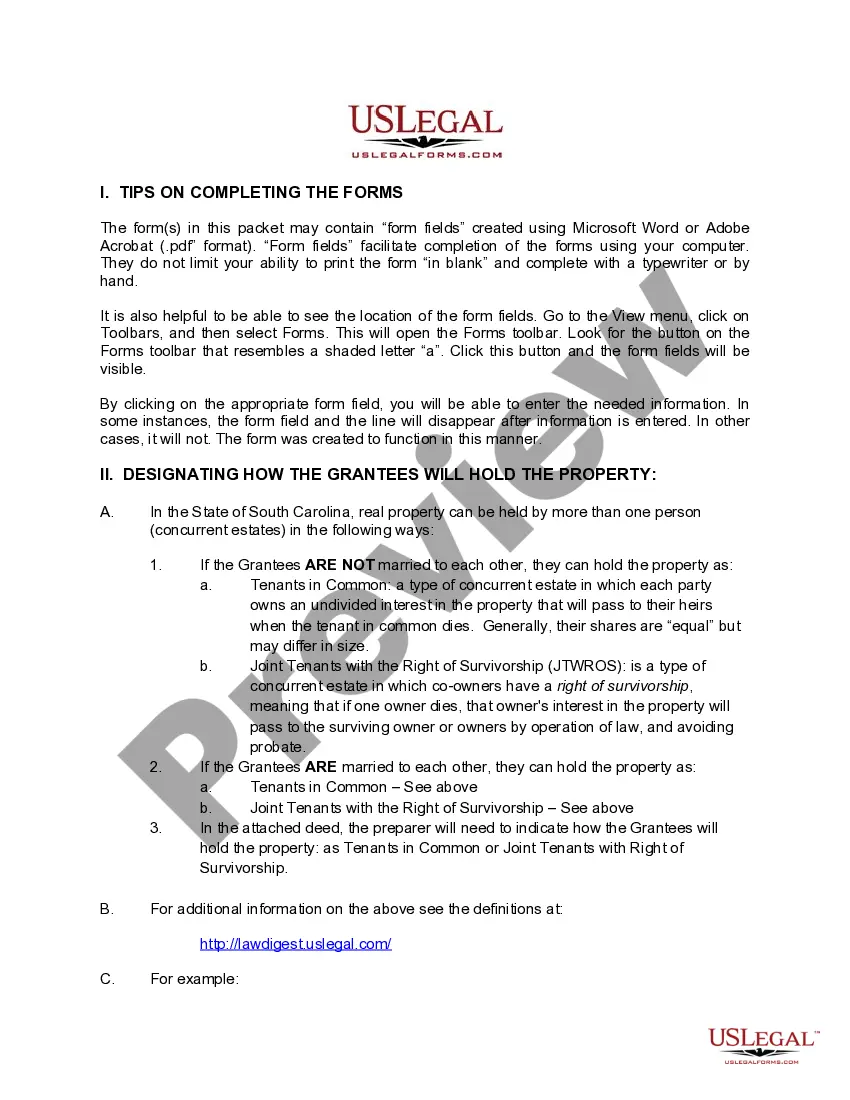
- Specification of how the Grantees will hold the property (e.g., as Joint Tenants with Right of Survivorship or Tenants in Common).
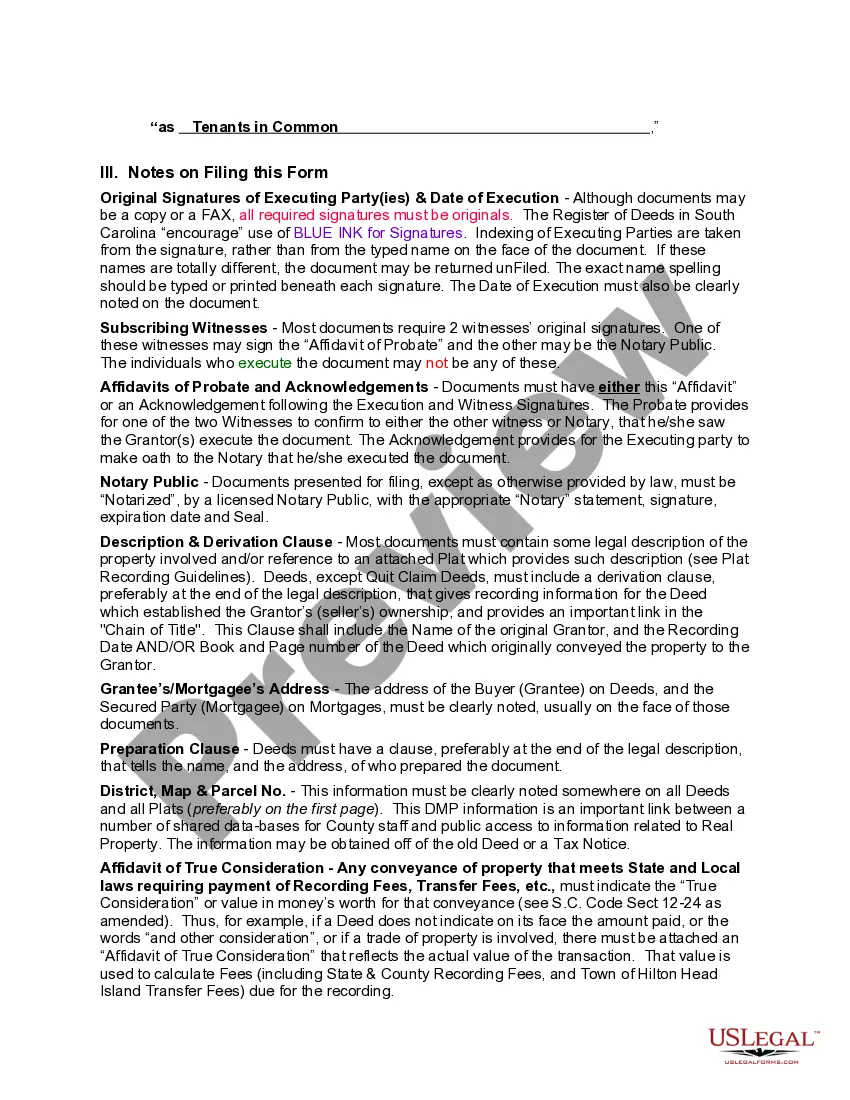
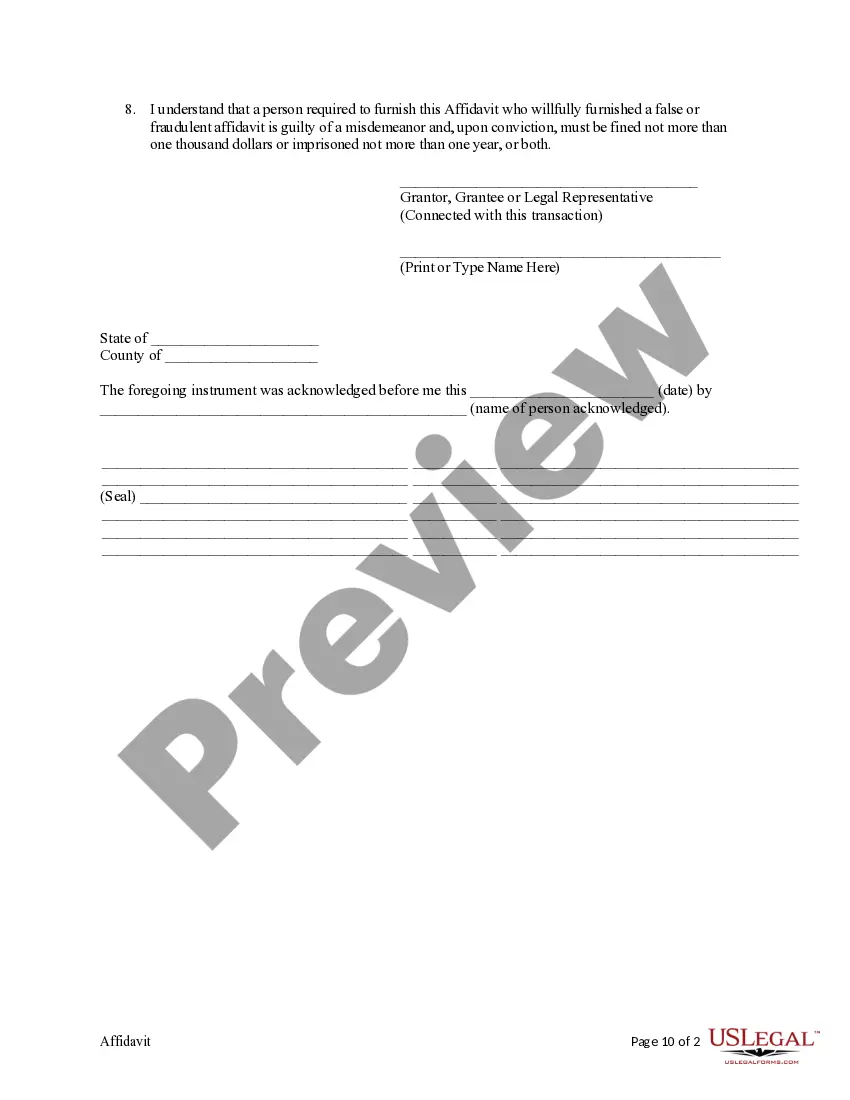
- Provisions for recording the deed, including necessary signatures and notary acknowledgments.
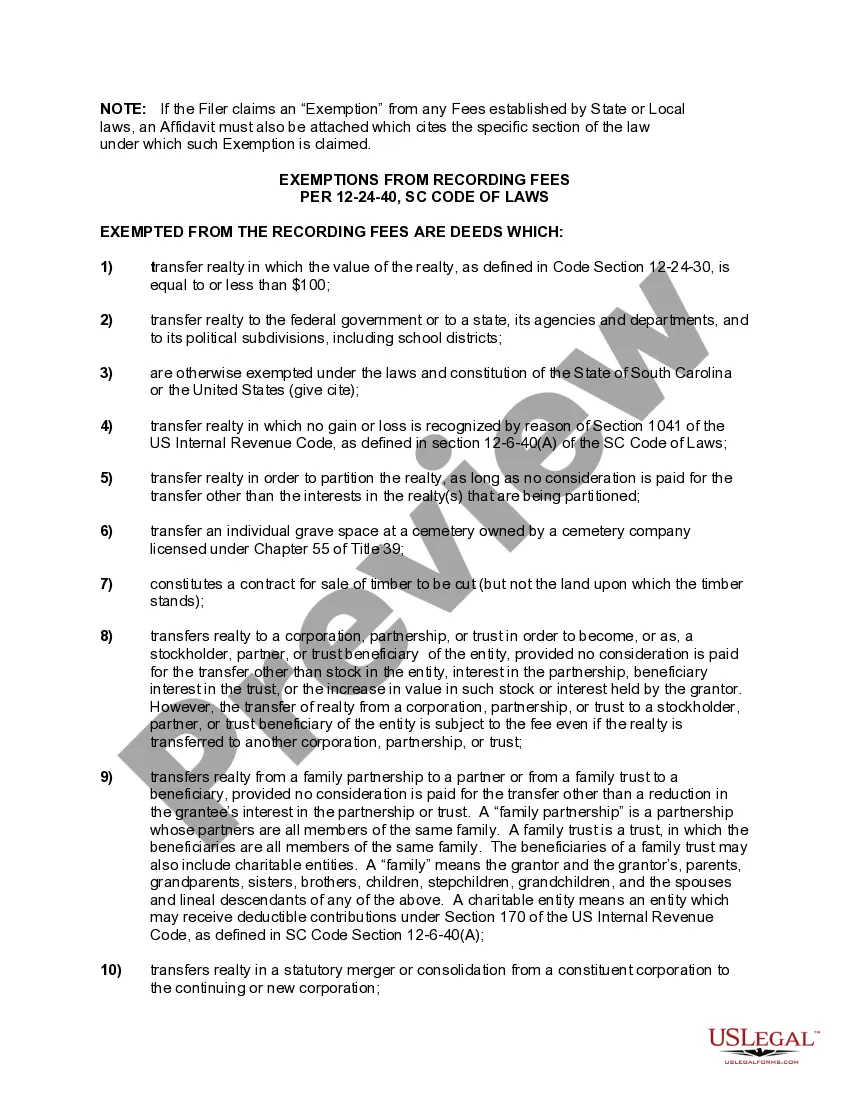
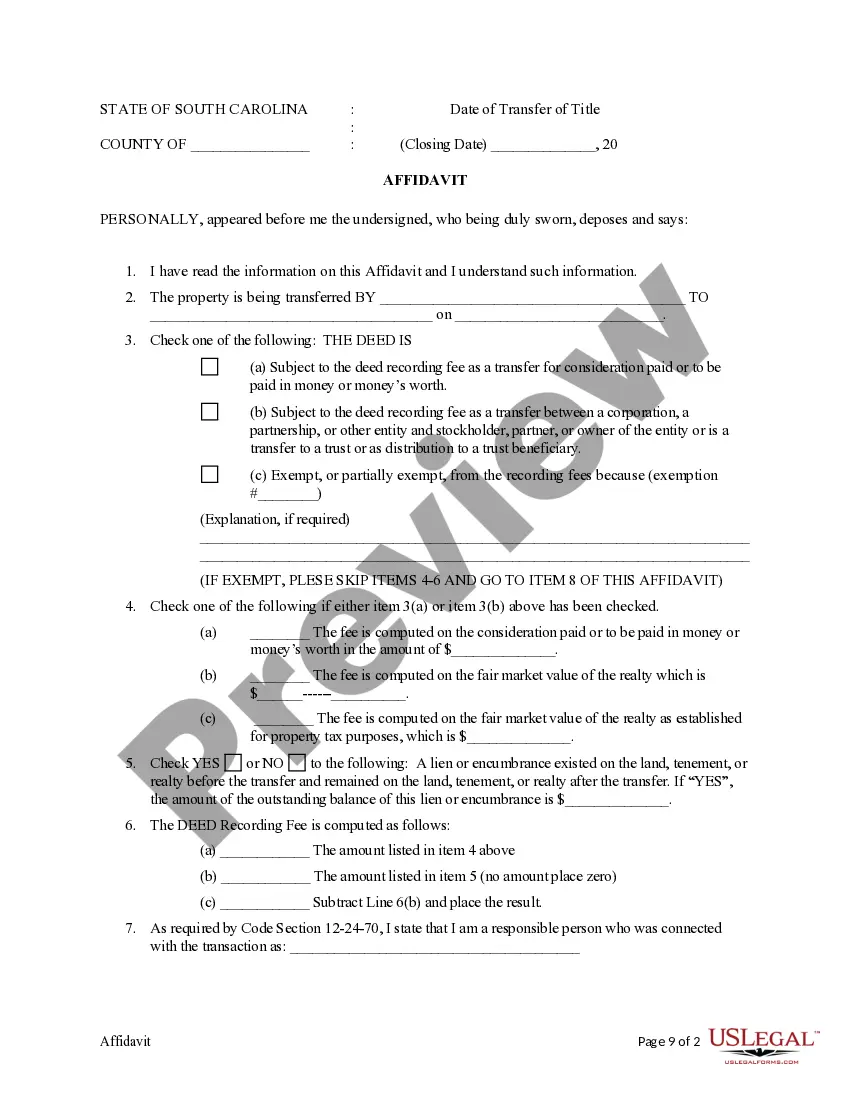
- Affidavit of True Consideration for any payments made or exemptions claimed.






Common use cases
This form is ideal when an individual wishes to transfer real estate property to two individuals while retaining the right to use the property during their lifetime. This scenario may arise in family situations, gift transfers, or estate planning, where the Grantor wants to maintain the use of the property while passing ownership to heirs or co-owners after their passing.
Who should use this form
- Individuals looking to transfer property ownership while retaining usage rights.
- Family members or friends involved in property transactions.
- Individuals engaged in estate planning or property gifting.
How to complete this form
- Identify the parties involved, including the Grantor and Grantees.
- Specify the property being transferred, ensuring all legal descriptions are accurate.
- Indicate how the Grantees will hold the property (e.g., Joint Tenants or Tenants in Common).
- Gather original signatures from all parties involved and any required witnesses.
- Have the document notarized, ensuring compliance with state requirements.
Does this form need to be notarized?
This form must be notarized to be legally valid. US Legal Forms provides secure online notarization powered by Notarize, allowing you to complete the process through a verified video call.
Get your form ready online
Our built-in tools help you complete, sign, share, and store your documents in one place.
Make edits, fill in missing information, and update formatting in US Legal Forms—just like you would in MS Word.
Download a copy, print it, send it by email, or mail it via USPS—whatever works best for your next step.
Sign and collect signatures with our SignNow integration. Send to multiple recipients, set reminders, and more. Go Premium to unlock E-Sign.
If this form requires notarization, complete it online through a secure video call—no need to meet a notary in person or wait for an appointment.
We protect your documents and personal data by following strict security and privacy standards.

Make edits, fill in missing information, and update formatting in US Legal Forms—just like you would in MS Word.

Download a copy, print it, send it by email, or mail it via USPS—whatever works best for your next step.

Sign and collect signatures with our SignNow integration. Send to multiple recipients, set reminders, and more. Go Premium to unlock E-Sign.

If this form requires notarization, complete it online through a secure video call—no need to meet a notary in person or wait for an appointment.

We protect your documents and personal data by following strict security and privacy standards.
Common mistakes to avoid
- Failing to include a complete legal description of the property.
- Not obtaining the required witness signatures.
- Forgetting to notarize the document as mandated by law.
- Leaving fields incomplete, such as the Grantees' names or addresses.
Benefits of completing this form online
- Convenience: Easily accessible for download at any time.
- Editability: Simple to fill out digitally, ensuring accuracy.
- Reliability: Drafted by licensed attorneys to meet legal standards.
- Speed: Quick processing without the need for physical visits to a lawyer.
What to keep in mind
- This General Warranty Deed allows property transfer while retaining life estate rights.
- It is essential to include accurate property descriptions and complete necessary signatures.
- Notarization is required for the deed to be valid and legally enforceable.
- Common mistakes include incomplete forms and missing signatures.
Looking for another form?
Form popularity
FAQ
The original deed is returned to the owner of the property from the office of the recorder after proper entry. The office of the Recorder of Deeds maintains a set of indexes about each deed recorded, for an easy search. Almost all states have a grantor-grantee index including a reference to all documents recorded.
After your Warranty Deed has been recorded at the County Clerk's Office, it can be sent to the grantee. However, any person or corporation can be designated as the recipient of the recorded Warranty Deed.
South Carolina does not allow real estate to be transferred with transfer-on-death deeds.
Can a life estate deed be changed? It is challenging to modify or change a life estate deed. The grantor cannot change the life estate as he or she has no power to do so after creating the life estate deed unless all of the future tenants agree. It requires the permission or consent of every one of the beneficiaries.
It's important to note that a warranty deed does not actually prove the grantor has ownership (a title search is the best way to prove that), but it is a promise by the grantor that they are transferring ownership and if it turns out they don't actually own the property, the grantor will be responsible for compensating
File a petition in probate court. The first step to transferring the property to the rightful new owners is to open up a case in probate court. Petition the court for sale and convey the property to the purchaser. Next, you must petition the court to sell the property.
The mortgage company usually prepares this deed as part of the loan package and delivers it to the title company for you to sign at closing. The title company is commonly the trustee to the deed and holds legal title to the property until the loan gets fully repaid.
Typically, the lender will provide you with a copy of the deed of trust after the closing. The original warranty deeds are often mailed to the grantee after they are recorded. These are your original copies and should be kept in a safe place, such as a fireproof lockbox or a safe deposit box at a financial institution.
A life estate deed permits the property owner to have full use of their property until their death, at which point the ownership of the property is automatically transferred to the beneficiary.In the right situations, it can be a streamlined and easy way to transfer ownership.