Transmittal Letter from Attorney to Client
Understanding this form
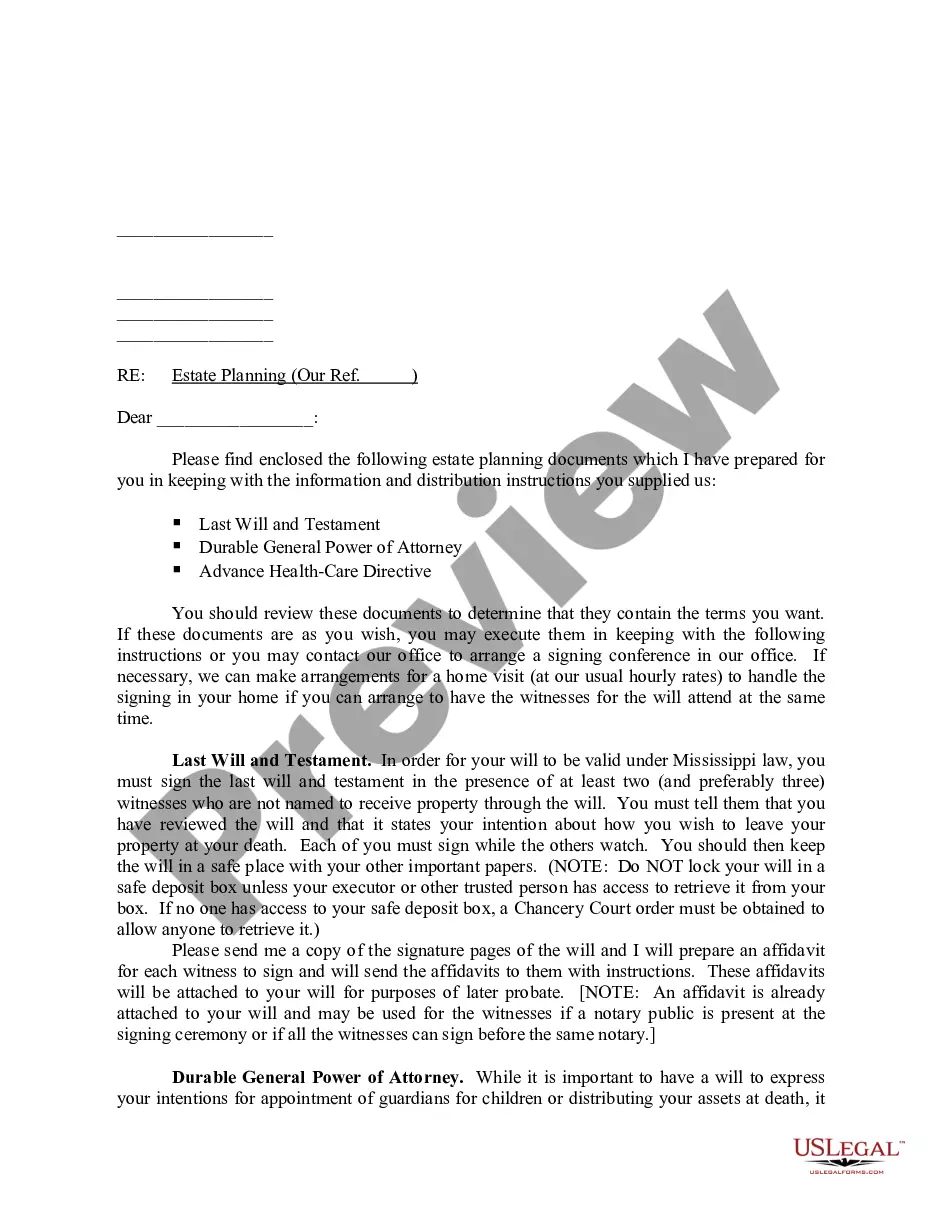
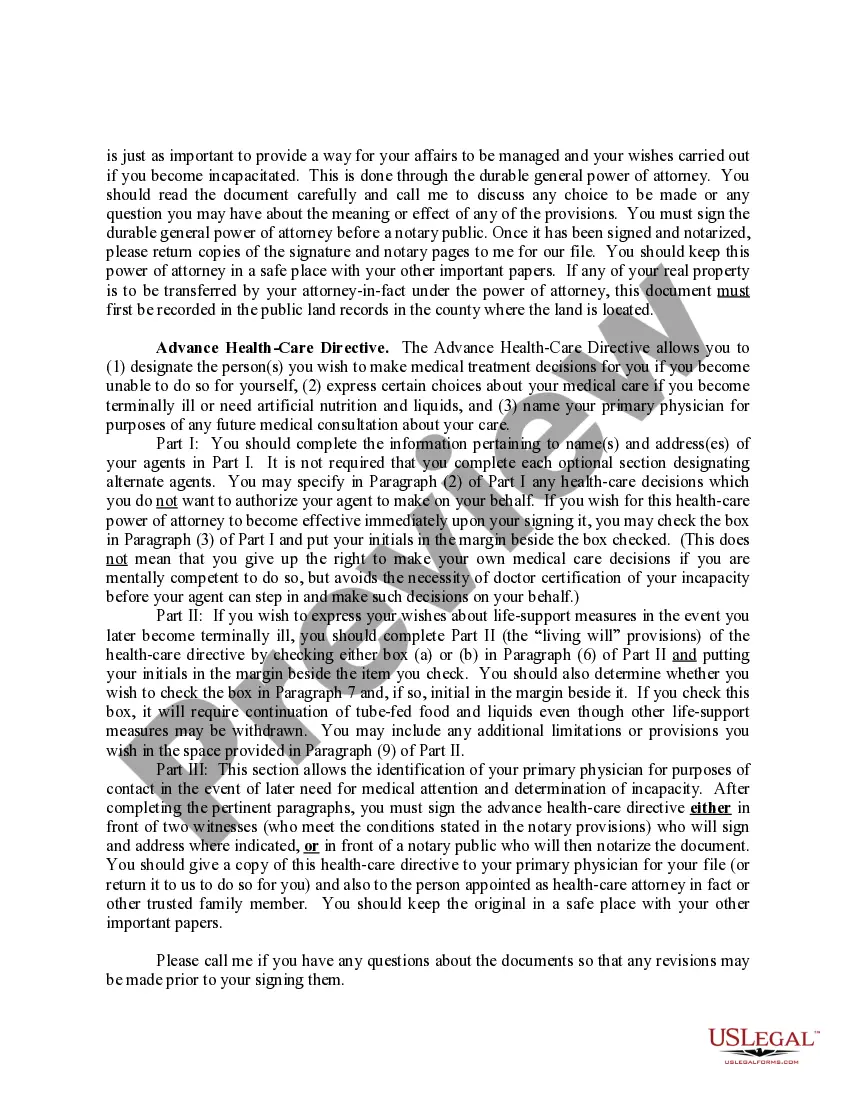
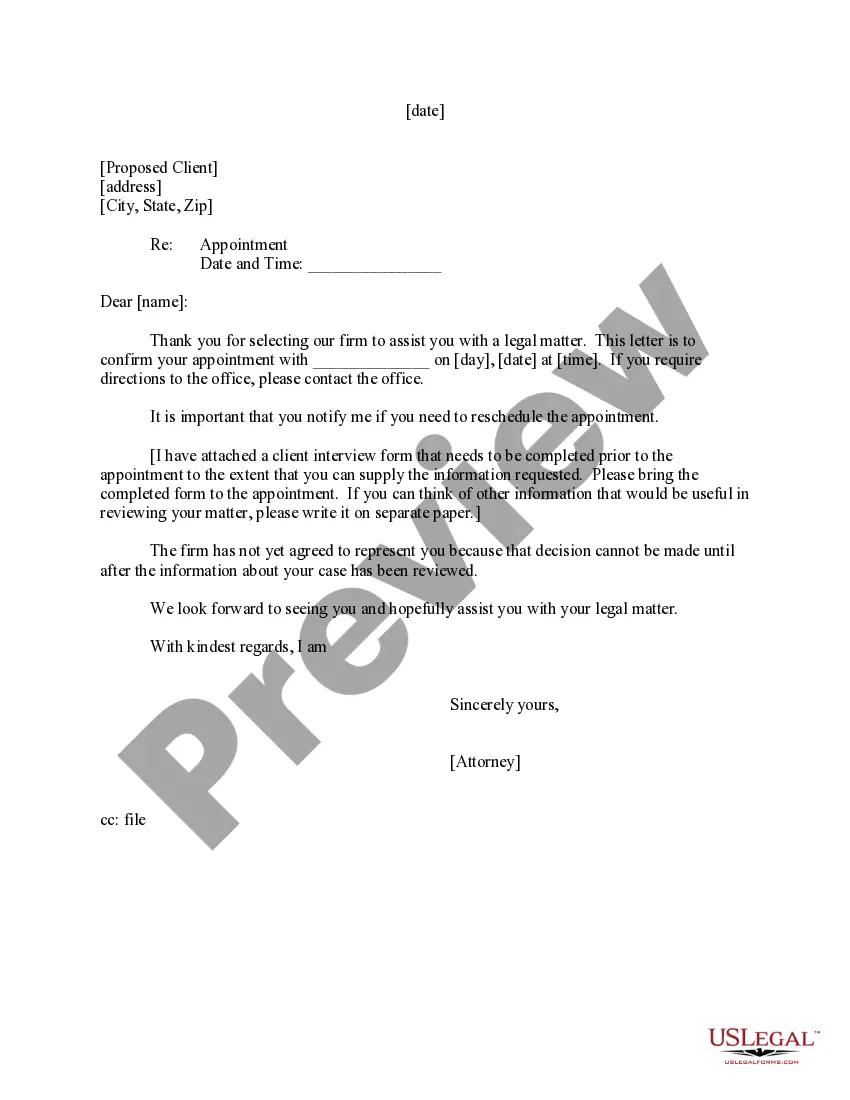
The Transmittal Letter from Attorney to Client is a correspondence used by attorneys to send important estate planning documents to their clients. This letter includes detailed descriptions of the various documents being sent, such as the Last Will and Testament, Durable General Power of Attorney, and Advance Health-Care Directive. It helps ensure that clients understand the purpose of each document and the steps they need to take, differentiating it from typical cover letters or informal communications.
What’s included in this form
- A detailed description of the Last Will and Testament, including signing requirements in the presence of witnesses.
- Instructions for executing the Durable General Power of Attorney, highlighting the need for notarization.
- Guidelines for completing the Advance Health-Care Directive, including provisions for appointing decision-makers and expressing medical care preferences.
- Recommendations for storing documents safely and retrieving them when needed.
- Contact information for the attorney in case of questions or required amendments.
When to use this form
This form is necessary when an attorney wishes to formally send estate planning documents to their client. It is particularly vital when the client has received draft versions of their Last Will, Durable General Power of Attorney, or Advance Health-Care Directive. The letter helps to clarify the execution process and provides critical instructions for handling these sensitive documents.
Intended users of this form
- Individuals who are in the process of estate planning and need to execute legal documents.
- Attorneys who prepare and send estate planning documents to their clients.
- Clients seeking understanding and instructions regarding their estate planning documents.
- Families involved in a loved oneâs estate planning who may need clear guidance on handling the documents.
Completing this form step by step
- Review each document enclosed in the transmittal letter thoroughly to confirm they meet your wishes.
- For the Last Will and Testament, ensure that you sign the document in front of at least two witnesses.
- Complete and sign the Durable General Power of Attorney in the presence of a notary public.
- Fill out the Advance Health-Care Directive, specifying your health care agents and preferences for treatment.
- Return copies of the signed documents to your attorney for their records.
- Store the original documents in a safe place with other important paperwork.
Does this form need to be notarized?
Yes, this form must be notarized to be legally valid. The Durable General Power of Attorney specifically requires notarization to ensure that the document is recognized and enforceable. US Legal Forms offers integrated online notarization services, allowing you to complete this process securely and conveniently via video call.
Get your form ready online
Our built-in tools help you complete, sign, share, and store your documents in one place.
Make edits, fill in missing information, and update formatting in US Legal Forms—just like you would in MS Word.
Download a copy, print it, send it by email, or mail it via USPS—whatever works best for your next step.
Sign and collect signatures with our SignNow integration. Send to multiple recipients, set reminders, and more. Go Premium to unlock E-Sign.
If this form requires notarization, complete it online through a secure video call—no need to meet a notary in person or wait for an appointment.
We protect your documents and personal data by following strict security and privacy standards.

Make edits, fill in missing information, and update formatting in US Legal Forms—just like you would in MS Word.

Download a copy, print it, send it by email, or mail it via USPS—whatever works best for your next step.

Sign and collect signatures with our SignNow integration. Send to multiple recipients, set reminders, and more. Go Premium to unlock E-Sign.

If this form requires notarization, complete it online through a secure video call—no need to meet a notary in person or wait for an appointment.

We protect your documents and personal data by following strict security and privacy standards.
Avoid these common issues
- Neglecting to sign documents in the presence of required witnesses or a notary.
- Failing to communicate specific wishes or preferences within the Advance Health-Care Directive.
- Inadequately reviewing documents for correctness before execution.
- Locking documents away without ensuring trusted individuals can access them if needed.
Why complete this form online
- Convenience: Download your forms anytime, anywhere, without need for physical appointments.
- Editability: Modify template forms to fit your specific circumstances before printing.
- Reliability: Obtain forms crafted by licensed attorneys, ensuring they meet legal requirements.
- Time-saving: Quickly access and fill out necessary estate planning documents without delay.
Looking for another form?
Form popularity
FAQ
A letter or memo of transmittal conveys the report to the person requesting it, or the primary audience for the report. It provides a context for reading the report. Unlike the report proper, a letter of transmittal may use ?I? and be less formal in tone than the rest of the report.
THE BUILDING BLOCKS OF LEGAL CORRESPONDENCE1 Transmittal Letters. Letters Requesting or Sending Information. Advice Letters. Demand Letters. Instruction Letters. Combination Letters.
A Transmittal Letter is a business letter and is formatted ingly, it should include the recipient's address, sender's address, distribution list, a salutation and closing. It typically includes why it should receive the reader's consideration, and what the reader should do with it.
The letter of transmittal may be a part of the appraisal report, or it may be a separate document. The Standards of Professional Appraisal Practice do not require the use of a letter of transmittal. In many cases, such as with brief form reports, a letter of transmittal is not practical.
A letter of transmittal is a short cover letter that accompanies a more complex document to explain its purpose. This letter clarifies the intent of the document or report so that recipients understand what they are reading and why it was sent to them.
The main purpose of a transmittal is to document the sending of documents, files, or samples. If the documents are distributed by hand, the sender can request the receiver sign the transmittal as proof of delivery.
There are three different types of transmittals that can be sent out to those involved with a project. They are submittals, requests for information, and strangely enough, transmittals.
Definitions of transmittal. the act of sending a message; causing a message to be transmitted.