Pennsylvania Electrical Contractor Package
What is this form package?
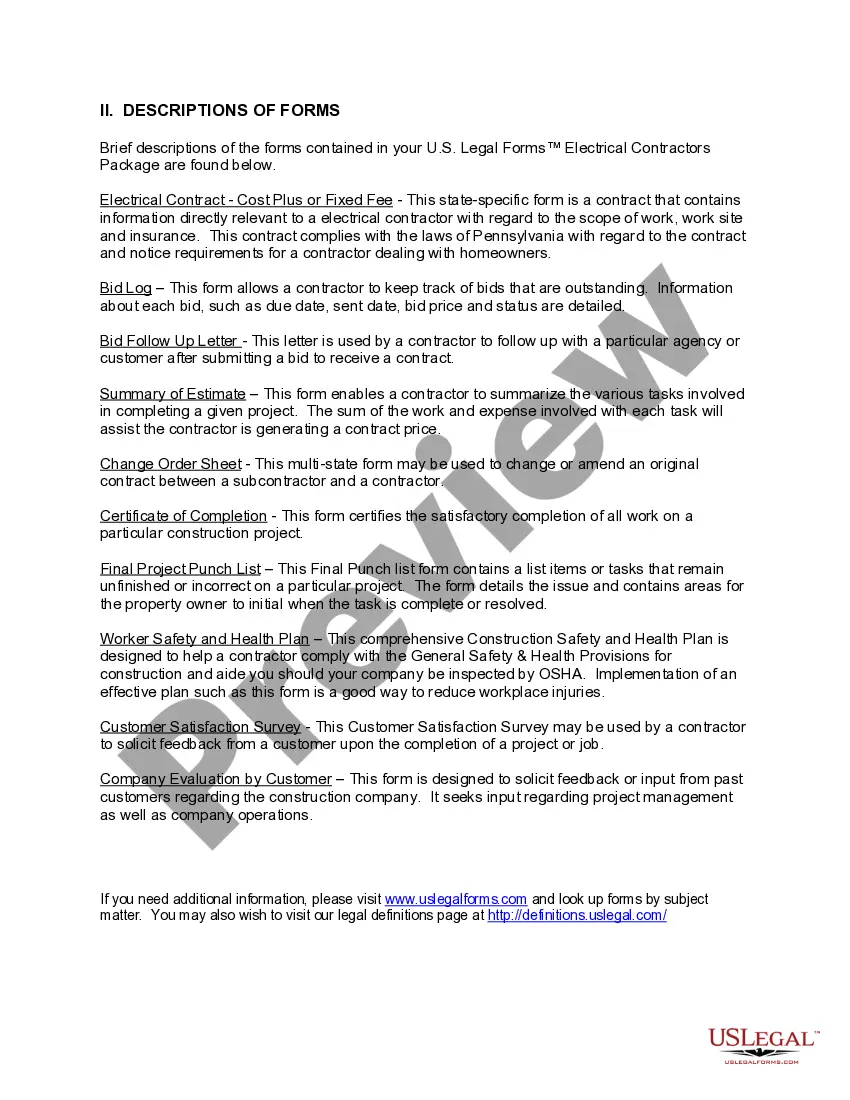
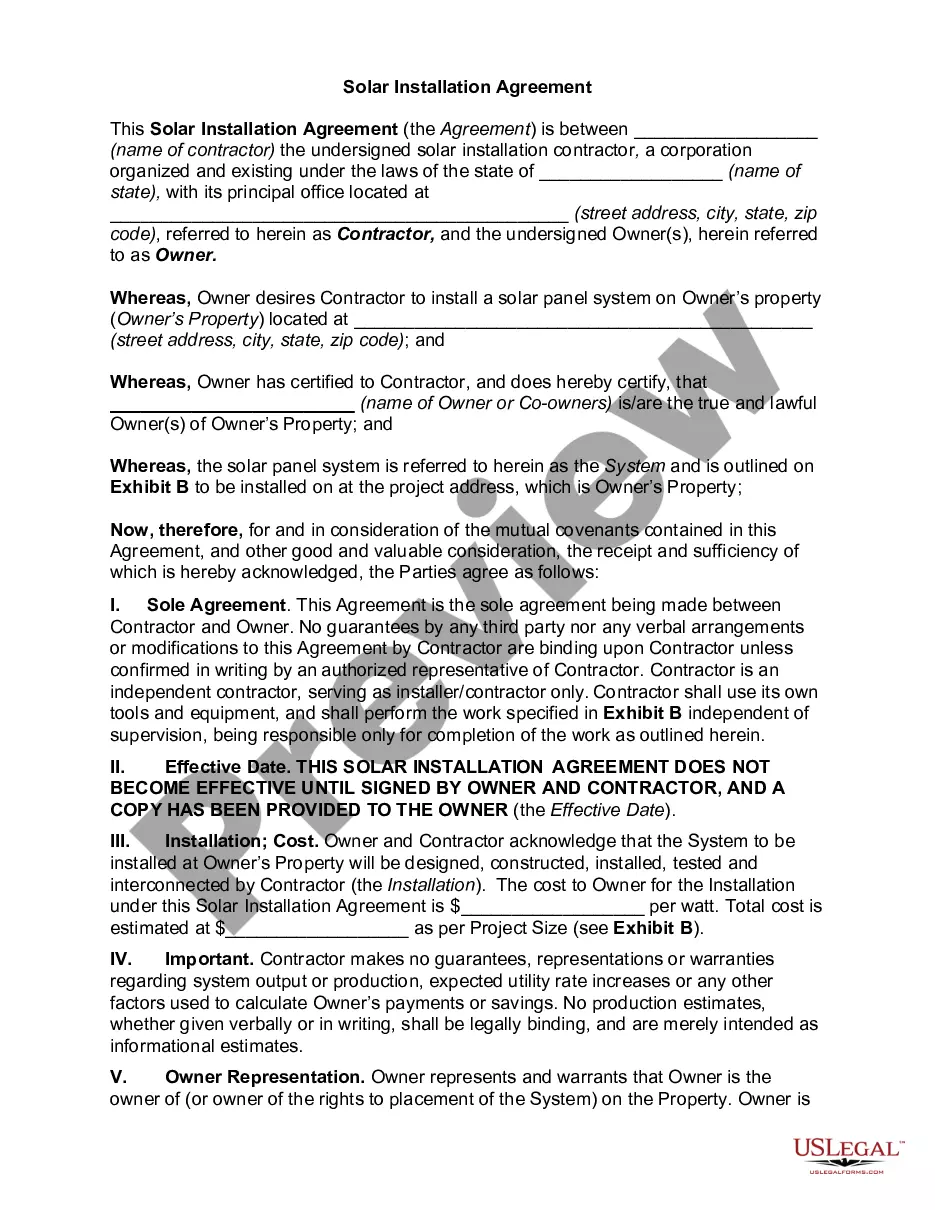
The Pennsylvania Electrical Contractor Package is a comprehensive collection of legal forms designed specifically for electricians and electrical contractors working in Pennsylvania. This package addresses the legal issues that may arise between electrical contractors, property owners, suppliers, and subcontractors during electrical projects, whether for new constructions or repairs. By offering an electrical contract that complies with Pennsylvania state law, this package serves as an essential tool for professionals in the electrical industry.
Documents contained in this package
- Electrical Contract for Contractor
- Contractor's Bid Log
- Contractor's Bid Follow Up Letter
- Contractor's Summary of an Estimate
- Contractor's Final Punch List
- Customer Satisfaction Survey
- Construction Company Evaluation by a Customer
- Construction Safety and Health Plan
- Change Order for Construction or Repairs by Contractor
- Certification of Completion by Contractor







When to use this form package
This form package is useful in various scenarios, including:
- When entering into an electrical contract with a client or subcontractor.
- During the bidding process for electrical projects.
- When tracking and managing bid submissions.
- To formalize changes to existing contracts through change orders.
- When completing a project and ensuring all tasks are finalized.
Who needs this form package
- Electrical contractors operating in Pennsylvania.
- Subcontractors involved in electrical work.
- Property owners hiring electricians for construction or repair projects.
- Suppliers of electrical materials.
Completing these forms step by step
- Review the included forms and identify which ones are needed for your project.
- Collect essential information such as project details and parties involved.
- Enter relevant data into the forms, ensuring all fields are completed accurately.
- Sign and date the required documents where necessary.
- Store completed forms securely for future reference and record-keeping.
Notarization requirements for forms in this package
Notarization is not commonly needed for forms in this package. However, if your state’s laws require it, our notarization service, powered by Notarize, allows you to finalize documents online 24/7 without in-person visits.
Get your form ready online
Our built-in tools help you complete, sign, share, and store your documents in one place.
Make edits, fill in missing information, and update formatting in US Legal Forms—just like you would in MS Word.
Download a copy, print it, send it by email, or mail it via USPS—whatever works best for your next step.
Sign and collect signatures with our SignNow integration. Send to multiple recipients, set reminders, and more. Go Premium to unlock E-Sign.
If this form requires notarization, complete it online through a secure video call—no need to meet a notary in person or wait for an appointment.
We protect your documents and personal data by following strict security and privacy standards.

Make edits, fill in missing information, and update formatting in US Legal Forms—just like you would in MS Word.

Download a copy, print it, send it by email, or mail it via USPS—whatever works best for your next step.

Sign and collect signatures with our SignNow integration. Send to multiple recipients, set reminders, and more. Go Premium to unlock E-Sign.

If this form requires notarization, complete it online through a secure video call—no need to meet a notary in person or wait for an appointment.

We protect your documents and personal data by following strict security and privacy standards.
Common mistakes
- Neglecting to complete all fields in the contract, which can lead to misunderstandings.
- Failing to keep a copy of submitted documents for your records.
- Not following up on bids or changes to contracts, which can delay projects.
- Using outdated forms, leading to non-compliance with current laws.
Advantages of online completion
- Convenient access to all necessary forms in one package.
- Editability allows customization of forms to fit specific project needs.
- Reliability from forms drafted by licensed attorneys ensuring legal validity.
- Efficient management of documents and records for your projects.
Looking for another form?
Form popularity
FAQ
From the way it is written, it sounds like you cannot do any electrical work yourself unless you are a licensed electrician. A permit is required for the electrical work, and you can bet that with this law in place, they will not issue a permit unless it is issued to a licensed electrician.
Are electrical shops profitable? Ans- Yes. Depending on your location, and monthly sales average you can earn a handsome profit of around 10%. Generally, people cover their investments in the business within 2 years of operation and tend to generate a steady cash flow with occasional profits.
Electricians usually charge between $50 to $100 per hour. Most homeowners pay a typical range between $162 and $522 for an electrician to visit their home and complete electrical repairs. Both hourly and project rates vary depending on the type of project, license and experience of the service provider.
Across the electrical and mechanical construction industry, gross margins were up almost 2 percent in 2017, but overall profitability decreased by 1 percent to 4.1 percent of revenue.
Our latest figures for 2018 show the average annual taxable income for an electrical contractor is $91,788.
According to the Construction Financial Management Association (www.cfma.org), the average pre-tax net profit for general contractors is between 1.4 and 2.4 percent and for subcontractors between 2.2 to 3.5 percent.
The average pay for an Electrician is ZAR 256,121 a year and ZAR 123 an hour in South Africa.
A general rule for supplies is to mark them up anywhere from 2 percent to 4 percent before taxes to cover price hikes. Mark up your supplies up between 7 and 15 percent to cover your overhead. Bid each electrician and helper to cover hourly wages, worker's compensation, and any additional benefits you may offer.
For electrical contractors, overhead generally runs at between 13% and 20% of total sales. The smallest contractors generally have the highest percentages of overhead, and very large contractors have the lowest percentages.