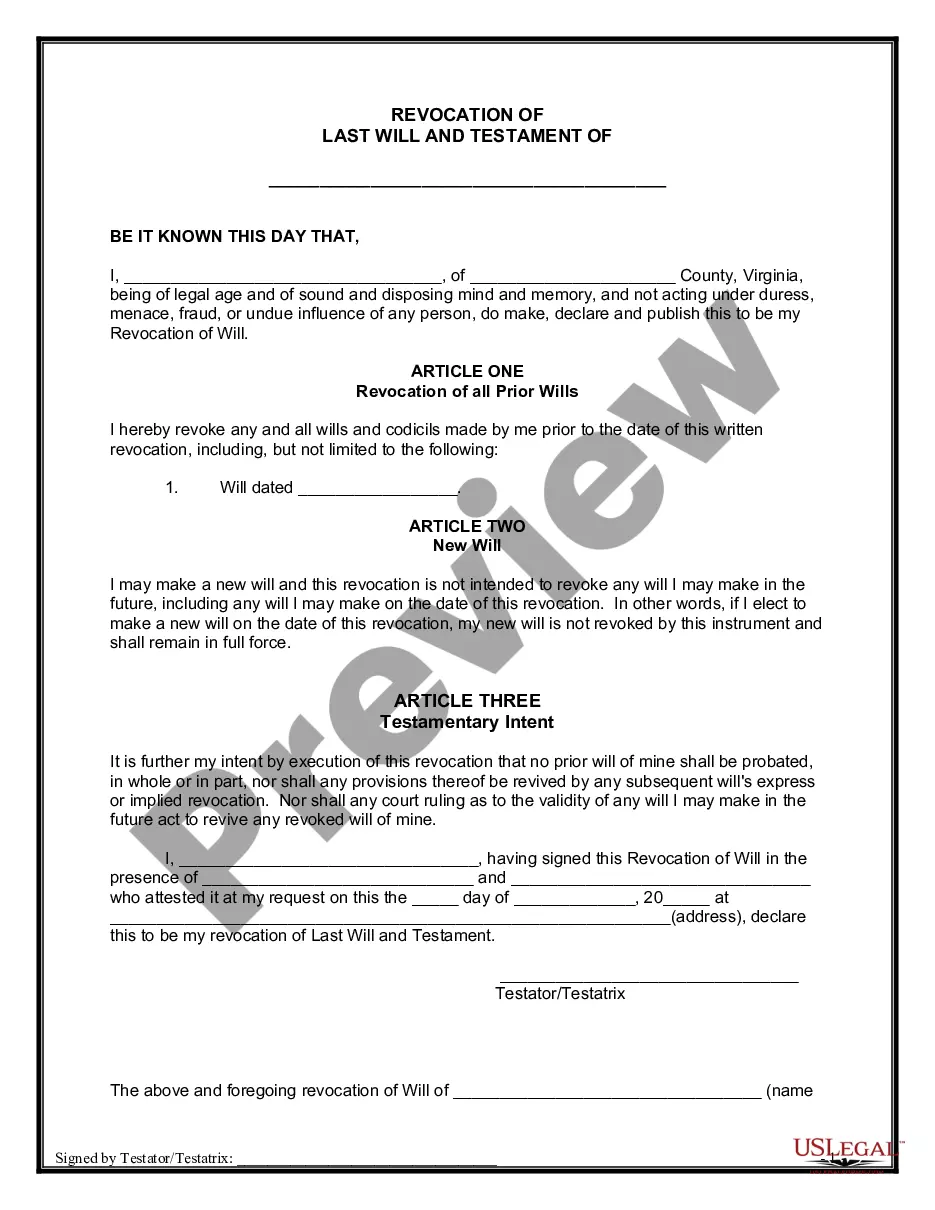
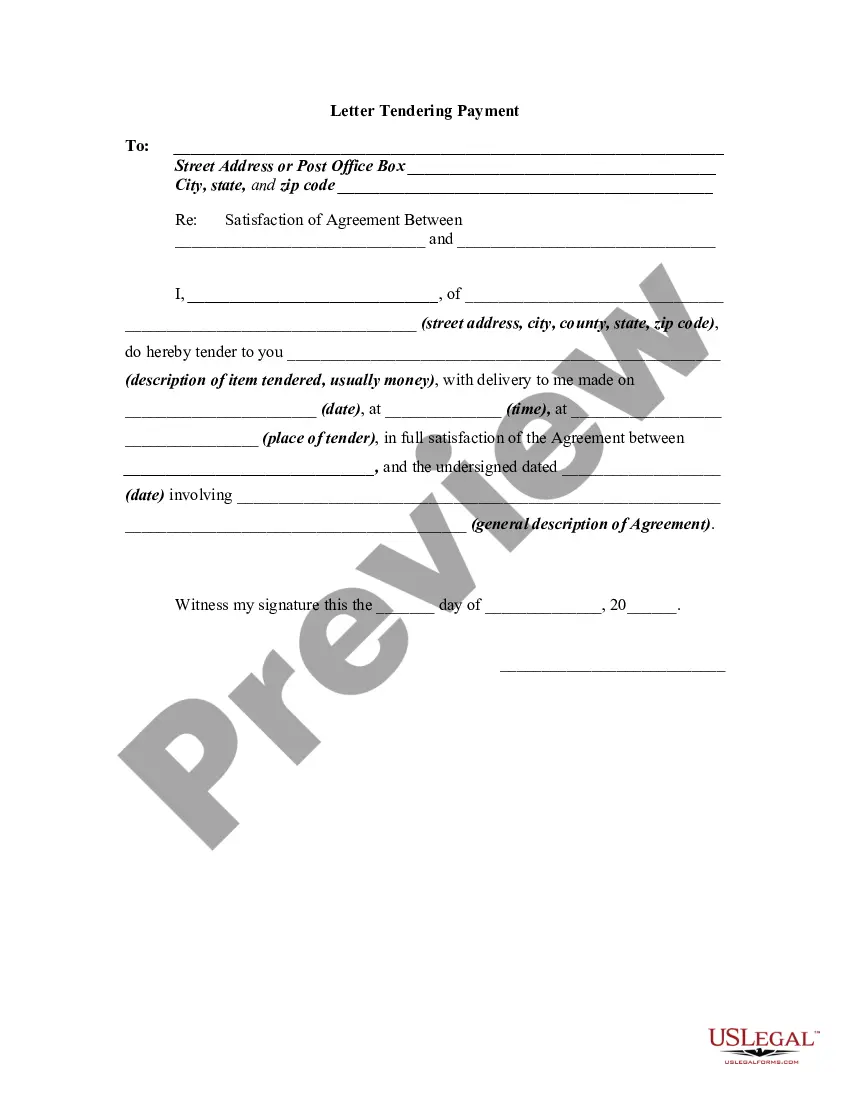
Letter Tendering Payment
What is this form?
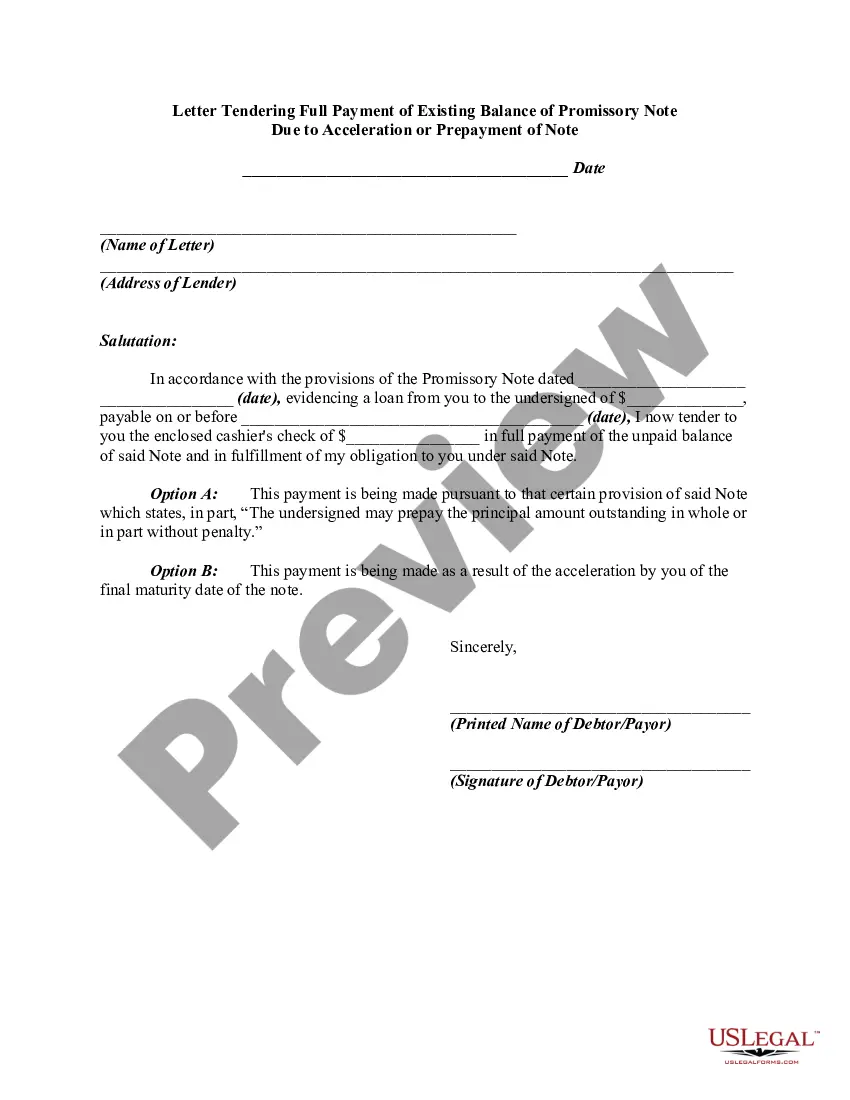
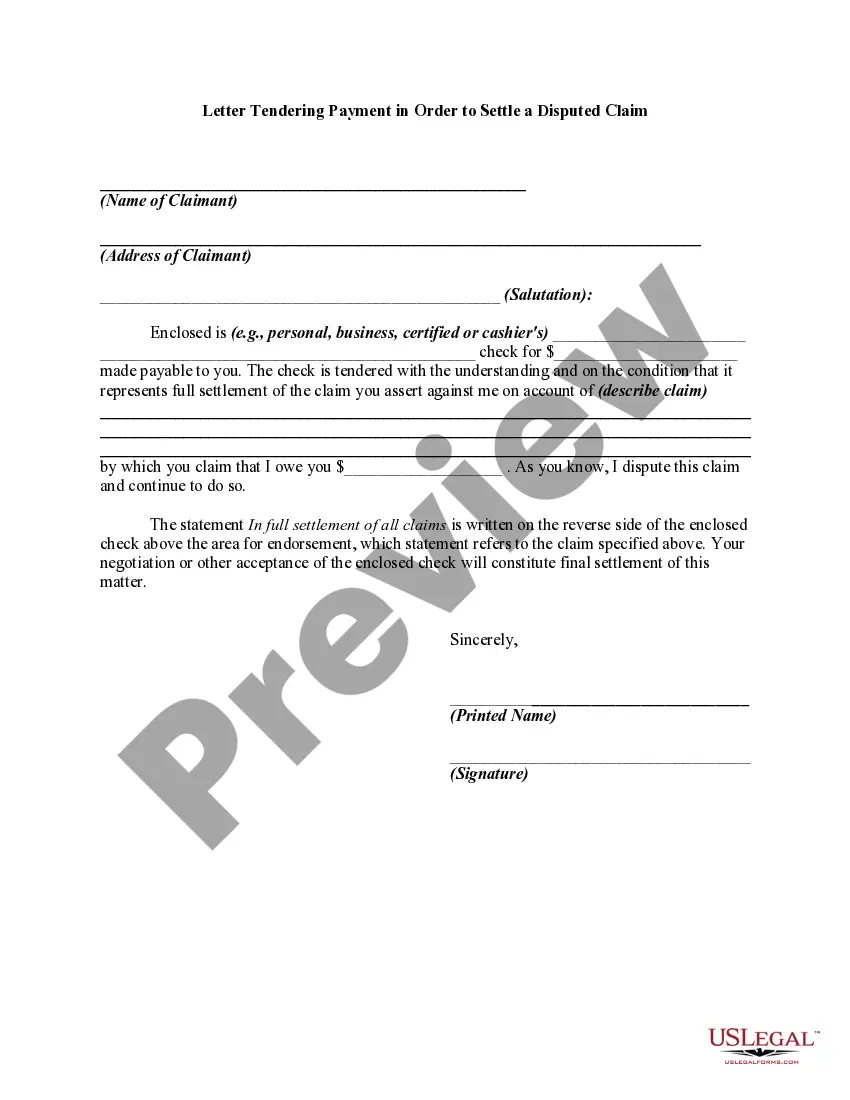
The Letter Tendering Payment is a formal document used to offer a payment to settle a debt or obligation. It serves as a clear record of the debtor's intent to fulfill their financial responsibilities. By using this form, parties can avoid disputes about payment terms and ensure that the transaction is completed effectively. Unlike other forms of payment agreements, this letter emphasizes the unconditional offer to pay, thereby relieving the debtor of further obligations once the payment is accepted.
Key parts of this document
- Parties involved: Identifies the creditor and debtor's names and addresses.
- Details of payment: Specifies the amount being tendered and the form of payment (e.g., cash, check).
- Agreement reference: Mentions the agreement that the payment is intended to satisfy.
- Date and time: States when the payment will be delivered.
- Signature: Requires the debtor's signature to validate the payment offer.
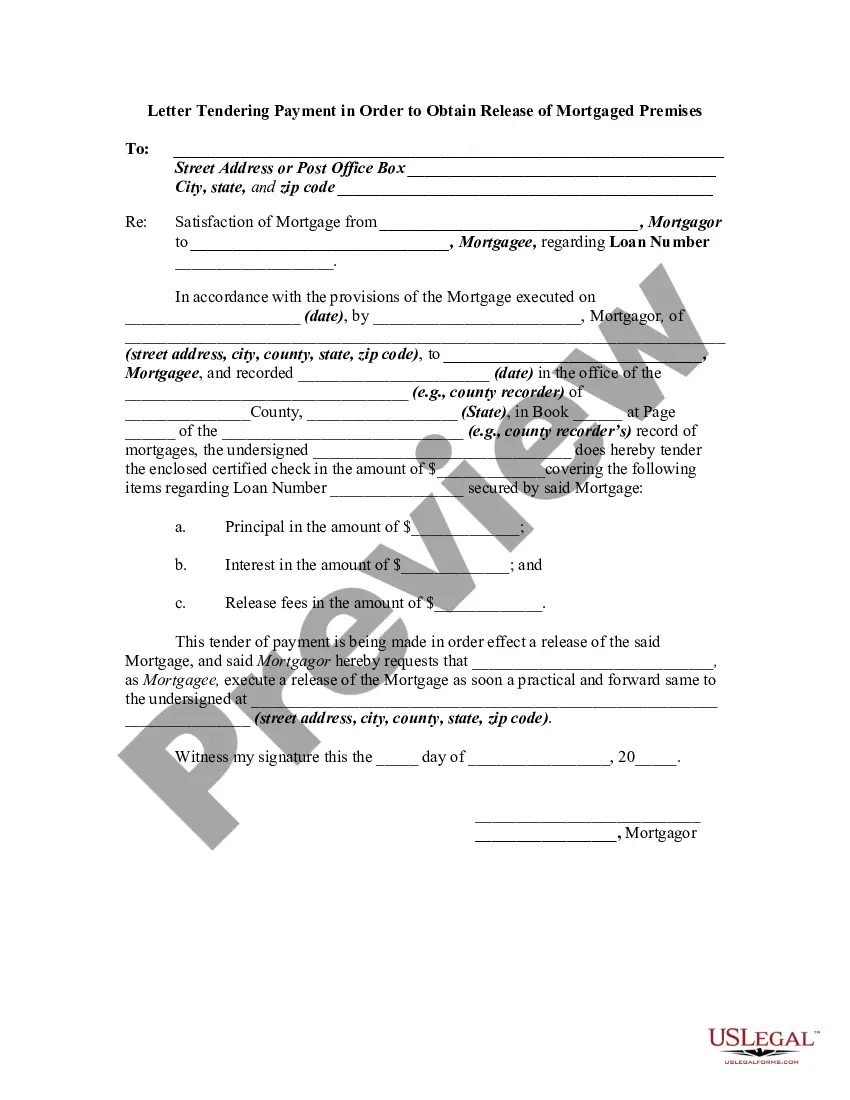
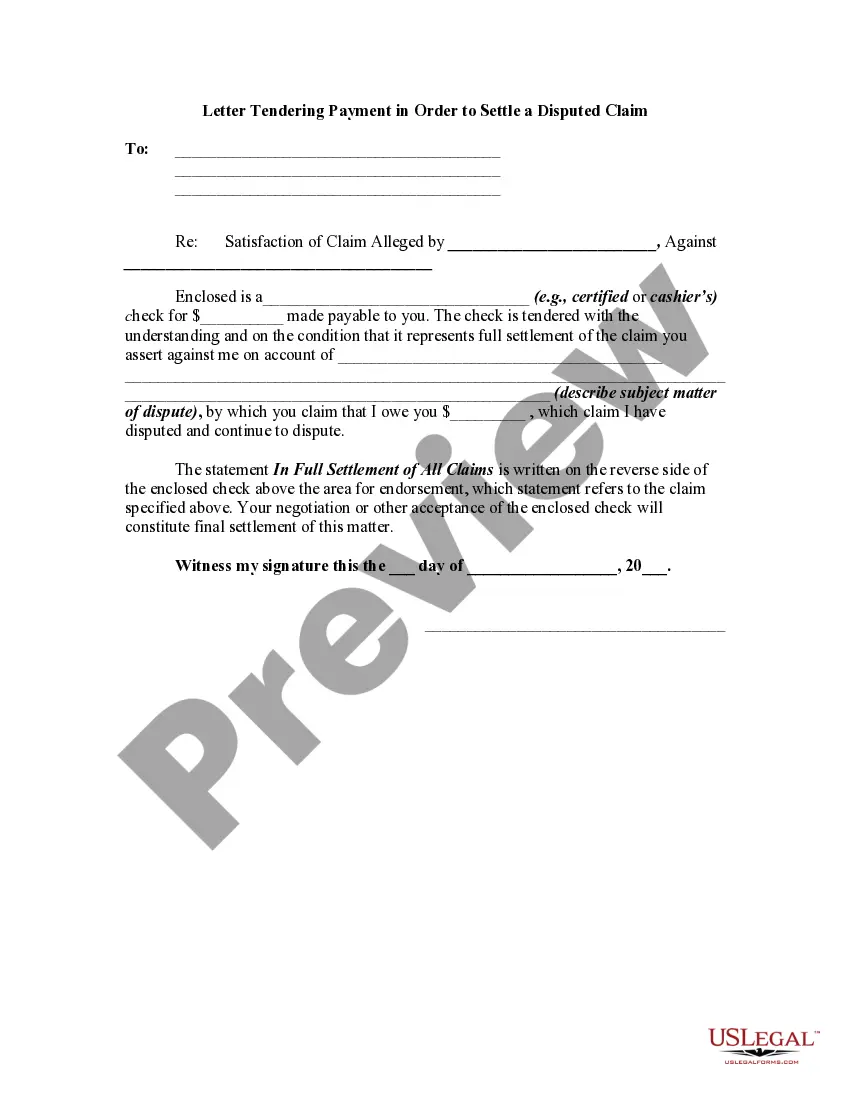
When this form is needed
This form is essential when a debtor wishes to formally offer payment to settle a debt. It is particularly useful in situations where there may be a disagreement about payment terms, or when the debtor wants to ensure they fulfill their obligation to avoid further liabilities. Additionally, it can be used in business transactions, settlements of contracts, or any scenario involving financial agreements.
Who should use this form
- Debtors looking to settle their debts formally.
- Individuals involved in contractual agreements requiring a payment offer.
- Businesses needing to document a tender of payment to avoid disputes.
- Individuals seeking to clear their financial liabilities with proof of payment.
How to prepare this document
- Identify the parties: Fill in the names and addresses of both the creditor and debtor.
- Describe the payment: Clearly state the amount and type of payment being offered.
- Reference the agreement: Include details about the agreement related to the payment.
- Specify the delivery of payment: Indicate when and where the payment will be delivered.
- Sign the document: Ensure the debtor signs the form to validate the payment offer.
Does this form need to be notarized?
This form usually doesn’t need to be notarized. However, local laws or specific transactions may require it. Our online notarization service, powered by Notarize, lets you complete it remotely through a secure video session, available 24/7.
Get your form ready online
Our built-in tools help you complete, sign, share, and store your documents in one place.
Make edits, fill in missing information, and update formatting in US Legal Forms—just like you would in MS Word.
Download a copy, print it, send it by email, or mail it via USPS—whatever works best for your next step.
Sign and collect signatures with our SignNow integration. Send to multiple recipients, set reminders, and more. Go Premium to unlock E-Sign.
If this form requires notarization, complete it online through a secure video call—no need to meet a notary in person or wait for an appointment.
We protect your documents and personal data by following strict security and privacy standards.

Make edits, fill in missing information, and update formatting in US Legal Forms—just like you would in MS Word.

Download a copy, print it, send it by email, or mail it via USPS—whatever works best for your next step.

Sign and collect signatures with our SignNow integration. Send to multiple recipients, set reminders, and more. Go Premium to unlock E-Sign.

If this form requires notarization, complete it online through a secure video call—no need to meet a notary in person or wait for an appointment.

We protect your documents and personal data by following strict security and privacy standards.
Mistakes to watch out for
- Failing to provide accurate information about the payment amount.
- Not referencing the original agreement correctly.
- Omitting the date and time for payment delivery.
- Not signing the document, leading to an unenforceable offer.
Why complete this form online
- Convenient access: Downloadable format allows for easy completion and customization.
- Reliable templates: Created by licensed attorneys, ensuring legal compliance.
- Editability: Users can tailor the form to their specific needs easily.
- Quick completion: Streamlines the process of settling debts and obligations.
Legal use & context
- This form is a legally recognized method to document an offer of payment.
- It serves as evidence of the debtor's intention to satisfy an obligation.
- Proper use can prevent disputes regarding the payment and its acceptance.
Quick recap
- The Letter Tendering Payment is essential for formally offering payments to settle debts.
- It includes critical elements like payment details and references to agreements.
- Accurate completion can prevent legal disputes and clarify obligations.
Looking for another form?


Form popularity
FAQ
A letter of invitation to tender. The form of tender. Preliminaries: including pre-construction information and site waste management plan (if required). The form of contract, contract conditions and amendments.
A short introduction thanking the organisation for inviting your company to tender. A unique reason why you should be given the job. A commitment statement to making the contract a success. An administrative note on some aspect of the tender can be included.
Cover Everything Asked. Executive Summary. Illustrations & Graphics. Detailed Project Costing. The Team that will Execute the Tender. Non-Disclosure Agreement (NDA) Client Need.
A tender of payment may be defined as "an unconditional offer by a debtor or obligor to pay another, in current coin of the realm, a sum not less in amount than that due on a specified debt or obligation."' Tender of payment typically arises within the law of commercial paper when a party obligated on a negotiable
Tender of payment is the antecedent of consignation; in other words, while the first is the preparatory act, the second is the principal act which will produce the effects of payment.Tender of payment is by its very nature extrajudicial in character, while consignation is judicial.
A short introduction thanking the organisation for inviting your company to tender. A unique reason why you should be given the job. A commitment statement to making the contract a success. An administrative note on some aspect of the tender can be included.
Establish facts. Don't assume everyone knows the facts. Refer to evidence. If there's evidence (like a contract), you don't need to include it, but you should refer to it. Make a demand. Be specific as to what you want. Set a deadline and establish method of payment. Offer a consequence.
One of the most powerful tools in a defense counsel's repertoire is the tender letter. Tendering a defense involves assigning that client's defense, and the costs associated with that defense, to another party pursuant to a contract or other agreement. The tender letter is the formal mechanism by which that happens.