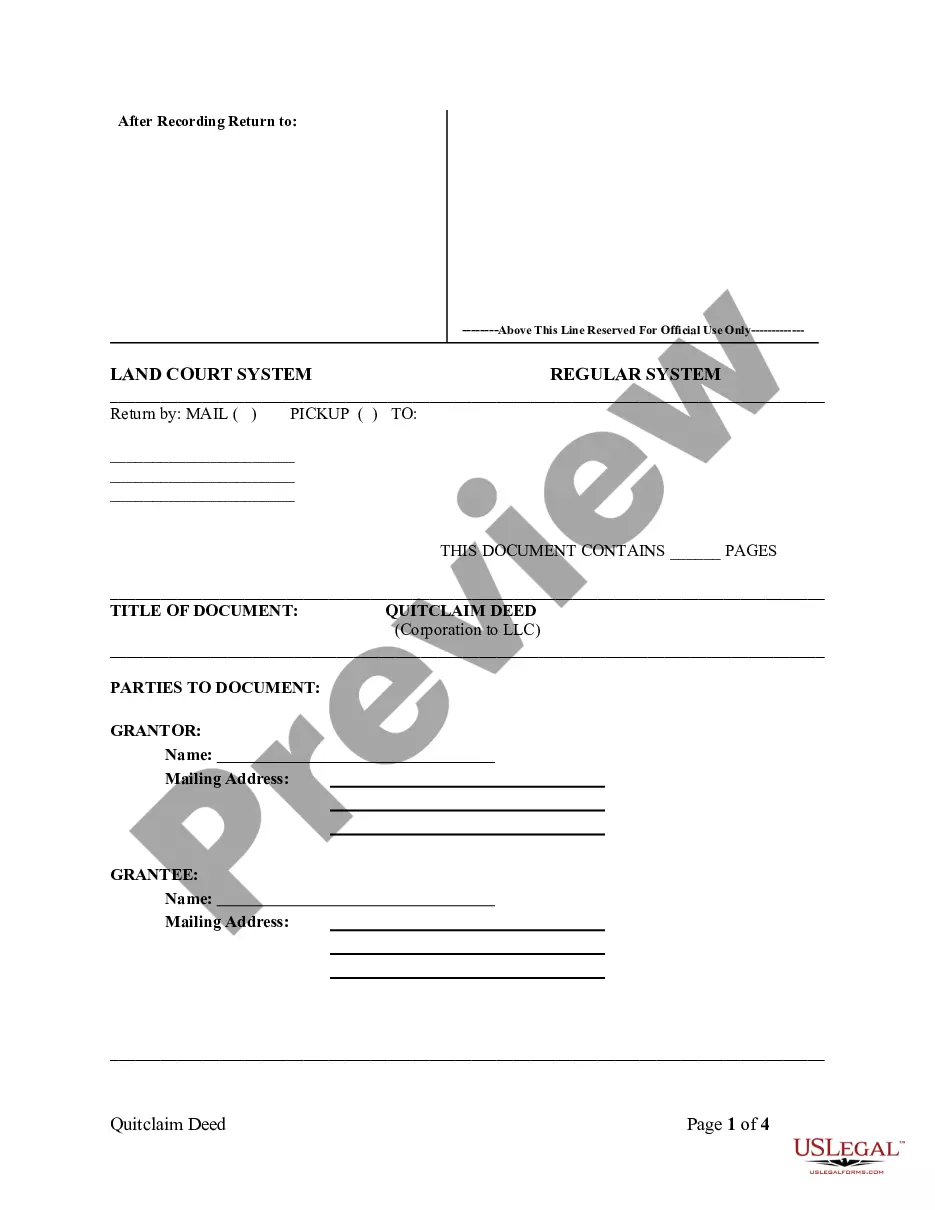
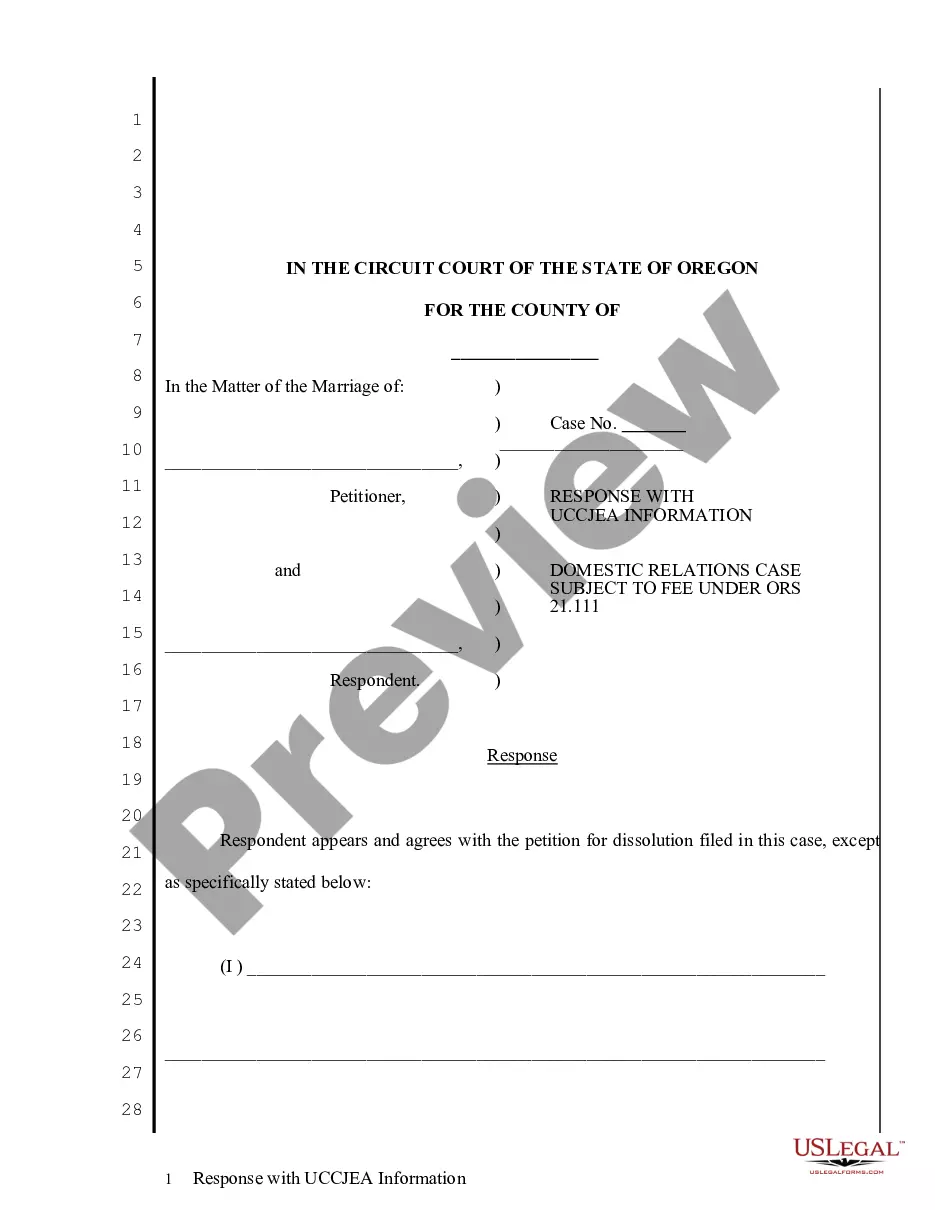
Oregon Response with UCCJEA Information
What is this form?
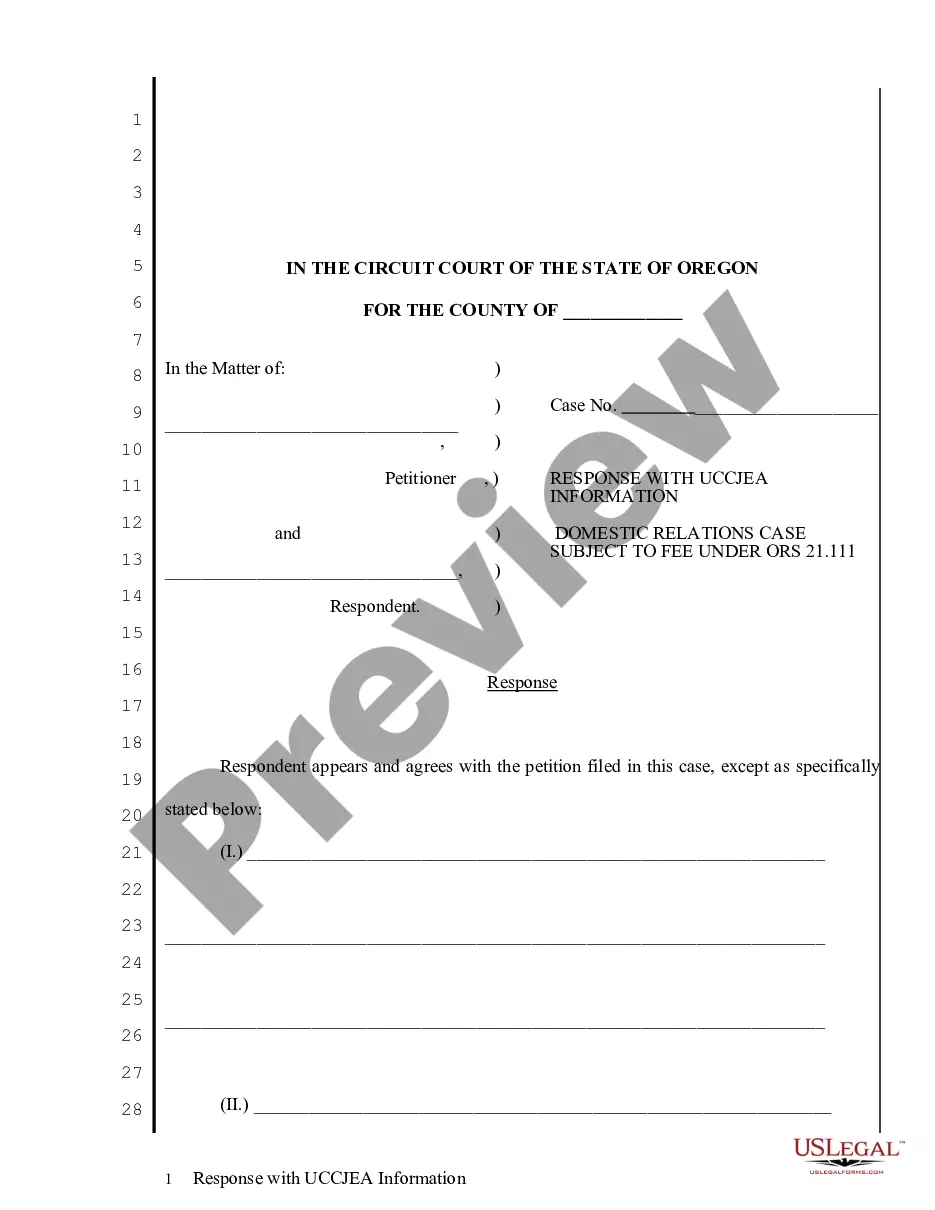
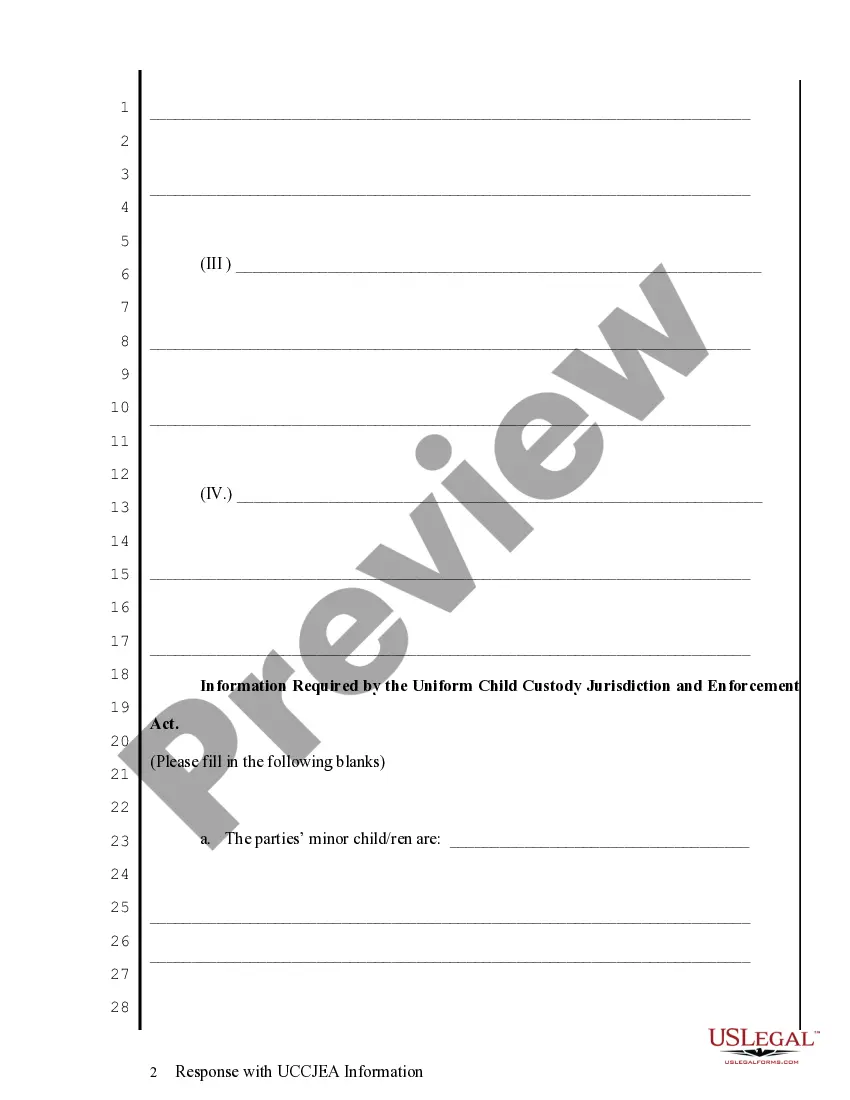
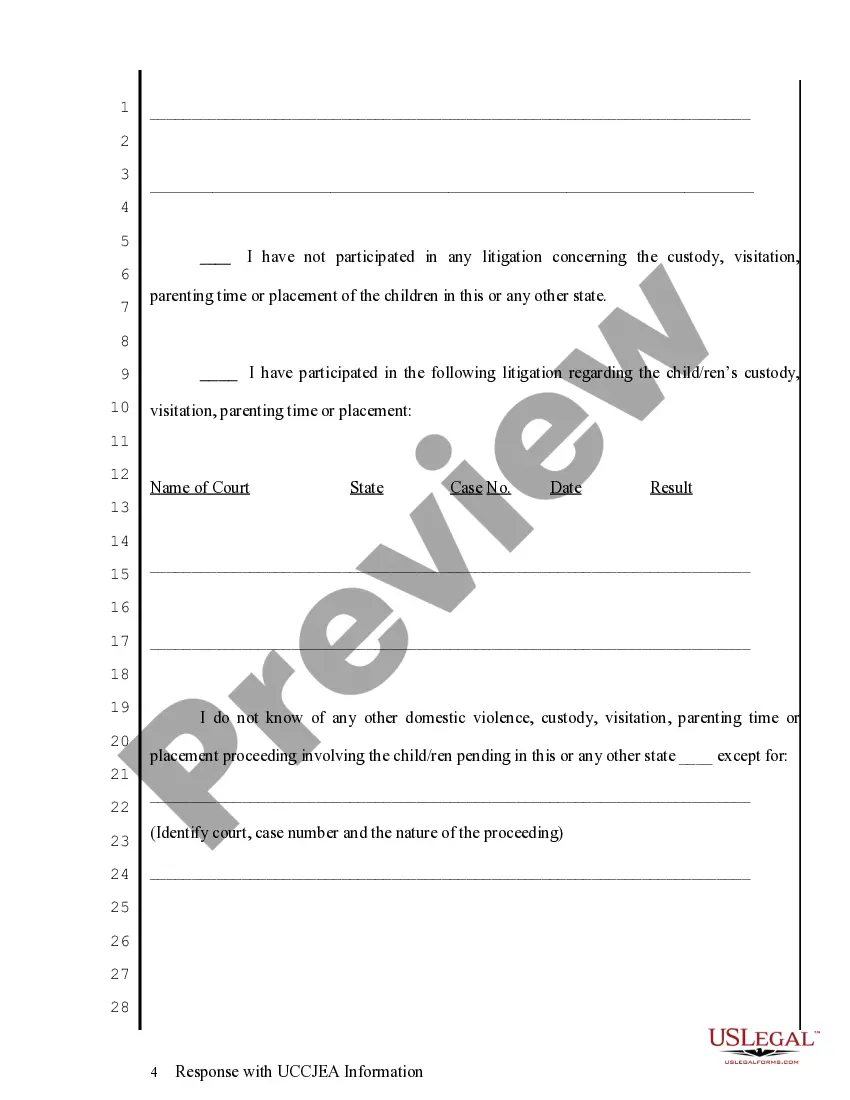
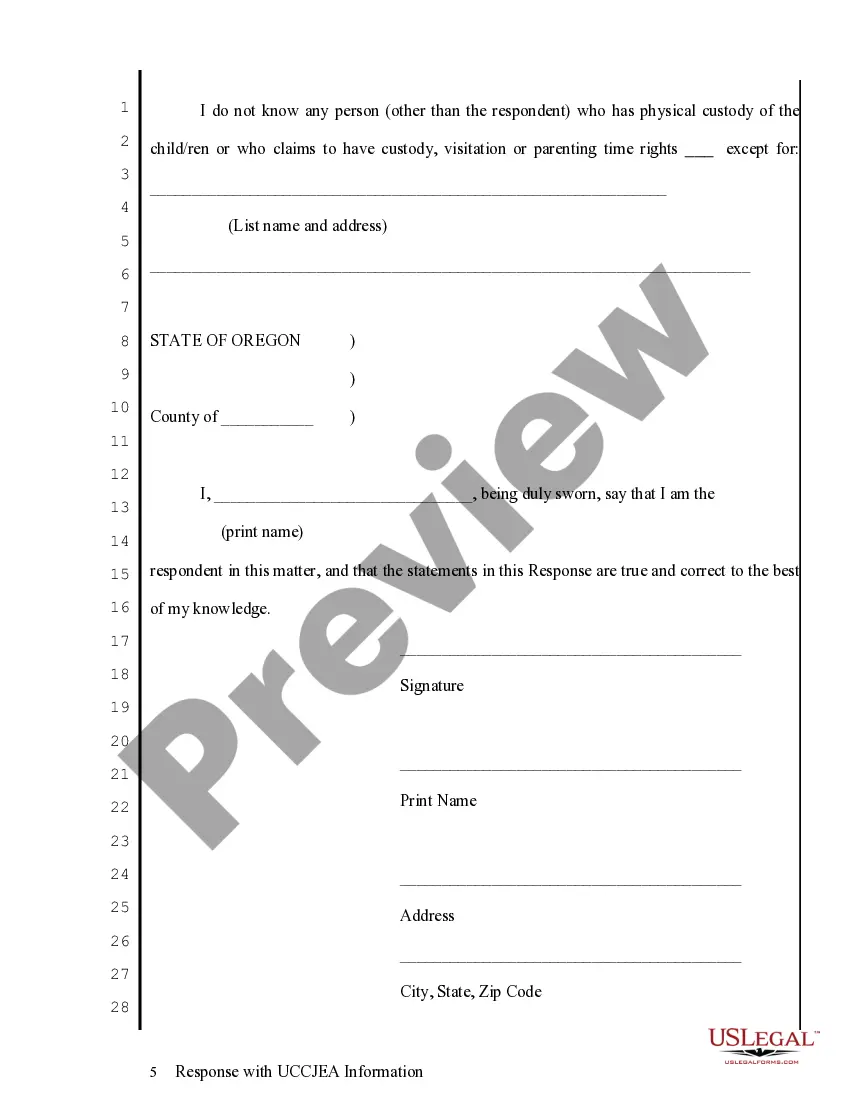
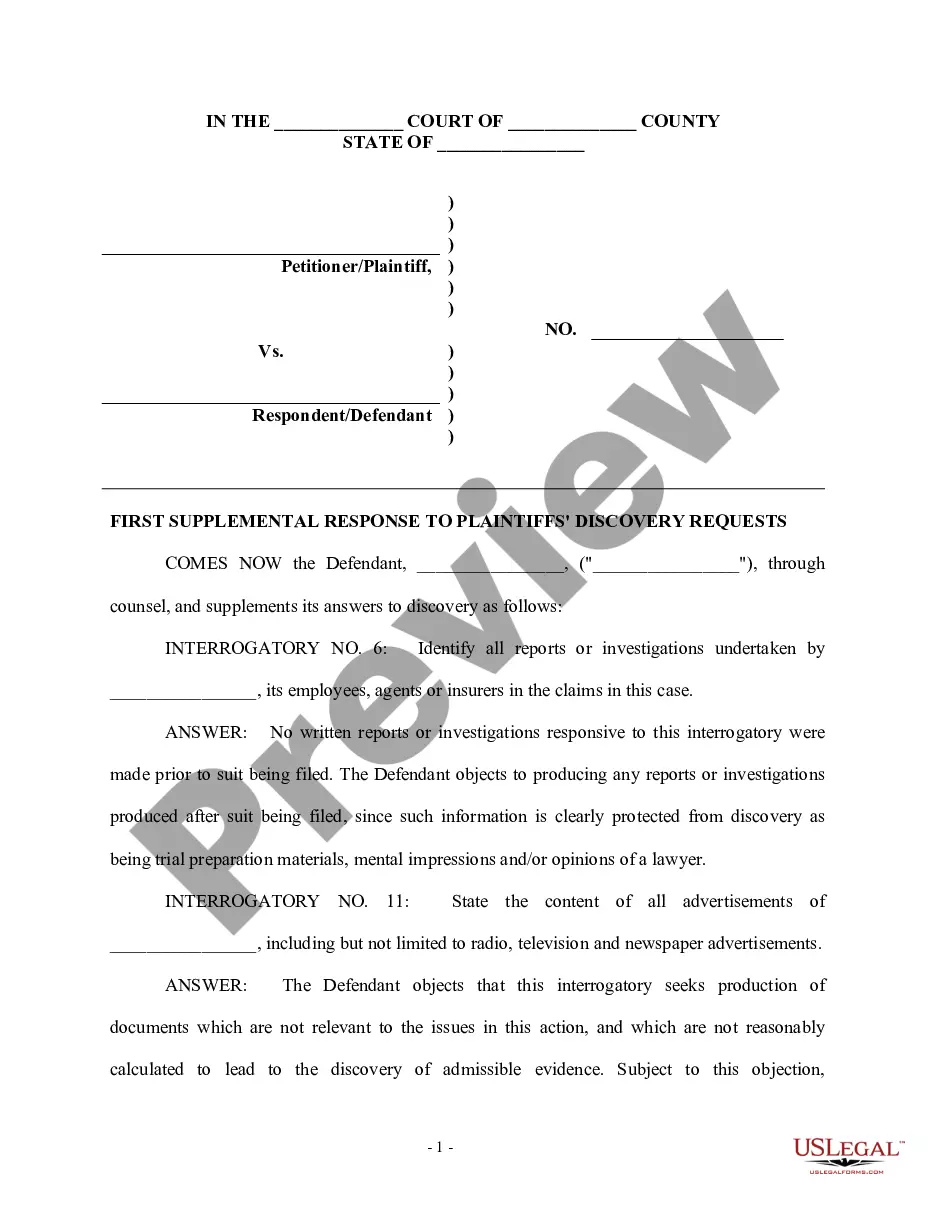
The Response with UCCJEA Information is an Oregon court form used in domestic litigation specifically to address issues surrounding child custody. This form is designed to provide important information under the Uniform Child Custody Jurisdiction and Enforcement Act (UCCJEA). It differs from other custody forms by focusing on jurisdictional matters and enforcement of existing custody orders.
Form components explained
- Petitioner and respondent information.
- Agreement or disagreements with the initial petition.
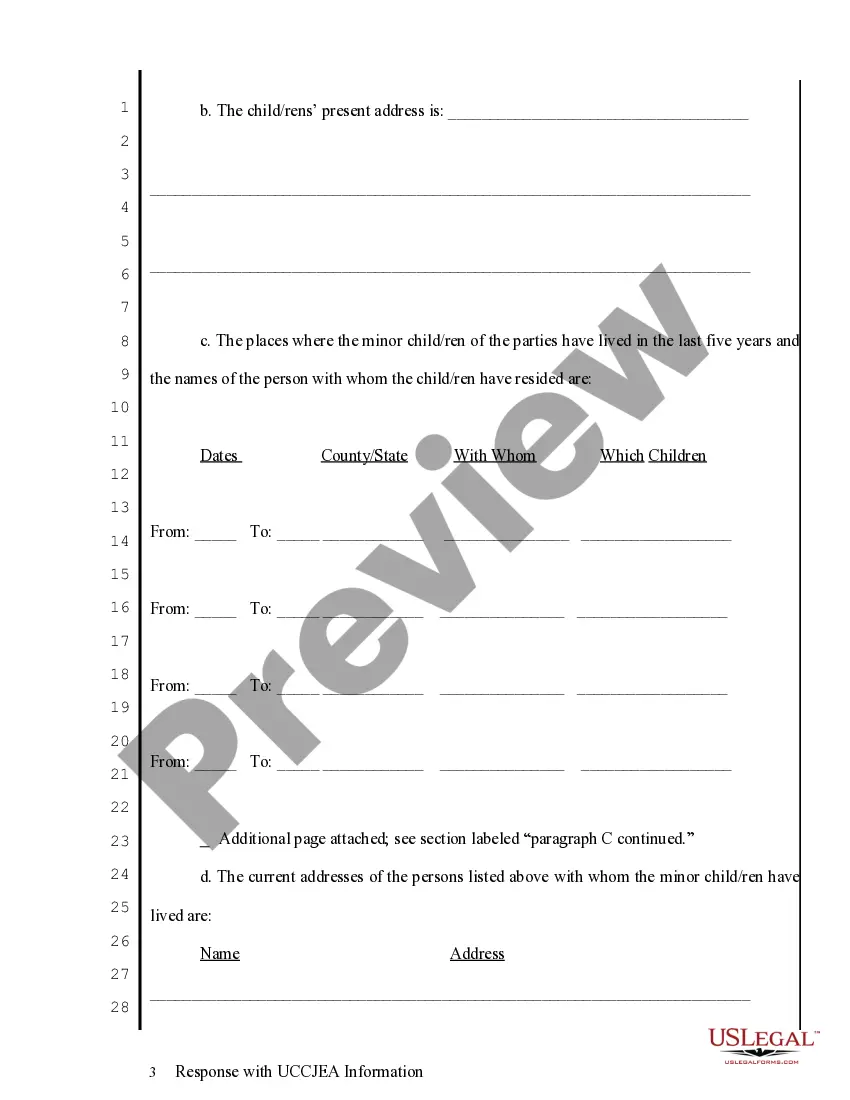
- Details on minor children, including their addresses and custody history.
- Information regarding previous litigation related to child custody and visitation.
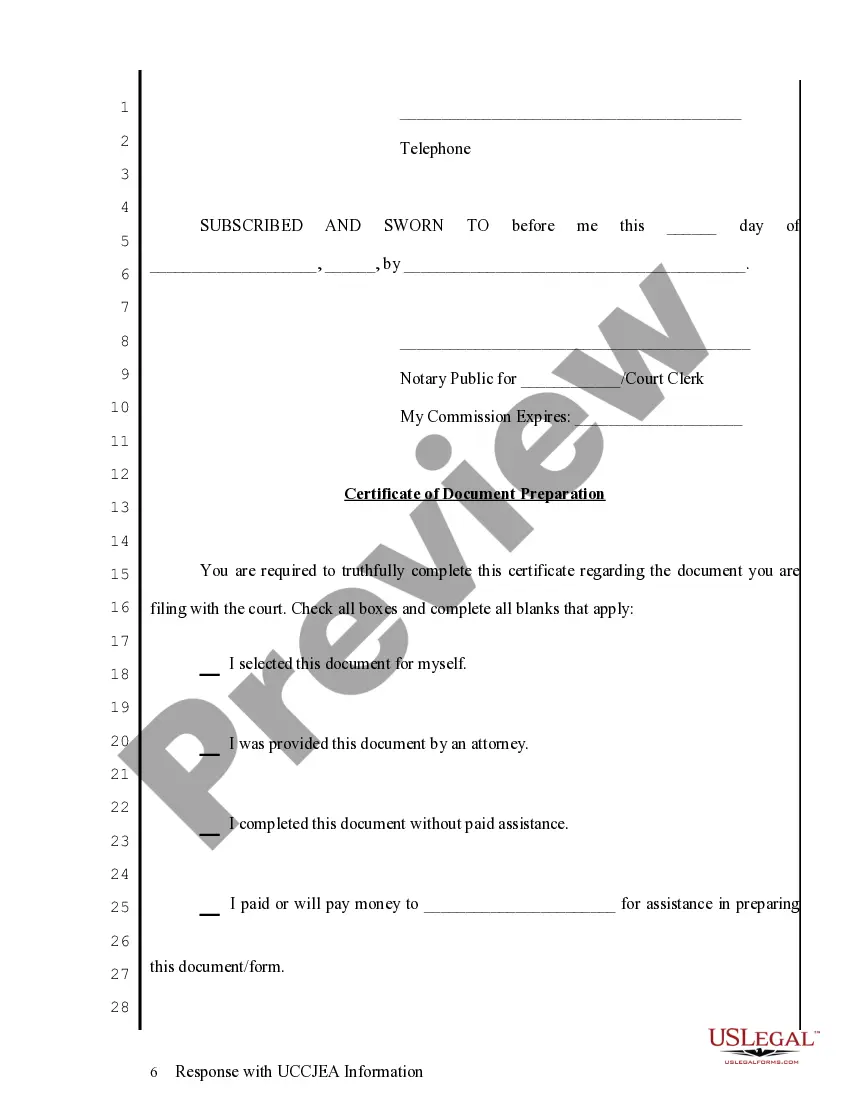
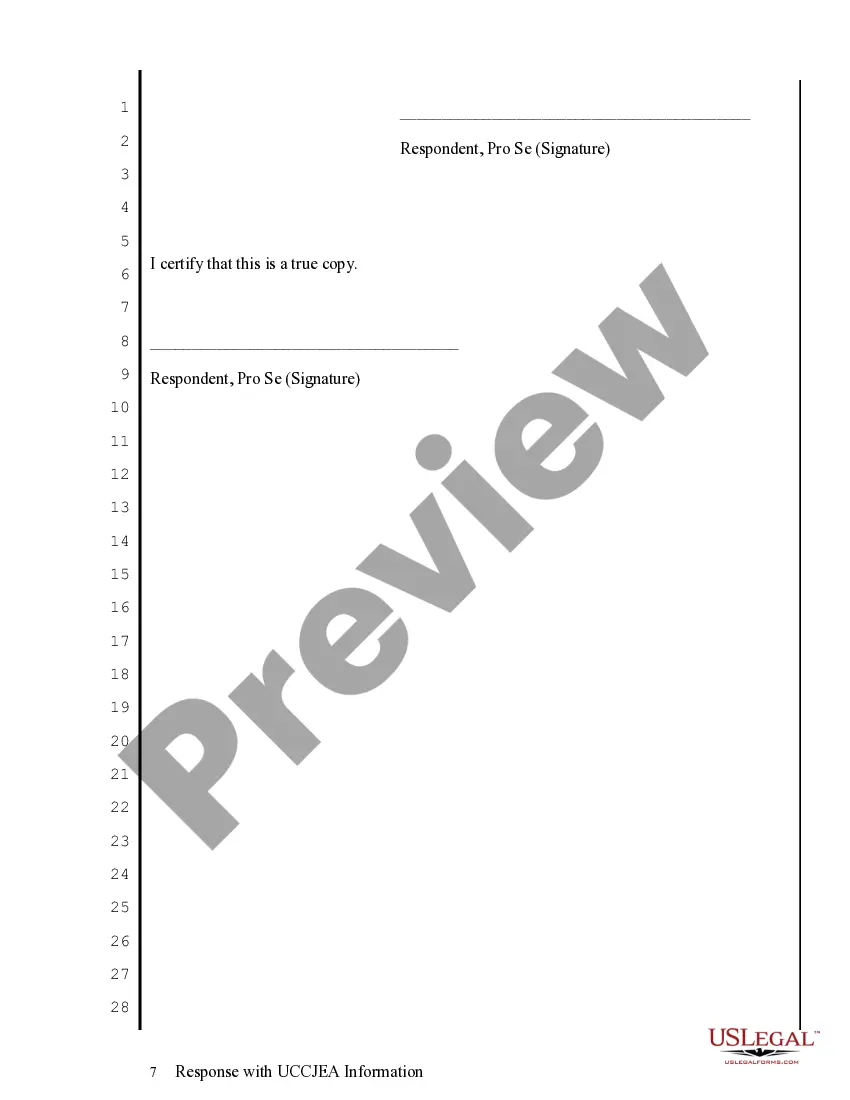
- Signatures and notarization section for validity.
When this form is needed
This form is necessary when a respondent is filing a formal response to a custody petition and needs to provide jurisdictional details about minor children involved in the case. It is particularly critical when there have been custody orders in multiple jurisdictions, ensuring that the court can establish its authority. Use this form when you need to clarify your position or respond to a petition for child custody under the UCCJEA.
Who needs this form
- Individuals responding to a child custody petition in Oregon.
- Parents or guardians seeking to outline custody information under the UCCJEA.
- Those who have previously participated in custody litigation and need to disclose this information.
How to prepare this document
- Identify the petitioner and respondent by filling in their names and case number.
- Agree or disagree with the petition as specified in the designated section.
- Provide detailed information about the minor children, including addresses and relevant custody history.
- Disclose any previous or pending litigation concerning child custody in other states.
- Sign the form and have it notarized as required.
Does this form need to be notarized?
To make this form legally binding, it must be notarized. Our online notarization service, powered by Notarize, lets you verify and sign documents remotely through an encrypted video session.
Get your form ready online
Our built-in tools help you complete, sign, share, and store your documents in one place.
Make edits, fill in missing information, and update formatting in US Legal Forms—just like you would in MS Word.
Download a copy, print it, send it by email, or mail it via USPS—whatever works best for your next step.
Sign and collect signatures with our SignNow integration. Send to multiple recipients, set reminders, and more. Go Premium to unlock E-Sign.
If this form requires notarization, complete it online through a secure video call—no need to meet a notary in person or wait for an appointment.
We protect your documents and personal data by following strict security and privacy standards.

Make edits, fill in missing information, and update formatting in US Legal Forms—just like you would in MS Word.

Download a copy, print it, send it by email, or mail it via USPS—whatever works best for your next step.

Sign and collect signatures with our SignNow integration. Send to multiple recipients, set reminders, and more. Go Premium to unlock E-Sign.

If this form requires notarization, complete it online through a secure video call—no need to meet a notary in person or wait for an appointment.

We protect your documents and personal data by following strict security and privacy standards.
Typical mistakes to avoid
- Failing to provide complete custody history for the last five years.
- Not specifying any ongoing custody litigation in other jurisdictions.
- Omitting necessary signatures or notarization.
Benefits of completing this form online
- Convenience of downloading and completing the form at your own pace.
- Editability allows for easy adjustments before final submission.
- Access to legal forms drafted by licensed attorneys ensures compliance with legal requirements.
Looking for another form?
Form popularity
FAQ
The UCCJEA (FL-105) is required if you have minor children of your marriage.Again, if you have minor children of the marriage, you're going to complete FL-105 which is the declaration called, The Uniform Child Custody Jurisdiction and Enforcement Act or UCCJEA (abbreviated due to its very long name).
Courts should usually allow a move if the other parent has moved, although it might be within reason (if the non-custodial parent moved 50 miles away, the Court might not allow the custodial parent to move 1,000 miles away).Normally when the non-custodial parent moves away, the custodial parent is allowed to move.
The purpose of the UCCJEA is to allow states to determine which states has jurisdiction regarding custody and visitation and for the court to determine who has home state jurisdiction.
Pull the header information from the plaintiff's petition. Title your Answer Answer to Plaintiff's Petition/Complaint. Center this title and make it bold. Introduce yourself. Admit, deny, or claim that you lack sufficient knowledge to admit or deny each of the plaintiff's numbered allegations.
Begin your letter by introducing yourself and explaining your relationship to the parent and how long you've known her. Then, spend two or three paragraphs explaining why you think she should be awarded custody. Use your final paragraph to summarize the points you've made in the body of your letter.
Read Information Sheet: Responsive Declaration to Request for Order (Form FL-320-INFO ). Fill out your court forms. Have your forms reviewed. Make at least 2 copies of all your forms. File your forms with the court clerk. Serve your papers on the other parent. File your Proof of Service.
Write clearly, and use your own words. Use bulleted lists for your major points. Don't insult or bash your ex. Attach evidence such as pay stubs or bank statements, but redact SSN and account numbers. Affirm that you are making your statement under oath, and under penalty of perjury.
The purpose of a Responsive Declaration to Request for Order (FL-320) is to provide you an opportunity to respond to a Request for Orders filed in your family law case. A Response allows you to tell the court if you agree or disagree with the request made by the moving party.
#1: Follow the California Rules of Court DECLARATIONS HAVE A 10 PAGE LIMIT #2: Use Your Own Words, Write Clearly, and Get to the Point. #3: Avoid Inflammatory Language and Don't Bash the Other Party. #4: Include Only Truthful Information That You Have Personal Knowledge of.