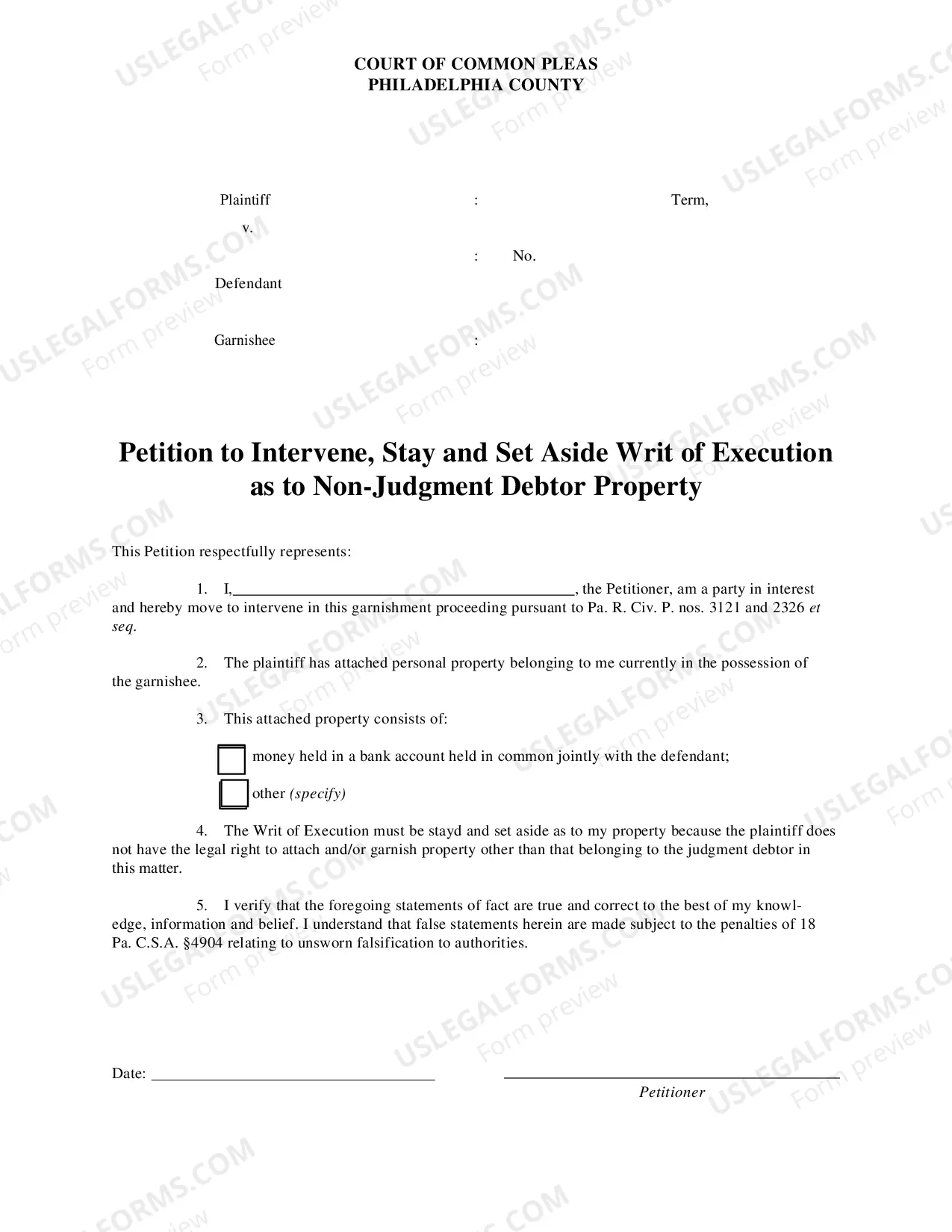
Defendant's First Supplemental response to Plaintiff's Discovery Request
About this form
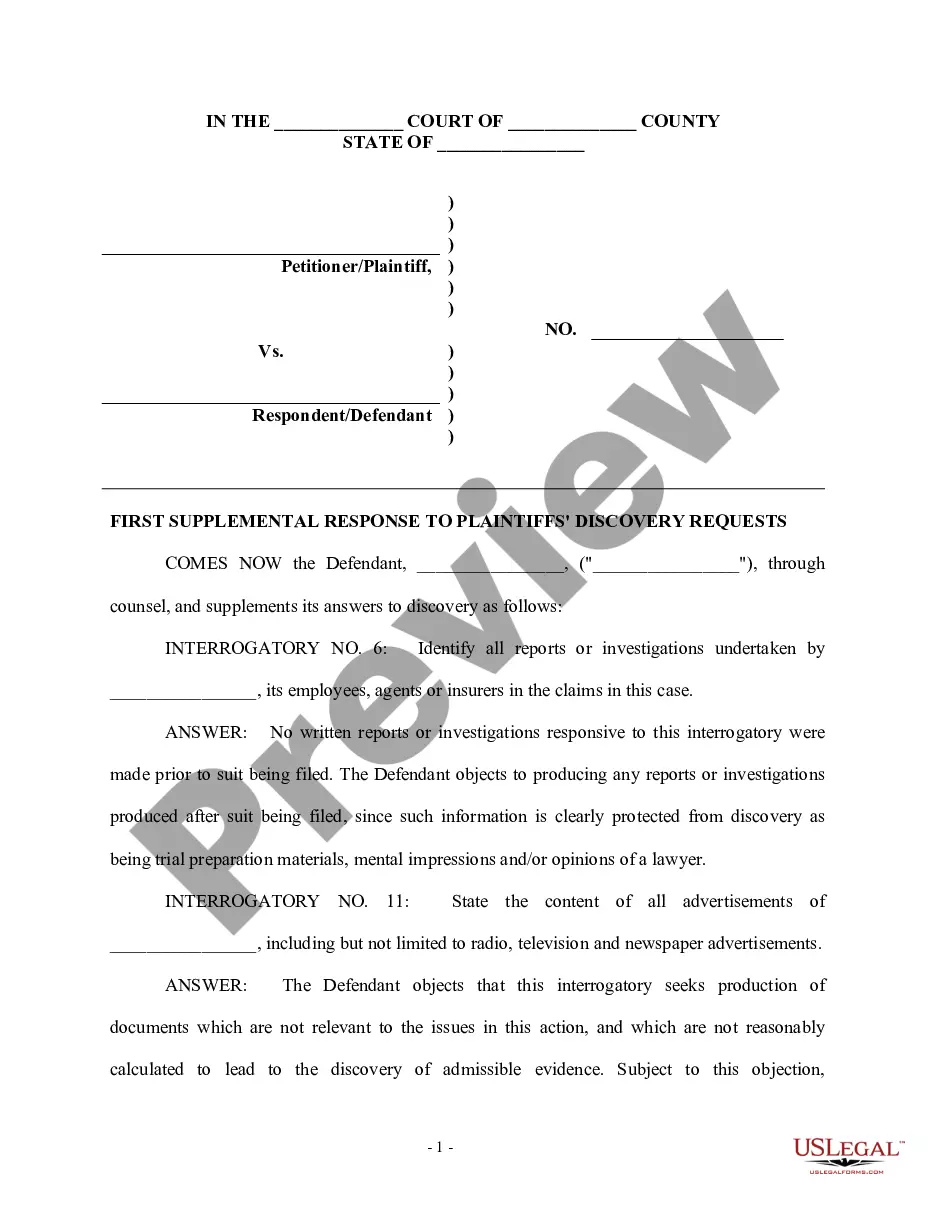
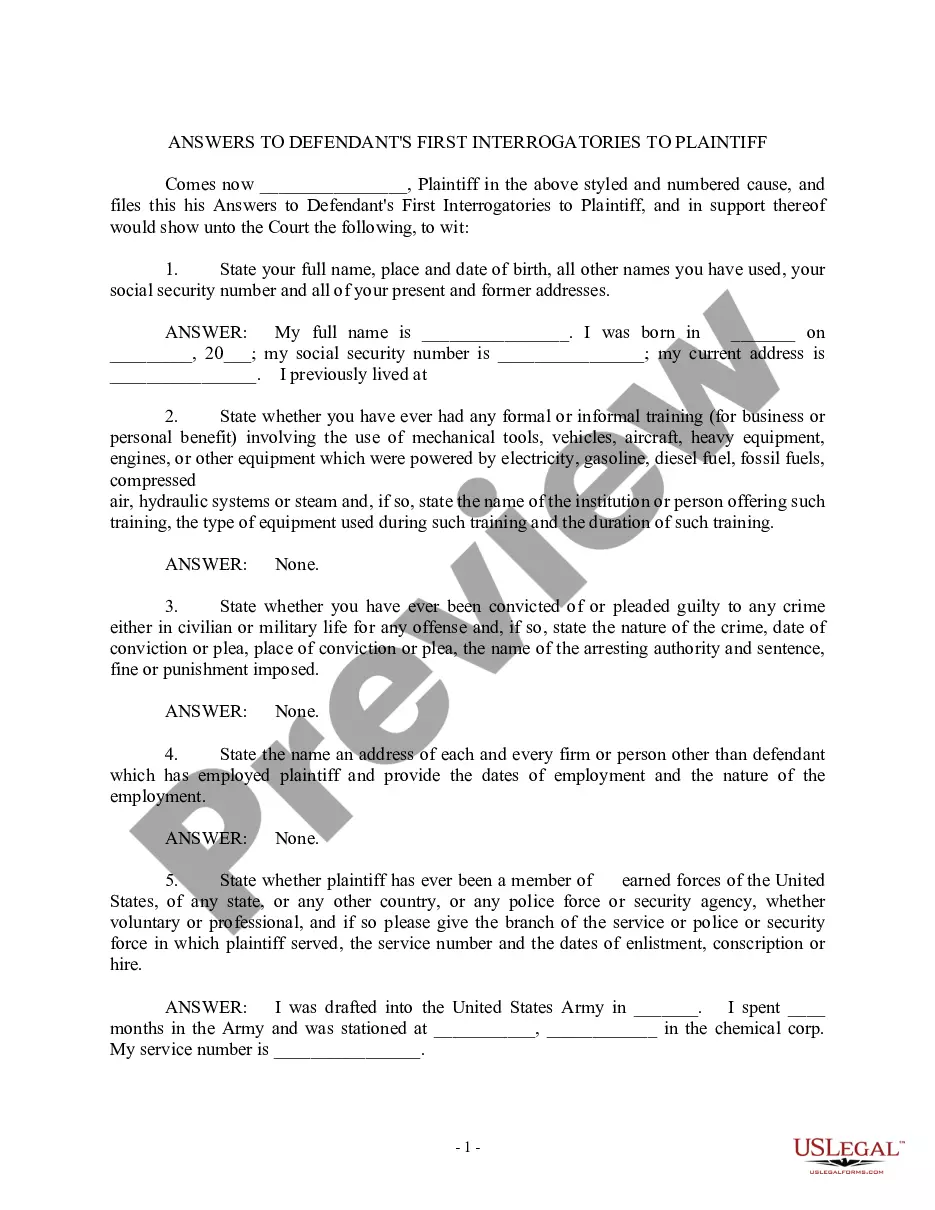
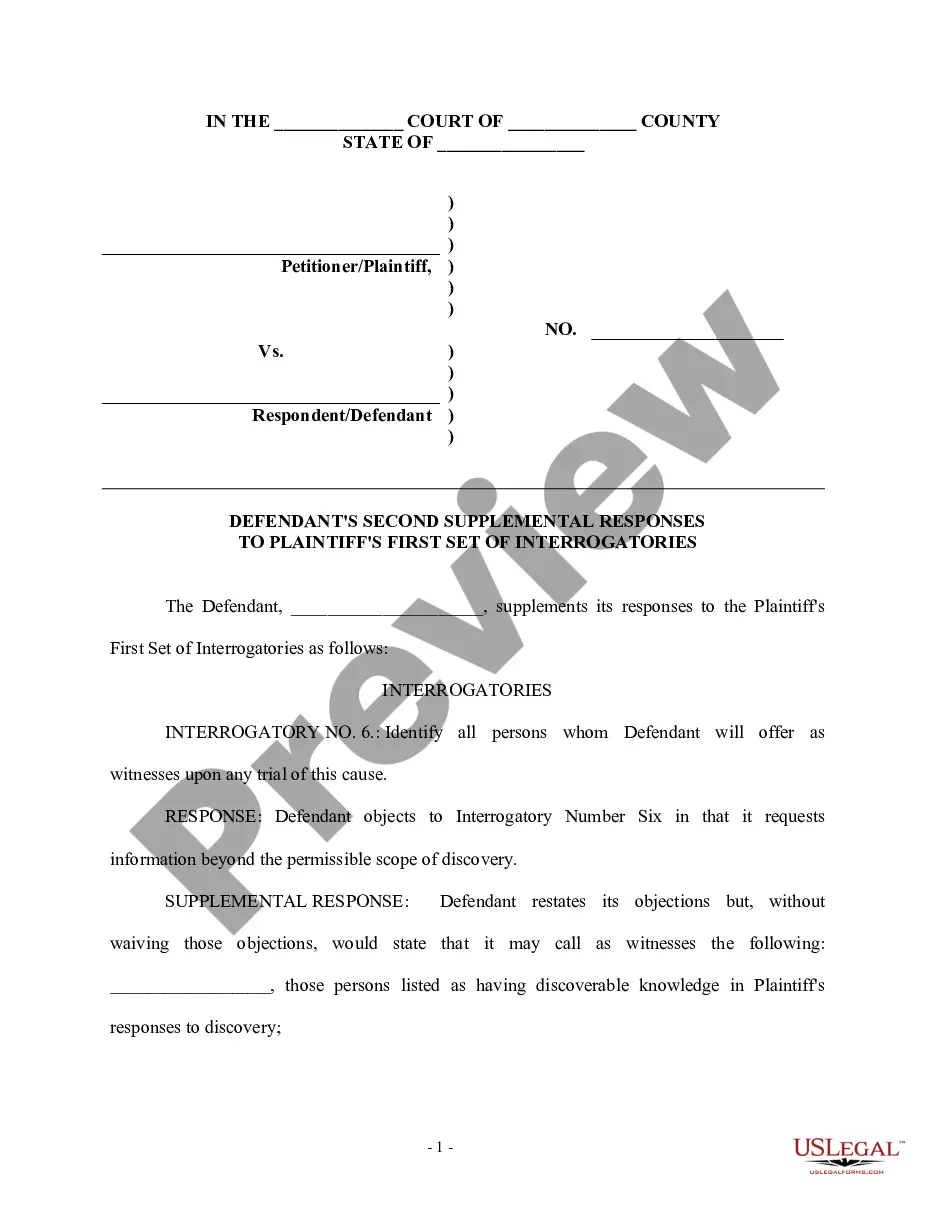
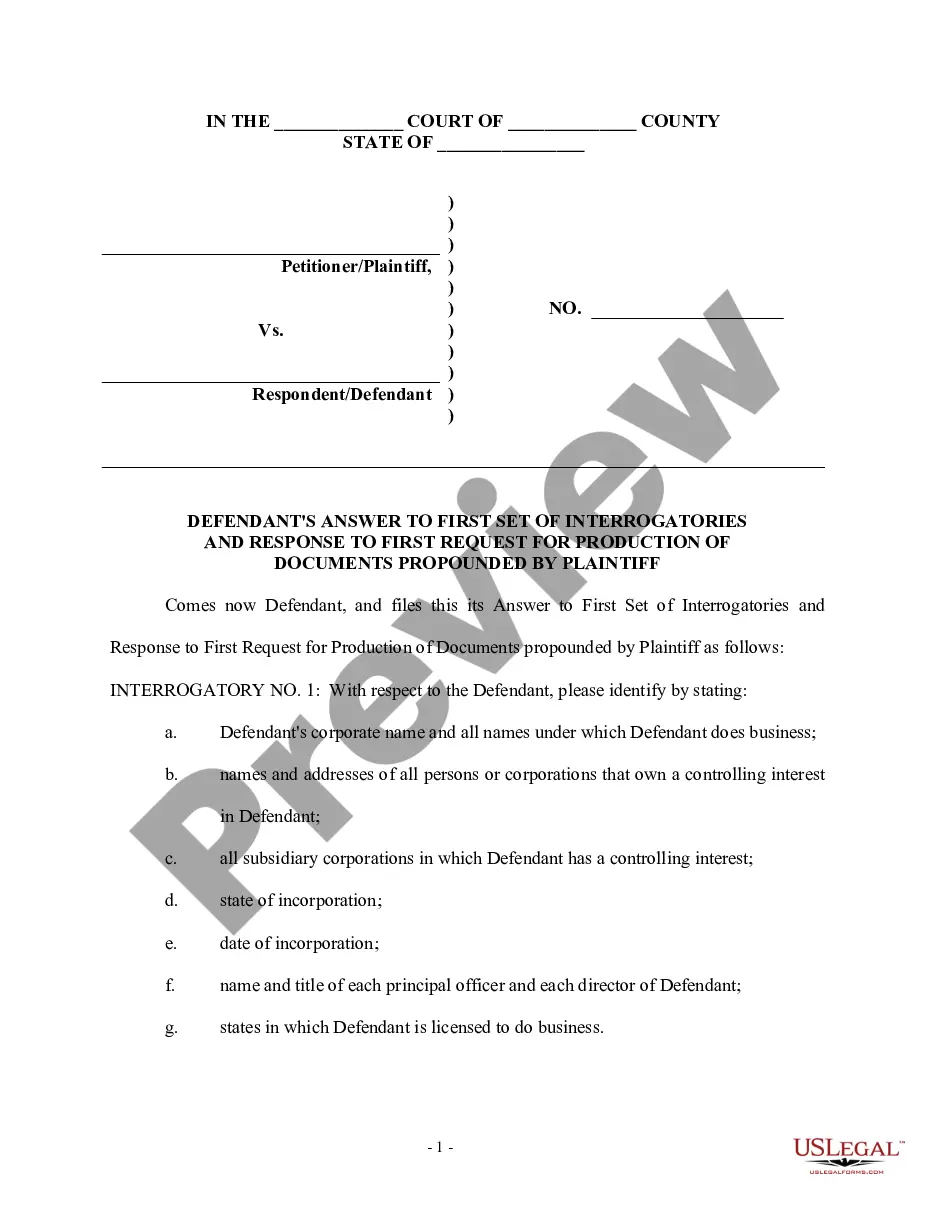
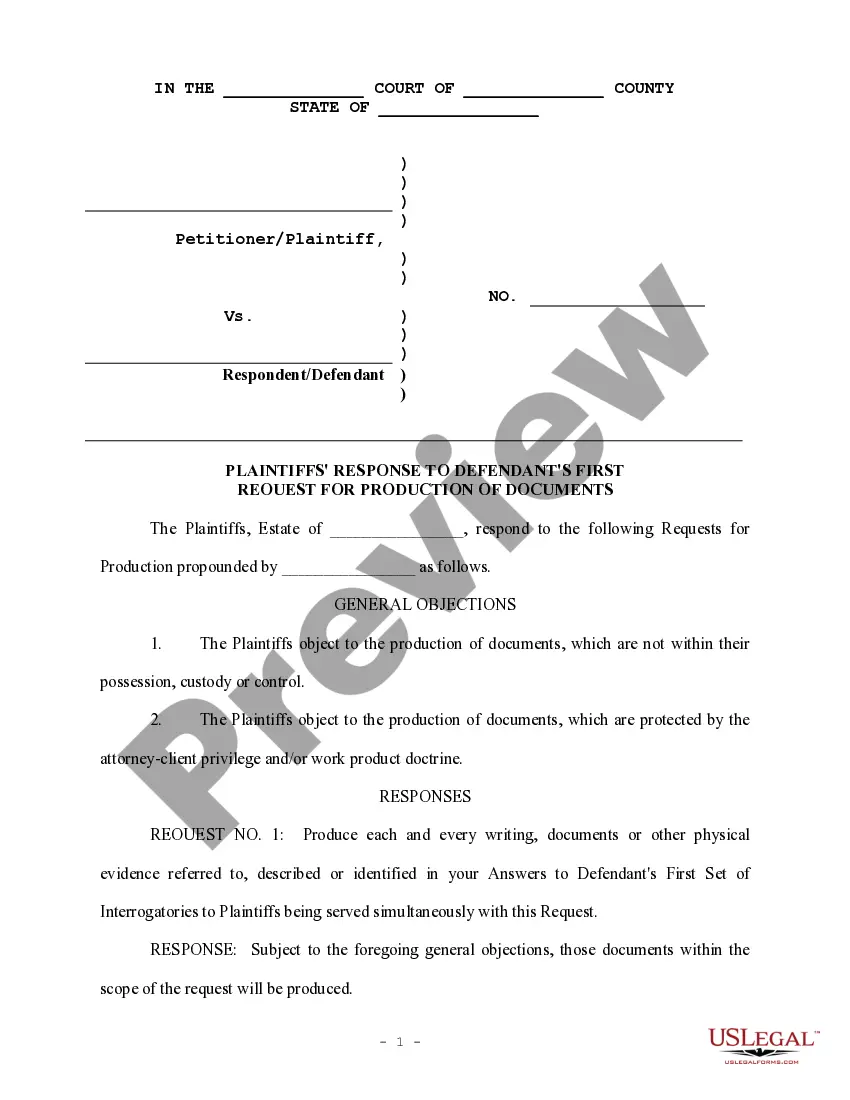
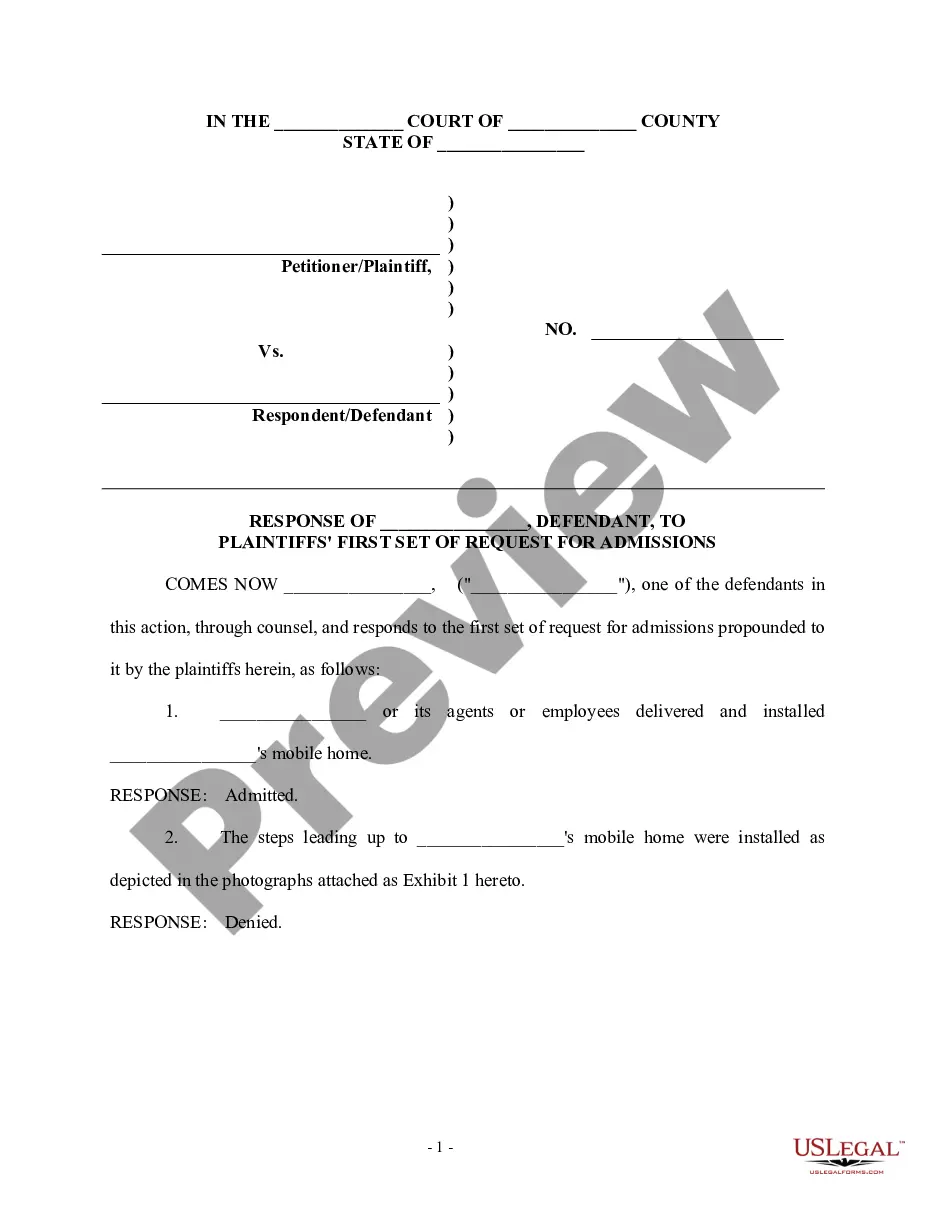
The Defendant's First Supplemental Response to Plaintiff's Discovery Request is a legal document used in personal injury cases. It allows the defendant to formally respond to queries posed by the plaintiff during the discovery phase of a lawsuit. This form is essential for addressing specific interrogatories and requests for documentation relevant to the case.
Key components of this form
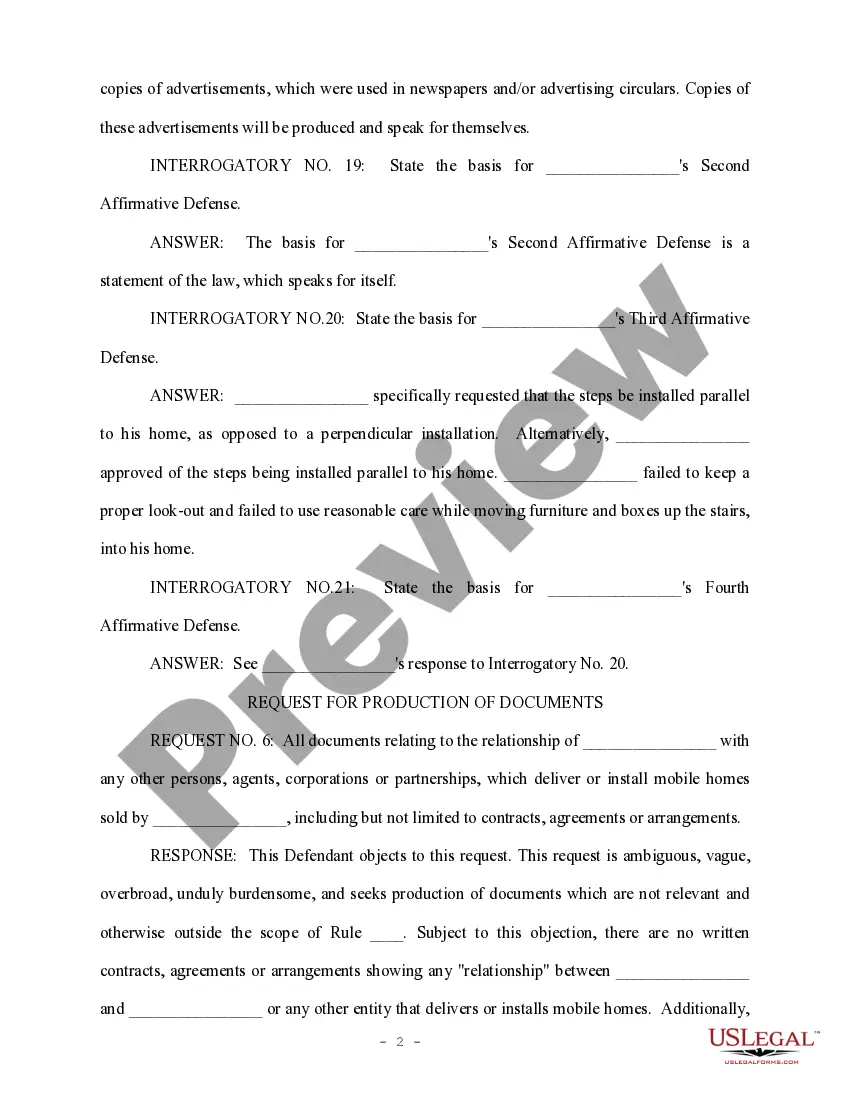
- Interrogatories: Questions posed by the plaintiff that the defendant must answer.
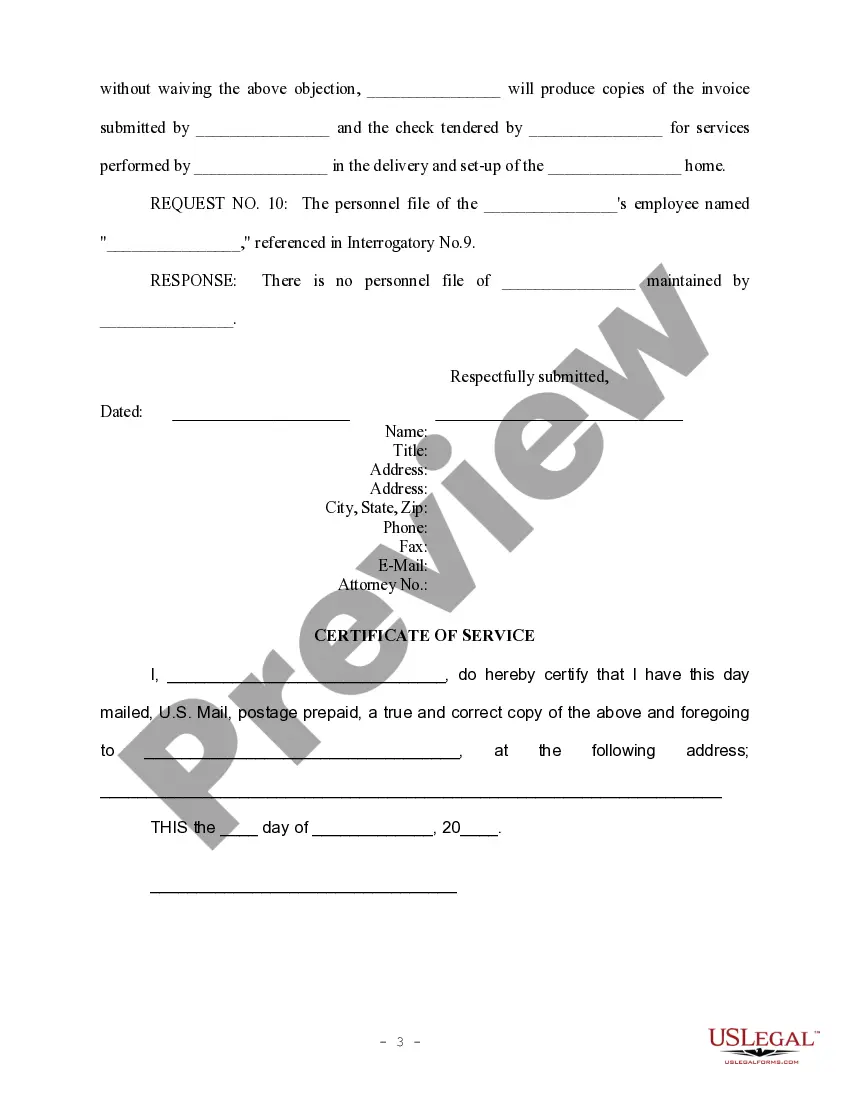
- Responses: The defendant's replies to each interrogatory, including objections if applicable.
- Requests for Production: A request for documents related to the case.
- Certificate of Service: A statement confirming that the responses have been sent to the appropriate parties.
Common use cases
This form should be used when a defendant is required to provide supplementary responses to discovery requests made by the plaintiff. It is an important part of the litigation process, ensuring both parties have access to relevant information as they prepare for trial.
Intended users of this form
- Defendants in personal injury lawsuits.
- Legal professionals representing defendants in civil cases.
- Individuals seeking to understand their obligations in a lawsuit.
Instructions for completing this form
- Identify the parties involved in the case.
- Carefully read each interrogatory and determine your response.
- Clearly state any objections to interrogatories that are not relevant or overly broad.
- Provide any requested documents or specify their availability.
- Complete the Certificate of Service to acknowledge that responses have been sent.
Notarization guidance
Notarization is not commonly needed for this form. However, certain documents or local rules may make it necessary. Our notarization service, powered by Notarize, allows you to finalize it securely online anytime, day or night.
Get your form ready online
Our built-in tools help you complete, sign, share, and store your documents in one place.
Make edits, fill in missing information, and update formatting in US Legal Forms—just like you would in MS Word.
Download a copy, print it, send it by email, or mail it via USPS—whatever works best for your next step.
Sign and collect signatures with our SignNow integration. Send to multiple recipients, set reminders, and more. Go Premium to unlock E-Sign.
If this form requires notarization, complete it online through a secure video call—no need to meet a notary in person or wait for an appointment.
We protect your documents and personal data by following strict security and privacy standards.

Make edits, fill in missing information, and update formatting in US Legal Forms—just like you would in MS Word.

Download a copy, print it, send it by email, or mail it via USPS—whatever works best for your next step.

Sign and collect signatures with our SignNow integration. Send to multiple recipients, set reminders, and more. Go Premium to unlock E-Sign.

If this form requires notarization, complete it online through a secure video call—no need to meet a notary in person or wait for an appointment.

We protect your documents and personal data by following strict security and privacy standards.
Avoid these common issues
- Failing to respond to all interrogatories within the required time frame.
- Providing incomplete or vague answers to specific questions.
- Neglecting to include proper objections, which may waive the right to raise them later.
Advantages of online completion
- Convenience of downloading and completing the form at your own pace.
- Editability allows for easy adjustments based on the case specifics.
- Reliability as the forms are drafted by licensed attorneys and comply with legal standards.
Legal use & context
- The responses provided in this form are part of the pre-trial discovery process.
- Failure to provide accurate answers may lead to legal consequences or sanctions.
- This form helps organize evidence and clarify each party's position in the case.
Key takeaways
- The Defendant's First Supplemental Response is crucial in personal injury lawsuits.
- Proper completion ensures compliance with discovery rules and helps prepare for trial.
- Be mindful of deadlines and the necessity for clear, precise answers.
Looking for another form?

Form popularity
FAQ
In your discovery response, you would include a time and place for the inspection and the other party has an opportunity to go and review the requested items at that time.There are cases though where the court, not the other party, will request information. This usually happens in divorce or child support cases.
Your answers to the interrogatories should usually be short, clear, and direct and should answer only the question that is being asked. This is not the time to set out your entire case or defense to the other side. Take the time to make sure your answers are correct and truthful.
Discovery is evidence that is required to be disclosed to an opposing party. Supplemental discovery is when there is additional evidence that has been provided to the other side, after the initial discovery.
When responding to Requests for Admissions, remember to answer as follows: Admit: If any portion of the Request for Admission is true then you must admit to that portion of the request. You are also allowed to have a hybrid response admit the part of the request that is true while denying another part.
Interrogatories are written questions sent by one party to another, which the responding party must answer under penalty of perjury.In addition, your responses must be verified, meaning that you must sign under penalty of perjury that your responses are true and correct (CCP § 2030.250).
Adj. referring to anything that is added to complete something, particularly a document such as a supplemental declaration, supplemental complaint, supplemental answer, supplemental claim.
Supplemental discovery, seeks to find out what has changed since the initial disclosure to uncover any new information that is crucial to the case. After answering a discovery request, the answering party has a duty to provide further information if the answer later turns out to be inaccurate.
An amended or supplemental response must be in the same form as the initial response and must be verified by the party if the original response was required to be verified by the party, but the failure to comply with this requirement does not make the amended or supplemental response untimely unless the party making