Oregon Response with UCCJEA Information
What this document covers
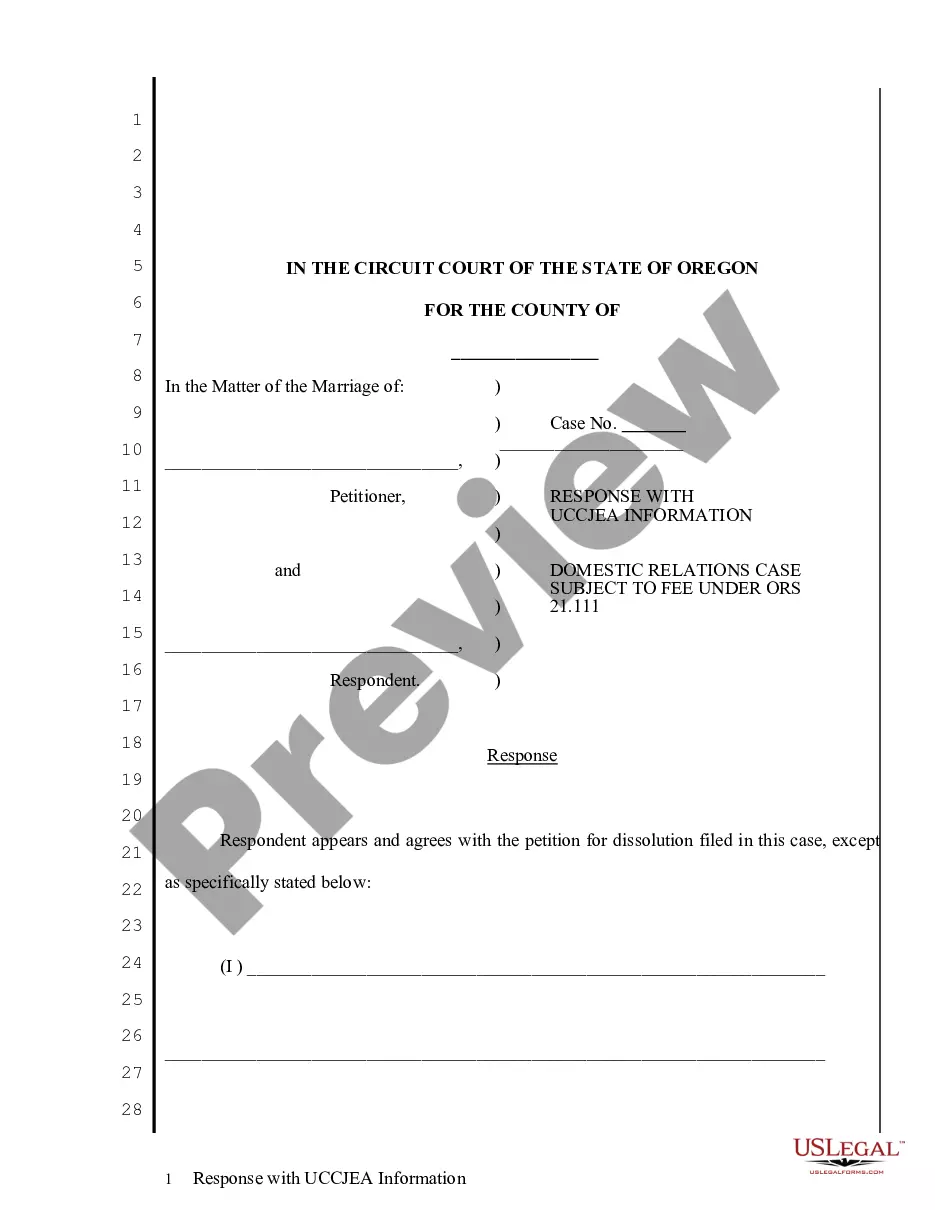
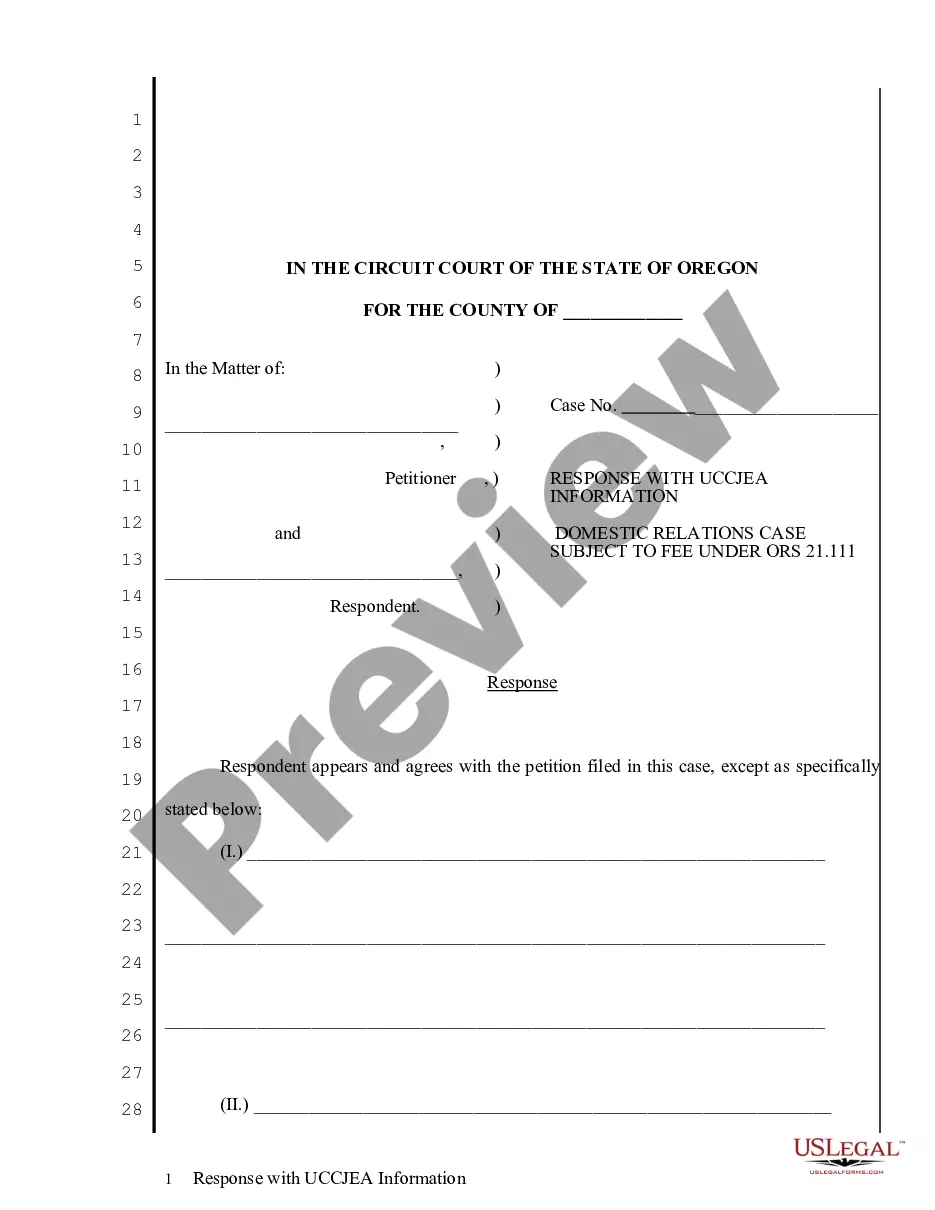
The Response with UCCJEA Information is a legal document used in Oregon for domestic litigation. This form allows a respondent to formally reply to a petition for dissolution of marriage while providing necessary information under the Uniform Child Custody Jurisdiction and Enforcement Act (UCCJEA). This form is designed to help courts determine jurisdiction in custody disputes, ensuring that child custody decisions are made in an appropriate manner.
Form components explained
- Case identification section with parties' names and case number.
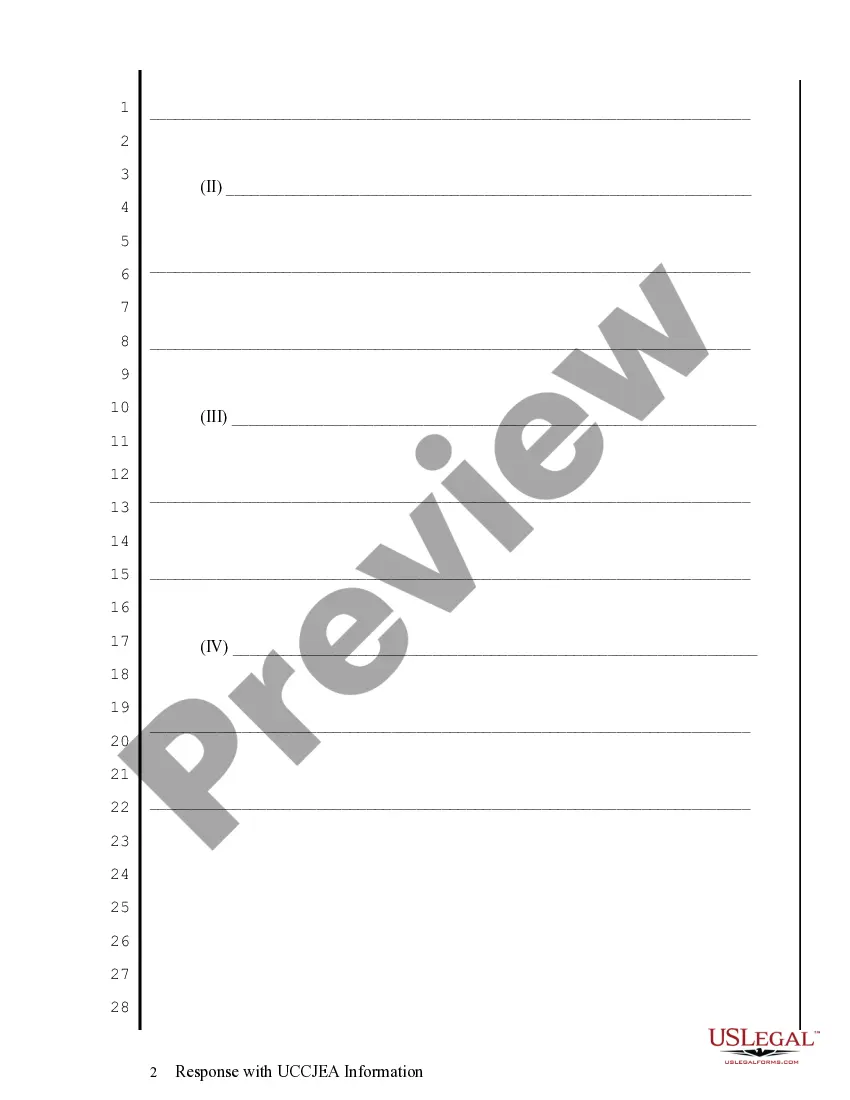
- Response agreement or objections to the petition for dissolution.
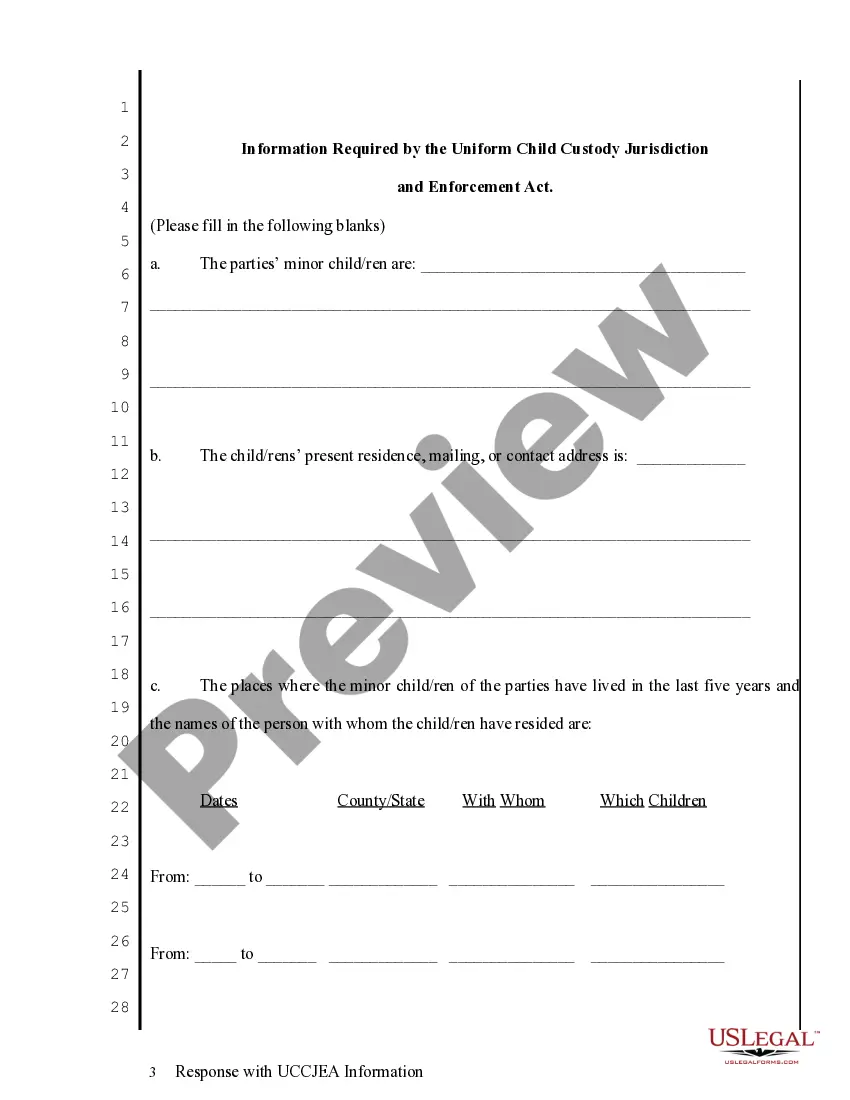
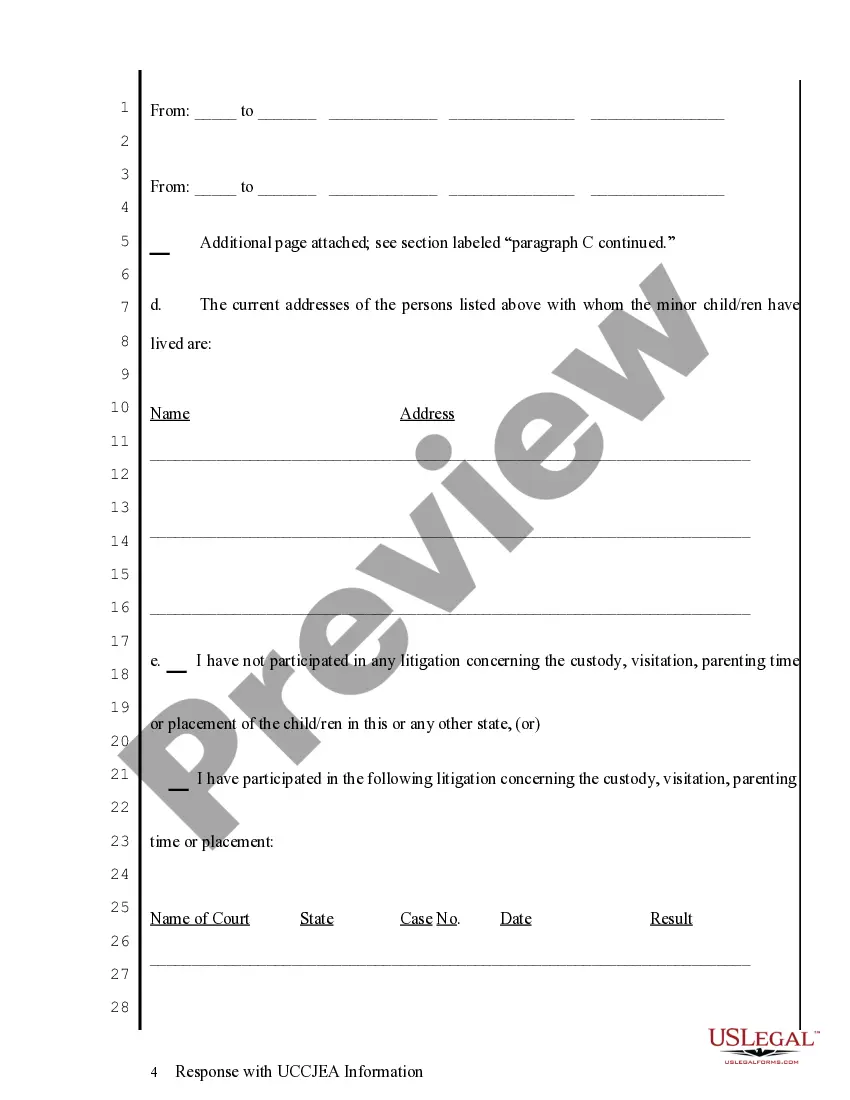
- Details about the minor children, including names and addresses.
- History of where the children have lived over the past five years.
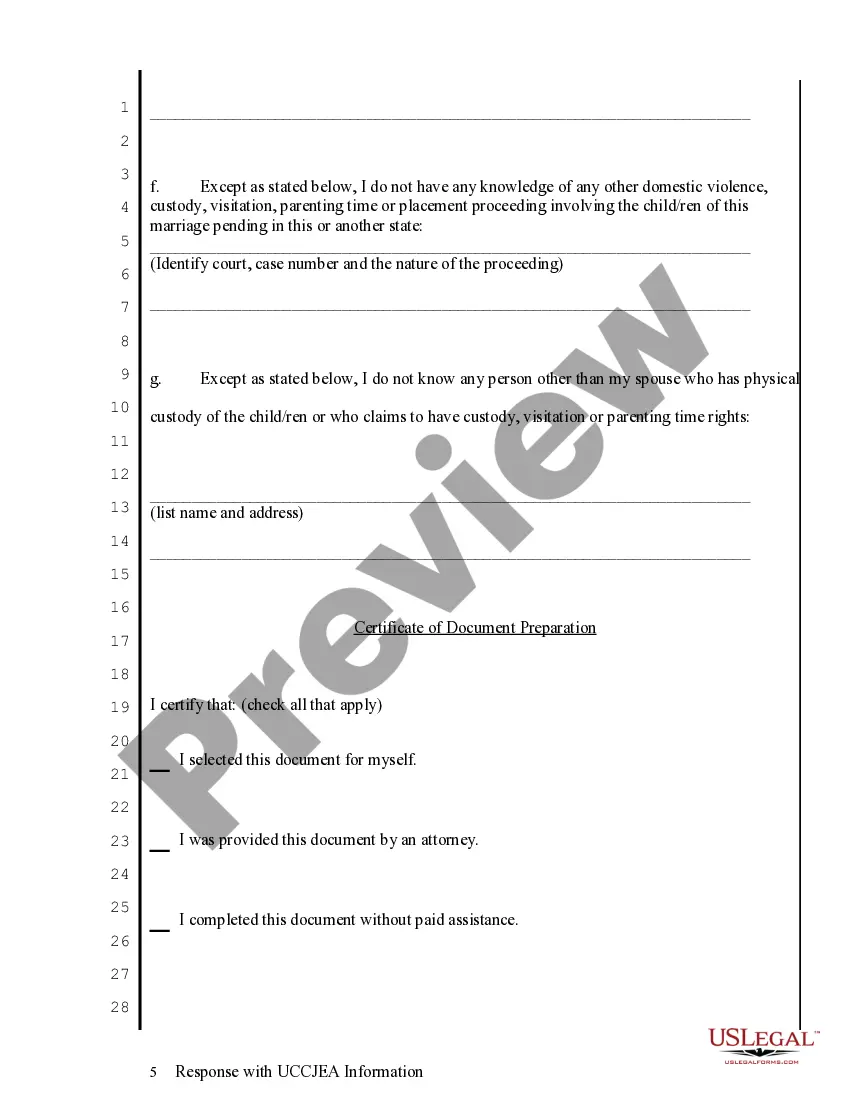
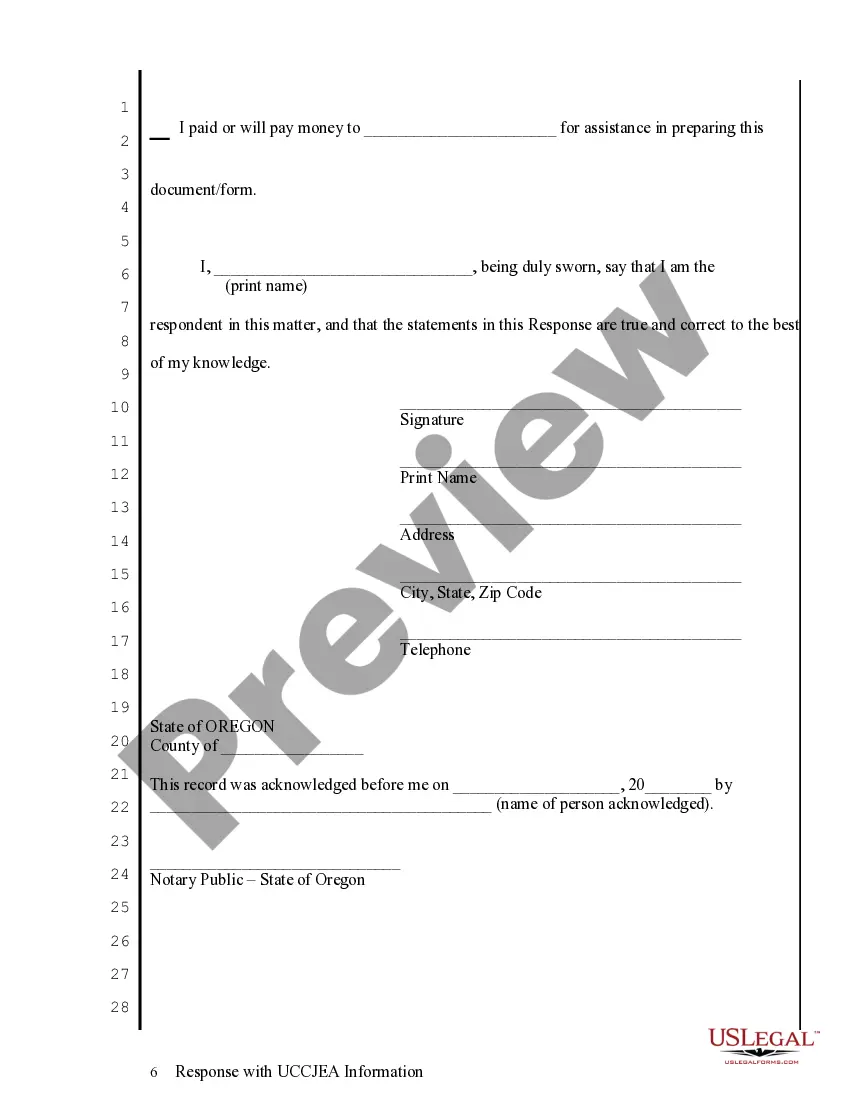
- Certification of document preparation and statement of truth.
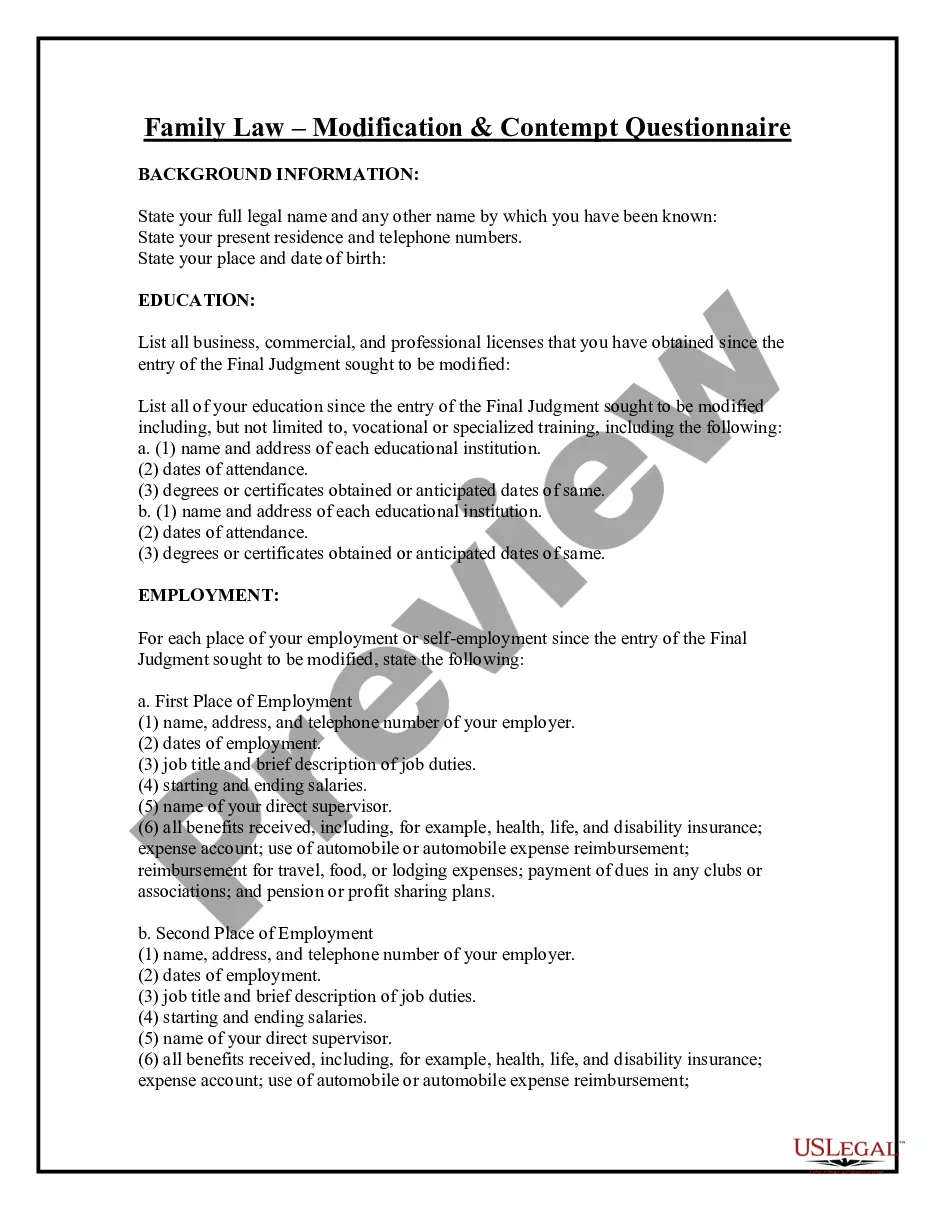
When to use this document
This form should be used when you are responding to a petition for dissolution of marriage in Oregon and need to provide specific information about child custody arrangements. It is particularly important if there are children involved, as it helps the court address jurisdiction under the UCCJEA and identify any existing custody disputes.
Who should use this form
- Individuals who have received a petition for dissolution of marriage in Oregon.
- Respondents required to provide custody information under the UCCJEA.
- Parents or guardians involved in domestic litigation concerning children.
Instructions for completing this form
- Enter the case number and full names of both parties at the top of the form.
- Provide your response to the petition, agreeing or detailing objections.
- Fill in information about any minor children, including names and addresses.
- Document the history of where the children have lived in the past five years.
- Complete the certification section to affirm the accuracy of the information provided.
Is notarization required?
Notarization is required for this form to take effect. Our online notarization service, powered by Notarize, lets you verify and sign documents remotely through an encrypted video session, available 24/7.
Get your form ready online
Our built-in tools help you complete, sign, share, and store your documents in one place.
Make edits, fill in missing information, and update formatting in US Legal Forms—just like you would in MS Word.
Download a copy, print it, send it by email, or mail it via USPS—whatever works best for your next step.
Sign and collect signatures with our SignNow integration. Send to multiple recipients, set reminders, and more. Go Premium to unlock E-Sign.
If this form requires notarization, complete it online through a secure video call—no need to meet a notary in person or wait for an appointment.
We protect your documents and personal data by following strict security and privacy standards.

Make edits, fill in missing information, and update formatting in US Legal Forms—just like you would in MS Word.

Download a copy, print it, send it by email, or mail it via USPS—whatever works best for your next step.

Sign and collect signatures with our SignNow integration. Send to multiple recipients, set reminders, and more. Go Premium to unlock E-Sign.

If this form requires notarization, complete it online through a secure video call—no need to meet a notary in person or wait for an appointment.

We protect your documents and personal data by following strict security and privacy standards.
Typical mistakes to avoid
- Failing to provide complete and accurate information about the children.
- Not signing the form or leaving out the signature of a Notary Public, if required.
- Using incorrect case numbers or names of the parties involved.
Advantages of online completion
- Convenience of accessing and downloading the form from anywhere.
- Editability allows you to easily fill in the necessary details.
- Procedural reliability, ensuring compliance with local laws and standards.
Looking for another form?


Form popularity
FAQ
A court must have child custody jurisdiction before it can decide, or make orders, concerning a child custody case.Generally speaking, the custody case must be decided in the home state. In California, the party initiating the proceeding bears the burden of establishing this state's UCCJEA jurisdiction.
The state making the decision is the child's home state. Jurisdiction typically lies in the child's home state, which is the state the child has resided with the parent for the six months prior to the legal action being brought. A state may also assume jurisdiction if the home state.
In short, the UCCJEA helps California residents, parents that recently arrived in California, and out of state parents to understand a clear set of rules determining whether California courts can make any orders with respect to child custody and visitation for a particular family.
The UCCJEA governs courts' jurisdiction to issue permanent, temporary,40 initial, and modification orders.
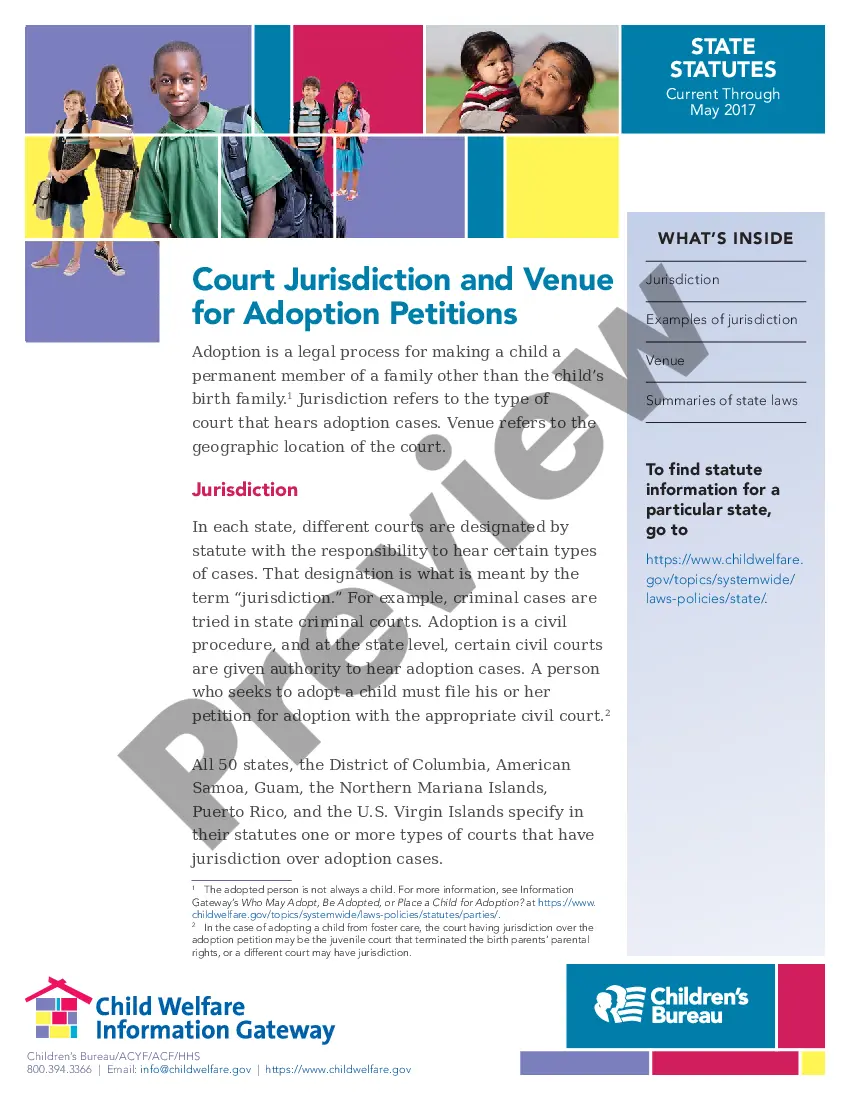
WHAT TYPE OF LAW IS IT? The UCCJEA is a uniform state law1 drafted by the National Conference of Commissioners on Uniform State Laws. Many states have replaced the older Uniform Child Custody Jurisdiction Act (UCCJA) with the UCCJEA. At present, more than thirty states have enacted their own versions of the UCCJEA.
The UCCJEA (FL-105) is required if you have minor children of your marriage.Again, if you have minor children of the marriage, you're going to complete FL-105 which is the declaration called, The Uniform Child Custody Jurisdiction and Enforcement Act or UCCJEA (abbreviated due to its very long name).