Hawaii Drainage Contract for Contractor
What this document covers
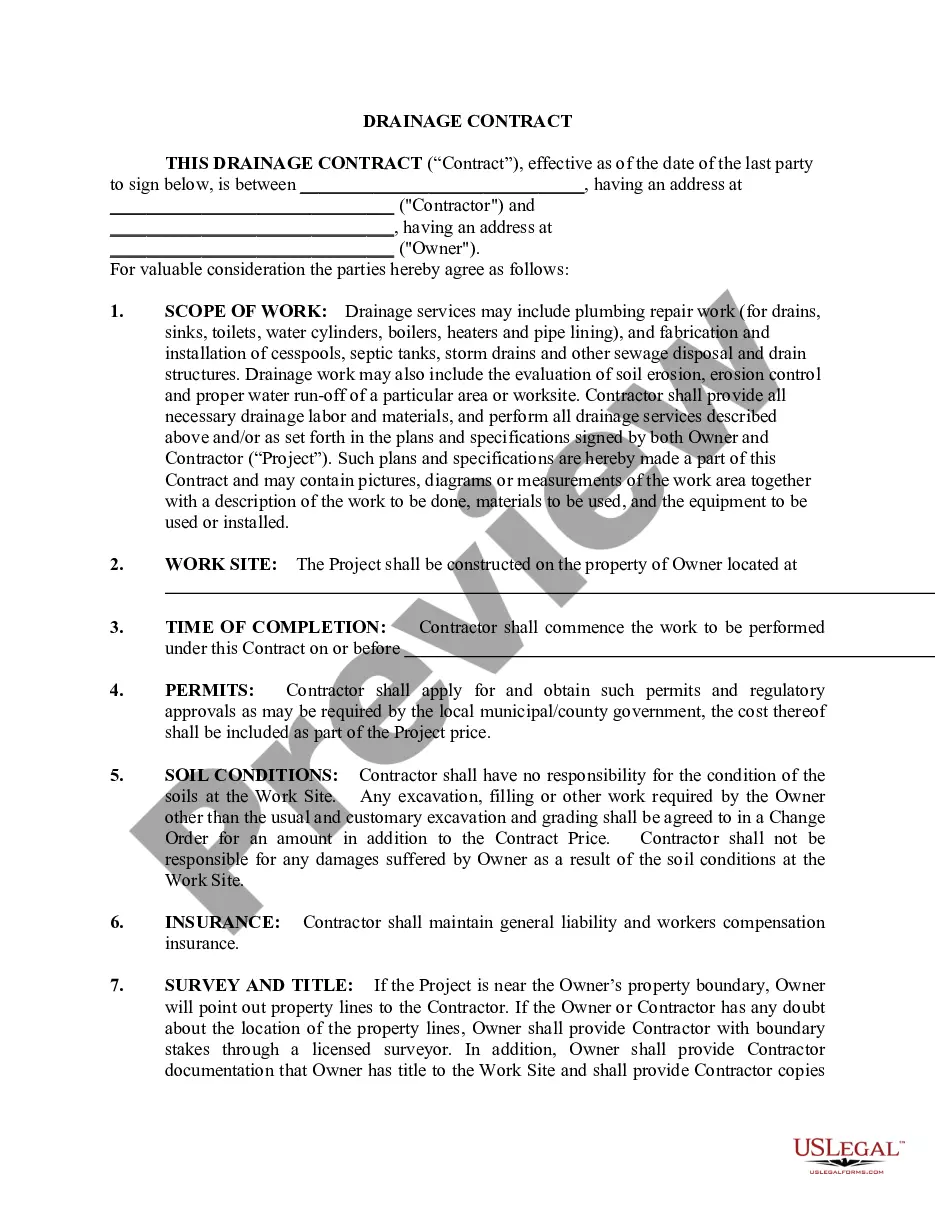
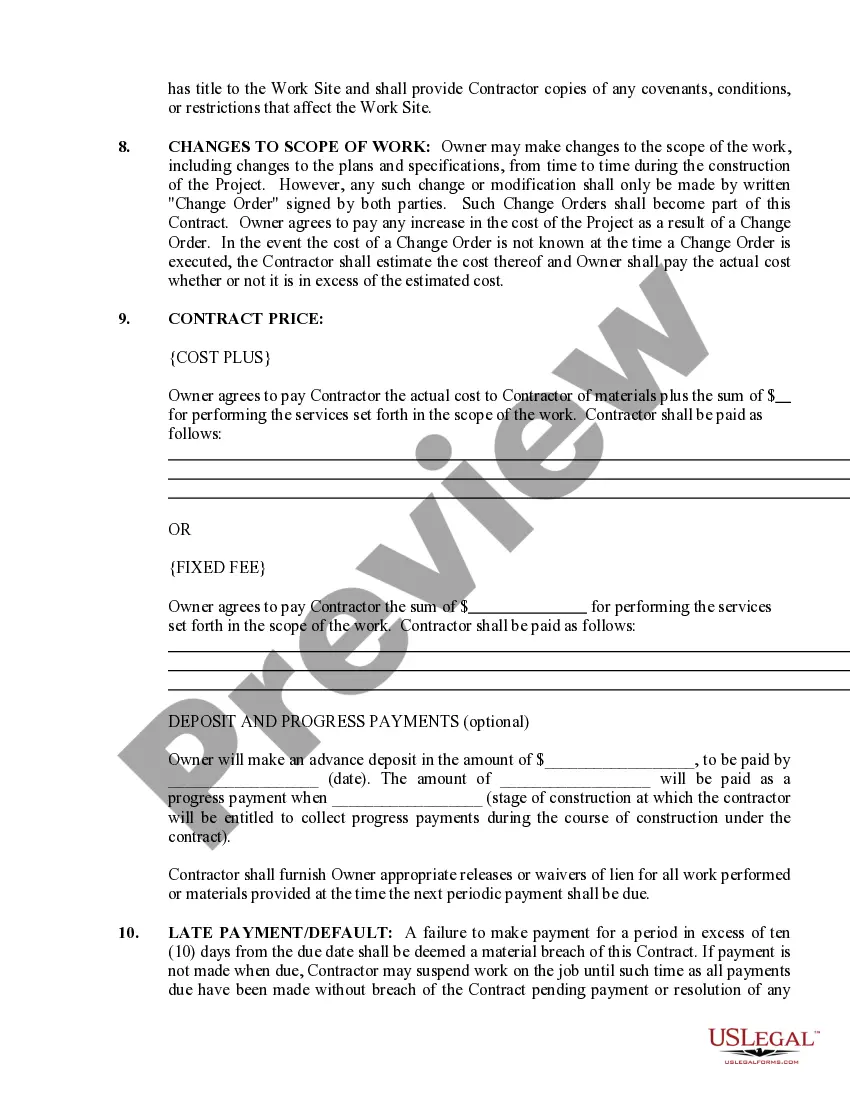
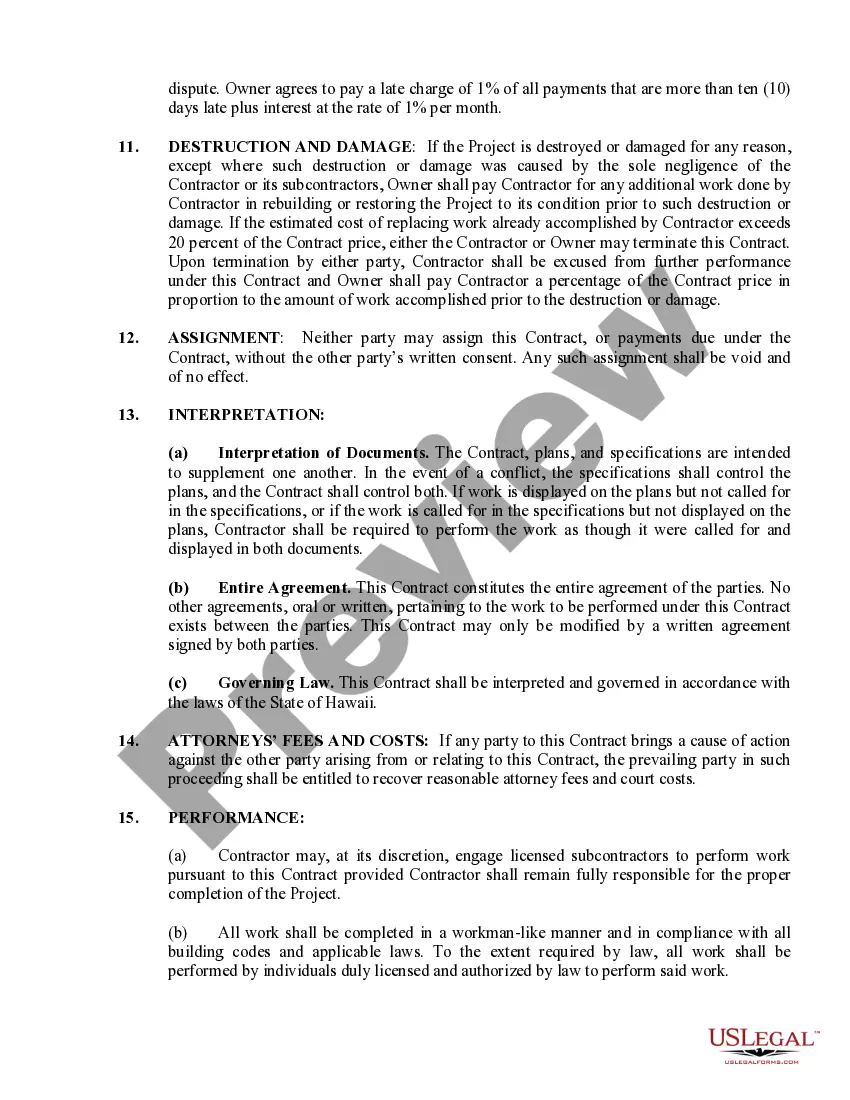
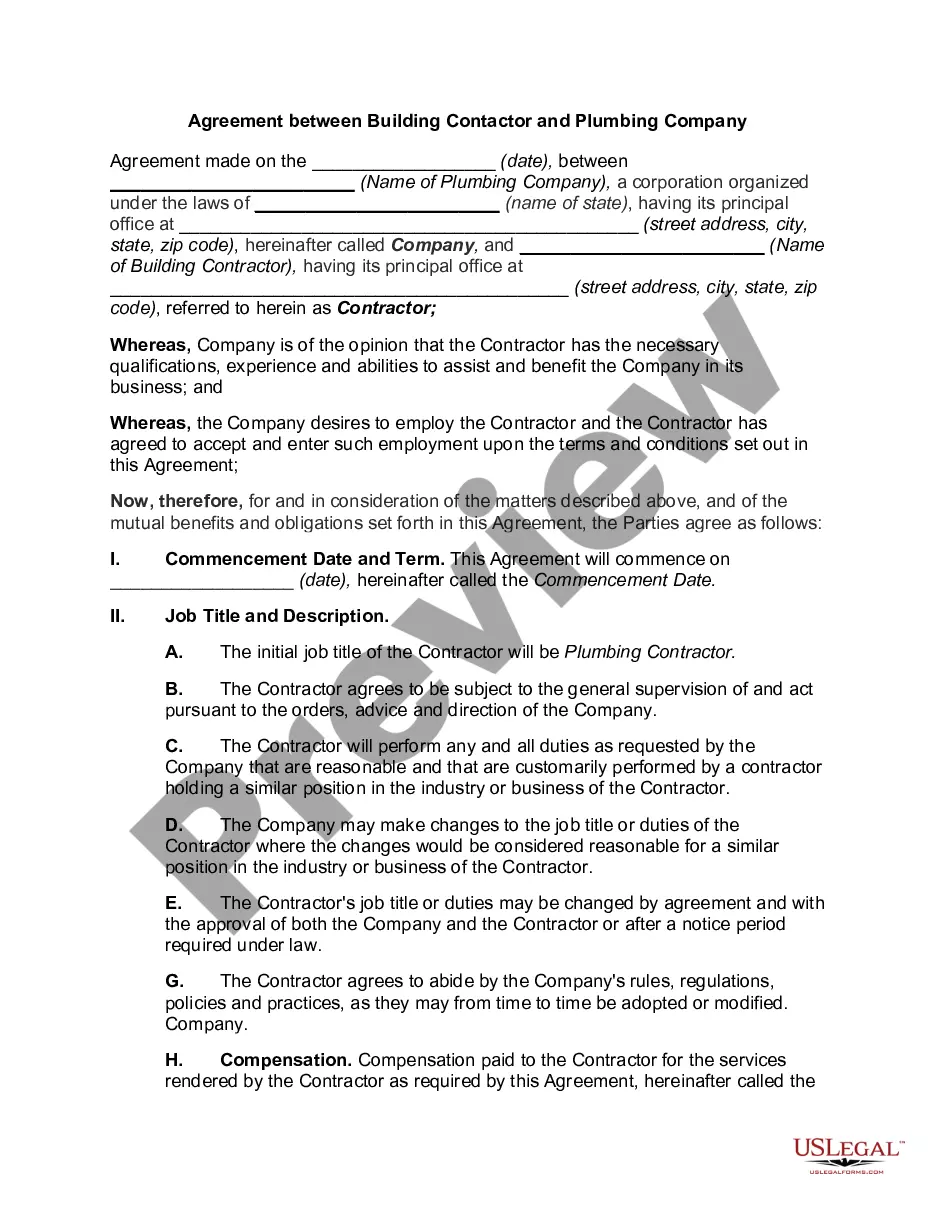
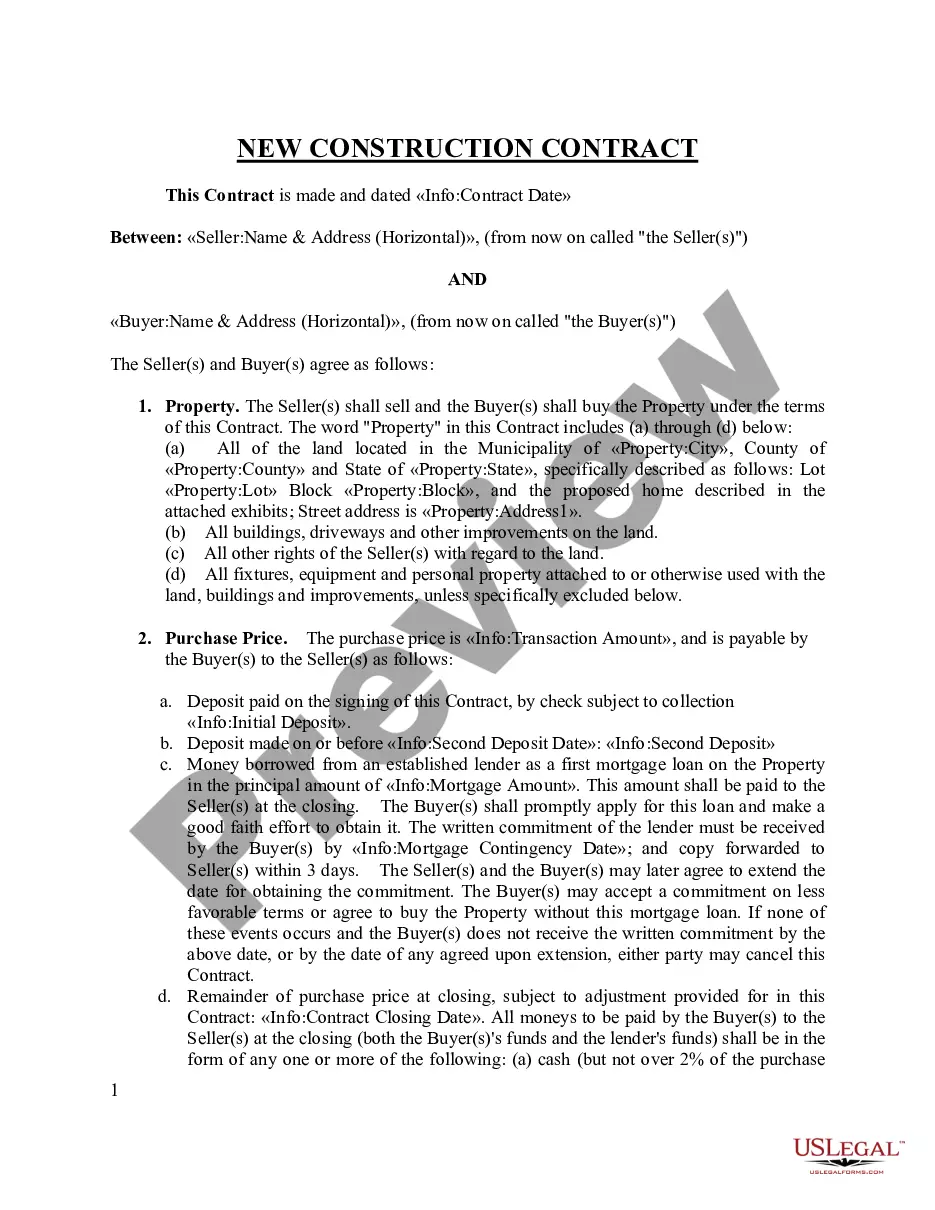
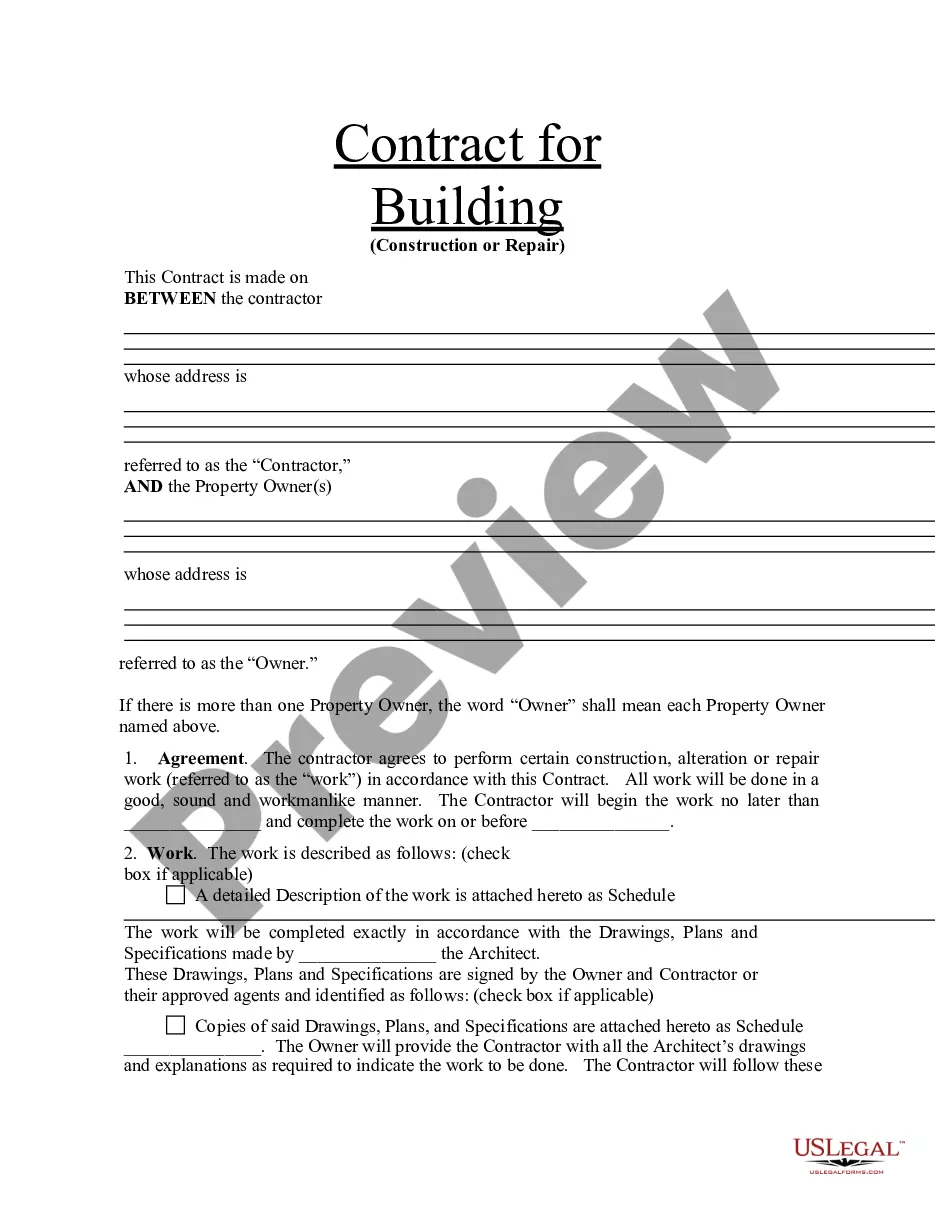
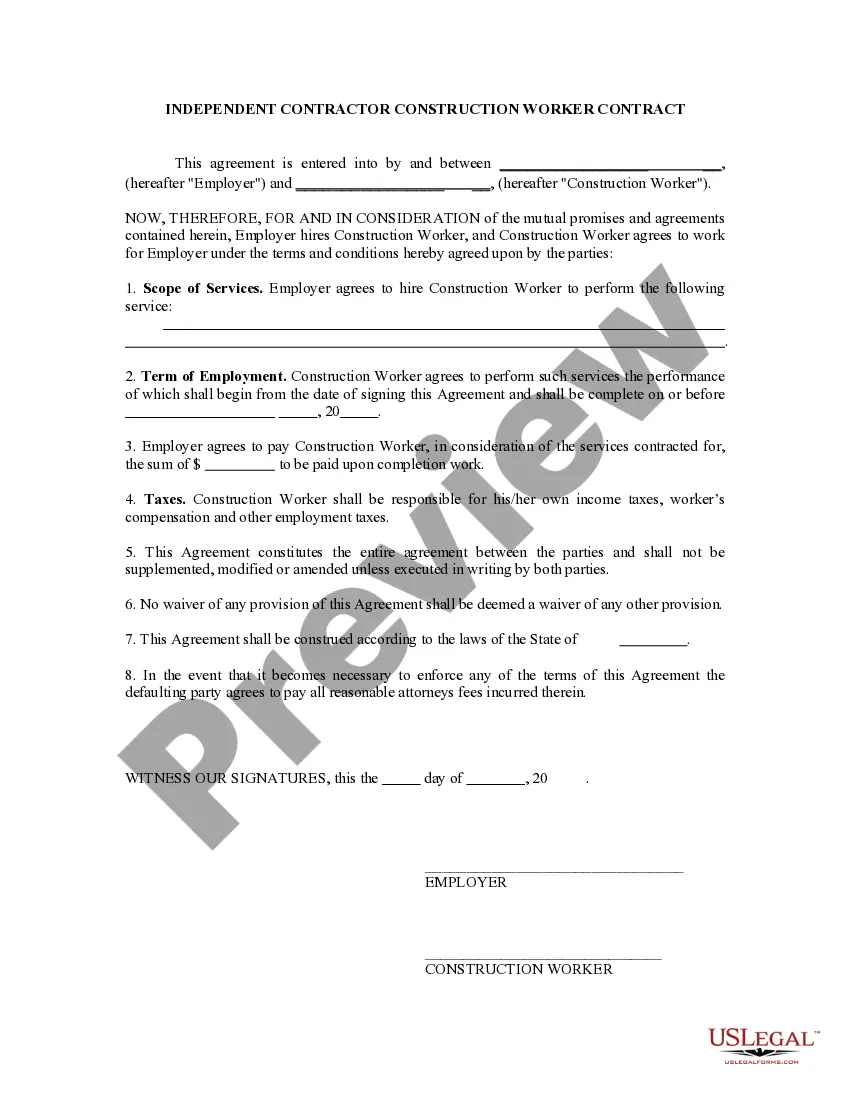
The Drainage Contract for Contractor is a legal document that formalizes agreements between drainage contractors and property owners. This contract outlines the scope of work, payment terms, and responsibilities of each party. It is specifically designed to be compliant with the laws of Hawaii, ensuring that all clausesâincluding change orders and warranty informationâare clearly defined to prevent disputes and protect both parties involved in drainage projects. This contract is essential for any homeowner or contractor looking to establish clear expectations on drainage work.
Main sections of this form
- SCOPE OF WORK: Details the specific drainage services to be performed, including plumbing repairs and installation of drainage systems.
- WORK SITE: Identifies the property where the drainage work will take place.
- PERMITS: Specifies the contractor's responsibility to obtain all necessary permits for the project.
- INSURANCE: Requires the contractor to maintain general liability and workers compensation insurance.
- CHANGE ORDERS: Outlines how changes to the scope of work should be documented and agreed upon.
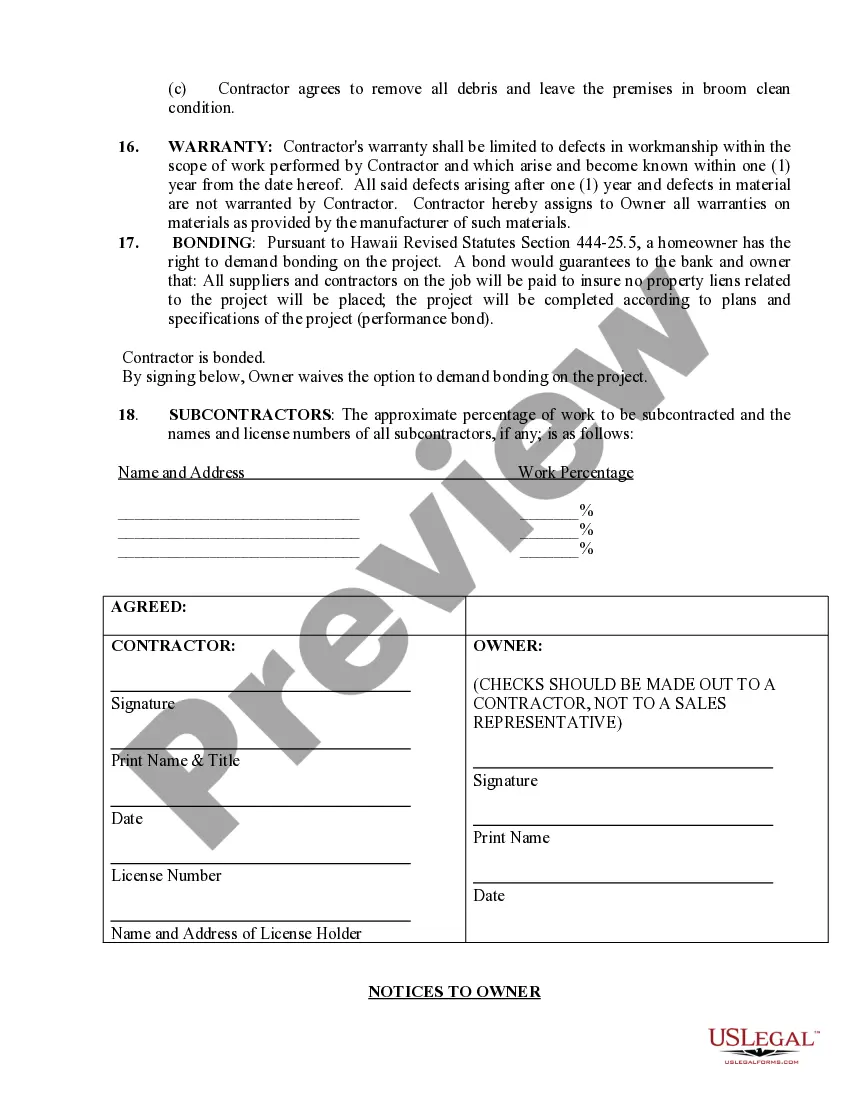
- WARRANTY: Sets the warranty period for workmanship issues arising from the project.

Common use cases
This form should be used whenever a property owner enters into an agreement with a drainage contractor for services such as the installation of drainage systems, plumbing repairs, or any work concerning water management on their property. It is particularly important for large projects that may require various approvals and contain multiple phases of work.
Who needs this form
- Property owners seeking to hire a drainage contractor for projects.
- Drainage contractors looking to establish a formal agreement with clients.
- Any party involved in drainage work that requires clear documentation of responsibilities and services.
Instructions for completing this form
- Identify the parties: Fill out the names and addresses of both the contractor and the property owner at the beginning of the contract.
- Specify the work: Clearly define the scope of work, including details about the drainage services to be provided.
- Enter payment details: Indicate whether the payment arrangement is cost-plus or fixed fee, and specify any terms related to changes in the project price.
- Include project location: Specify the address of the property where the drainage work will be performed.
- Obtain signatures: Ensure both parties sign the contract, confirming their agreement to the terms outlined.
Notarization guidance
This form does not typically require notarization unless specified by local law. However, having a notarized document can add an extra layer of validity and protection for both parties involved.
Get your form ready online
Our built-in tools help you complete, sign, share, and store your documents in one place.
Make edits, fill in missing information, and update formatting in US Legal Forms—just like you would in MS Word.
Download a copy, print it, send it by email, or mail it via USPS—whatever works best for your next step.
Sign and collect signatures with our SignNow integration. Send to multiple recipients, set reminders, and more. Go Premium to unlock E-Sign.
If this form requires notarization, complete it online through a secure video call—no need to meet a notary in person or wait for an appointment.
We protect your documents and personal data by following strict security and privacy standards.

Make edits, fill in missing information, and update formatting in US Legal Forms—just like you would in MS Word.

Download a copy, print it, send it by email, or mail it via USPS—whatever works best for your next step.

Sign and collect signatures with our SignNow integration. Send to multiple recipients, set reminders, and more. Go Premium to unlock E-Sign.

If this form requires notarization, complete it online through a secure video call—no need to meet a notary in person or wait for an appointment.

We protect your documents and personal data by following strict security and privacy standards.
Common mistakes
- Failing to specify the scope of work clearly, leading to misunderstandings later.
- Not obtaining necessary permits, which can cause delays.
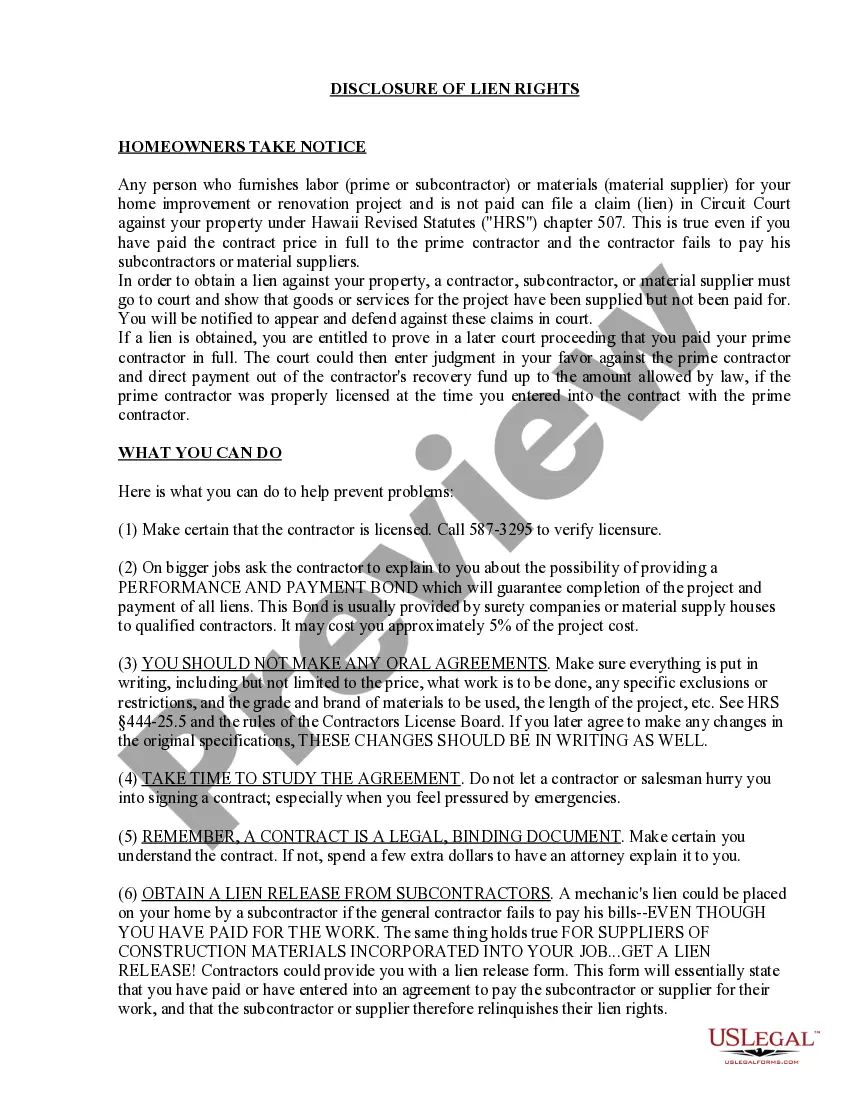
- Leaving out liability and insurance clauses which protect both parties.
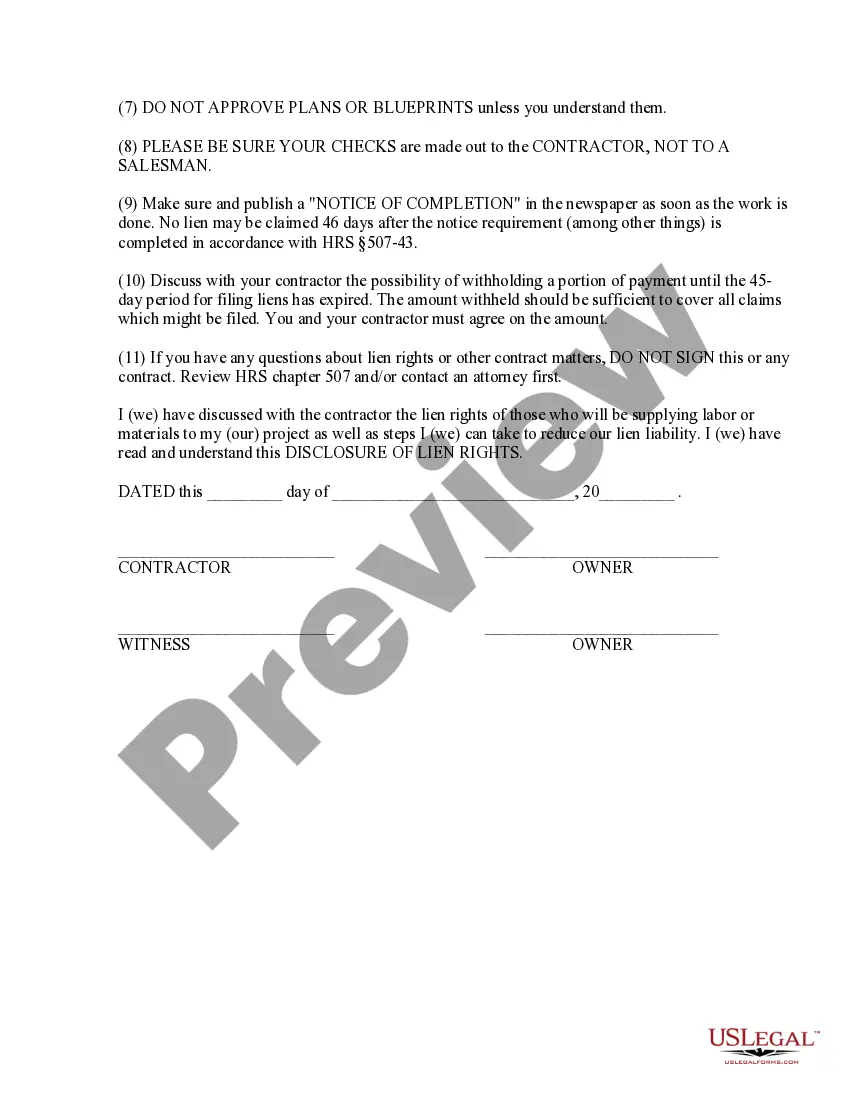
- Not documenting changes to the contract through a Change Order, risking disputes over additional costs.
Benefits of using this form online
- Convenient access to legal documents any time, without the need for in-person meetings.
- Editable templates that allow customization to meet specific project requirements.
- Reliability of professionally drafted content, ensuring legal compliance.
Main things to remember
- The Drainage Contract establishes clear responsibilities for both contractor and property owner.
- It should detail all aspects of the drainage work to avoid misunderstandings.
- Always maintain written documentation of any changes or agreements throughout the project.
Looking for another form?

Form popularity
FAQ
Filling out a contractor's proposal template starts with gathering essential project details. Clearly outline the scope of work, estimated costs, and timelines needed for completion. Highlight any specific requirements related to a Hawaii Drainage Contract for Contractor to demonstrate your relevant expertise. A well-prepared proposal can significantly improve your chances of securing the contract.
Yes, Hawaii requires a contractor's license for individuals or companies that perform construction work. Ensuring you have the appropriate license protects both the contractor and the client, maintaining a professional standard in the industry. It is crucial to comply with state regulations when engaging in projects outlined in a Hawaii Drainage Contract for Contractor.
Filling out a contractor agreement requires careful attention to detail. First, clearly input the names and contact information of both parties. Next, specify the scope of work, payment arrangements, and deadlines, focusing on what makes a Hawaii Drainage Contract for Contractor unique. Review the completed contract thoroughly before signing to ensure all details are accurate.
Creating a construction contract agreement involves several steps. Start with identifying the involved parties and describing the project in detail. It is crucial to state the payment schedule, completion timelines, and any specifications unique to a Hawaii Drainage Contract for Contractor. Ensure both parties sign and keep copies for their records to avoid misunderstandings.
Writing a simple contract agreement requires a clear understanding of the terms between the involved parties. Begin with a title that states the purpose of the contract. Then, list the obligations of each party, and state mutual agreement on the terms. A well-structured simple contract can help avoid disputes and forms the basis for solid professional relationships.
To write a simple construction contract, start by detailing the project scope, timelines, and payment terms. Include a section for both parties to sign, ensuring all relevant information is clear and uncomplicated. Mention any necessary permits or licenses, especially when dealing with a Hawaii Drainage Contract for Contractor. Using a template can simplify this process and ensure you don't miss crucial elements.
A construction contract, including a Hawaii Drainage Contract for Contractor, typically includes five key elements: offer, acceptance, consideration, legal capacity, and legality. The offer outlines the scope of work, while the acceptance confirms agreement on those terms. Consideration refers to what each party stands to gain, such as payment for services rendered. Legal capacity ensures all parties can enter a contract, and legality means the contract must comply with local laws and regulations.
In Hawaii, whether a handyman needs a license depends on the scope of the work performed. If the work exceeds a certain monetary value or involves specialized trades, a contractor's license may be required. For tasks related to a Hawaii Drainage Contract for Contractor, it’s essential to review local regulations to ensure compliance and avoid potential penalties.
In Hawaii, an RME in construction refers to a Responsible Managing Employee who plays a crucial role in maintaining the contractor's license. This person ensures that all construction tasks, including those under a Hawaii Drainage Contract for Contractor, meet regulatory standards. The presence of an RME helps assure that projects will be completed safely and according to legal guidelines.
An RME employee is a key individual in the contractor's firm who holds qualifications to oversee construction projects. This role involves ensuring compliance with local laws and regulations for projects like a Hawaii Drainage Contract for Contractor. By designating an RME employee, contractors demonstrate their commitment to quality and adherence to legal standards.