Employment Separation Agreement
Overview of this form
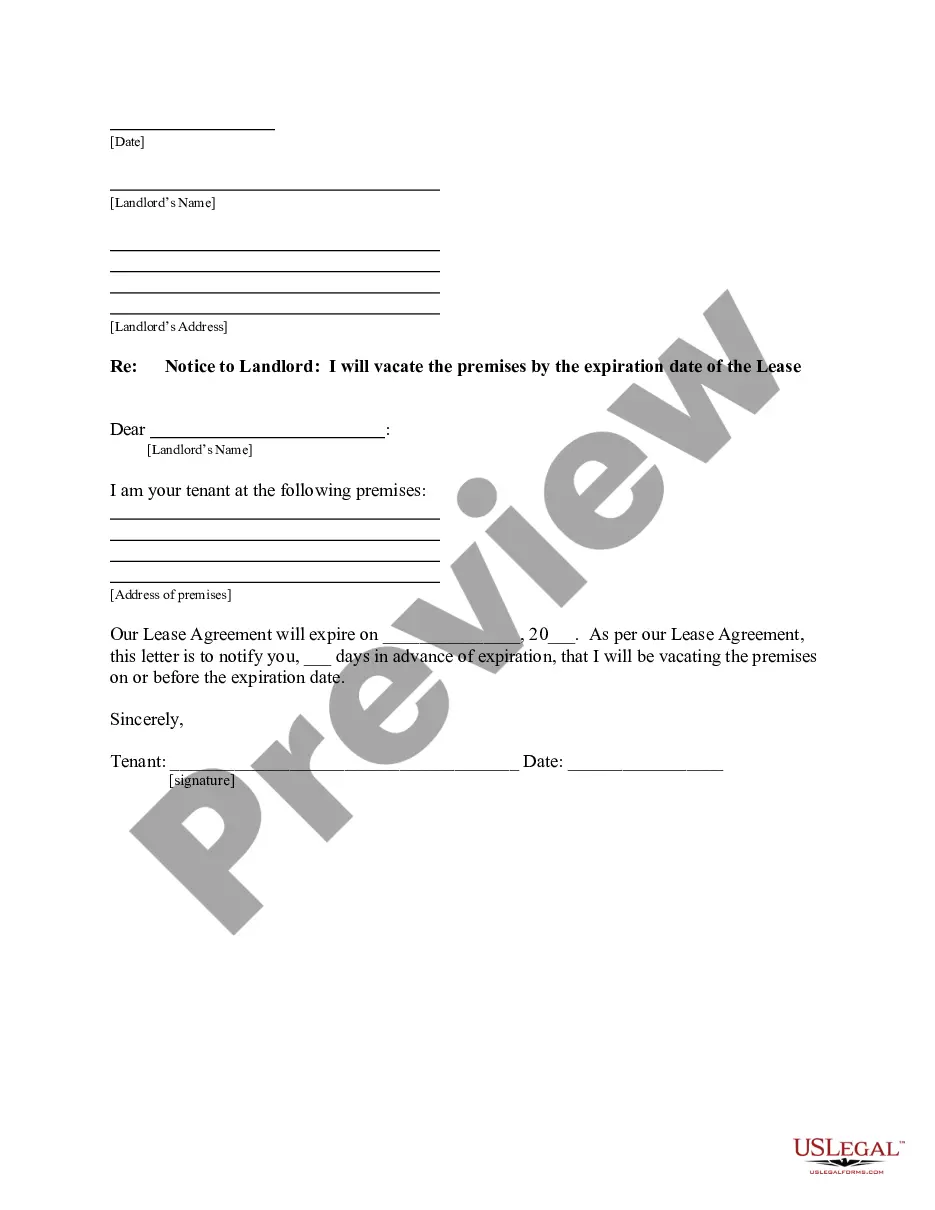
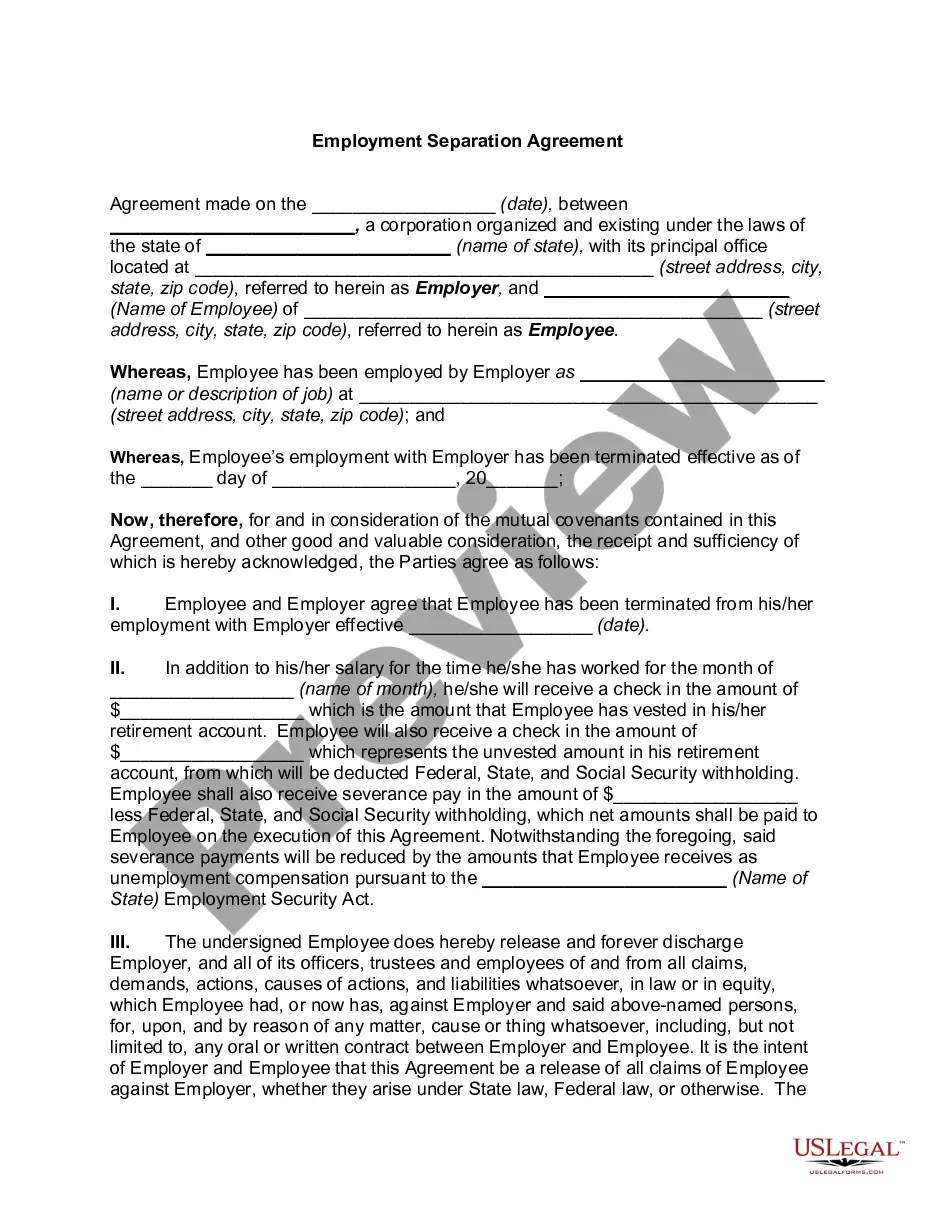
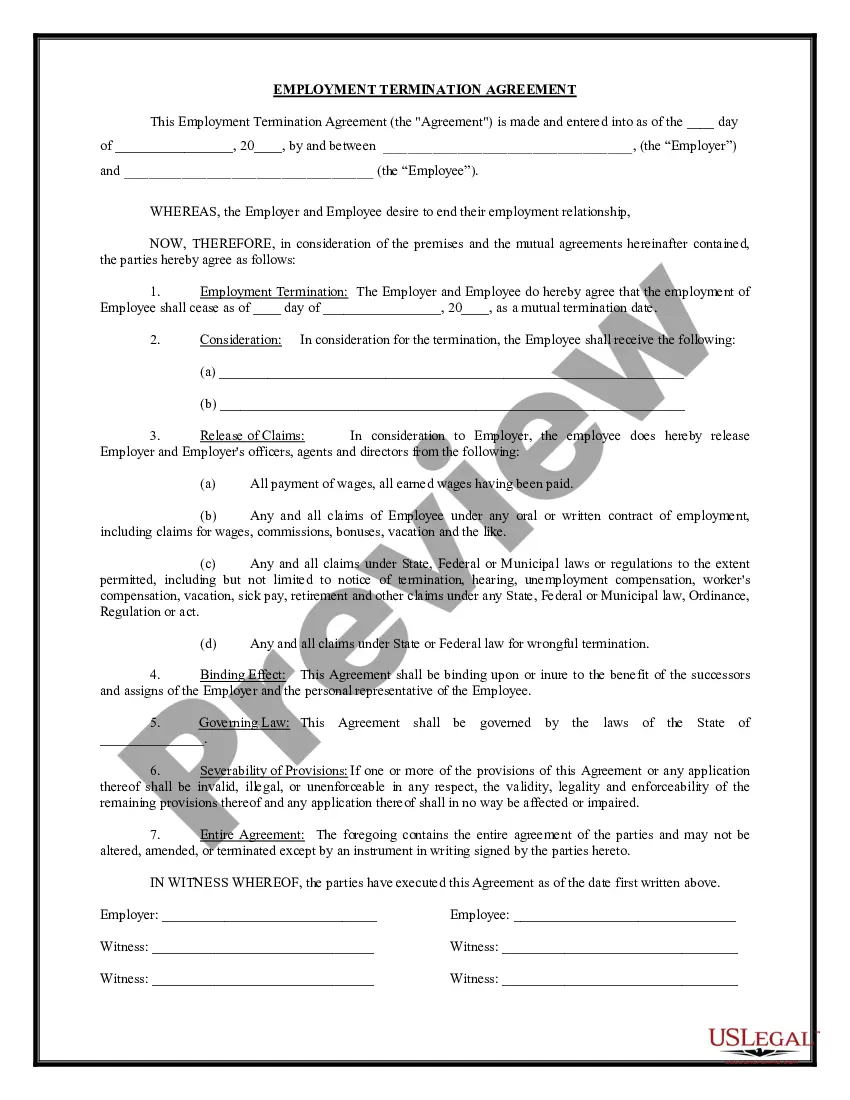
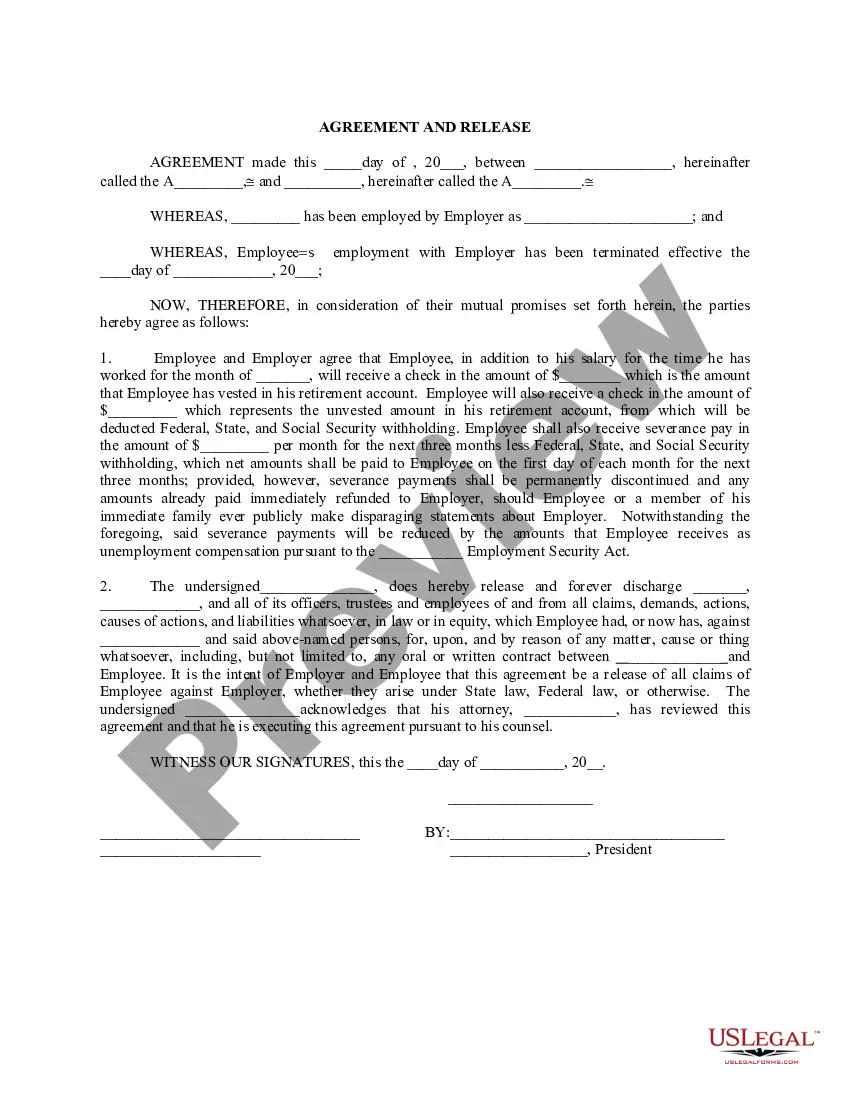
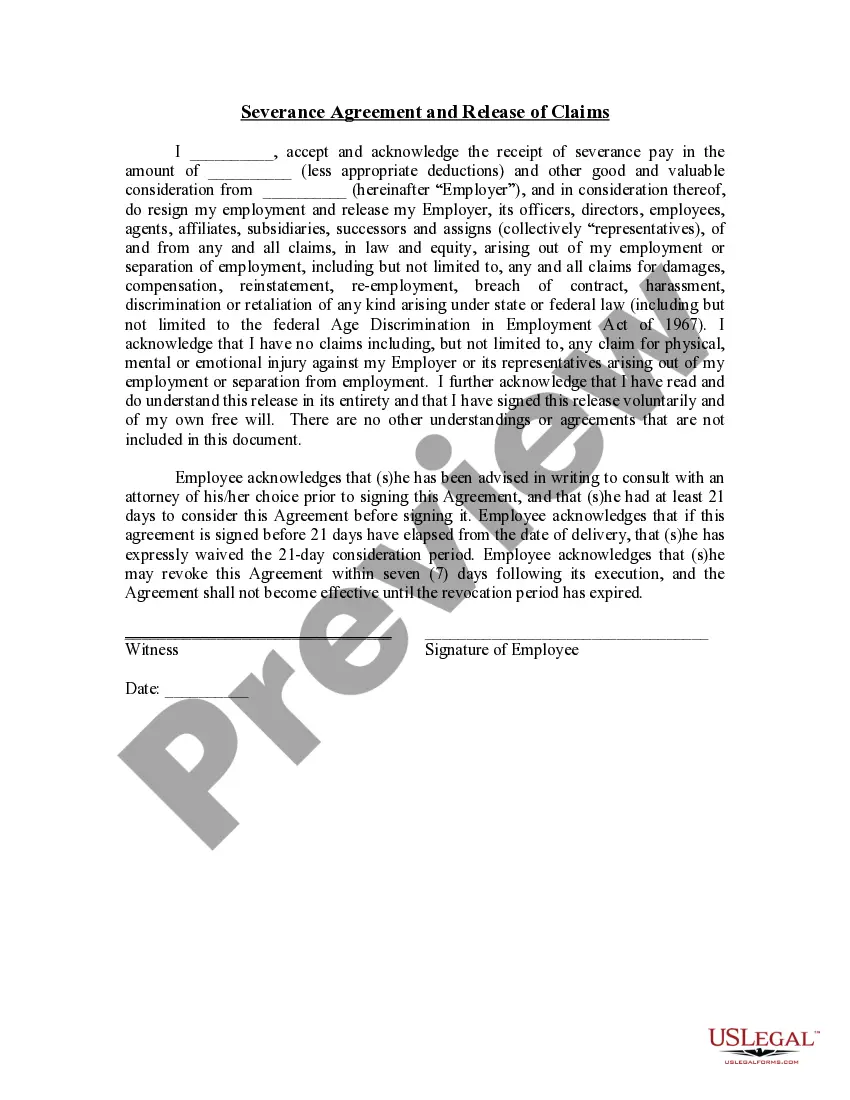
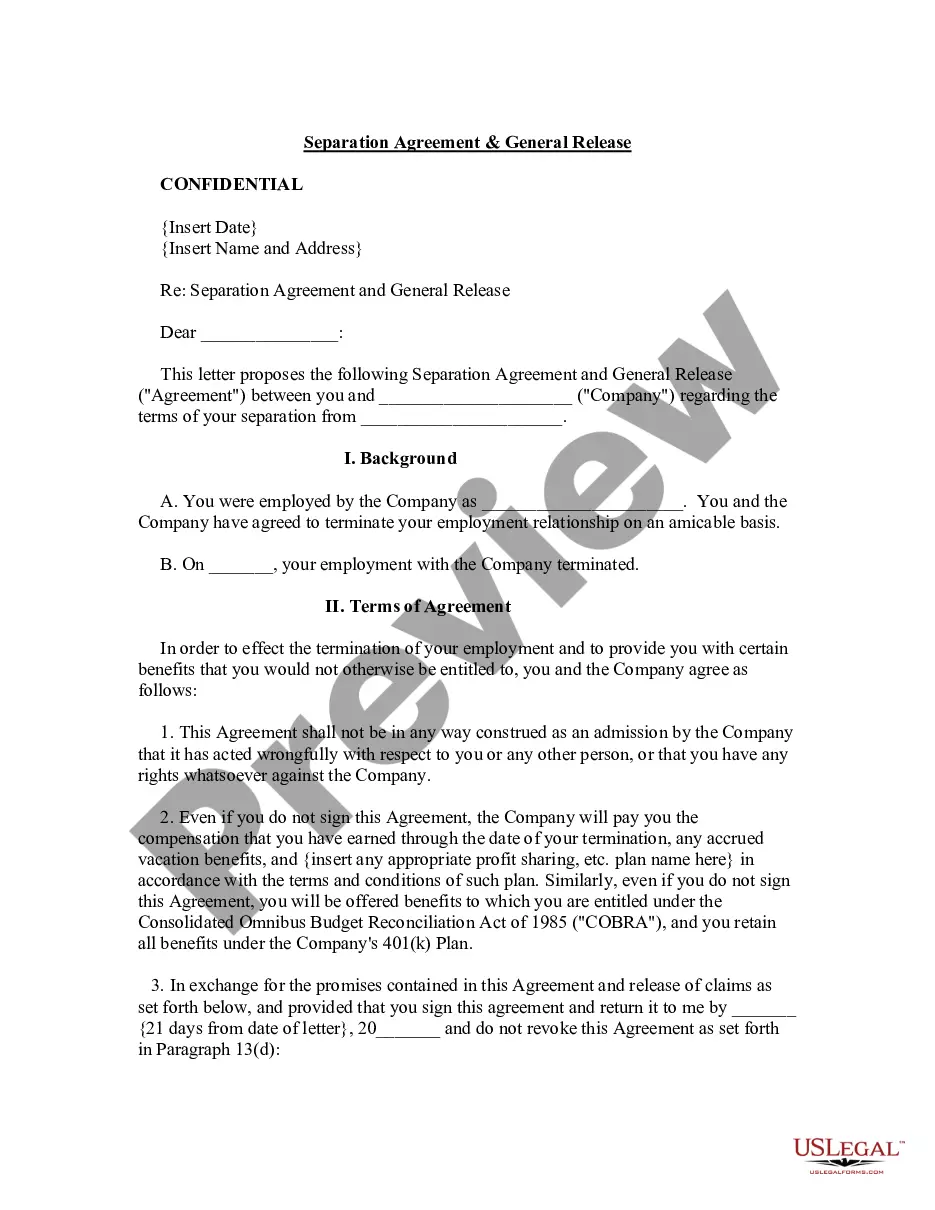
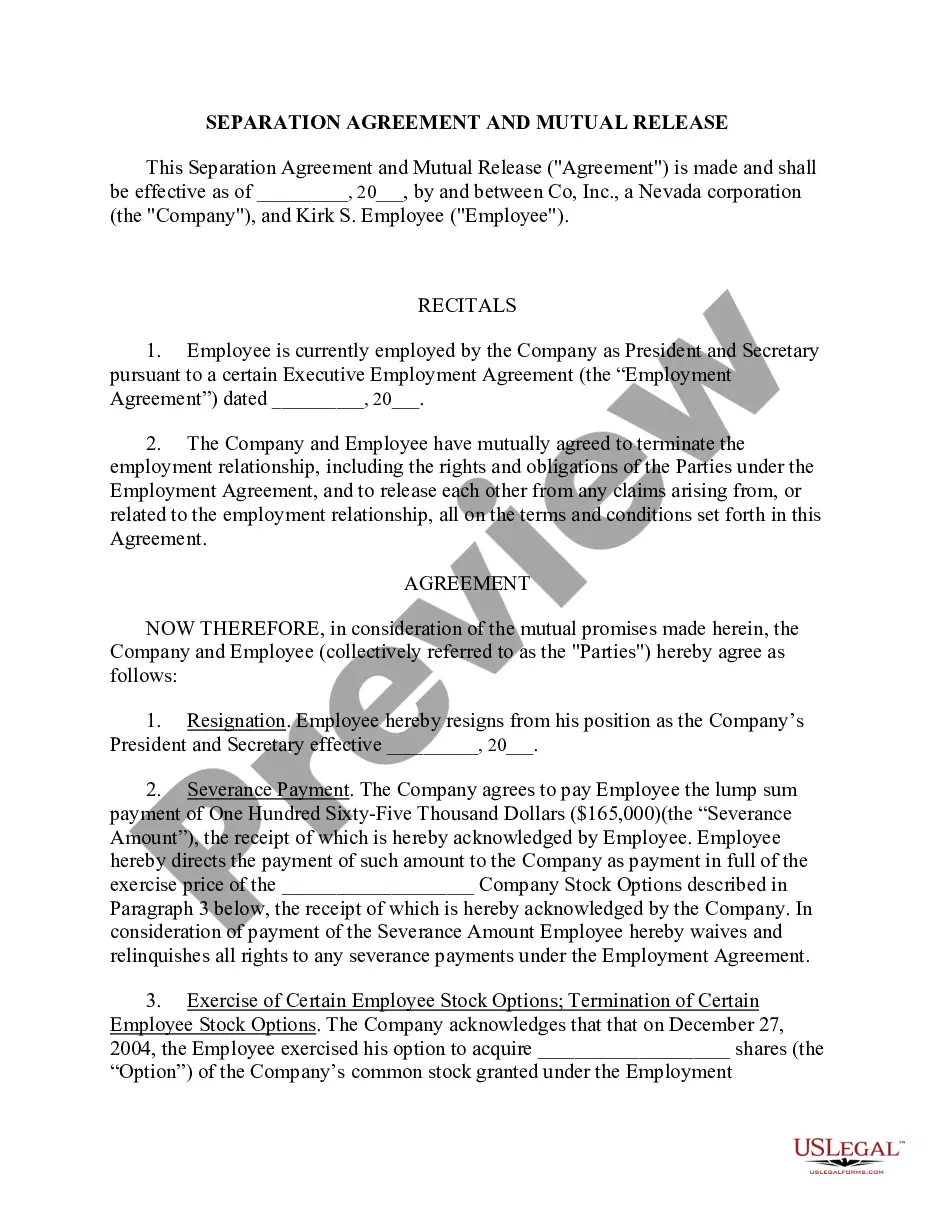
The Employment Separation Agreement is a written contract between an employer and an employee that outlines the terms of the employee's separation from the company. This form is essential for establishing a clear understanding of the rights and responsibilities of both parties following termination. Unlike a simple notice of termination, this agreement often includes provisions regarding severance pay, release of claims, and confidentiality, ensuring that both parties are protected after the employment relationship ends.
Key components of this form
- Date of Agreement: Indicates when the separation agreement is made.
- Employer and Employee Details: Identifies both parties and their addresses.
- Termination Details: Specifies the effective termination date and job position.
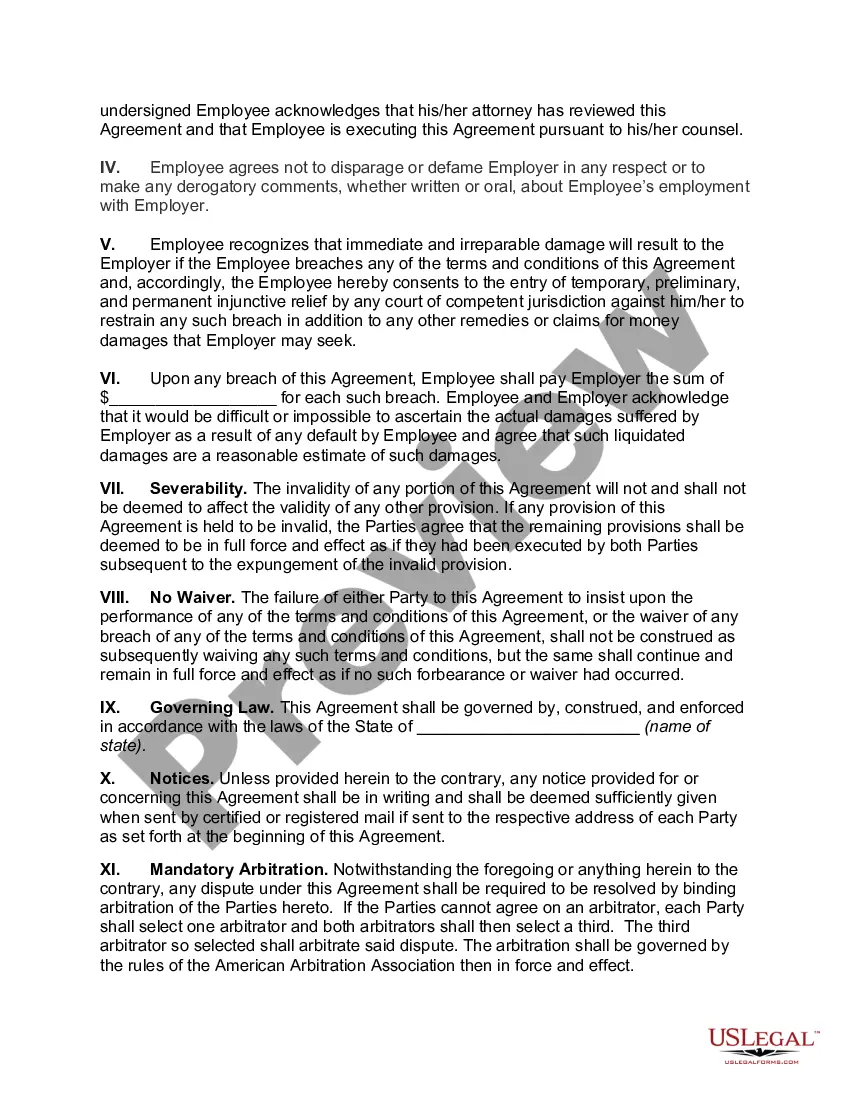
- Severance and Compensation: Outlines severance pay, retirement benefits, and any deductions.
- Release of Claims: Includes a provision where the employee waives the right to sue the employer.
- Non-disparagement Clause: Prevents the employee from making negative statements about the employer.
When to use this form
This form should be used when an employee's employment is terminated, whether voluntarily or involuntarily. It is particularly beneficial when severance pay is being offered, or when the employer seeks to protect against future claims from the employee. Use this agreement to formally document the terms of separation and to ensure that both parties have a mutual understanding of their rights and obligations post-employment.
Who this form is for
This form is intended for:
- Employers looking to formalize the termination process with their employees.
- Employees who are separating from their employers and want to ensure their rights are protected.
- HR professionals managing employee separations and ensuring compliance with legal standards.
How to prepare this document
- Fill in the date of the agreement at the top of the document.
- Enter the full name and address of the employer and employee.
- Specify the job title of the employee and the effective date of termination.
- Outline the severance pay and any retirement benefits in the designated sections.
- Include any clauses regarding non-disparagement and release of claims.
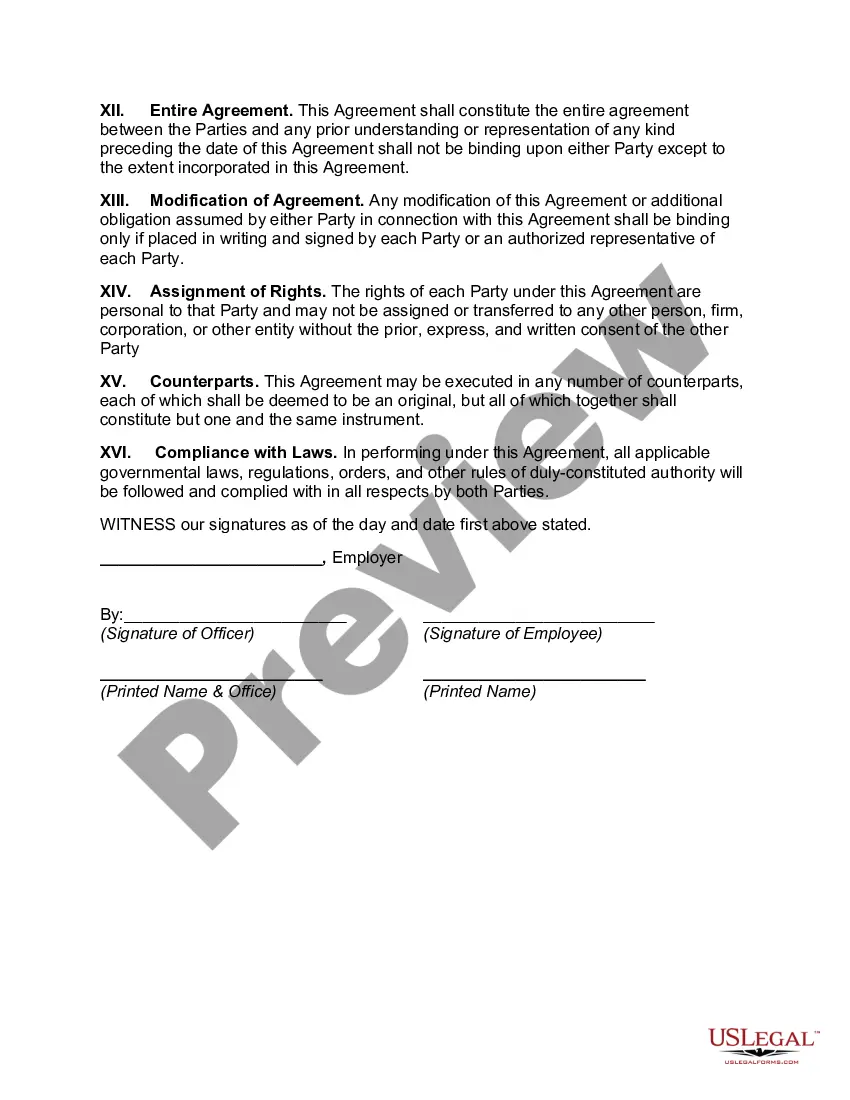
- Both parties should review and sign the agreement to finalize it.
Notarization requirements for this form
This form does not typically require notarization unless specified by local law. However, it is advisable to check state laws or consult a legal professional to ensure compliance.
Get your form ready online
Our built-in tools help you complete, sign, share, and store your documents in one place.
Make edits, fill in missing information, and update formatting in US Legal Forms—just like you would in MS Word.
Download a copy, print it, send it by email, or mail it via USPS—whatever works best for your next step.
Sign and collect signatures with our SignNow integration. Send to multiple recipients, set reminders, and more. Go Premium to unlock E-Sign.
If this form requires notarization, complete it online through a secure video call—no need to meet a notary in person or wait for an appointment.
We protect your documents and personal data by following strict security and privacy standards.

Make edits, fill in missing information, and update formatting in US Legal Forms—just like you would in MS Word.

Download a copy, print it, send it by email, or mail it via USPS—whatever works best for your next step.

Sign and collect signatures with our SignNow integration. Send to multiple recipients, set reminders, and more. Go Premium to unlock E-Sign.

If this form requires notarization, complete it online through a secure video call—no need to meet a notary in person or wait for an appointment.

We protect your documents and personal data by following strict security and privacy standards.
Common mistakes to avoid
- Failing to clearly specify the termination date.
- Not detailing the severance pay or compensation accurately.
- Omitting the employee's release of claims clause.
- Neglecting to have both parties sign the agreement.
- Overlooking state-specific legal requirements.
Benefits of using this form online
- Easy access to a professionally drafted template tailored for immediate use.
- Convenience of filling out the form at your own pace.
- Ability to customize the document to reflect specific circumstances and needs.
- Reliable legal language that helps protect both parties involved.
- The agreement serves to protect both parties, ensuring legal closure on employment matters.
- It may limit the former employeeâs ability to pursue legal claims against the employer.
- Compliance with specific state laws may affect the binding nature of the agreement.
Quick recap
- An Employment Separation Agreement clearly lays out the terms of termination.
- It is vital for legally protecting both the employer and employee post-termination.
- Understanding each clause can prevent potential disputes in the future.
Looking for another form?
Form popularity
FAQ
A separation agreement is a legally binding document drawn up between the parties in a marital relationship. The agreement is something that both people in the marriage use to formally divide their assets, debts, and other marital responsibilities so that each party experiences a fair separation from the other.
Separation details. An employment separation agreement should lay out some basic terms, such as identifying both parties (company and terminated employee), the final date of employment, and possibly a reason (termination, layoff, resignation, etc.).
Add the employee name, ID number, position, and department. Add the name of manager or supervisor handling termination. Include any severance, benefits, and compensation the employee is entitled to. Detail any company property employee is expected to return.
A separation agreement is a legal document that when signed and notarized by you and your spouse can act as a legally binding contract that is separate from or survives the divorce. Such a contract is enforceable, meaning you can take legal action if your spouse does not adhere to the terms of the contract.
In most cases courts will respect the separation agreements of spouses as long as such agreements are fair, reasonable and properly executed.
The spouses' right to live separately. Custody of the children. A visitation schedule, or a provision for reasonable visitation. Child support. Alimony or spousal support. The children's expenses, including medical, dental, educational and recreational. Property and debt division. Insurance, including medical, dental and life.
Separation agreements can be long and complex, especially if you and your partner have been together for years and have extensive marital property or children. While you can draft a separation agreement yourself, it's best to have an attorney do it for you.
Compensation details. Confidentiality rules following termination. Date of employee's termination. Agreement from both parties in the form of a signature. Details about how long the employee will continue to have access to benefits.
The spouses' right to live separately. Custody of the children. A visitation schedule, or a provision for reasonable visitation. Child support. Alimony or spousal support. The children's expenses, including medical, dental, educational and recreational. Property and debt division. Insurance, including medical, dental and life.