Oregon Defendant's Response Small Claims
What is this form?
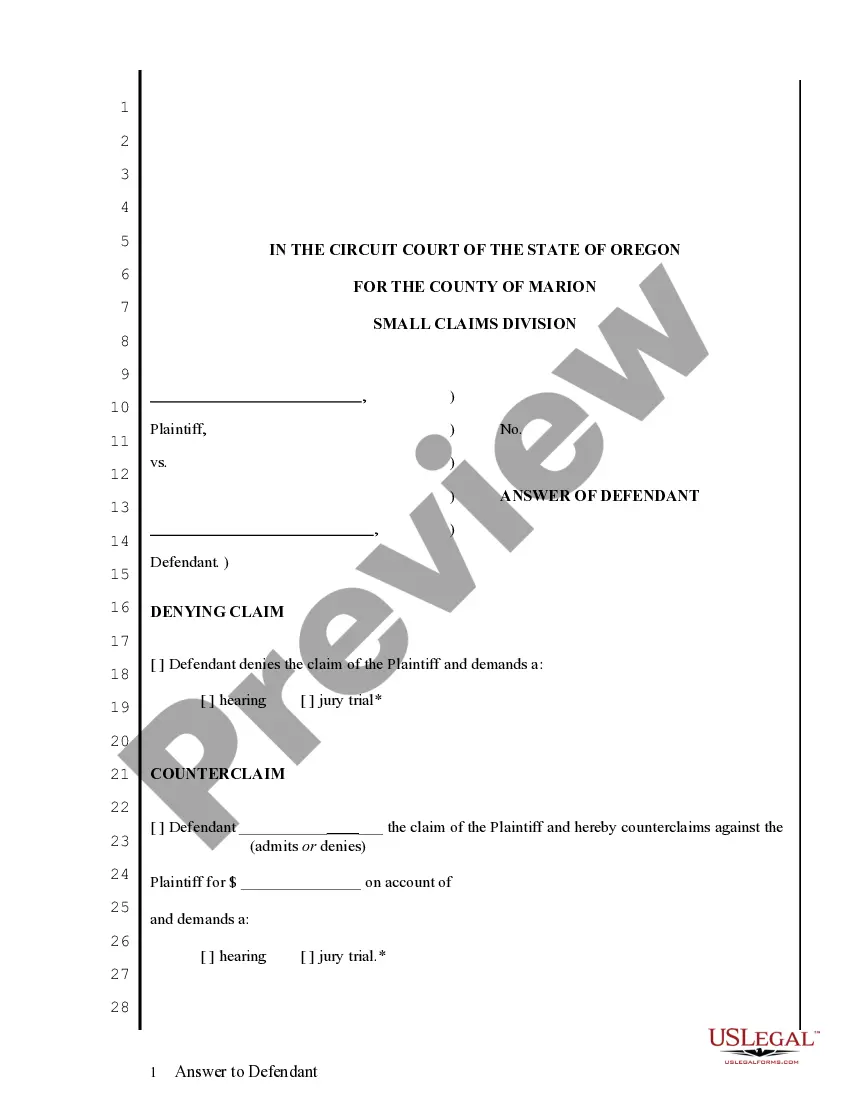
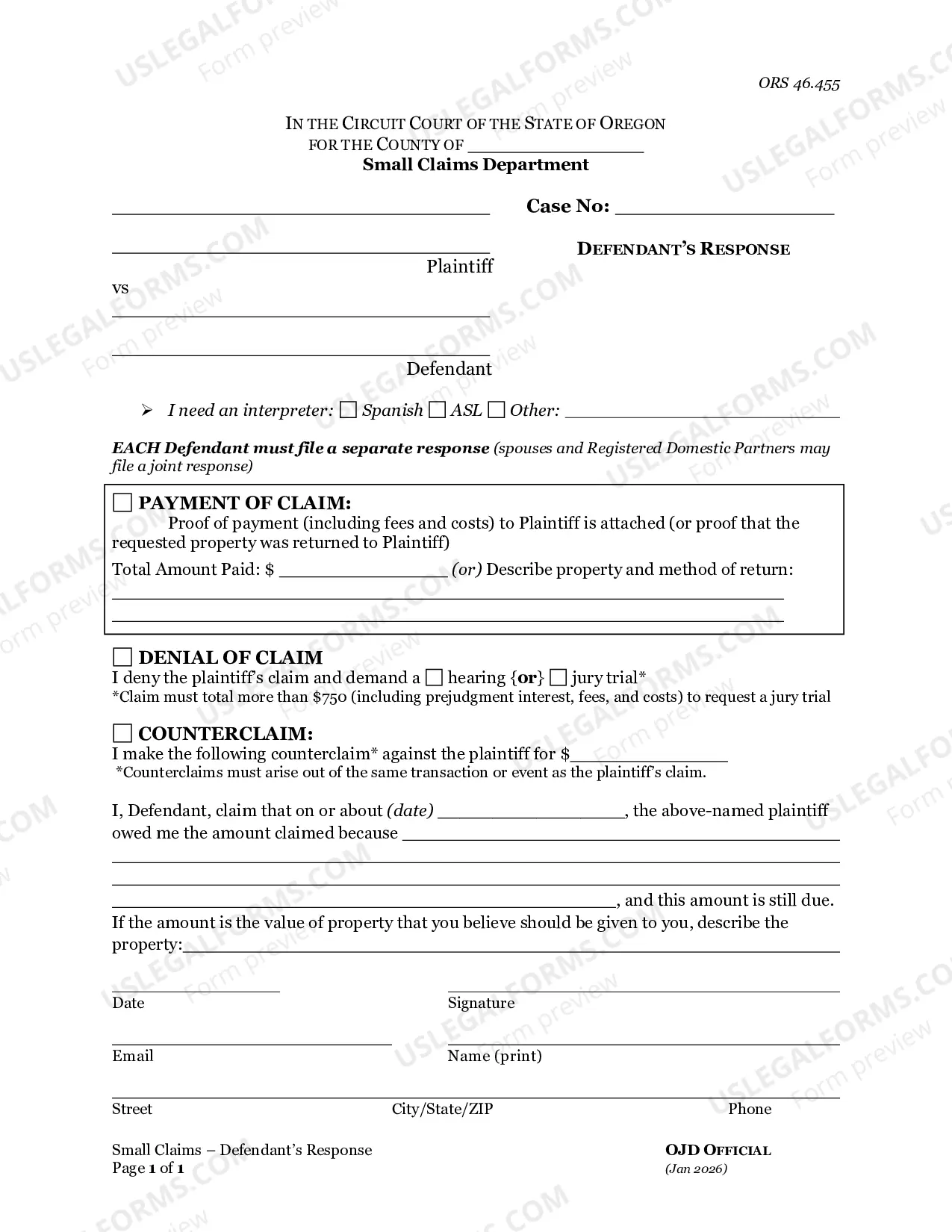
The Defendant's Response Small Claims form is a legal document used in small claims disputes in the state of Oregon. This form allows defendants to formally respond to claims made against them in small claims court. It includes sections for denying the plaintiff's claims and can also incorporate a counterclaim, where the defendant can assert their own claims against the plaintiff. This form is distinct from other types of responses as it is specifically tailored for small claims litigation, ensuring compliance with Oregon's legal requirements.
Key components of this form
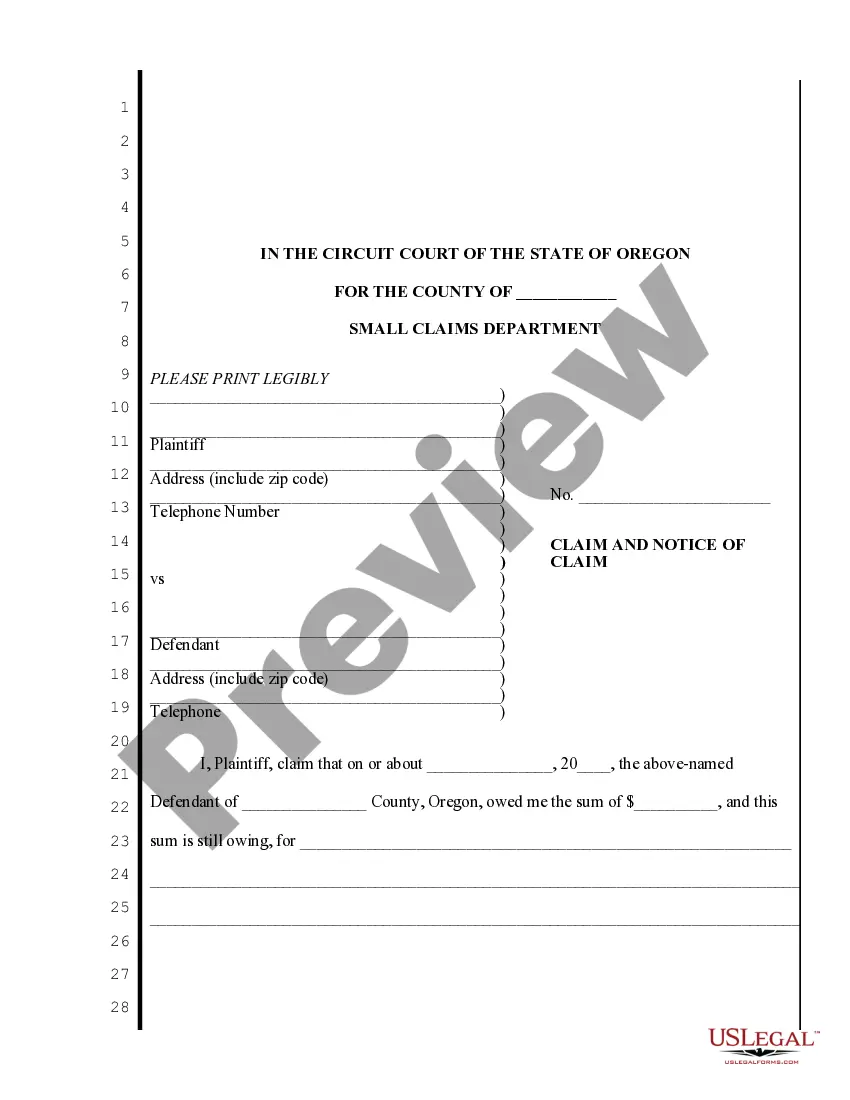
- Identification of parties: Names and addresses of both the plaintiff and defendant.
- Admission or denial of claims: A section for the defendant to specify if they admit or deny the plaintiff's claims.
- Counterclaim section: Allows the defendant to assert any claims they have against the plaintiff.
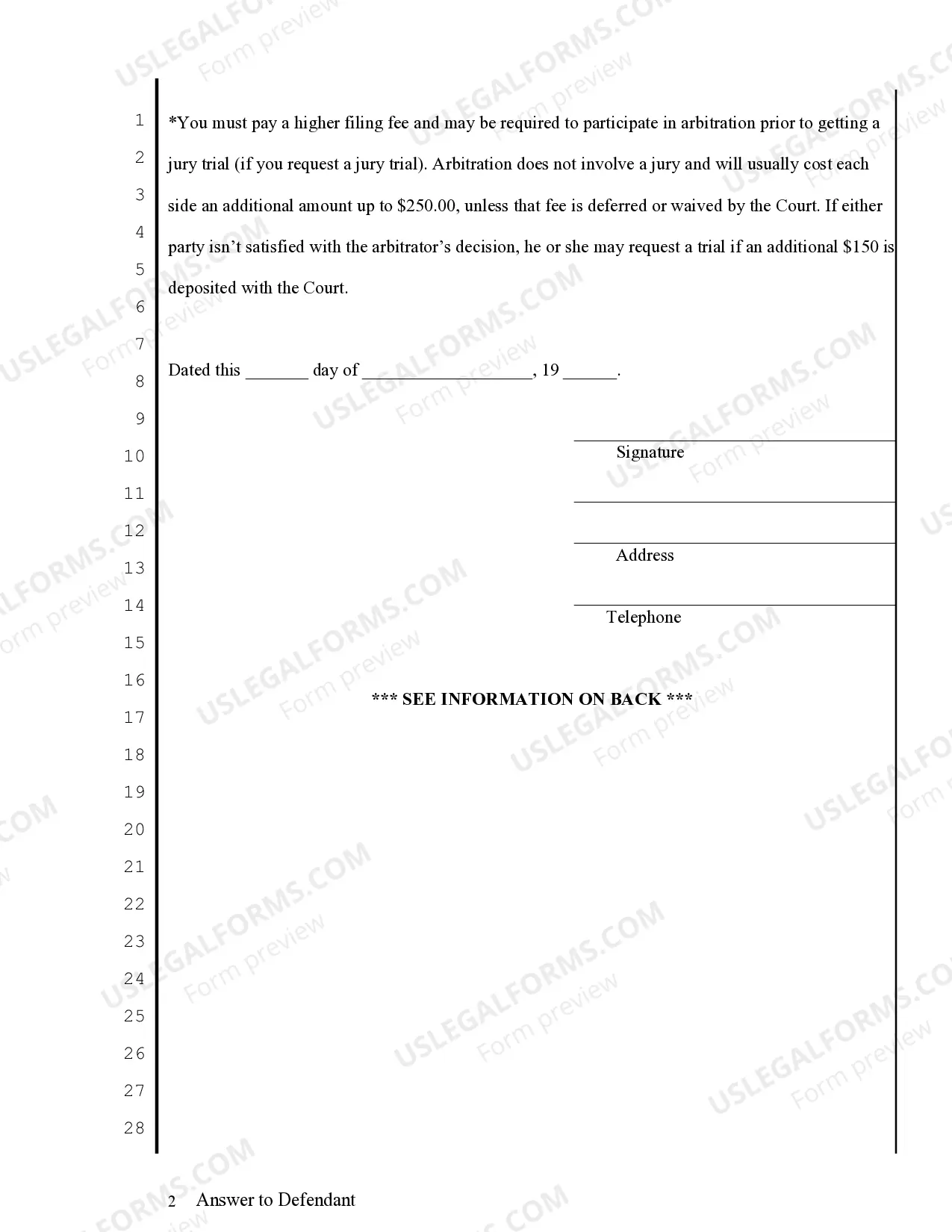
- Request for hearing: Includes options for requesting a hearing or jury trial.
- Signature line: Space for the defendant to sign and date the form.
- Contact information: Area for the defendant to provide their address and telephone number.
When this form is needed
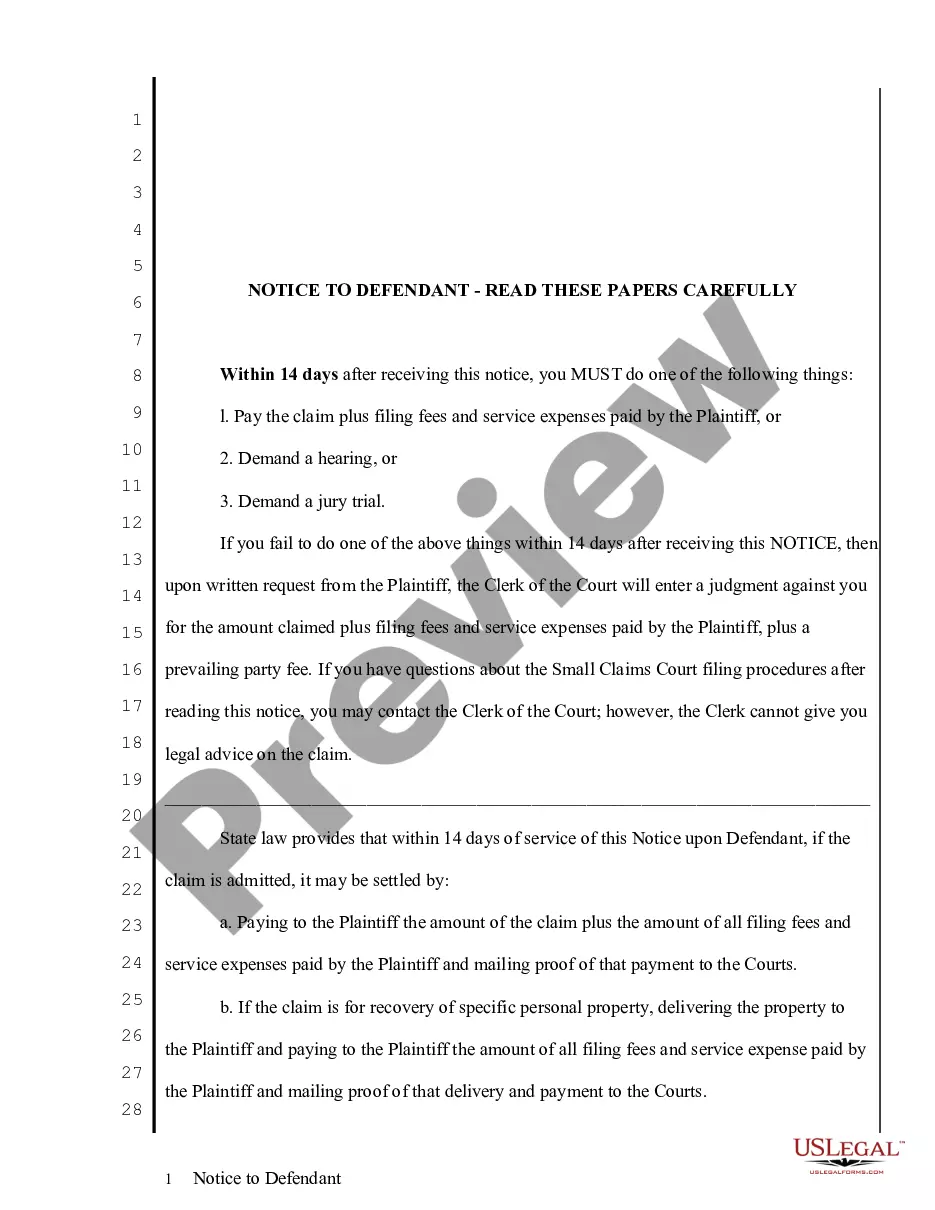
This form should be used when a defendant has received a small claims complaint and wishes to respond to the allegations made by the plaintiff. It is necessary to submit this form before the court date to ensure that the defendant's voice is heard and to defend against the claims. Additionally, if the defendant has a counterclaim against the plaintiff, this form allows them to include that claim in their response.
Who needs this form
- Individuals or businesses named as defendants in a small claims case in Oregon.
- Anyone looking to deny claims made against them in a small claims court.
- Defendants who have their own claims against the plaintiff and wish to file a counterclaim.
Completing this form step by step
- Identify the parties involved by entering the names and addresses of both the plaintiff and defendant.
- Clearly state whether you admit or deny the claims made by the plaintiff.
- If applicable, enter your counterclaim details, including the nature of the claim and any relevant amounts.
- Indicate whether you are requesting a hearing or a jury trial.
- Sign and date the form, providing your contact information, including address and phone number.
Notarization requirements for this form
This form does not typically require notarization to be legally valid. However, some jurisdictions or document types may still require it. US Legal Forms provides secure online notarization powered by Notarize, available 24/7 for added convenience.
Get your form ready online
Our built-in tools help you complete, sign, share, and store your documents in one place.
Make edits, fill in missing information, and update formatting in US Legal Forms—just like you would in MS Word.
Download a copy, print it, send it by email, or mail it via USPS—whatever works best for your next step.
Sign and collect signatures with our SignNow integration. Send to multiple recipients, set reminders, and more. Go Premium to unlock E-Sign.
If this form requires notarization, complete it online through a secure video call—no need to meet a notary in person or wait for an appointment.
We protect your documents and personal data by following strict security and privacy standards.

Make edits, fill in missing information, and update formatting in US Legal Forms—just like you would in MS Word.

Download a copy, print it, send it by email, or mail it via USPS—whatever works best for your next step.

Sign and collect signatures with our SignNow integration. Send to multiple recipients, set reminders, and more. Go Premium to unlock E-Sign.

If this form requires notarization, complete it online through a secure video call—no need to meet a notary in person or wait for an appointment.

We protect your documents and personal data by following strict security and privacy standards.
Avoid these common issues
- Failing to sign the form, which invalidates the submission.
- Not clearly stating whether claims are admitted or denied.
- Omitting important details in the counterclaim.
- Misspelling names or addresses of parties involved.
- Not submitting the form by the required deadline.
Why use this form online
- Easy access: Download the form anytime from US Legal Forms, ensuring you have the latest version.
- Editable format: Fill in the form online or print it out to complete by hand.
- Expert drafting: Forms are prepared by licensed attorneys, giving users confidence in their legal accuracy.
- Secure and convenient: Online forms eliminate the need for in-person visits to legal offices.
Legal use & context
- This form serves as the official response in small claims disputes in Oregon.
- A timely filed response is essential to prevent a default judgment against the defendant.
Looking for another form?
Form popularity
FAQ
Fill out the form. Fill out the beginning of the Response Family Law Act form (PDF, 0.1 MB). Fill out your Reply Statements. Copy your documents. File your forms. Serve your forms. File the affidavit with the court. Go to court.
You can file an answer or a general denial. Filing an answer. You can file a motion In certain situations, you can respond to the lawsuit by filing a motion (a request) that usually tells the court that the plaintiff made a mistake in the lawsuit. Talk to a lawyer!
Filing a Form N9 (acknowledgment of service) gives the defendant extra time in which to prepare a defence.This means asking the court to make an order that the defendant pay you the money and costs you are claiming.
If the defendant disputes your claim, they will send their defence to the court. They usually get 14 days to complete and return the defence but can ask to extend it to 28 days. If this happens, the court will let you know. There are various ways the defendant can dispute your claim.
File an answer. The most common way to respond to a complaint is by filing an answer. Negotiate. Being served with a lawsuit does not automatically mean you need to appear in court. Request more information from the plaintiff. Cross-complain. File a motion to dismiss.
If the defendant does not reply to your claim, you can ask the court to enter judgment 'by default' (that is, make an order that the defendant pay you the amount you have claimed because no reply has been received). You should do this as soon as possible after the 14 days have passed.
If you don't file a response 30 days after you were served, the Plaintiff can file a form called Request for Default. The Plaintiff has to wait 30 days to file this. If the Plaintiff files this form, the Court can enter a judgment against you. The Plaintiff will win the case.
If the defendant does not reply to your claim, you can ask the court to enter judgment 'by default' (that is, make an order that the defendant pay you the amount you have claimed because no reply has been received). You should do this as soon as possible after the 14 days have passed.
Your response to the complaint should both preserve your rights and also comply with court rules. An incorrect response or a failure to respond to a complaint can have serious consequences, such as the waiver of your rights or a judgment against you.