Ohio Grant of Encroachment
What this document covers
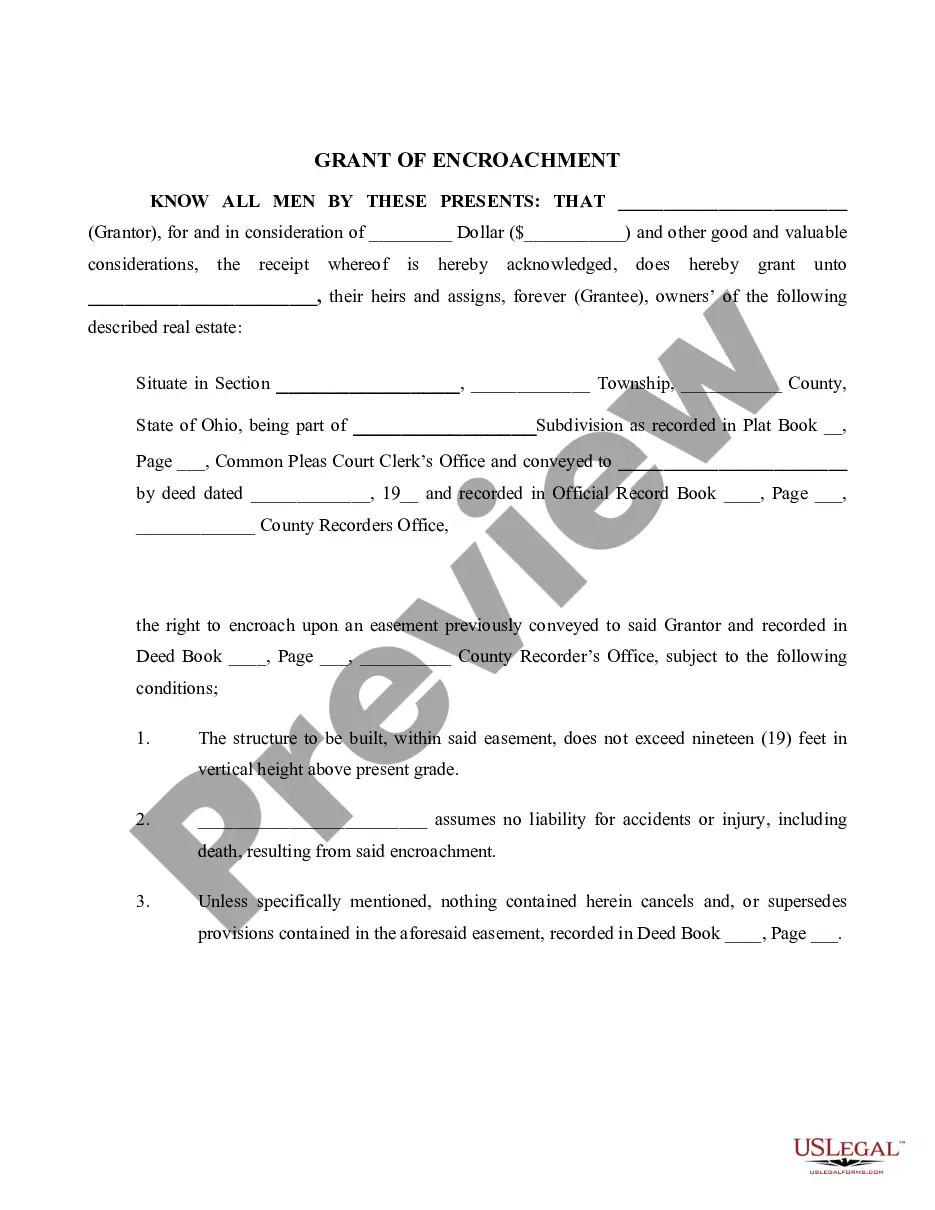
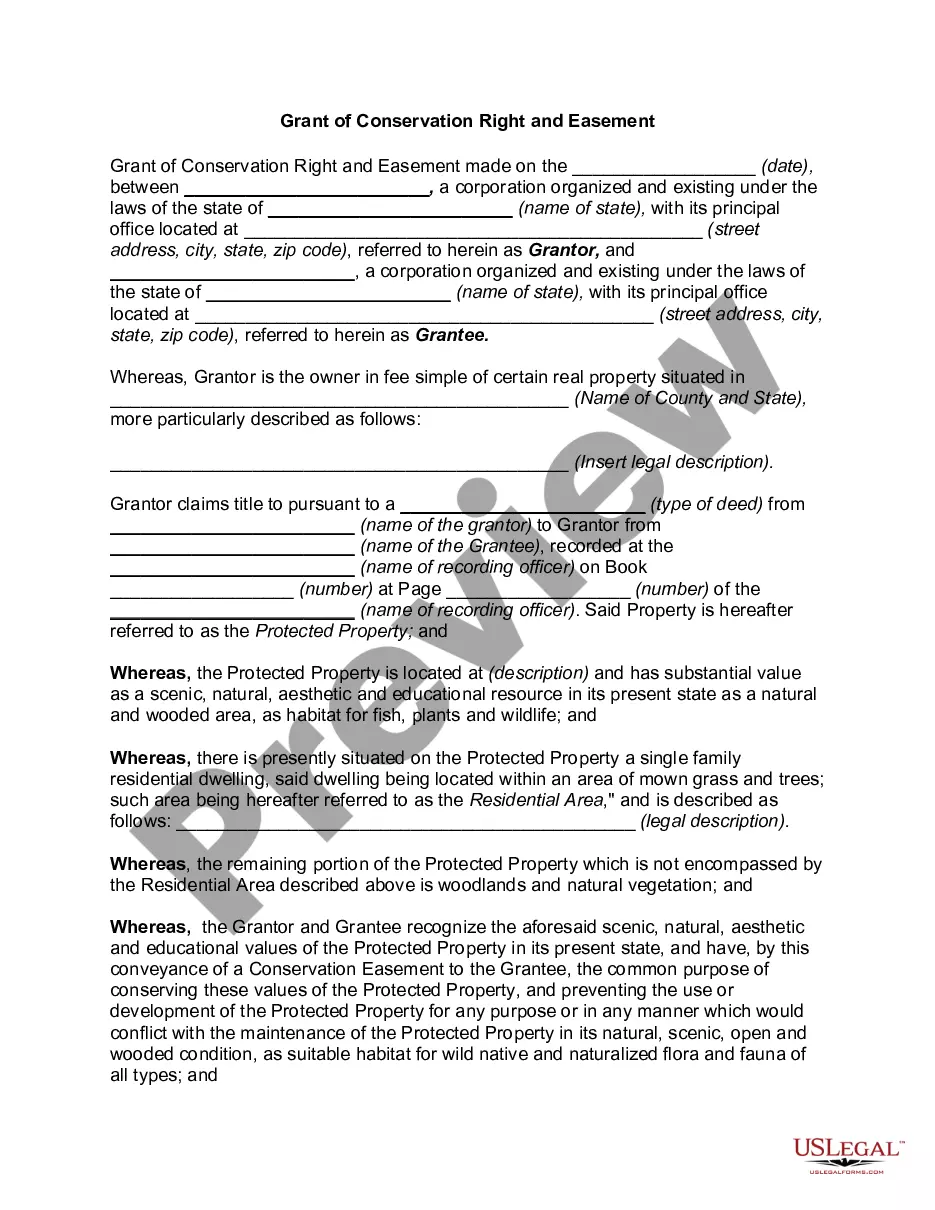
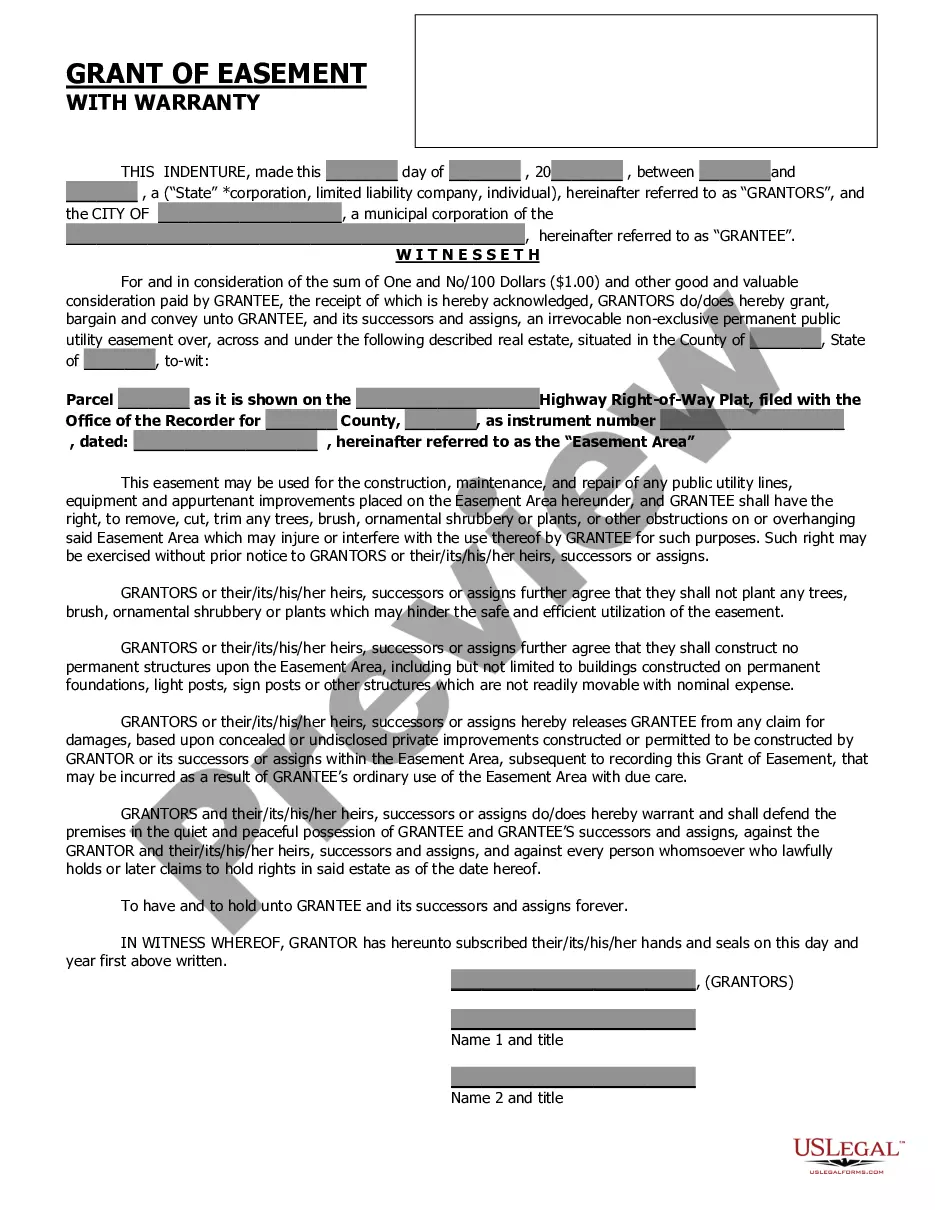
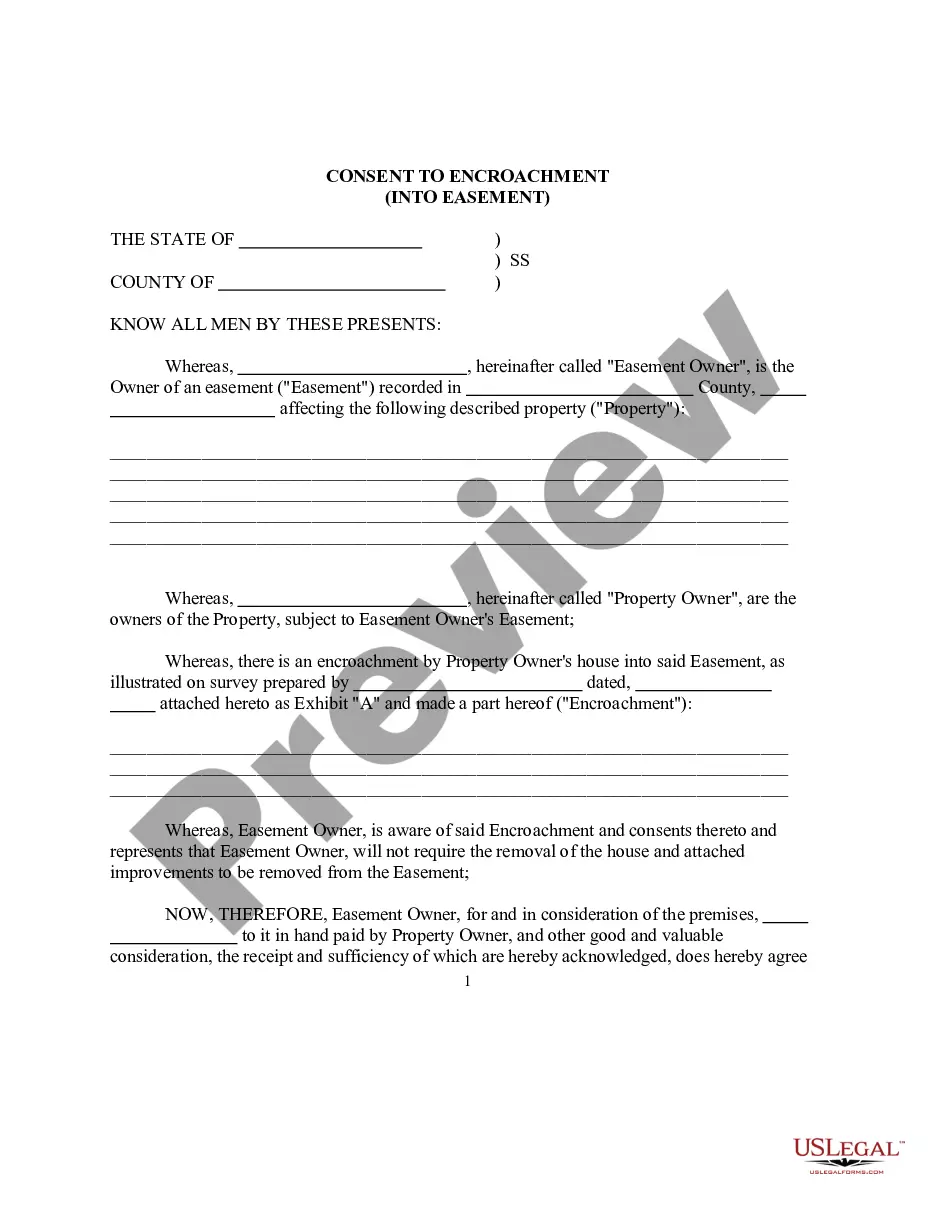
The Grant of Encroachment is a legal document that allows the owner of a parcel of land (the Grantor) to permit an encroachment upon an easement they own, for the purpose of constructing a specific structure. This form clarifies the rights and responsibilities involved in this arrangement, ensuring that all legal stipulations are adhered to. Unlike other easement agreements, this form specifically addresses the conditions under which the structure can be built and any associated liabilities.
Key components of this form
- The identities of the Grantor and Grantee are clearly stated.
- Details of the property and easement are provided, including legal descriptions and references to previous deeds.
- Conditions regarding the height of the structure are defined.
- Liabilities and limitations on the Grantor's responsibilities are addressed.
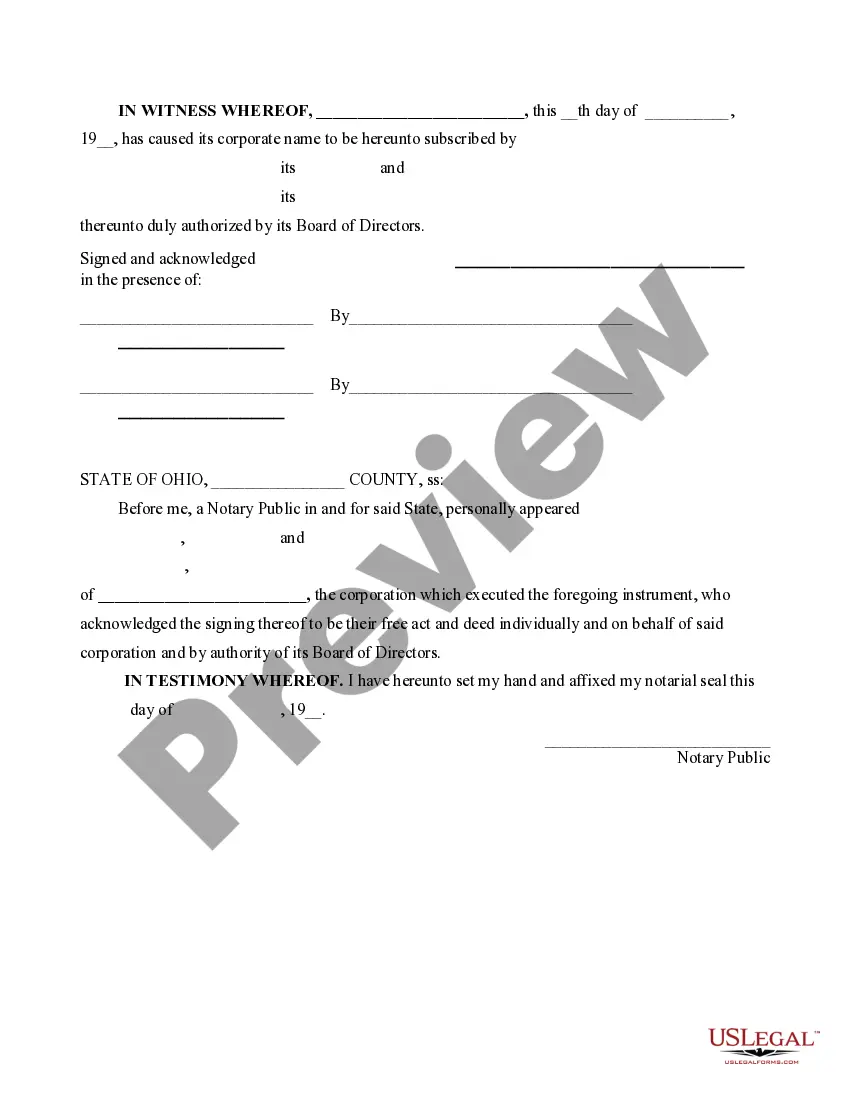
- Signatures and acknowledgments are required to validate the document.
When this form is needed
This form should be used when a landowner wishes to allow an encroachment on an easement they own for construction purposes. Situations may include a homeowner wanting to build a property that slightly overlaps with an established easement or when a developer needs to construct a structure that will utilize an easement without violating existing regulations.
Intended users of this form
- Landowners who wish to permit a structure to be built on their easement.
- Developers or contractors planning construction that impacts existing easements.
- Real estate professionals involved in property development agreements.
How to complete this form
- Identify the Grantor and Grantee by entering their names and addresses.
- Provide a detailed legal description of the property and the easement involved.
- Specify the agreed consideration amount for granting the encroachment.
- List the conditions for construction, especially height limitations.
- Ensure all parties sign and date the document, including a notary public if required.
Is notarization required?
Notarization is required for this form to take effect. Our online notarization service, powered by Notarize, lets you verify and sign documents remotely through an encrypted video session, available 24/7.
Get your form ready online
Our built-in tools help you complete, sign, share, and store your documents in one place.
Make edits, fill in missing information, and update formatting in US Legal Forms—just like you would in MS Word.
Download a copy, print it, send it by email, or mail it via USPS—whatever works best for your next step.
Sign and collect signatures with our SignNow integration. Send to multiple recipients, set reminders, and more. Go Premium to unlock E-Sign.
If this form requires notarization, complete it online through a secure video call—no need to meet a notary in person or wait for an appointment.
We protect your documents and personal data by following strict security and privacy standards.

Make edits, fill in missing information, and update formatting in US Legal Forms—just like you would in MS Word.

Download a copy, print it, send it by email, or mail it via USPS—whatever works best for your next step.

Sign and collect signatures with our SignNow integration. Send to multiple recipients, set reminders, and more. Go Premium to unlock E-Sign.

If this form requires notarization, complete it online through a secure video call—no need to meet a notary in person or wait for an appointment.

We protect your documents and personal data by following strict security and privacy standards.
Typical mistakes to avoid
- Failing to provide complete property descriptions, which can lead to legal disputes.
- Omitting signatures or failing to sign in the presence of a notary when necessary.
- Ignoring local zoning laws that may impact the encroachment agreement.
Benefits of using this form online
- Convenient access to the form anytime, allowing for prompt completion.
- Editability enables users to tailor the document to their specific needs easily.
- Reliability in terms of legal compliance, as forms are prepared by licensed attorneys.
Looking for another form?

Form popularity
FAQ
If you know where the boundary is and you don't need to follow the process for party walls, the best approach is to talk to your neighbour. Talk to them face to face if you can - make a note of what you agreed. If you don't feel comfortable speaking to them, write to them or ask someone to contact them for you.
A Land Survey Works Wonders for Boundary Disputes. If you feel like your neighbor has or is developing on top of your land, you may want to get a professional land survey. Talk it Over and Offer Concessions. Bring on a Neutral Third Party. Hire a Qualified Estate Attorney.
If the encroachment is found during the sale of a home, the seller may be able to work with whomever it is that owns the land where the encroachment is located and either have the encroachment removed or resolve any issues to be sure the title is clear at the time of closing.
Can I Collect Damages for an Encroachment on My Land? Since an encroachment is seen as an invasion of a person's property rights, that person may be able to recover a damages award for any harm that was suffered due to the offending encroachment.
Legal approach: One can always take the legal route to get an injunction order or eviction notice from the court to do away with the illicit possession of your property. Out of court settlement: Legal assistance is not only expensive but also time taking.
A neighbor will not own the part of a structure that encroaches on their land. Instead, the encroachment will be viewed as an act of trespass. Also, although the neighbor will be able to sue that person for trespass, they will not automatically gain legal title to the portion of the building that is now on their land.
Negotiate directly with the neighbour to achieve a settlement of the dispute that has arisen; or. Agree with the neighbour to enter into a form of Alternative Dispute Resolution (ADR), and in the present conundrum I would recommend Mediation; or.
A Land Survey Works Wonders for Boundary Disputes. If you feel like your neighbor has or is developing on top of your land, you may want to get a professional land survey. Talk it Over and Offer Concessions. Bring on a Neutral Third Party. Hire a Qualified Estate Attorney.