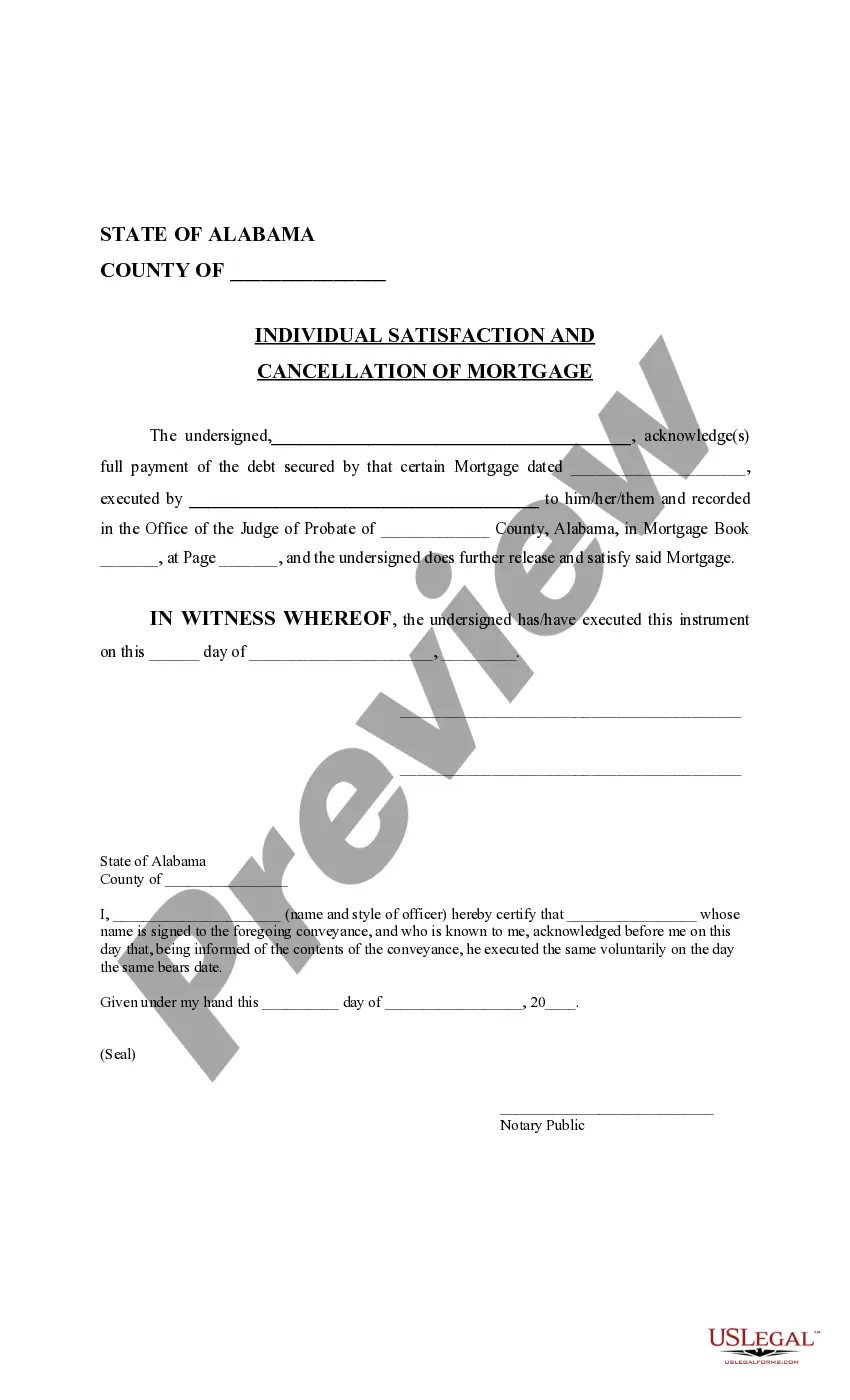
Ohio Grant of Utility Easement
Overview of this form
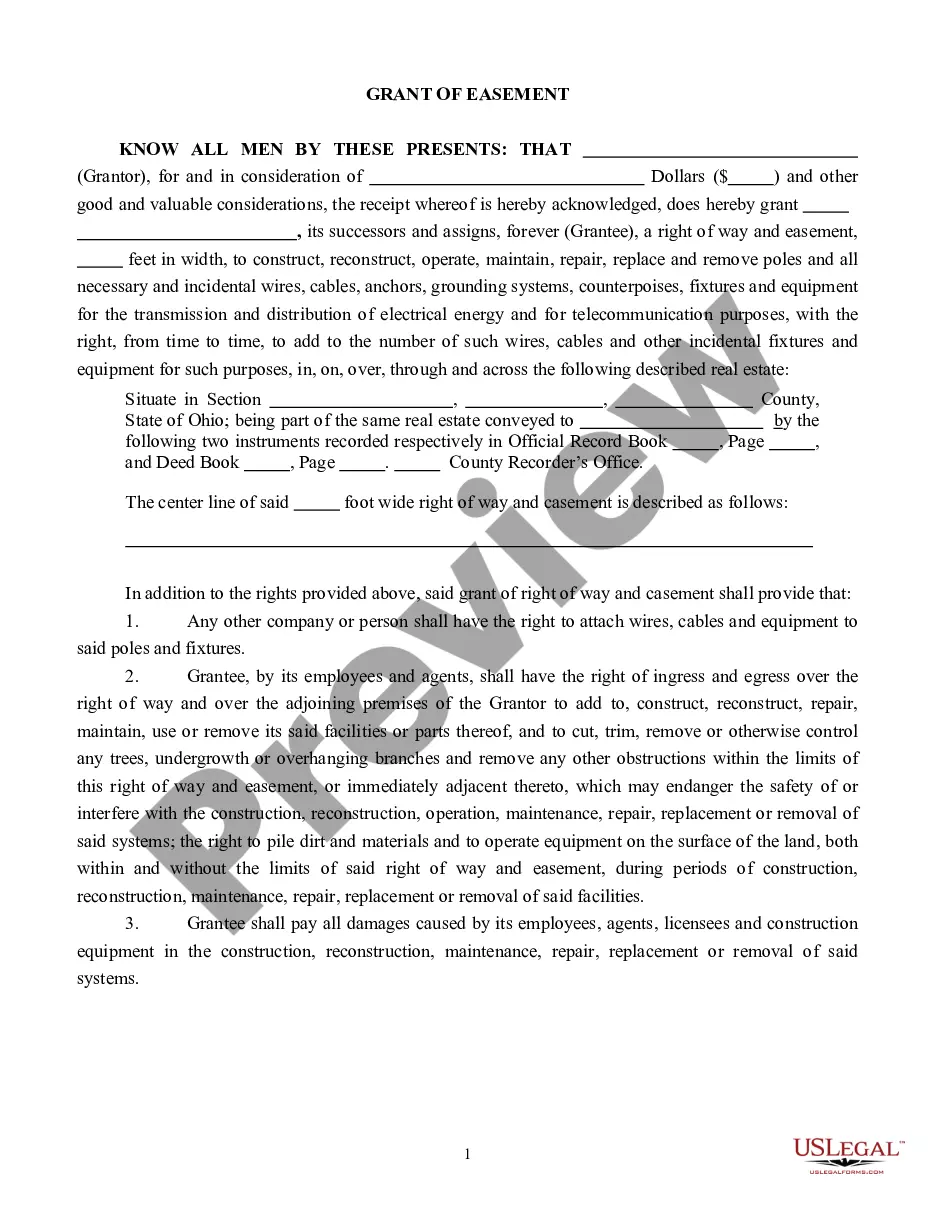
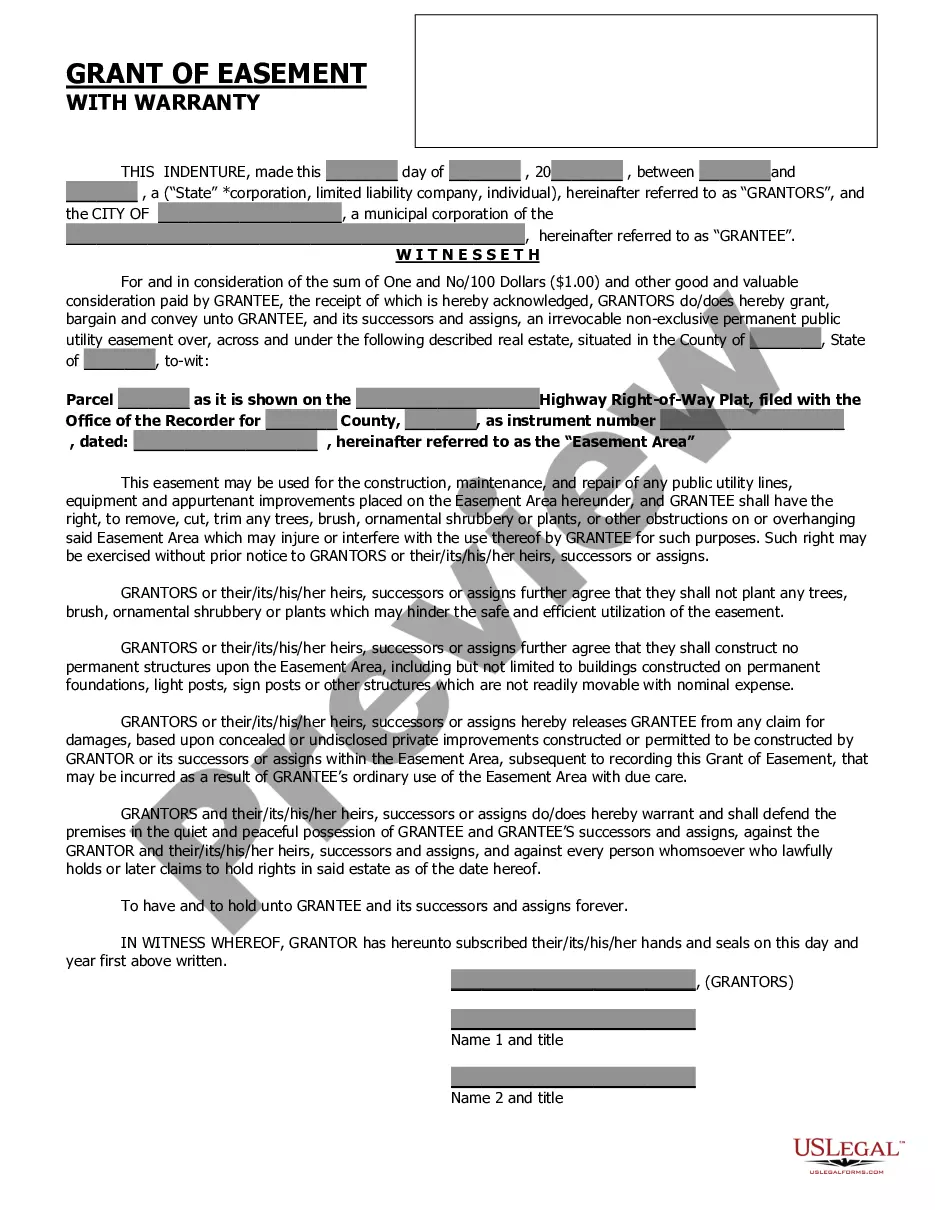
The Grant of Utility Easement is a legal document that provides permission for utility companies to access and use a specified area of land for installing and maintaining infrastructure necessary for the transmission of electrical energy and telecommunications. Unlike other easements, this form is specifically tailored for utility services, ensuring that the utility company can operate without legal hindrance while granting certain rights to the property owner as well.
Key components of this form
- Grant of right of way and easement for utility access.
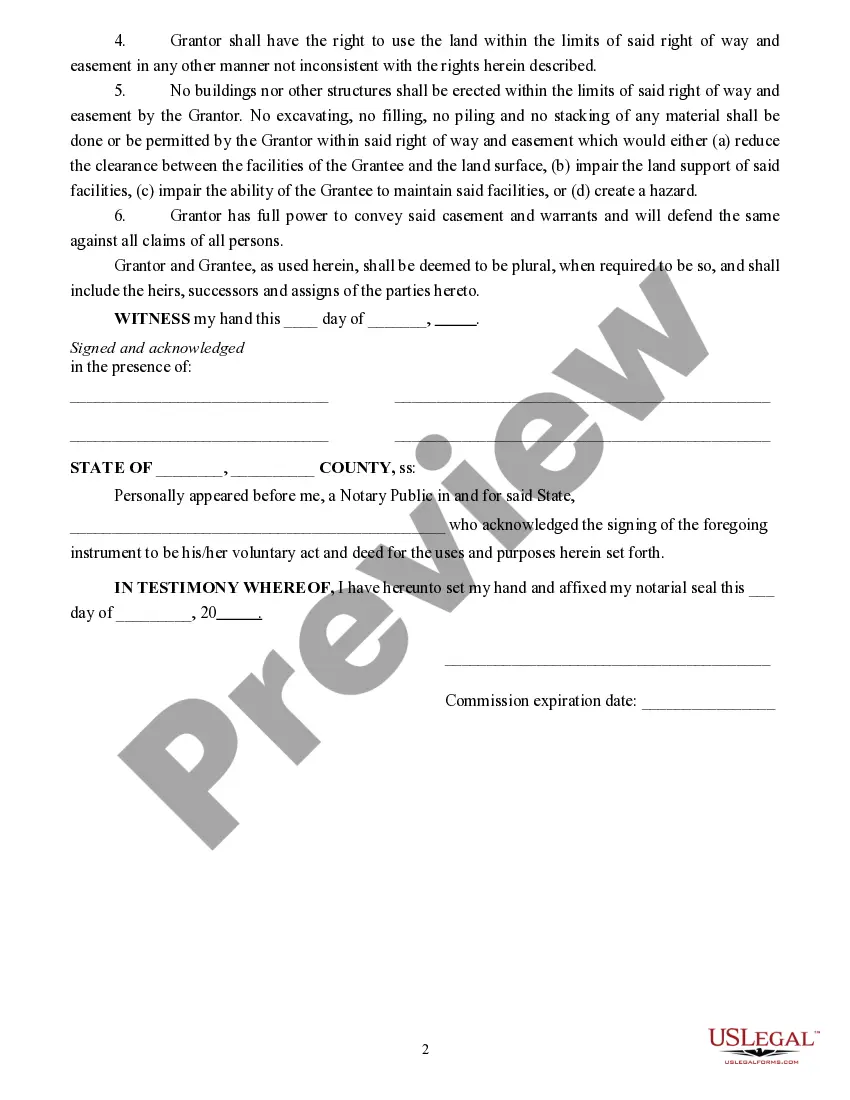
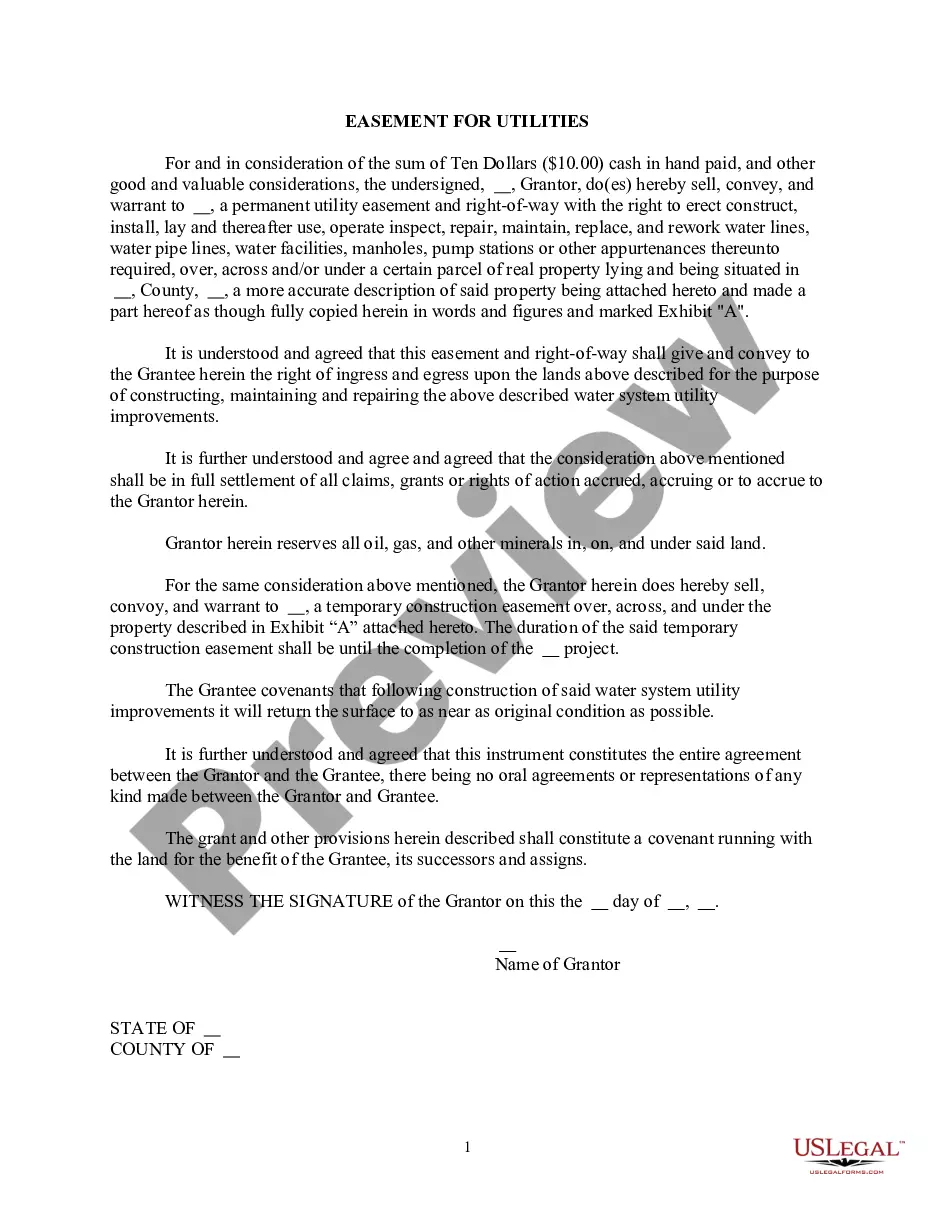
- Permits the utility company to construct, maintain, and remove necessary equipment like poles and cables.
- Allows the utility company to manage vegetation that could obstruct their facilities.
- Details the responsibilities of the grantee, including compensation for damages incurred during work.
- Prohibits the property owner from constructing structures or piling materials within the easement area.
When to use this document
This form is used when a property owner grants a utility company permission to enter their property for the purpose of installing or maintaining utility lines and equipment. It is commonly needed when a new utility service is being established or when existing services require upgrades or repairs. The form ensures both parties understand their rights and obligations regarding the easement area.
Intended users of this form
- Property owners who need to grant easements to utility companies.
- Utility companies looking to establish legal access for their operational needs.
- Businesses or organizations requiring utility services that necessitate easements on private property.
Steps to complete this form
- Identify the parties involved, including the property owner (grantor) and the utility company (grantee).
- Specify the exact location of the easement on the property, including any boundaries or limitations.
- Detail the rights being granted to the utility company, such as construction, maintenance, and access rights.
- Outline any responsibilities of the utility company, including compensation for damages during work.
- Review and sign the document before a notary public to ensure its legal validity.
Does this form need to be notarized?
Notarization is required for this form to take effect. Our online notarization service, powered by Notarize, lets you verify and sign documents remotely through an encrypted video session, available 24/7.
Get your form ready online
Our built-in tools help you complete, sign, share, and store your documents in one place.
Make edits, fill in missing information, and update formatting in US Legal Forms—just like you would in MS Word.
Download a copy, print it, send it by email, or mail it via USPS—whatever works best for your next step.
Sign and collect signatures with our SignNow integration. Send to multiple recipients, set reminders, and more. Go Premium to unlock E-Sign.
If this form requires notarization, complete it online through a secure video call—no need to meet a notary in person or wait for an appointment.
We protect your documents and personal data by following strict security and privacy standards.

Make edits, fill in missing information, and update formatting in US Legal Forms—just like you would in MS Word.

Download a copy, print it, send it by email, or mail it via USPS—whatever works best for your next step.

Sign and collect signatures with our SignNow integration. Send to multiple recipients, set reminders, and more. Go Premium to unlock E-Sign.

If this form requires notarization, complete it online through a secure video call—no need to meet a notary in person or wait for an appointment.

We protect your documents and personal data by following strict security and privacy standards.
Typical mistakes to avoid
- Failing to clearly define the easement boundaries, leading to disputes later.
- Not specifying the responsibilities of the utility company, which can result in property damage without compensation.
- Overlooking the requirement for notarization, which can invalidate the agreement.
Benefits of using this form online
- Convenience of downloading and printing the form at your convenience.
- Editability to customize the document for your specific situation.
- Access to professionally drafted forms created by licensed attorneys, ensuring legal compliance.
- Time-saving approach as you can complete the form rapidly without unnecessary delays.
Key takeaways
- The Grant of Utility Easement is essential for property owners granting access to utility companies.
- It outlines rights and responsibilities to help protect both parties.
- Proper completion and notarization of the form are crucial for its validity.
- Utilizing this form can facilitate smoother negotiations with utility providers.
Looking for another form?
Form popularity
FAQ
There must be a dominant and a servient tenement; The easement must accommodate the dominant tenement, that is, be connected with its enjoyment and for its benefit; The dominant and servient owners must be different persons; The right claimed must be capable of forming the subject-matter of a grant.
A property easement is a legal situation in which the title to a specific piece land remains with the landowner, but another person or organization is given the right to use that land for a distinct purpose.
An easement is a limited right to use another person's land for a stated purpose. Examples of easements include the use of private roads and paths, or the use of a landowner's property to lay railroad tracks or electrical wires.
A property easement is a legal situation in which the title to a specific piece land remains with the landowner, but another person or organization is given the right to use that land for a distinct purpose.
Benefits the owner of adjacent land. The easement is thus appurtenant to the holder's land. The benefited land is called the dominant tenementThe land that benefits from an easement., and the burdened landthat is, the land subject to the easementis called the servient tenement.
An easement is the grant of a nonpossessory property interest that grants the easement holder permission to use another person's land.An affirmative easement gives the easement holder the right to do something on the grantor of the easement's land, such as travel on a road through the grantor's land.
When you're buying a house, you might find out that the property has an easement on it. Essentially this means that someone other than you could have access to the land. This isn't necessarily a bad thing. For example, utility companies typically hold easements in case they need to access pipes or cables.