Alabama Disclosure of Anticipated Disbursements
About this form
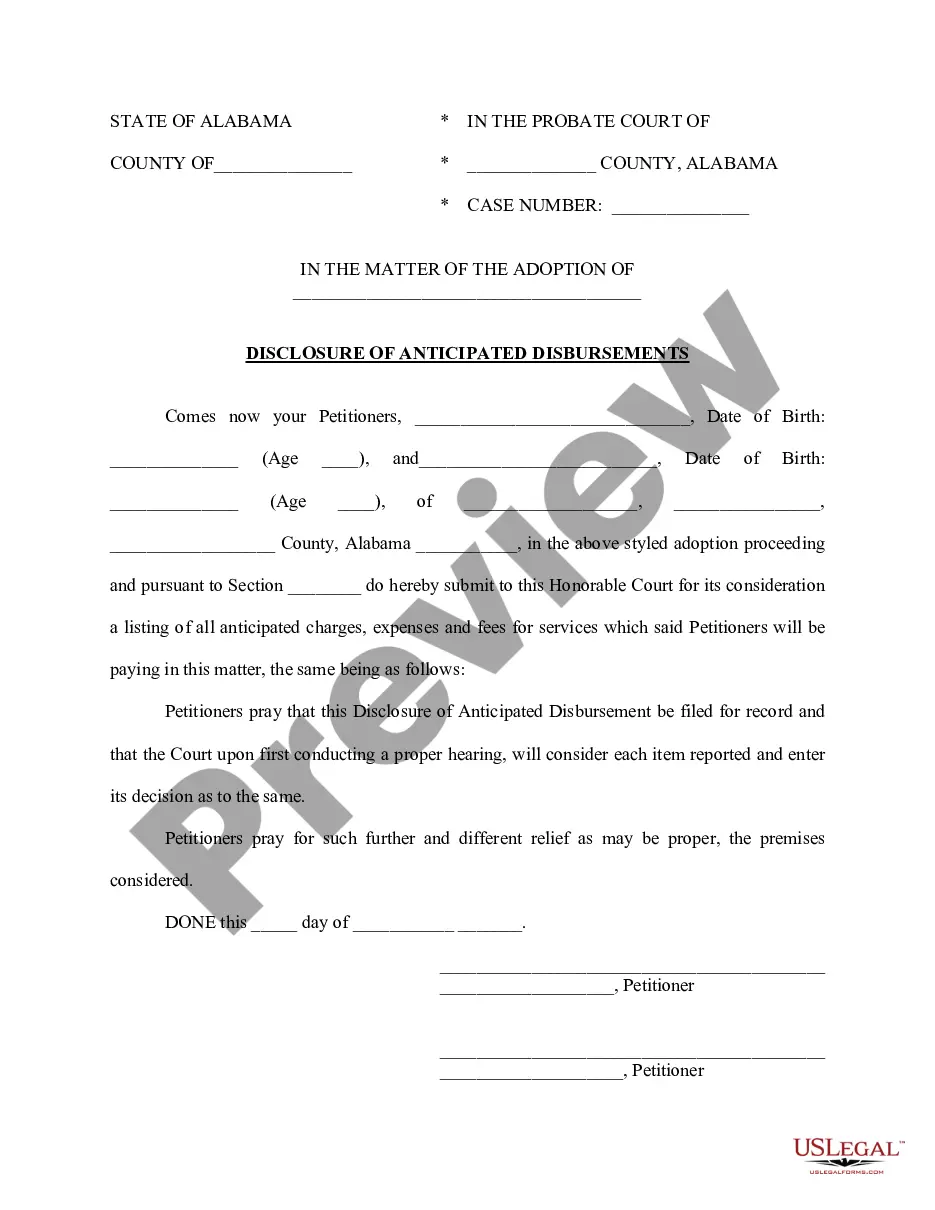
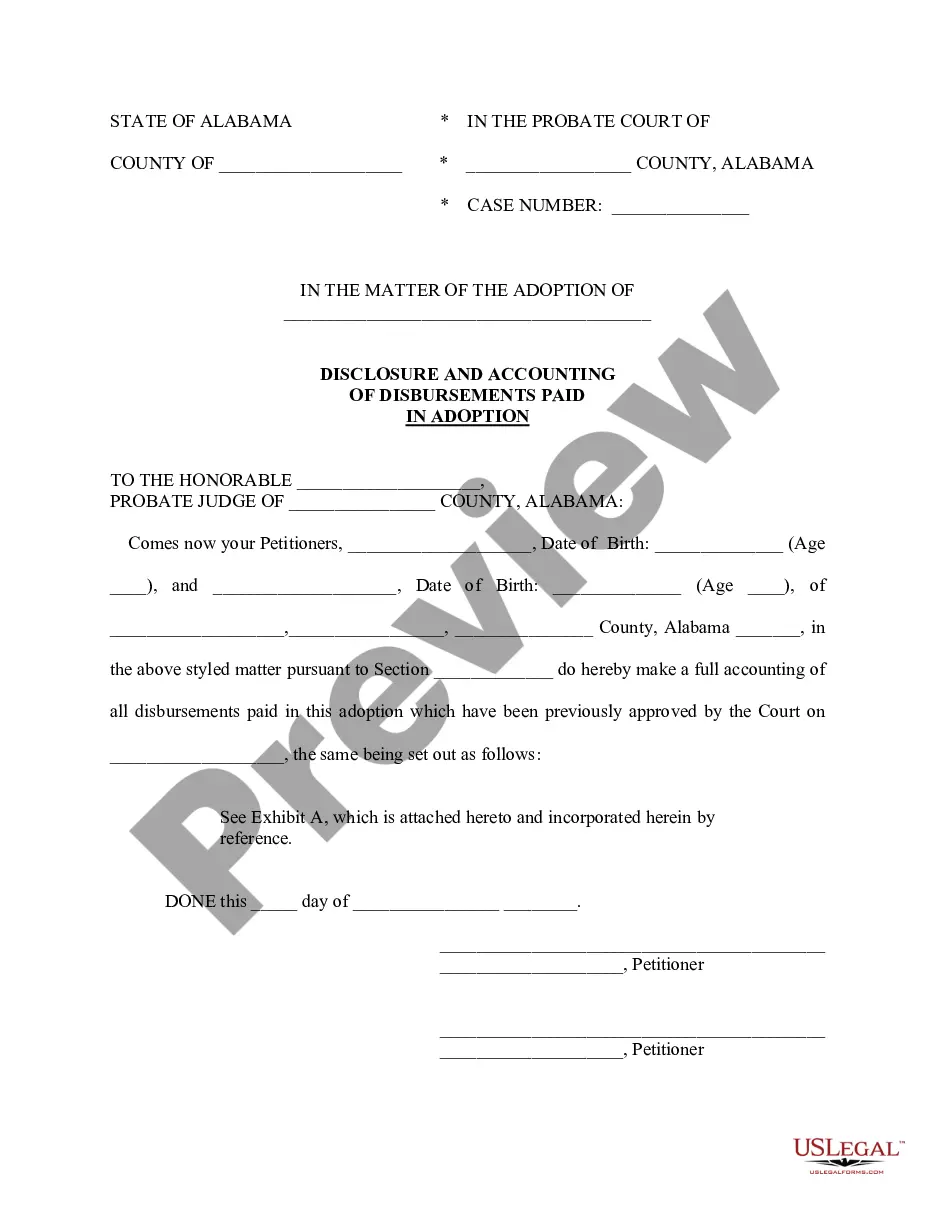
The Disclosure of Anticipated Disbursements form is a legal document used in adoption proceedings. It is submitted by the petitioners to list all expected charges, expenses, and fees they will incur throughout the adoption process. This form is essential for transparency with the court and ensures that all financial aspects of the adoption are disclosed upfront, differentiating it from other adoption-related documents that may not require such detailed financial disclosures.
Form components explained
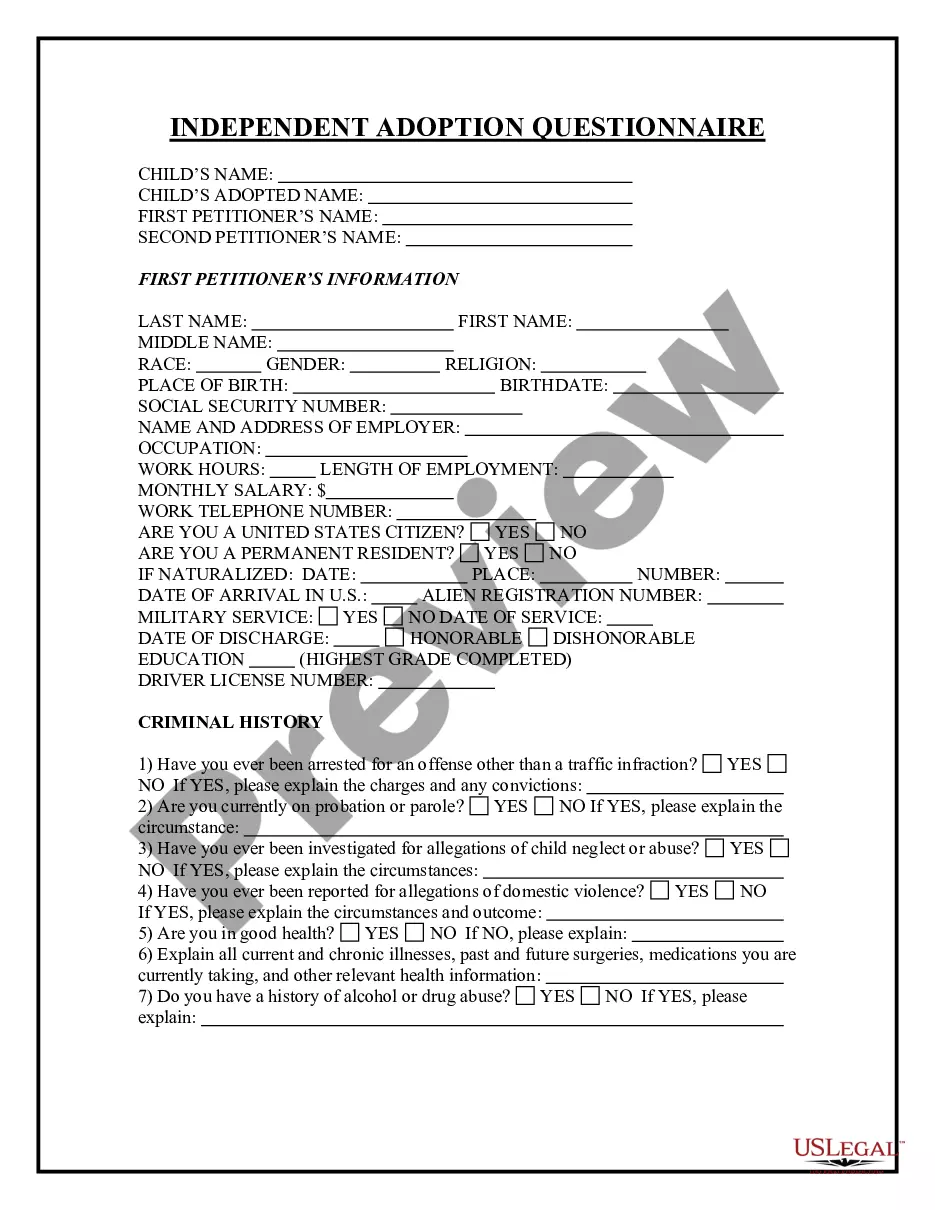
- Petitioners' details: Names and ages of the petitioners.
- Case number: The specific identifier for the adoption case.
- List of anticipated charges: A detailed breakdown of all expected expenses and fees related to the adoption.
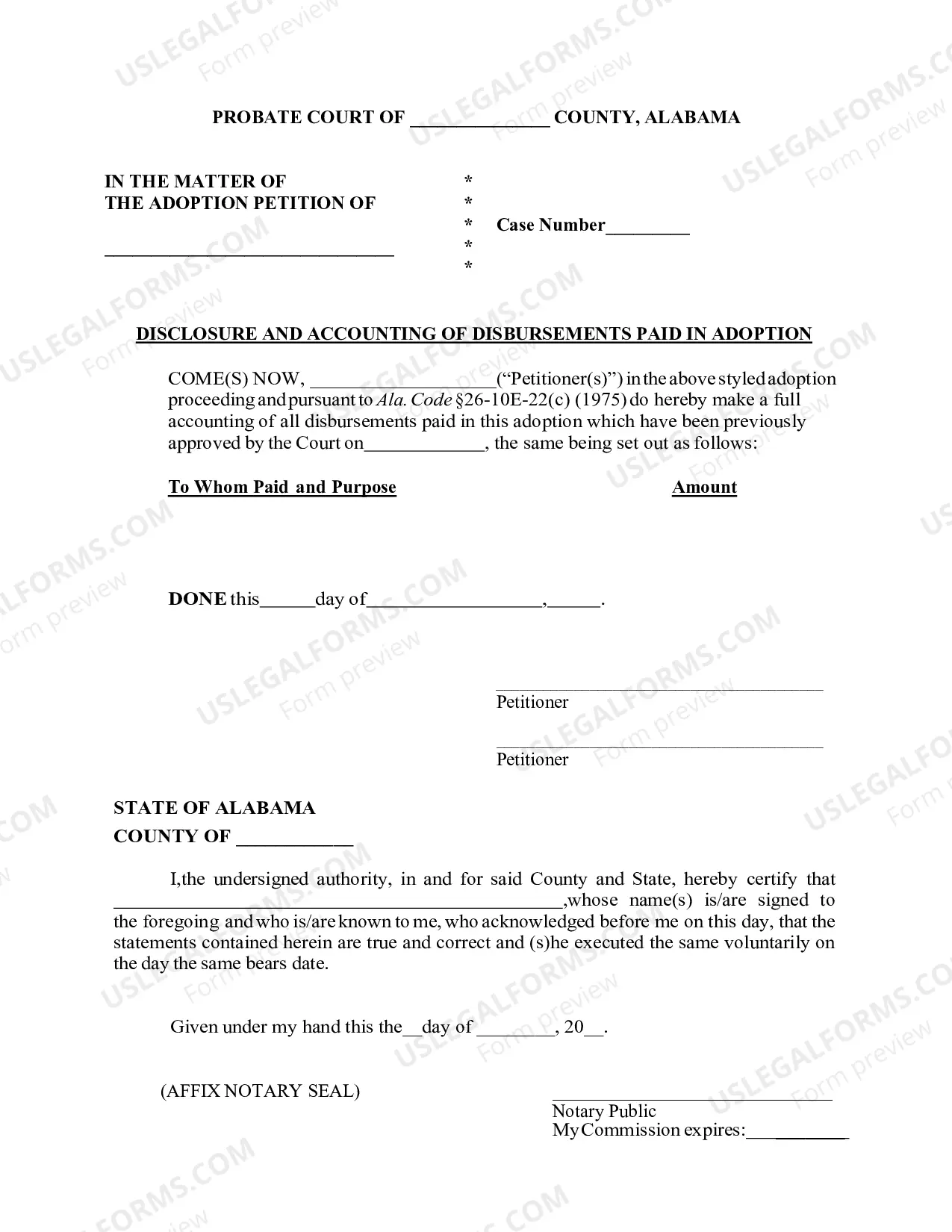
- Signature section: Places for both petitioners to sign and affirm the accuracy of the information provided.
- Notarization section: A space for a notary public to acknowledge the signatures.

Situations where this form applies
This form is typically used during the adoption process when petitioners must present a clear understanding of the financial obligations involved. It is a necessary step before the court can approve the adoption, ensuring all potential costs are tallied and understood by the petitioners and the court alike.
Who this form is for
- Individuals or couples involved in an adoption proceeding.
- Petitioners seeking to provide full transparency about financial expectations to the court.
- Those who want to ensure compliance with legal requirements in the adoption process.
How to prepare this document
- Identify the petitioners: Fill in the names and ages of all individuals involved in the adoption.
- Enter the case number: Provide the assigned case number for the adoption proceedings.
- List anticipated charges: Detail each expected charge, expense, or fee related to the adoption process.
- Sign the document: Both petitioners must sign the form, affirming the truthfulness of the information provided.
- Obtain notarization: Have the signed form notarized to ensure it meets legal standards.
Does this form need to be notarized?
To make this form legally binding, it must be notarized. Our online notarization service, powered by Notarize, lets you verify and sign documents remotely through an encrypted video session.
Get your form ready online
Our built-in tools help you complete, sign, share, and store your documents in one place.
Make edits, fill in missing information, and update formatting in US Legal Forms—just like you would in MS Word.
Download a copy, print it, send it by email, or mail it via USPS—whatever works best for your next step.
Sign and collect signatures with our SignNow integration. Send to multiple recipients, set reminders, and more. Go Premium to unlock E-Sign.
If this form requires notarization, complete it online through a secure video call—no need to meet a notary in person or wait for an appointment.
We protect your documents and personal data by following strict security and privacy standards.

Make edits, fill in missing information, and update formatting in US Legal Forms—just like you would in MS Word.

Download a copy, print it, send it by email, or mail it via USPS—whatever works best for your next step.

Sign and collect signatures with our SignNow integration. Send to multiple recipients, set reminders, and more. Go Premium to unlock E-Sign.

If this form requires notarization, complete it online through a secure video call—no need to meet a notary in person or wait for an appointment.

We protect your documents and personal data by following strict security and privacy standards.
Common mistakes
- Failing to list all anticipated expenses, which can lead to compliance issues.
- Not entering the case number correctly, causing delays in processing.
- Forgetting to sign the form or leaving out one of the petitioners' signatures.
- Neglecting to get the form notarized if required.
Benefits of completing this form online
- Convenience of downloading the form at any time, eliminating the need for in-office visits.
- Editability allows petitioners to customize the form to their specific needs before submission.
- Access to legal guidance through a straightforward structure, minimizing confusion.
Summary of main points
- The Disclosure of Anticipated Disbursements form is crucial for adoption proceedings in Alabama.
- Properly documenting financial expectations helps ensure a smooth adoption process.
- Accurate completion and notarization of the form are essential for legal compliance.
Looking for another form?


Form popularity
FAQ
Many adoption workers advise parents to introduce the word "adoption" as early as possible so that it becomes a comfortable part of a child's vocabulary and to tell a child, between the ages of 2 and 4 that he is adopted.
The certificate will normally include Full Adoption Name, Date of Birth, Sex, Place of Birth (where known), Adoptive Parent(s') name(s), their address and Occupation at time of adoption, Date of the Adoption Order and description of the court which made it; Date of entry into the Adopted Children Register.
Adoptions resulting from crimes such as abduction and sale of and trafficking in children, fraud in the declaration of adoptability, falsification of official documents or coercion, and any illicit activity or practice such as lack of proper consent by biological parents, improper financial gain by intermediaries and
Identified adoptions are also called designated adoptions. Identified adoptions combine elements of both independent adoptions and agency adoptions. In an identified adoption, the birth and adoptive families find each other, but an agency is used for the process.
There isn't a right time to tell your child that they are adopted but its best to tell them as early as possible. This is to avoid them learning about their adoption from anyone else, or feeling that their adoption is a bad thing.