Virginia Living Trust for Husband and Wife with Minor and or Adult Children

What this document covers
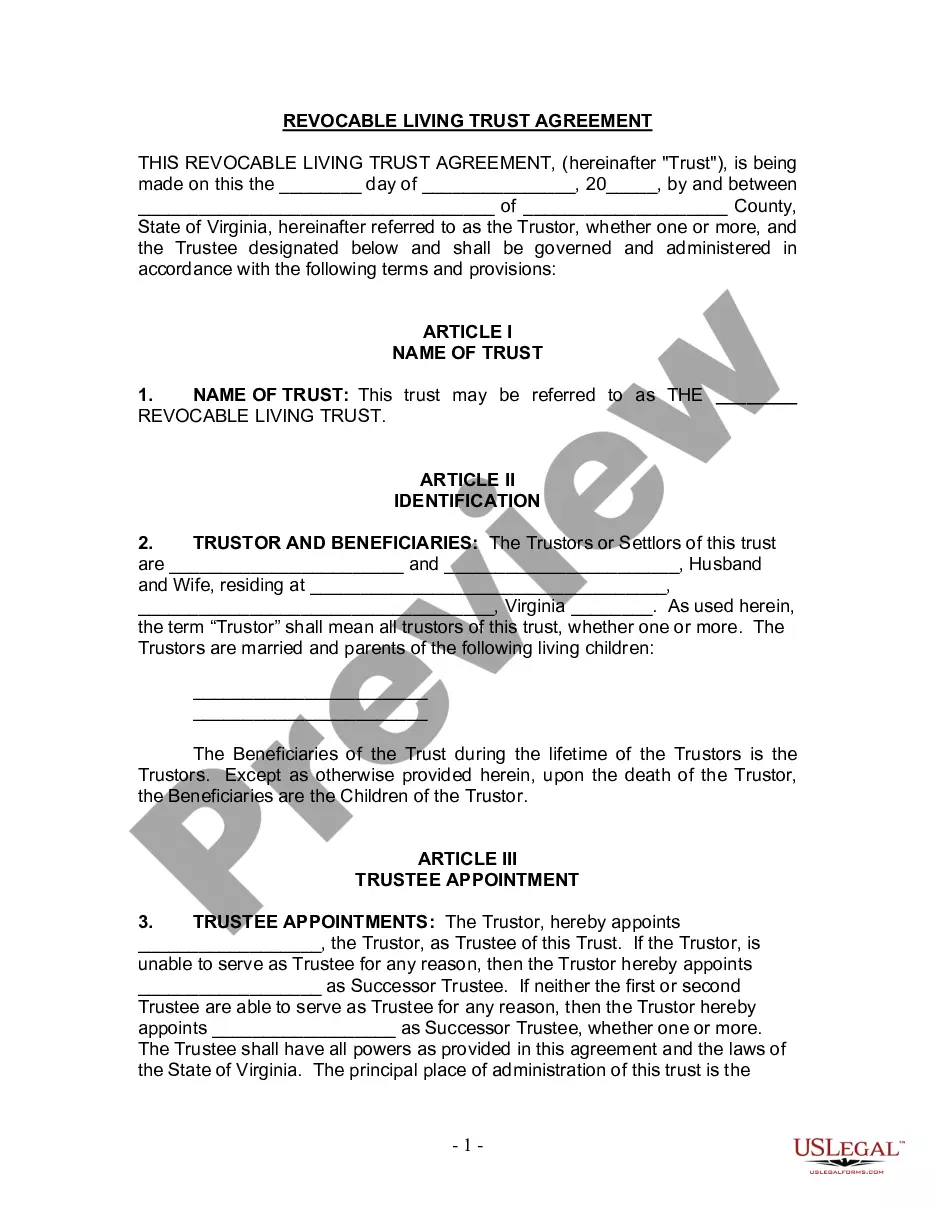
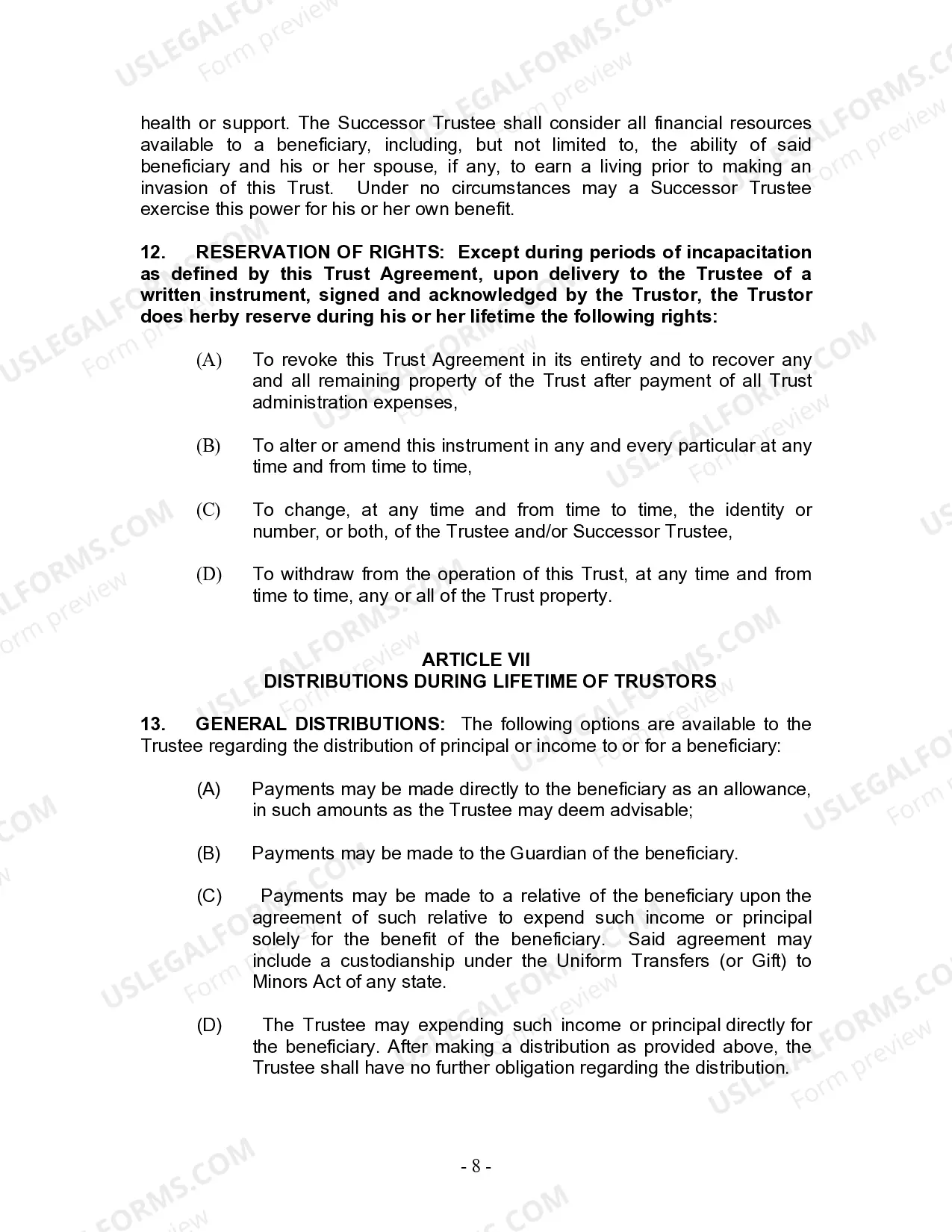
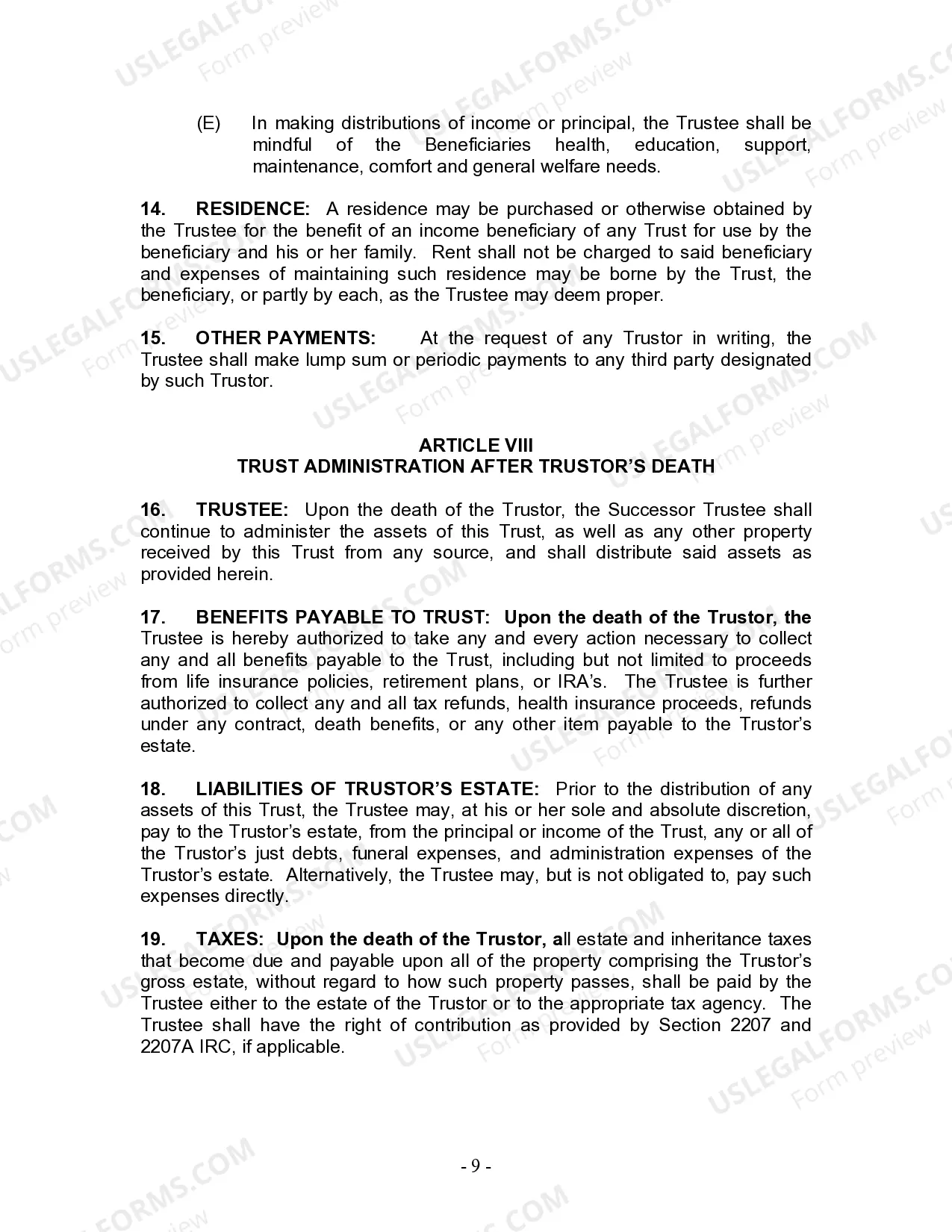
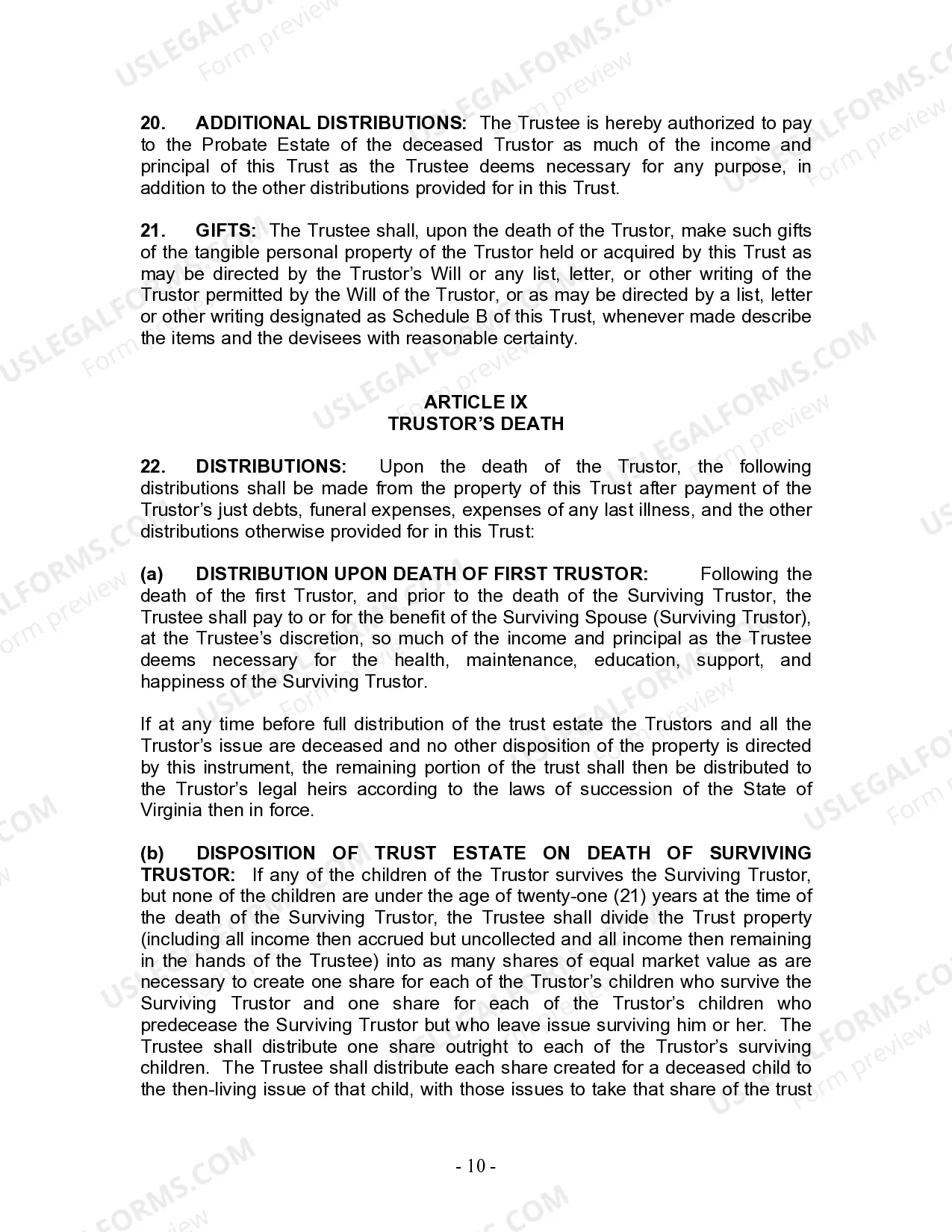
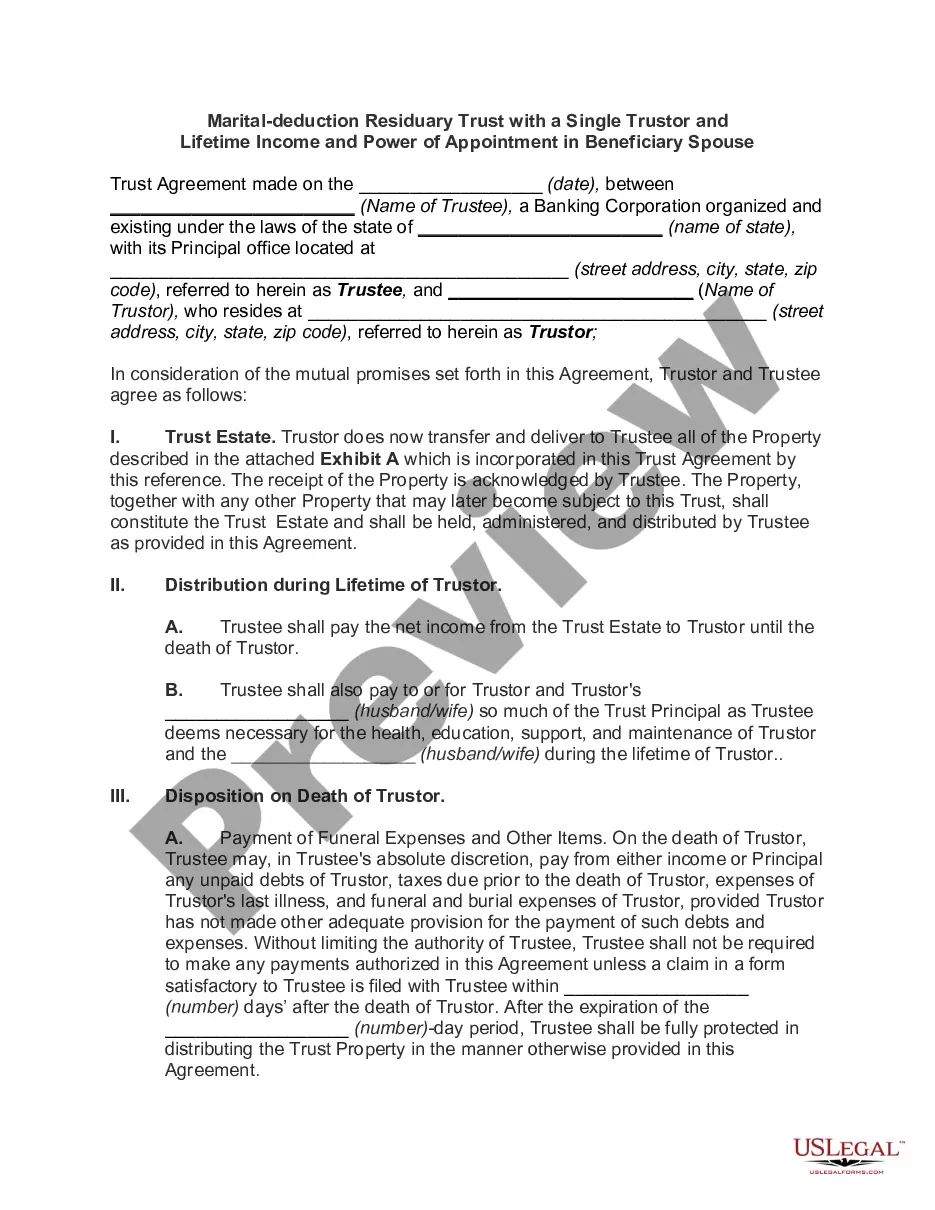
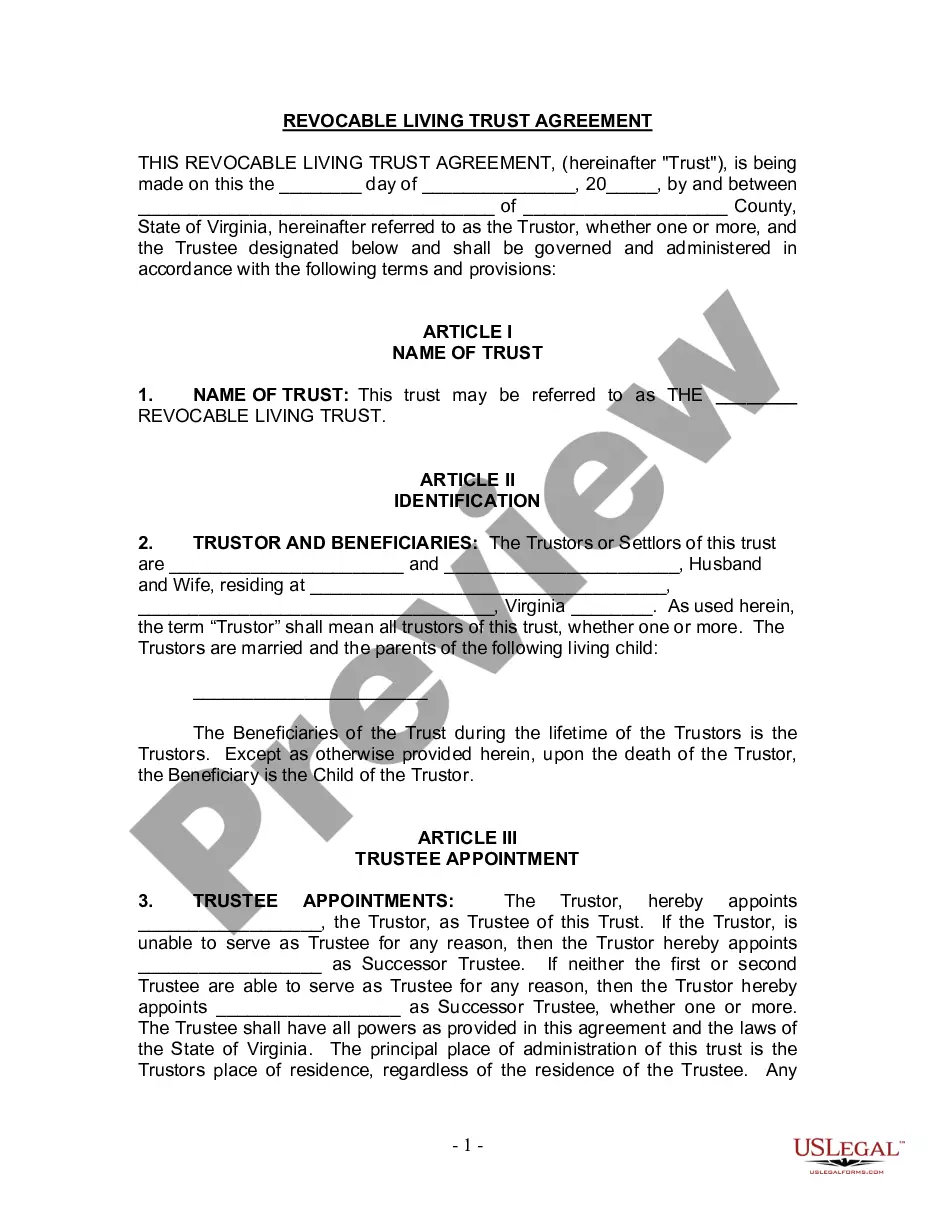
This is a Living Trust for Husband and Wife with Minor and or Adult Children. A living trust is a legal document that allows you to manage your assets during your lifetime and specify how they will be distributed after your death. Unlike a will, a living trust can help your estate avoid probate, ensuring a smoother transition of assets to your beneficiaries. This form is particularly tailored for married couples who want to establish a trust to manage their shared assets while benefiting both minor and adult children.
Main sections of this form
- Identification of the Trustor and Trustees.
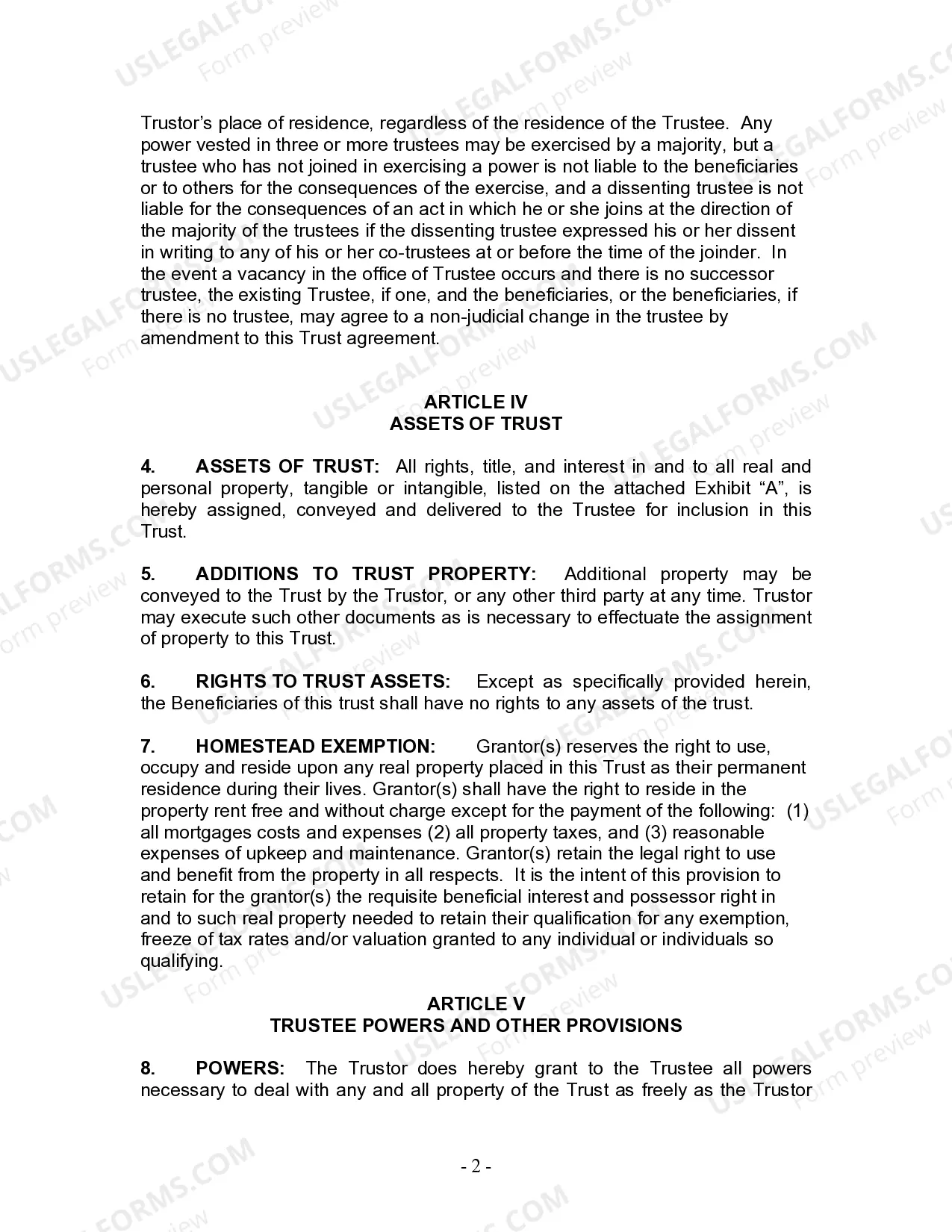
- Asset assignment to the trust.
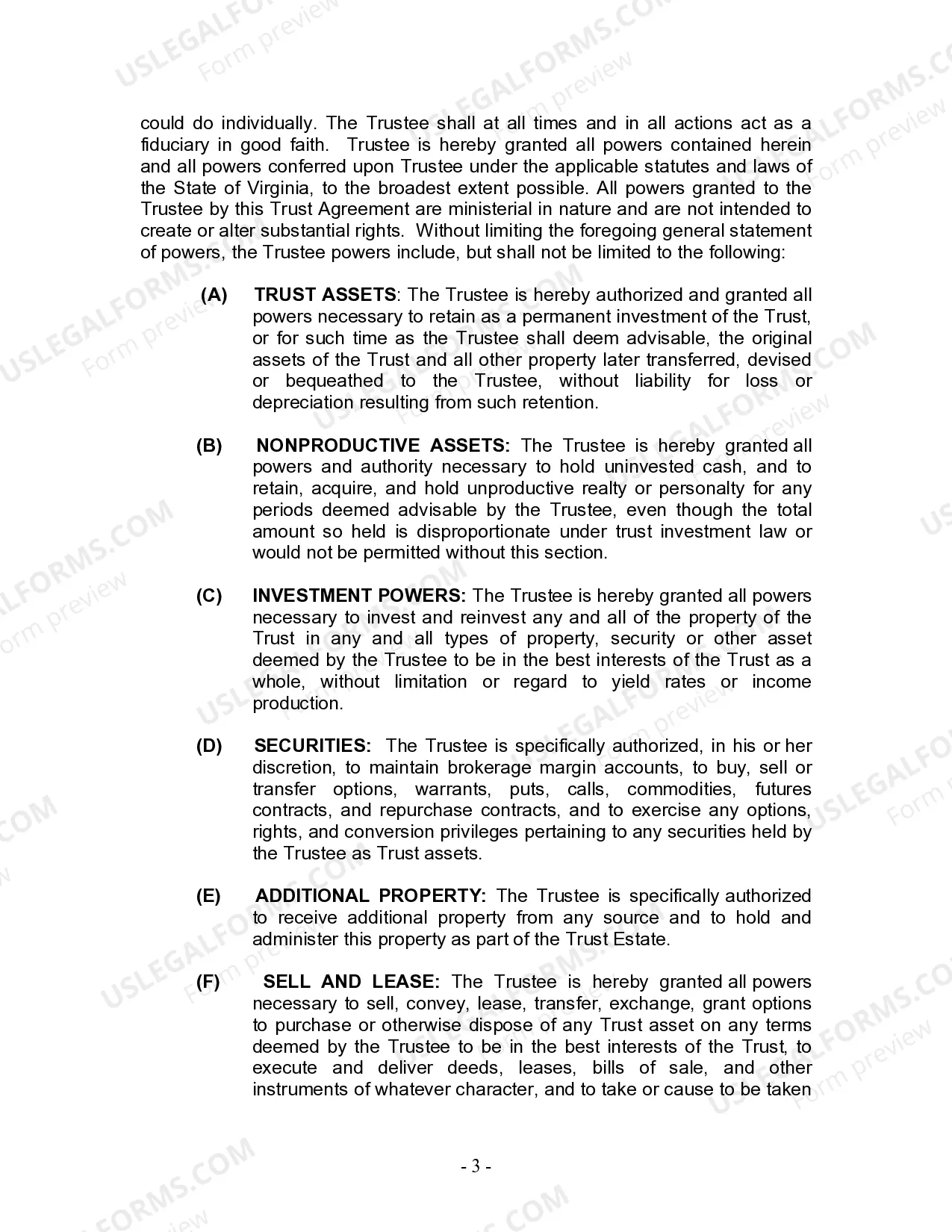
- Instructions on managing assets during the Trustor's lifetime.
- Distribution clauses for assets upon the death of the Trustors.
- Provisions for appointing Successor Trustees.

Situations where this form applies
You should use this living trust form when you want to formally establish a trust to manage your assets while you are alive and after your passing. This is especially useful for married couples who have minor or adult children and wish to ensure a straightforward transfer of their estate. It is also beneficial if you want to maintain control over asset distribution and avoid the lengthy probate process.
Who can use this document
- Married couples looking to establish a trust for the management of family assets.
- Parents wanting to designate clear instructions for asset distribution to their children.
- Individuals wishing to avoid probate proceedings after their death.
- Couples wishing to maintain control over their property even after death.
How to complete this form
- Enter the date and names of the Trustor(s) (husband and wife).
- Assign a name for your living trust.
- Clearly list the assets that will be included in the trust.
- Designate your Trustees and any Successor Trustees.
- Sign the document in the presence of a notary public if required.
Is notarization required?
This document requires notarization to meet legal standards. US Legal Forms provides secure online notarization powered by Notarize, allowing you to complete the process through a verified video call, available 24/7.
Get your form ready online
Our built-in tools help you complete, sign, share, and store your documents in one place.
Make edits, fill in missing information, and update formatting in US Legal Forms—just like you would in MS Word.
Download a copy, print it, send it by email, or mail it via USPS—whatever works best for your next step.
Sign and collect signatures with our SignNow integration. Send to multiple recipients, set reminders, and more. Go Premium to unlock E-Sign.
If this form requires notarization, complete it online through a secure video call—no need to meet a notary in person or wait for an appointment.
We protect your documents and personal data by following strict security and privacy standards.

Make edits, fill in missing information, and update formatting in US Legal Forms—just like you would in MS Word.

Download a copy, print it, send it by email, or mail it via USPS—whatever works best for your next step.

Sign and collect signatures with our SignNow integration. Send to multiple recipients, set reminders, and more. Go Premium to unlock E-Sign.

If this form requires notarization, complete it online through a secure video call—no need to meet a notary in person or wait for an appointment.

We protect your documents and personal data by following strict security and privacy standards.
Common mistakes
- Failing to list all significant assets intended for the trust.
- Not designating a Successor Trustee, leaving gaps in management.
- Overlooking updates when major life changes occur (like divorce or the birth of children).
- Not reviewing the trust periodically to ensure it remains relevant and effective.
Benefits of completing this form online
- Convenience of completing the form from home at your own pace.
- Editability allows you to make changes easily before finalizing.
- Access to professionally drafted documents ensures legal compliance.
- Immediate download provides quick access to necessary legal tools.
Quick recap
- A living trust allows for efficient management and distribution of assets.
- It is crucial for married couples with children looking to avoid probate.
- Proper completion and notarization are essential for validity.
- Regular updates to the trust are important to reflect life changes.
Looking for another form?
Form popularity
FAQ
Qualified retirement accounts 401ks, IRAs, 403(b)s, qualified annuities. Health saving accounts (HSAs) Medical saving accounts (MSAs) Uniform Transfers to Minors (UTMAs) Uniform Gifts to Minors (UGMAs) Life insurance. Motor vehicles.
WHO INHERITS THE PROPERTY OF AN INTESTATE? someone other than the surviving spouse in which case, one-third goes to the surviving spouse and the remaining two-thirds is divided among all children. f0a7 if no surviving spouse, all passes to the children and their descendants.
Heirs/Heirs at Law: the persons who would inherit the decedent's estate if the decedent died intestate, as determined by law at the time of the decedent's death.
California is a community property state, which means that following the death of a spouse, the surviving spouse will have entitlement to one-half of the community property (i.e., property that was acquired over the course of the marriage, regardless of which spouse acquired it).
The process of funding your living trust by transferring your assets to the trustee is an important part of what helps your loved ones avoid probate court in the event of your death or incapacity. Qualified retirement accounts such as 401(k)s, 403(b)s, IRAs, and annuities, should not be put in a living trust.
Under California law, a marriage automatically invalidates any pre-existing will or trust as to the new spouse's inheritance rights, unless the documents provide for a new spouse, or clearly indicate a new spouse will receive nothing.
Next of kin under Virginia law generally means the closest living relatives of the decedent. The Virginia Supreme Court has stated that the term next of kin is a nontechnical term whose commonly accepted meaning is 'nearest in blood. ' Elmore v. Virginia Nat'l Bank, 232 Va.
Virginia is a common law property state. This means that in cases of intestacy, the estate is automatically inherited by the spouse.Therefore, if there is a surviving spouse, the spouse will receive the deceased's portion of all marital properties.
Dying intestate means dying without a will. Virginia's laws of intestate succession state that when a person dies leaving a spouse and children, one-third of the person's assets pass to the spouse and two-thirds of the person's assets pass to the children.